Sony Bravia 8 II First Look: is this the OLED picture-quality champion?
Sony's 2025 flagship QD-OLED trades raw brightness for processing, colour and sound. We weigh the independent measurements to decide whether that trade is worth making over brighter rivals.
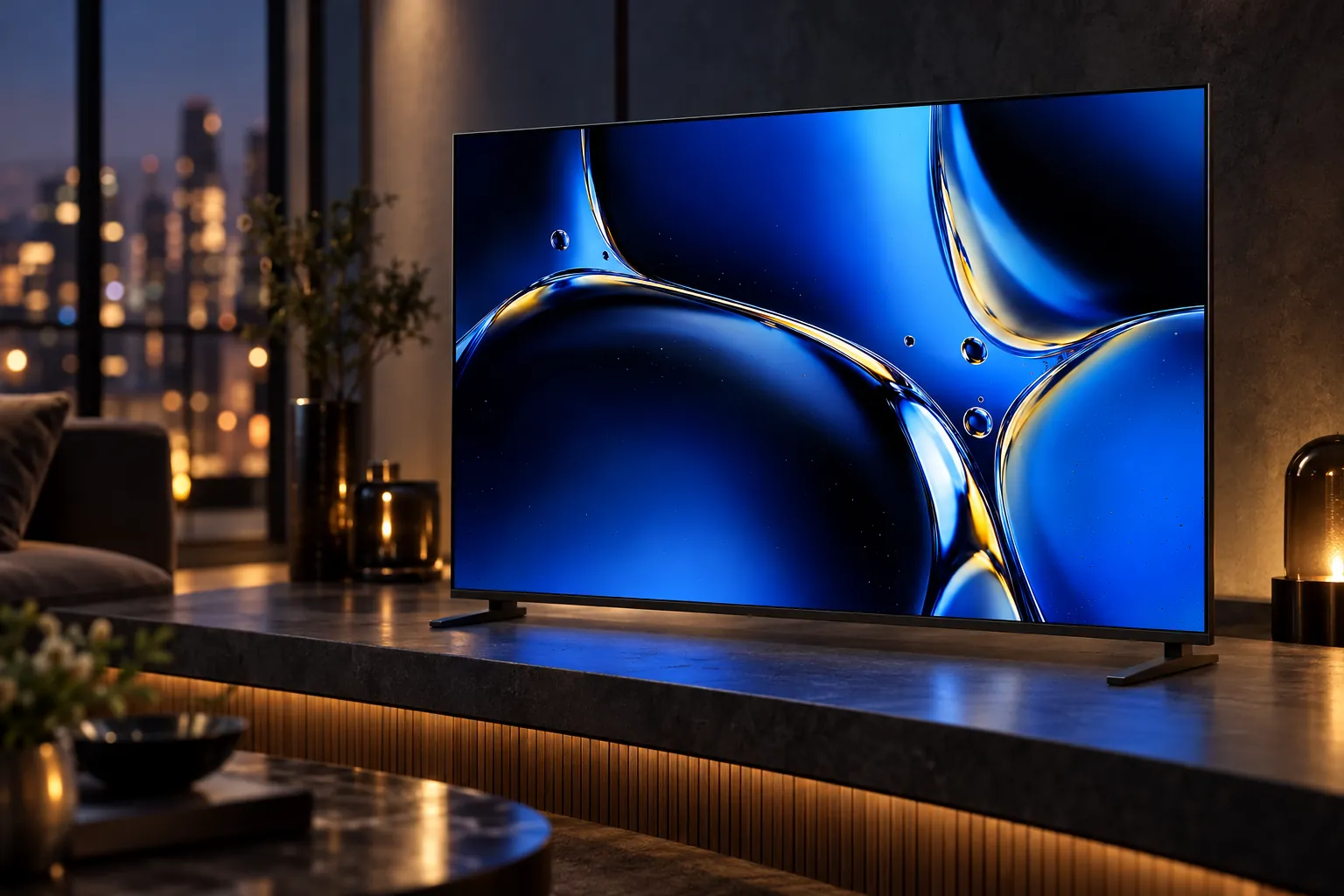


Wide Rec. 2020 colour, praised Sony processing and strong built-in sound suit dim-room movie viewing, though brighter rivals win in daylight.
Check price on AmazonWe link to the exact model on Amazon UK. Prices change often, so check the live price before you buy. As an Amazon Associate we earn from qualifying purchases.
It's late on a Saturday, the lights are down, and the film you've waited months to watch is finally queued up. This is the moment a premium OLED earns its keep. Then Monday comes, the sun pours through the bay window during the football, and suddenly a different television would have been the smarter buy. The Sony BRAVIA 8 II is very good at the first scenario and noticeably weaker at the second, and at well over £2,000 for the 65-inch, knowing which household you live in matters.
The short answer
Buy the Sony BRAVIA 8 II 65-inch if you mostly watch films and quality streaming in a dim or moderately lit room, value Sony's colour and motion processing, and would rather not buy a soundbar straight away. Skip it if your living room is bright, you play competitive games, or you need more than two full HDMI 2.1 ports: brighter QD-OLED and four-stack OLED rivals measured far stronger on SDR brightness and input lag. It is a refined movie television, not the outright picture-quality champion.
At a glance
| Specification | Sony BRAVIA 8 II 65-inch |
|---|---|
| UK model | K-65XR8M25B (support code K-65XR8M2) |
| Panel | 4K (3840 × 2160) QD-OLED, 120Hz |
| Processor | Sony XR Processor |
| HDR formats | HDR10, HLG, Dolby Vision |
| HDMI | 4 inputs, 2 with full HDMI 2.1 gaming features |
| Audio | Acoustic Surface Audio+, 50W, Dolby Atmos and DTS:X |
| Smart platform | Google TV, AirPlay, HomeKit, Chromecast built-in |
| Weight (without stand) | Approx. 22.9kg |
| UK launch / RRP | 6 June 2025 / £2,999 |
What Exactly Is the BRAVIA 8 II (And Why the Name Is Confusing)
Sony's naming does buyers no favours here. The BRAVIA 8 II is the second-generation BRAVIA 8-series OLED, sold in the UK as the K-65XR8M25B (Sony's support pages shorten it to K-65XR8M2). It arrived as the successor to the A95L, Sony's 2023 premium QD-OLED, and it is a genuinely different television from the 2024 BRAVIA 8 (K-65XR80), which Sony kept selling alongside it as the cheaper option.
That matters because the two names sit next to each other on retailer shelves, and the "II" is easy to miss. The original BRAVIA 8 is a conventional OLED; the BRAVIA 8 II uses a QD-OLED panel and is the brighter, more colourful set. If a deal looks suspiciously cheap, check the model code before you check out.
Sony announced the BRAVIA 8 II on 2 April 2025, and it went on sale in the UK on 6 June 2025. The 65-inch launched at £2,999 and the 55-inch at £2,499. Wider global availability followed in July 2025, so it has now been on the market for well over a year.
No 77-inch version exists. The BRAVIA 8 II comes only in 55 and 65 inches. If you want a bigger Sony OLED, your choices are the older A95L or the 2024 BRAVIA 8 in its larger size. The 55-inch and 65-inch BRAVIA 8 II share the same panel technology, processing, audio and connections; Sony didn't strip features from the smaller set.
Inside the Panel: QD-OLED Meets Sony's XR Processing
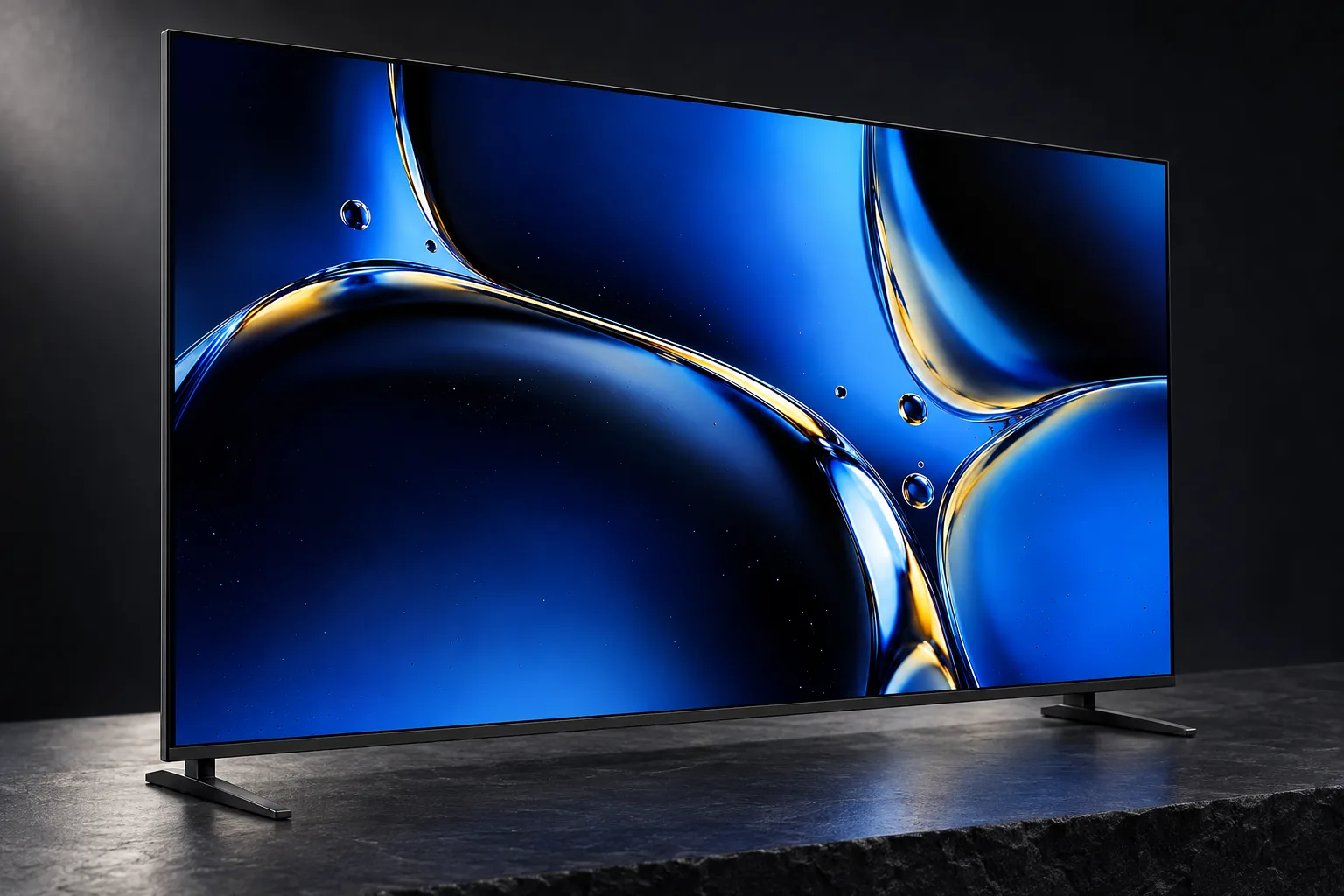
The core recipe is simple to describe. A QD-OLED panel gives you self-lit pixels, so each one switches off completely for true black with no halo around bright objects, and a quantum-dot colour layer that pushes saturation further than conventional white-OLED designs. Sony then layers its own image processing on top, and that processing is where the company stakes its claim.
Samsung and LG broadly chased brightness and gaming specifications in 2025. Sony went the other way, tuning this set for how films look: natural skin tones, clean upscaling of lower-quality streams, and careful motion handling. That's the central tension behind the headline question. If "picture quality" means peak luminance, Sony loses. If it means refinement, the argument gets much more interesting.
XR Triluminos Max and Live Colour
Sony's colour management, designed to make full use of the QD-OLED panel's wide gamut whilst keeping tones believable rather than cartoonish.
XR Contrast Booster 25 and Dynamic Contrast Enhancer
Contrast processing that drives highlights harder in small areas whilst preserving shadow detail, which is where reviewers singled out the set's dark-scene gradation.
XR Clear Image
Noise reduction and upscaling for lower-resolution and compressed sources, so older films and weaker streams look cleaner on a 4K panel.
XR OLED Motion
Motion processing aimed at keeping pans smooth without the "soap opera" look. OLED's near-instant pixel response makes this more important than on LCD, as the section on 24fps stutter below explains.
HDR support covers HDR10, HLG and Dolby Vision, including Dolby Vision Game mode. There are studio-calibrated modes for Netflix, Sony Pictures Core and Amazon Prime, plus IMAX Enhanced. Sony Pictures Core arrives with ten film credits and 24 months of benefits on UK sets, a small but welcome extra for film collectors.
The HDR10+ question
Sony lists HDR10, HLG and Dolby Vision, and stops there. Samsung's S95F takes the opposite approach, supporting HDR10+ but not Dolby Vision. If most of your viewing is Dolby Vision content on Netflix, Disney+ or Apple TV, the Sony is the more natural fit; Prime Video viewers who prize HDR10+ may lean the other way.
The Brightness Verdict: Where the 'Picture-Quality Champion' Claim Falls Apart
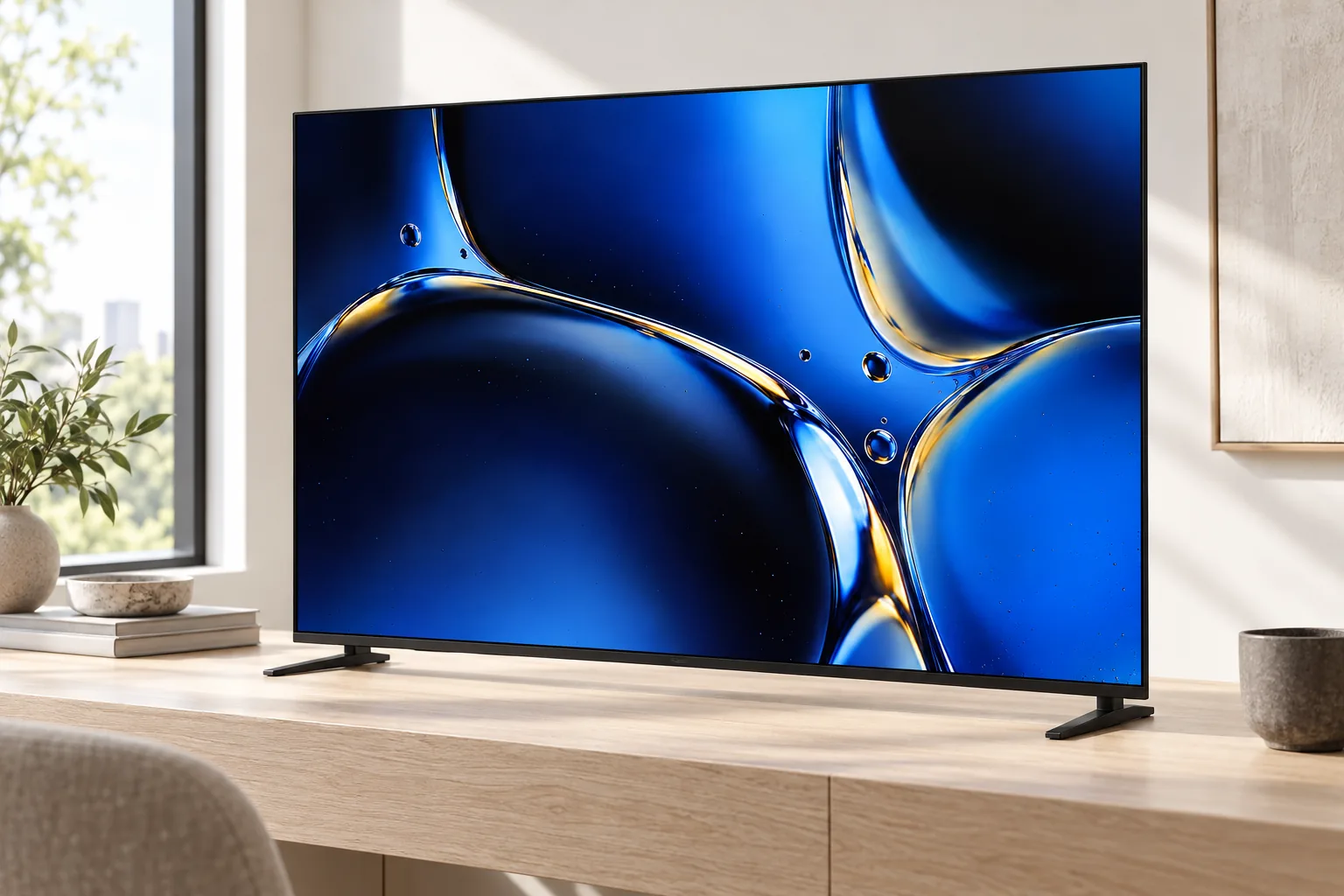
Brightness is where the BRAVIA 8 II's crown slips, and the measurements leave little room for debate. Numbers vary with picture mode, test window and equipment, so the useful thing is the pattern rather than any single figure.
| Measurement | Result | Source |
|---|---|---|
| HDR peak, Cinema mode (65-inch) | Approx. 1,439 nits | TechRadar |
| HDR peak, Standard mode (65-inch) | Approx. 1,067 nits | TechRadar |
| HDR full-screen, Cinema / Standard (65-inch) | Approx. 183 / 250 nits | TechRadar |
| HDR, 10% window | 1,633 nits | Tom's Guide |
| SDR, 10% window | 270 nits | Tom's Guide |
| HDR, 1–5% windows (55-inch) | Approx. 1,950cd/m² | Expert Reviews |
| HDR, 10% / 25% windows (55-inch) | Approx. 1,600 / 770cd/m² | Expert Reviews |
Expert Reviews measured the 55-inch model; the other figures come from 65-inch or unspecified-size samples. 1 nit equals 1cd/m².
Small highlights are genuinely punchy: a sunlit window, a lamp in a dark room, an explosion against a night sky. Those figures, in the 1,400–1,950 nit region for small windows, are a substantial jump over the 2024 BRAVIA 8. The problem shows up in two places: everyday SDR viewing and large bright scenes.
The SDR gap is the one that will affect most homes. Daytime TV, sport, news and most YouTube are SDR, and Samsung's S95F measured nearly four times brighter at 1,004 nits against the Sony's 270. LG's G5 roughly doubled it. Only Panasonic's Z95B came in lower. On HDR the Sony trails all three rivals at a 10% window, though the gap is narrower.
RTINGS' window-by-window results show where the brightness goes as more of the screen lights up. In Professional mode, SDR peak brightness started very high in tiny areas and fell steeply as the bright patch grew.
That roughly nine-fold drop from 2% to full screen is the panel's automatic brightness limiter at work. In practice, a snowfield, a bright sky or a white-walled interior looks noticeably less forceful than a starfield with a few vivid points. RTINGS' real-scene HDR tests told the same story: 1,118cd/m² and 1,273cd/m² on scenes with concentrated highlights, but 662cd/m² on a broadly bright pool landscape in Professional mode.
RTINGS also judged the set too dim for a sunny room with the curtains open, and noted that blacks can look grey or faintly purple under ambient light, a known trait of QD-OLED panels that lack a polariser. Dim the room and that disappears; leave the blinds up and it's part of the picture.
Colour, Contrast and the Case Sony Actually Wins
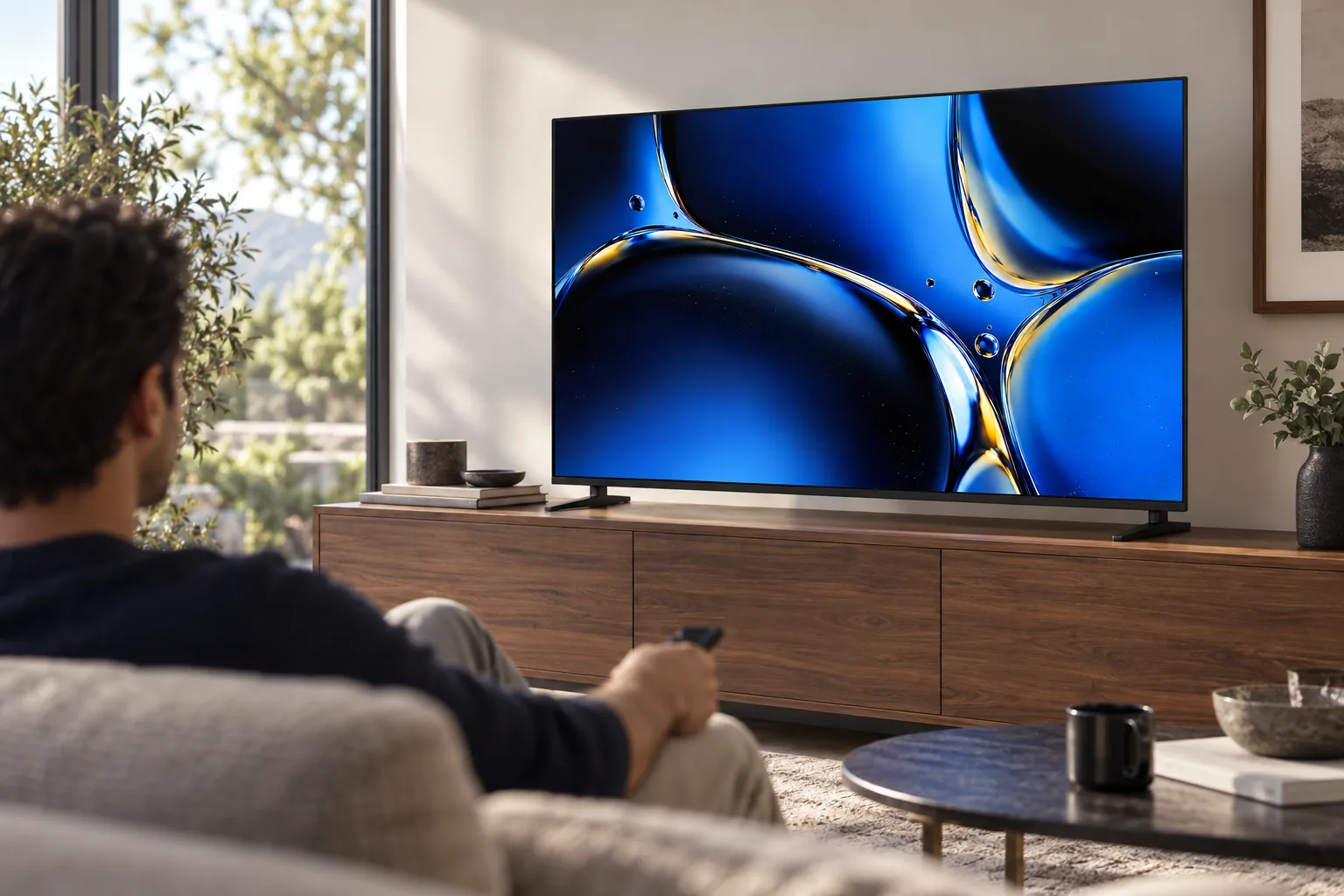
If you hoped colour accuracy would rescue the "champion" claim, the first number disappoints. Tom's Guide measured a Delta-E of 3.5 (lower is better) in its test mode, against 1.1 for the Samsung S95F, 1.9 for the LG G5 and 1.3 for the Panasonic Z95B. Out of the box, in that test, the Sony was the least accurate of the four. Figures around 3 sit near the point where trained eyes start to notice errors, so this isn't a disaster, but it isn't a win either.
The colour story changes when you look at how much colour the panel can reach. Rec. 2020 is the very wide colour space that future HDR mastering is heading towards, and this is where the Sony edges ahead.
Its 90.55% is the widest Rec. 2020 coverage of the four, though only a whisker ahead of the Samsung, which uses similar QD-OLED technology. The bigger gap is over the LG and Panasonic, around eight to nine percentage points. Coverage of today's content gamuts is essentially complete: 100% of UHDA-P3 and 99.99% of Rec. 709.
Contrast is the other pillar. As with any OLED, each pixel switches off independently, so there's no blooming around subtitles or highlights. Reviewers repeatedly praised the shadow detail, the rich yet natural colour, and the way skin tones and animation look. These are subjective judgements, but they were consistent across outlets, and they line up with Sony's processing-first approach.
What the colour numbers add up to
The Sony isn't the most accurate of these four sets straight out of the box, but it reaches deeper into saturated colours than its LG and Panasonic rivals and matches the Samsung. Pair that with Sony's tone handling and you get the reason film fans keep choosing it: vivid without looking garish. CalMAN Auto Calibration support also means an enthusiast or professional calibrator can tighten up that Delta-E figure.
One quirk film viewers should know about: because OLED pixels change state almost instantly, RTINGS reported visible stutter on 24fps material during slow camera pans. Sony's motion processing can smooth this, and the set's motion handling drew praise, but if you're sensitive to judder and refuse to touch motion settings, expect to notice it.
Gaming Reality Check: Two HDMI 2.1 Ports and 16.3ms
Console gaming on the BRAVIA 8 II works well enough. It supports 4K at 120Hz, variable refresh rate, ALLM, SBTM and Dolby Vision gaming, and PC players get FreeSync and Nvidia G-Sync compatibility. PS5 owners also get Auto HDR Tone Mapping, which sets up HDR on the console automatically, and Auto Genre Picture Mode, which switches between game and film settings depending on what you launch.
The trouble is speed and ports. Input lag measurements were remarkably consistent across outlets, and consistently behind rivals.
| Television | Input lag | Source |
|---|---|---|
| Sony BRAVIA 8 II | 16.3ms | TechRadar |
| Sony BRAVIA 8 II | 16.3ms | Tom's Guide |
| Sony BRAVIA 8 II | 16.4ms | Trusted Reviews |
| Sony BRAVIA 8 II (65-inch) | 16.1ms at 4K/60Hz; 7.9ms at 1080p/120Hz | Independent review syndicated by Yahoo |
| Samsung S95F | 9.5ms | Tom's Guide |
| LG G5 | 9.2ms | Tom's Guide |
| Panasonic Z95B | 12.7ms | Tom's Guide |
Around 16ms at 4K/60Hz is perfectly playable for adventure games and single-player epics, but it's the slowest of the four flagships Tom's Guide compared, and competitive players chasing every millisecond will feel the difference against the LG and Samsung. Running at 120Hz roughly halves the delay, which helps on titles that support it.
The port layout is the more practical headache. Of the four side-mounted HDMI inputs, only HDMI 3 and 4 carry the full HDMI 2.1 gaming features, and HDMI 3 is also the eARC port for a soundbar. Plug in a soundbar via eARC and you're left with one full-bandwidth port. A PS5 and an Xbox Series X both wanting 4K/120Hz? One of them has to compromise. Rivals such as the S95F and G5 offer four HDMI 2.1 ports.
There are two more limits. The panel tops out at 120Hz, whereas the S95F and G5 go to 165Hz for PC gaming, and RTINGS found no 1440p/120Hz support, which matters for some Xbox and PC setups. On the plus side, Sony's game menu includes useful touches such as Black Equalizer for lifting shadow detail and an on-screen crosshair.
Gaming positives
- 4K/120Hz, VRR, ALLM and SBTM on HDMI 3 and 4
- Dolby Vision gaming support
- FreeSync and G-Sync compatibility
- PS5 Auto HDR Tone Mapping and Auto Genre Picture Mode
- Black Equalizer and crosshair tools
Gaming drawbacks
- Roughly 16ms lag at 4K/60Hz, behind LG, Samsung and Panasonic flagships
- Only two full HDMI 2.1 ports, one shared with eARC
- 120Hz maximum; no 144Hz or 165Hz
- No 1440p/120Hz support
Acoustic Surface Audio+: The Soundbar You Might Not Need
Here is something no brightness chart captures. Instead of tiny downward-firing speakers, the BRAVIA 8 II uses actuators behind the panel that vibrate the screen itself, so a voice seems to come from the actor's mouth rather than from somewhere beneath the TV. Two subwoofers add weight that slim televisions usually lack. Reviewers rated it unusually highly for a built-in system, citing a convincing soundstage and clear dialogue.
50W, four-channel layout
Two actuators and two subwoofers rated at 15W + 15W + 10W + 10W.
Dolby Atmos and DTS:X
Plus DTS Digital Surround, DTS-HD Master Audio and DTS-HD High Resolution Audio, so most disc and streaming soundtracks decode natively.
Voice Zoom 3
Lifts dialogue above music and effects, handy for mumbled lines in late-night viewing.
3D Surround Upscaling and acoustic auto-calibration
Expands stereo into a wider presentation and adjusts output to your room and seating position.
Keep expectations realistic, though. RTINGS described the sound as balanced and clear but not especially loud, with limited bass impact and a less even balance at maximum volume. For everyday TV and most films at sensible volumes, it's genuinely good. For room-shaking action at cinema levels, you'll still want dedicated speakers.
An upgrade path, not a dead end. Acoustic Centre Sync lets the TV act as the centre channel when paired with a compatible Sony soundbar, so the screen-based dialogue you've grown used to stays put when you add more speakers later. The raised stand position also leaves room for a soundbar in front of the screen.
Sony BRAVIA 8 II 65-inch: Full Specification Rundown
The 65-inch version covered here is the bigger of the two sizes, with a 64.5-inch measured diagonal. Its design is understated: a flush black bezel and a dark-silver aluminium stand. At 3.4cm deep without the stand, it sits neatly on a wall, and at around 22.9kg on its own, it's a two-person job to lift onto a bracket.
Connections and smart features
All four HDMI inputs, both USB ports and the digital audio output sit on the side, which makes wall mounting tidier. There's Ethernet, Wi-Fi 6E and Bluetooth 5.3, and the digital audio output doubles as the S-Center speaker input for Sony's soundbar link. No headphone socket is listed, so wireless headphones go via Bluetooth.
Google TV runs the show, with the Play Store, voice search and a built-in microphone with a physical switch for privacy. Apple households aren't left out: AirPlay and HomeKit are both supported, alongside Chromecast built-in. UK tuners cover Freeview terrestrial and satellite, with two satellite inputs, CI+ and USB hard-drive recording.
Stand and setup
The stand has two positions: a standard height, giving an overall height of about 84.4cm, and a raised soundbar position at about 90.5cm. The stand footprint is about 144.2cm wide and 33.9cm deep, so your TV unit needs to be at least as wide as the screen itself; this isn't a set for a narrow cabinet. The optional BRAVIA Cam adds camera features but isn't in the box. Reviewers noted one small irritation: the remote lacks USB-C charging.
Power draw is 0.5W in standby and 2W in networked standby over Wi-Fi or Ethernet.
Check the warranty on your order. Some retailers advertise a five-year warranty with this model. Sony's own product pages don't spell that out, so confirm the exact cover in your order paperwork before you buy, particularly if you're weighing a cheaper listing against a dearer one.
The Rival It Can't Outshine: Measuring Up Against Samsung's S95F
The S95F is the comparison that matters most, because it uses similar QD-OLED technology and represents exactly the "brighter rival" the BRAVIA 8 II has to justify itself against. Here's the full picture side by side.
| Metric | Sony BRAVIA 8 II | Samsung S95F |
|---|---|---|
| Panel | QD-OLED | QD-OLED |
| Maximum refresh rate | 120Hz | 165Hz |
| SDR brightness, 10% window | 270 nits | 1,004 nits |
| HDR brightness, 10% window | 1,633 nits | 2,286 nits |
| Delta-E (lower is better) | 3.5 | 1.1 |
| Rec. 2020 coverage | 90.55% | 90.26% |
| Input lag | 16.3ms | 9.5ms |
| HDR formats | Dolby Vision, HDR10, HLG | HDR10+, HDR10, HLG |
| Full HDMI 2.1 ports | 2 | 4 |
| Smart platform | Google TV | Tizen |
Brightness, Delta-E, colour coverage and input lag figures are from Tom's Guide's comparison testing.
On paper, Samsung wins most of the rows. It's dramatically brighter in SDR and HDR, more accurate out of the box, quicker to respond, and better equipped for gaming. In a bright living room or for a household with two consoles, it's the more sensible choice.
Sony's advantages are narrower but real. Its Rec. 2020 coverage is fractionally wider. It supports Dolby Vision, which the S95F doesn't. Google TV, AirPlay and Chromecast give it a broad app and casting ecosystem. And on the qualities no meter fully captures, namely cinematic processing, upscaling, motion and built-in sound, reviewer consensus favours the Sony.
The price picture
The BRAVIA 8 II has come down a long way since launch. UK retailer listings in mid-November 2026 showed the 65-inch at roughly £2,199–£2,399, against its £2,999 RRP, with the 55-inch around £1,799–£1,999. Prices move daily, so treat these as a guide to the tier rather than a fixed figure. Those cuts narrow the gap with brighter rivals but don't erase it, and at current prices the smaller size can still cost more than some brighter competitors or much cheaper Mini LED sets.
Head-to-head verdict
If you'd measure picture quality with a light meter, the Samsung S95F beats the BRAVIA 8 II. If you'd measure it on a Sunday night with a 4K Blu-ray and the lights off, the decision is far closer, and the Sony's processing, Dolby Vision support and sound tip it for many film fans. Paying the Sony premium only makes sense if those strengths are the reasons you're buying an OLED in the first place.
Who Should Actually Choose the BRAVIA 8 II
This television has a clear personality, which makes deciding easier than with most premium sets. Here's how the evidence breaks down by household.
Dedicated film fans
Strong fit. If you watch mostly films and premium streaming in a dim or moderately lit room, Sony's colour, shadow detail, upscaling and motion handling are the qualities you'll actually notice.
Buyers delaying a soundbar
Good fit. Acoustic Surface Audio+ is good enough for everyday viewing, and Acoustic Centre Sync keeps it useful when you do expand your system.
PS5 owners and Sony households
Good fit. Auto HDR Tone Mapping and Auto Genre Picture Mode take the fiddling out of setup, provided you only need one or two high-bandwidth devices.
Bright, sunny living rooms
Look elsewhere. Low SDR brightness and greyish blacks in ambient light favour brighter QD-OLED rivals or a high-end Mini LED set.
Competitive and PC gamers
Look elsewhere. Around 16ms of lag, a 120Hz ceiling and no 1440p/120Hz put LG and Samsung ahead.
Anyone wanting 77 inches
Not possible here. The BRAVIA 8 II stops at 65 inches.
Reasons to buy
- Inky OLED blacks with no blooming
- 90.55% Rec. 2020 coverage, the widest of the four flagships compared
- Highly regarded processing, upscaling and motion
- Punchy small HDR highlights, a big step up from the 2024 BRAVIA 8
- Built-in sound that reviewers rated well above typical TV speakers
- Dolby Vision, Google TV, AirPlay and HomeKit
Reasons to hesitate
- 270-nit SDR brightness, far below the S95F and G5
- Steep brightness drop on large bright scenes
- 3.5 Delta-E out of the box trails rivals
- Two full HDMI 2.1 ports, one shared with eARC
- 16.3ms input lag and 120Hz maximum
- No HDR10+ and no 77-inch size
Common Questions Before You Buy
Who Should Buy Which, and Our Verdict
With one television on the table, the real choice is between the Sony BRAVIA 8 II 65-inch and the brighter alternatives it competes with. Choose the Sony if your evenings revolve around films, your room can be dimmed, and you value refined colour, smooth upscaling and genuinely good built-in sound. Choose a brighter rival such as the Samsung S95F or LG G5 if you watch in daylight, game competitively or need four full HDMI 2.1 ports.
So, is it the OLED picture-quality champion? No, not by the measurements. It's dimmer, slower and, out of the box, less accurate than its main competitors. What it does offer is the widest Rec. 2020 coverage of the flagships compared, processing that reviewers consistently praised, and a speaker system that delays a soundbar purchase. For the right viewer in the right room, that adds up to the more satisfying film television. For everyone else, the brighter rivals are the safer use of over £2,000.
Sources
- Sony UK, BRAVIA 8 II product and specification pages (K-65XR8M2, K-55XR8M2): sony.co.uk
- Sony US, K-65XR80M2 specifications: sony.com
- Sony Electronics press release, 2 April 2025: sony.mediaroom.com
- RTINGS, Sony BRAVIA 8 II OLED review: rtings.com/tv/reviews/sony/bravia-8-ii-oled
- TechRadar, Sony Bravia 8 II review: techradar.com/televisions/sony-bravia-8-ii-review
- Tom's Guide, Sony Bravia 8 II review: tomsguide.com/tvs/oled-tvs/sony-bravia-8-ii-review
- Expert Reviews, Sony Bravia 8 II review (55-inch): expertreviews.co.uk
- What Hi-Fi?, Sony 2025 TV lineup and BRAVIA 8 II coverage: whathifi.com
- HDTVTest, BRAVIA 8 II launch coverage: hdtvtest.co.uk
- Trusted Reviews, Sony Bravia 8 II review (input lag figure)
- Independent 65-inch review syndicated by Yahoo Tech: tech.yahoo.com
- Which?, UK retailer price listings: which.co.uk
- Sony BRAVIA 8 II 65-inchBest for film fansView on Amazon
Sources and evidence (27)
- sony.co.uk (other)
- whathifi.com (other)
- hdtvtest.co.uk (other)
- tomsguide.com (other)
- techradar.com (other)
- expertreviews.co.uk (other)
- samarafoundation.com (other)
- tech.yahoo.com (other)
- rtings.com (other)
- sony.co.uk (other)
- sony.co.uk (other)
- sony.co.uk (other)
- rtings.com (other)
- techradar.com (other)
- tomsguide.com (other)
- whathifi.com (other)
- whathifi.com (other)
- expertreviews.co.uk (other)
- campaign.odw.sony-europe.com (other)
- sony.mediaroom.com (other)
- sony.co.uk (other)
- sony.co.uk (other)
- sony.com (other)
- whathifi.com (other)
- electronics.sony.com (other)
- which.co.uk (other)
- electronics.sony.com (other)