
Best Smart Air Quality Monitors and Purifiers for UK Homes
CO2, PM2.5 and damp/mould sensors — plus the purifiers to match — with a plain-English guide to what the numbers on the screen actually mean.
We link to the exact model on Amazon UK. Prices change often, so check the live price before you buy. As an Amazon Associate we earn from qualifying purchases.
See Aranet4 Home on Amazon UK
Check today's price & availability on Amazon UK
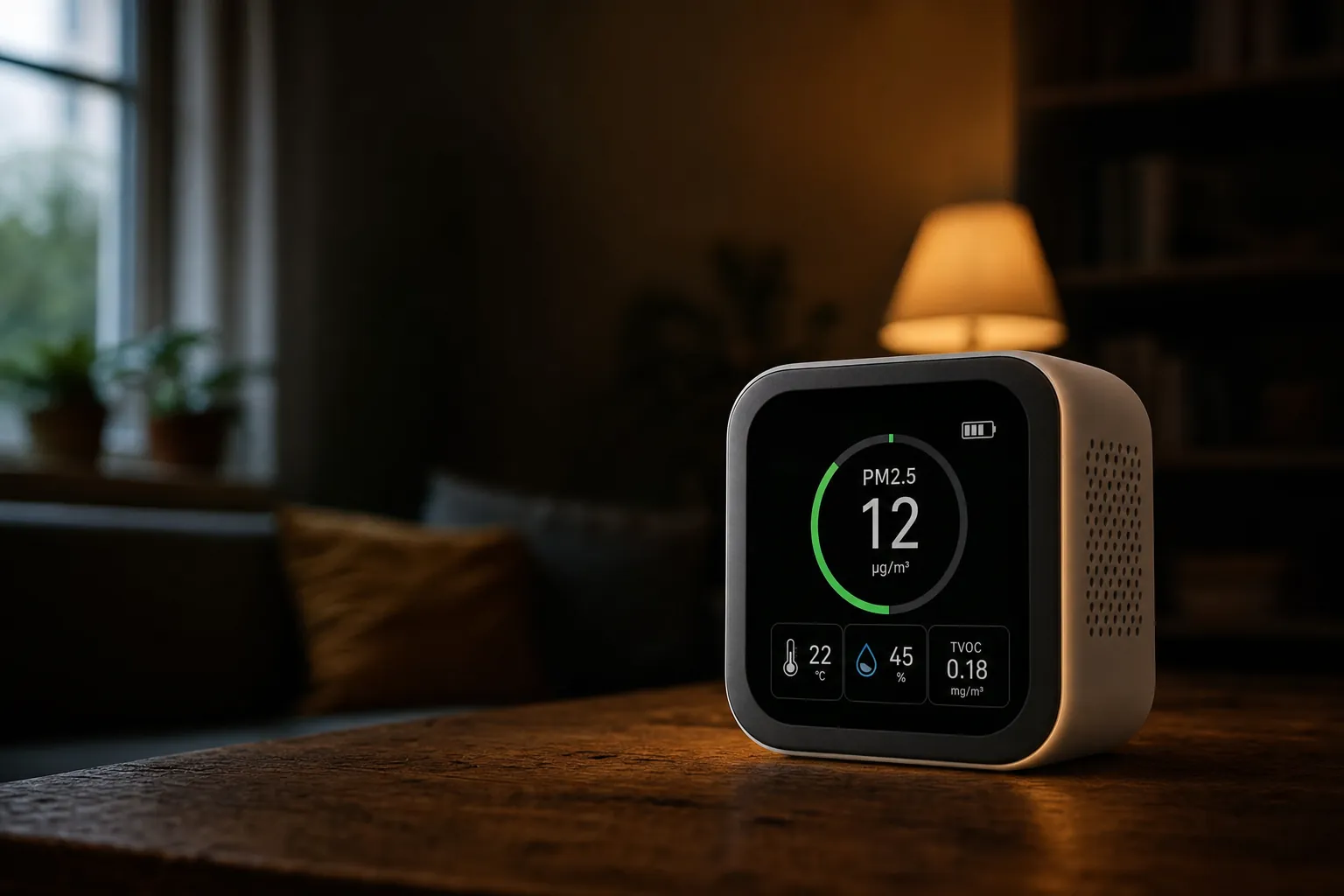
A smart air quality monitor sitting on a shelf in a typical UK living room — the first step to understanding what you're actually breathing.
How I Approached This Guide
Air quality is one of those categories where it's dangerously easy to buy the wrong thing. A gorgeous purifier is useless if you can't see what it's actually removing, and a fancy monitor is just an expensive thermometer if you never act on its data. So I've split my picks into two camps that work best together: monitors that tell you what's wrong, and purifiers that fix the airborne stuff. Whilst monitors won't cure damp on their own, knowing your humidity and mould-risk trends is the single most useful thing you can do before you spend a penny on a dehumidifier or extractor.
Throughout, I've leaned on the three metrics that matter most in British homes: CO2 (a proxy for ventilation and stuffiness), PM2.5 (fine particulate matter from cooking, candles, traffic and wood burners), and humidity/mould risk (the damp-and-mould axis that plagues so many older UK properties). If a device nails all three, or nails one of them brilliantly, it's earned a place here.
Quick reality check: no monitor "cleans" your air, and no purifier reduces CO2. They're different jobs. To lower CO2 you need fresh air — open a window or improve ventilation. Purifiers tackle particles and gases. Keep those two ideas separate and you'll never be disappointed.
The Quick Verdict — My Top Picks at a Glance
If you're in a hurry, here's the shortlist before we dive into the detail. The Airthings View Plus is the do-everything monitor with seven sensors, the Aranet4 Home is the sharpest CO2 specialist you can buy, and the Airthings Wave Mini is the affordable pick if damp and mould are your main worry. On the value side, the Qingping Air Quality Monitor Gen 2, Temtop M10+ and IKEA VINDSTYRKA all earn their place.
The Best Air Quality Monitors for UK Homes
Let's start with the monitors, because you genuinely can't manage what you can't measure. These are the devices that will tell you whether your bedroom's CO2 is climbing to headache territory overnight, whether that suspicious corner is at real risk of mould, and whether your Sunday roast is quietly filling the house with fine particles.
1. Airthings View Plus (Model 2960) — Best Overall Monitor
If you want one monitor to rule them all, the Airthings View Plus is it. This is the most complete home air quality monitor I've come across, packing seven sensors into a tidy cable-free unit: radon, particulate matter (PM2.5), carbon dioxide (CO2), temperature, humidity, airborne chemicals (VOCs) and air pressure. That radon sensor is a genuinely rare inclusion at this level and worth knowing about given radon is a real concern in certain parts of the UK.
The CO2 reading is the star for me. It uses a proper NDIR (Non-Dispersive Infra-Red) sensor with a measurement range of 400–5000 ppm and an optimum accuracy of ±30 ppm ±3% within 15–35°C and 0–80% relative humidity after its initial calibration. That's the same calibre of sensor technology you'd find in commercial building monitors, not an estimated "eCO2" guess. The 2.9-inch ePaper display shows your current readings at a glance, and everything syncs over Wi-Fi to the app and web dashboard so you can pore over historical trends.
Battery life is a highlight if you don't mind tuning it: with sensible settings in the web dashboard you can stretch the 6x AA batteries up to two years, though more frequent measurements will pull that down. There's a USB-C option if you'd rather keep it permanently powered. It plays nicely with Amazon Alexa, Google Assistant and IFTTT too, so you can build automations — like nudging a smart plug on a purifier or extractor when a threshold is crossed.
One thing worth setting expectations on: radon readings take time. Levels fluctuate with weather, so a longer test gives a more accurate average — Airthings notes readings can take days to a month to stabilise within ±10% accuracy, and recommends waiting at least 20 days for reliable results. Similarly, the VOC and CO2 sensors need around 7 days of initial calibration. In other words, install it and let it settle before drawing conclusions.
Pros
- Seven sensors including a rare radon reading
- Proper NDIR CO2 sensor with ±30 ppm ±3% accuracy
- Cable-free with up to two years of battery life
- Works with Alexa, Google Assistant and IFTTT
- Generous 5-year warranty (register within 30 days)
Cons
- Radon needs 20+ days to give reliable figures
- Sensors require ~7 days of initial calibration
- The most feature-rich, so the priciest of the bunch
The Airthings View Plus uses an ePaper display and packs seven sensors, including a genuinely uncommon radon reading.
2. Aranet4 Home — Best for CO2 and Ventilation
See Aranet4 Home on Amazon UK
Check today's price & availability on Amazon UK
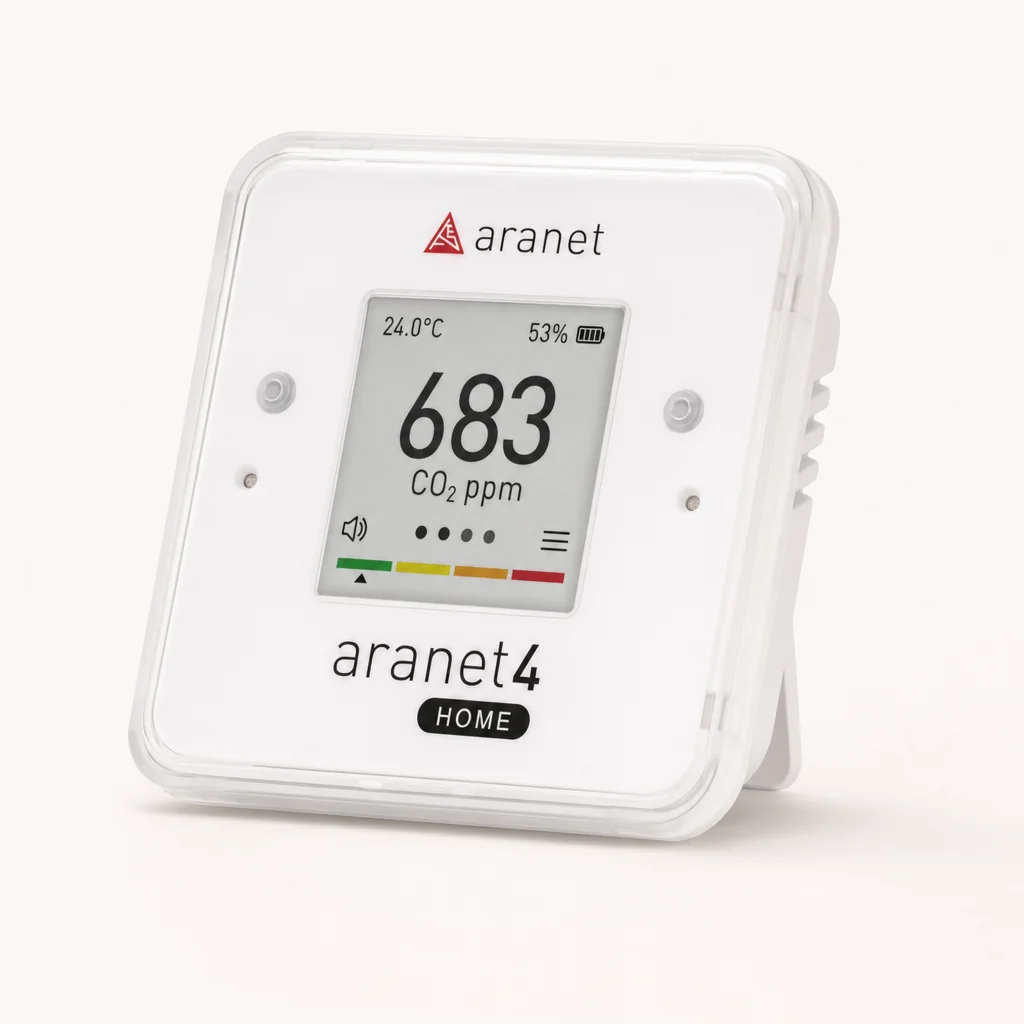
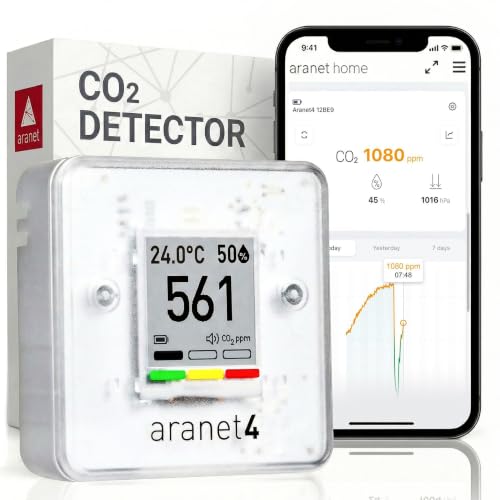
If your main concern is stuffy rooms and ventilation — a foggy-headed home office, a bedroom that feels like a submarine by morning, or a busy classroom — the Aranet4 Home is the one I keep coming back to. It focuses on four things and does them exceptionally well: carbon dioxide, temperature, humidity and atmospheric pressure, all in real time.
The reason it's so respected is the CO2 sensor. Like the Airthings, it uses a true NDIR sensor that detects actual CO2 molecules rather than estimating "eCO2" from VOC data, which means stable long-term accuracy. The basic accuracy is 30 ppm ± 3% of reading across a range of 0–9999 ppm. In plain terms, when the Aranet4 says your bedroom is at 1,600 ppm, you can trust it.
The e-ink display is a genuine pleasure — it puts a big, prominent CO2 number front and centre with colour coding, and there's an optional buzzer if the concentration climbs too high. That energy-efficient screen is also why the battery lasts up to four years, which is frankly remarkable. Readings refresh every minute, so it's not instant, but for tracking ventilation trends that's more than fast enough. The Aranet Home app syncs over Bluetooth for trends, alerts and up to 90 days of historical data with tidy graphs.
Pro Tip
The default red alert fires at 1400 ppm — a sensible ventilation trigger. If you notice your bedroom hitting that overnight, cracking a window a few centimetres before bed is often enough to keep morning readings comfortably below 1000 ppm, which is where cognitive performance stays sharp.
Pros
- Class-leading true NDIR CO2 accuracy (30 ppm ± 3%)
- Astonishing battery life of up to 4 years
- Big, clear, colour-coded e-ink number with buzzer
- Up to 90 days of graphed history in the app
Cons
- No PM2.5 or VOC sensing — CO2-focused only
- E-ink refreshes once a minute, not instantly
- Bluetooth-only sync (no always-on Wi-Fi)
3. Airthings Wave Mini — Best for Damp and Mould Risk
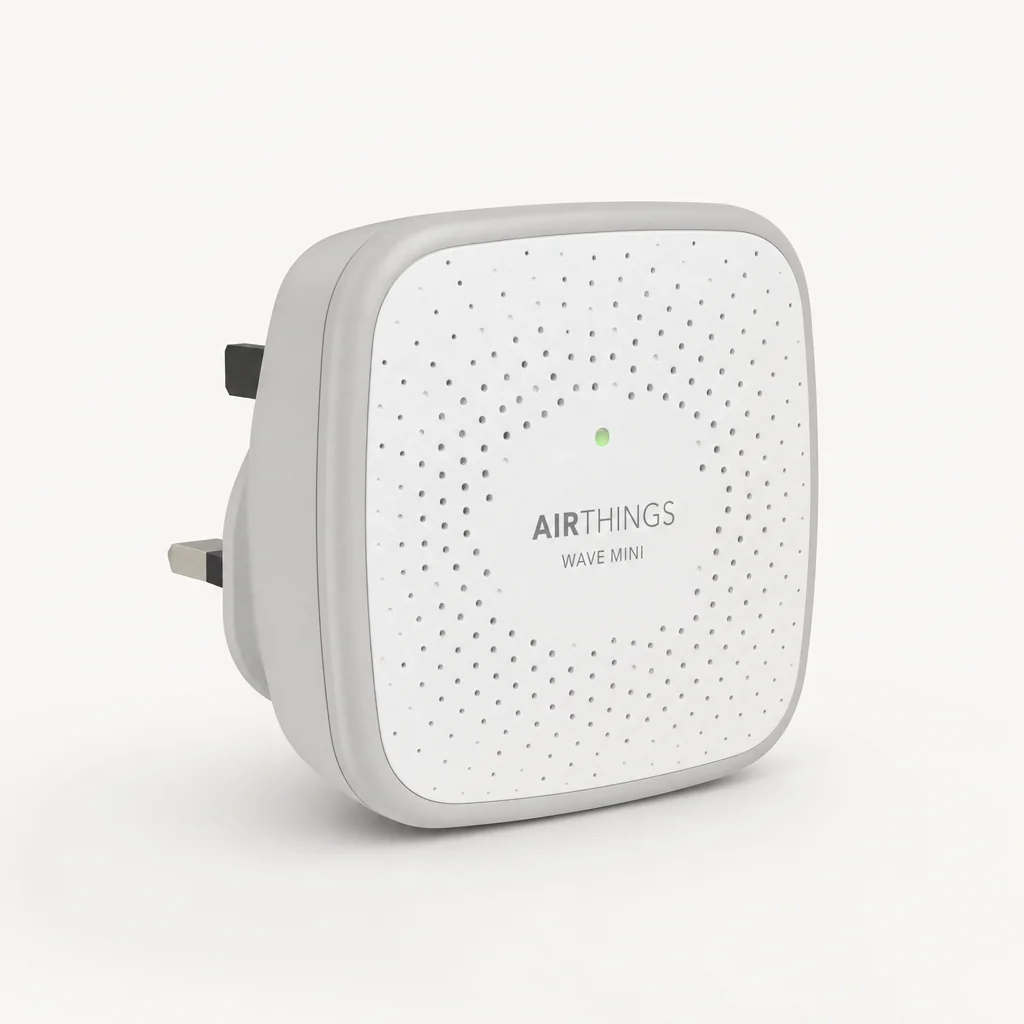
Damp and mould are the quiet plague of British housing, and the Airthings Wave Mini is the most affordable dedicated tool I'd point people towards. It monitors humidity, temperature and VOCs, and — the clever bit — it includes a mould-risk function that uses those sensor readings to assess how likely your room is to develop mould and mildew. Rather than just showing you a humidity percentage and leaving you to guess, it does the interpretation for you.
It's a wave-activated device: pass your hand over it and it lights up to give you a quick read on the environment. There's no CO2 or PM2.5 here, so it's not a whole-home solution, but for a chronically damp bathroom, a cold north-facing bedroom, or that cupboard under the stairs where the coats never quite dry out, it's a smart, low-cost sentinel.
Mould-risk indication
Combines humidity and temperature data to flag rooms at real risk of developing mould and mildew, rather than leaving you to interpret raw numbers.
Humidity and temperature
The two metrics that decide whether condensation forms on cold surfaces — the root cause of most household mould.
VOC sensing
Tracks airborne chemicals from cleaning products, paints and furnishings, so you can spot when ventilation is needed.
Wave activation
Wave your hand over the unit for an instant visual status without reaching for your phone.
Pros
- Dedicated mould-risk assessment does the thinking for you
- Ideal for damp-prone bathrooms, bedrooms and cupboards
- Affordable way into the Airthings ecosystem
- Handy wave-to-check interaction
Cons
- No CO2 or PM2.5 sensing
- Not a whole-home solution on its own
- VOC sensor needs initial calibration to settle
4. Airthings Wave Plus — Best for VOC and Radon Without the Extras
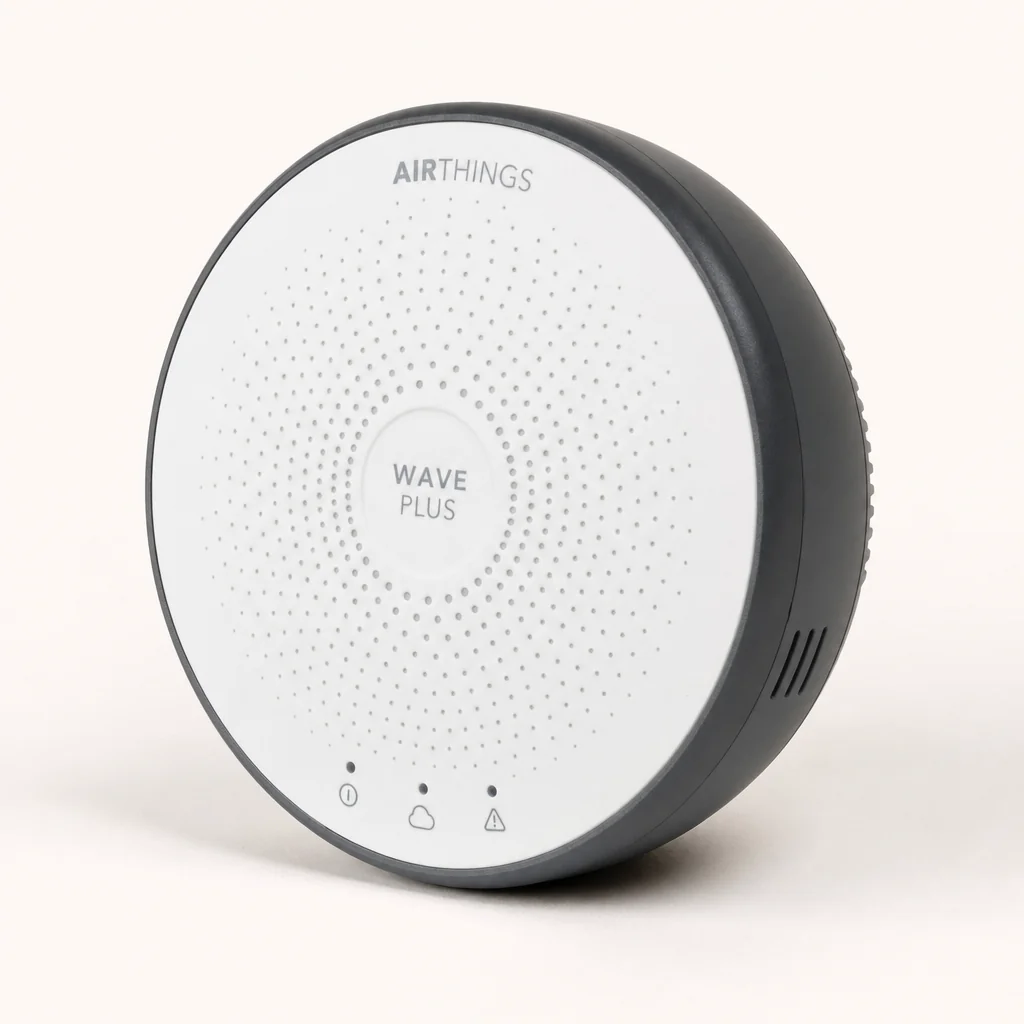
Sitting between the Wave Mini and the View Plus, the Airthings Wave Plus detects VOCs, CO2 and radon gas whilst also collecting temperature, humidity and air pressure data. It's the pick for someone who wants radon and CO2 monitoring but doesn't need the PM2.5 sensor or the always-on ePaper display of the flagship.
Because it shares the Airthings platform, you get the same app trends and the same integration potential. If radon is on your radar — and in certain UK regions it genuinely should be — but you're not fussed about tracking cooking particulates, the Wave Plus is a sensible middle rung on the ladder.
Pros
- Includes radon plus CO2 and VOC sensing
- Also logs temperature, humidity and pressure
- Full Airthings app and trend history
Cons
- No PM2.5 sensor
- No always-on display like the View Plus
Damp corners and cold north-facing walls are where UK mould thrives — a humidity-and-mould-risk monitor is the cheapest early-warning system you can buy.
5. Qingping Air Quality Monitor Gen 2 (QP Pro 2) — Best for Detailed Multi-Metric Tracking on a Budget

See Qingping Air Quality Monitor Gen 2 (QP Pro 2) on Amazon UK
Check today's price & availability on Amazon UK
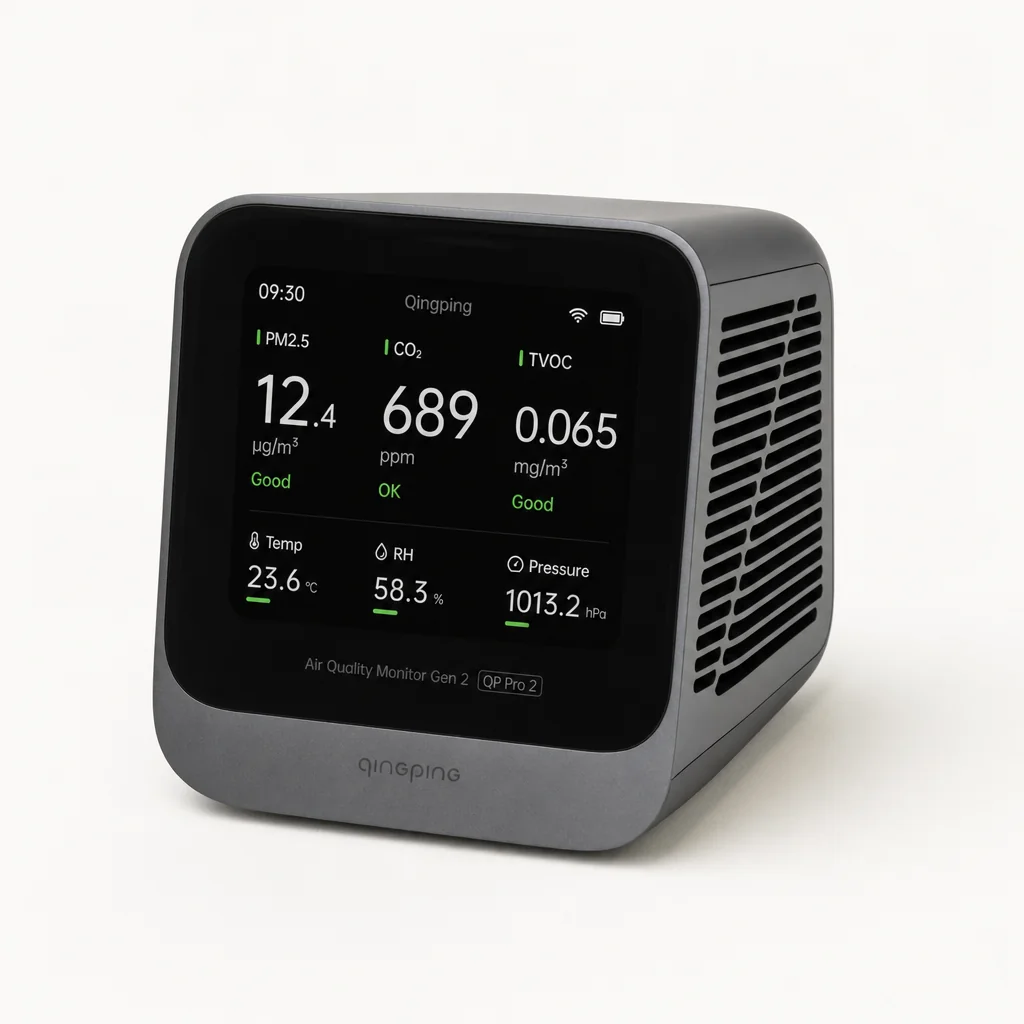
For those who want a genuinely broad spread of readings without paying flagship money, the Qingping Air Quality Monitor Gen 2 is a cracker. It measures PM2.5, PM10, CO2, eTVOC, temperature, humidity (RH) and noise level — that's a wider net than several pricier rivals, and the addition of a noise-level reading is unusual and quietly useful if you're monitoring a nursery or study.
The one thing to understand is the "eTVOC" and CO2 labelling. Unlike the true NDIR sensors in the Aranet4 and Airthings, budget devices in this bracket often lean on estimated readings for gases. That's fine for spotting trends and relative changes — "cooking just spiked the particulates" or "the room's got stuffy" — but treat the absolute CO2 figure as a strong indicator rather than lab-grade truth.
Pros
- Broadest sensor spread of the value picks
- Tracks both PM2.5 and PM10 particulates
- Unusual noise-level reading included
Cons
- Estimated (eTVOC) gas figures rather than NDIR
- Best for trends over absolute lab accuracy
6. Temtop M10+ — Best Simple Everyday Monitor
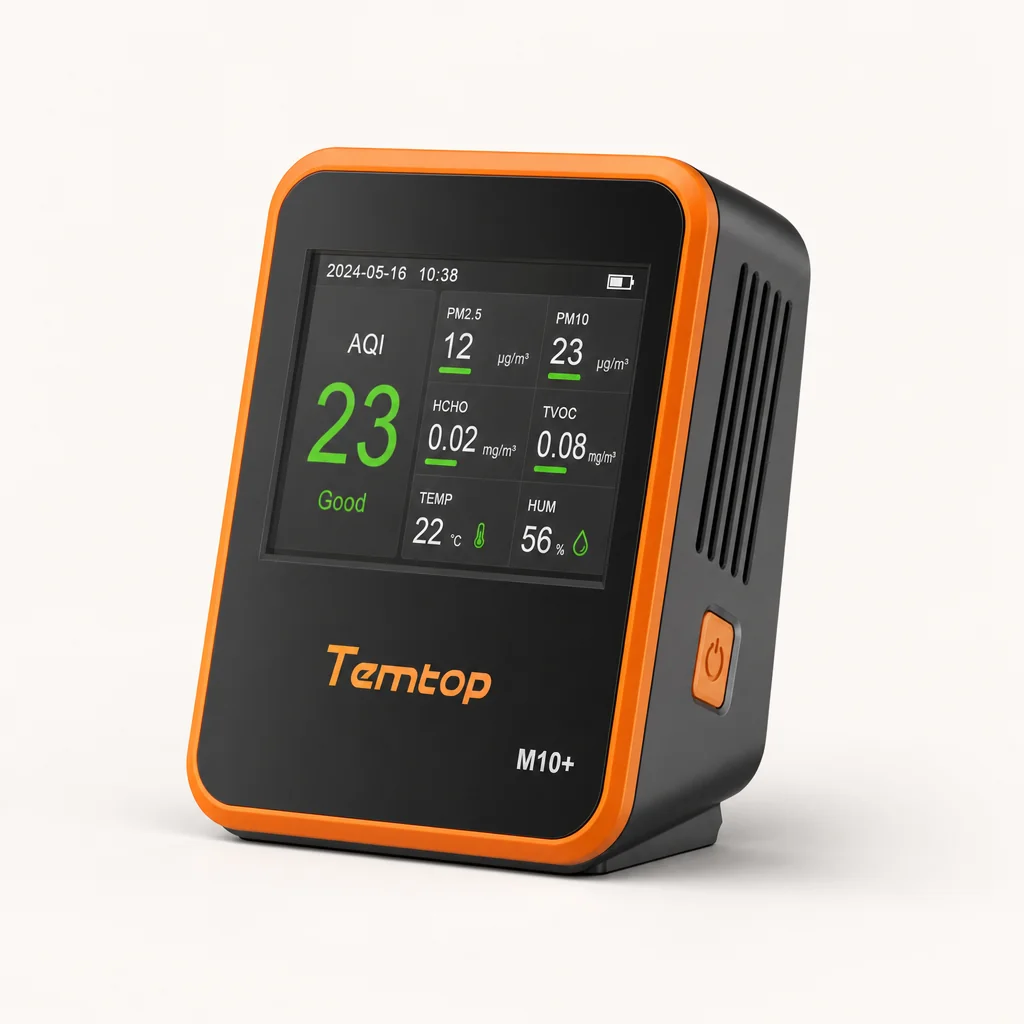
The Temtop M10+ is the one I'd hand to someone who wants a straightforward "how's my air right now?" device without a companion-app deep dive. It's a practical middle ground that measures the everyday indoor issues most people actually care about — particles, CO2 and VOCs — and it works well for spotting cooking pollution, poor ventilation and humidity swings.
It won't give you the sensor breadth of the Qingping or the accuracy pedigree of the Aranet4, but as a glance-and-go unit for the kitchen or living room, it does the job cleanly. If your goal is simply to become aware of when your air gets bad — and to nudge you into opening a window or switching a purifier on — it's a sensible, no-nonsense choice.
Pros
- Covers the big three: particles, CO2 and VOCs
- Great at flagging cooking pollution and stuffiness
- Simple, glance-and-go operation
Cons
- Fewer metrics than the Qingping Gen 2
- Less rigorous CO2 accuracy than NDIR rivals
7. IKEA VINDSTYRKA — Best Budget Monitor
Shop IKEA VINDSTYRKA on Amazon UK
You didn't expect a flatpack giant to make a decent air monitor, but the IKEA VINDSTYRKA is a genuinely good budget-friendly way to get started. It detects PM2.5, VOCs, temperature and humidity — the essential quartet for spotting cooking particulates and damp-driving humidity — and it slots neatly into IKEA's smart home ecosystem for those already invested.
It's not going to challenge the Aranet4 or View Plus on precision or on CO2 (which it doesn't measure directly), but for a first monitor to raise your awareness — to actually see that lighting candles or frying food sends PM2.5 climbing — it's a brilliant entry point that gets people hooked on the data.
Pros
- The most affordable way into air monitoring
- Covers PM2.5, VOCs, temperature and humidity
- Fits IKEA's smart home ecosystem neatly
Cons
- No direct CO2 measurement
- Least detailed history and analysis of the picks
8. Blauberg Wave Mini — Best Alternative Mould-Risk Monitor
Sold in some markets under the Blauberg name, this Wave Mini variant carries four air quality sensors including real-time mould-risk indication, humidity, temperature and airborne chemicals (VOCs). It's functionally the same proposition as the Airthings Wave Mini — a compact, focused watchdog for damp-prone rooms — so if you spot it available and priced well, it's a perfectly valid route to the same mould-risk feature set.
Pros
- Real-time mould-risk indication
- Four focused sensors for damp-prone rooms
- Compact and easy to place
Cons
- No CO2 or PM2.5 sensing
- Availability varies by market
Air Quality Monitors Compared
Here's every monitor pick side by side, so you can weigh sensor coverage against accuracy and battery life at a glance.
| Model | Key Sensors | CO2 Type | Battery / Power | Best For |
|---|---|---|---|---|
| Airthings View Plus | Radon, PM2.5, CO2, VOC, temp, humidity, pressure | NDIR ±30 ppm ±3% | 6x AA (up to 2 yrs) or USB-C | Do-everything monitoring |
| Aranet4 Home | CO2, temp, humidity, pressure | True NDIR 30 ppm ±3% | Up to 4 years | CO2 & ventilation |
| Airthings Wave Mini | Humidity, temp, VOC, mould risk | No CO2 sensor | Battery | Damp & mould |
| Airthings Wave Plus | Radon, CO2, VOC, temp, humidity, pressure | NDIR | Battery | Radon + CO2 |
| Qingping AQM Gen 2 | PM2.5, PM10, CO2, eTVOC, temp, RH, noise | Photoacoustic NDIR | Rechargeable | Broad multi-metric value |
| Temtop M10+ | Particles, CO2, VOC | Estimated | Rechargeable | Simple everyday use |
| IKEA VINDSTYRKA | PM2.5, VOC, temp, humidity | — | Mains/USB | Budget starter |
| Blauberg Wave Mini | Mould risk, humidity, temp, VOC | — | Battery | Mould-risk alternative |
Sensor coverage varies wildly — the flagship monitors track seven metrics, whilst the CO2 specialists deliberately do fewer things brilliantly.
What the Numbers Actually Mean
This is the part most guides skip, and it's the most important. A monitor is only useful if you understand its readings. So here's my plain-English translation of the three metrics that matter in UK homes.
CO2 (measured in ppm — parts per million)
Outdoor air sits around 400 ppm — which is why the good sensors bottom out there. Below about 800 ppm indoors is lovely and fresh. From roughly 1,000 ppm you may start feeling drowsy and less sharp — this is why the Aranet4's default red alert fires at 1,400 ppm. CO2 isn't dangerous at typical home levels, but it's a superb proxy for ventilation: high CO2 means stale, poorly ventilated air, and the only fix is fresh air, not a purifier.
PM2.5 (fine particulate matter, µg/m³)
These are particles small enough to reach deep into your lungs — from cooking (especially frying), candles, wood burners and outdoor traffic drifting in. This is the metric a purifier directly tackles. Watch how it spikes when you cook and how quickly it settles; a good purifier will visibly drag those numbers back down within minutes.
Humidity & mould risk (%RH)
Relative humidity persistently above the mid-60s, especially on cold walls, is where condensation and mould take hold. The Airthings and Blauberg Wave Mini units go a step further by combining humidity and temperature into a single mould-risk flag, so you don't have to interpret the raw figures yourself. Lower humidity with ventilation, heating and — where needed — a dehumidifier; a purifier won't help here.
VOCs (volatile organic compounds)
Airborne chemicals from cleaning sprays, paints, new furniture and air fresheners. Short spikes are normal; persistently elevated VOCs suggest you need better ventilation or to remove a source. Purifiers with activated carbon filters help reduce these.
Remember the golden rule of interpretation: NDIR CO2 sensors (Aranet4, Airthings) give you trustworthy absolute numbers, whilst estimated "eCO2/eTVOC" readings (typical of budget units) are best read as trends. Both are useful — just know which you're looking at.
Matching a Purifier to Your Readings
Once your monitor shows the problem, a purifier is how you attack the airborne side of it. The key thing is to buy a purifier that matches what your monitor is telling you rather than the flashiest model on the shelf.
If your PM2.5 spikes when you cook
You need a purifier with a true HEPA filter and enough airflow for the room. Position it near — but not directly in — the kitchen, and let your monitor show you how fast it clears the particulate spike. That feedback loop is the whole point of pairing the two devices.
If your VOCs stay elevated
Look for a purifier that includes an activated carbon layer, which adsorbs gases and odours that a HEPA filter alone can't capture. Your VOC reading should trend downwards once it's running.
If your CO2 is the problem
Be honest with yourself — a purifier will do nothing here. High CO2 is a ventilation issue. Open windows, use trickle vents, or look at mechanical ventilation. Your monitor is telling you to bring in fresh air, not clean the existing air.
If humidity and mould risk are high
This is a job for ventilation, heating and a dehumidifier, not a purifier. Use your Wave Mini's mould-risk flag to identify the worst rooms and target them.
Pro Tip: Build the Feedback Loop
The single best thing you can do is use monitor and purifier together and watch the numbers. With something like the View Plus and its Alexa, Google Assistant and IFTTT support, you can even automate a smart plug to switch a purifier on when PM2.5 crosses a threshold. That turns a passive monitor into an active air-quality system.
How Air Purifiers Actually Work: HEPA, Carbon and CADR
Before we get to the units themselves, it's worth ninety seconds on how a purifier actually cleans your air, because two little bits of jargon — HEPA and activated carbon — explain almost every buying decision, and understanding them stops you overpaying for marketing.
HEPA — the particle net (does the heavy lifting)
A HEPA filter isn't a sieve; it's a dense mat of fibres that traps particles three ways at once — big ones slam into a fibre, mid-sized ones brush past and stick, and the very tiniest zig-zag around until they hit one. The rating is quoted at 0.3 microns because that's the single hardest size to catch — which means a real HEPA filter is actually even better against particles both larger and smaller than that, including most smoke and viruses. In Europe a True HEPA H13 captures at least 99.95%; the US "True HEPA" figure of 99.97% at 0.3µm is essentially the same thing measured a different way. Watch out for "HEPA-type", "HEPA-like" or "99% HEPA" — those are not the certified standard and let through many times more.
Activated carbon — the smell & gas sponge
HEPA catches solids but does almost nothing about gases and odours — that's carbon's job. It works by adsorption: gas molecules from cooking, frying, paint and new-furniture off-gassing (VOCs) physically cling to the vast internal surface area of the porous carbon (often over 1,000 m² packed into a single gram). It's a completely separate layer from the HEPA, which is why smoke — part particle, part gas — needs both. Carbon saturates and has to be replaced, and a thick carbon bed does far more than a token sprinkle, so if a maker states the carbon weight, that's a good sign.
CADR — how much clean air it really delivers
Clean Air Delivery Rate is the one number that cuts through the spin: an independent AHAM benchmark for how much genuinely filtered air a unit pushes out on full power, quoted in m³/h in the UK. Rough rule of thumb for allergy-grade cleaning: aim for a CADR in m³/h of roughly 11–12 times your room's floor area in square metres (so a 16 m² room wants about 190 m³/h). Quoted CADR is a best-case, full-blast lab figure, so size up — a purifier that hits your target on a lower, quieter setting is far nicer to live with.
Ionisers, PECO and UV — the "active" extras
A good HEPA-plus-carbon filter is what does the real, evidence-backed work. The bolt-on "active" technologies range from marginal to counter-productive: ionisers often just redeposit dust on your walls and can emit small amounts of ozone, a lung irritant; PECO/PCO has weak, mixed independent evidence and can produce by-products; and consumer UV-C is usually too brief to matter. Avoid standalone ozone generators entirely (the US EPA warns they don't safely clean air), and prefer units certified ozone-free or within California's 50 ppb limit. It's not that these are always harmful — it's that the filter is what you're really paying for.
The "5 air changes an hour" rule. For general freshness a purifier that cycles your room's air about twice an hour is fine, but allergy and asthma sufferers should aim for roughly 4–5 air changes per hour (the US CDC now cites a minimum of 5 for clean indoor air). To check: air changes per hour = CADR (m³/h) ÷ room volume (m³). A 4 × 4 m room with a 2.4 m ceiling is about 38 m³, so for 5 changes an hour you want a CADR of at least ~190 m³/h — which is exactly why the bigger-CADR units below earn their keep in a living room.
Pro Tip: buy for the room, not the box art
Ignore the giant "up to X m²" figure on the front of the box — that's usually calculated at a feeble two air changes an hour. Work out your room's real floor area, multiply by 11–12 for a m³/h CADR target, then buy a unit that comfortably beats it so you can run it on a lower, quieter speed. Your monitor from the picks above is the perfect way to prove it's working: watch the PM2.5 fall after you switch it on.
The Best Air Purifiers for UK Homes
Now the units that actually do the cleaning. I've picked six that cover every realistic UK situation — from a £85 starter for a single bedroom to a whole-living-room workhorse and a design-piece that doubles as a summer fan. Every one pairs a genuine HEPA filter with activated carbon, all are in stock in the UK as I write, and I've matched each to the kind of problem your monitor is most likely to have flagged. Prices move around, so treat them as a guide and check the live figure.
1. Levoit Core 400S — Best overall for living rooms
See Levoit Core 400S on Amazon UK
Check today's price & availability on Amazon UK
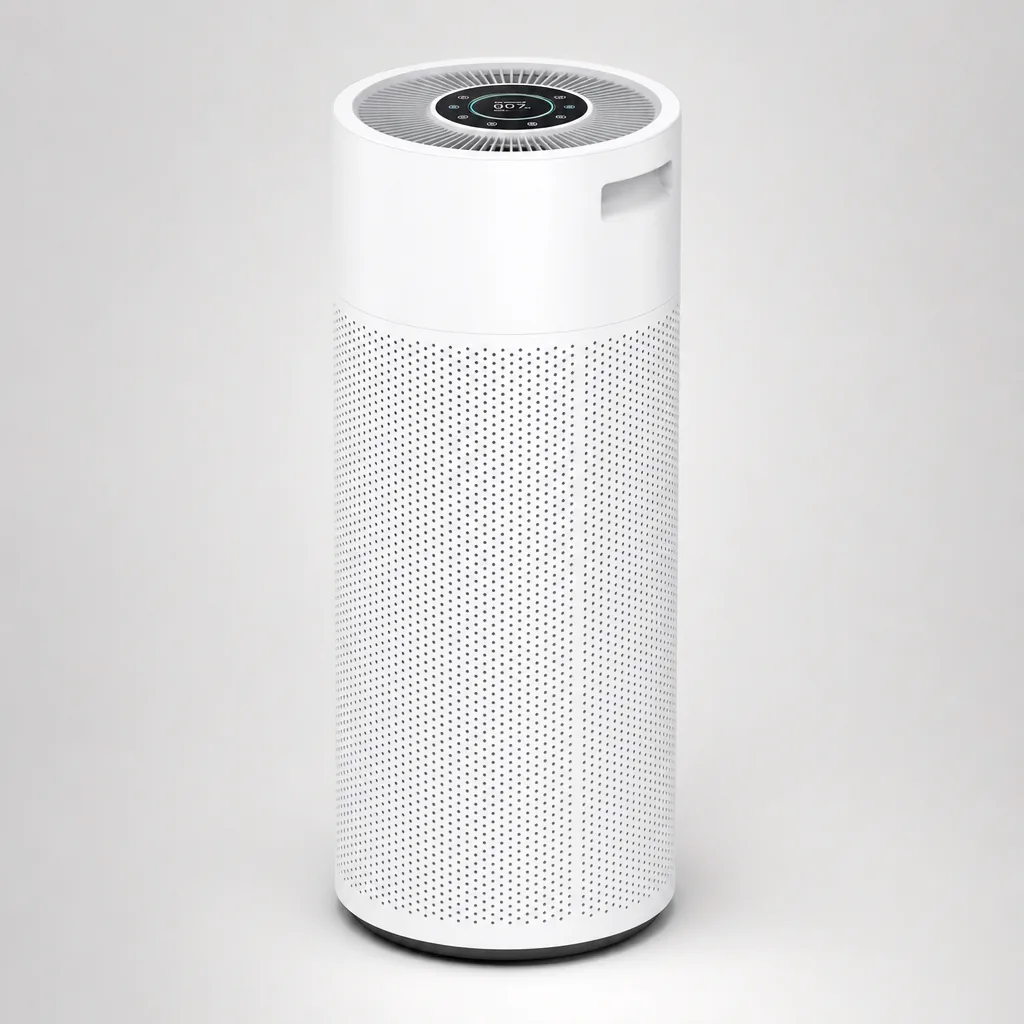
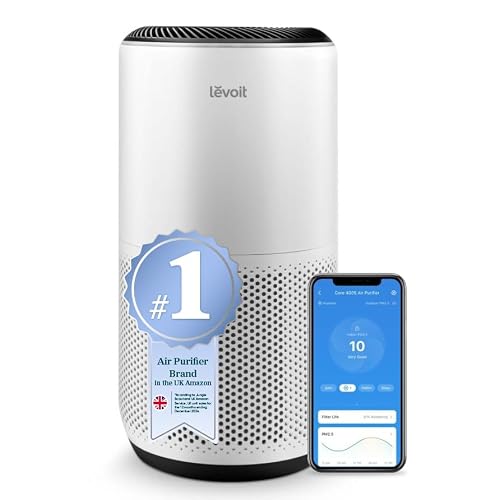
If I could only recommend one purifier to the average UK household, it'd be this. The Core 400S is the Goldilocks pick: a genuine 3-in-1 filter (fabric pre-filter, HEPA-grade media and an activated-carbon layer), a claimed CADR of 400 m³/h and enough grunt for a living room or open-plan kitchen-diner, wrapped in Levoit's genuinely good VeSync app.
A laser particle sensor drives a proper auto mode — it ramps up the instant you start frying and settles back down once the air clears — and a light ring shows air quality at a glance. Replacement filters (Core 400S-RF) run about £66 a year, which is the main ongoing cost to factor in.
One honest caveat the spec sheet won't tell you: independent testers have found the European version runs a little below its headline CADR (EU units are throttled compared with the US), and it gets distinctly whiny at full tilt. Neither is a deal-breaker — on auto in a normal room it's quiet and effective — but if you want near-silence, the Blueair below is the one.
Pros
- Genuine whole-living-room coverage and airflow for the money
- Excellent VeSync app with a responsive PM2.5 auto mode
- Works with Alexa and Google for threshold automations
- Sensible middle-of-the-range price
Cons
- Noticeably whiny on its top speed
- EU unit measures a bit below the headline CADR
- About £66/year in replacement filters
2. Blueair Blue 511i Max — Best value smart pick / quietest

See Blueair Blue 511i Max on Amazon UK
Check today's price & availability on Amazon UK
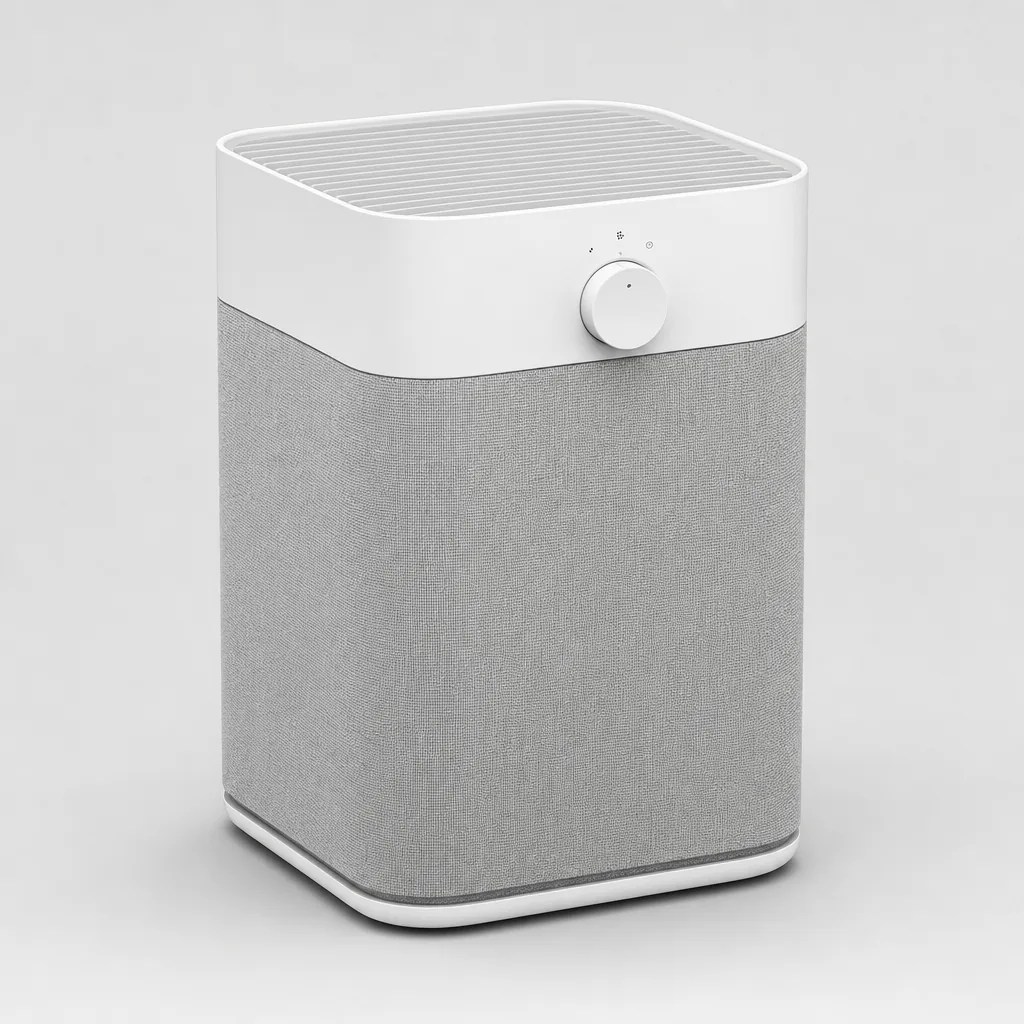
Blueair's little Swedish box is the one I'd put in a bedroom without a second thought. It uses the company's HEPASilent system — an electrostatic charge plus a mechanical filter — which lets it move a useful amount of air at a genuinely remarkable 18 dB on its lowest setting. You'll forget it's on.
It sips power (20 W flat out), the combination filter is a cheap ~£35 a year, and the Blueair app handles auto mode, night mode and scheduling off the built-in PM2.5 sensor. For a bedroom, a nursery or a home office, the running costs and the silence make it the easiest purifier here to live with.
Two things to know: the carbon layer is fairly thin, so it's more of a particle specialist than an odour-buster, and like all HEPASilent units it runs a mild ioniser — though current Blueair models test at around 2 ppb of ozone, which is negligible and well inside safe limits.
Pros
- Near-silent 18 dB floor — ideal for bedrooms
- Tiny 20 W running cost and cheap ~£35 filter
- Proper app with auto, night and scheduling
- Compact and light at 3.4 kg
Cons
- Thin carbon layer — weaker on strong odours
- Scheduling needs the app rather than on-unit controls
- HEPASilent branding isn't classic 'True HEPA'
3. Philips Series 2200 — Best for allergies & odours

See Philips Series 2200 on Amazon UK
Check today's price & availability on Amazon UK
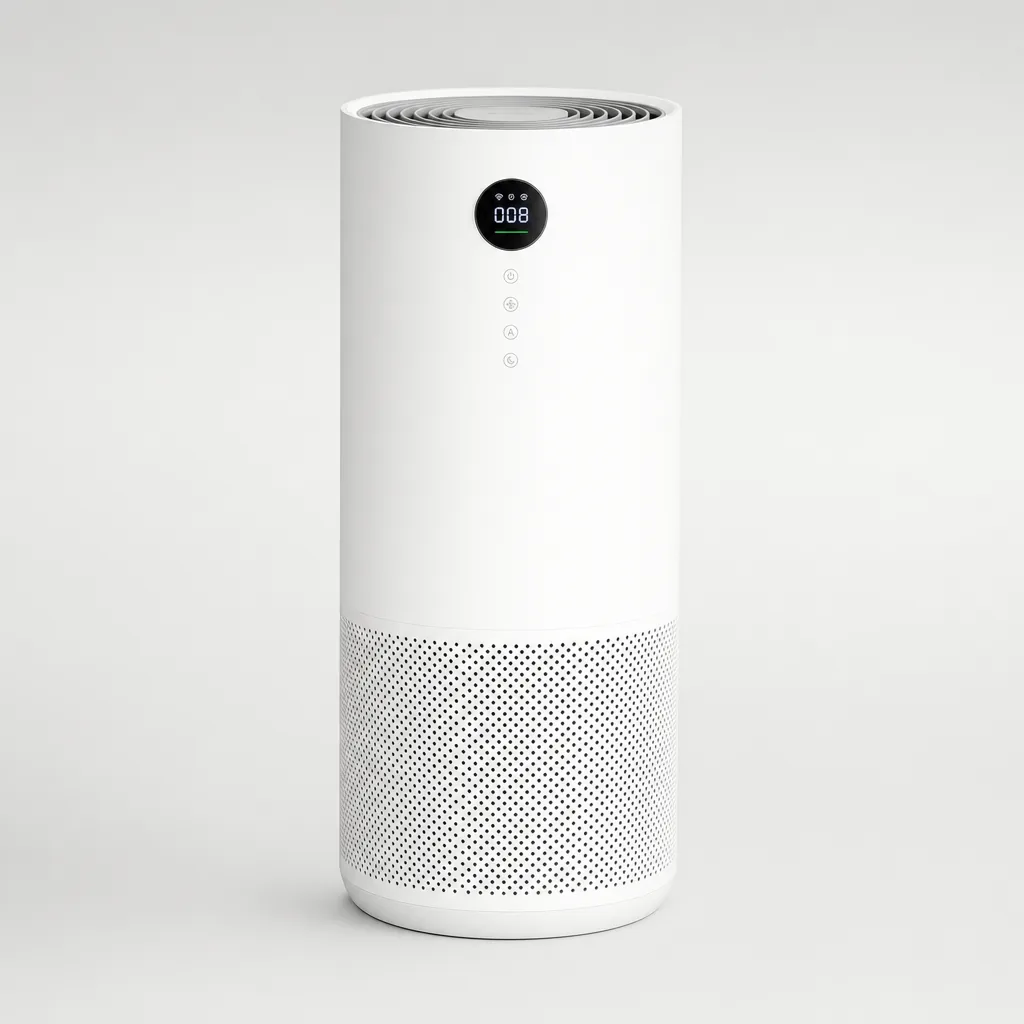
When the problem is pollen, pet dander or lingering odours, you want maximum clean-air throughput plus real carbon, and the Philips Series 2200 delivers both. Its NanoProtect HEPA and active-carbon filters push a hefty 420 m³/h CADR across rooms up to 109 m² — the strongest airflow-per-pound in this list.
A clear numeric PM2.5 readout and a colour air-quality ring make it satisfyingly informative, the Air+ app adds Wi-Fi control and auto mode, and the HEPA filter is rated for a long life (up to around three years) before replacement. For hay-fever sufferers who want to knock pollen down fast in a big room, this is my pick.
The trade-off for all that airflow is noise: on its turbo setting it's genuinely loud (around 64 dB), so you'll run it hard while you're out or cooking, then drop it right down for the evening. And unlike the Dyson, it's a purifier only — no cooling fan.
Pros
- Highest CADR here — clears big rooms fast
- Proper active-carbon layer for odours and VOCs
- Clear PM2.5 number plus colour AQI ring
- Long-life HEPA (up to ~3 years)
Cons
- Loud on its top (turbo) speed
- No cooling-fan function
- Larger footprint than the bedroom units
4. Dyson Purify Hot+Cool HP1 — Best premium / doubles as a fan

See Dyson Purify Hot+Cool HP1 on Amazon UK
Check today's price & availability on Amazon UK
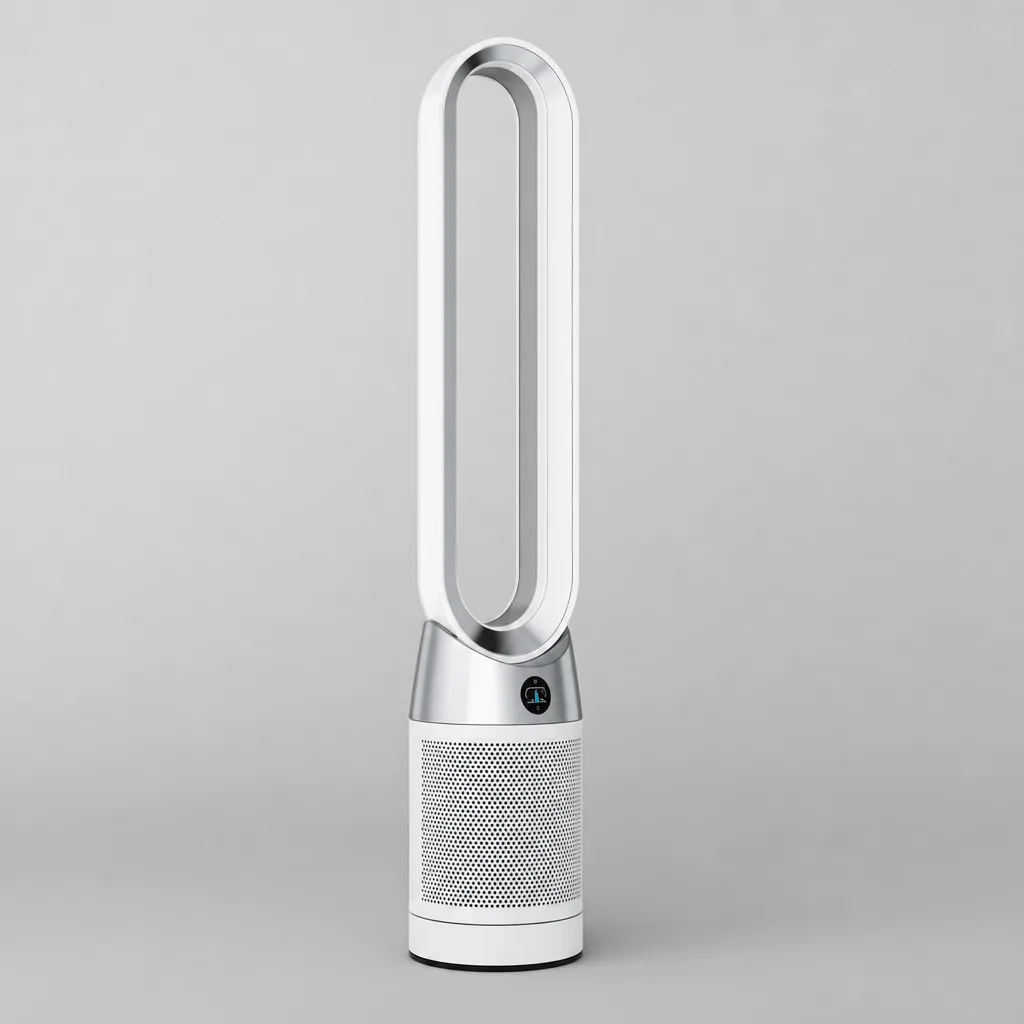
Yes, it's expensive, and yes, it's worth understanding exactly what the money buys. The Purifier Cool PC1 (Dyson's current TP11) is the only unit here with a fully sealed filtration system — a combined glass HEPA H13 and carbon cartridge that captures 99.95% down to 0.1 microns with no air sneaking around the edges — and it doubles as a bladeless cooling fan, which earns its keep in a British heatwave.
The sensor suite and MyDyson app are the best in this group — it reports PM2.5, PM10, VOCs and nitrogen dioxide on its own LCD and in the app — and the 350° oscillation genuinely circulates a whole room. It's the one people put in the living room because it looks the part.
Set expectations, though: Dyson doesn't publish a CADR (it quotes airflow instead), so raw clean-air throughput is arguably beaten by cheaper units, filters are pricey, and this standard Cool doesn't destroy formaldehyde. If you specifically need formaldehyde handling or 100 m²-plus coverage, Dyson's ~£900 HEPA Big+Quiet Formaldehyde is the (much dearer) step up.
Pros
- Fully sealed H13 — no filtered-air leakage
- Doubles as a 350° bladeless cooling fan
- Best-in-class sensors and app of this group
- Beautifully made and genuinely quiet on low
Cons
- Expensive for its actual filtration output
- No published CADR figure to compare
- Pricey filters; no formaldehyde destruction
5. Shark NeverChange5 — Best for low maintenance

See Shark NeverChange5 on Amazon UK
Check today's price & availability on Amazon UK
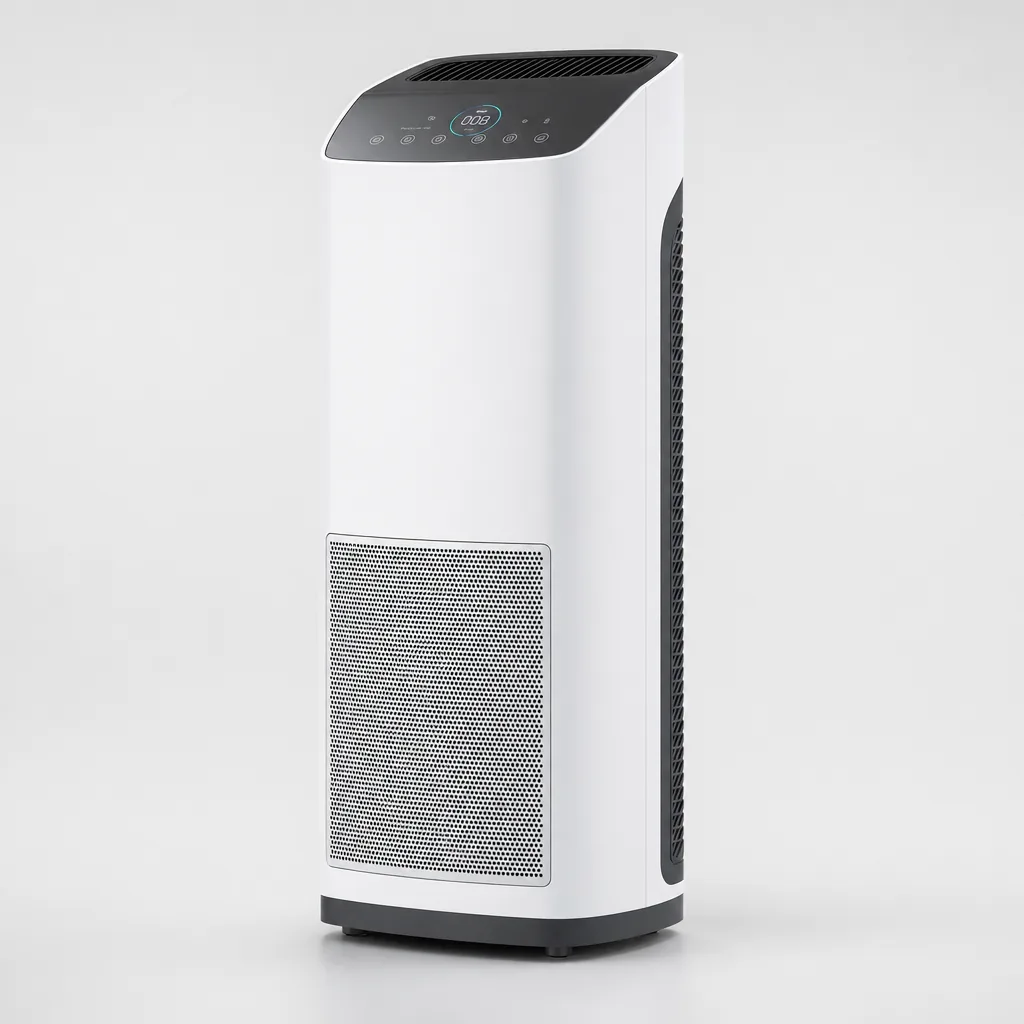
The clever idea here is right in the name: the Shark NeverChange5 has a sealed HEPA filter engineered to last five years, so unlike almost everything else on this page there's no annual filter to buy or forget. Its four-layer NeverChange filter (NanoSeal HEPA, carbon, a pet-particle barrier and a washable pre-filter) captures 99.97% of allergens across rooms up to 60 m².
Over five years that sealed filter is a real saving versus the £35–£66-a-year replacements the other units need, and only the pre-filter needs the occasional wash. Its Clean Sense IQ particle sensor drives an auto mode, the display dims for bedrooms, and reviewers rate it genuinely quiet and effective — the pet-particle layer makes it a sensible shout for households with cats or dogs.
The compromises are connectivity and gases: there's no Wi-Fi, app or voice control on any current UK Shark purifier, the sensor only tracks particles (so it's weak on VOCs), and because the filter is sealed you can't refresh just the carbon if odours become the issue.
Pros
- No filter to buy for five years — big long-run saving
- Genuinely quiet and effective, with a pet-particle layer
- Simple auto mode and a dimmable display
- Only the pre-filter needs occasional washing
Cons
- No Wi-Fi, app or voice control at all
- Particle-only sensor — weak on VOCs/odours
- Sealed filter means you can't refresh carbon alone
6. Levoit Compact HEPA Purifier — Best budget starter
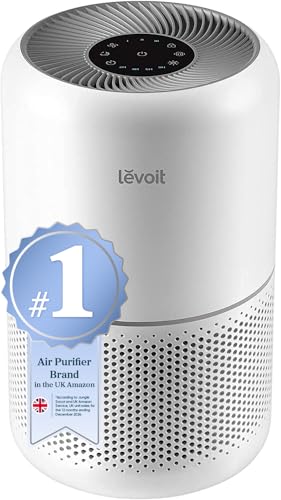
See Levoit Compact HEPA Purifier on Amazon UK
Check today's price & availability on Amazon UK
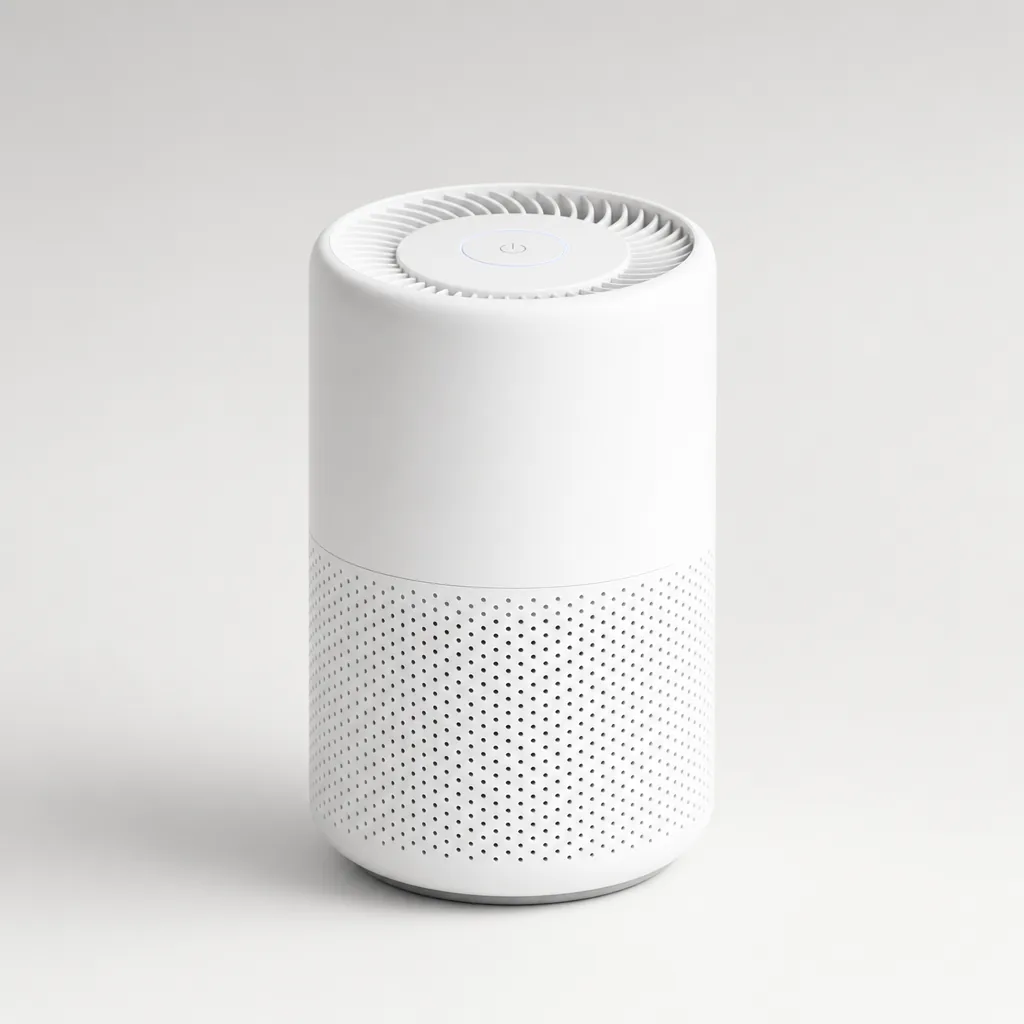
If you just want to start cleaning the air in one bedroom without spending three figures, this compact Levoit is the sensible entry point. At about £85 it still gives you a genuine 3-in-1 HEPA-and-carbon filter (not the 'HEPA-type' fudge you get on cheap no-name units), a CADR of 187 m³/h and quiet running — enough for a bedroom, nursery or small study.
It's a no-frills unit — you won't get the laser sensor, app or Alexa control of the pricier Levoits — but for filtering the air where you sleep, it does the fundamental job properly and cheaply. Think of it as the way to find out whether a purifier makes a difference for you before you commit to a bigger, smarter one.
Match it to a small room and it's excellent value; ask it to clean a big open-plan space and it'll struggle, so be realistic about coverage. If you want smarts at a low price instead, stretch to the Blueair above.
Pros
- Cheapest honest route into real HEPA + carbon
- Quiet and compact for a bedroom or study
- 3-in-1 filter, not a 'HEPA-type' fudge
- Great low-risk way to try a purifier
Cons
- No app, sensor or voice control at this price
- Best for one room, not open-plan spaces
- More frequent filter swaps than bigger units
Air Purifiers Compared
Here's the whole purifier shortlist side by side. Read CADR and coverage together — a big coverage figure at a low CADR just means the maker assumed very few air changes an hour.
| Model | Filtration | CADR | Coverage | Noise | Smart | Price |
|---|---|---|---|---|---|---|
| Levoit Core 400S | HEPA-grade + carbon | 400 m³/h* | up to 166 m² | 24–52 dB | App, sensor, Alexa/Google | £219.99 |
| Blueair Blue 511i Max | HEPASilent + carbon | 239 m³/h | up to 48 m² | 18–46 dB | App, sensor, Alexa/Google | £169 |
| Philips Series 2200 | NanoProtect HEPA + carbon | 420 m³/h | up to 109 m² | ~18–64 dB | App, sensor, Alexa | £219.99 |
| Dyson Purify Hot+Cool HP1 | Sealed H13 + carbon | Not published† | Whole-room | 28–61 dB | App, sensor, voice | £449.99 |
| Shark NeverChange5 | Sealed 5-yr HEPA + carbon | Not published | up to 60 m² | ~42 dB+ | Sensor + auto (no app) | £249.99 |
| Levoit Compact HEPA | HEPA-grade + carbon | 187 m³/h | up to 80 m² | Quiet | Basic (no app) | ~£85 |
*Independent testers measure European Levoit units a little below the headline CADR. †Dyson quotes airflow (litres/second) and projection distance rather than an AHAM CADR, so it can't be compared like-for-like.
How the Monitors Rank on What Matters
To make the trade-offs concrete, here's how the picks compare on the qualities I weigh most heavily — sensor breadth, CO2 accuracy, mould insight and how effortless they are to live with. These reflect my overall assessment across the category rather than any single lab figure.
Who Should Buy What
Cut to the chase — pick the profile that sounds most like you.
The all-rounder
You want one device that watches everything — particles, CO2, VOCs, humidity, even radon. Buy the Airthings View Plus and let it run for a few weeks before drawing conclusions.
The home-office worker
Foggy afternoons and stuffy rooms are your enemy. The Aranet4 Home gives you trustworthy CO2 readings, a four-year battery and a clear buzzer when it's time to open a window.
The damp-house dweller
Older property, cold walls, recurring mould? The Airthings Wave Mini (or Blauberg Wave Mini) flags mould risk before you can see it on the wall.
The data enthusiast on a budget
You love readings and want the widest spread for the money. The Qingping Air Quality Monitor Gen 2 tracks PM2.5, PM10, CO2, VOCs, climate and even noise.
The keen home cook
You just want to see when cooking fouls the air. The Temtop M10+ is a clean, glance-and-go monitor for the kitchen and living room.
The first-timer
Curious but not ready to splash out? The IKEA VINDSTYRKA is the cheapest way to start seeing your PM2.5, VOCs and humidity.
The keen cook with PM2.5 spikes
Frying and searing send fine particles soaring. The Levoit Core 400S has the airflow to drag a kitchen-diner's PM2.5 back down fast, and its auto mode reacts the moment you start cooking.
The hay-fever or pet-dander sufferer
You need maximum clean-air throughput plus carbon. The Philips Series 2200 pushes 420 m³/h across a big room, or the Shark NeverChange5 adds a dedicated pet-particle layer with no filters to buy for five years.
The light sleeper
Silence matters more than raw power. The Blueair Blue 511i Max runs at a barely-there 18 dB and costs pennies to leave on overnight.
The set-and-forget buyer
You don't want to think about filters or apps. The Shark NeverChange5 has a sealed five-year filter and a simple auto mode — buy it, plug it in, forget it.
Frequently Asked Questions
No — monitors only measure. They tell you what's in your air so you can act, whether that's opening a window to drop CO2 or running a purifier to cut PM2.5. Think of the monitor as the dashboard and the purifier or ventilation as the engine.
NDIR (Non-Dispersive Infra-Red) sensors, as used in the Aranet4 and Airthings units, detect actual CO2 molecules for stable, accurate readings — the Aranet4 quotes 30 ppm ± 3%. Estimated "eCO2" figures are derived indirectly and are better for spotting trends than for absolute precision.
Give it time. Airthings notes its VOC and CO2 sensors need around 7 days of initial calibration, and radon readings can take days to a month to stabilise — waiting at least 20 days gives a reliable radon average. Don't panic over the first few days of data.
The Aranet4 Home. Its true NDIR CO2 sensor, prominent colour-coded display, optional buzzer and up to four years of battery life make it ideal for tracking overnight CO2 build-up. The default 1,400 ppm red alert is a handy prompt to ventilate.
With the Airthings View Plus you can. It works with Amazon Alexa, Google Assistant and IFTTT, so you can trigger a smart plug on a purifier when a reading crosses a threshold, turning your setup into an automatic air-quality system.
For most homes, yes. HEPA traps solid particles — dust, pollen, cooking smoke, dander — but does almost nothing about gases and smells. Activated carbon handles those odours and VOCs by adsorbing them. Every purifier in our picks includes both. If odours and fumes are your main concern, prioritise a model with a thick carbon layer, like the Philips Series 2200.
Typically every 6–12 months, costing roughly £35–£66 a year depending on the model — a real running cost worth factoring in. The exception is the Shark NeverChange5, whose sealed HEPA is designed to last five years (only its pre-filter needs the odd wash), which is why it's our low-maintenance pick.
As a rule of thumb for allergy-grade cleaning, aim for a CADR in m³/h of about 11–12 times your room's floor area in square metres — so a 16 m² bedroom wants roughly 190 m³/h. Because quoted CADR is a full-power lab figure, size up so you can run the unit on a quieter setting and still hit your target as the filter ages.
A good HEPA-plus-carbon filter does the real work; the "active" extras are mostly marginal and some ionisers produce small amounts of ozone, a lung irritant. Avoid standalone ozone generators, and prefer units certified ozone-free or within California's 50 ppb limit. Blueair's HEPASilent ionises but current models test at around a negligible 2 ppb.
No — and this is the most common mistake. Purifiers clean particles and gases from the air; they do nothing for CO2 (that needs ventilation — open a window) or for damp and mould (that needs heating, ventilation and often a dehumidifier). Use your monitor to tell the two situations apart before you spend.
Pair the right monitor with the right response — fresh air for CO2, HEPA and carbon for particles and VOCs, dehumidifying for damp — and you've built a proper home air-quality system.
The Final Word
If you buy just one device, make it the one that matches your biggest problem. For genuinely comprehensive coverage — including radon and a proper NDIR CO2 sensor — the Airthings View Plus is the monitor I'd put in most homes, and its Alexa, Google Assistant and IFTTT support means it can drive a purifier automatically. If stuffy rooms and ventilation are your obsession, nothing beats the Aranet4 Home for CO2 accuracy and that outrageous four-year battery. And if damp and mould are the recurring nightmare — as they are in so many British homes — the affordable Airthings Wave Mini with its mould-risk flag is the cheapest early-warning system you can buy.
And if you're adding a purifier, keep it simple: the Levoit Core 400S is the do-everything pick for a living room, the near-silent Blueair Blue 511i Max is the value and bedroom champion, the Philips Series 2200 is the one for hay-fever and odours, and the Shark NeverChange5 is for anyone who never wants to buy a filter again. Match the CADR to your room, pair it with your monitor, and watch the PM2.5 fall.
Whatever you choose, remember the two rules that make all of this worthwhile: understand what the numbers mean, and pair the reading with the right response. A monitor without action is just décor — but a monitor that nudges you to open a window, flick on a purifier or tackle the damp is one of the most quietly transformative gadgets you can own. Breathe easy.
- Qingping Air Quality Monitor Gen 2 (QP Pro 2)View on Amazon
- Aranet4 HomeView on Amazon
- Levoit Core 400SView on Amazon
- Blueair Blue 511i MaxView on Amazon
- Philips Series 2200View on Amazon
- Shark NeverChange5View on Amazon