Apple Watch Series 11 First Look: Is the standard Apple Watch still enough?
A bigger battery, tougher glass and the same familiar shape. We weigh the 46mm GPS model against the Ultra and Garmin's long-life rivals using published specs and independent reviewers' results.
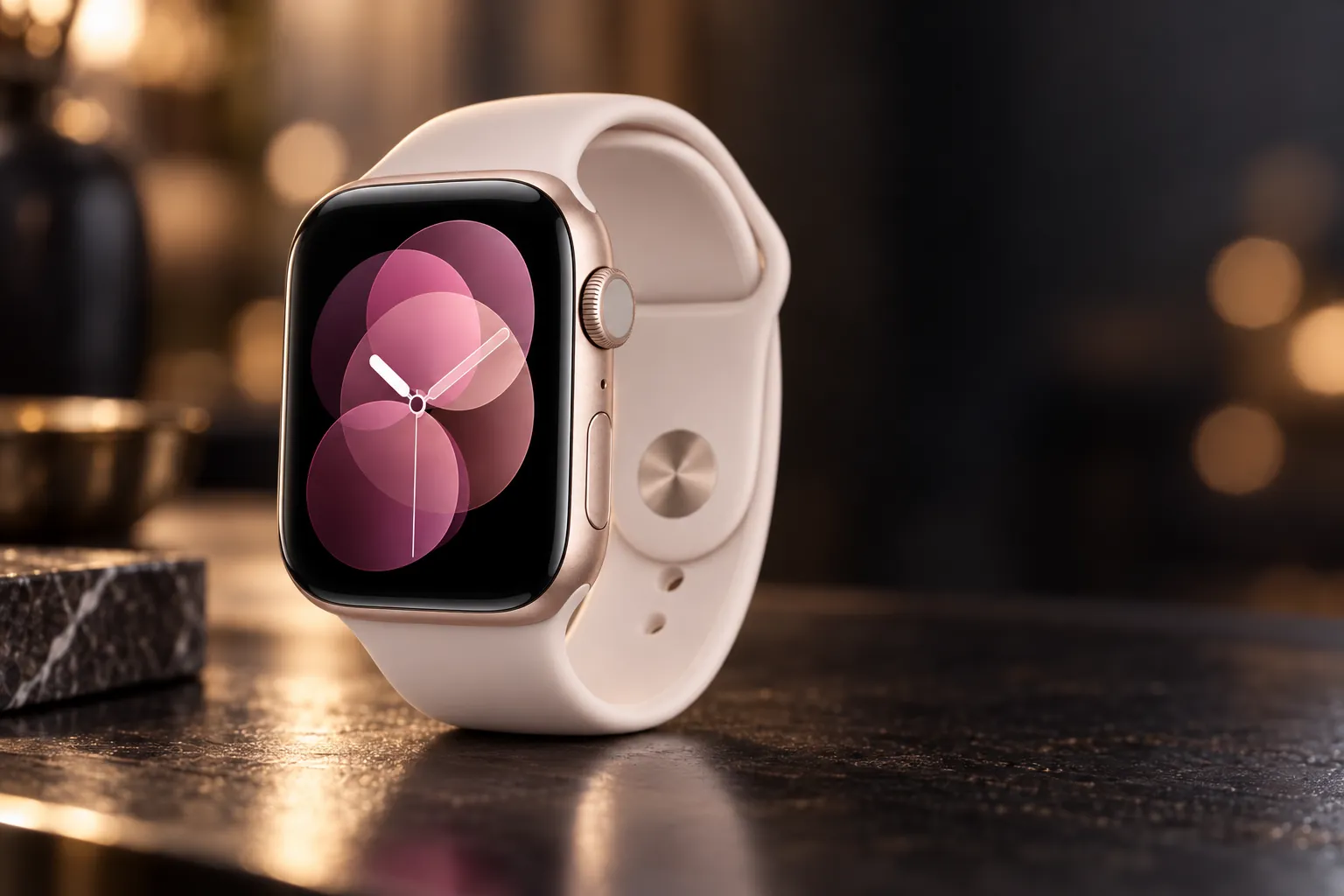


A 24-hour rating, around 1% heart-rate and GPS error in reviews, and the full Apple health suite without Ultra bulk.
Check price on AmazonWe link to the exact model on Amazon UK. Prices change often, so check the live price before you buy. As an Amazon Associate we earn from qualifying purchases.
It's twenty to eleven, the watch on your bedside table says 19%, and you have a choice to make: charge it now and lose your sleep data, or wear it to bed and hope it limps through tomorrow's run. For years that little dilemma has been the tax on owning an Apple Watch, and it's exactly what pushes people towards an Ultra or a Garmin. The Series 11 was Apple's attempt to make the everyday model good enough that you don't have to.
The short answer
If you own an iPhone and want one watch for notifications, payments, health alerts and everyday runs, the Apple Watch Series 11 in 46mm GPS form is still enough. Its 24-hour rating finally makes overnight sleep tracking practical, and independent reviewers measured heart-rate and GPS error at around 1%. Choose an Ultra only if you need multi-day battery, 100m water resistance, dual-frequency GPS or satellite messaging. Choose a Garmin if you want a week or more between charges, or you use Android. Series 10 owners can sit this one out.
One piece of context before the detail. Apple launched Series 12 in September 2026 and the Series 11 no longer sits in its main store line-up, so what you're weighing up today is a previous-generation watch still on sale through retailers. It remains supported by watchOS 27, which keeps it current on software. The listing we're looking at is the 46mm GPS model in Jet Black aluminium with a Black Sport Band in M/L.
| At a glance | Apple Watch Series 11, 46mm GPS, Jet Black |
|---|---|
| Case | 46 × 39 × 9.7mm aluminium; 37.8g without strap |
| Display | Always-On LTPO3 wide-angle OLED, up to 2,000 nits |
| Chip | Apple S10, 64GB storage |
| Battery rating | Up to 24 hours; up to 38 hours in Low Power Mode |
| Water and dust | 50m (swimproof), IP6X |
| Connectivity | GPS only: Wi-Fi 4, Bluetooth 5.3, NFC; no cellular |
| Phone needed | iPhone 11 or later, or iPhone SE (2nd gen or later) |
| UK launch price | £399 (September 2025) |
Apple Watch Series 11: What Actually Changed Since Series 10
Put a Series 10 and a Series 11 side by side and you'll be hunting for differences. TechRadar described the 46mm Series 11 as highly familiar and almost indistinguishable from its predecessor apart from the finish. The case is still 9.7mm deep, the processor is still the S10, and Tom's Guide noted that the display resolution is effectively unchanged too.
What Apple did change sits mostly inside. The official battery rating jumped from Series 10's 18 hours to 24 hours of normal use, with Low Power Mode stretching that to 38 hours. That six-hour gain is the single biggest reason this generation exists.
The second change is on the front. Aluminium models moved to Ion-X glass with a ceramic coating, which Apple claims is twice as scratch-resistant as the Series 10 treatment. Engadget's reviewer reported knocking the watch repeatedly without visible scratching, though that was everyday wear rather than a controlled durability test. Titanium Series 11 models use sapphire instead, but this Jet Black listing is aluminium.
Don't pay for 5G you aren't getting
Many Series 11 reviews celebrate the arrival of 5G, the first time an Apple Watch generation advertised it. That only applies to GPS + Cellular models. This GPS-only listing has no cellular modem at all, so 5G isn't a reason to choose it over a GPS-only Series 10.
The rest of the launch story was software. Sleep Score and hypertension notifications arrived alongside Series 11, but as we'll come to, they weren't reserved for it.
Battery Life: Finally Enough for a Full Day of Sleep Tracking?
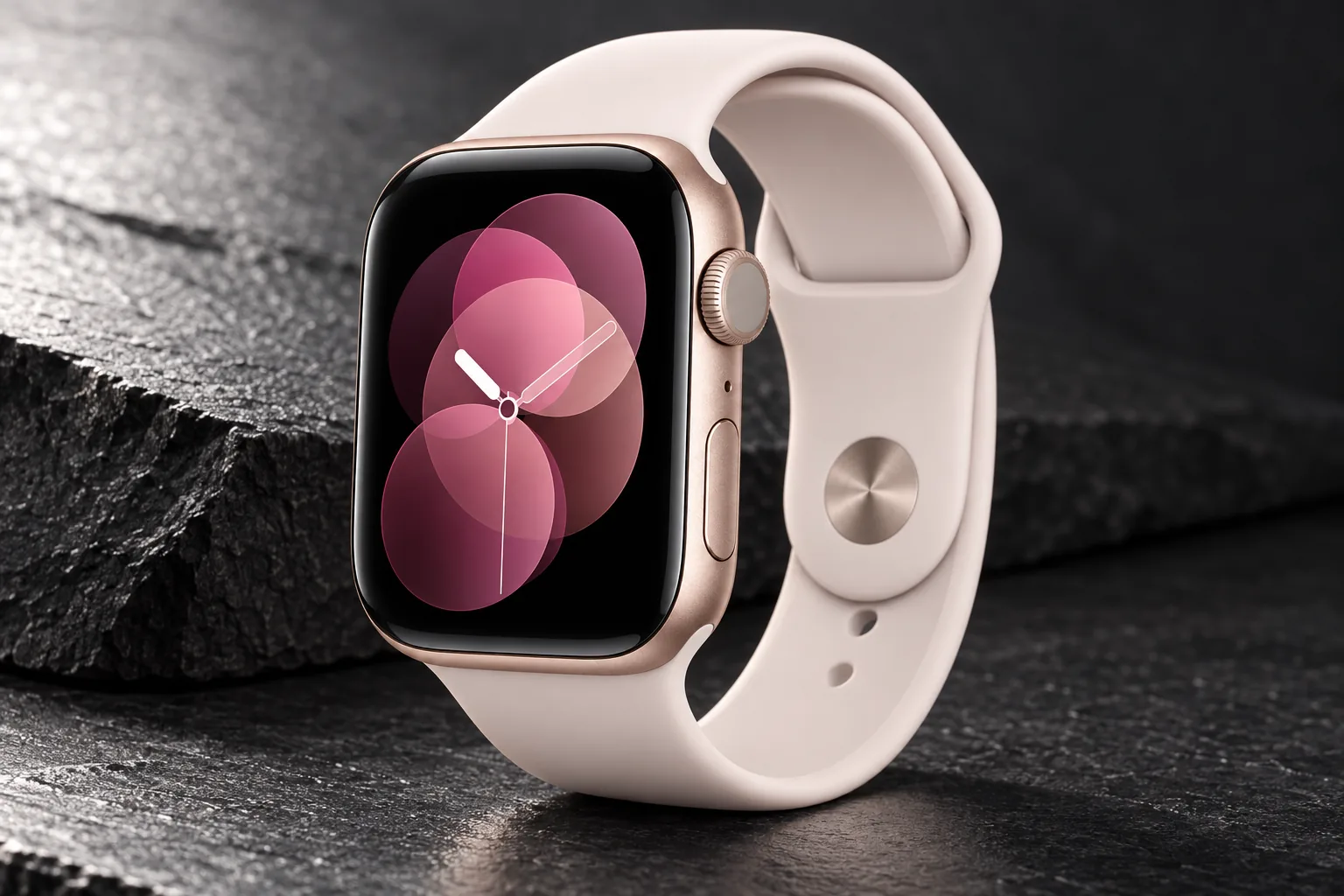
Apple's 24-hour figure comes from a defined test cycle: 300 time checks, 90 notifications, 15 minutes of app use, a 60-minute workout with Bluetooth music and six hours of sleep tracking, with GPS models connected to an iPhone throughout. That's a fairly realistic day for many people, rather than a best-case lab number with everything switched off.
Independent reviewers largely backed it up. TechRadar's Jacob Krol took a 46mm Series 11 off the charger at 54%, wore it overnight for sleep tracking and then used it through the following day. It reached 1% after 5pm, which works out at roughly 17 hours from half a charge. TechRadar's conclusion was that a day and a half is realistic with light use.
Tom's Guide reported a similar pattern: around 20% lost overnight during sleep tracking, then a full following day and evening before the watch needed charging. Its reviewer called that a major improvement on the old 18-hour rating, and found the watch could generally meet or slightly exceed Apple's claim.
The fine print matters if you train a lot. In a separate comparison, Tom's Guide put the Series 11 at roughly eight hours of outdoor GPS use, against 14 hours for the Ultra 3. A daily GPS workout, music streaming and the Always-On display all eat into that 24 hours, so a keen runner should expect a top-up most days rather than a day and a half.
Charging is quick, if not quite as quick as Apple suggests. Apple claims about 30 minutes to 80%, with 15 minutes giving up to eight hours of normal use and five minutes enough for up to eight hours of sleep tracking. Macworld measured closer to 40 minutes to reach 80%, so plan on 35 to 45 minutes rather than exactly half an hour.
A routine that works: the five-minute charge claim is the useful one. Pop the watch on its magnetic puck while you brush your teeth and, by Apple's figures, that's enough to track the night. The box includes a USB-C fast-charging cable but no power adapter, so you'll need a USB-C plug of your own.
Heart Rate and GPS: How Accurate Is the Wrist Sensor, Really?
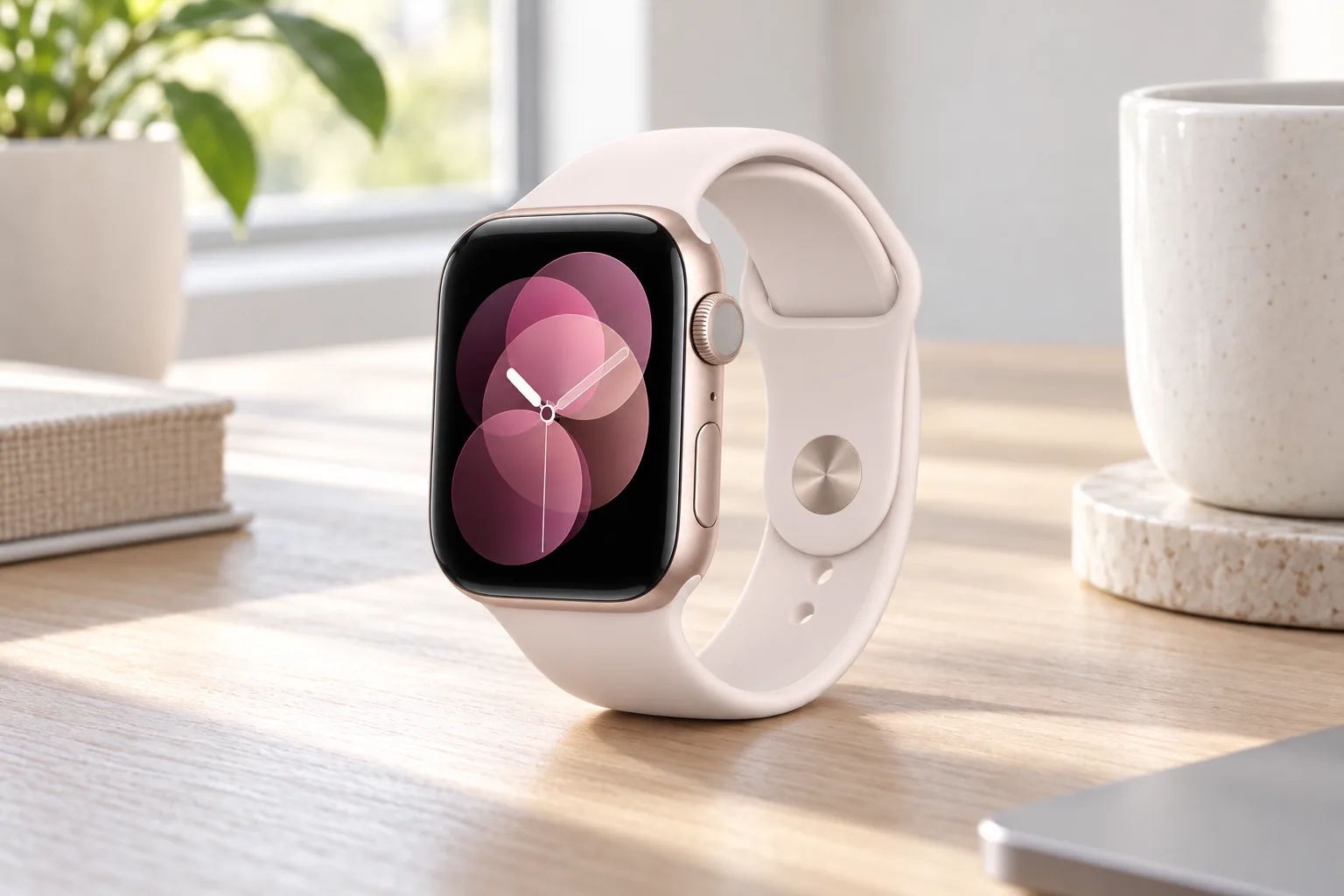
Accuracy is where the "is it enough?" question gets interesting, because the Series 11 lacks the dual-frequency GPS that the Ultra 3 and many Garmins carry. On paper that's a handicap. In independent results, it mattered less than you might expect.
Expert Reviews' Jonathan Bray ran six runs with a 46mm Series 11 alongside a Polar H10 chest strap. Average heart-rate readings differed from the strap by just 0.91%. Across the same runs, recorded distance differed from the reference by an average of 1.09%, which he described as highly accurate.
It wasn't seamless. Bray saw occasional dropouts at the start of workouts, including during the first 12 minutes of a half-marathon, before the signal settled and the data became very accurate. He still recommended a chest strap for anyone who wants the most dependable heart-rate data, and the watch can pair with compatible Bluetooth accessories if you already own one.
Wareable's results told a similar story. Against a Garmin HRM 600 chest strap, steady-state run averages were generally within one beat per minute, and across eight high-intensity interval sessions the watch followed sharp peaks and recovery troughs closely. Warm-up dropouts appeared there too.
For GPS, Wareable compared the Series 11 with a Garmin Fenix 8 Pro using multi-band GPS. On one run the Garmin logged 9.12 miles and the Series 11 recorded 8.89; on another, 6.24 miles versus 6.12. That's a shortfall of roughly 2.5% and 1.9% respectively. Wareable found the Apple tracks visually clean and often less prone to obvious drift, but noted dual-frequency systems still have the edge among tall buildings.
What reviewers liked
- Average heart-rate error under 1% against a chest strap (Expert Reviews)
- Steady-state runs within about one bpm of a Garmin strap (Wareable)
- Clean GPS tracks despite single-frequency L1 GPS
- Training Load, heart-rate zones, pacer, race route and automatic track detection built in
What tripped it up
- Heart-rate dropouts in the opening minutes of some workouts
- No dual-frequency GPS for dense city centres
- Around eight hours of outdoor GPS use, per Tom's Guide
- No native Garmin-style recovery score such as Body Battery
The Screen and Chip: Same Brains, Brighter Window
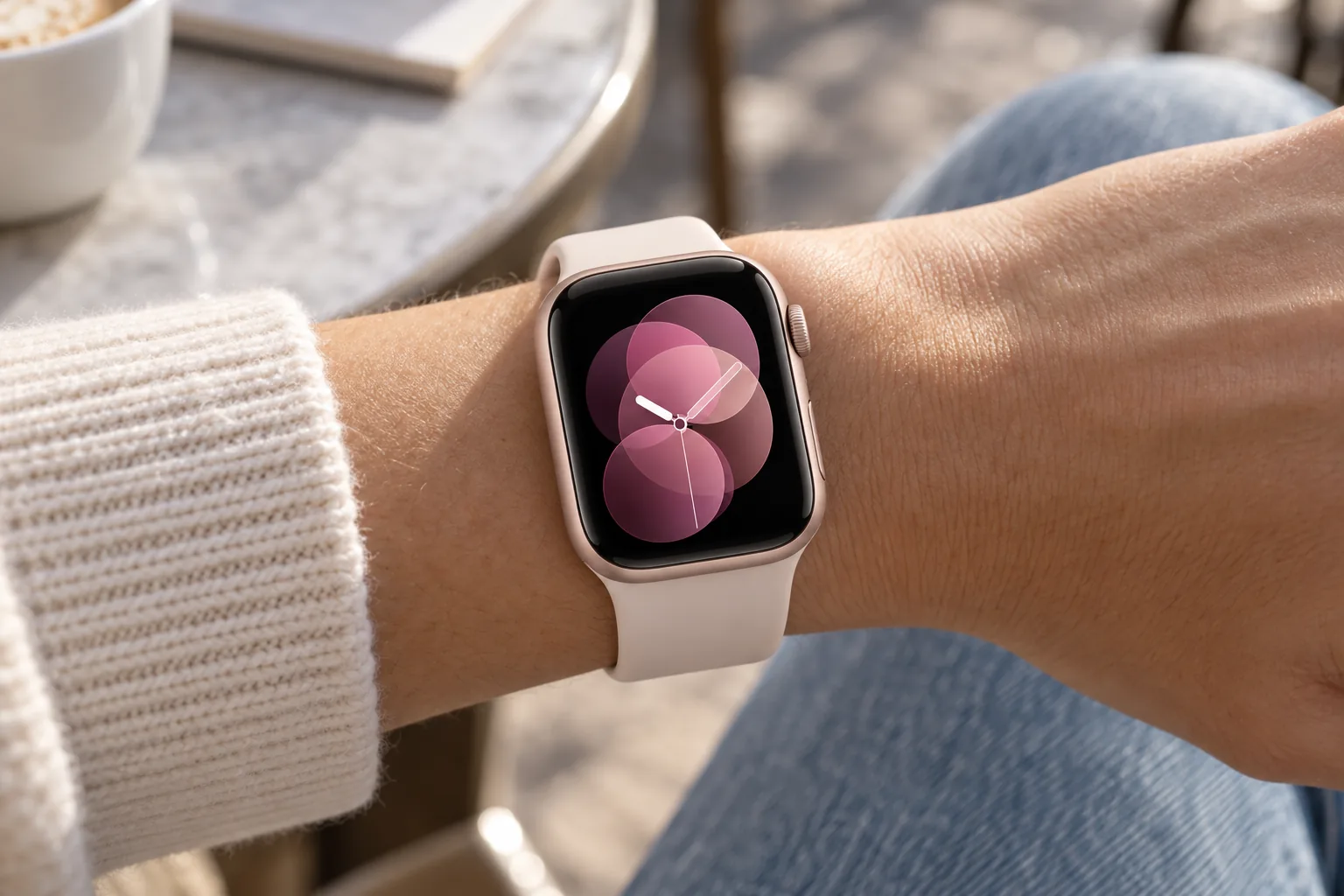
The 46mm display has 416 × 496 pixels at 326ppi across 1,220 square millimetres, a figure that edges towards Ultra-sized screen space in a much slimmer case. It's an Always-On, wide-angle LTPO3 OLED panel rated at up to 2,000 nits at its brightest and just 1 nit at its dimmest, which is handy when you check the time in a dark bedroom.
Notebookcheck measured a 42mm Series 11, the smaller case from the same generation, at a peak of 2,117 cd/m² with the ambient light sensor active, slightly beating Apple's own figure. With the sensor disabled, it topped out around 1,010 nits. The reviewer found it easy to read in direct sunlight. The same comparison, however, had Samsung Galaxy Watch8 and Huawei Watch GT 6 Pro samples running roughly 1,000 nits brighter.
That 3,000-nit Ultra 3 rating is the relevant gap for Apple buyers. If you cycle or run in bright midday sun and glance at your pace constantly, the Ultra's extra headroom is a tangible advantage. For checking messages on a grey British commute, 2,000 nits is plenty.
The S10 chip, a 64-bit dual-core processor, is carried over unchanged. Notebookcheck found the watch smooth in normal use, but its browser-based Octane V2 score of 1,417 trailed Wear OS rivals such as the Galaxy Watch8 at 13,026. Notebookcheck cautioned that browser scores don't translate neatly across operating systems, and since nobody browses the web on their wrist for fun, it's a footnote rather than a deal-breaker. Siri now runs on-device, and Double Tap and wrist-flick gestures let you dismiss or answer things one-handed.
Sleep Score and Hypertension Alerts: Genuinely New, or Just Marketing?
Health is where Apple put most of its launch energy, and the Series 11 carries the full sensor set: electrical and third-generation optical heart sensors, blood oxygen hardware, a temperature sensor and a water-temperature sensor, among others. Some functions depend on your region, age and local regulatory approval.
Sleep Score
Rolls sleep duration, regularity and other sleep signals into a single nightly number, alongside sleep stages and sleep-apnoea notifications.
Hypertension notifications
Looks for long-term patterns that may indicate chronic high blood pressure and prompts you to get checked.
ECG and rhythm alerts
ECG app, high and low heart-rate alerts and irregular-rhythm notifications.
Safety
Fall Detection, Crash Detection, Emergency SOS and Backtrack for retracing your route.
Everyday wellbeing
Cycle tracking with retrospective ovulation estimates, medications, mindfulness and noise monitoring.
Here's the catch, and Expert Reviews was blunt about it: most of the headline features, Sleep Score and hypertension notifications included, are software that also reached older compatible Apple Watch models. TechRadar agreed that neither feature, nor watchOS 26 itself, was a reason to replace a healthy Series 10.
So the features are genuine, but they don't make the Series 11 special within Apple's own range. What they do is strengthen the case against non-Apple rivals, and they widen the gap over the cheaper SE 3, which goes without the Always-On display, ECG, blood oxygen hardware and hypertension notifications.
Not a blood pressure monitor. Apple is explicit that hypertension notifications do not measure blood pressure and are not a diagnosis. The feature flags patterns that may warrant a proper check with a cuff or your GP. Availability also depends on region and eligibility.
Series 11 vs Apple Watch Ultra: What You're Actually Giving Up
This is the comparison most Apple shoppers agonise over. At launch the Series 11 46mm GPS cost £399 ($429 in the US), while the Ultra 3 started at $799, roughly double. Tom's Guide's verdict was that the Series 11 is the better option for most people, with the Ultra 3 aimed at adventurers and endurance users.
| Feature | Apple Watch Series 11 | Apple Watch Ultra 3 |
|---|---|---|
| US launch price | $399 (starting price; 46mm GPS was $429) | From $799 |
| Case size | 46mm | 49mm |
| Weight (case) | 37.8g | Approximately 61g |
| Battery, normal use | 24 hours | 42 hours |
| Low Power Mode | 38 hours | 72 hours |
| Outdoor GPS use (Tom's Guide) | Approximately 8 hours | Approximately 14 hours |
| Peak brightness | 2,000 nits | 3,000 nits |
| Water resistance | 50m, swimproof | 100m, EN13319 |
| Front crystal | Ceramic-coated Ion-X | Sapphire |
| GPS | L1 single-frequency | Precision dual-frequency |
| Satellite messaging | No | Yes |
| Action button | No | Yes |
| Health features | Broadly comparable | Broadly comparable |
Read that table carefully and a pattern emerges. The Ultra doesn't give you a better health watch; Apple ships broadly the same health and fitness feature set across both. What the extra money buys is endurance, durability and off-grid safety: nearly double the battery, sapphire glass, twice the water rating, dual-frequency GPS and satellite messaging when there's no phone signal.
The Series 11 wins on wearability. At 9.7mm deep and 37.8g before the strap, it slides under a shirt cuff and is easier to forget about in bed, which matters if the whole point is sleep tracking. Its water rating covers swimming and showering, but Apple rules out scuba diving, waterskiing and high-velocity water sports. The 6m depth gauge doesn't make it a dive watch.
Stick with Series 11
You want health alerts, notifications, Apple Pay and runs of a couple of hours, and you'd rather have a slim watch that you'll actually wear to bed.
Stretch to an Ultra
You do long hikes, trail races or open-water swims, need satellite messaging in remote areas, or regularly go two days between chargers.
Series 11 vs Garmin: Where Apple Still Loses on Pure Endurance
If you're coming from the Garmin side, battery life is the elephant on the wrist. The Garmin Venu 4 is rated for up to 10 days in smartwatch mode in its 41mm size and 12 days at 45mm. Against the Series 11's 24 hours, that's roughly a tenfold difference.
Expert Reviews made exactly this point. It acknowledged that 24 hours is a substantial step up from Series 10's 18, but still called daily charging disappointing next to Garmin and Huawei watches that run for days or weeks.
| Feature | Apple Watch Series 11 | Garmin Venu 4 |
|---|---|---|
| US launch price | From $399 (46mm GPS: $429) | From $549.99 |
| Smartwatch-mode battery | 24 hours | Up to 10 days (41mm) / 12 days (45mm) |
| GPS-only runtime | Approximately 8 hours outdoor GPS (Tom's Guide) | Up to 15 hours (41mm) / 20 hours (45mm) |
| Multi-band GPS | No | Yes |
| Water resistance | 50m | 50m |
| ECG | Yes, region dependent | Yes, region dependent |
| Phone compatibility | iPhone only | iPhone and Android |
| Training and recovery | Training Load | Body Battery, Training Readiness, recovery tools |
| Smartwatch apps | Broader third-party ecosystem | More limited |
Where Apple pulls clearly ahead is everything that makes a smartwatch smart. Expert Reviews rated notifications, messaging, Apple Pay, calls, Maps and the wider watchOS app ecosystem as particularly strong, with Apple keeping an advantage over Garmin and Android-based rivals. Its reviewer also found the speaker surprisingly loud and clear for calls, and praised the haptics.
Higher up Garmin's range, Fenix-class watches lean even harder into endurance. A 43mm Fenix 8 AMOLED weighs 66g with its stainless-steel case and is rated for up to 10 days in smartwatch mode, or four days with the always-on display. That's a dedicated training and navigation tool; the Series 11 is the better general-purpose companion to an iPhone.
Why pick the Series 11
- Richer notifications, replies and calls from the wrist
- Apple Pay and deep iPhone integration
- Larger third-party app library
- Fall and Crash Detection plus hypertension and sleep-apnoea notifications
- Slimmer and lighter than a Fenix-class watch
Why pick a Garmin
- Days rather than hours between charges
- Longer GPS workouts and multi-band GPS on the Venu 4
- Works with Android phones
- Body Battery and Training Readiness for recovery planning
Apple Watch Series 11: Who Should Buy This Specific Listing
Be clear about what this exact box contains. It's the GPS-only 46mm model (part number MEUX4) in Jet Black aluminium with a Black Sport Band in M/L. UK retailers list that strap for roughly 160 to 210mm wrists, whilst the case itself accepts bands for 140 to 245mm. There's no cellular modem, so calls, messages and streaming need your iPhone nearby or a Wi-Fi connection.
On price, treat the £399 figure as history. That was the September 2025 launch RRP; now that Series 12 has replaced it in Apple's line-up, UK retailer pricing varies. In the US, Tom's Guide tracked sale prices for the 46mm GPS model around $329. A previous-generation watch only makes sense at a meaningful discount, so compare it against Series 12 pricing before you commit.
Upgraders from an older Apple Watch
If your watch predates Series 10, the 24-hour rating, brighter Always-On screen and tougher glass add up to a noticeable step, and overnight sleep tracking stops being a gamble.
Health-focused iPhone owners
ECG, Sleep Score, sleep-apnoea and hypertension notifications plus Fall Detection, in a case that's comfortable enough to wear around the clock.
Everyday runners
Expert Reviews measured heart-rate and distance error at around 1%, good enough to skip a dedicated sports watch for runs of a few hours.
Series 10 owners
Same S10 chip, same size, same resolution, and the new health software already reached older models. TechRadar's advice was to skip it.
Phone-free exercisers
If you want to run or swim without your iPhone and still take calls or stream music, you need the GPS + Cellular version instead.
Android users and ultra-athletes
It won't pair with Android at all, and multi-day events need the endurance of a Garmin or an Ultra.
Our verdict: yes, the standard Apple Watch is still enough
The Series 11 doesn't reinvent anything, and it was never meant to. It fixed the one complaint that pushed people towards Ultras and Garmins in the first place: a battery that couldn't comfortably cover a day plus a night's sleep. Reviewers found it does, with heart-rate and GPS results close enough to chest straps and multi-band watches for most runners.
We recommend it for iPhone owners on an older Apple Watch who want the full health and smartwatch package without Ultra bulk, provided it's discounted against its £399 launch price. If you own a Series 10, need a week of battery or carry an Android phone, look elsewhere.
Common Questions Before You Buy
Sources
- Apple UK: Apple Watch Series 11 technical specifications, apple.com/uk
- Apple Support: Apple Watch Series 11 specifications, support.apple.com
- Apple UK Newsroom: Series 11 announcement, 9 September 2025, apple.com/uk/newsroom
- TechRadar: Apple Watch Series 11 review, techradar.com
- Tom's Guide: Apple Watch Series 11 review and Series 11 vs Ultra 3, tomsguide.com
- Expert Reviews: Apple Watch Series 11 review, expertreviews.co.uk
- Wareable: Apple Watch Series 11 review, wareable.com
- Notebookcheck: Apple Watch Series 11 42mm review, notebookcheck.net
- Engadget: Apple Watch Series 11 review, engadget.com
- Garmin: Venu 4 manual and Fenix 8 AMOLED product page, garmin.com
- Harvey Norman UK: MEUX4 configuration listing, harveynorman.co.uk
- Apple Watch Series 11Best everyday Apple WatchView on Amazon
Sources and evidence (24)
- harveynorman.co.uk (other)
- apple.com (other)
- support.apple.com (other)
- apple.com (other)
- techradar.com (other)
- tomsguide.com (other)
- expertreviews.co.uk (other)
- notebookcheck.net (other)
- apple.com (other)
- amazon.co.uk (retailer)
- apple.com (other)
- tomsguide.com (other)
- support.apple.com (other)
- support.apple.com (other)
- support.apple.com (other)
- wareable.com (other)
- techadvisor.com (other)
- apple.com (other)
- tomsguide.com (other)
- apple.com (other)
- tomsguide.com (other)
- www8.garmin.com (other)
- garmin.com (other)
- engadget.com (other)