
Galaxy Watch 9 vs Garmin Venu 4: Only One Lasts a Week
Samsung has built the better computer for your wrist. Garmin has built the better instrument. The battery gap between them is enormous, and it is still not the most important thing you should be weighing up.
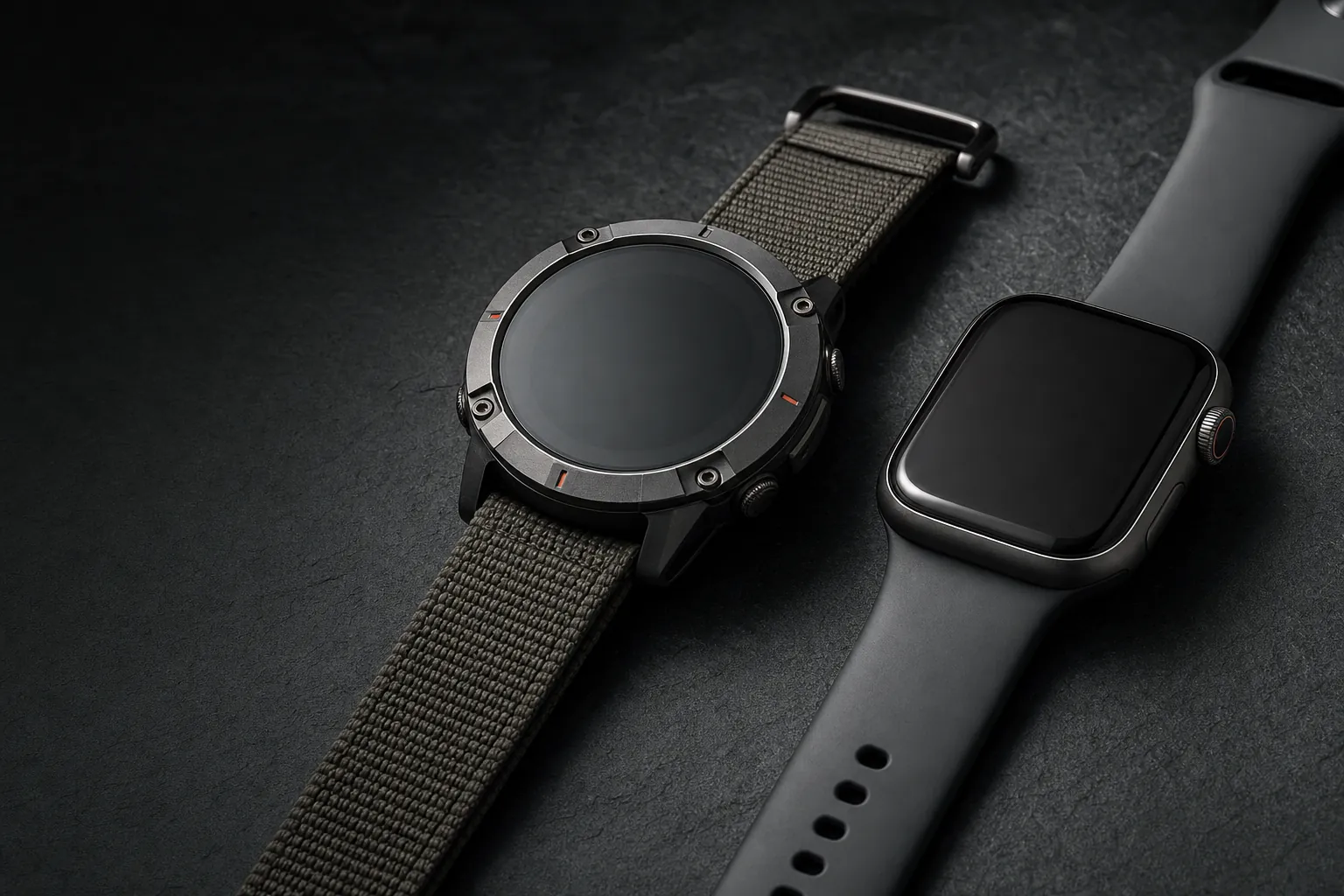
We link to the exact model on Amazon UK. Prices change often, so check the live price before you buy. As an Amazon Associate we earn from qualifying purchases.
There is a version of this comparison that takes ninety seconds. The Garmin Venu 4 runs for the best part of a fortnight. The Galaxy Watch 9 runs for about a day. Battery, therefore Garmin, therefore goodbye. That version is tidy, quotable and wrong, because the two are not really competing to do the same job.
Samsung announced the Galaxy Watch 9 at Unpacked in London on 22 July 2026, with general sale from 7 August. It is the first Galaxy Watch on Qualcomm's Snapdragon Wear Elite chip, runs Wear OS 7 with Samsung's One UI 9 Watch layer, and comes with five years of promised operating system and security updates. It starts at £349.
Garmin's Venu 4 has been on sale since 22 September 2025 at £469.99, making it the older and, at recommended price, dearer watch. It is also the one still running when the Samsung has been on the charger three times. Garmin quotes up to 12 days in smartwatch mode on the 45mm, and reviewers generally get eight to twelve in ordinary use.
The honest question is not which is better. It is which set of compromises you can live with for the next three or four years.
Why this is a harder decision than it used to be
For most of the last decade this sorted itself neatly. Want a watch that did watch things, you bought a Garmin. Want a small phone on your wrist, you bought whatever your phone-maker sold you. That has stopped being true from both directions. Garmin has spent three generations of the Venu turning a running watch into something you can wear to a wedding, with a speaker, microphone, proper AMOLED screen, contactless payments and offline music. Samsung has spent the same period bolting serious health hardware to a Wear OS watch, to the point where the Watch 9 will take a single-lead ECG, estimate your blood pressure and screen you for sleep apnoea.
What has not converged is the underlying engineering trade-off. The Watch 9 carries a 390mAh cell in the 40mm case and roughly 445mAh in the 44mm, driving a 3,000-nit Super AMOLED panel through a 3nm five-core processor that is, in effect, a small smartphone chip. The Venu 4 drives a 2,000-nit AMOLED through a purpose-built, far less capable processor running Garmin's own operating system, which does almost nothing when you are not looking at it. Samsung's watch is powerful because it is a computer. Garmin's watch lasts because it is not, and no amount of firmware will change that. The Watch 9's 40mm battery is 20 per cent larger than the Watch 8's and the headline figure is still 30 hours.
The price gap has moved too. The Venu 4 arrived at £469.99, a £70 increase over the Venu 3 that several reviewers called out as its main weakness, against £349 for the Watch 9. But the Venu 4 has been on sale for nearly eleven months and UK street prices have fallen a long way below Garmin's own, so the two are much closer on real money than the recommended prices suggest.
Then there is the thing nobody at Samsung enjoys discussing: the Watch 9 does not work with an iPhone at all. There is a section on that below. Which leaves the interesting case — an Android owner deciding whether a real app ecosystem is worth plugging a watch in every night.
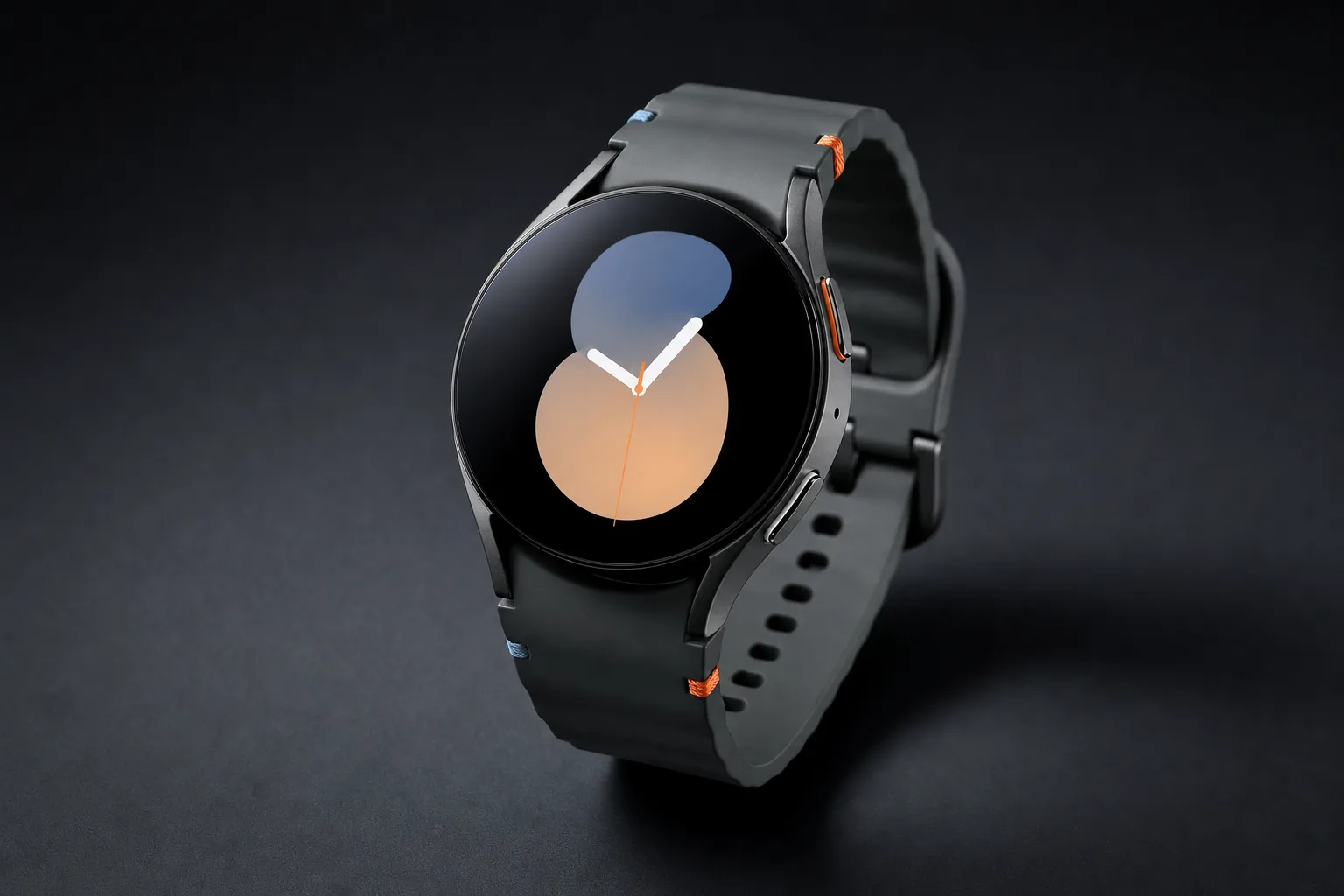
Galaxy Watch 9 vs Garmin Venu 4: the specifications side by side
Both come in two sizes, and the larger one has the better battery life in each case, so size is not purely cosmetic. Samsung dropped the Classic with its rotating bezel this year. Garmin has dropped the "S" suffix and calls its two models 41mm and 45mm.
| Specification | Samsung Galaxy Watch 9 | Garmin Venu 4 |
|---|---|---|
| Sizes | 40mm and 44mm | 41mm and 45mm |
| Case dimensions | 42.7 x 40.4 x 8.6mm / 46.0 x 43.7 x 8.6mm | 41 x 41 x 12.0mm / 45 x 45 x 12.5mm |
| Weight (case only) | 31.5g / 34g | 42g / 51g |
| Display | 1.34in 438 x 438 or 1.47in 480 x 480 Super AMOLED | 1.2in 390 x 390 or 1.4in 454 x 454 AMOLED |
| Peak brightness | Up to 3,000 nits | Up to 2,000 nits |
| Cover glass | Sapphire crystal | Corning Gorilla Glass |
| Case and bezel | Armor aluminium 2 | Metal case, stainless steel bezel |
| Processor | Snapdragon Wear Elite (SW6100), 3nm, five cores | Garmin in-house platform; not publicly specified |
| Memory / storage | 2GB RAM, 32GB storage | 8GB storage; RAM not published |
| Operating system | Wear OS 7 with One UI 9 Watch | Garmin OS (shared with Fenix 8 and Forerunner 570) |
| Battery capacity | 390mAh (40mm) / approx. 445mAh (44mm) | Not published by Garmin |
| Claimed smartwatch battery | Up to 30 hours with always-on display, up to 40 hours without | Up to 10 days (41mm) or 12 days (45mm) without always-on display |
| Claimed battery, always-on display | Up to 30 hours | Up to 3 days (41mm) or 4 days (45mm) |
| GNSS | Dual-frequency L1+L5 GPS, GLONASS, Galileo, BeiDou | Multi-band L1+L5 across GPS, GLONASS, Galileo, BeiDou, QZSS, with SatIQ |
| Durability | IP68, 5 ATM, MIL-STD-810H | 5 ATM |
| Cellular option | Yes, LTE via eSIM | No |
| ECG | Yes, but requires a Galaxy phone | Yes, live in the UK since April 2025 |
| Blood pressure | Yes, with cuff calibration and a Galaxy phone | No wrist blood pressure feature |
| Phone compatibility | Android only; will not pair with an iPhone | Android and iOS |
| UK price at launch | £349 (40mm) / £379 (44mm) | £469.99 both sizes, £519.99 with leather strap |
| Buy | Check price | Check price |
Two rows do most of the work. Battery is the obvious one. Phone compatibility is the quieter one, and for a lot of readers it is the only row that matters.
A note on the 44mm battery figure: Samsung's published capacity is generally listed as 445mAh, the number GSMArena, SamMobile and the5krunner all carry. Engadget's Watch 8 comparison lists 449mAh. It changes nothing in practice, but we would rather flag it than quietly pick one.
UK prices in August 2026
Prices below were checked on 6 August 2026 against Samsung UK, Garmin's UK store and the major UK price-comparison sites. The Watch 9 is new, so it sits at recommended price everywhere. The Venu 4 has had nearly a year to settle and the discounting is substantial.
| Model | UK RRP | Best price seen at time of checking |
|---|---|---|
| Galaxy Watch 9, 40mm Bluetooth | £349 | RRP; Currys was running a £50 promotional saving at launch |
| Galaxy Watch 9, 44mm Bluetooth | £379 | RRP |
| Galaxy Watch 9 LTE | Samsung UK has not published a separate LTE price at the time of writing; the US gap is $50 per size | - |
| Garmin Venu 4, 41mm | £469.99 | Around £365 via UK price comparison |
| Garmin Venu 4, 45mm | £469.99 | Around £369 to £380 |
| Garmin Venu 4 with leather strap | £519.99 | Rarely discounted |
That changes the arithmetic. At list price the Venu 4 costs £120 more than the 40mm Watch 9 and £90 more than the 44mm. At street prices the gap collapses to somewhere between nothing and about £20, and the Venu 4 you can buy today is a stainless-steel-bezelled watch with a fortnight of battery life for roughly what Samsung wants for an aluminium one that needs charging nightly.
Do not pay Garmin's recommended price. Comparison sites regularly find the Venu 4 under £380, which is where its value case actually lives. For the wider ranges, we keep running notes on the current Samsung smartwatch line-up in the UK and on which Garmin watch is worth buying.
Galaxy Watch 9, 40mm
The cheapest way in. 390mAh battery, 1.34in display. Bluetooth only.
Galaxy Watch 9, 44mm
Bigger 1.47in screen and a larger cell, though the quoted battery life is identical.
Garmin Venu 4, 45mm
Recommended price. Widely available under £380 at UK retail as of August 2026.
Round one: battery life, and the always-on display trap
Garmin quotes up to 12 days in smartwatch mode for the 45mm Venu 4 and up to 10 days for the 41mm. Samsung quotes up to 30 hours for the Galaxy Watch 9 with the always-on display enabled, rising to 40 hours with it off. Both figures are honest as far as they go. Neither is quite what you will get.
The always-on display is where the confusion lives, and the two report it differently. Samsung's 30-hour headline already assumes the display is on, which is unusually candid. Garmin's 12-day headline assumes it is off. Turn it on and Garmin's own specification drops to 4 days on the 45mm and 3 days on the 41mm. That is a two-thirds reduction, and the single most common reason someone buys a Garmin, leaves the screen on and wonders why it is not lasting a fortnight.
Independent testing muddies this in Garmin's favour. Tech Advisor's UK reviewer ran the Venu 4 with the always-on display enabled, including workouts and downloaded Spotify playlists, and got six days rather than four. Reviewers running with the screen off report eight to twelve days including daily workouts and nightly sleep tracking. The sources also plainly disagree: several outlets state five days with the always-on display for the 45mm where Garmin's own sheet says four. Plan around four to six.
The Samsung side is less contested. Trusted Reviews' 40mm Watch 9 with the always-on display on "only lasts comfortably for one full day", stretching from 7am to mid-afternoon the following day but never reaching two. That tallies with the 30-hour claim. Add Gemini queries, a tracked workout and LTE and you are charging every evening.
Charging speed does not compensate. The Watch 9 charges wirelessly at 10W, reaching full in around 80 minutes on the 40mm and 90 on the 44mm, with a half-hour top-up returning roughly 50 and 45 per cent. The real cost of that is not inconvenience so much as data: a watch that comes off at night either does not track your sleep or forces you into a daily routine of charging while you make dinner. The Venu 4 never asks you to choose.
Read the small print on any battery claim
Manufacturer battery figures for AMOLED smartwatches almost always assume the always-on display is off, with Samsung's Watch 9 figure a rare exception. If a watch is advertised at 12 days and you want a permanently readable screen, assume you are buying a three to six day watch. Both of these behave exactly that way.
Round two: software, apps and the things a Garmin simply cannot do
Here the result reverses completely, and it is not close either.
The Watch 9 runs Wear OS 7 with Samsung's One UI 9 Watch interface, which means it has the Google Play Store on it. Real Google Maps with turn-by-turn navigation. Google Wallet and Samsung Wallet for contactless. Gemini on a long-press of the side button, answering questions, setting reminders and dictating replies. Spotify and YouTube Music with offline downloads, and Spotify can now push playlists to the watch from your phone. If an app exists for Wear OS, it runs here.
Garmin has Connect IQ, which is an app store in the way a village shop is a supermarket. There are watch faces, data fields and small utilities, some excellent. What there is not is Google Maps. The Venu 4 has no offline maps of any kind. Navigation means following a breadcrumb line on a blank screen, with no roads, place names or contours. Connect IQ apps can relay turn-by-turn directions from your phone's mapping app, but that needs your phone with you and awake, which rather defeats the purpose.
Notifications are the other daily gap. Both show them. Only the Samsung lets you reply properly, with a keyboard and dictation. On the Venu 4 you get the text and canned responses, and only on Android at that. Voice is a partial exception in Garmin's favour: the Venu 4 has a speaker and microphone, so you can take calls on your wrist and reach your phone's assistant. It is still not Gemini on the watch.
Where the Galaxy Watch 9 wins outright
- Full Google Play Store, including Google Maps with real mapping and turn-by-turn.
- Gemini on the watch, with genuinely quick voice responses.
- Proper notification replies with keyboard and dictation.
- LTE option, so it works without your phone nearby.
- Five years of promised OS and security updates.
Where the Galaxy Watch 9 falls down
- Roughly one day of battery, and 80 to 90 minutes to recharge.
- No iPhone support whatsoever.
- ECG, blood pressure and sleep apnoea need a Galaxy phone, not just any Android.
- Overnight charging conflicts with sleep tracking.
- Aluminium case where Garmin gives you steel.
Where the Garmin Venu 4 wins outright
- Eight to twelve days per charge with the always-on display off; four to six with it on.
- Multi-band GNSS with measured accuracy matching Garmin's high-end running watches.
- The full training load, training readiness and recovery suite, included at no cost.
- Sleep tracking that is actually practical, because the watch is never off your wrist.
- Works identically with Android and iPhone.
Where the Garmin Venu 4 falls down
- No offline maps at all - breadcrumb navigation only.
- Connect IQ is not a serious app ecosystem next to Google Play.
- £469.99 recommended price is hard to justify; buy it discounted or not at all.
- Thicker and heavier: 12.5mm and 51g on the 45mm, against 8.6mm and 34g.
- Garmin Pay's directly supported UK bank list is short, though Curve works around it.
Round three: screens, cases and what you are actually wearing
Samsung has the brighter panel by a wide margin. The Watch 9 peaks at 3,000 nits against the Venu 4's 2,000, and it is sharper: 480 x 480 across 1.47 inches on the 44mm against 454 x 454 across 1.4 inches on the 45mm Garmin. That said, 2,000 nits is not dim. Tech Advisor's reviewer reported no readability problems with the Venu 4 at any hour, indoors or in direct sun. This is a win for Samsung on the number rather than a defeat for Garmin in use.
Materials go the other way, which given the launch prices genuinely surprised us. The Venu 4 has a stainless-steel bezel with a fibre-reinforced-polymer case with a stainless steel bezel and Corning Gorilla Glass. The Watch 9 uses Armor aluminium 2 with a sapphire crystal front. Sapphire is the harder cover glass, so Samsung wins the lens and Garmin wins the case.
Size and comfort favour Samsung heavily. The 44mm Watch 9 is 8.6mm thick and 34g. The 45mm Venu 4 is 12.5mm and 51g, having gained roughly 20 per cent in weight over the Venu 3 when Garmin moved to metal. That is half as heavy again, and you notice it at night. The smaller sizes narrow the gap without closing it: 31.5g against 42g.
On durability Samsung claims more: IP68, 5 ATM and MIL-STD-810H shock and environmental testing. Garmin claims 5 ATM and does not publish a MIL-STD figure, which is not the same as failing one. Both are fine for swimming, showering and British weather. Neither is a diving watch.
Round four: health sensors, and the Galaxy phone catch
On paper the Watch 9 has the deeper health hardware. Samsung's BioActive sensor combines optical heart rate, electrical measurement for ECG and bioelectrical impedance for body composition, alongside skin temperature and SpO2. On top sit the Watch 9's software features: a Vitals dashboard pulling heart rate, HRV, SpO2, temperature and breathing rate into one panel, a Heart Health Score replacing the old Vascular Load metric, Daily Cardio Load, a Fitness Index and hearing alerts, plus sleep apnoea screening carried over from the Watch 8.
Then there is the catch. ECG, blood pressure and sleep apnoea detection all run inside the Samsung Health Monitor app, which requires a Samsung Galaxy smartphone on Android 12 or newer. Not any Android phone. A Galaxy. On a Pixel, a OnePlus or a Xiaomi, the Watch 9 works perfectly well as a watch and those three headline features are simply unavailable. Trusted Reviews' UK review confirmed it bluntly during testing.
Blood pressure is widely misunderstood in both directions. It is available in the UK, and has been since 2021 across 30-plus countries following CE marking of Samsung Health Monitor; the United States went without until March 2026. What it is not is a cuff replacement. It calibrates against a conventional upper-arm cuff monitor you must already own, three readings within thirty minutes, repeated every 28 days. Samsung states it is not for diagnostic use, not for under-22s, and not for people with pacemakers or arrhythmias other than atrial fibrillation.
Sleep apnoea is the murkiest of the three. Samsung secured CE marking and rolled it out across 34 European markets, taking it to 70 worldwide, and Engadget confirms the Watch 9 retains it. We could not find explicit confirmation in Samsung's own UK materials that the UK is among them, and post-Brexit the UK sits outside the CE regime for medical devices. If this feature specifically is why you are buying, check it is live on your account first.
Garmin's health hardware is narrower and less encumbered: the Elevate Gen 5 optical sensor, an ECG app, SpO2 where regionally available and skin temperature. Garmin's ECG went live in the UK in April 2025 and was its first feature classified as a medical device here, so UK owners get it with no phone-brand strings attached. Garmin has no wrist blood pressure feature and does not claim one, which is arguably the more honest position.
Where Garmin pulls ahead is what it does with the data. Health Status flags when heart rate, HRV, respiration, skin temperature or Pulse Ox drift from your baseline. Lifestyle Logging records caffeine and alcohol and shows the effect on sleep and stress. Sleep Alignment tracks how well your sleep timing matches your circadian rhythm. Samsung's equivalents are newer and, as reviewers keep noting, produce good numbers without always explaining what to do about them.
Round five: GPS, training and the bit Garmin does not lose
Both now have dual-frequency L1+L5 reception. That was Samsung's advantage for a couple of generations until the Venu 4 arrived with multi-band GNSS across GPS, GLONASS, Galileo, BeiDou and QZSS, plus Garmin's SatIQ system that switches modes automatically to save battery.
Measured results favour Garmin. Reviewers running the Venu 4 under heavy tree cover and in urban streets found traces matching the Forerunner 570 exactly, and one test put it within about 30 metres of an Apple Watch Ultra 3 over a full run. The Galaxy Watch 9's dual-band GPS was described as highly accurate in UK testing, with the caveat that traces occasionally clipped the corner of a building. That is a normal result for a good smartwatch. It is not a Garmin result.
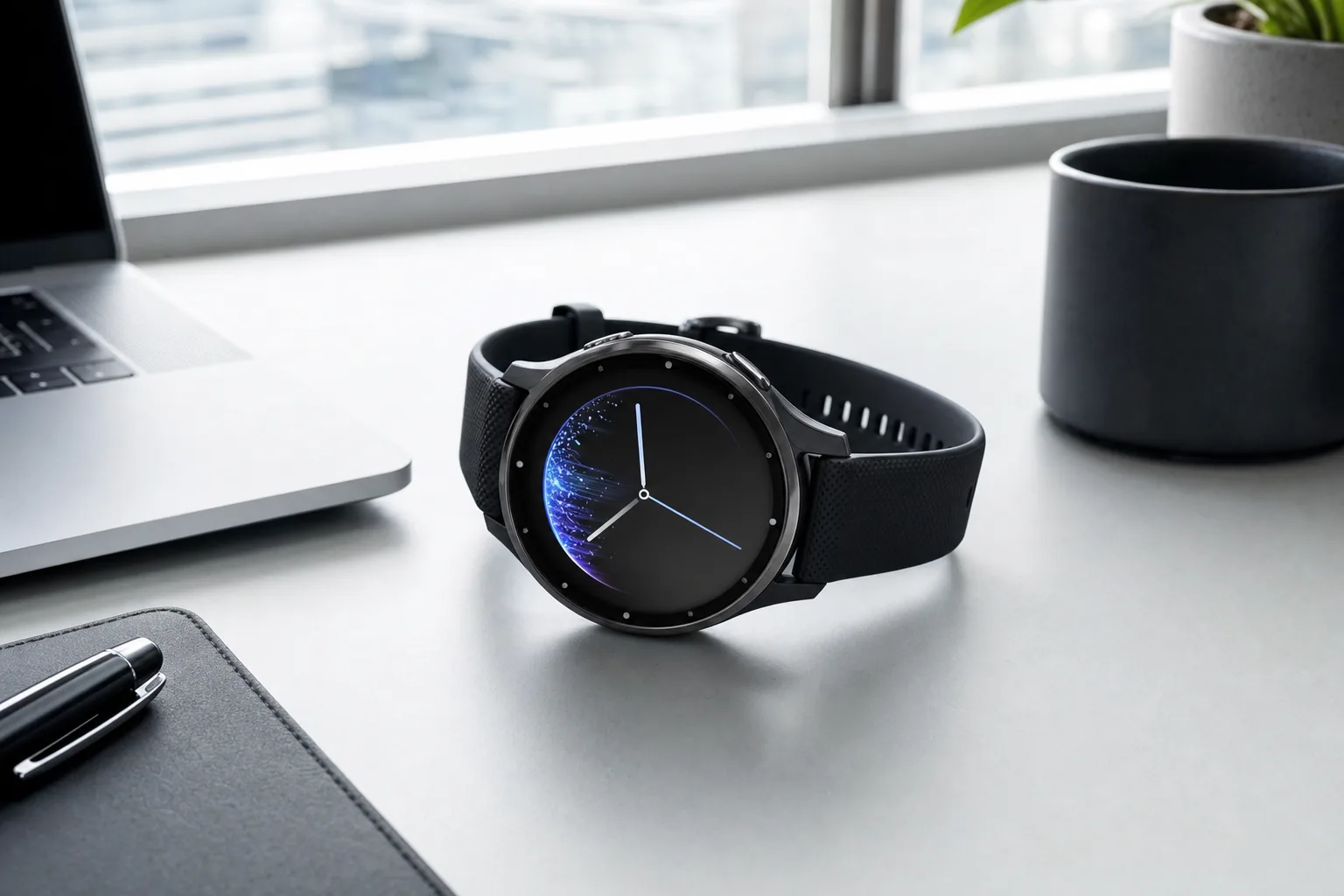
Battery in GPS mode is the more decisive difference. Garmin publishes 20 hours of GPS-only tracking on the 45mm Venu 4, 17 hours with all systems and multi-band enabled, and 9 hours with multi-band plus music. The 41mm manages 15, 12 and 6 hours. Samsung does not publish a GPS-mode figure for the Watch 9, and given a 30-hour all-day rating you should not expect anything close. For a marathon, a long hike or a full day out, that ends the discussion.
On training software Garmin is playing a different sport. The Venu 4 has the full training load suite, Training Readiness, HRV Status, Body Battery and the new Garmin Fitness Coach, which builds adaptive plans across more than 25 activities and adjusts them to your history and recovery. It supports structured triathlon workouts and carries more than 80 sports profiles. This is the same underlying software that runs on the Fenix 8, minus the maps.
Samsung's Running Coach is real and decent: a three to five week guided programme rather than a season-long adaptive plan, with Daily Cardio Load and Fitness Index as respectable first attempts at load management. Heart rate accuracy is good on both in steady-state work; Tech Advisor found the Venu 4 within 1bpm of a Garmin HRM 600 chest strap.
Run parkrun on a Saturday and want your steps counted, either watch is more than adequate and the Samsung is nicer to live with. Follow a training plan, chase a personal best, enter a half marathon or a triathlon, and the Venu 4 is a materially better instrument. Our full Garmin Venu 4 review covers the training features in more depth.
Round six: payments, music and the everyday details
Contactless works on both in the UK, but not equally well. The Watch 9 runs Google Wallet and Samsung Wallet, which between them cover essentially every UK bank and card. Garmin Pay's directly supported UK list is much shorter, with Santander, Starling, Monzo, Barclays, NatWest, HSBC and Capital One among the names and plenty of UK banks absent. The workaround is a Curve card, which sits in front of your real card and works regardless of issuer. It works well, but it is another account to manage.
Offline music is a draw. The Venu 4 has 8GB of storage with offline downloads from Spotify, Deezer and Amazon Music. The Watch 9 has 32GB with offline Spotify and YouTube Music. Both let you run with earbuds and leave your phone at home; only the Samsung will also stream over LTE.
Garmin has a few small hardware wins. The Venu 4 has a built-in LED torch with white and red modes, which sounds gimmicky until you have used one on a dark lane. It also has a spoken watch face that reads out time and health data hourly, and colour filter options for colour-blind users. Samsung has none of those, and the accessibility work deserves more credit than it gets.
The iPhone question, answered plainly
If you use an iPhone, do not buy a Galaxy Watch 9. It will not pair. This is not something a third-party app or a firmware update can fix.
Google dropped iOS support with Wear OS 3, and Samsung has shipped every watch since the Galaxy Watch 4 on that platform. Older Tizen models up to the Galaxy Watch 3 could pair with an iPhone through a Samsung app. Everything from the Watch 4 onwards cannot. There has been movement on the Apple side, with iOS 26.3 opening more system access to third-party wearables, but that is groundwork rather than a solution and Samsung would need to ship substantial software of its own. Nothing has been announced.
The Venu 4 works with an iPhone exactly as it works with an Android phone, with the one exception that iOS does not permit replying to notifications from a third-party watch. Garmin Connect, training data, music downloads, Garmin Pay and ECG all behave identically. That single line disqualifies the Watch 9 for a large slice of the UK market, and it is worth saying loudly because Samsung's marketing does not.
Does Garmin make you pay a subscription?
Partly, and it is worth being precise because this generates more misinformation than any other question in the Garmin world.
Garmin Connect+ launched in 2025 and costs £6.99 a month or £69.99 a year in the UK, with a 30-day trial. What it does not do is paywall the features you buy the watch for. Training Readiness, Body Battery, HRV Status, sleep tracking, training load, VO2 max, Garmin Coach plans, the Fitness Coach and the full Garmin Connect app all remain free, and Garmin explicitly committed to keeping the free experience intact.
Connect+ adds Active Intelligence, which generates AI-flavoured prompts through the day, a Performance Dashboard with historic graphing, expanded LiveTrack and some cosmetic extras. Reviewers have been unimpressed; the5krunner's assessment a year on was that it still is not worth it. Garmin also moved revamped gear tracking back into the free tier in February 2026.
Samsung charges nothing for Samsung Health, a genuine advantage that Trusted Reviews listed as a plus point. Its most valuable health features are gated behind owning a Galaxy phone, though, which is a far more expensive requirement than £69.99 a year.
The short version on subscriptions: you do not need Garmin Connect+ to get full value from a Venu 4, and we would not buy it. But if a friend tells you Garmin has paywalled sleep tracking or Body Battery, they are wrong. Those are free and remain free.
What actually matters when you are choosing
Strip away the specification sheets and five questions decide this, in roughly this order.
1. What phone do you carry?
iPhone: Venu 4, decision over. Non-Samsung Android: the Watch 9 works but you lose ECG, blood pressure and sleep apnoea. Galaxy: both are open, so read on.
2. Do you want to track your sleep?
Be realistic about when a one-day watch gets charged. You will either charge before bed or lose the night. The Venu 4 never poses the question.
3. Do you need maps on your wrist?
The Watch 9 has real Google Maps. The Venu 4 has a breadcrumb line on a blank screen. For city navigation and travel that is a serious gap.
4. Are you actually training, or just moving?
Steps, a few gym sessions and the odd 5K: either watch, and the Samsung is nicer. Structured plans, races, long endurance days: the Venu 4, comfortably.
5. How much watch do you want on your wrist?
The 45mm Venu 4 is 51g and 12.5mm thick. The 44mm Watch 9 is 34g and 8.6mm. If you sleep in a watch or have slim wrists, go and handle both before buying.
Notice what is missing. Processor speed does not appear, because both respond quickly enough. Display resolution does not appear, because both are sharp at arm's length. Price does not appear high up, because the street prices are now close enough that it should not decide it.
Who should buy which
No fence-sitting. For the largest single group of UK buyers — an Android owner who wants a smartwatch, tracks activity casually and would like notifications, maps and payments to just work — the Galaxy Watch 9 is the right buy, and the nightly charge is a nuisance rather than a dealbreaker. For anyone who trains with intent, or who cannot face a daily charge, the Venu 4 is the better watch and it is not close.
Samsung Galaxy Watch 9, 40mm
£349, the brightest screen here, full Wear OS apps, Gemini and five years of updates. Charge it every night and it is excellent.

See Samsung Galaxy Watch 9 on Amazon UK
Check today's price & availability on Amazon UK
Garmin Venu 4, 45mm
Twelve days claimed, 20 hours of GPS, multi-band accuracy and Garmin's full training suite at no subscription cost. Buy it discounted.

See Garmin Venu 4 on Amazon UK
Check today's price & availability on Amazon UK
Garmin Venu 4
Not a close call. The Galaxy Watch 9 will not pair with an iPhone under any circumstances. The Venu 4 works identically on both platforms.
Garmin Venu 4, 41mm
Lighter than the 45mm at 42g, and it stays on your wrist all night because it does not need charging. Sleep Alignment and Consistency are genuinely useful.

See Garmin Venu 4 41mm on Amazon UK
Check today's price & availability on Amazon UK
Samsung Galaxy Watch 9, 44mm
£379 for a 1.47in 480 x 480 panel at 3,000 nits, still only 34g. The quoted battery life is the same 30 hours as the 40mm.

See Samsung Galaxy Watch 9 44mm on Amazon UK
Check today's price & availability on Amazon UK
You want a rugged outdoor watch
Neither has offline maps, and only Samsung's Ultra tier goes properly hard-wearing. We covered the run-up to that model in our Galaxy Watch Ultra 2 rumour tracking.
One more scenario. If you already own a Galaxy Watch 7 or 8, the Watch 9's improvements are real but incremental: a faster chip, a 20 per cent larger battery on the 40mm, repackaged health metrics. Engadget's comparison found no new health sensors at all. Our full Galaxy Watch 9 review covers what has and has not changed. If your Watch 8 is fine, keep it.
Galaxy Watch 9 vs Garmin Venu 4 FAQ
Both watches are excellent. They are simply excellent at different things, and the wrong one will annoy you daily.
Final verdict: buy the one that fits your week, not your spreadsheet
Most people should buy the Samsung Galaxy Watch 9. At £349 it undercuts the Venu 4's recommended price, its 3,000-nit screen is the best here, and Wear OS 7 gives it real Google Maps, Google Wallet, Gemini and every app you would actually want, backed by five years of promised updates. If you carry an Android phone, want a smartwatch rather than a training computer and can charge it each evening, it is the more useful object.
Buy the Garmin Venu 4 if you train, or if a nightly charge would ruin it for you. Eight to twelve days per charge, 20 hours of GPS tracking, multi-band accuracy matching Garmin's dedicated running watches, and a training and recovery system Samsung has no answer to. It also tracks your sleep properly, because it never leaves your wrist. Just do not pay £469.99; at the £365 to £380 UK street prices we found in early August 2026 it is arguably the better buy outright.
Two hard rules. If you own an iPhone, the Watch 9 is not an option at any price. And if your Android phone is not a Galaxy, its ECG, blood pressure and sleep apnoea features will not work for you, which removes most of the reason to prefer it on health grounds.
- Samsung Galaxy Watch 9View on Amazon
- Garmin Venu 4View on Amazon
- Garmin Venu 4 41mmView on Amazon
- Samsung Galaxy Watch 9 44mmView on Amazon