
Garmin Venu 4 Review: Lifestyle Smartwatch with Up to 12-Day Battery
Garmin's flagship AMOLED lifestyle watch grows up. The Venu 4 keeps the two-week battery life and adds smarter health metrics, multi-band GPS and a microphone - enough to challenge the Apple Watch on its own turf.
We link to the exact model on Amazon UK. Prices change often, so check the live price before you buy. As an Amazon Associate we earn from qualifying purchases.
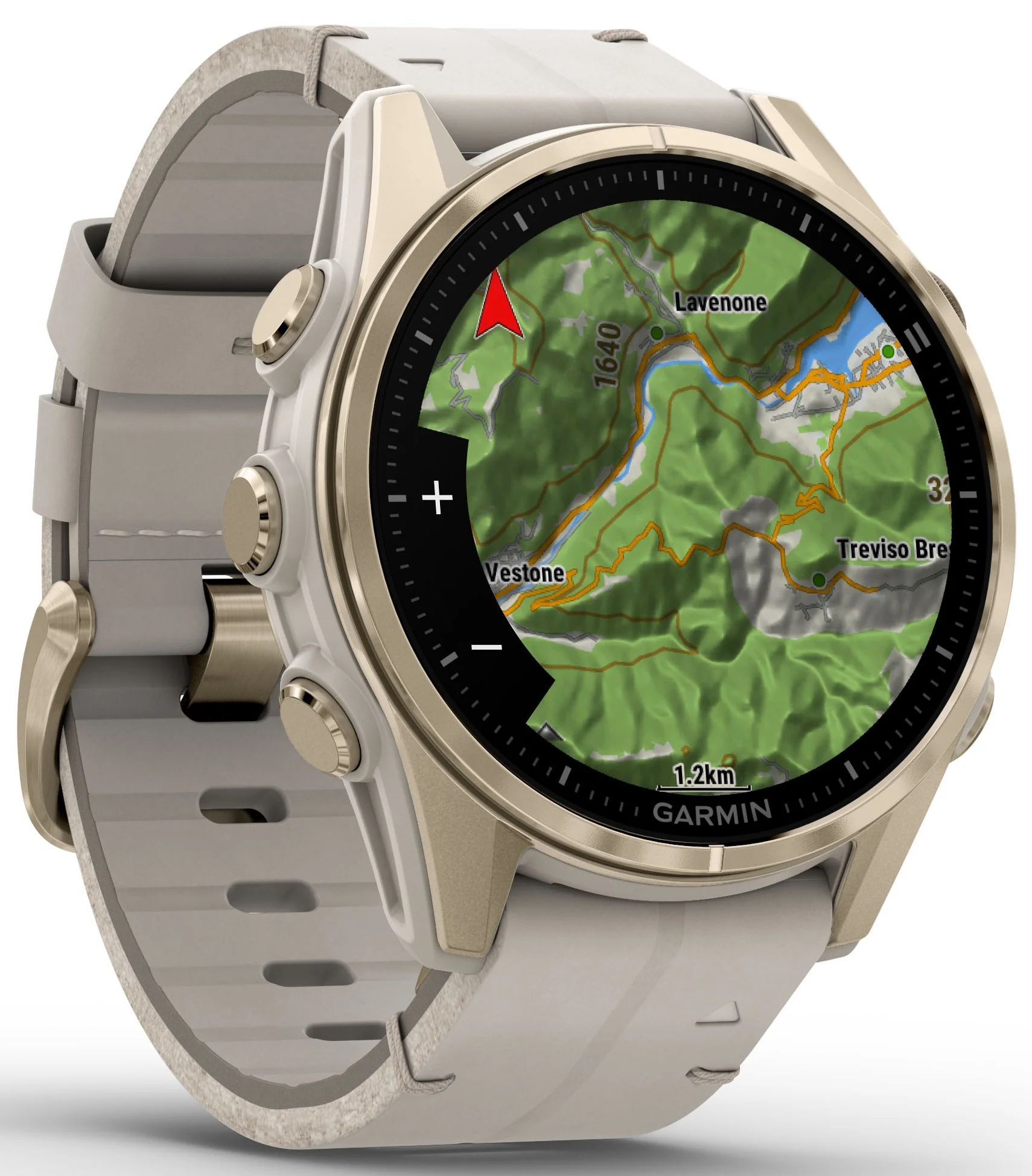
The Garmin Venu 4 - an AMOLED lifestyle smartwatch that pushes a single charge to nearly two weeks.

See Garmin Venu 4 41mm on Amazon UK
Check today's price & availability on Amazon UK
1. Where the Venu 4 fits in Garmin's range
Garmin makes a lot of watches. Working out where the Venu 4 sits is half the battle.
Garmin's 2026 lineup at a glance
- Forerunner - dedicated running watches, light and feature-dense (165, 265, 965).
- Fenix / Epix - rugged premium multisport with maps and topo (Fenix 8, Epix 2 Pro).
- Venu - lifestyle AMOLED with full health tracking but a softer, more wearable design (Venu 4).
- vivoactive - the entry-level lifestyle watch (vivoactive 6).
- Lily / vivomove - smaller, hybrid or fashion-led options.
The Venu 4 sits above the vivoactive 6 and below the Fenix range. It shares Garmin's full health-and-sleep stack with the Fenix, but it doesn't have full topographic maps, the rugged metal bezel or the 30+ day battery life of a Fenix 8. In return it's lighter, more attractive, and noticeably cheaper.
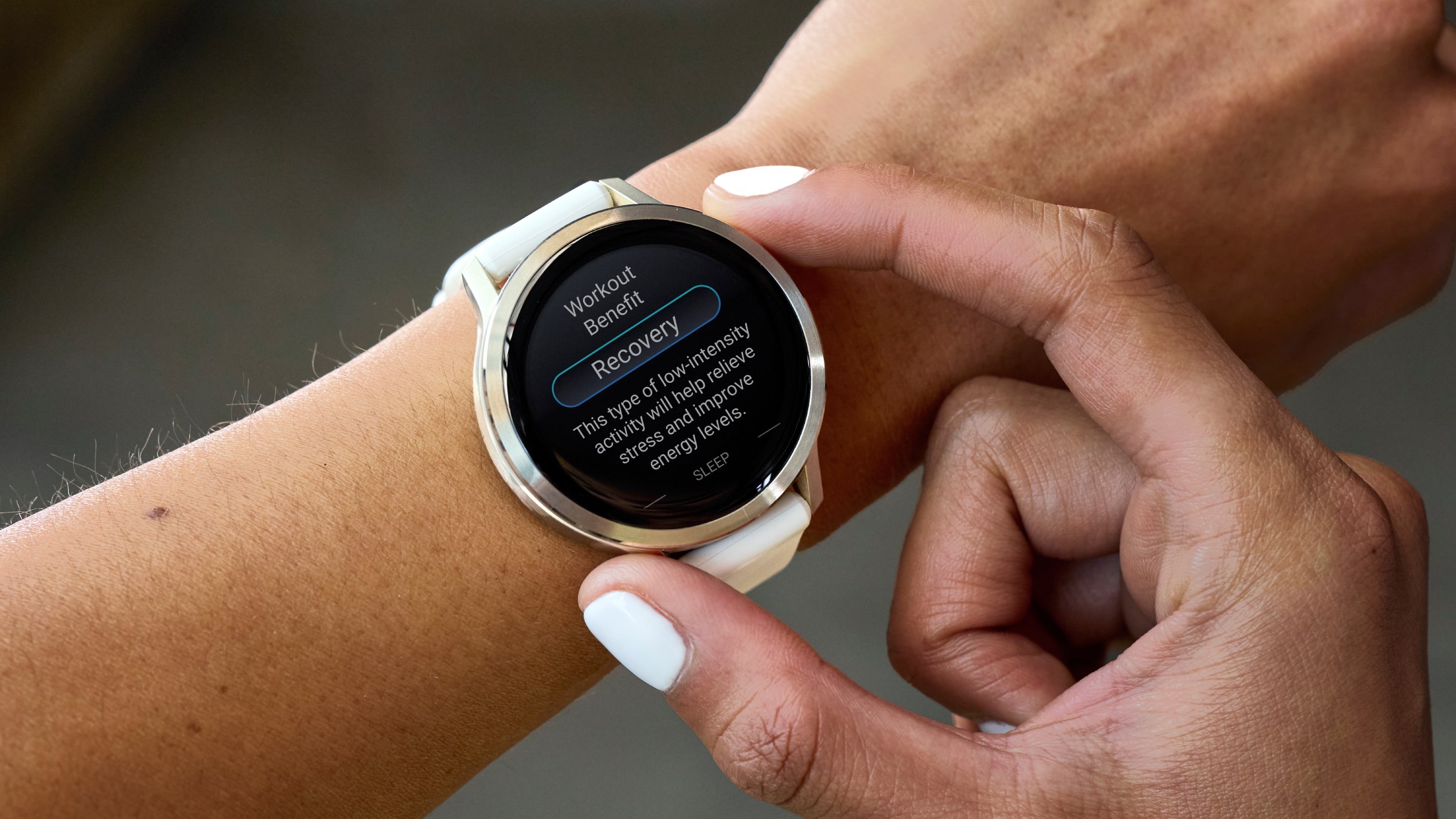
The Venu 4 splits the difference between a Forerunner and a Fenix - light enough to wear all day, capable enough to handle real workouts.
2. Design and display
The Venu 4 comes in 41mm and 45mm sizes. The 41mm uses a 1.2-inch AMOLED; the 45mm uses a 1.4-inch AMOLED. Construction is a stainless-steel bezel with a fibre-reinforced-polymer case and Gorilla Glass 3.
Two case sizes, picked properly
Garmin offers the Venu 4 in 41mm and 45mm. Both have the same internal hardware - sensors, GPS, battery efficiency - but the 45mm case carries a larger battery. The 41mm is the one to buy for smaller wrists; the 45mm is the one to buy if battery life is the headline feature.
AMOLED in real use
Always-on mode with a low-power dimmed face works well in the UK's notoriously dim winters. The display ramps up to 1000+ nits in direct sunlight - readable on the brightest summer days. Touch is responsive, and the two physical buttons mean you can control the watch with gloves on.
What's new in design
- Microphone and speaker - take calls on your wrist, or use voice assistant prompts (paired phone required).
- New strap mechanism - quick-release pins are now industry standard, third-party 22mm/20mm straps fit.
- Improved water resistance - 5ATM / 50m as before, with swim profiles; it is not a dive computer.
3. Battery life - the real Garmin advantage
Battery life remains Garmin's defining advantage and the single biggest reason to pick the Venu 4 over an Apple Watch. The 45mm case is officially rated up to 12 days in smartwatch mode with always-on disabled, or roughly 8-9 days with always-on enabled. GPS hits the figure harder - around 22 hours of continuous multi-band GPS, or 35 hours in standard GPS mode.
Real-world usage
- 'Smartwatch only' use - notifications, sleep tracking, daily activity: 8-12 days depending on always-on settings.
- One workout per day - 30-45 minutes of GPS-tracked exercise: 5-7 days.
- Heavy use - daily workouts, music streaming, frequent calls: 3-4 days.
For comparison, an Apple Watch Series 10 will get you 18-36 hours depending on use; a Pixel Watch 3 lasts 24 hours. Garmin's lead here is not a 20% advantage - it's an order of magnitude. You charge it on a Sunday morning while making coffee, and forget about it until next weekend.
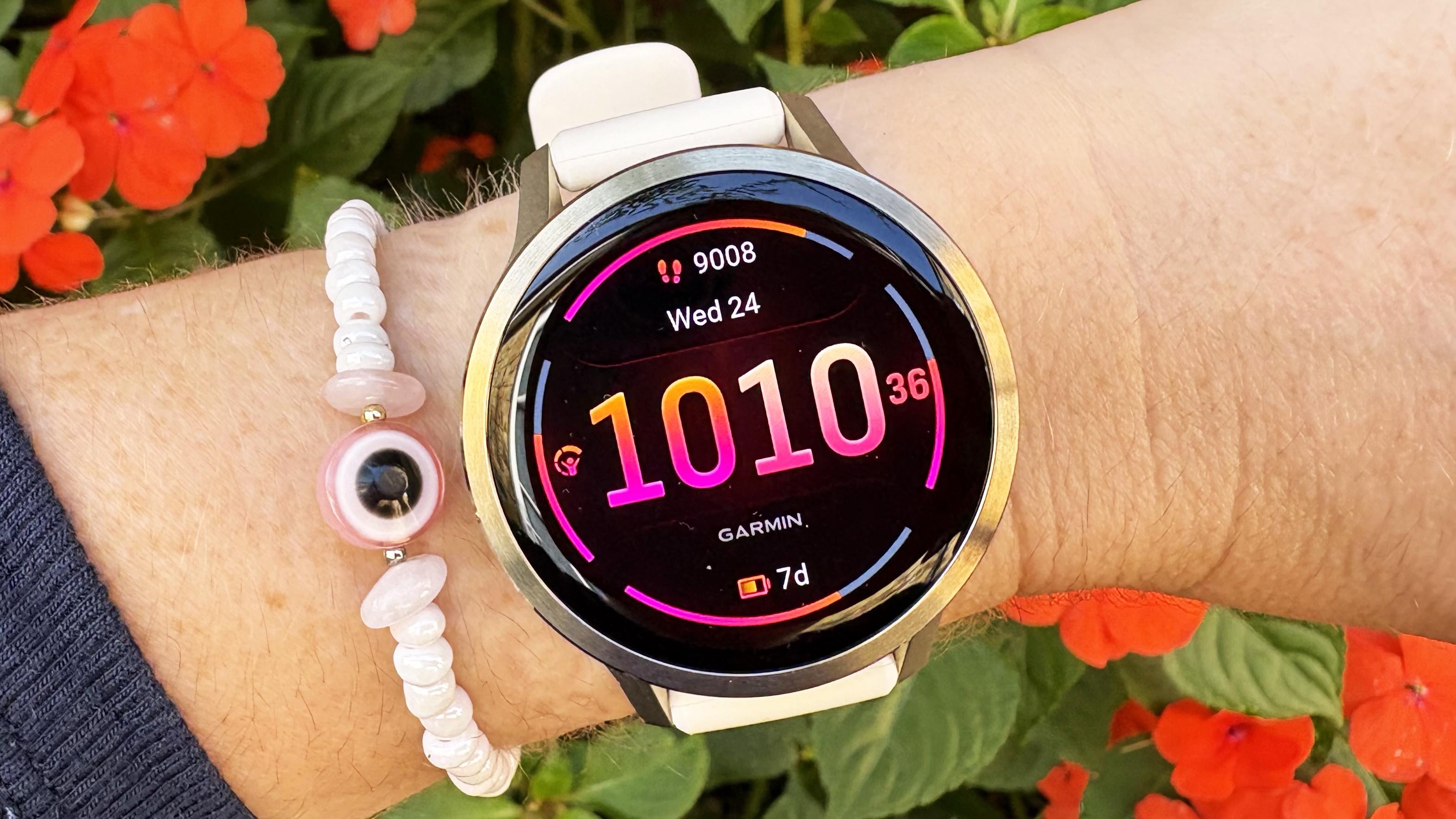
The Venu 4's 45mm case can hit 12 days of smartwatch use - charging becomes a weekly chore rather than a nightly one.
Sleep tracking that doesn't require a Sunday-night charge
Long battery life is the foundation of Garmin's sleep-tracking advantage. You can wear the watch overnight, every night, without the Apple Watch problem of 'it's at 3% and I haven't slept yet'.
4. Health and wellness features
This is the area where Garmin has caught up to (and in some places overtaken) Apple. The Venu 4 ships with the most complete health tracking suite Garmin makes outside the Fenix line.
Continuous metrics
- Heart rate - 24/7, with high/low alerts
- Pulse Ox / SpO2 - continuous overnight option, with daytime spot-checks
- Body Battery - 0-100 energy reserve metric updated continuously
- Stress Score - HRV-derived, real-time
- Skin temperature - sleep tracking baseline (no fever spot-check)
- HRV Status - 7-night rolling baseline
What's new on the Venu 4
Garmin has added an ECG feature (where regulatory approval permits - this is live in the UK), a Sleep Coach that gives proactive bedtime nudges based on your training load and prior sleep, and a refreshed Women's Health tracking suite with cycle predictions and pregnancy mode.
Body Battery is the killer metric
If you've never used Body Battery, it's hard to convey how useful it is. A single 0-100 number that goes up when you sleep and down when you stress or exercise. Look at it in the morning to see if you're recovered; look at it before a workout to see if you should push or take it easy. After two weeks you start checking it the way you check your phone battery.
5. GPS and workout tracking
The Venu 4 uses multi-band (L1+L5) GPS - the gold standard in 2026. In practical terms, GPS tracks are accurate even in dense urban environments or under tree cover where single-band watches drift.
Workout modes
Garmin offers more than 35 built-in activity profiles, including running, cycling, swimming, golf (with course maps), HIIT, yoga, strength training with rep counting, and pickleball. The Venu 4 adds a few new ones - hyrox, padel, and trail running with refined elevation profiles.
Pace and intensity guidance
You won't get the Forerunner's race predictor or the Fenix's stamina metric, but the Venu 4 includes Garmin's daily suggested workouts (based on your training load), Heart Rate Zone alerts, and a built-in HIIT timer with rep-and-rest cycles. For most lifestyle athletes, this is plenty.
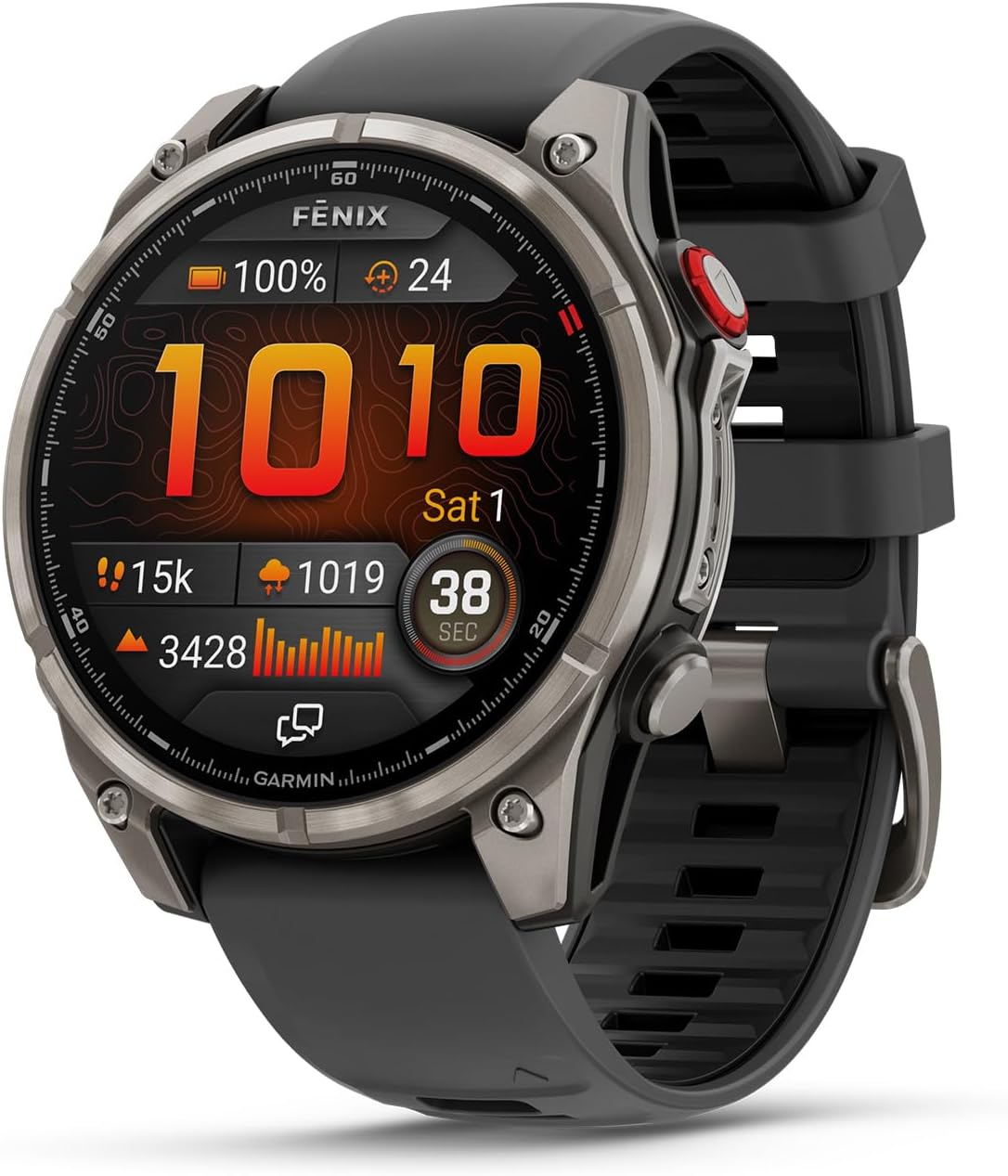
Multi-band GPS makes urban runs noticeably more accurate - traces sit on the right side of the road instead of swerving into buildings.
Where it falls short of a Forerunner
If you're a serious runner, the Venu 4 is missing a few things that matter: the Race Widget that predicts your 5K/10K/half/full marathon times, training load focus (is your work aerobic or anaerobic?), and PacePro for courses with elevation. None of these are deal-breakers; if you want them, look at a Forerunner 265 or 965 instead.
6. Smartwatch features - calls, payments and music
The Venu 4 has finally added the smartwatch table-stakes that previous Venu watches lacked. The microphone and speaker mean you can take calls on your wrist, dictate text replies, and use your phone's voice assistant hands-free.
Calls and notifications
Calls work over Bluetooth via your paired phone. Audio quality is fine for short calls - more 'speakerphone in a meeting room' than 'studio microphone'. Notifications come through clean and you can reply to texts with quick canned responses or voice dictation (Android only - iOS still restricts third-party watch reply).
Garmin Pay
Shop Garmin Pay on Amazon UK
Garmin Pay support is issuer/card-specific and changes over time; check Garmin's current UK participating-bank list for the exact card before relying on it. Set up takes 5 minutes and uses standard chip-and-PIN fallback for transactions over the contactless limit.
Music storage
The Venu 4 holds up to 8GB of music on board - around 1500 tracks depending on encoding. Spotify, Amazon Music and Deezer all support offline playlists synced over Wi-Fi. For runs without your phone, this is genuinely useful.
Voice assistant
The Venu 4 supports phone-paired voice assistant - press the button, ask Siri (iOS) or Google Assistant (Android) anything, and the response plays through the watch's speaker. There's no on-board AI, no Garmin assistant; this is purely a relay to your phone.
7. Sleep, stress and recovery
Garmin's sleep tracking has consistently been more useful than Apple's, and the Venu 4 widens the gap further with the new Sleep Coach.
What gets tracked
- Sleep stages - light, deep, REM, awake
- SpO2 during sleep - average and lowest values
- Skin temperature variation - shows whether tonight is warmer or cooler than your baseline
- HRV during sleep - the underlying recovery metric
- Sleep Score - 0-100, with a written breakdown of what was good and what wasn't
Sleep Coach
The Venu 4's new Sleep Coach gives proactive bedtime nudges. If you had a tough workout this morning, it might suggest going to bed 45 minutes earlier than usual. If your HRV is depressed, it'll explain why and how to recover. It's not the same as a coaching app, but it nudges in the right direction without being preachy.
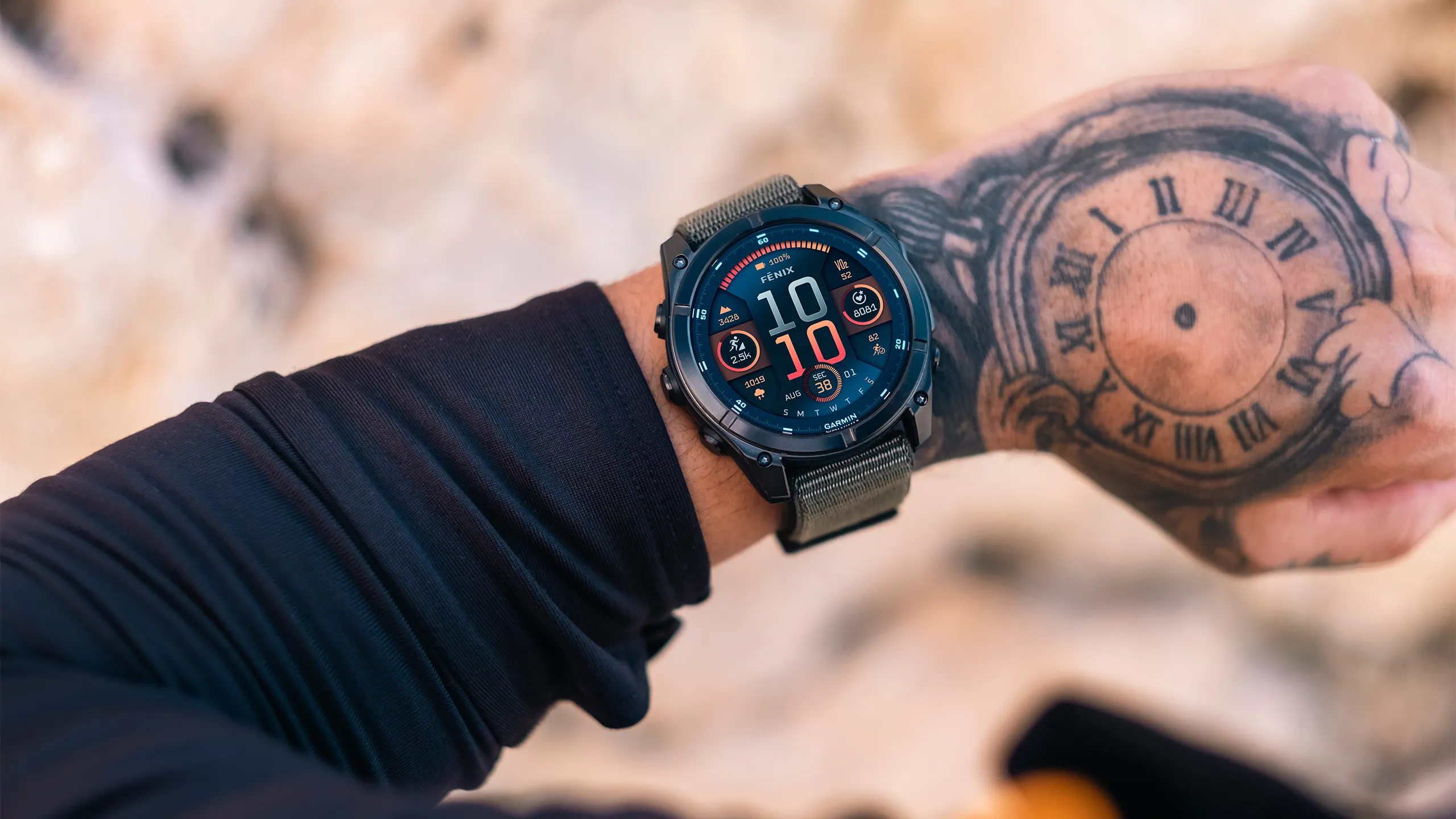
The Sleep Coach turns Garmin's data into actionable bedtime advice - more useful than the raw sleep score on its own.
Stress tracking
Heart rate variability is sampled continuously to produce a Stress Score. The watch buzzes if your stress stays elevated for too long and offers a guided breathing exercise. The threshold is configurable, and it doesn't become annoying after the first day.
8. Garmin Connect and the ecosystem
The watch is only half the experience. Garmin Connect (the companion app) is the other half - and it's genuinely good in 2026.
What you get in Connect
- A clean dashboard of every metric the watch tracks
- Long-term trend graphs (3-month, 1-year sleep / RHR / weight / HRV)
- Course planner (build a route, sync to watch, follow the breadcrumb on the wrist)
- Garmin Coach - free running and cycling training plans (5K to marathon)
- Connections - friends list, leaderboards, group challenges
- Strava / MyFitnessPal / Apple Health export
Compared to Apple Health and Fitbit
Garmin Connect is more data-rich than Apple Health, but less polished. Fitbit Premium is more 'consumer-friendly'; Garmin Connect is more 'show me the numbers'. For people who actually look at their data, Connect is the better tool. For people who just want a thumbs-up that they slept well, Fitbit's softer presentation may suit better.
No subscription
One thing Apple, Fitbit, Whoop and Oura all share that Garmin doesn't is a paid subscription. Core Garmin Connect remains usable without a subscription, but Garmin Connect+ is an optional paid tier; do not promise that every present or future feature is free forever. There is a Premium tier locking your sleep score behind a paywall, no 'Coach' upcharge, no recurring fees. That changes the long-term cost calculation considerably.
9. Venu 4 vs Apple Watch Series 10 - the practical differences
The most common cross-shop for the Venu 4 is the Apple Watch Series 10. They cost similar money and target overlapping buyers, but the daily experience is fundamentally different.
Battery life
This is the headline difference and the one that shapes everything else. Apple Watch Series 10: 18-36 hours depending on use. Venu 4 (45mm case): 8-12 days in smartwatch mode, 5-7 days with daily workouts. The Apple Watch's short battery life means it lives on a charger by your bed every night, which means it's a poor sleep tracker. The Venu 4 lives on your wrist for a fortnight at a time and tracks every night.
Apps and ecosystem
Apple Watch wins, comprehensively. The watchOS app store is enormous: Strava, MyFitnessPal, Microsoft Outlook, BBC Sounds, all your banking apps, every podcast app, third-party payment options, even a few games. Garmin Connect IQ has apps and watch faces, but the catalogue is a fraction the size and many third-party Connect IQ apps are visibly amateur.
Health tracking depth
Garmin wins on workout depth, sleep tracking, recovery metrics and the long-term trend graphs. Apple wins on ECG sophistication, heart rate notifications, fall detection (subjectively more reliable), Mindfulness app, and Apple Health's integration with the broader iOS ecosystem.
Music, payments, calls
Apple Watch handles cellular calls (with the Cellular variant), Apple Pay everywhere, all major streaming services with offline playback, and Siri at a quality the Venu 4 doesn't approach. Venu 4 handles Bluetooth-relayed calls (good for short use), Garmin Pay (supported by major UK banks but the list is shorter), and offline music from Spotify, Amazon Music or Deezer.
Looks
Subjective. The Venu 4 round face looks more like a traditional watch; the Apple Watch's rounded-rectangle is unmistakably tech. Many men prefer the round Garmin face for formal occasions; many women find the AMOLED Apple Watch more attractive day-to-day. There's no right answer.
Subscription cost
The hidden long-term factor. Apple Watch Series 10 with cellular service: £5-£10/month for cellular plus optional Apple Fitness+ and Apple One bundles. Garmin Venu 4: zero ongoing subscription costs, ever. Over five years that's a real number - hundreds of pounds.
The 30-second rule
If you live in iOS, take cellular calls and want a deep app ecosystem on your wrist, get the Apple Watch Series 10. If you care more about workouts, sleep tracking, and not charging your watch every day, get the Garmin Venu 4. Neither is wrong.
10. Two weeks living with the Venu 4
Spec sheets don't capture how a smartwatch feels day-to-day. Here is what a real fortnight with the Venu 4 actually looks like.
Days 1-2 - the first charge anxiety
Charged out of the box on day one, hit 100% in about 90 minutes from flat. Walked, ran 5K, slept, repeated for two days. Took a screenshot of the battery icon on day 2 (still 87%). For an Apple Watch user, the not-charging-daily psychology takes a few days to adapt to. By day 3 you stop checking.
Days 3-5 - getting useful data
By day 3, Body Battery had calibrated to my baseline; HRV had a seven-night reading; Sleep Score showed pattern (predictably worst on Sunday after a big session, best mid-week). The Sleep Coach started giving suggestions on day 4 - 'considering yesterday's intensity, aim for 23:00 bedtime tonight'. It was right, twice that week.
Days 6-7 - the long workout test
A 75-minute hill run on Saturday, then a 90-minute hike on Sunday. Multi-band GPS handled both cleanly - no urban canyon drift, no elevation glitches. Heart rate tracked smoothly through both. Battery ended Sunday on 65%, ie comfortably enough to skip a charge for several more days.
Day 8 - the first charge
Plugged in on Monday morning, day 8 of wear. Battery showed 22%. Charged from 22-100% in about 75 minutes while drinking coffee and showering. Realistic recharge cadence: weekly, with one extra session in heavy weeks.
Days 9-12 - the office and life-admin week
Mostly a quiet week - office, a couple of evening walks, no big runs. Notifications came through cleanly, Garmin Pay worked at three shops, two restaurants and one Tube journey. Body Battery patterns were clear: started high, dipped during the working day, recovered in the evening. The data felt useful in a way Apple Watch's 'Activity Rings' doesn't.
Day 13 - the difficult restaurant
Italian restaurant, ambient noise around 70dB. Took a call by tapping the watch and using the speaker - audio was clear enough for a 90-second confirmation, not for a long conversation. The Apple Watch would have done this slightly better; the gap is meaningful but Venu 4 is no longer 'no microphone'.
Day 14 - the second charge
Charged again at end of day 13, total runtime about 13 days from the day-1 charge. With one big-workout weekend included. The marketing '12 days' figure is real if you don't crank always-on-display, run GPS-heavy workouts daily, or stream music constantly.
What stuck
Body Battery, the Sleep Coach, and the freedom from a nightly charger. Those are the three things that would make me hesitant to go back to an Apple Watch. The lack of a polished app store and Siri remained the things I missed.
See Garmin Venu 4 41mm on Amazon UK
Check today's price & availability on Amazon UK
Frequently asked questions
How does the Venu 4 compare to the Apple Watch Series 10?
Different watches for different priorities. The Apple Watch is a far better smartwatch (apps, Siri, ecosystem). The Venu 4 is a far better health and fitness device (battery life, sleep tracking, no subscription). If you live inside iOS and care about apps, get the Apple Watch. If you care about workouts, sleep and battery life, get the Venu 4.
Should I buy the Venu 4 or a Forerunner 265?
If you're a runner first and want a watch second, get the Forerunner - it has running-specific features (race predictor, training load focus, PacePro) the Venu doesn't. If you want a watch that looks good in a meeting and tracks all your fitness, get the Venu 4.
Does the Venu 4 work with iPhone?
Yes, fully. Notifications work, music sync works, Garmin Pay works. The only limitation is that you can't reply to iMessages from the watch (an iOS restriction that affects every non-Apple watch).
Is the ECG feature certified for the UK?
Yes. Garmin obtained MHRA acknowledgement for the ECG feature ahead of the Venu 4 launch. As with the Apple Watch, the ECG can detect signs of atrial fibrillation but is not a replacement for clinical diagnosis.
Will it survive open-water swimming or triathlon?
5ATM / 50m water resistance covers swimming pools and ocean swims. The Venu 4 has dedicated open-water and pool swim modes, and a triathlon multisport mode. For ironman-distance triathlon, a Forerunner 965 or Fenix 8 has a few more dedicated tools, but for sprint and Olympic the Venu 4 is fine.
How accurate is the heart rate sensor compared to a chest strap?
For steady-state cardio, very close - within 2-3bpm of a chest strap. For high-intensity interval work or weight training with a lot of wrist flexion, all wrist-based HR sensors lag behind. If you do a lot of HIIT or CrossFit, pair the Venu 4 with a Garmin HRM-Pro chest strap for the best of both.
Will my old Garmin watch's training data carry over?
Yes. Garmin Connect stores all your historical data on Garmin's servers, so the moment you sign in on a new watch you have your full history - VO2 Max, training load, HR baseline, sleep history, workout records. The Venu 4 reads them and continues from where you left off.
How does Garmin Connect compare to Strava?
They serve different purposes. Garmin Connect is the data platform - all your metrics, workouts, sleep, body measurements, stored long-term. Strava is the social/training-focused platform. Most committed runners and cyclists use both: workouts auto-sync from Garmin to Strava, training plans live in Garmin, social and route discovery live in Strava.
Is the AMOLED display a battery hit compared to the older MIP display Venus?
Yes, AMOLED uses meaningfully more power than the MIP (memory-in-pixel) screens of older Garmin lifestyle watches. The Venu 4's 14-day figure assumes an always-off display except on raise-to-wake. Always-on AMOLED roughly halves battery life. If you absolutely need 30+ day battery life and an MIP display is acceptable, the Forerunner 165 or vivoactive 6 are the alternatives.
Can I swim with it?
Yes - 5ATM water resistance covers pool swims and ocean swims down to about 50m. There are dedicated open-water and pool swim profiles, plus a triathlon multisport mode. For diving deeper than 10m you want a Descent or Fenix 8 with proper dive computer features.
How does the ECG feature work in the UK?
Press and hold the watch face for 30 seconds with your fingers on the bezel sensors. The watch records a single-lead ECG and displays the result (sinus rhythm, AFib detected, or inconclusive). Results sync to Garmin Connect and can be exported as PDF. Garmin obtained MHRA acknowledgement before launch; the feature is enabled out of the box for UK buyers.
Do I need a phone with me to use the watch?
No, for basic use. Music plays, workouts track, notifications are paused, contactless payments work. Most features that need internet (firmware updates, weather, music sync) need a phone or Wi-Fi connection eventually, but you can leave your phone at home for an entire workout without losing anything important.
Verdict: the lifestyle smartwatch that doesn't need a charger by your bed
The Venu 4 is the easiest Garmin recommendation in years. It looks good, the AMOLED display is beautiful, the new microphone and speaker fix the biggest functional gap in previous Venus, and the two-week battery life remains a quiet superpower. Garmin's health tracking - especially sleep and Body Battery - is genuinely better than Apple's, and you don't pay a subscription to access any of it.
The compromises are reasonable. Apps are limited compared to a real smartwatch, the running-focused features aren't as deep as a Forerunner, and you don't get full topographic maps. None of those will matter to most buyers.
If you want a smartwatch that puts health and battery life ahead of phone integration, the Garmin Venu 4 is the watch to buy.
See Garmin Venu 4 41mm on Amazon UK
Check today's price & availability on Amazon UK
- Garmin Venu 4 41mmView on Amazon
 Anker Nano II 65W chargerView on Amazon