
Samsung Smart Watches UK: The Complete Buyer's Guide
A head-to-head look at every Galaxy Watch you can actually buy in Britain right now — from the featherweight Watch 8 to the titanium-clad Watch Ultra — with honest verdicts on which one suits which wrist.
We link to the exact model on Amazon UK. Prices change often, so check the live price before you buy. As an Amazon Associate we earn from qualifying purchases.
Samsung's 2026 Galaxy Watch line-up spans flagship slimness, classic bezels, rugged titanium and a budget-friendly entry point.
Samsung's Galaxy Watch lineup is the strongest Android smartwatch family in the UK in 2026, with options for every wrist and budget.
What's covered in this guide
- The current Galaxy Watch range
- Galaxy Watch 8 deep dive
- Watch 8 Classic for traditionalists
- Watch Ultra for the outdoors
- Watch 7 and Watch FE value plays
- Head-to-head comparison
- Performance, battery, fitness
- Who should buy which
- FAQs and final verdict
The 2026 Samsung Galaxy Watch Line-Up at a Glance
Before we get into the weeds, here's the lay of the land. Samsung currently sells five distinct Galaxy Watch models in the UK, and each one is aimed at a meaningfully different buyer. The Galaxy Watch 8 is the all-rounder flagship. The Watch 8 Classic adds a physical rotating bezel and a more traditional look. The Galaxy Watch Ultra is the rugged, titanium-built adventure piece. The Galaxy Watch 7 remains in the range as a still-excellent fitness option, and the Galaxy Watch FE is the budget gateway.
Samsung announced the Galaxy Watch9 and Galaxy Watch Ultra2 on 22 July 2026, with UK availability from 3 August. Both use Snapdragon Wear Elite; the Ultra2 has an 800mAh battery and 5,000-nit display, while Watch9 has a 390mAh battery in a slimmer body.
Galaxy Watch 8: The All-Rounder Flagship

See Galaxy Watch 8 on Amazon UK
Check today's price & availability on Amazon UK
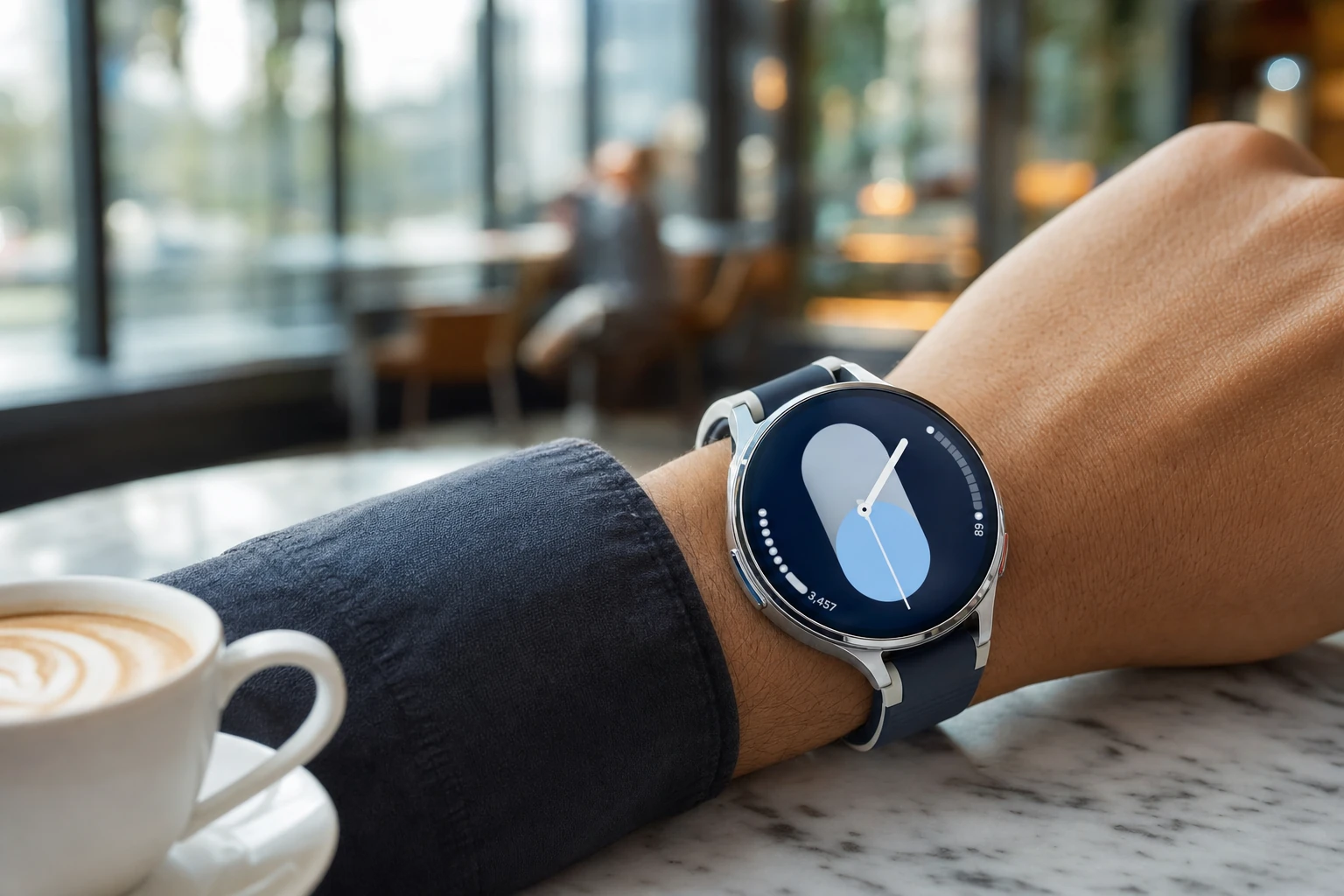
If you asked me which Galaxy Watch most people should buy, I'd point at the Galaxy Watch 8 without hesitating. Released on 25 July 2025, it's Samsung's thinnest Galaxy Watch ever at just 8.6mm — a number that genuinely matters when you're sleeping in it or sliding it under a shirt cuff. The 40mm version weighs only 30g and the 44mm tips the scales at 34g. Compared to the chunkier Watch 6, it feels like a different category of object on the wrist. UK pricing started at £319 for the 40mm Bluetooth model (£349 for the 44mm, £369 with LTE), but by mid-2026 it has dropped sharply — John Lewis has had it at £299, down from £399.
The headline upgrade over last year's Watch 7 is the display. Samsung has bumped peak brightness from 2,000 nits to a properly punchy 3,000 nits, and the difference outdoors in British summer sunshine — yes, we get some — is night and day. You can actually read a notification without cupping your other hand around the watch face like you're shielding a candle.
Under the hood, the Watch 8 runs on Samsung's Exynos W1000 chip built on a 3nm process — efficiency gains here are why the watch can be this thin and still hold its battery life. There's 2GB of RAM and 32GB of internal storage, plenty for offline playlists and a healthy collection of Wear OS apps. The casing is Samsung's "Armour Aluminium" finish, which sits in Graphite or Silver and looks more industrial than fashion-forward — a deliberate move, I think.
The big software story is Google Gemini built directly into the watch — the Watch 8 was the first Samsung watch to ship with Gemini on-wrist out of the box, replacing the old Google Assistant. Raise your wrist, ask a question, and you get genuinely useful answers — not the half-baked voice assistant nonsense we've put up with for a decade. Samsung's Running Coach feature is also a meaningful addition, offering structured plans and post-run analysis that nudges the Watch 8 closer to dedicated GPS sports watches. New for the Watch 8 is also an Antioxidant index and an AGEs (Advanced Glycation End-products) index, the latter monitored across four levels while you sleep with the watch on.
The Galaxy Watch 8's slimmer profile and Dynamic Lug System make it the most comfortable Galaxy Watch to date.
Galaxy Watch 8 Classic: For the Traditionalists

See Galaxy Watch 8 Classic on Amazon UK
Check today's price & availability on Amazon UK
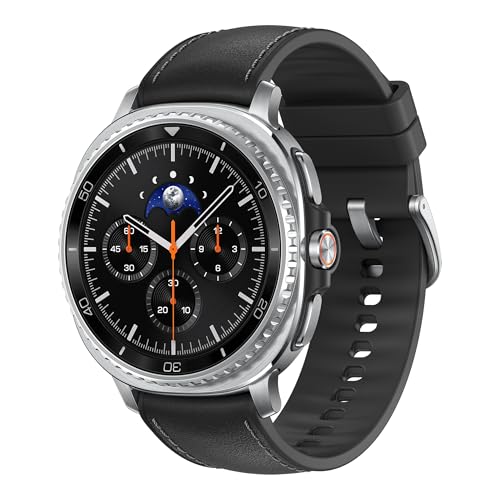
The Galaxy Watch 8 Classic is the watch I keep coming back to whenever I want my wrist to look like it's wearing actual jewellery rather than a fitness gadget. The defining feature is, as ever, the physical rotating bezel — backed by a 3D Hall sensor for satisfyingly precise clicks. Spin it to scroll notifications, scrub through workouts, or thumb through tiles, and tactile interaction immediately makes the touchscreen feel like a compromise. It launched at £449 (Bluetooth) / £499 (LTE), and since there's no Watch 9 Classic coming this year, it remains the only bezel-equipped Galaxy Watch you can buy new in 2026.
It's a 46mm-only proposition. The stainless steel case weighs 63.5g (so substantial — there's no pretending otherwise), measures 10.6mm thick, and houses a 445mAh battery. Samsung has also added a third physical button — the Quick Button — to the side, which can be remapped to launch a workout, a torch, or whatever app you use most.
Storage doubles compared to the standard Watch 8, jumping to 64GB, which makes the Classic the choice if you want to load a serious offline music library or use the watch as a mini-app platform. RAM remains at 2GB, the same as the standard Watch 8.
Watch 8 Classic Strengths
- Physical rotating bezel is genuinely the best smartwatch interaction method
- 64GB storage doubles what the standard Watch 8 offers
- Stainless steel build feels properly premium
- 3,000-nit display is sublime in any lighting
- Larger 445mAh battery for longer endurance
- Dedicated Quick Button adds genuine utility
Watch 8 Classic Compromises
- 63.5g is heavy for sleep tracking and small wrists
- 10.6mm thickness is noticeable under shirt cuffs
- Single 46mm size limits accessibility
- Premium positioning means premium pricing
Galaxy Watch Ultra: The Rugged Specialist

See Galaxy Watch Ultra on Amazon UK
Check today's price & availability on Amazon UK
The Galaxy Watch Ultra is Samsung's answer to the Apple Watch Ultra, and for 2025 it received a mid-cycle refresh that doubled internal storage from 32GB to 64GB and introduced a striking new Titanium Blue colour to the existing Titanium Grey, White and Silver options. It's an unapologetic adventure watch — and importantly, it's the only Galaxy Watch I'd describe as truly built for abuse. In the UK it sells for around £558 (47mm, LTE) at Amazon, Currys and John Lewis.
The case is Grade 4 Titanium with a sapphire crystal covering the 1.5-inch Super AMOLED display — the same 3,000 nits peak brightness as the rest of the modern range. It's MIL-STD-810H certified, IP68 dust- and water-resistant, and rated to 10ATM (100m) of water pressure for either fresh or salt water. The watch is engineered to operate between -20°C and 55°C, and at altitudes from -500m up to 9,000m. That last figure is over the summit of Everest, for context. The 2025 model also charges faster than the 2024 edition — hitting 50% in about 30 minutes — and swaps the old Bixby for Google Gemini.
Dual-Frequency GPS
L1 + L5 satellite reception means dramatically more accurate tracking in cities, dense forests and mountains where single-band watches lose the plot.
Emergency Siren
An 86dB siren built into the watch — properly loud and properly useful if you've twisted an ankle off-trail.
AI Heart-Rate Zones
Personalised zones calibrated from your training history, plus FTP metrics for cyclists who actually care about threshold power.
120+ Workout Modes
From standard running and swimming through to specialist activities — comparable to dedicated multisport watches at this point.
The Ultra packs a 590mAh battery — by far the largest in the range — and that's where it earns its "battery champion" badge. In real-world use with always-on display disabled and GPS used sparingly, you're looking at multi-day endurance (Samsung quotes up to 80 hours with AOD off, and up to 100 hours in Power Saving) rather than the daily charge cycle of the standard Watch 8. There's a remappable Quick Button on the case, plus the standard pair of side buttons.
The Galaxy Watch Ultra ships with LTE (4G) connectivity in the UK, allowing standalone calls and data with a compatible eSIM plan. 5G is not part of the spec for the European version.
Grade 4 titanium, sapphire crystal and a 590mAh battery make the Galaxy Watch Ultra the most capable adventure piece Samsung has ever shipped.
Galaxy Watch 7 and Watch FE: The Smart Buys
See Galaxy Watch 7 and Watch FE on Amazon UK
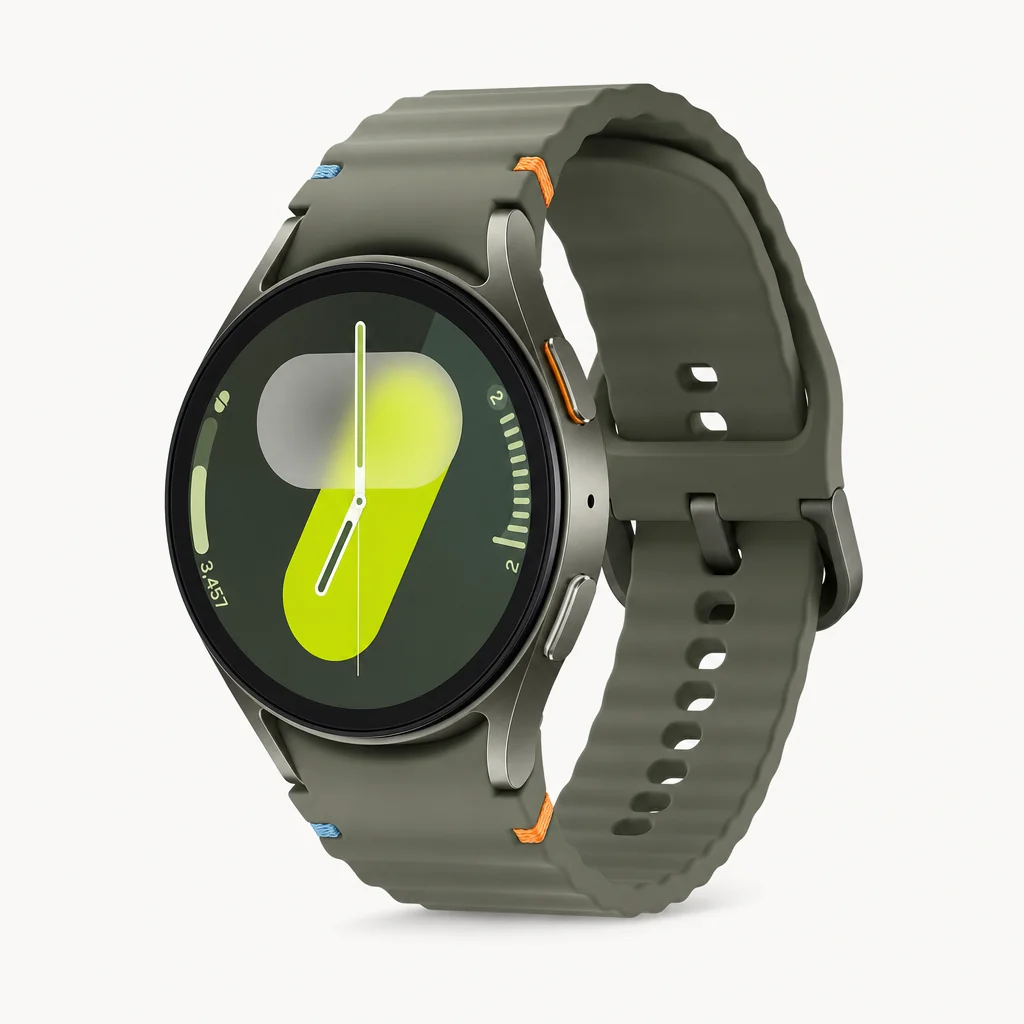
Just because Samsung has launched newer watches doesn't mean the Galaxy Watch 7 has stopped being good — it just means it's now far more affordable. Released in 2024 and still widely stocked across UK retailers, the Watch 7 keeps the circular Galaxy Watch silhouette, runs on the Exynos W1000 chipset, and comes in 40mm and 44mm sizes with 300mAh and 425mAh batteries respectively. Its display tops out at 2,000 nits — a genuine downgrade from the Watch 8 in bright sunlight, but indoors and in normal conditions you simply won't notice. As of June 2026 it has plunged to bargain territory, starting from around £110 at price-comparison sites — making it Samsung's pick as the best-value fitness option in the range.
What you do get is most of the same fitness DNA, the same sleep-tracking algorithms, and an excellent suite of health sensors. For the buyer whose primary use case is running, cycling and general activity tracking, the Watch 7 is arguably the sweet spot in the line-up.
The Galaxy Watch FE sits below it as Samsung's entry-level smartwatch. It launched in the UK at £199 (Bluetooth) but now sells from around £107, making it the cheapest doorway into the Galaxy Watch world. It's based on the older Galaxy Watch 4 architecture and comes in a single 40mm size, available in Bluetooth-only or LTE configurations. It's not the watch I'd recommend if you want longevity — but if your budget is tight and you mainly want notifications, basic activity tracking, sleep monitoring and the Samsung Health ecosystem, it's a sensible choice.
Head-to-Head Comparison
Here's how the four most relevant 2026 models stack up directly against each other:
| Feature | Galaxy Watch 8 | Watch 8 Classic | Watch Ultra | Watch 7 |
|---|---|---|---|---|
| Sizes | 40mm / 44mm | 46mm | 47mm | 40mm / 44mm |
| Casing | Armour Aluminium | Stainless Steel | Grade 4 Titanium | Aluminium |
| Glass | Sapphire | Sapphire | Sapphire Crystal | Sapphire |
| Display Brightness | 3,000 nits | 3,000 nits | 3,000 nits | 2,000 nits |
| Battery (largest) | 435 mAh | 445 mAh | 590 mAh | 425 mAh |
| Storage | 32 GB | 64 GB | 64 GB (2025) | 32 GB |
| RAM | 2 GB | 2 GB | 2 GB | 2 GB |
| Thickness | 8.6 mm | 10.6 mm | 10.9 mm | 9.7 mm class |
| Weight | 30g / 34g | 63.5 g | 60.1 g | 28.8g / 33.8g |
| Rotating Bezel | Digital (touch) | Physical | Digital + Quick Button | Digital (touch) |
| Water Rating | 5ATM class | 5ATM class | 10ATM / 100m, IP68 | 5ATM class |
| OS | Wear OS 6 / One UI 8 Watch | Wear OS 6 / One UI 8 Watch | Wear OS 6 / One UI 8 Watch | Wear OS 5 |
| UK price (from) | ~£299 | £449 | ~£558 | ~£110 |
| Buy | Check price | Check price | Check price |
Wear OS plus Samsung's One UI Watch layer means deep integration with Galaxy phones and a serious fitness suite.
Performance and Battery Life
The Exynos W1000 chip in the Watch 8 and Watch 8 Classic is built on a 3nm process, which on paper sounds like marketing. In reality it does two things: it makes the watch noticeably snappier when launching apps and dictating replies, and it sips power, which is the only reason Samsung could make the Watch 8 as thin as it is. Note that the next generation — the rumoured Watch 9 — is set to move to Qualcomm's Snapdragon Wear Elite, which Qualcomm claims is a substantial leap in both performance and efficiency.
The Galaxy Watch Ultra also uses the Exynos W1000 — the same chip you'll find inside the Watch 8 and Watch 7. The Ultra's headline performance metric is endurance: that 590mAh battery, paired with an efficient chipset, is what delivers genuine multi-day life.
In day-to-day use I've consistently gotten through a full 24 hours on the standard Watch 8 with always-on display enabled and a workout or two thrown in (Samsung rates it at up to 30 hours with AOD on). The 44mm has more headroom than the 40mm, predictably, but neither is a multi-day watch in the way the Ultra is. The Watch 8 Classic, with its slightly larger 445mAh cell and identical chip, sits between the two.
Real-world battery tip
Turning off always-on display is the single biggest endurance hack across the entire Galaxy Watch range. On the Watch 8 it can comfortably push you from one-day endurance into two. On the Ultra, it pushes you from "couple of days" into a long weekend without panic.
Health and Fitness Tracking
This is where Samsung has quietly become very good. The Galaxy Watch sensor stack covers heart rate, ECG, blood oxygen (SpO2), body composition (BIA), skin temperature and an increasingly clever sleep tracking suite. On the Watch 8 specifically, Samsung has added a Vascular Load metric, a more detailed Sleep Apnea screening tool, and a new AGEs (Advanced Glycation End-products) index that estimates biological ageing markers across four levels while you sleep.
For runners, the Watch 8's new Running Coach feature analyses your form and pace patterns and serves up structured plans aimed at goals like a 5K time or a marathon target. It's not Garmin Coach yet, but it's the closest a Galaxy Watch has come. The Ultra goes further with FTP metrics for cyclists, AI-powered personalised heart rate zones, and over 120 workout modes.
Sleep Tracking
Detailed sleep stage analysis with a sleep score, sleep coaching programmes, and apnea screening. The slimmer Watch 8 is the most comfortable to wear overnight.
Cardiovascular Health
Continuous heart rate, on-demand ECG, blood oxygen and a Vascular Load reading that monitors strain on your heart from daily activity.
Running Analysis
Cadence, ground contact time, stride length, vertical oscillation and post-run feedback — all baked in via the Running Coach module on Watch 8.
Body Composition
Bioelectrical impedance analysis gives you body fat percentage, skeletal muscle, water and BMR — in 15 seconds, on your wrist.
The fitness tracking suite has matured into one of the most comprehensive on any smartwatch — particularly with the Watch 8's Running Coach.
Who Should Buy Which Galaxy Watch
Right, here's the bit you actually came for. After all the specs and the comparisons, this is how I'd match each watch to a real person.
The Everyday User
Buy: Galaxy Watch 8. If you want one watch that does everything well — fitness, notifications, sleep, comfort, looks — this is it. The 8.6mm profile makes it disappear on the wrist, and it's now widely available near £299.
The Office Wearer
Buy: Galaxy Watch 8 Classic. Stainless steel, physical bezel, classic round face — it's the Galaxy Watch that pairs properly with a suit. With no Watch 9 Classic coming this year, it's the only bezel pick in 2026.
The Adventurer
Buy: Galaxy Watch Ultra. Titanium, sapphire crystal, MIL-STD-810H, 100m water resistance, dual-frequency GPS and a 590mAh battery. Anyone serious about hiking, swimming, cycling or trail running.
The Budget Buyer
Buy: Galaxy Watch FE or Watch 7. The FE is the cheapest entry into the Galaxy Watch ecosystem at around £107. The Watch 7, now from about £110, is the smarter buy — a full fitness suite at a deep discount.
Galaxy Watch vs Apple Watch vs Garmin
It would be weird to write a UK Galaxy Watch guide without addressing the elephants in the room. The Apple Watch obviously dominates if you have an iPhone — Galaxy Watches require an Android phone for full functionality, full stop. If you're in the Samsung or Pixel ecosystem, the Galaxy Watch is the obvious pick. Garmin is the closest competitor on the fitness side, and that's a more interesting comparison.
| Capability | Galaxy Watch 8 | Apple Watch (latest gen) | Garmin Forerunner / Fenix |
|---|---|---|---|
| Phone Compatibility | Android only | iPhone only | Android & iPhone |
| Display Brightness | 3,000 nits | ~3,000 nits class | MIP / AMOLED varies |
| Battery Life | ~1 day standard | ~1–2 days | Multi-day to weeks |
| Sapphire Crystal | Yes (most) | Premium tiers only | Premium tiers only |
| Health Sensors | HR, ECG, SpO2, BIA, Temp | HR, ECG, SpO2, Temp | HR, SpO2 (varies) |
| Voice Assistant | Google Gemini | Siri | Limited |
| App Ecosystem | Wear OS / Play Store | App Store (huge) | Connect IQ (limited) |
| Design Variety | 5 distinct models | 2 main models | Dozens of models |
The honest takeaway: Samsung's Galaxy Watches now match Apple's hardware and software polish in a way they simply didn't three or four years ago. They beat Garmin on style, voice assistance and general smartwatch features, but Garmin still wins on pure battery longevity for serious athletes. The Watch Ultra narrows the gap considerably.
Health features like ECG, blood-pressure monitoring and Body Composition push the Galaxy Watch beyond a simple notification mirror.
Frequently Asked Questions
Pricing and Where to Buy in the UK
Samsung Galaxy Watches are widely available across UK retailers — Samsung's own UK store, John Lewis, Currys, Argos and Amazon UK all stock the current line-up. As a rough mid-2026 guide: the Watch 8 now sells from around £299 (down from £399 at launch), the Watch 8 Classic from £449, the Watch Ultra around £558, and the older Watch 7 and Watch FE have both tumbled to roughly £107–£110. Bundle deals (often a free strap or a discount on Galaxy Buds) tend to appear around major shopping windows — Watch9 and Ultra2 are now available, so compare current live prices across both generations.
Because deals and configurations shift week to week, the most reliable thing to do is check live pricing rather than rely on a snapshot.
Pair your Galaxy Watch with the right strap and case combination and you genuinely have a watch you'll wear daily.
Overall Rating
The Galaxy Watch 8 is the best all-round Samsung smartwatch — but the right choice depends on which buyer you are.
The Final Verdict
Which Galaxy Watch Should You Actually Buy?
If I had to pick one watch from this entire range and recommend it to a friend, it would be the Galaxy Watch 8 — particularly the 44mm version. The combination of a 3,000-nit display, the 3nm Exynos W1000 chip, an 8.6mm profile that disappears on the wrist, Gemini AI built in, and the upgraded Running Coach makes it the most well-rounded smartwatch Samsung has ever produced. And with street prices now hovering near £299, the value case is stronger than ever. It's the watch you can wear to bed, to the office, on a run, and to dinner.
For anyone who values traditional watch aesthetics or simply prefers the tactile rotating bezel, the Galaxy Watch 8 Classic is the obvious upgrade — and, with no Watch 9 Classic due this year, the only way to get a bezel in 2026. For genuine adventurers and athletes who want titanium, sapphire crystal, dual-frequency GPS and that monstrous 590mAh battery, the Galaxy Watch Ultra is in a class of its own. And if budget is the priority, the Watch 7 and Watch FE quietly remain brilliant buys now that both sit around £110.
Buy the model that fits now: Watch9 and Ultra2 are already on sale, while discounted Watch8-generation models may offer better value.
Bottom line: Samsung's 2026 Galaxy Watch range is the strongest it's ever been, with a clearly differentiated model for every type of buyer. There isn't a bad pick in the line-up — only the right pick for your wrist.
 Galaxy Watch 8View on Amazon
 Galaxy Watch UltraView on Amazon
 Galaxy Watch 8 ClassicView on Amazon