
iPhone 18 Pro First Look: is Apple's variable-aperture camera enough?
Apple's smaller Pro gains a mechanical iris, A20 Pro silicon and longer endurance. The question is whether those upgrades outweigh a familiar design and a higher price.
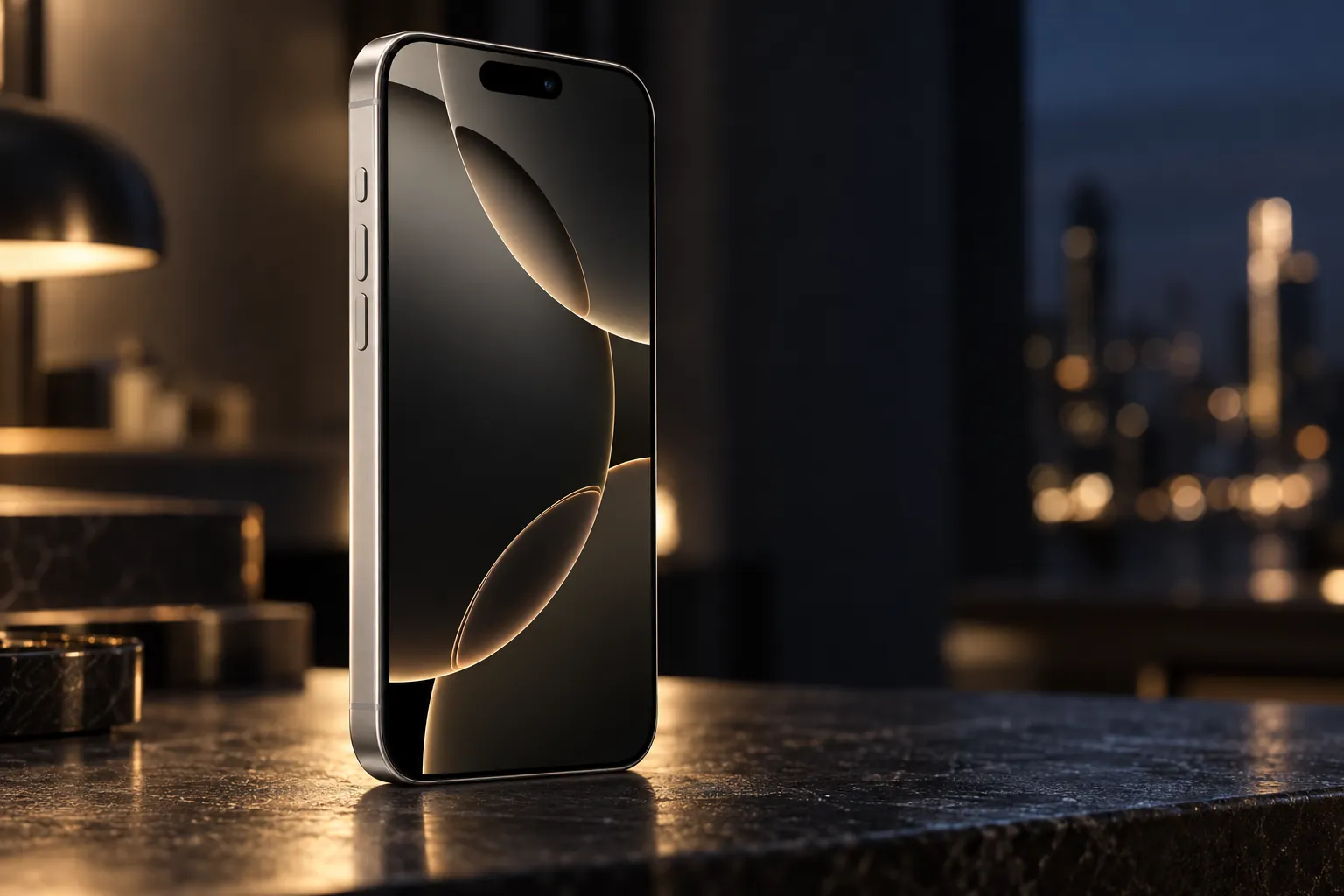


A compelling 6.3-inch Pro for photographers and creators who will use its variable aperture, advanced video formats and A20 Pro performance.
Check price on AmazonWe link to the exact model on Amazon UK. Prices change often, so check the live price before you buy. As an Amazon Associate we earn from qualifying purchases.
You are framing a dinner-table portrait in low light, then switching to a close-up where every detail of a watch, plate or product needs to stay sharp. The Apple iPhone 18 Pro is aimed squarely at that moment: a phone that can alter its main lens aperture rather than asking software to fake every creative decision. The short answer: buy it if you will genuinely use the new camera controls, shoot serious video, or are moving from an iPhone 15 Pro or older. If you own an iPhone 17 Pro and usually leave the camera on automatic, the case is much less persuasive.
| At a glance | Apple iPhone 18 Pro |
|---|---|
| Configuration covered | 512GB, Black |
| Display | 6.3-inch Super Retina XDR OLED, 2,622 × 1,206, adaptive 120Hz |
| Chip | Apple A20 Pro with seven-core GPU |
| Main camera | 48MP, 24mm equivalent, four-position ƒ/1.48 to ƒ/4.0 aperture |
| Telephoto | 48MP, 4x optical zoom at 100mm equivalent; 8x optical-quality option |
| Battery claim | Up to 23 hours typical use |
| Weight | 211g |
| UK RRP for configuration covered | £1,399 |
What Apple Actually Changed on the iPhone 18 Pro
Apple announced the iPhone 18 Pro on 9 September 2026, and it reached general sale in the UK on 18 September. The Amazon UK listing covered here is the regular 6.3-inch model rather than the larger Pro Max, in Black with 512GB of storage.
Check today's price: Apple iPhone 18 Pro on Amazon UK
The headline price is £1,399 for that configuration. It sits £100 above the equivalent previous-generation tier cited by reviewers, so this is not a subtle premium for a phone whose exterior remains close to the iPhone 17 Pro. TechRadar's central criticism was straightforward: the overall form factor looked and felt largely unchanged.
There are three material changes. First, the 48MP Fusion Main camera now has a mechanical iris with four selectable apertures. Secondly, the A20 Pro combines a six-core CPU, seven-core GPU, dual 16-core Neural Engine and hardware ray tracing, alongside a new vapour-chamber cooling system. Thirdly, Apple lifted its battery claims, whilst third-party figures also point to an endurance improvement.
The more familiar elements remain substantial: aluminium unibody construction, Ceramic Shield 2 on both front and back, IP68 resistance, Face ID, USB-C with USB 3 speeds up to 10Gbps, Wi-Fi 7, Bluetooth 6 and 25W MagSafe or Qi2 charging.
That makes this a refinement-led Pro rather than a visual reset. For buyers coming from an older phone, the package is more meaningful because the camera system, performance platform and charging all arrive together. For recent Pro owners, each improvement needs to earn its place individually.
Inside the Variable Aperture: How Apple's First Mechanical Iris Works
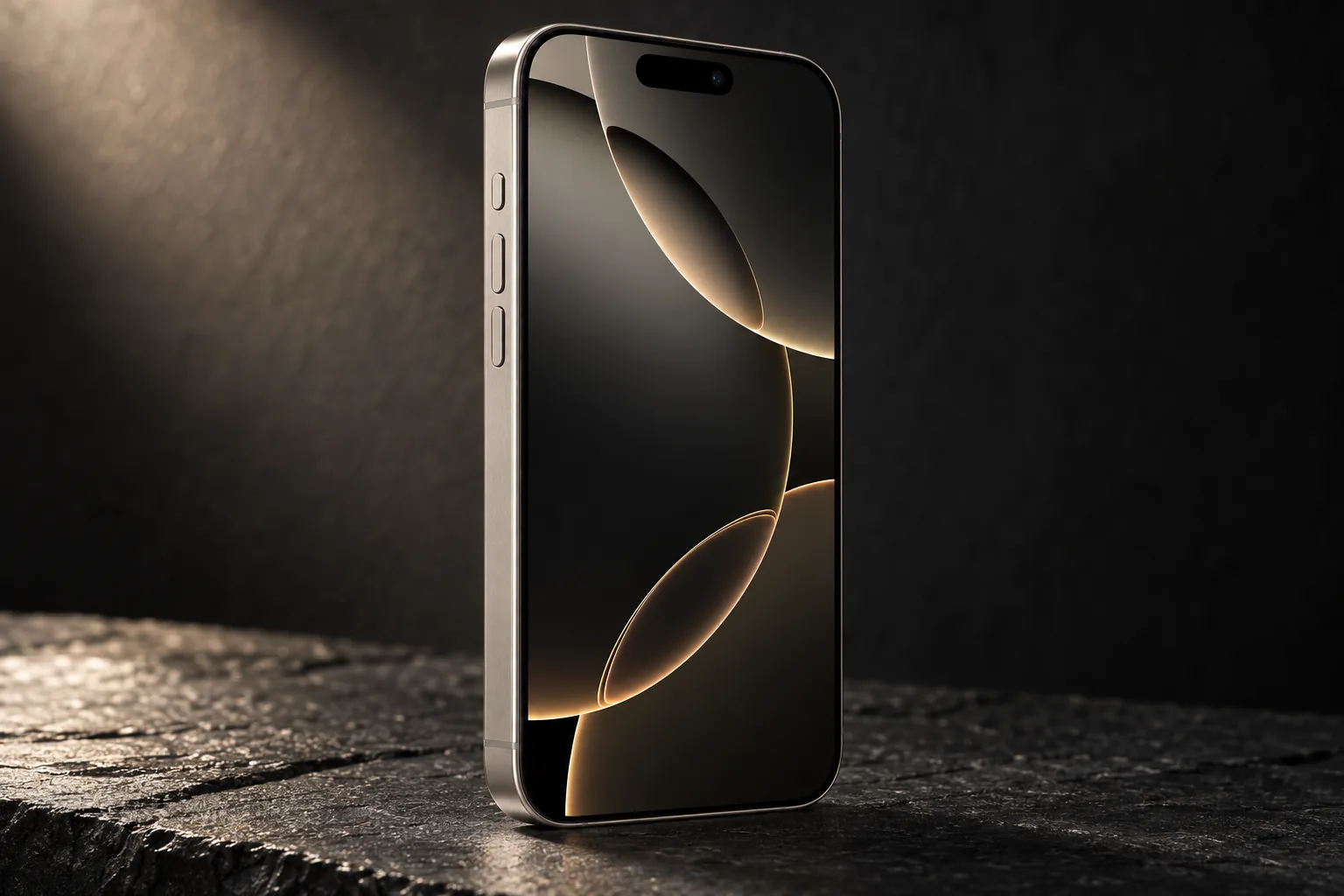
The iPhone 18 Pro's distinctive new hardware is confined to its 48MP Fusion Main camera, which uses a 24mm-equivalent lens. Instead of a single fixed aperture, it offers four positions: ƒ/1.48, ƒ/1.8, ƒ/2.8 and ƒ/4.0.
At ƒ/1.48, the lens admits more light and produces the shallowest natural depth of field available from the phone. This is the setting aimed at portraits, close subjects and darker scenes where maintaining a quicker shutter speed matters. Moving towards ƒ/4.0 keeps more of the scene in focus. That can be useful for tabletop photography, groups, architecture and landscapes where a blurred background would hide the very detail you are trying to capture.
ƒ/1.48: light and separation
The widest setting is designed for lower-light shooting and more natural foreground-to-background separation before Portrait processing enters the picture.
ƒ/2.8 to ƒ/4.0: deeper focus
Narrower settings are more useful where the subject has depth: products, plates of food, close-up objects and scenes with a foreground element.
Pro controls in Camera
Apple exposes aperture, shutter speed, white balance and histogram controls directly in the Camera app rather than requiring a separate app.
Automatic shooting remains
TechRadar said the controls added creative flexibility without removing the simple automatic approach expected from an iPhone.
The important limitation is equally clear. Variable aperture only applies to the main camera. The 48MP Fusion Ultra Wide remains at ƒ/2.2, while the 48MP tetraprism telephoto remains at ƒ/2.8. Those fixed lenses still provide significant flexibility in framing, but they do not give the photographer the same optical depth-of-field choice.
The practical distinction
This is not an interchangeable-lens camera compressed into a phone. It is a four-step optical control on one lens. That is still more meaningful than a software slider, but it rewards people who know why they are changing aperture rather than those who simply want a quicker point-and-shoot photo.
Reviewer feedback made that divide plain. TechRadar praised the extra creative control and image quality when the photographer took charge of settings. The same evidence suggests people who leave every choice to automatic mode may see smaller day-to-day gains. Category reporting also identified a trade-off at the widest setting: edge sharpness can soften at ƒ/1.48, with sharper results around ƒ/2.8.
What the iris adds
- Optical depth-of-field adjustment instead of relying solely on simulated Portrait blur.
- More deliberate control for product shots, portraits and close-ups.
- A direct route to aperture settings inside Apple's own Camera app.
- Potentially stronger low-light flexibility at the widest aperture.
Where it stops short
- Only four positions are available rather than continuous adjustment.
- The ultra-wide and telephoto cameras retain fixed apertures.
- Wide-open images can trade some edge sharpness for light gathering.
- Small smartphone sensors still limit how much natural blur is possible.
Does It Change What You Can Actually Shoot?
For ordinary daylight snapshots, expect an evolution rather than a wholesale visual break from Apple's previous Pro formula. Apple's computational processing remains central to the result. The variable aperture matters most when the scene gives it a problem to solve: a person close to the lens, a dim room, a detailed object extending into the frame, or bright lights that benefit from a narrower aperture's more pronounced starburst effect.
Product photography is one of the clearest examples. A close-up of a keyboard, collectable, shoe or watch can look tidier at ƒ/2.8 or ƒ/4.0 because more of the object should remain acceptably sharp. Conversely, a portrait made at ƒ/1.48 can use a shallower natural focal plane before software blur is applied. That is why the feature should appeal more to enthusiasts than to people who only occasionally tap the shutter button.
The rest of the rear system is serious rather than decorative. The 48MP ultra-wide reaches a 13mm-equivalent field of view and supports macro photography. The 48MP tetraprism telephoto offers 4x optical zoom at 100mm equivalent, with autofocus and 3D sensor-shift optical stabilisation. Apple also provides a 12MP optical-quality 8x telephoto view at 200mm equivalent, whilst still photography can stretch to 40x digital zoom.
That 4x and 8x pairing gives the phone useful reach for people, details on buildings, stage performances and travel scenes. The 40x figure should be treated as framing flexibility rather than a promise of equal image quality at every zoom level. The more compelling case is the combination of the native 4x telephoto and the optical-quality 8x option.
A mobile production tool, not just a stills camera
For video specialists, the iPhone 18 Pro supports ProRes RAW, Apple Log 2, Academy Color Encoding System workflows and Genlock. It can record ProRes at up to 4K/120fps to external storage, whilst standard recording includes 4K Dolby Vision up to 120fps through the main camera. Those capabilities make the 512GB configuration easier to justify for creators who regularly work with larger files.
Other video options include Cinematic mode at up to 4K Dolby Vision/60fps, Action mode at up to 2.8K Dolby Vision/60fps, spatial video at 1080p/30fps and 4K Dolby Vision slow motion up to 120fps through the main camera. Four studio-quality microphones, wind-noise reduction, Spatial Audio recording and Audio Mix complete a feature set built for more than social clips.
The front camera is also an 18MP Center Stage unit with autofocus, Retina Flash, tap-to-zoom-and-rotate controls and ultra-stabilised video. For a buyer who creates short-form videos, hosts calls and records behind-the-scenes footage, that broader camera setup matters almost as much as the rear main sensor.
A20 Pro Under the Microscope: Benchmarks That Matter
The A20 Pro is Apple's new performance engine, backed by a six-core CPU with two performance cores and four efficiency cores, a seven-core GPU with Neural Accelerators, dual 16-core Neural Engines and hardware-accelerated ray tracing. The numerical results reported by Tom's Guide explain why the chip is likely to matter most to demanding buyers, even if messaging, browsing and scrolling will not suddenly feel alien to an iPhone 17 Pro owner.
Those figures point to comfortable headroom for editing, demanding games, on-device intelligence features and video workloads. Tom's Guide described the A20 Pro as the fastest smartphone chip it had measured, and its results put the iPhone 18 Pro ahead of the Galaxy S26 Ultra in the CPU and graphics comparisons cited in its review.
The less glamorous addition is the vapour chamber. It moves heat away from the chip under sustained workloads, where performance often matters more than a brief benchmark burst. TechRadar credited the combination of A20 Pro and the new cooling system with improved thermals and sustained behaviour. Tom's Guide recorded 62.8% stability in the 3DMark Wild Life Extreme Stress assessment for the smaller Pro.
| Performance metric | Apple iPhone 18 Pro | Context |
|---|---|---|
| Geekbench 6 | 4,735 single-core; 12,800 multi-core | Reported by Tom's Guide |
| Geekbench 7 | 4,022 single-core; 11,543 multi-core | Reported by Tom's Guide |
| 3DMark Solar Bay Unlimited | 61.93fps; 16,288 score | Reported by Tom's Guide |
| Geekbench AI 1.7 | 69,245 | Reflects AI-oriented workload performance |
| Wild Life Extreme stability | 62.8% | Reported by Tom's Guide |
There is a caveat for buyers focused only on everyday speed. TechRadar's assessment was that the A20 Pro is extremely fast, but routine use remains broadly similar to the preceding Pro. That does not diminish the silicon; it puts it in context. The return is more obvious for a creator exporting video, a player running graphically intensive games, or someone intending to keep the device through several years of heavier software demands.
Battery Life and Charging: Modest Gains, Real Numbers
Apple rates the iPhone 18 Pro for up to 23 hours of typical use, 34 hours of video playback and 31 hours of streamed video playback. Those are useful indicators, but the more comparable figure comes from Tom's Guide's continuous 5G web-browsing assessment at 150 nits: an average of 16 hours 17 minutes.
That is a worthwhile 56-minute increase over the iPhone 17 Pro's 15 hours 21 minutes in the same assessment. It is not a battery revolution, but it gives the smaller Pro a more comfortable buffer for long navigation days, heavy messaging, streaming and camera use. TechRadar separately reported roughly 30 hours of mixed use, whilst noting that intensive photography and video capture consume power more quickly.
| Continuous 5G web browsing at 150 nits | Runtime |
|---|---|
| Apple iPhone 18 Pro | 16 hours 17 minutes |
| iPhone 17 Pro | 15 hours 21 minutes |
| Samsung Galaxy S26 Ultra | 16 hours 40 minutes |
| OnePlus 15 | 25 hours 13 minutes |
The comparison makes the trade-off clear. The Galaxy S26 Ultra narrowly exceeded the iPhone 18 Pro in that single measurement, and the OnePlus 15 lasted much longer. Apple's strength is not an outright endurance win in every comparison; it is a credible improvement in a 6.3-inch Pro package combined with unusually deep video and camera tools.
Charging is materially stronger than on older iPhones. Apple states that a 60W-capable adapter or higher and a USB-C cable can bring the phone to 50% in around 15 minutes. Tom's Guide recorded 53% after 15 minutes and 80% after 30 minutes. TechRadar likewise reached approximately 50% in 15 minutes using Apple's Dynamic 40W charger and an Anker 45W charger.
MagSafe and Qi2 charging reach up to 25W. For a buyer frequently topping up at a desk, in the car or between shoots, that matters. The charging improvement is not as glamorous as the mechanical iris, but it may be the change that repeatedly saves a busy day.
Screen, Siri AI and the Bits Apple Didn't Shout About
The display remains a familiar Pro proposition: a 6.3-inch Super Retina XDR OLED panel with a 2,622 × 1,206 resolution and 460ppi density. It supports Always-On mode, Dynamic Island, HDR, True Tone, P3 wide colour and ProMotion's adaptive refresh rate up to 120Hz. Apple also specifies an anti-reflective coating and a 1-nit minimum brightness for dark environments.
Apple quotes 3,000 nits of peak outdoor brightness, 1,600 nits peak HDR brightness and 1,000 nits typical maximum brightness. Tom's Guide recorded 2,314 nits in a 25% window and 1,627 nits in a 10% window. These are different measurement methods, so they should not be read as a direct contradiction. They do show that the panel has substantial brightness available for outdoor framing and HDR content.
TechRadar praised the panel's sharpness, colour and smooth 120Hz operation, whilst also observing that it remains familiar rather than a dramatic display upgrade. The smaller Dynamic Island helps maximise the usable screen area, but it is not an argument on its own for replacing a recent Pro.
Apple Intelligence and Siri AI are part of the package, enabled by the A20 Pro's neural hardware. TechRadar saw more progress here than on earlier iPhones, but also reported rough edges and mistakes. The sensible buying approach is to treat these features as part of a broader capability set, not as the primary reason to spend £1,399.
Elsewhere, the specification is generously modern: Apple's C2 modem, 5G sub-6GHz, Gigabit LTE, Wi-Fi 7 with 2×2 MIMO, Bluetooth 6, Thread, NFC and second-generation Ultra Wideband. USB-C supports DisplayPort output and USB 3 transfers up to 10Gbps, particularly relevant when recording external ProRes files. Satellite Emergency SOS, Crash Detection, Roadside Assistance via satellite and Find My via satellite remain important safety features rather than everyday selling points.
Apple iPhone 18 Pro: Weighing the Pro Controls Against the Price Tag
The Apple iPhone 18 Pro configuration covered here is a 512GB Black model with a £1,399 UK RRP. It is a high storage tier suited to people who capture a lot of 4K footage, use ProRAW or ProRes, download large games, or keep an extensive local photo library. For lighter users, the capacity will be generous; for creators shooting external ProRes regularly, it is a more understandable expense.
iPhone 18 Pro entry tier
256GB, the starting UK RRP.
Configuration covered
512GB in Black, with capacity that better suits substantial media libraries and creator workflows.
The purchase calculation is uncomplicated. The variable aperture is a serious feature, but only if you will engage with it. The A20 Pro is extraordinarily capable on measured figures, but its value is strongest when your workload can expose that capability. Battery life improved, but it did not lead every cited comparison. Together, these changes make a strong package; separately, they may not be enough to tempt a satisfied iPhone 17 Pro owner.
Ergonomics are the other consideration. Tom's Guide recorded the official 211g weight, compared with 206g for the iPhone 17 Pro. Five grams is not dramatic on paper, but the reviewer specifically called out the increase. Its dimensions remain 150.0 × 71.9 × 8.75mm, so the phone keeps the same broadly compact-for-a-Pro footprint whilst becoming a little denser in the hand.
Reasons to choose it
- Mechanical aperture control gives photographers a real new shooting option.
- All three rear cameras use 48MP sensors, with useful 4x and 8x telephoto framing.
- A20 Pro performance, hardware ray tracing and vapour-chamber cooling suit demanding workloads.
- Measured battery life improved over the iPhone 17 Pro, and charging is far quicker than older generations.
- ProRes RAW, Apple Log 2, Genlock and external 4K/120fps recording suit serious video work.
Reasons to pause
- The design remains very close to the preceding iPhone Pro generation.
- At 211g, it is heavier than the iPhone 17 Pro.
- The aperture system only serves the main camera and has four settings.
- The £1,399 512GB price is £100 above the equivalent prior-generation tier cited by reviewers.
- Siri AI has improved, but TechRadar reported that it still makes mistakes.
Who Should Actually Upgrade — and Who Should Sit This One Out
The strongest upgrade path is from an iPhone 15 Pro or older. TechRadar's assessment was that the move is much more substantial for this group, and the reason is cumulative: a faster chip, stronger cooling, longer battery life, faster charging, a new main-camera mechanism and a more evolved professional video toolkit all arrive at once.
Photographers who use controls
Choose it if you regularly adjust exposure, want optical aperture choice, shoot close subjects or prefer a camera workflow that goes beyond automatic mode.
Mobile video creators
It fits creators who will use Log, ProRes RAW, Genlock, external recording and the 512GB capacity for large media files.
Performance-focused buyers
The A20 Pro, hardware ray tracing and vapour-chamber cooling are relevant if demanding games, editing and AI features are regular parts of your phone use.
It also makes sense for someone who wants Apple's highest-tier camera and performance features without stepping up to a 6.9-inch device. The 6.3-inch display keeps it more manageable than the Pro Max, whilst Apple has not reserved the headline variable-aperture camera system for the larger model.
Hold onto an iPhone 17 Pro if your photographs are mostly automatic, your current battery still covers a day and you do not need advanced video formats. The newer phone is faster and more capable, but TechRadar found everyday use broadly familiar. Paying more for a slightly heavier phone with a similar-looking body is hard to justify when the feature you are funding is one you may rarely touch.
Buyers prioritising outright endurance should consider the context from Tom's Guide's figures before deciding. The Galaxy S26 Ultra reached 16 hours 40 minutes in the cited web-browsing assessment, just ahead of the iPhone 18 Pro's 16 hours 17 minutes, whilst the OnePlus 15 reached 25 hours 13 minutes. That does not erase Apple's camera and video strengths; it simply means the iPhone is not the automatic answer for someone whose sole priority is runtime.
Verdict: enough for the right buyer, not every recent Pro owner
The Apple iPhone 18 Pro is a convincing purchase for camera enthusiasts, serious mobile video creators and owners of older Pro models. Its mechanical aperture adds genuine creative control, the A20 Pro delivers formidable measured performance, and battery life has moved in the right direction. But its body is familiar, its weight has risen, and the £1,399 512GB model asks a lot from people who will simply leave everything on automatic. The variable aperture is enough when it matches how you shoot; it is not, on its own, an automatic upgrade trigger.
Who should buy which
Choose Apple iPhone 18 Pro if you want a 6.3-inch flagship iPhone with a variable-aperture main camera, deep video options, 512GB of storage and the A20 Pro's measured performance. It is especially well suited to photographers and videographers prepared to use the controls Apple has added.
Skip the upgrade from an iPhone 17 Pro if your current phone remains fast enough, you rarely go beyond automatic photography and the modest battery improvement does not address a real problem. This generation gives the camera-minded buyer more to explore, but its day-to-day experience is intentionally familiar.
- Apple iPhone 18 ProFor creative controlView on Amazon
Sources and evidence (13)
- apple.com (other)
- apple.com (other)
- tomsguide.com (other)
- techradar.com (other)
- apple.com (other)
- apple.com (other)
- apple.com (other)
- itpro.com (other)
- t3.com (other)
- apple.com (other)
- gsmarena.com (other)
- apple.com (other)
- techradar.com (other)