
DisplayPort 2.1 Graphics Cards for High-Refresh 4K Gaming
Five named GPUs for 4K/240Hz and 4K/480Hz OLED monitors, with the display-link details, rendering compromises and UK buying context that generic graphics-card lists often skip.
A 4K OLED with a 240Hz or 480Hz refresh rate changes the graphics-card question. It is no longer enough to ask which GPU can render 4K: buyers need to consider the display connection, the refresh mode they actually intend to use, frame-generation expectations, ray tracing, power supply capacity and the large gap between launch pricing and observed street pricing. The GeForce RTX 5090, RTX 5080, RTX 5070 Ti, Radeon RX 9070 XT and RX 9070 all support DisplayPort 2.1-class output, but they do not offer the same verified bandwidth information or the same route to high frame rates.
For most people buying a 4K/240Hz OLED, the practical decision is between the Radeon RX 9070 XT's raster-performance value and NVIDIA's stronger ray tracing, DLSS 4 and confirmed UHBR20 DisplayPort specification. For someone buying a 4K/480Hz panel specifically, the NVIDIA cards have a clearer published display specification. That does not mean a game will reach 480fps at 4K: output capability and render performance are separate constraints.
Why DisplayPort 2.1 Actually Matters for 2026's OLED Monitors
See DisplayPort 2.1 Graphics Cards for High-Refresh 4K Gaming on Amazon UK
Check price & availability on Amazon
DisplayPort 2.1 matters because 4K resolution, HDR colour depth and very high refresh rates all consume link bandwidth. A 4K/240Hz OLED is already a demanding display target. A 4K/480Hz OLED pushes further, and the cable, monitor input and GPU output must negotiate a mode that fits within their shared bandwidth capability.
Display output is not frame-rate performance. A GPU may expose a 4K/480Hz output mode while a modern AAA game renders well below 480fps at native 4K. High-refresh OLED gaming often involves sensible settings, upscaling and, where supported, frame generation.

NVIDIA specifies DisplayPort 2.1b with UHBR20 on all three GeForce cards covered here: the RTX 5090, RTX 5080 and RTX 5070 Ti. UHBR20 is the published high-bandwidth link mode that gives buyers a clear basis for checking compatibility with premium DisplayPort 2.1 OLEDs. NVIDIA rates each card for 4K at 480Hz or 8K at 165Hz with Display Stream Compression (DSC), and for 4K 12-bit HDR at 480Hz with DSC.
DSC is important to understand rather than fear. It is a compression method used to fit demanding display modes within the available connection bandwidth; monitor and graphics-card specifications commonly cite it for their highest resolution and refresh combinations. If you specifically want the clearest published path to a 4K/480Hz OLED mode, NVIDIA's confirmed DP2.1b UHBR20 specification is meaningful. It should not be read as a promise that every title will run at 480fps.
AMD specifies DisplayPort 2.1a and HDMI 2.1b on the Radeon RX 9070 XT and RX 9070. Those cards are relevant to high-refresh 4K displays, but AMD's consumer product pages did not publish an equivalent UHBR20 figure. That leaves less verified detail for buyers who are selecting a GPU principally for confirmed 4K/480Hz DisplayPort operation. For a 4K/240Hz OLED, both Radeon cards remain credible options; performance, price and preferred graphics features become more important than a theoretical maximum mode.
Buy the display link for the panel you own
For 4K/480Hz, prioritise the three NVIDIA cards with confirmed DP2.1b UHBR20 support. For 4K/240Hz, all five GPUs can make sense, but the deciding question becomes how much ray tracing, native-resolution performance and frame-generation support you expect from the games you play.
The Flagship Question: Is the NVIDIA GeForce RTX 5090's 32GB and 575W Worth It for OLED Gaming Alone?
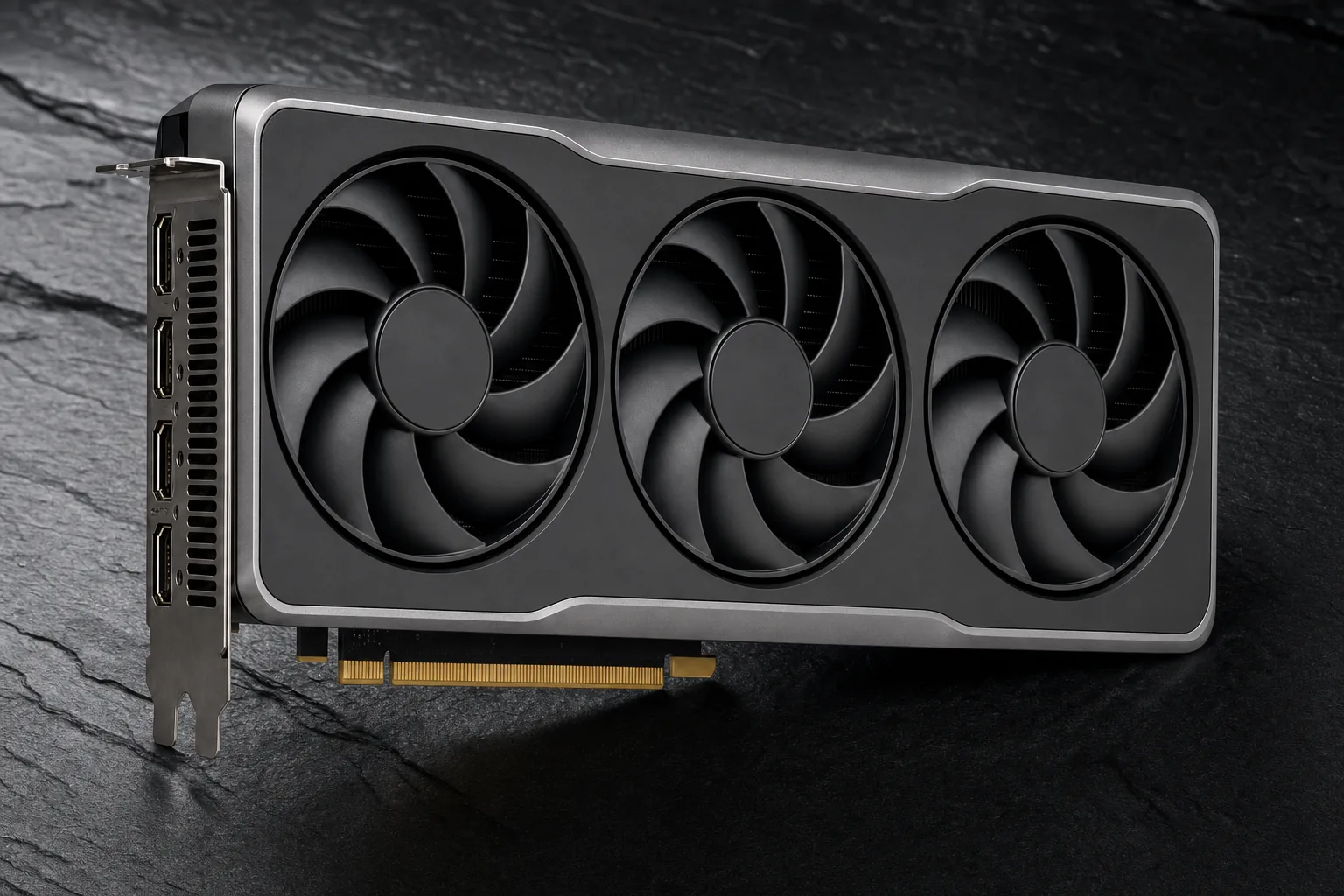
The NVIDIA GeForce RTX 5090 is the performance-led option in this group. Its Blackwell GPU has 21,760 CUDA cores, 32GB of GDDR7 memory on a 512-bit bus and a reference boost clock of 2.41GHz. It also carries a 575W total graphics power rating, needs a recommended 1,000W system power supply, and uses either a 600W PCIe Gen 5 cable or an adapter drawing from four PCIe 8-pin cables.
Gamers Nexus reported 182fps in Final Fantasy XIV at 4K and 133fps in Dragon's Dogma 2 at 4K. In the Final Fantasy XIV result, the RTX 5090 was 31% ahead of the RTX 4090 and 74% ahead of the Radeon RX 7900 XTX. These figures demonstrate substantial 4K headroom, but they also illustrate the limitation of treating a monitor refresh number as a target every game must hit. Dragon's Dogma 2 at 133fps remains far below 240Hz, despite using the highest-performing card in this guide.
The RTX 5090's 32GB allocation is valuable for particular workloads: heavy ray tracing, texture-heavy modded games, demanding creative projects and buyers who want extra capacity beyond the 16GB shared by every other card here. A 4K/240Hz OLED alone does not inherently require 32GB. It is rendering settings, game engines, mods and wider workloads that determine whether that memory headroom earns its cost.
That cost is the major problem. The card launched at $1,999 in January 2025, but observed September 2026 Currys listings sat roughly between £4,340 and £4,800. US third-party listings were reported around $6,389 to $6,449. At those levels, it has been priced as a scarce product rather than as a normal gaming upgrade. It is technically compelling, but not a rational value-focused choice at observed street prices.
Plan the system around the 575W rating
The RTX 5090 is not a drop-in upgrade for every high-end PC. Its 1,000W recommended power supply, connector requirements and case-airflow needs should be checked before purchase. Gamers Nexus reported around 72°C GPU temperature and approximately 32.5dBA at one metre for the Founders Edition, although memory temperature reached roughly 90°C in its controlled environment.
NVIDIA GeForce RTX 5080: The Same Display Silicon, a Fraction of the Card
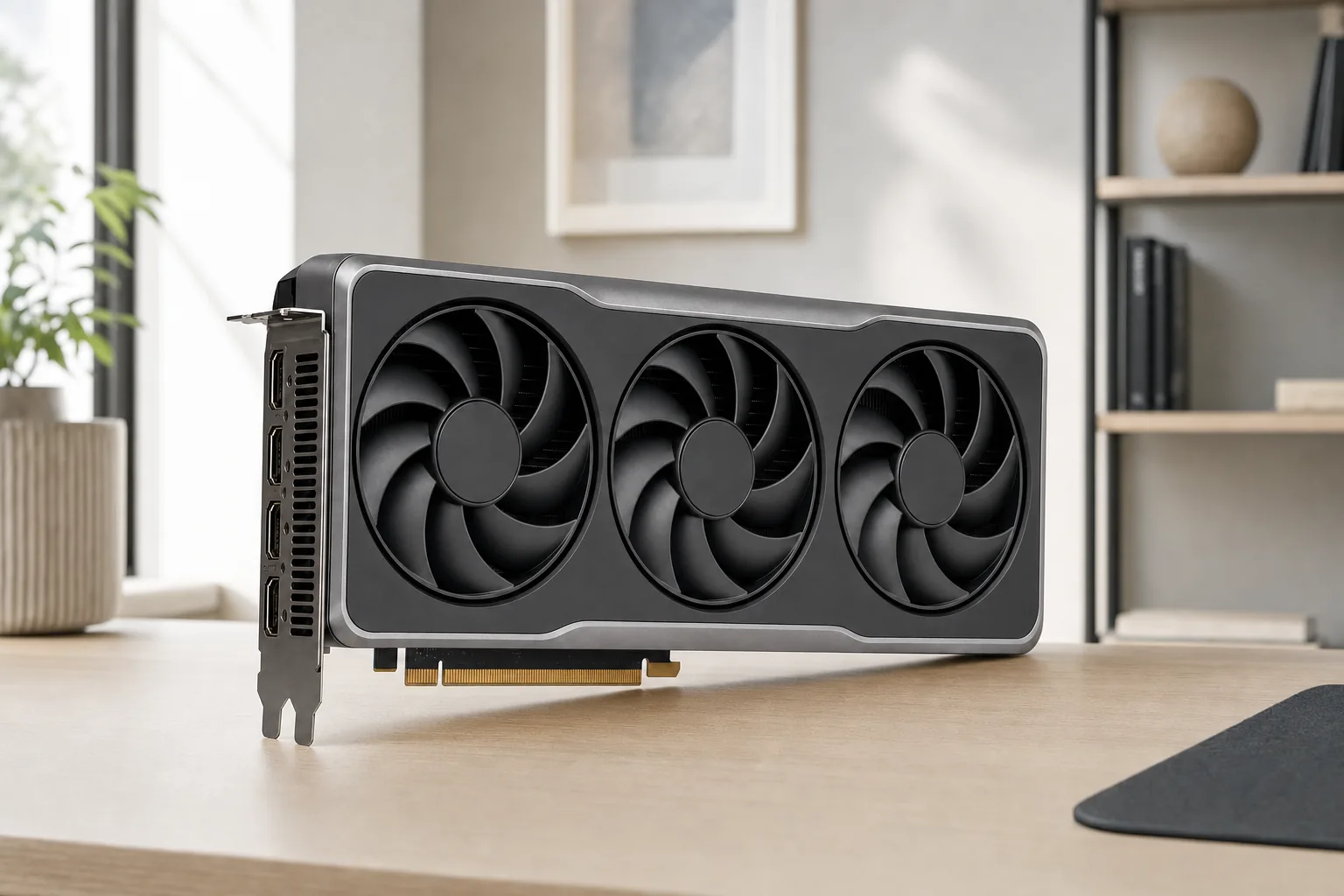
The RTX 5080 retains the feature that matters most to the display-first buyer: three DisplayPort 2.1b UHBR20 connections, one HDMI 2.1b output, 4K/480Hz and 8K/165Hz capability with DSC, plus the same stated 4K 12-bit HDR at 480Hz with DSC. It also supports DLSS 4, Multi Frame Generation, Reflex, G-SYNC, AV1 encode/decode and NVIDIA's Game Ready and Studio driver branches.
It does not, however, retain the RTX 5090's rendering resources. The RTX 5080 has 10,752 CUDA cores and 16GB of GDDR7 on a 256-bit bus. Its 360W total graphics power and 850W recommended PSU make it much easier to accommodate than the flagship, particularly in a UK system already using a good 850W unit. That is a 215W reduction in rated board power compared with the RTX 5090.
| Specification | GeForce RTX 5090 | GeForce RTX 5080 |
|---|---|---|
| Display outputs | 3× DisplayPort 2.1b, 1× HDMI 2.1b | 3× DisplayPort 2.1b, 1× HDMI 2.1b |
| Published DisplayPort bandwidth | UHBR20 | UHBR20 |
| Stated 4K display ceiling | 4K/480Hz with DSC | 4K/480Hz with DSC |
| Memory | 32GB GDDR7, 512-bit | 16GB GDDR7, 256-bit |
| Total graphics power | 575W | 360W |
| Recommended system power | 1,000W | 850W |
| Final Fantasy XIV at 4K, Gamers Nexus | 182fps | 112fps |
That 182fps versus 112fps Final Fantasy XIV result meant the RTX 5090 was approximately 62% ahead of the RTX 5080 in Gamers Nexus' 4K result. It is the RTX 5080's central compromise: the display capability is identical, but the performance distance to the flagship is much greater than the physical similarity of the cards suggests. The RTX 5080 is consequently more comfortable as a 4K/240Hz OLED card than as a route to 4K/480Hz gaming in visually intensive releases.
Cooling results were encouraging. Gamers Nexus reported around 65–66°C GPU temperature under full load, approximately 72–75°C memory temperature, and about 298W in its Final Fantasy XIV 4K efficiency result. Black Myth: Wukong ran at 58fps at 4K raster settings in the same review. The lesson is straightforward: the 480Hz output mode is useful for competitive and lighter titles, whilst demanding games will still ask for DLSS, frame generation or settings adjustments.
Reasons to choose it
- Confirmed DP2.1b UHBR20 output and the same stated 4K/480Hz-with-DSC capability as the RTX 5090.
- 360W board power is substantially more manageable than 575W.
- DLSS 4, Multi Frame Generation and NVIDIA's ray-tracing stack suit feature-heavy PC releases.
- Reported Founders Edition temperatures were low for this performance class.
Reasons to pause
- 16GB of memory is a long-term consideration for expensive 4K builds.
- The native-performance gap to the RTX 5090 was substantial in the cited 4K result.
- Observed UK pricing around £1,400–£1,620 was well above the original $999 MSRP.
NVIDIA GeForce RTX 5070 Ti: Where NVIDIA's Full Display Spec Gets More Accessible
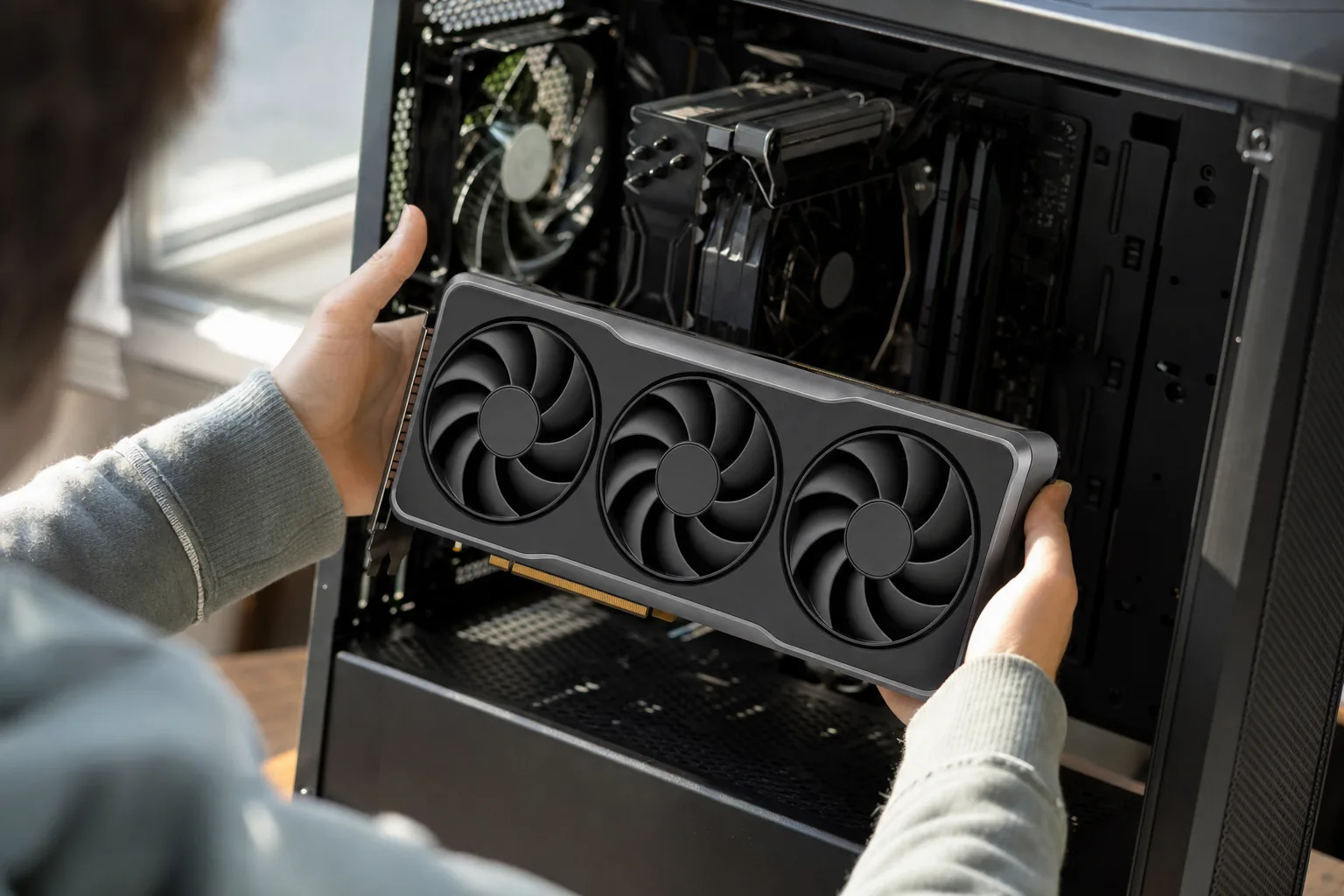
The RTX 5070 Ti is the lowest-priced NVIDIA model in this guide with the full published DP2.1b UHBR20 specification. Like the RTX 5090 and RTX 5080, it has three DisplayPort 2.1b outputs, HDMI 2.1b, a stated 4K/480Hz or 8K/165Hz ceiling with DSC, and support for 4K 12-bit HDR at 480Hz with DSC. For a buyer who values a documented route to a DisplayPort 2.1 OLED mode but cannot justify the higher models, that parity matters.
Against the RTX 5080, the RTX 5070 Ti gives up 1,792 CUDA cores but retains the same 16GB GDDR7 capacity and 256-bit bus. Its 300W power rating and 750W recommended PSU are friendlier to an existing upper-mid-range system. Board-partner cards differ in physical dimensions, cooling and permitted power limits, so the specific manufacturer model matters more here than it does with NVIDIA's Founders Edition cards.
TechSpot reported that factory-overclocked RTX 5070 Ti cards varied by no more than approximately 3% in performance across the models examined. Their clocks ranged roughly from 2.482GHz to 2.588GHz against the 2.452GHz reference specification, while temperatures after an hour of Crimson Desert ranged from around 57°C to 65°C in a 21°C room. Board power limits in that group ranged from approximately 300W to 350W. In other words, a larger and costlier cooler may improve noise or temperature behaviour, but it should not be expected to radically transform gaming frame rates.
4K/240Hz OLED buyers
The RTX 5070 Ti makes sense when confirmed UHBR20 connectivity, DLSS 4 and ray tracing matter more than achieving 240fps in every AAA game at native 4K.
Existing 750W systems
Its 750W recommended PSU creates a more realistic upgrade path than the RTX 5080 or RTX 5090, provided the case accommodates the chosen board-partner design.
Price-sensitive NVIDIA shoppers
The original MSRP was $749. Observed US pricing around $1,150–$1,290 and UK observations around £940–£1,000 weaken that appeal sharply.
At launch pricing, this was the natural entry point into NVIDIA's current high-bandwidth display output. In September 2026, prices remained substantially above MSRP. Treat $749 as historical context, not a figure to expect at checkout. If the card sits close to £1,000, the Radeon RX 9070 XT deserves serious consideration for conventional 4K rendering, whilst the RTX 5080 becomes relevant if its own premium is comparatively small.
AMD Radeon RX 9070 XT: The Raster-Heavy Alternative for Buyers Who Do Not Chase Ray Tracing
The Radeon RX 9070 XT is the purchase to examine first when the priority is conventional 4K raster performance for less money than NVIDIA's high-end alternatives. AMD specifies 64 compute units, 4,096 stream processors, 16GB of GDDR6 on a 256-bit bus, up to 640GB/s of memory bandwidth, a boost frequency of up to 2.97GHz and 304W total board power. It uses two 8-pin power connectors.
Tom's Hardware reported that the RX 9070 XT was approximately 15% ahead of the RX 9070 at 4K. It was also reported as around 5–10% ahead of the RX 7900 XT, although the RX 7900 XTX retained an approximately 5% overall lead in that particular 4K suite. Those comparisons matter because they show the RX 9070 XT as a serious 4K card rather than merely a lower-cost alternative. It is not, however, AMD's equivalent to the RTX 5090 in ray-traced performance or total rendering throughput.
| Specification | Radeon RX 9070 XT | Radeon RX 9070 |
|---|---|---|
| Architecture | RDNA 4 | RDNA 4 |
| Compute units | 64 | 56 |
| Stream processors | 4,096 | 3,584 |
| Memory | 16GB GDDR6, 256-bit | 16GB GDDR6, 256-bit |
| Memory bandwidth | Up to 640GB/s | Up to 640GB/s |
| Total board power | 304W | 220W |
| Display interface | DisplayPort 2.1a, HDMI 2.1b | DisplayPort 2.1a, HDMI 2.1b |
| 4K performance relationship | Approximately 15% ahead in Tom's Hardware's suite | Reference result |
On display connectivity, the RX 9070 XT supports DisplayPort 2.1a and HDMI 2.1b. That is enough to place it in the right generation for modern OLED monitors, but AMD does not publish a directly equivalent UHBR20 figure on its consumer product page. A buyer seeking verified 4K/480Hz DisplayPort bandwidth should not assume equivalence simply because both vendors use "DisplayPort 2.1" branding.
AMD's software proposition includes FSR 4, Fluid Motion Frames 2.1, Radeon Super Resolution, Anti-Lag, FreeSync and Adrenalin Edition. This is a capable package, especially for an owner willing to tune settings game by game. NVIDIA nevertheless retains the stronger position for ray tracing, DLSS and its broader ecosystem of Reflex, G-SYNC, Studio Drivers, Broadcast and RTX Remix. Image quality and frame-generation suitability remain title-specific decisions rather than box-ticking exercises.
Reasons to choose it
- 16GB capacity, strong 4K raster performance and 304W board power.
- Observed UK pricing around £720–£800 and US observations around $740–$800 were far less inflated than RTX 50-series high-end pricing.
- FSR 4 and Fluid Motion Frames 2.1 help build a high-refresh strategy where supported.
- Reported value was particularly strong near the lower end of the observed price range.
Reasons to pause
- Ray-tracing performance and supporting software stack trail NVIDIA's competing approach.
- AMD does not publish an equivalent UHBR20 figure for its DP2.1a output on the relevant consumer pages.
- Cooler design, dimensions, ports and acoustics vary between board partners.
AMD Radeon RX 9070: The Efficiency Pick for 4K Gaming Below the Top Tier
The Radeon RX 9070 is the lower-power AMD option, not simply a cheaper RX 9070 XT. It has 56 compute units and 3,584 stream processors rather than the XT's 64 and 4,096, but keeps the same 16GB GDDR6 capacity, 256-bit bus, up-to-640GB/s memory bandwidth, DisplayPort 2.1a and HDMI 2.1b connectivity. Its 220W total board power is 84W lower than the XT's, and AMD recommends a 650W PSU.
That 650W recommendation is a practical advantage for an upgrade to an existing mid-range PC. A smaller PSU requirement does not remove the need to check the rest of the system, but it lowers the likelihood of also budgeting for a power-supply replacement. Tom's Hardware measured the RX 9070 close to its 220W rating in 4K gaming. It also found the RX 9070 XT approximately 15% faster at 4K, which is a meaningful deficit on a premium high-refresh panel.
AMD publishes 4K Ultra examples including 64fps in Arc Raiders, 71fps in Call of Duty: Black Ops 7, 60fps in The Last of Us: Part 2, 63fps in Horizon Forbidden West, 71fps in Marvel's Spider-Man 2 and 63fps in Ghost of Tsushima. These are manufacturer figures, so they should not be treated as directly comparable with independent review suites. They do reinforce the correct positioning: the RX 9070 is a 4K card, but it is more naturally suited to 4K/120Hz or 4K/165Hz-class play, or to 4K high-refresh gaming with sensible settings and upscaling, than it is to chasing maximum frame rates at native 4K.
Save power, not expectations
The RX 9070 makes a coherent 4K OLED pairing where heat, system power and purchase cost matter. The RX 9070 XT is usually the more logical option for a costly 4K/240Hz display because of its reported 15% 4K lead, unless the lower 220W board power or 650W PSU recommendation solves a specific build constraint.
Matching the Card to the Panel: 4K/240Hz vs 4K/480Hz OLED Buying Logic
The monitor should shape the graphics-card choice. A 4K/240Hz OLED is already an ambitious display for modern games. It can show a wide range of frame rates smoothly through variable refresh rate, so there is no requirement to render a fixed 240fps. A 4K/480Hz OLED has an even higher ceiling, but its main benefit will be clearest in esports, older games and titles that scale to exceptionally high frame rates. For current cinematic releases, even the RTX 5090 may need DLSS, frame generation or reduced settings before it approaches 240fps, never mind 480fps.
| Buyer priority |
|---|
| Verified 4K/480Hz DisplayPort specification |
| Ray-traced 4K with the largest memory allocation |
| 4K/240Hz OLED with NVIDIA display capability at lower power |
| Conventional 4K raster performance per pound |
| 4K OLED upgrade with lower power demand |
For a 4K/240Hz OLED, all five cards can be credible purchases. The RTX 5090 offers the largest performance and memory headroom, but its observed pricing makes it difficult to justify for gaming alone. The RTX 5080 offers the same display-link ceiling in a more manageable power envelope, but its 16GB memory and elevated price remain concerns. The RTX 5070 Ti is appealing when found at a sensible premium because it does not compromise on NVIDIA's published display output.
The Radeon RX 9070 XT is the more price-conscious choice for a buyer focused on traditional rendering performance. It is especially persuasive where ray tracing is not the main draw and where the saving can be retained rather than spent on an oversized cooler or heavily marked-up partner model. The RX 9070 is more conditional: it is the lower-power option for people happy to use FSR 4 and tune settings rather than insist on native-4K maximum settings.
Buyers uncomfortable with DSC in the signal chain should remember that NVIDIA's stated 4K/480Hz capability itself uses DSC. The practical distinction is not that one of these cards eliminates DSC at the cited maximum mode; it is that NVIDIA publishes a precise UHBR20 figure and its 4K/480Hz-with-DSC capability for all three cards, whilst AMD's consumer documentation does not publish an equivalent bandwidth claim. Check the exact monitor manual, GPU board-partner ports and cable certification before spending on a 480Hz OLED setup.
Pricing and stock observations reflected snapshots available on 24 September 2026. Graphics-card pricing changes rapidly by retailer, board-partner design, seller and region. Check the exact model's dimensions, power connector arrangement, port layout and warranty terms before ordering.
Sources and methodology
- NVIDIA GeForce RTX 5090, RTX 5080 and GeForce comparison documentation for official specifications, display outputs, power requirements, codecs and software support.
- AMD Radeon RX 9070 and RX 9070-series documentation for official RDNA 4 specifications, display interfaces, board power, software features and manufacturer-provided game examples.
- Gamers Nexus RTX 5090 and RTX 5080 reviews for cited 4K game results, thermal figures, acoustics and power observations.
- TechSpot RTX 5070 Ti board-partner roundup for cited clock, temperature, power-limit and relative variation observations.
- Tom's Hardware Radeon RX 9070 XT review coverage for relative 4K performance positioning and power observations.
- Observed retailer and price-tracker snapshots dated September 2026 for UK and US street-price context. These were not guaranteed prices.
Sources and evidence (13)
- nvidia.com (other)
- nvidia.com (other)
- nvidia.com (other)
- amd.com (other)
- amd.com (other)
- nvidia.com (other)
- overclockers.co.uk (other)
- gamersnexus.net (other)
- gamersnexus.net (other)
- techspot.com (other)
- tomshardware.com (other)
- tomshardware.com (other)
- tomshardware.com (other)