
Best Handheld Gaming PCs: Steam Deck OLED vs ROG Ally X, Legion Go S, MSI Claw 8 AI+ and ROG Xbox Ally X
The handheld PC market is no longer just "Steam Deck or nothing". Here's the practical, real-world guide to performance, battery life, screens, Windows vs SteamOS, comfort and value.

We link to the exact model on Amazon UK. Prices change often, so check the live price before you buy. As an Amazon Associate we earn from qualifying purchases.
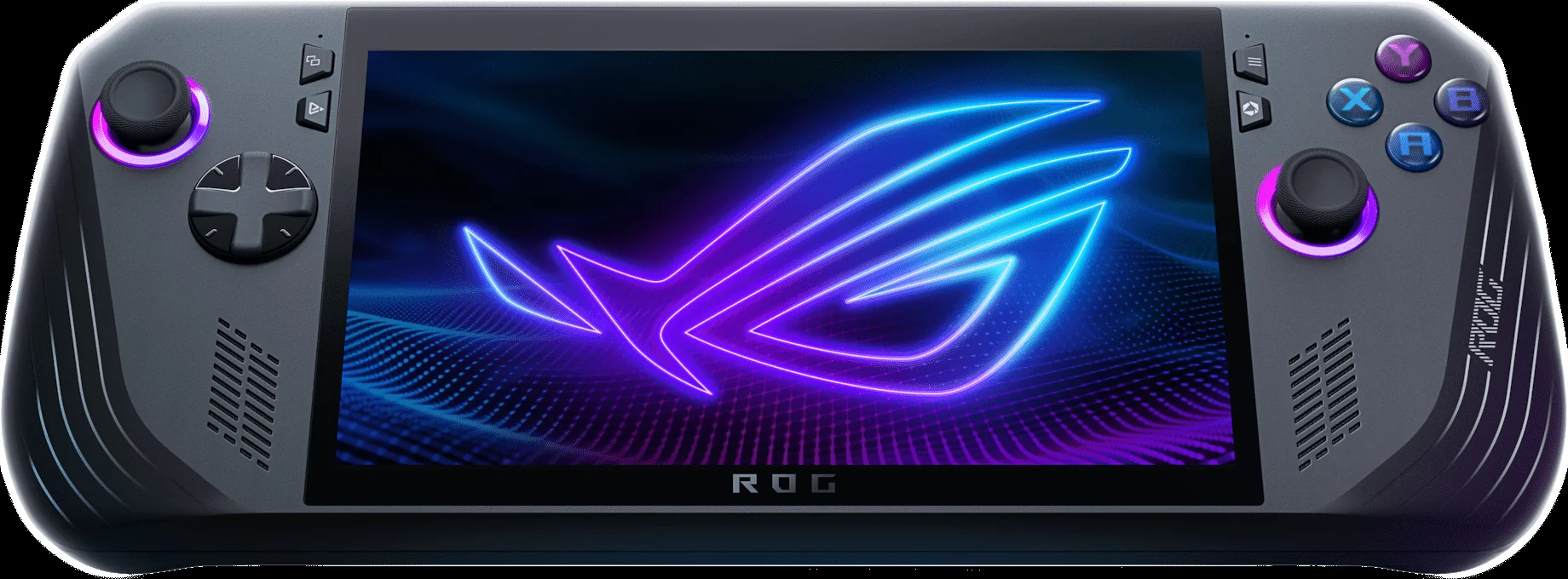
The best handheld gaming PCs now split into two clear camps: console-like SteamOS machines and faster, more flexible Windows handhelds.
If you asked me a couple of years ago which handheld gaming PC to buy, I'd probably have started and ended with the Steam Deck. In 2026, the answer is much more interesting. Valve's Steam Deck OLED is still the easiest recommendation for many players, but ASUS, Lenovo and MSI have pushed the category hard with bigger batteries, sharper screens, faster chips, more RAM and stronger Windows integration. The result is brilliant for choice, but also mildly confusing if you just want to play your favourite PC games on the sofa.
This Gadget Scout guide compares five of the most important handheld gaming PCs you should be looking at in 2026: the Steam Deck OLED, ROG Ally X, Lenovo Legion Go S, MSI Claw 8 AI Plus and ROG Xbox Ally X. Rather than pretending there is one perfect device for everyone, I'm going to focus on the things that matter after the novelty wears off: how games feel, how often you need to charge, how good the screen looks, how much software faff you can tolerate, and whether the machine makes sense for the way you actually play.
In this review
- Quick verdict: which handheld should you buy?
- Key specs compared
- Performance and real-world gaming advice
- Battery life and power modes
- Screen quality and refresh rates
- SteamOS vs Windows software experience
- Controls, comfort and portability
- Value, availability and buying tips
- FAQ and final recommendations
1. Quick verdict: the best handheld gaming PCs in 2026
For most people with a decent Steam library, the Steam Deck OLED remains the handheld I'd recommend first. It is not the most powerful device here, and its 1280×800 resolution looks modest beside the Full HD and 1920×1200 Windows machines. But the overall experience is still superb: a 7.4-inch OLED HDR display, 90Hz refresh rate, SteamOS, trackpads, gyro controls, strong repairability and a relatively light 640g body make it feel like a complete gaming handheld rather than a small Windows laptop with buttons stuck on.
The ROG Ally X is the Windows pick I'd steer many enthusiasts towards. Its AMD Ryzen Z1 Extreme APU, Radeon 780M graphics, 24GB of LPDDR5X-7500 memory, 1TB PCIe 4.0 SSD and 80Wh battery make it a very convincing performance machine. It is more flexible than the Steam Deck OLED because it runs Windows 11, so services outside Steam are less of a fight. The trade-off is that Windows is still not as elegant on a handheld as SteamOS.
The Lenovo Legion Go S sits in a fascinating middle ground. It is notable because it is the world's first officially licensed handheld powered by SteamOS, though Windows 11 versions are also sold. Its 8-inch 1920×1200 PureSight IPS screen gives you a larger canvas than the Steam Deck OLED or ROG Ally X, and it supports 120Hz with VRR. It uses fused TrueStrike controllers rather than the detachable approach of the original Legion Go, and Lenovo has kept enthusiast-friendly touches such as Hall-effect joysticks and adjustable trigger switches.
The MSI Claw 8 AI+ is the one to watch if you want a large, powerful Intel-based Windows handheld. The original MSI Claw had a difficult start, but the Claw 8 AI+ is described as a massive improvement, with a great screen, serious performance and Hall-effect analogue sticks. It is the sort of device that makes the most sense if you want a bigger Windows handheld and are happy to spend time tuning settings.
Finally, the ROG Xbox Ally X is the newest and arguably most strategically important machine here. Co-developed by ASUS and Microsoft under the ROG and Xbox brands, it was released on 16 October 2025 as a successor to the ASUS ROG Ally. If your dream handheld is a Windows gaming PC with a more Xbox-like identity, this is the one that signals where Microsoft wants portable PC gaming to go next.
Best overall for Steam players and the smoothest handheld experience.
Best established Windows option, with an 80Wh battery and Z1 Extreme performance.
Best large-screen SteamOS/Windows hybrid choice with 8-inch VRR display.
Best Intel-based option for players who want a large Windows handheld.
Best for Xbox-first PC gamers who want the newest ASUS/Microsoft collaboration.
2. Key specifications at a glance
Specs do not tell the whole story with handheld PCs, but they do explain why these devices feel so different in the hand. Battery capacity, display resolution, refresh rate, operating system and memory bandwidth all matter more here than they might on a desktop gaming PC, because the machine is constantly balancing performance, heat, noise and power draw.
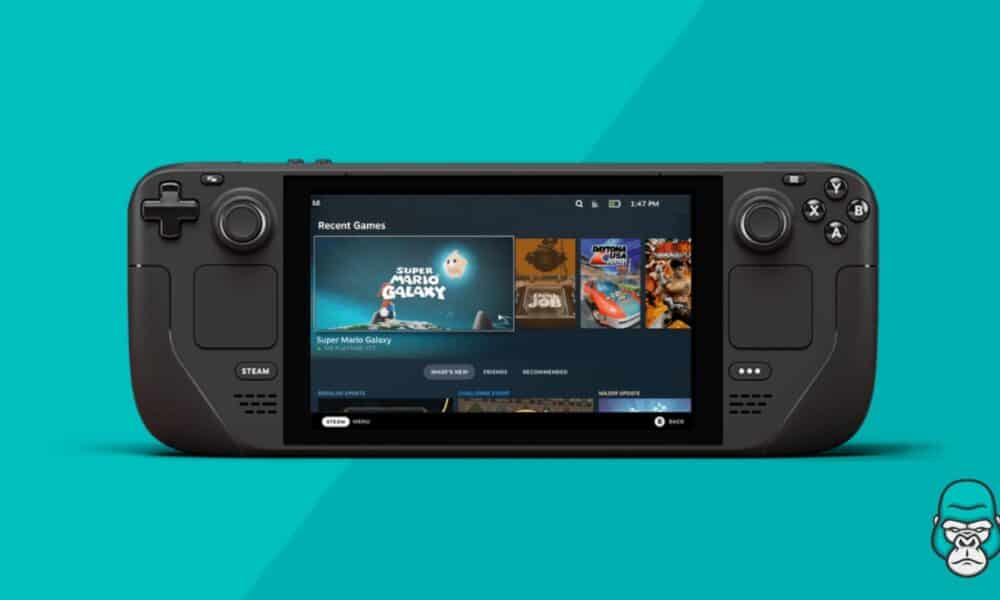
The Steam Deck OLED's 7.4-inch HDR OLED panel is still one of the strongest reasons to choose Valve's handheld.
| Feature | Steam Deck OLED | ROG Ally X | Lenovo Legion Go S | MSI Claw 8 AI+ | ROG Xbox Ally X |
|---|---|---|---|---|---|
| Operating system | SteamOS | Windows 11 | Windows 11 or SteamOS, depending on SKU | Windows 11 | Windows 11 with Xbox full-screen experience |
| Processor platform | AMD 6nm custom APU | AMD Ryzen Z1 Extreme | Ryzen Z2 Go or Z1 Extreme, depending on SKU | Intel Core Ultra 7 258V | AMD Ryzen AI Z2 Extreme |
| Memory | 16GB LPDDR5 | 24GB LPDDR5X-7500 | 16GB or 32GB LPDDR5X | 32GB LPDDR5x-8533 | 24GB LPDDR5X-8000 |
| Display | 7.4-inch 1280×800 OLED HDR, 90Hz | 7-inch 1920×1080 IPS, 120Hz VRR, 500 nits | 8-inch 1920×1200 IPS, 120Hz VRR, 500 nits | 8-inch 1920×1200 IPS, 120Hz VRR, 500 nits | 7-inch 1920×1080 IPS, 120Hz VRR, 500 nits |
| Battery | 50Wh | 80Wh | 55.5Wh | 80Wh | 80Wh |
| Ports / controls | USB-C, trackpads, gyro | USB4 plus USB-C 3.2 Gen 2 | Two USB4 ports; Hall-effect sticks | Two Thunderbolt 4 ports; Hall-effect sticks | USB4 plus USB-C 3.2 Gen 2; impulse triggers |
| Best for | Steam library and OLED play | Original Ally X value and Windows flexibility | Large display and OS choice | Intel-based Windows handheld buyers | Highest-performance Xbox-style Windows handheld |
| Buy | 1TB model | Check price | Check exact SKU | Check price | Check price |
| Buy | Check price | Check price | Check price | Check price |
3. Performance: which handheld is actually fastest?
Performance on a handheld PC is not as simple as "newest chip wins". These machines are power-limited, thermally constrained and often used unplugged. A game that looks great at 25W can drain a battery quickly, whilst a slightly slower handheld with better software-level frame pacing can feel smoother in bed or on a train. That is why I separate peak performance from practical performance.
The ROG Ally X is the most clearly specified powerhouse in this group. Its AMD Ryzen Z1 Extreme has 8 Zen 4 cores and 16 threads, with clocks listed at 3.3GHz to 5.1GHz. Graphics come from the Radeon 780M with 12 RDNA 3 compute units, backed by 24GB of LPDDR5X-7500 memory. That memory allocation matters because handheld APUs share system memory with graphics; having 24GB gives the system more breathing room than the Steam Deck OLED's 16GB, especially in modern PC games that are happier with more RAM.
ASUS also gives you clear power modes: Silent at 10W, Performance at 15W and Turbo at 25W, rising to 30W on AC power. In practice, this means the ROG Ally X can be tuned for the moment. If you are playing a lightweight indie, 10W is the sensible choice. If you are trying to push a demanding game, Turbo mode is where the Z1 Extreme gets to stretch its legs.
The Steam Deck OLED is less about raw numbers and more about efficiency and consistency. Its AMD 6nm custom APU is older in performance terms than the Z1 Extreme class, and the 1280×800 display target is much easier to drive than 1920×1080 or 1920×1200. That sounds like a weakness on paper, but in handheld use it is often a strength. Games configured around 800p can look crisp enough on a 7.4-inch screen, and the lower pixel count helps the Steam Deck OLED maintain playable results without needing to chase high wattage all the time.
The Lenovo Legion Go S has a different balance. The Ryzen Z2 Go version uses RDNA 2 graphics with 12 compute units and clocks up to 4.3GHz, whilst a separate higher-spec Ryzen Z1 Extreme variant is also sold. The important buying advice is simple: do not assume every Legion Go S performs the same. If you care primarily about frame rates in demanding PC games, the processor variant matters. If you care about SteamOS convenience, the officially licensed SteamOS model is a big part of the appeal.
The MSI Claw 8 AI+ is the Intel wildcard. It is a large, powerful Windows handheld and a major improvement over the original MSI Claw, with serious performance and a great screen. I would treat it as an enthusiast option: appealing if you want to explore Intel's handheld platform and like the idea of a bigger device, but less obviously plug-and-play than the Steam Deck OLED.
The ROG Xbox Ally X is harder to judge purely through specs here, but its positioning matters. It is co-developed by ASUS and Microsoft as a ROG and Xbox device, and it succeeds the ASUS ROG Ally line. The question is not simply whether it runs games quickly; it is whether Microsoft and ASUS have made Windows handheld gaming feel less like Windows desktop gaming squeezed into a tiny screen.
My practical performance rule
If you mostly play verified Steam games, indies, older AAAs and emulated classics, the Steam Deck OLED's lower resolution and SteamOS optimisation make it feel wonderfully balanced. If you regularly use Game Pass, Epic, Battle.net or anti-cheat-heavy multiplayer games, a Windows handheld such as the ROG Ally X, MSI Claw 8 AI+ or ROG Xbox Ally X will usually make more sense.
4. Battery life and power: the boring spec that changes everything
Battery capacity is one of the most important specs in a handheld gaming PC. You can always lower graphics settings, cap frame rate or use upscalers, but you cannot magic a small battery into a large one. This is where the ROG Ally X makes its strongest argument: an 80Wh battery in a handheld PC is a serious advantage.
The jump from the Steam Deck OLED's approximately 50Wh battery to the Ally X's 80Wh pack is not subtle. It gives ASUS more room for high-performance play, but also more room for quiet, efficient play. The danger, of course, is that Windows handheld owners are often tempted to run everything at higher wattage and higher resolution, which can eat into that advantage quickly. The best Ally X owners are the ones who actually use the power modes rather than leaving everything in Turbo.
The Steam Deck OLED benefits from its roughly 25% larger battery versus the older LCD Deck, improved cooling and more efficient 6nm APU. More importantly, SteamOS makes battery management approachable. The Deck encourages you to cap refresh rate, limit frame rate and tune power without feeling like you are doing engineering homework. For casual evening play, that friendliness is a major reason it remains my favourite travel handheld.
The Lenovo Legion Go S lands between them with a 55.5Wh battery. That is notably more than the Deck OLED, but far behind the Ally X. Its 8-inch 1920×1200 120Hz VRR display is beautiful and flexible, but it can also encourage higher rendering targets. If you buy the Go S, I would be quite disciplined: use VRR, cap demanding games sensibly, and do not feel obliged to render every title at the panel's full 1920×1200 resolution.
The MSI Claw 8 AI+ is positioned as a large, powerful Intel-based Windows handheld. As with any performance Windows handheld, the best experience will depend on sensible wattage and settings choices. It is the kind of device where I would spend the first hour setting up profiles for the games I actually play rather than assuming one universal power mode will suit everything.
Big batteries help, but sensible power profiles still matter if you want a handheld PC to last away from the charger.
Use low wattage for lighter games
The ROG Ally X's 10W Silent mode is exactly the sort of profile you should use for indies, 2D games and older PC titles.
Cap frame rate before dropping resolution
A stable 40fps or 45fps often feels better on a handheld than chasing an unstable 60fps that drains the battery.
Turbo is not for every journey
The Ally X can run at 25W Turbo, or 30W on AC power, but that is best reserved for demanding sessions or plugged-in play.
Do not fear sub-native rendering
On a 7-inch or 8-inch display, smart scaling and modest settings can look far better than the numbers suggest.
5. Screens: OLED beauty vs big VRR panels
This is the category where personal taste really kicks in. The Steam Deck OLED has the most immediately impressive panel: a 7.4-inch OLED HDR screen at 1280×800, with a 90Hz refresh rate and up to 1,000 nits peak brightness. HDR support on a handheld can sound like a luxury, but with OLED's contrast it makes night scenes, neon-lit cities and colourful indie games look wonderful. If you play in the evening, on a commute or in bed, the OLED Deck is still the screen I find easiest to love.
The trade-off is resolution. At 1280×800, the Steam Deck OLED is not as sharp as the ROG Ally X's 1920×1080 screen or the Legion Go S's 1920×1200 panel. But this is where theory and handheld reality diverge. Higher resolution looks cleaner in menus and lighter games, but in demanding titles you may not want to render at native resolution anyway. The Deck's 800p target is kinder to the GPU and often makes performance tuning simpler.
The ROG Ally X uses a 7-inch Full HD IPS display with a 120Hz refresh rate and VRR/FreeSync Premium. VRR is a huge advantage for handheld PCs because frame rates can fluctuate as power and thermals shift. A game bouncing between the mid-40s and high-50s can feel much smoother on a VRR display than it would on a fixed-refresh screen. The Ally X panel is not OLED, but the combination of 1080p, 120Hz and VRR is excellent for players who value responsiveness.
The Lenovo Legion Go S has the biggest confirmed panel here: an 8-inch 1920×1200 PureSight IPS display with 120Hz, VRR, 500 nits brightness and 100% sRGB colour coverage. Lenovo says the 8-inch screen gives a 37% larger viewing area than typical handheld gaming consoles, and that extra space genuinely matters for PC games with small UI elements. Strategy games, RPGs and desktop launchers are simply easier to read on a larger display.
The MSI Claw 8 AI+ is also described as having a great screen, and its large-handheld positioning puts it in the same conversation as the Legion Go S for buyers who want more display area. If you find 7-inch handhelds cramped, both the Lenovo and MSI options should be high on your shortlist.
Screen wins
- Steam Deck OLED has the most cinematic display thanks to OLED HDR and 1,000-nit peak brightness.
- ROG Ally X combines Full HD sharpness with 120Hz and VRR.
- Legion Go S offers the largest confirmed viewing area with an 8-inch 16:10 panel.
Screen compromises
- Steam Deck OLED is lower resolution than the main Windows rivals.
- Higher-resolution handhelds can demand more careful settings management.
- Bigger screens usually mean a heavier device in your hands.
6. Software: SteamOS simplicity or Windows flexibility?
This is the real buying decision. The Steam Deck OLED is not just popular because of hardware; it is popular because SteamOS feels like it belongs on a handheld. The interface is controller-first, sleep and resume are excellent by PC standards, and Steam's compatibility layers do a lot of heavy lifting. If a game is in your Steam library and plays nicely on Deck, the experience can feel close to a console.
SteamOS is not perfect. Some multiplayer games with anti-cheat systems are still awkward or unavailable, and stores outside Steam can require extra work. But the day-to-day experience is coherent. You pick up the Deck, press a button, play, suspend, and come back later. For a portable machine, that matters more than many spec sheets admit.
The Lenovo Legion Go S is especially important because it is the world's first officially licensed handheld powered by SteamOS. That means buyers who like the Deck's software philosophy but want an 8-inch 1920×1200 120Hz VRR screen now have a more direct alternative. Lenovo also sells Windows 11 versions, so you need to pay close attention to the exact model you are buying.
Windows 11 handhelds such as the ROG Ally X and MSI Claw 8 AI+ offer broader compatibility. Game Pass, Epic Games Store, GOG, Battle.net and many anti-cheat titles are generally more straightforward on Windows than on Linux-based SteamOS. You also get a normal PC desktop when you need it. The downside is that Windows still asks more of you: updates, launchers, pop-ups, desktop scaling and occasional controller weirdness can intrude on the illusion that you are using a console.
ASUS tries to smooth this over with Armoury Crate SE on the ROG Ally X, and the ROG Xbox Ally X exists partly because Microsoft and ASUS know the handheld Windows experience needs to feel less clunky. I like Windows handhelds, but I like them most when I treat them as tiny gaming laptops. If you expect a Nintendo Switch-like experience, SteamOS is currently the safer bet.
Important buying note: Lenovo Legion Go S is sold in SteamOS and Windows 11 versions. The operating system is not a minor detail — it changes store compatibility, interface feel and how much tweaking you will do.
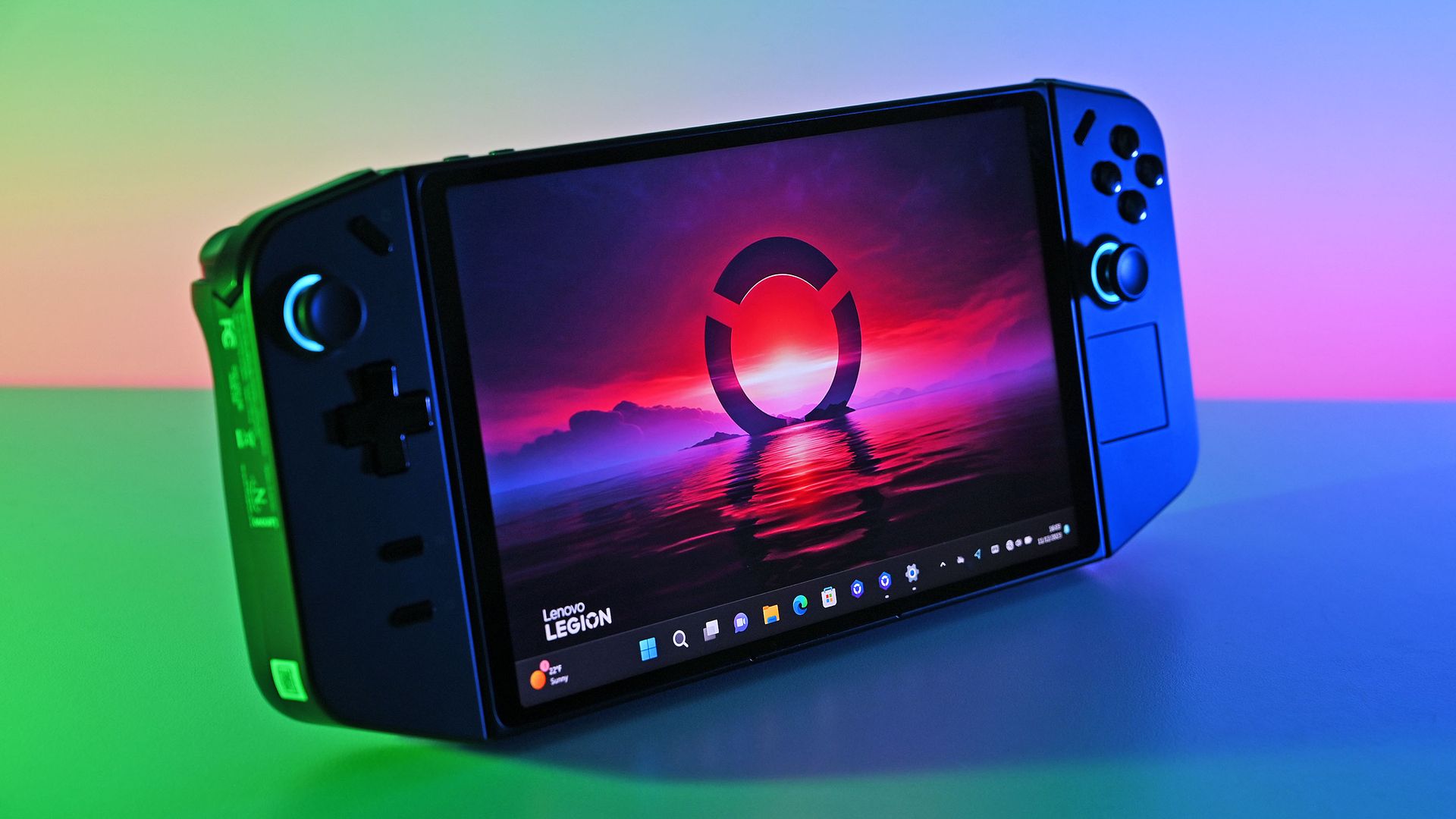
SteamOS is still the easiest handheld interface for many players, whilst Windows remains the compatibility champion.
7. Controls, comfort and portability
Controls can make or break a handheld PC. A powerful handheld with awkward sticks, poor triggers or too much weight quickly becomes a machine you admire but do not use. This is one reason the Steam Deck OLED continues to hold up so well: Valve's layout is unusual, but it is incredibly flexible. The trackpads are brilliant for PC games that were never designed for twin sticks, the 6-axis gyro helps with fine aiming, and the haptics add useful feedback. It is also around 640g, making it the lightest confirmed device in this comparison.
The ROG Ally X is more traditional. It has RGB-lit thumbsticks, ASUS's dual-fan Zero Gravity thermal system and a familiar Xbox-style layout. One point worth knowing: Hall-effect sticks are not a given on premium handhelds, and the ROG Ally X is a notable exception in that regard. That does not mean its controls are bad, but if stick durability is a top priority, the Lenovo and MSI entries look stronger on paper.
The Lenovo Legion Go S uses fused TrueStrike controllers rather than the detachable controllers of the original Legion Go. That should make it feel more like a normal handheld and less like a mini modular console. It also includes Hall-effect joysticks and adjustable trigger switches, both of which are meaningful features. Hall-effect sticks are valued because they avoid the same physical contact mechanism that can contribute to traditional stick drift, whilst adjustable triggers are handy if you switch between racing games and shooters.
The Legion Go S is heavier than the Steam Deck OLED at roughly 727–740g, and its dimensions are listed at 298.5 × 127.55 × 22.6–43.4mm. That is the trade-off for the bigger 8-inch screen. I would not call that a deal-breaker, but if you often play lying down, every extra gram becomes noticeable after half an hour.
The MSI Claw 8 AI+ also includes Hall-effect analogue sticks, which is a welcome premium touch. Given that it is a large Windows handheld, I would place it in the "two-handed sofa machine" category rather than the "standing on a busy train" category. Bigger handhelds can be more immersive, but they ask more from your wrists.
Trackpads matter more than you think
The Steam Deck OLED's trackpads are excellent for launchers, strategy games, older PC titles and mouse-heavy interfaces.
Gyro is a genuine advantage
Valve's 6-axis gyro can make aiming feel more precise once you build the habit of using it alongside the sticks.
Adjustable triggers are useful
The Legion Go S's trigger switches help tailor the feel for shooters, racers and action games.
Hall-effect sticks are a premium plus
Lenovo's Legion Go S and MSI's Claw 8 AI+ both include Hall-effect joysticks or analogue sticks.
8. Ports, storage and upgradeability
Handheld PCs are still PCs, so ports and storage matter. Games are enormous, microSD cards are convenient but slower than internal SSDs, and docking to a monitor or TV can turn a handheld into a surprisingly capable little living-room machine.
The Steam Deck OLED comes with either 512GB or 1TB NVMe storage, using a user-replaceable M.2 drive. It also supports microSD cards, with 1TB cards confirmed. Connectivity includes Wi-Fi 6E, Bluetooth 5.3 with a dedicated antenna, and a single USB-C port supporting USB 3.2 Gen 2, DisplayPort Alt Mode and Power Delivery. Valve's approach to repairability remains one of the Deck's best qualities, with Torx rear screws and iFixit parts support.
The ROG Ally X is very strong here. It includes 1TB PCIe 4.0 NVMe storage in the more common M.2 2280 size, 24GB LPDDR5X-7500 RAM, Wi-Fi 6E, Bluetooth 5.2, a USB4 port with Thunderbolt 4 compliance, another USB-C 3.2 Gen 2 port, a UHS-II microSD slot and a 3.5mm audio jack. Having two USB-C ports makes charging whilst using accessories much less annoying.
The Lenovo Legion Go S also impresses. Storage options include 512GB or 1TB PCIe 4.0 NVMe, with user-replaceable drives, and RAM options include 16GB or 32GB LPDDR5X. It has two USB-C ports, both USB4 at 40Gbps, with USB Power Delivery from 65–100W and DisplayPort 1.4 support. You also get a 3.5mm combo jack and a card reader. For docking and expansion, that is a very solid setup.
For the MSI Claw 8 AI+, the key practical point is that it is a large Windows handheld and a major step forward from MSI's first Claw. For buyers who want the most laptop-like handheld experience, Windows flexibility and a bigger chassis can be appealing, especially if you use external displays, launchers and accessories regularly.
| Port/storage point | Steam Deck OLED | ROG Ally X | Lenovo Legion Go S |
|---|---|---|---|
| Internal storage | 512GB or 1TB NVMe, user-replaceable M.2 | 1TB PCIe 4.0 NVMe, M.2 2280 | 512GB or 1TB PCIe 4.0 NVMe, user-replaceable |
| Memory | 16GB LPDDR5 | 24GB LPDDR5X-7500 | 16GB or 32GB LPDDR5X |
| USB-C | 1× USB-C with DisplayPort Alt Mode and Power Delivery | 1× USB4 plus 1× USB-C 3.2 Gen 2 | 2× USB-C, USB4 40Gbps, DisplayPort 1.4 |
| Card expansion | microSD, 1TB cards confirmed | UHS-II microSD | Card reader |
| Repairability angle | Torx rear screws and iFixit parts support | Standard Windows handheld expandability strengths | User-replaceable storage |
| Buy | Out of stock | Check price | Check price |
9. Value and buying advice
Exact prices shift constantly with bundles, storage variants and retailer promotions, so I would not buy any of these purely because it is briefly discounted. Instead, match the device to your library and tolerance for tinkering. That sounds obvious, but it is the mistake I see most often: someone buys the fastest-looking handheld, then discovers that the software or size does not suit how they play.
If your library is mostly Steam and you want the least friction, buy the Steam Deck OLED. It is not the spec-sheet champion, but it is the best "I just want to play" handheld here. The OLED screen, SteamOS, repairability, trackpads and 640g weight make it feel mature in a way many rivals are still chasing.
If you want Windows compatibility and strong hardware, the ROG Ally X is the safer established choice. The 80Wh battery is a headline feature for good reason, and the Z1 Extreme plus 24GB LPDDR5X-7500 gives it a serious performance base. It is especially appealing if you regularly use Game Pass or non-Steam launchers.
If you want a bigger screen and like the idea of SteamOS beyond Valve's own hardware, the Lenovo Legion Go S is the most intriguing option. The 8-inch 1920×1200 120Hz VRR display is genuinely useful, and the choice of SteamOS or Windows versions gives buyers flexibility. Just be careful with model variants, because the Ryzen Z2 Go and Z1 Extreme versions are not the same proposition.
If you want a large Intel Windows handheld, the MSI Claw 8 AI+ is the Claw generation worth considering. It is a major improvement over the original MSI Claw and has the premium touches — including Hall-effect analogue sticks — that the first wave of handheld PCs did not always get right.
If you are heavily invested in Xbox services and want the newest ASUS/Microsoft direction, the ROG Xbox Ally X is the emotional pick. It was released on 16 October 2025 and is the clearest sign yet that Microsoft wants Xbox-branded PC handhelds to become a mainstream category.
Buy Steam Deck OLED if…
You want the most console-like experience for Steam games, a beautiful OLED HDR screen, trackpads and strong repairability.

See Steam Deck OLED 1TB on Amazon UK
Check today's price & availability on Amazon UK
Buy ROG Ally X if…
You want Windows flexibility, Z1 Extreme performance, 24GB RAM and the reassurance of an 80Wh battery.

See ASUS ROG Ally X (24GB / 1TB) on Amazon UK
Check today's price & availability on Amazon UK
Buy Legion Go S if…
You want an 8-inch 1920×1200 120Hz VRR display and the choice between SteamOS and Windows models.

See the exact listed Lenovo Legion Go S configuration on Amazon UK
Check today's price & availability on Amazon UK
Buy MSI Claw 8 AI+ if…
You specifically want a large Intel-based Windows handheld with serious performance and Hall-effect analogue sticks.

See MSI Claw 8 AI+ (Brown) on Amazon UK
Check today's price & availability on Amazon UK
Buy ROG Xbox Ally X if…
You want the ASUS and Microsoft co-developed handheld that pushes the ROG Ally line towards Xbox-branded PC gaming.
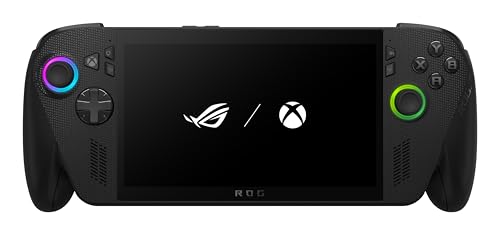
See ROG Xbox Ally X on Amazon UK
Check today's price & availability on Amazon UK
Avoid big handhelds if…
You mostly play standing up, commute in cramped spaces or are sensitive to wrist fatigue. Weight matters more than it seems.
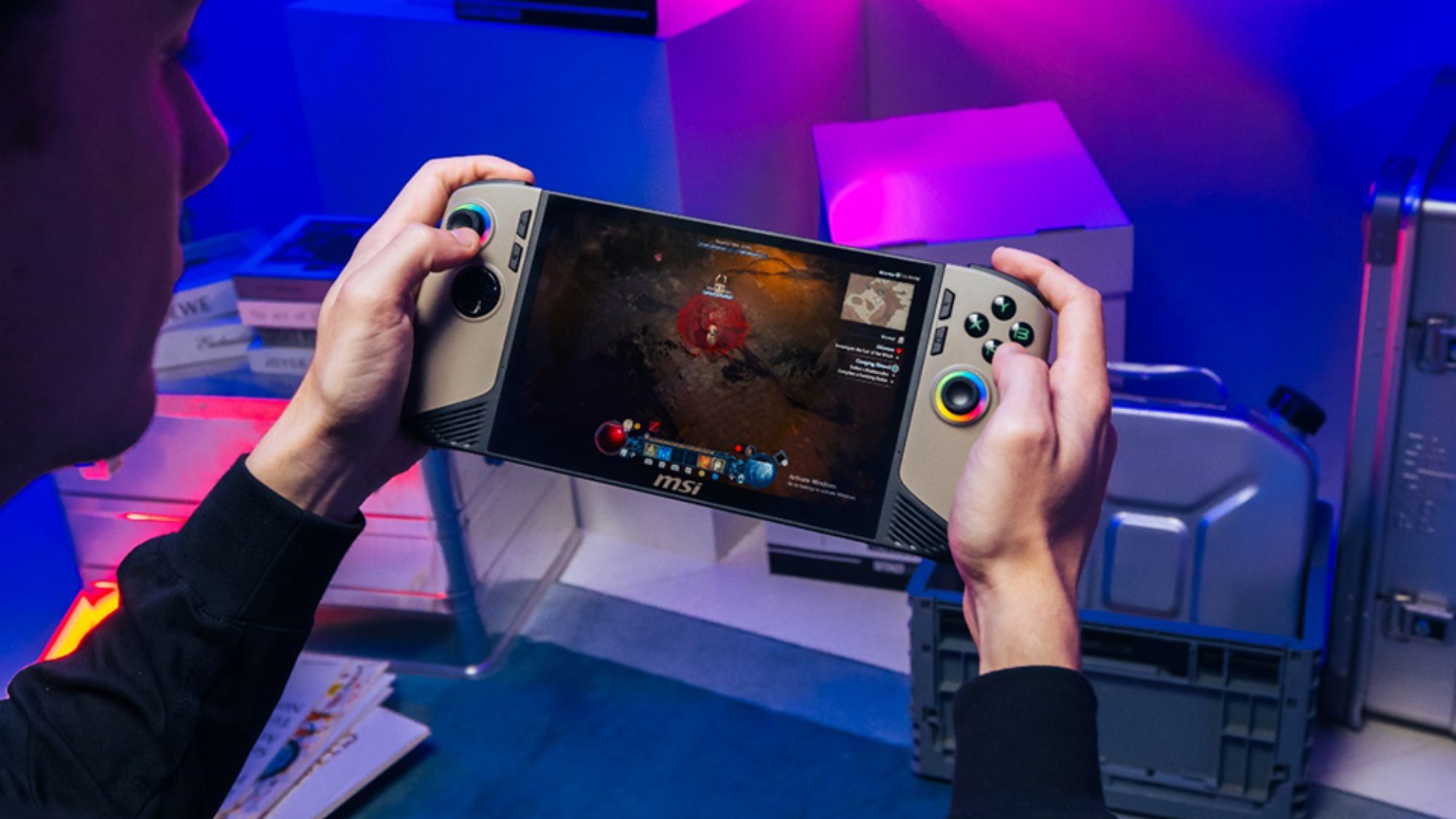
Choose based on where your games live: SteamOS for simplicity, Windows for the widest launcher and service compatibility.
10. Ratings and final verdict
Scoring handheld PCs is tricky because the "best" device changes depending on whether you prioritise comfort, battery, screen, compatibility or raw power. My overall ratings below reflect the buying advice I'd give to a normal enthusiast in 2026, not a synthetic league table based only on chip speed.
The Steam Deck OLED wins my overall recommendation because it understands handheld gaming best. It has the best panel for cinematic play, the most cohesive software experience, excellent controls and enough performance for a huge slice of the PC library. The ROG Ally X is the best choice if you want Windows and more performance headroom, especially thanks to its 80Wh battery and Z1 Extreme hardware. The Lenovo Legion Go S is the most interesting alternative because it brings officially licensed SteamOS to non-Valve hardware and pairs it with a bigger VRR screen.
The MSI Claw 8 AI+ deserves attention as the Intel-based large handheld that finally makes MSI feel competitive in this space, whilst the ROG Xbox Ally X is the one to watch if you care about Xbox's future on handheld PCs. Neither makes the Steam Deck OLED irrelevant; instead, they prove that handheld PCs are becoming a proper category with different answers for different players.
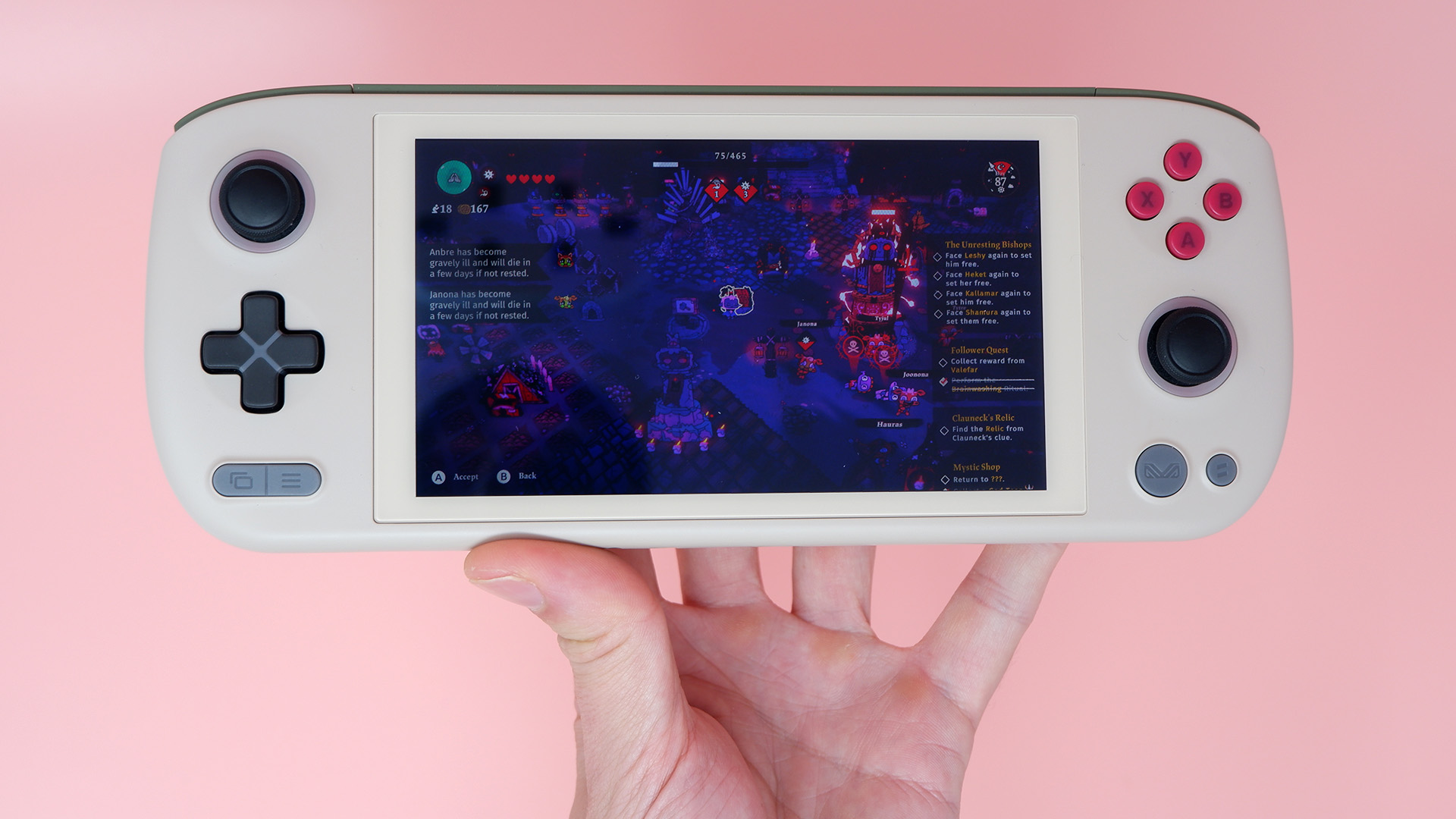
The best handheld gaming PC is the one that fits your library, your hands and your patience for tweaking.
Final verdict
Best overall: Steam Deck OLED. It remains the most rounded handheld gaming PC in 2026, especially for Steam users who value OLED quality, comfort, software polish and suspend/resume convenience.
Best Windows handheld: ROG Ally X. Its Ryzen Z1 Extreme APU, 24GB LPDDR5X-7500 memory, 1TB PCIe 4.0 SSD, 120Hz VRR display and 80Wh battery make it the Windows model I'd recommend first.
Best big-screen alternative: Lenovo Legion Go S. The 8-inch 1920×1200 120Hz VRR display and SteamOS/Windows choice make it ideal for players who find 7-inch handhelds cramped.
Best enthusiast wildcard: MSI Claw 8 AI+. It is the Intel-based option to consider if you want a large, powerful Windows handheld with a much stronger showing than the original Claw.
Best Xbox-focused pick: ROG Xbox Ally X. Released on 16 October 2025, it is the clearest bridge between ASUS's ROG handheld experience and Microsoft's Xbox gaming ecosystem.

8BitDo Pro 3 on Amazon
Check today's price & availability on Amazon UK
- ROG Ally XView on Amazon
- exact listed Lenovo Legion Go S configurationValue and buying adviceView on Amazon
- MSI Claw 8 AI+ (Brown)Value and buying adviceView on Amazon
- ROG Xbox Ally XValue and buying adviceView on Amazon
- 8BitDo Pro 3View on Amazon