
Samsung Galaxy S25 Ultra Review
Samsung’s Ultra flagship remains the all-in one Android phone for people who want a giant display, serious zoom, stylus convenience and top-tier polish — but the big question is whether that premium experience feels genuinely new enough to justify the price.
We link to the exact model on Amazon UK. Prices change often, so check the live price before you buy. As an Amazon Associate we earn from qualifying purchases.
The Galaxy S25 Ultra continues Samsung’s Ultra formula: bold design, giant screen, integrated S Pen and headline-grabbing camera ambitions.
The Samsung Galaxy S25 Ultra sits right at the sharp end of the smartphone market, where compromises are supposed to disappear and expectations become almost unreasonable. This is the phone people buy when they want everything: the biggest display, the most versatile camera system, the most feature-rich software and enough power to last years rather than months. In this review, I’m looking at it as a real-world device rather than a spec-sheet trophy — how it feels in the hand, where it excels, where it overreaches and who should actually spend this sort of money on it.
What I’ll cover in this review
- Design, build and day-to-day ergonomics
- Display quality and media experience
- Performance, responsiveness and AI features
- Camera system strengths and limitations
- Battery life and charging practicality
- Software, S Pen features and long-term value
- Pricing, rivals and buying advice
- Pros, cons, ratings and final verdict
1. First impressions and key specs
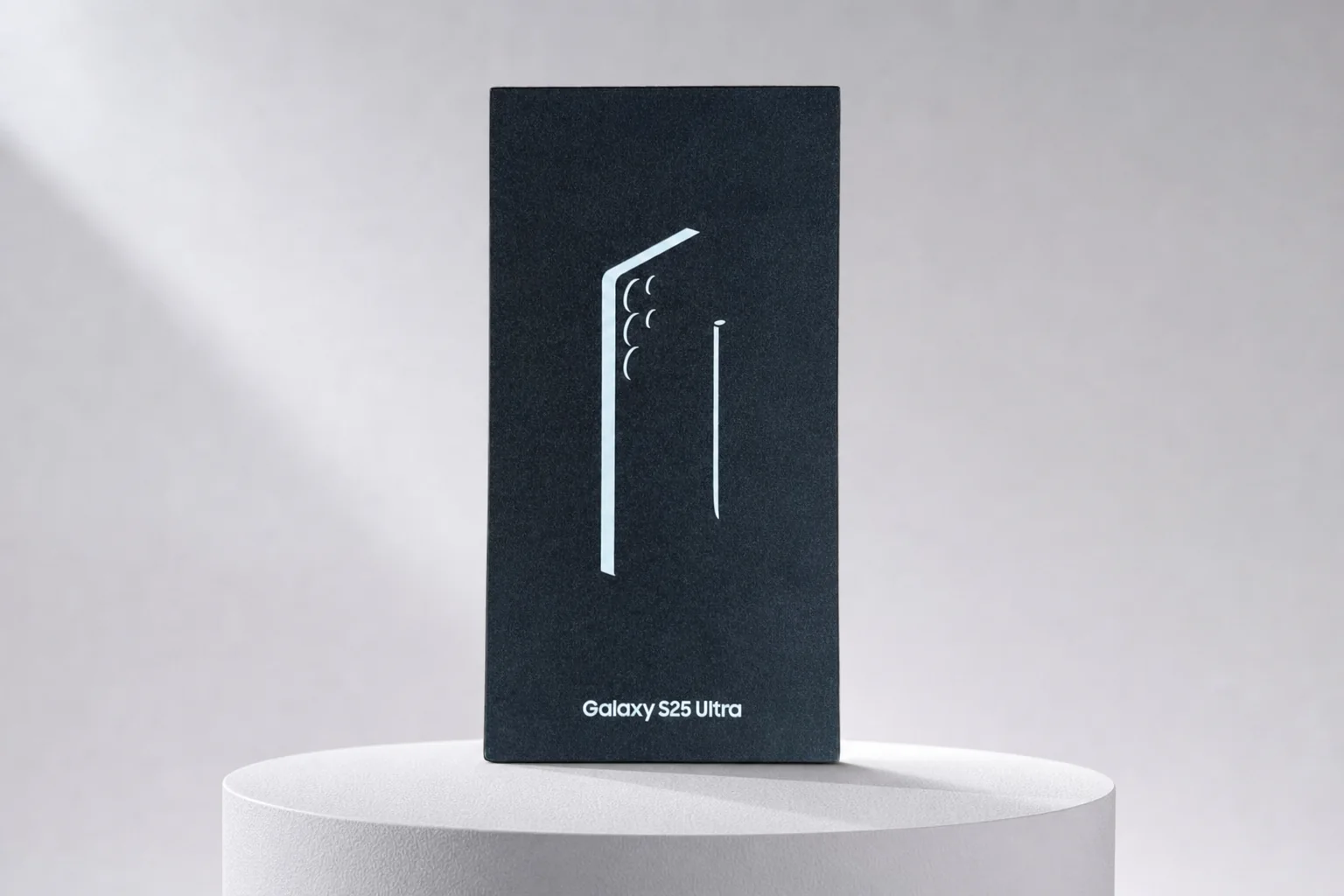
The Galaxy S25 Ultra doesn’t try to hide what it is. This is a large, expensive, feature-packed flagship aimed at people who are happy to carry a proper slab of tech in exchange for getting one of the most capable phones on the market. The design language remains unmistakably Samsung Ultra: squared-off corners, flat-looking display area, integrated S Pen silo and an industrial sort of confidence that feels more “mobile workstation” than fashion accessory.
What I’ve always found interesting about Samsung’s Ultra line is that it really sits in its own niche. Plenty of premium phones do one or two things brilliantly — perhaps they take gorgeous portraits, or last ages on a charge, or feel luxuriously compact. The Ultra approach is different. It tries to be the phone for the person who doesn’t want to choose. A cinema-like display? Included. Long zoom camera? Included. Pen input? Included. Desktop-style productivity extras? Included. That broad appeal is exactly why the Ultra range has become so influential.
At a glance, the S25 Ultra’s appeal is easy to understand. It aims to deliver top-tier performance, a flexible camera setup, a big battery and some of the most mature Android software around. Samsung also continues to lean heavily into AI-powered tools and smart productivity features, which means the experience is no longer just about raw hardware. Whether those additions are genuinely useful or simply marketing gloss depends on how you use your phone, and I’ll dig into that later.
The S25 Ultra is very much a flagship built around excess in the best sense: big screen, big capability and very few obvious omissions.
One important point before we go further: if you prefer small or even medium-sized phones, the Ultra line is rarely the best fit no matter how good the hardware is. This remains a large-handset proposition first and foremost.
2. Design, build and how it feels to live with
In day-to-day use, the Galaxy S25 Ultra feels reassuringly premium in a way that Samsung has largely perfected over the past few generations. The build is tight, the panels line up neatly and the whole thing gives off that expensive “engineered rather than merely assembled” impression. It feels every inch the flagship, and if you’re spending Ultra money, that matters.
That said, this is not a phone I’d describe as universally comfortable. The broad body and more squared-off silhouette give it a serious, professional character, but they also make it a little less forgiving in the hand than a rounded phone of similar size. When you’re lounging on the sofa or trying to use it one-handed on the train, you’re always aware of the scale. For some buyers, that’s a benefit: the big frame creates room for a giant canvas and the internal S Pen. For others, it’s simply a reminder that this is a niche flagship designed around maximum capability, not pocketability.
Personally, I think Samsung gets the balance mostly right. The flatter aesthetic helps with writing using the stylus, and the frame shape gives the handset a more stable feel when you’re taking photos or annotating documents. It also avoids the over-curved-screen awkwardness that once made some large phones feel slippery and slightly theatrical. The S25 Ultra looks bold without looking gimmicky, which is harder to pull off than it sounds.
Integrated S Pen
The built-in stylus remains one of the Ultra’s biggest differentiators, especially if you annotate PDFs, jot quick notes or use your phone for business tasks.
Large Footprint
The size benefits content consumption and multitasking, though it does make casual one-handed use noticeably less comfortable than on smaller rivals.
Premium Finish
Samsung’s flagship construction feels refined and suitably expensive, with the sort of confidence you expect at the top end of the market.
Professional Character
Rather than aiming to be playful or compact, the Ultra projects a serious “workhorse” identity, which suits its audience rather well.
Another thing I appreciate is that Samsung’s design choices still support the phone’s functional ambitions. Nothing here feels accidental. The device is large because it’s trying to offer a note-taking surface, a media screen and a photography toolkit in one. If you buy into that concept, the size starts to feel justified. If you simply want a brilliant camera phone, though, there are smaller alternatives that may fit your life better.
Practical takeaway
If you already use a plus-sized handset or miss the old Galaxy Note style of device, the S25 Ultra’s shape will likely feel natural after a few days. If you’re moving from a smaller phone, expect an adjustment period — especially for pockets, messaging and one-handed navigation.
3. Display quality and media experience
Samsung’s reputation for excellent smartphone displays didn’t appear by accident, and the Galaxy S25 Ultra absolutely trades on that strength. This is the sort of phone you buy if you want your screen to impress every single day, whether you’re streaming, editing photos, reading long articles, gaming or simply scrolling through your camera roll. The size alone gives it an edge over many premium rivals, but it’s the overall polish that really makes a difference.
Colours look vivid without necessarily tipping into cartoonish overkill, contrast is properly dramatic and fine text benefits enormously from having so much room to breathe. One of the biggest quality-of-life benefits of a large high-end panel is that everything feels less cramped. Split-screen multitasking becomes more practical, document viewing is less fiddly and handwriting with the S Pen feels significantly more natural than on a smaller canvas.
In my experience, this is one of those screens that makes you linger. You open a photo to check focus and end up admiring it for ten seconds because the panel flatters everything. It’s also a very forgiving display for mixed use. Bright daylight use should be expected to be strong at this level, whilst indoor viewing at night is equally important and often overlooked. Samsung usually tunes its premium phones to handle both extremes well, and that matters more than any headline spec if this is the device you’ll use for hours every day.
The media experience also benefits from the phone’s physical stature. Watching films or sport on a compact flagship can still be enjoyable, but a handset like this gives you a more immersive result. You’re not quite at tablet territory, of course, yet the Ultra clearly leans in that direction. It’s a phone for people who treat their handset as their most-used screen rather than just a communications tool.
Display strengths
- Large screen makes video, reading and multitasking feel properly spacious.
- Samsung’s panel tuning tends to deliver excellent contrast and rich colour without losing overall polish.
- The generous canvas makes the S Pen more useful than it would be on a smaller handset.
- Premium screen quality enhances everything from maps to messaging, not just films and games.
Display trade-offs
- A bigger panel inevitably means a bigger, heavier handset overall.
- Not everyone wants a phone this large purely to gain a superior media experience.
- With great screen quality comes great battery temptation — you’ll probably use it more.
- Ultra-class displays can make mid-range phones feel a bit disappointing afterwards.
Ultimately, the display is one of the S25 Ultra’s clearest selling points. Even if you never touch the camera’s zoom features or the S Pen, you will notice the quality of the screen every time you unlock it. That consistency of benefit is one reason the Ultra line remains so compelling despite its size and price.
4. Performance, speed and the “everything phone” factor
At the flagship end of the market, raw speed is no longer just about opening apps quickly. Most premium phones feel fast in a showroom. What matters is how they behave under pressure: jumping between camera use, navigation, messaging, editing, tethering, cloud syncing and perhaps a game or two, all whilst staying fluid and not feeling stressed. That’s the test an Ultra phone needs to pass, and Samsung typically understands that better than many brands chasing benchmark bragging rights.
The Galaxy S25 Ultra is designed to be overqualified for ordinary smartphone tasks, and that’s exactly what you want if you’re keeping a handset for several years. Day-to-day responsiveness should be effortless. Animations ought to remain smooth, large files should move quickly, multitasking should feel stable and gaming should be handled with confidence. More importantly, all those capabilities have to coexist. A lot of cheaper phones can be quick until you ask them to do three demanding things at once. The Ultra is supposed to shrug that off.
For productivity users, that headroom matters enormously. If you’re signing documents with the S Pen, hopping into video meetings, running split-screen apps and constantly bouncing between work and personal accounts, the phone needs to feel like a serious tool rather than a pretty toy. In that sort of workload, the difference between “fast” and “flagship fast” becomes obvious quite quickly.
The bars below reflect Gadget Scout's editorial impressions of how the phone feels to use day-to-day. They are editorial impressions from hands-on day-to-day use rather than Geekbench or 3DMark benchmark results.
One point worth making is that performance now extends beyond traditional speed into AI-assisted features. Samsung has increasingly positioned its premium phones as smart assistants for summarising, editing, translating, organising and enhancing tasks that used to involve multiple apps. I’m generally sceptical of AI claims until they save me actual time, but on a phone like this, a handful of genuinely useful features can matter a lot. If the software helps you rewrite a note, clean up a voice memo or search across your content more efficiently, that does add real value.
Where I remain cautious is the long-term novelty of those tools. The core performance of the S25 Ultra is the reason to buy it; AI extras should be treated as bonuses, not the foundation of the purchase. Software trends shift, feature branding changes and some flashy tricks fade away. Smooth responsiveness, stable multitasking and enough headroom for years of updates are the qualities that endure.
The Ultra’s performance appeal isn’t just speed for speed’s sake — it’s the ability to handle demanding, messy real-life phone usage without falling apart.
5. Camera performance: versatility is still the main event
Camera quality is one of the main reasons anyone considers an Ultra phone, and Samsung knows it. The Galaxy S25 Ultra aims to be the handset you pull out in almost any situation and still feel confident: wide landscapes, food, pets, portraits, low-light scenes, travel snaps and, crucially, zoom shots that ordinary phones simply can’t approach. That flexibility is what separates the Ultra line from many otherwise excellent flagships.
In good light, Samsung’s top phones tend to produce bold, punchy, highly shareable images. The style is usually clean, contrasty and immediately attractive on the phone’s own display. Some people love that vivid Samsung look; others prefer a more natural or subdued rendering. Personally, I think Samsung has become better at balancing impact with realism over time, though tastes vary. If you like photos that look impressive straight away without editing, the S25 Ultra is likely to appeal.
Where the Ultra concept really earns its keep is zoom. This is often the difference between a phone that takes a decent record shot and one that gives you a genuinely usable photo from the back of a crowd or across a city street. Parents at school performances, travellers on observation decks, sports spectators and concert-goers all benefit from that extra reach. It’s not merely a gimmick; it changes what sort of photos you can realistically capture.
The challenge with ultra-premium camera systems is consistency. Almost every flagship can take a lovely primary-camera photo on a sunny day. The hard part is keeping quality dependable across multiple lenses and tricky conditions. Samsung’s ambition here is not just to give you one brilliant camera but to give you an entire system. That’s harder, and it’s why the camera experience has to be judged as a package rather than a single lens showcase.
Strong daylight results
Samsung usually delivers crisp, vibrant photos that look great instantly, particularly for travel, architecture and everyday social sharing.
Meaningful zoom flexibility
The Ultra range has long appealed to people who actually use telephoto reach, and that remains one of its strongest practical advantages over standard flagships.
Low-light ambition
Night scenes are where expensive phones justify themselves, though image style and processing preferences will still vary from person to person.
All-round content creation
For creators who shoot a mix of stills, clips, close-ups and zoomed shots, the Ultra’s flexibility is often more useful than chasing one “best” camera metric.
If I have one broader reservation about Samsung camera phones, it’s that ambitious processing can sometimes divide opinion. Some users adore the punch and clarity. Others want gentler tones, less sharpening or more natural skin rendering. That’s not unique to Samsung, but it is part of the buying decision. The S25 Ultra is at its best for people who want capability and convenience first. It’s less about minimalist photographic purity and more about being ready for almost anything.
Camera buying advice
If zoom matters to you even occasionally, the Ultra tends to make far more sense than a smaller flagship. If you mostly shoot friends, food and ordinary daylight scenes, a cheaper premium phone may give you 85 to 90 per cent of the experience for significantly less money.
6. Battery life, charging and long-day reliability
Battery expectations are always sky-high for an Ultra phone, and understandably so. If a handset is this big, this costly and this powerful, nobody wants to be hunting for a charger by mid-afternoon. The good news is that phones in this class are typically built to last a full day with confidence, even for fairly demanding users. The more nuanced answer is that battery life depends heavily on what you do with all that premium hardware.
A giant bright display, powerful processor, heavy camera use, background syncing and AI features can all chip away at endurance. The S25 Ultra should still feel like an all-day device for the vast majority of people, but the definition of “all day” changes from user to user. For moderate use, that might mean ending the evening with a comfortable reserve. For power users — maps, 5G, video, hotspot, camera and multitasking — it may mean getting through the day rather than sailing through it.
What matters most, in my view, is predictability. Premium phones justify themselves when they are dependable. You want to know that a hectic travel day, a long conference or a concert evening won’t suddenly expose a weakness. The Ultra’s broader appeal comes from this sense of reliability. It is trying to be the phone you trust on important days, not just one that posts nice benchmark figures online.
Charging is the other half of the story. Even the best battery eventually needs topping up, and premium buyers quite rightly expect convenience. Whilst I’d always like to see quicker, simpler charging across the industry, most people buying a phone like this care less about “fastest in class” and more about whether 20 or 30 minutes on charge makes a meaningful difference. For a device aimed at busy users, that matters a great deal.
Battery positives
- Should be capable of getting most users through a full day with confidence.
- Large form factor gives Samsung room to pursue serious endurance.
- Well suited to productivity-heavy ownership if battery optimisation is handled sensibly.
- More reassuring than compact flagships for travel and mixed workloads.
Battery caveats
- Heavy camera use, gaming and max-brightness outdoor use can still drain any flagship quickly.
- A gorgeous large display encourages exactly the kind of use that consumes battery fastest.
- Charging expectations are very high at this price, so merely “good” can feel underwhelming.
- Battery size alone doesn’t guarantee endurance — software efficiency matters just as much.
Overall, I’d describe battery life on an Ultra-class handset as part of the peace-of-mind package. It may not be the most glamorous talking point, but it’s absolutely part of what you’re paying for. You want the freedom to use the big display, the camera zoom and the multitasking tools without constantly second-guessing the battery percentage.
7. Software, S Pen and the everyday experience
Hardware gets people through the door, but software is what makes them keep a phone for years. Samsung has spent a long time refining its Android experience, and the Galaxy S25 Ultra benefits from that maturity. The interface is typically rich in features, highly customisable and packed with little conveniences that reveal themselves over time. If you like tinkering, productivity shortcuts and clever extras, Samsung’s software approach is often a joy.
The flip side is that it can also feel busy compared with the cleaner, more minimalist style of some competitors. I don’t necessarily consider that a flaw — many people buying an Ultra actively want a “power user” phone — but it is part of the personality. This is a handset that assumes you might care about floating windows, extensive multitasking, advanced camera settings, edge tools, note-taking integrations and a host of AI-assisted options. It’s less serene than some rivals, yet arguably more capable.
The S Pen remains central to this identity. For some buyers, it’s the reason the Ultra line exists at all. If you’ve never used a stylus-equipped phone, it’s easy to assume it’s niche. In practice, it becomes surprisingly handy. Marking up screenshots, signing forms, scribbling shopping lists, selecting text precisely, annotating maps or sketching quick ideas all feel more direct with a pen than with a thumb. You don’t need to be an artist or executive to appreciate that.
There’s also something satisfying about how the S Pen changes the attitude of the device. The phone stops feeling like a passive consumption gadget and starts behaving more like a small creative and productivity tool. That doesn’t mean everyone needs it, of course. Plenty of users will pop the pen out a few times in the first month and then mostly forget it exists. But if you are the sort of person who likes writing things down rather than just dictating them, this feature is still unusually compelling.
The S Pen is genuinely useful only if it suits your habits. It’s a brilliant differentiator for note-takers and productivity-minded users, but it shouldn’t be the sole reason to spend Ultra money if you know you’ll rarely use it.
On the update and longevity side, Samsung has become one of the strongest names in Android. That matters more than ever because flagship phones are expensive enough that people increasingly keep them for several years. A phone like the S25 Ultra isn’t merely a luxury purchase; for many owners it is also a long-term investment. Strong software support, reliable security updates and ongoing feature improvements make a meaningful difference to value.
The overall everyday experience, then, is classic Samsung at its best: ambitious, capable, feature-rich and designed for people who actually use their phones for more than doomscrolling. If that sounds like you, the software may be one of the Ultra’s biggest strengths rather than an afterthought.
8. Samsung Galaxy S25 Ultra vs the competition
No premium phone exists in a vacuum, and the Galaxy S25 Ultra competes in one of the toughest parts of the market. Buyers shopping at this level usually compare at least three routes: the “everything” flagship like the Ultra, a more camera-specialist rival and perhaps a polished mainstream premium alternative. Which one makes sense depends less on raw quality and more on priorities.
The S25 Ultra’s core advantage is breadth. It’s difficult to find another phone that combines a genuinely huge premium display, stylus input, serious zoom ambitions, mature Android multitasking and the weight of Samsung’s ecosystem in one package. Rivals may beat it in one specific area, but fewer of them offer such an expansive all-round brief.
Against Apple’s Pro Max-style approach, the decision often comes down to ecosystem and personality. Apple tends to win on simplicity, integration for existing iPhone users and a more streamlined user experience. Samsung counters with more flexibility, more overt productivity tools and the S Pen. Against Google’s Pixel-style flagship approach, the choice is often between camera character and device versatility. Pixel phones can feel more computationally clever and cleaner in software, whilst Samsung gives you more hardware breadth, especially around zoom and pen input.
| Feature | Samsung Galaxy S25 Ultra | Apple iPhone 16 Pro Max | Google Pixel 9 Pro XL |
|---|---|---|---|
| Overall identity | Maximum-feature Android flagship with S Pen and broad camera toolkit | Premium mainstream flagship with strong ecosystem pull and polished simplicity | Camera-led Android flagship with clean software and smart computational photography |
| Display experience | Large, immersive and productivity-friendly | Premium and polished, with strong media appeal | Excellent, though less tied to stylus or workstation-style use |
| Camera approach | Versatile, especially if zoom flexibility matters | Consistent and dependable, often strongest for ecosystem-friendly sharing/video | Often favoured for natural-looking computational stills |
| Software character | Feature-rich, customisable, productivity-heavy | Simple, smooth and tightly integrated with Apple devices | Clean, smart and AI-forward with a lighter feel |
| Unique selling point | S Pen plus “do everything” ambition | Ecosystem cohesion and familiar iOS experience | Photography style and streamlined Android experience |
| Best for | Power users, note-takers, zoom fans and people who want every tool in one phone | Existing Apple users and buyers who prioritise simplicity | Android users who want strong photography without the Ultra’s bulk |
What keeps the S25 Ultra competitive, in my opinion, is that it still feels distinct rather than merely expensive. It doesn’t just exist to tick flagship boxes. It has a clear point of view: big screen, big capability, stylus, zoom, multitasking and a slightly more ambitious software layer. If that exact mixture appeals, the alternatives often feel narrower even when they are excellent in their own right.
9. Price, value and who should actually buy it
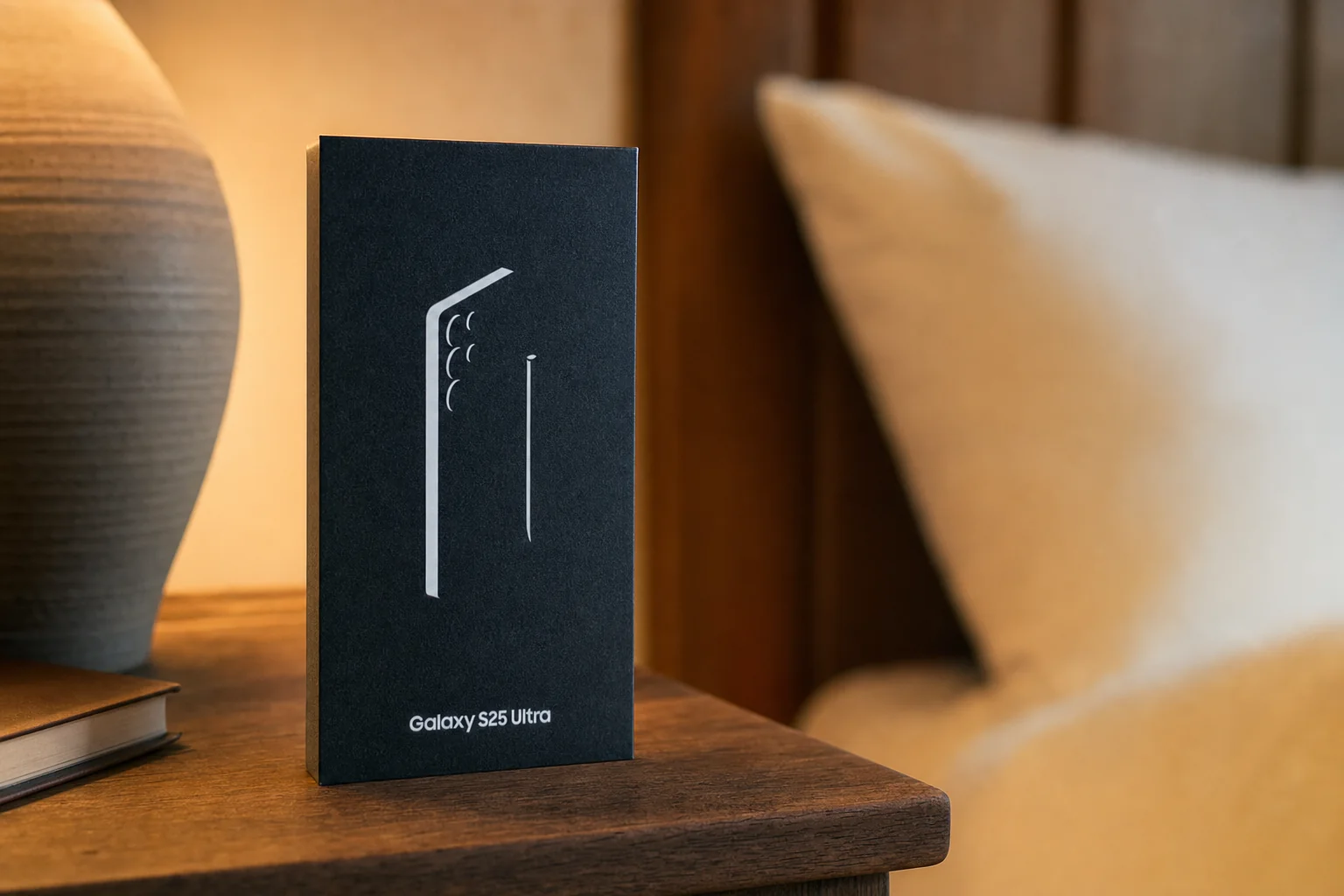
Availability note: the Galaxy S25 Ultra is now a previous-generation flagship following the Galaxy S26 Ultra launch. Some storage variants have been marked end-of-life by Samsung in certain markets, and live current pricing was not consistently confirmed at the time of research. Treat stock and any advertised discounts as inventory-dependent, and check current pricing directly before buying.
Ultra phones are never casual purchases, and the S25 Ultra is likely to be the sort of device people deliberate over for weeks rather than minutes. That’s sensible. When you spend this much on a phone, the right question isn’t simply “is it good?” but “will I use enough of what makes it expensive?” There’s a big difference between admiring a phone’s capabilities and actually benefiting from them.
For the right user, the value proposition is stronger than it first appears. If this becomes your camera, notebook, productivity machine, media device, travel companion and everyday computer, then paying more for a polished all-in-one flagship can make sense. If you mostly use your phone for messaging, browsing, occasional photos and streaming in bed, you may be paying a lot for features you’ll barely touch.
For mainstream premium buyers
If you won’t use the S Pen or zoom regularly, a cheaper high-end phone may offer far better value.
Best fit audience
If you want one device that genuinely does nearly everything, the Ultra makes much more financial sense.
Long-term owners
The higher price is easier to justify if you keep your phone for several years rather than upgrading annually.
My honest advice is to be ruthless with yourself. Are you buying the S25 Ultra because you’ll genuinely annotate documents, exploit the zoom, appreciate the massive display and benefit from its multitasking features? Or are you buying it because it’s the flagship everyone talks about? There’s nothing wrong with wanting the best, but the best for one person is often wasteful overkill for another.
If you are at the stage of checking current deals and bundle offers, it makes sense to compare street pricing before committing, especially as flagship promotions can change quickly.
Buy it if you’re a productivity user
You’ll get real value from the S Pen, split-screen multitasking, large display and Samsung’s feature-rich software.
Buy it if camera flexibility matters
This makes sense for people who actually use zoom, shoot in varied conditions and want one of the most versatile phone camera setups around.
Skip it if you want a compact flagship
If you care more about comfort, simplicity or price than maximum capability, another premium phone will probably suit you better.
10. Final rating, FAQs and verdict
After spending time thinking through where the Galaxy S25 Ultra sits in the current market, I come back to the same conclusion: it remains one of the most complete premium Android phones you can buy, but it’s also one of the easiest to overspend on if your needs are fairly ordinary. It is brilliant because it is unapologetically specialised. This is not a “for everyone” phone, even though Samsung tries to make it feel like the ultimate upgrade for everyone.
The scores below are Gadget Scout's own editorial ratings, based on the specifications and review findings discussed in this article, not a standardised lab-tested scoring methodology.
Gadget Scout verdict
The Samsung Galaxy S25 Ultra is one of the best examples of the “everything flagship” idea. It gives you an expansive display, top-tier polish, powerful performance, broad camera versatility and the still-unique convenience of a built-in S Pen. More than anything, it feels like a phone built for people who use their handset heavily and expect it to replace several other tools.
Its weaknesses are mostly the predictable ones: it’s large, expensive and more feature-dense than many people truly need. That doesn’t make it flawed — it simply means you should buy it with clear intent. If you want the most capable Samsung phone and you’ll actually exploit what makes it special, the S25 Ultra is easy to recommend. If you just want an excellent premium phone, there are cheaper and more comfortable alternatives that may suit you better.
- Best for: power users, camera tinkerers, note-takers and big-screen fans
- Less ideal for: compact-phone lovers, casual users and value-first buyers
- Bottom line: a superb flagship, provided you actually need an Ultra rather than simply fancy one
 Samsung Galaxy S25 UltraView on Amazon