
Samsung Galaxy Z Fold8 Ultra Review: The First Ultra Foldable Tested
Samsung's thinnest, brightest and most camera-ambitious book-style Fold yet puts a 5,000mAh silicon-carbon battery inside a 4.1mm unfolded body. That is a serious opening statement.
Samsung Galaxy Z Fold8 Ultra: First Look and Why It Matters

See Samsung Galaxy Z Fold8 Ultra on Amazon UK
£1899.00price at 23 Aug, may change
Foldables have spent years asking buyers to accept a compromise: a lovely big screen, perhaps, but a chunky body, a smaller battery or cameras that felt a little too apologetic for a flagship. The Galaxy Z Fold8 Ultra was Samsung's attempt to stop making excuses. At 4.1mm unfolded, 215g and with a 5,000mAh battery, it addressed three of the category's oldest grumbles in one go.
The important thing here is not merely that Samsung made another folding phone. It made two distinctly different Z Fold8 phones. The standard Galaxy Z Fold8 had a wider, passport-like format with a 7.6-inch internal display, a 5.5-inch cover screen and a simpler dual-camera arrangement. The Galaxy Z Fold8 Ultra reviewed here was the traditional large book-style model: 6.5 inches outside, 8.0 inches inside, and clearly built for people who want their phone to become a proper working canvas when opened.
That split was sensible. The wide model made a case for itself as the lighter, more content-friendly option, but the Ultra was the all-in version. It had the larger display, the 200MP main camera, the upgraded 50MP ultrawide, a 3x telephoto lens and the larger 5,000mAh battery. There was no pretending this was a modest refresh. Samsung had put its biggest ideas in one very thin machine.
In practical terms, the three numbers to remember are 4.1mm, 215g and 5,000mAh. The first tells you why it feels unusually elegant once opened. The second matters because a foldable can be technically slim yet still feel like you are carrying a paperback in your pocket. The third is perhaps the real breakthrough: battery capacity has historically been the part of foldable engineering most likely to lose the fight against thinness.
The big change is balance
The Fold8 Ultra was not defined by one show-off specification. Its appeal was that the thin chassis, bigger battery, brighter screens and upgraded ultrawide camera all moved in the same direction: fewer compromises for people who genuinely use the inner display every day.
It was still a specialist device, mind you. An 8-inch folding display is not automatically useful simply because it is large. If your phone life consists of messaging, scrolling and the occasional photo, a conventional flagship remains simpler. But if you regularly read documents, juggle conversations and browser tabs, edit photographs, watch long video or use a phone as a compact travel workstation, the Fold8 Ultra made an unusually coherent case for itself.
The Galaxy Z Fold8 Ultra's traditional book-style format gives it a 6.5-inch cover display and an expansive 8.0-inch inner screen.
Specs at a Glance: the Important Bits
Samsung did not hold back on the core hardware. The Fold8 Ultra used the Snapdragon 8 Elite Gen 5 for Galaxy, a customised version of Qualcomm's platform with improvements to CPU, GPU and NPU performance for Galaxy hardware. It paired that chip with 12GB of RAM on the 256GB and 512GB versions, while the 1TB model received 16GB.
The screen specification is especially strong. Both displays used Foldable Dynamic LTPO AMOLED 2X technology with a 120Hz refresh rate and HDR10+ support, while the quoted 3,000-nit peak brightness was 15% higher than the Galaxy Z Fold7. That is the sort of number that matters beyond a spec sheet: a foldable's inner screen is brilliant for maps, messages and reading, but only if you can actually see it outdoors without performing a small interpretive dance in search of shade.
There was also sensible flagship connectivity: 5G, Wi-Fi 7, Bluetooth 5.4, USB-C 3.2, dual Nano-SIM support and multiple eSIM capability. Android 17 came installed, and Samsung included its Galaxy AI-powered multitasking tools rather than treating the large display as little more than a stretched video player.
Design and Build: the 4.1mm Miracle
At 4.1mm when open, the Fold8 Ultra sounded almost implausibly thin. It is the kind of measurement that seems designed for a launch-stage slide, yet it carries genuine significance because this was not a stripped-back device with a tiny battery and two cameras. It contained the 5,000mAh silicon-carbon cell, a triple rear camera system and an 8-inch foldable screen.
That does not make it a featherweight in every situation. At 215g, the Fold8 Ultra still had the reassuring density of a serious flagship. But it was not an absurd weight for the amount of screen and hardware involved. In fact, it landed only 14g above the lighter Galaxy Z Fold8 Wide, which weighed 201g, despite having the larger inner panel, an additional telephoto camera and an extra 200mAh of battery capacity.
The difference between folded and unfolded use is central to the experience. Closed, the 6.5-inch outer panel handled the quick jobs: replying to messages, checking travel details, scanning an email and taking a call. Open it and the Ultra became a little tablet. That is the magic of the form factor when it works. You do not carry a tablet because you hope you might want one later; you carry a phone that happens to be ready when the moment arrives.
Samsung's material choices were appropriately robust on paper. Corning Gorilla Glass Ceramic 3 protected the front, Gorilla Glass Victus 2 covered the rear, and the device had an IP48 rating for water resistance against the everyday mishaps that happen when life gets less glamorous than a product render. It was also offered in Graphite, Cream and Violet Shadow, with Green Shadow exclusive to Samsung's own store.
Thin where it counts
The 4.1mm unfolded measurement was crucial because it made the 8-inch display feel like an intentional working surface, not a bulky novelty bolted into a phone.
215g with flagship hardware
It remained a substantial device, but the weight was credible given the large display, 5,000mAh battery and three rear cameras.
Built for ordinary accidents
IP48 protection and reinforced glass on both outer surfaces provided welcome reassurance for a phone designed to be opened and closed all day.
There is a broader point here. Foldable design used to be an exercise in explaining why the engineering had not quite caught up with the idea. The Fold8 Ultra looked more like the engineering had finally been invited into the room at the start of the project. It was not a normal slab phone, and it should not be judged as one, but it was far closer to the everyday practicality conventional-phone buyers expect.
At 4.1mm unfolded, the Fold8 Ultra concentrated an 8-inch display, triple cameras and a 5,000mAh battery into a remarkably slim format.
Display Deep-Dive: 3,000 Nits Across Eight Inches
The Fold8 Ultra's main display was an 8.0-inch Foldable Dynamic LTPO AMOLED 2X panel with 120Hz refresh support and HDR10+. That is a mouthful, admittedly. In normal-person terms, it meant a large OLED screen designed for deep contrast, vivid colour, smooth motion and responsive scrolling. It is the panel that turns the Fold from an expensive conversation starter into a useful device.
The outer 6.5-inch screen matters just as much as the headline inner panel. Plenty of foldable owners spend much of the day using the cover display, because it is simply quicker for short interactions. Samsung's decision to give the Ultra a properly sized external display meant you could handle the everyday stuff without constantly opening the phone. Then, when a task grew beyond a glance, the larger screen was waiting.
Brightness was one of the most meaningful upgrades. Samsung rated the Fold8 Ultra at 3,000 nits peak brightness, 15% higher than the Galaxy Z Fold7. A foldable's interior display is particularly vulnerable to bright environments because it is broad, reflective and often used for maps or reading while you are outside. More brightness does not make glare disappear by magic — sadly, physics remains stubbornly employed — but it makes the panel more usable in the situations where a large screen can be genuinely helpful.
Why the brighter panel matters
On a device designed for documents, split-screen work and video, a brighter inner display is not just there to make HDR clips look punchier. It improves legibility when the Fold8 Ultra is being used as a practical tool away from a desk.
LTPO is another piece of jargon worth translating. It is a display technology built to vary refresh behaviour intelligently rather than permanently running flat-out. The Fold8 Ultra supported up to 120Hz, which makes scrolling and interface movement look fluid, while the adaptive approach helps avoid wasting power when a high refresh rate is not useful. That matters more on an 8-inch display than it does on a compact phone, simply because there is more panel to illuminate.
The crease remained part of the foldable bargain. Samsung had made major progress in thinness, brightness and battery density, but a screen that bends still has a fold line. Some people stop noticing one quickly; others spot it every time a pale webpage catches the light. If you are unusually sensitive to display uniformity or tactile changes under a fingertip, try one before committing. That is not a criticism unique to Samsung. It is the price of the entire category's best trick.
The Fold8 Ultra's screen proposition was strongest for work that benefits from space: two apps side by side, long articles, documents, photos, web research and video. For quick social scrolling alone, the cover display remained the more natural route.
Camera System: Does a 200MP Sensor Belong on a Foldable?
Yes, with one important caveat: the 200MP camera was a very good reason to choose the Ultra, but it did not erase the limits of the rest of the camera package. Samsung gave the Fold8 Ultra a 200MP main camera with optical image stabilisation, an f/1.7 aperture, 0.6μm pixels and an 85-degree field of view. It supported 8K video at 30fps and 4K video at up to 120fps.
On a device with an 8-inch inner screen, a high-resolution main camera makes particular sense. The bigger display gives you more room to assess framing, inspect detail and edit photographs without squinting at a conventional phone-sized canvas. The Foldable form factor also has a practical photographic advantage: it can be partially opened for more flexible positioning when you do not want to carry a separate stand.
The main camera's pixel count should be treated sensibly rather than as a promise that every photo needs to become a mural. A 200MP sensor gives the image system a large amount of data to work with, and Samsung's ProVisual Engine was designed to process that data. For most everyday images, the benefit is not necessarily an enormous file full of microscopic detail; it is the potential for a richly processed, well-balanced photograph. Full-resolution shooting is more useful when the scene is static, the light is good and you know you may crop later. For a moving child, a dog or your mate enthusiastically waving a pint around at a garden party, speed and dependable processing matter more.
The bigger story was the ultrawide camera. Samsung upgraded it to 50MP, with an f/1.9 aperture, 0.7μm pixels, a 120-degree field of view and 4K recording at 60fps. This was not a decorative extra. A weak ultrawide is one of the quickest ways for an expensive camera phone to feel less premium, because it tends to reveal itself whenever you photograph architecture, landscapes, a room full of people or anything that refuses to fit into a standard frame.
A 50MP ultrawide gave the Ultra a far more credible wide-angle proposition than the token secondary cameras that have appeared on some earlier premium handsets. It was especially relevant to foldable users, who are likely to take advantage of the larger screen when composing expansive scenes. You can see more of an image while framing it, and the 120-degree view gives you the option to make the scene genuinely wide rather than simply standing further back and hoping there is not a hedge behind you.
The Fold8 Ultra's rear array combines a 200MP main camera, upgraded 50MP ultrawide and 10MP 3x optical telephoto lens.
The 10MP telephoto offered 3x optical zoom, f/2.4 optics and optical image stabilisation. This was the least extravagant part of the system, and it is fair to say so. A 3x optical lens is useful: it is excellent for portraits, distant details, travel shots and subjects where stepping closer is not possible. But a 10MP telephoto was also the point at which the Ultra's camera ambitions looked most conservative. At this level, some buyers will understandably want a longer optical reach or more sensor resolution at the telephoto end.
Samsung did include 10MP cameras on both the cover display and the inner display. The outer camera had an 85-degree field of view, while the inner camera offered a wider 100-degree view. Both supported 4K video at 60fps. They were practical tools for calls, quick selfies and the kind of front-facing video that now fills a frankly alarming percentage of modern workdays.
200MP main camera
With OIS, an f/1.7 aperture and 8K30 or 4K120 video support, the main camera was built to handle the serious photographic work.
50MP ultrawide upgrade
The f/1.9, 120-degree ultrawide was the key camera improvement, making the wide-angle view feel worthy of the Ultra badge rather than a box-ticking afterthought.
3x optical telephoto
The 10MP telephoto added a genuinely useful portrait and medium-distance perspective, although it was the system's most restrained specification.
Camera verdict in one sentence
The Fold8 Ultra finally treated the ultrawide camera as an Ultra-level feature, while the 200MP main sensor made the larger inner display feel more valuable for photography and editing.
Performance and Benchmarks: Snapdragon 8 Elite Gen 5 for Galaxy
See Galaxy Z Fold8 Ultra on Amazon UK
£1899.00price at 23 Aug, may change
The Snapdragon 8 Elite Gen 5 for Galaxy was the Fold8 Ultra's performance foundation. Samsung described this as a customised Galaxy version with enhanced NPU, GPU and CPU performance. That matters on a foldable because it is doing more than driving a single app on a conventional screen. The device has to handle large-display layouts, multiple active windows, camera processing, AI features and demanding games without turning the whole experience into a negotiation.
There was one caveat around benchmark figures: early results varied considerably, and Samsung appeared to restrict benchmark-app access on the new Galaxy Z8 series. That makes it irresponsible to present a single score as gospel. What can be reported is that one Galaxy Z Fold8 result reached 2,262 in Geekbench 7 single-core and 6,317 multi-core testing, while another Z Fold8 review unit returned 2,861 single-core and 7,840 multi-core.
Those results are not directly a clean Fold8 Ultra scorecard, and the variation is exactly why they should be read as indicative rather than definitive. Benchmarks are useful for checking broad performance capability, but they cannot tell you whether a phone's screen layout makes your work easier, whether the camera is enjoyable to use or whether the battery lasts through a day. They are a tool. Not a personality test for silicon.
The chart shows reported early Galaxy Z Fold8 Geekbench 7 runs, not a direct like-for-like set of final Fold8 Ultra benchmark results. The range is useful context, but not a reason to overstate precision.
Gaming evidence from the Galaxy Z Fold8 was encouraging. Genshin Impact ran at a stable 60fps, with the chassis peaking at a comfortable 38°C. Samsung also used an expanded graphite cooling structure to improve thermal conductivity and disperse heat more effectively. Thin foldables have limited room for cooling, so thermal management is not an optional footnote here; it is one of the reasons fast hardware remains fast after more than a few minutes.
The Ultra-thin body still imposed limits in highly demanding games. That is unavoidable: a 4.1mm unfolded chassis does not leave infinite space for heat to go on holiday. But the combination of flagship silicon, a broad 8-inch screen and upgraded cooling made the Fold8 Ultra a persuasive gaming device for anyone who values visual space as much as raw benchmark bragging rights.
Samsung's customised Snapdragon platform and expanded graphite cooling were designed to keep demanding multitasking and gaming workloads moving smoothly.
Battery Life and Charging: Silicon-Carbon Changes the Conversation
The Fold8 Ultra was the first Samsung phone to use a silicon-carbon battery, and that is arguably the most important specification in this whole review. Silicon-carbon chemistry offers higher energy density than traditional lithium-ion cells, allowing manufacturers to fit more capacity into less space. In this case, it enabled a 5,000mAh battery in a device that measured only 4.1mm when unfolded.
That is a proper engineering win. The Galaxy Z Fold7 had a 4,400mAh battery, so the Fold8 Ultra's 5,000mAh capacity represented a substantial step up. Samsung's EU energy-label figures put the Fold8 Ultra at 51 hours of battery endurance, compared with 40 hours and 28 minutes for the Z Fold7. That was a meaningful improvement, not merely the sort of polite uplift that needs a microscope and a favourable moon phase to detect.
Battery life on a foldable will always depend heavily on how you use the inner display. An 8-inch panel consuming bright HDR video is a different workload from checking messages on the 6.5-inch cover screen. But the point of the bigger battery was not that every owner would achieve identical endurance. It was that the Fold8 Ultra gave the large display enough energy headroom to feel less like a luxury you had to ration.
The practical battery upgrade
The Fold8 Ultra combined more capacity with a thinner body, and the EU endurance figure rose from 40:28 on the Fold7 to 51:00. That is the sort of change that makes folding the phone open more often feel less risky.
Charging was improved too. Wired charging rose to 45W from 25W, with Samsung stating that the Fold8 Ultra could reach 67% in 30 minutes. Wireless charging increased to 20W, and reverse wireless charging was included for accessories or another compatible device. The phone was also rated for at least 1,200 charging cycles before battery capacity fell below 80%.
That last point deserves more attention than it usually gets. Foldables are costly, complex devices designed to be kept for longer than a throwaway upgrade cycle. Battery longevity is therefore not a dry regulatory figure. It is part of whether the device can remain enjoyable and dependable after a lot of daily charging. The 1,200-cycle certification was reassuring, especially given the more demanding power requirements of a large folding panel.
5,000mAh silicon-carbon battery
Higher energy density helped Samsung fit a larger battery into the Ultra's exceptionally slim unfolded frame.
45W wired charging
Samsung quoted 67% charge in 30 minutes, a welcome improvement over the Fold7's 25W charging specification.
Longer-term confidence
The battery was certified to retain at least 80% capacity after 1,200 charge cycles, which is especially relevant on a premium foldable.
Software and Galaxy AI: Android 17 on a Bigger Canvas
Shop Software and Galaxy AI on Amazon UK
The Fold8 Ultra shipped with Android 17, but the real story was how Samsung used the larger display. A foldable stands or falls on its software behaviour. A giant screen with phone-sized apps scattered across it is not productivity; it is just a very expensive way to make icons look lonely.
Samsung positioned Galaxy AI-powered multitasking as part of the Fold8 Ultra experience. That was the right focus. The 8-inch display gave you room for work that is awkward on a standard phone: reading a source while writing notes, comparing two web pages, keeping a conversation open next to a document, or placing a video beside an email rather than constantly hopping between applications.
The Snapdragon 8 Elite Gen 5 for Galaxy also included enhanced NPU capability, which matters for AI-assisted work. On a large foldable screen, AI features can be useful when they reduce fiddly jobs: organising information, helping with content and allowing you to stay in context rather than leaving the app you are using. The best version of phone AI is not the loudest one. It is the version that quietly saves you a few taps without requiring a standing ovation.
Large-screen multitasking
The 8-inch panel offered space for Galaxy AI-powered productivity and side-by-side app work that would be cramped on a conventional phone.
Enhanced on-device intelligence
The Galaxy-tuned Snapdragon platform brought improved NPU capability to support Samsung's AI-focused experiences.
A phone that scales with the task
The cover screen handled quick interactions, while opening the device created a more comfortable space for longer, more involved jobs.
There is still a human habit to overcome. You have to remember to unfold it. That sounds silly, but it is true. The Fold8 Ultra rewards people who are prepared to use the large display deliberately. If you only ever use it closed, you have paid for an excellent but unusually substantial 6.5-inch phone. If you open it for reading, planning, research, editing and entertainment, it starts to justify its purpose very quickly.
Samsung Galaxy Z Fold8 Ultra vs Galaxy Z Fold7 and Z Fold8 Wide
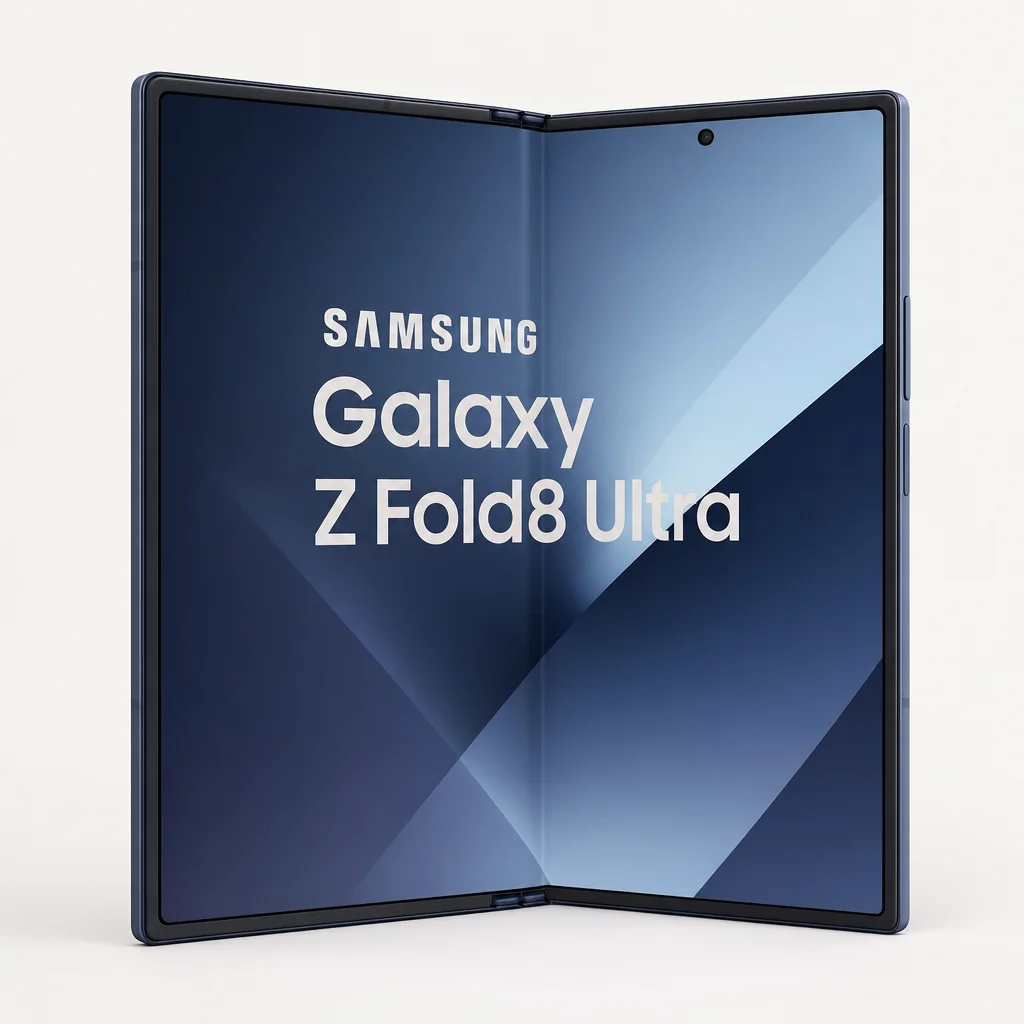
The Fold8 Ultra was not the only foldable in Samsung's 2026 range, and its closest competition came from inside the same family. The Galaxy Z Fold8 Wide targeted people who preferred a broader, shorter format, while the Galaxy Z Fold7 remained the clearest reference point for understanding how far the Ultra's battery and brightness story had moved on.
The table below sticks to the figures that matter most. The Ultra was clearly the specification leader: larger screen, bigger battery, a 200MP main camera and a dedicated 3x telephoto. The Fold8 Wide countered with lower weight and a distinctly different 4:3 inner-screen concept. Neither was simply "better"; they were aimed at different kinds of foldable buyer.
| Feature | Galaxy Z Fold8 Ultra | Galaxy Z Fold8 Wide | Galaxy Z Fold7 |
|---|---|---|---|
| Main display | 8.0-inch | 7.6-inch | — |
| Cover display | 6.5-inch | 5.5-inch | — |
| Unfolded thickness | 4.1mm | 4.5mm | — |
| Weight | 215g | 201g | — |
| Battery capacity | 5,000mAh | 4,800mAh | 4,400mAh |
| EU battery endurance | 51:00 | — | 40:28 |
| Main camera | 200MP | 50MP | — |
| Ultrawide camera | 50MP | 50MP | — |
| Telephoto camera | 10MP, 3x optical | — | — |
| Charging | 45W wired, 20W wireless | 45W wired, 20W wireless | 25W wired |
The Fold8 Ultra sat at the top of Samsung's foldable range with the largest screen, largest battery and most versatile rear camera system.
The Fold8 Wide was the alternative for someone who valued lower weight and a broader display shape. At 201g, it was Samsung's lightest Galaxy Z Fold, and its 4,800mAh battery was hardly small. Its 50MP main and 50MP ultrawide cameras also made sense for users who wanted simplicity over zoom flexibility.
The Ultra, meanwhile, was the better fit for the buyer who wanted the fullest expression of Samsung's foldable idea. The additional telephoto lens, 200MP main sensor, 8-inch panel and 5,000mAh battery were not isolated upgrades. Together, they made it the version for people who expected their foldable to handle the serious stuff.
Pros
- Remarkably slim 4.1mm unfolded design.
- Large 8.0-inch 120Hz AMOLED main display with 3,000-nit peak brightness.
- 5,000mAh silicon-carbon battery substantially improved endurance over the Fold7.
- Upgraded 50MP ultrawide gave the camera system stronger all-round credibility.
- 45W wired and 20W wireless charging were meaningful quality-of-life upgrades.
Cons
- The 215g weight was sensible for the hardware, but still substantial for a phone.
- The 10MP 3x telephoto was less ambitious than the 200MP main and 50MP ultrawide.
- Like all folding displays, the inner panel's crease remained part of the ownership experience.
- The big screen only earns its keep if you regularly unfold it for work, reading or entertainment.
Who the Samsung Galaxy Z Fold8 Ultra Suits
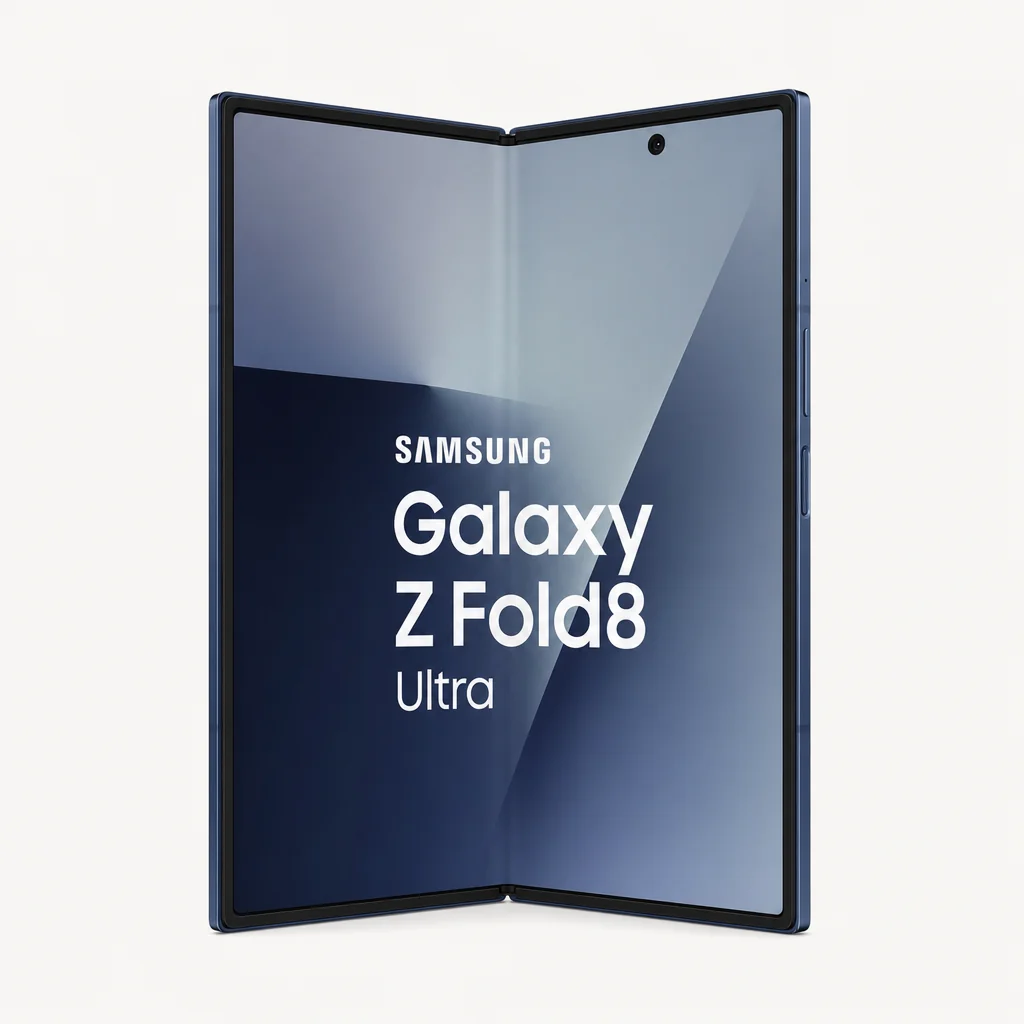
The Ultra was not designed to be a universal recommendation, and that is fine. The right question is not "is a foldable better than every conventional phone?" It plainly is not. The right question is whether the ability to carry a full-size 8-inch workspace in your pocket improves enough of your day to matter.
Best for mobile multitaskers
Choose the Fold8 Ultra if you spend a lot of time reading, researching, replying to messages and working across multiple apps away from a laptop.
Best for foldable photographers
The 200MP main camera and upgraded 50MP ultrawide made this the most compelling choice for buyers who want a serious camera suite on a foldable.
Best for big-screen entertainment
The 8-inch HDR10+ AMOLED panel, 120Hz refresh rate and higher peak brightness made the Ultra the obvious Samsung Fold8 for video and games.
Best for the uncompromising buyer
If you want Samsung's fullest book-style foldable specification rather than the lighter, wider Fold8 Wide design, the Ultra was the clear choice.
Conversely, the Fold8 Ultra was harder to recommend to someone who wants a phone that stays closed all day. The 6.5-inch cover screen was capable, but it was only half the proposition. Buyers who value a lighter device and prefer a broader 4:3 internal display had a legitimate reason to consider the 201g Galaxy Z Fold8 Wide instead.
For everyone else, the Ultra's appeal was unusually straightforward. It brought together the things that normally pull foldables in opposite directions: thinness, endurance, camera quality and screen space. It was a premium device because it did more, not merely because it had a complicated hinge.
The Fold8 Ultra made the strongest case for buyers who want a compact phone outside and a large-screen workspace when they open it.
Gadget Scout Rating
The Fold8 Ultra earned a high score because Samsung made progress where it mattered. The screen was brighter, the battery was substantially larger, charging was faster, the body was thinner and the ultrawide camera received a proper upgrade. The telephoto specification and unavoidable foldable crease stopped it being perfect, but neither undermined the core achievement.
Samsung Galaxy Z Fold8 Ultra FAQ
Samsung's Fold8 Ultra represented a major step towards the long-promised foldable ideal: a full-size screen without a full-size compromise.
Final Verdict: Samsung Galaxy Z Fold8 Ultra
The Galaxy Z Fold8 Ultra was Samsung's most convincing book-style foldable to date. Its 4.1mm unfolded design was extraordinary, but the real achievement was fitting that slimness around a 5,000mAh silicon-carbon battery, an 8-inch 3,000-nit display and a camera system finally worthy of a top-tier Fold.
The 50MP ultrawide was the upgrade that made the camera package feel properly complete, while the 200MP main sensor and roomy inner display made the Ultra unusually appealing for people who shoot, edit and share from one device. The 10MP 3x telephoto was less ambitious, and the crease remained a foldable reality, but these were comparatively small caveats in a device that solved so many of its predecessors' practical problems.
If you will actually unfold it for work, reading, entertainment and multitasking, the Fold8 Ultra was more than a luxury gadget. It was the first Samsung Ultra foldable that felt like the category had properly grown up.