
Samsung Galaxy Ring 2 Rumours: Features, Price and Release Date
Everything the leaks, patents and supply-chain whispers are telling us about Samsung's next smart ring — and whether the wait will be worth it.
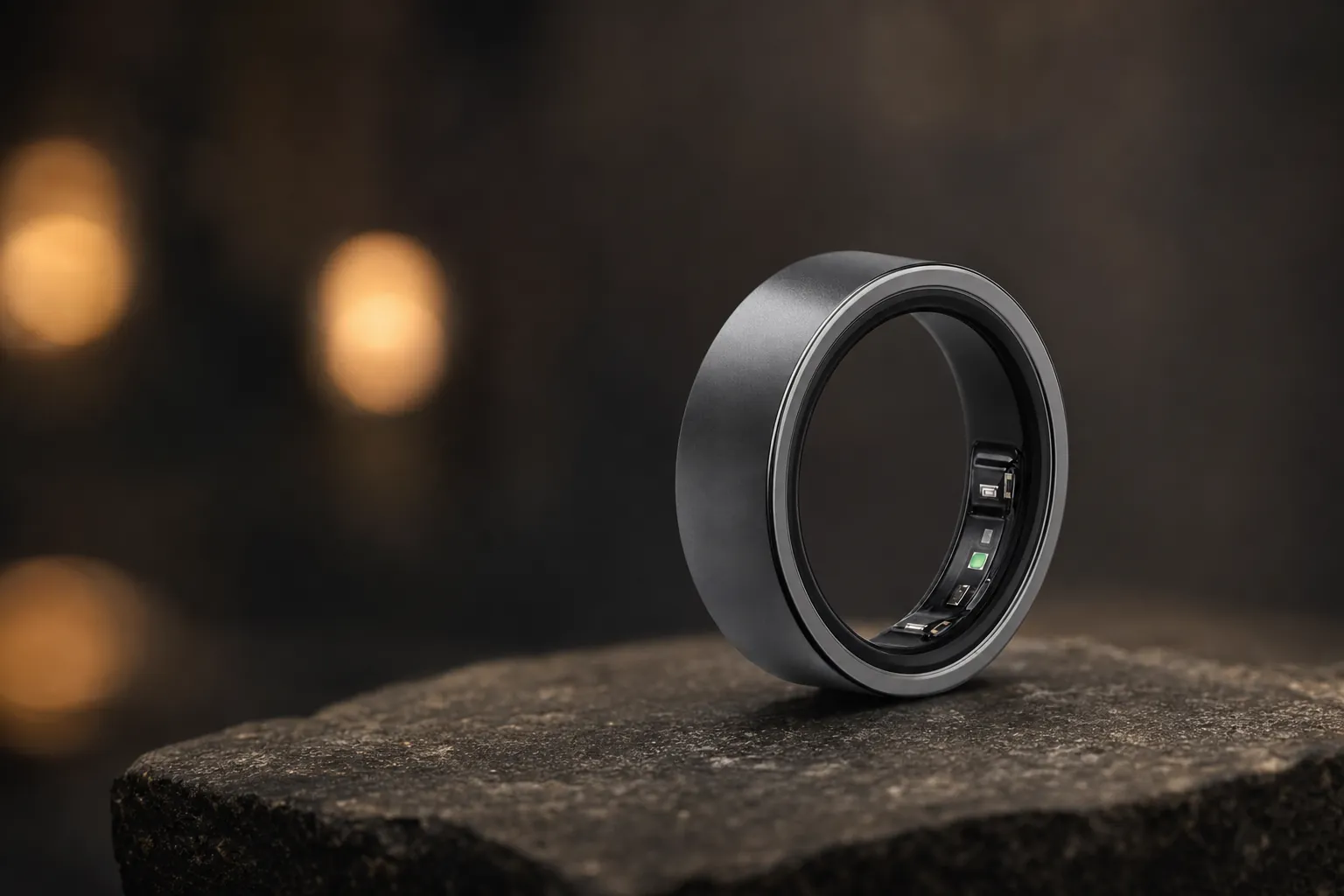 Illustrative concept image, not an official photo
The original Galaxy Ring set the template — but the sequel could change the formula in some meaningful ways.
Let me be honest with you up front: there is no Samsung Galaxy Ring 2 yet. Samsung hasn't said a word officially, no invitations have gone out, and nobody outside Suwon has held the finished article. What we do have is a steadily growing pile of leaks, patent filings and supply-chain chatter that paints a surprisingly detailed picture of where Samsung's smart ring is heading. So treat everything in this article as informed speculation rather than gospel — but informed it certainly is, and some of it is genuinely exciting.
See the original Galaxy Ring on Amazon UK
I've spent a fair bit of time with the original Galaxy Ring, and whilst it was a confident first effort, it left plenty of room for improvement. The rumours swirling around the second-generation model address almost every gripe I had — from battery life to sizing to the breadth of health tracking. In this deep dive I'll walk you through what's being whispered, set each rumour against what the first ring actually delivered, compare it to the competition, and give you my honest take on whether you should hold out for it.
Throughout, I'll keep flagging which bits are solid and which are wishful thinking, because the smart ring rumour mill is famously prone to getting ahead of itself. Right, let's get stuck in.
Concept visualisation for illustration — based on rumoured specs, not a confirmed design.
The Story So Far: What the Original Galaxy Ring Got Right
To understand where the Galaxy Ring 2 might go, you have to understand where the first one landed. Samsung released the original Galaxy Ring on the 10th of July 2024, with open sales following on the 24th of July. It arrived at £399 in the UK, $399.99 (about £315) in the US and €449 across much of Europe — squarely positioning it as a premium wearable rather than a budget tracker.
It was, and still is, a tidy piece of engineering. The ring measures 7.0mm wide and just 2.6mm thick, and depending on which of the US sizes 5 to 13 you opted for, it weighs somewhere between 2.3 and 3 grams. That's genuinely featherweight — light enough that you forget it's there within a day or two of wearing it. The concave design, with sides that taper towards the middle, was a clever touch aimed at minimising the scuffs and scratches that inevitably plague anything you wear on your hands all day.
Grade 5 titanium, a concave profile and a sub-3g weight made the first Galaxy Ring genuinely easy to live with.
Build quality was never in question. Samsung used grade 5 titanium alloy and offered it in black, silver and gold. It carried both an IP68 rating and a 10ATM water resistance rating — meaning it could handle 100m of water pressure for up to ten minutes, plus the usual dust and immersion protection you'd expect. You could swim in it, shower in it and generally forget about it, which is exactly what you want from something you never take off.
Here's a quick snapshot of the first-generation hardware, which forms the baseline against which every Galaxy Ring 2 rumour deserves to be judged.
Inside that slim titanium shell, Samsung packed an accelerometer, a PPG (photoplethysmography) sensor for heart rate, and a skin temperature sensor. With those, the ring tracked sleep, heart rate, skin temperature, blood oxygen during sleep, general activity and menstrual cycle insights, all surfaced through the Samsung Health app. The battery ranged from 18 mAh in the smallest sizes (rated for six days) up to 23.5 mAh in the largest (rated for seven), and the bundled charging case held 361 mAh — good for roughly 20 full recharges before the case itself needed topping up over USB-C with a 25W adapter.
In day-to-day use, I found the real-world battery life landed closer to six days than the headline figure, which is respectable but not class-leading. And that, conveniently, brings us to the single biggest rumour swirling around the sequel.
The Headline Rumour: A Solid-State Battery Breakthrough
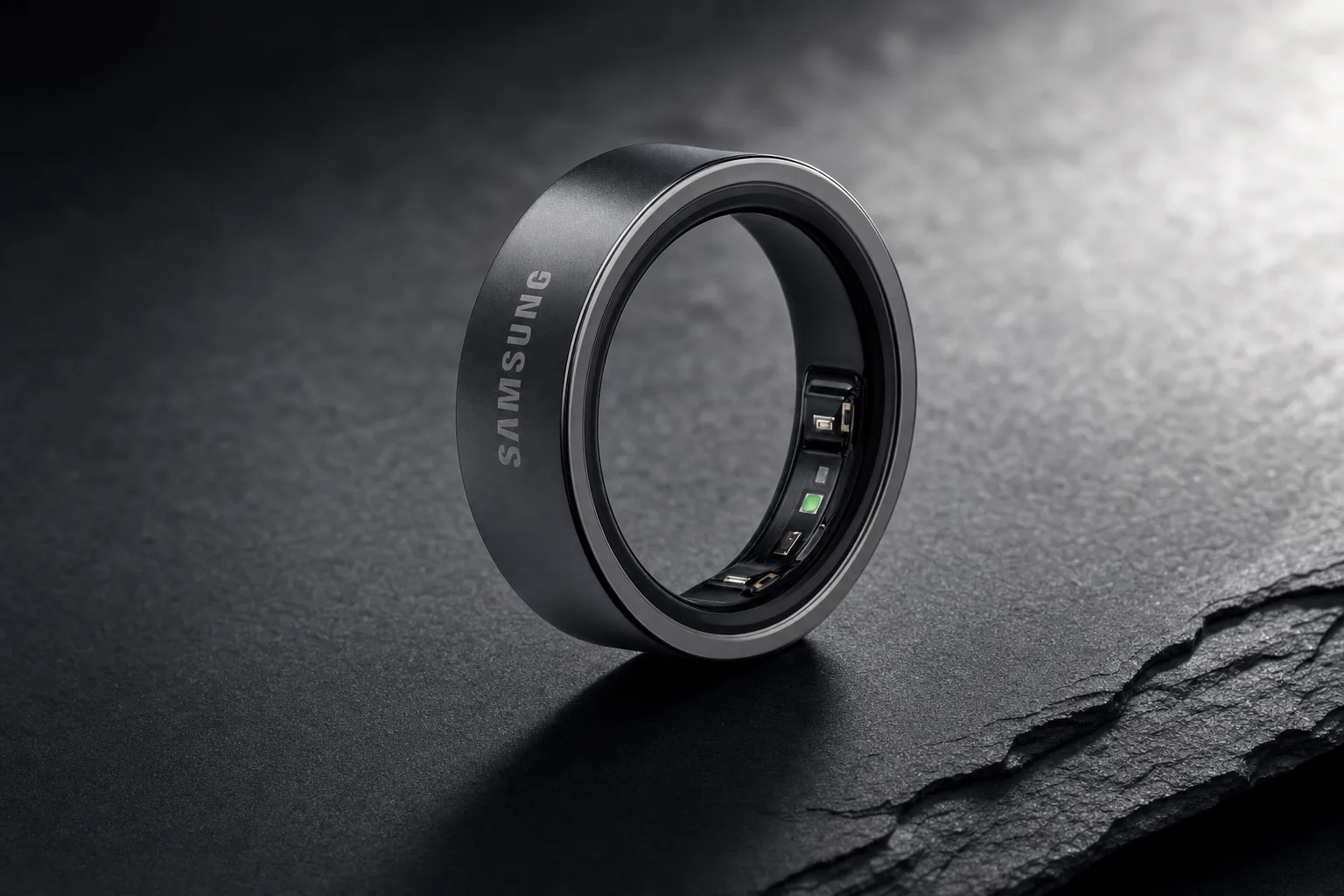
If only one Galaxy Ring 2 rumour turns out to be true, I desperately hope it's this one. Multiple Korean outlets, including Money Today, plus the well-followed Smartphone Assistant, have suggested that the second-generation ring could ship with a solid-state battery built around a ceramic-based electrolyte rather than the conventional liquid electrolyte found in today's lithium-ion cells.
Why does that matter so much in a device this small? Because batteries are the single biggest constraint in smart ring design. Everything — thickness, weight, longevity, charge speed — is dictated by what you can cram into that curved sliver of titanium. A solid-state cell promises to ease nearly all of those constraints at once.
Samsung SDI showcased pouch-type solid-state battery samples at InterBattery 2026, which is what's fuelling much of this speculation. Crucially, though, there's been no official confirmation that the Galaxy Ring 2 will actually use this technology — so file it firmly under "promising but unproven".
The numbers being floated are eye-opening. ETNews reported in May 2026 that the Galaxy Ring 2 could be rated for 9 to 10 days of battery life, a meaningful jump over the first ring's six-to-seven-day rating. More optimistically still, some reports point to a real-world window of 10 to 12 days if the solid-state technology delivers. For a device you'd ideally never want to remove, stretching the charge cadence from "weekly" to "roughly fortnightly" is a genuine quality-of-life upgrade.
Charging could be transformed too. The original ring takes over an hour to refill, but with a solid-state cell the rumours suggest a 0–100% charge in under 20 minutes. There's also talk of a clever manufacturing change: rather than the usual winding method, Samsung is said to be exploring a stacking approach to distribute power more evenly across the ring's curved form. That's exactly the sort of behind-the-scenes engineering that doesn't make for flashy marketing but quietly makes a product better.
Rumoured battery-life figures for the Galaxy Ring 2 versus the measured reality of the first model. Treat the longer figures with healthy scepticism until Samsung confirms anything.
My Take on the Battery Hype
Solid-state batteries have been "two years away" for a decade now. The fact that Samsung SDI is showing real samples is encouraging, but going from a trade-show prototype to a mass-produced consumer ring is a huge leap. If it ships, it's a landmark. If it doesn't, expect a more modest battery bump instead — either way, longevity should improve.
Design: Thinner, Lighter and More Sizes
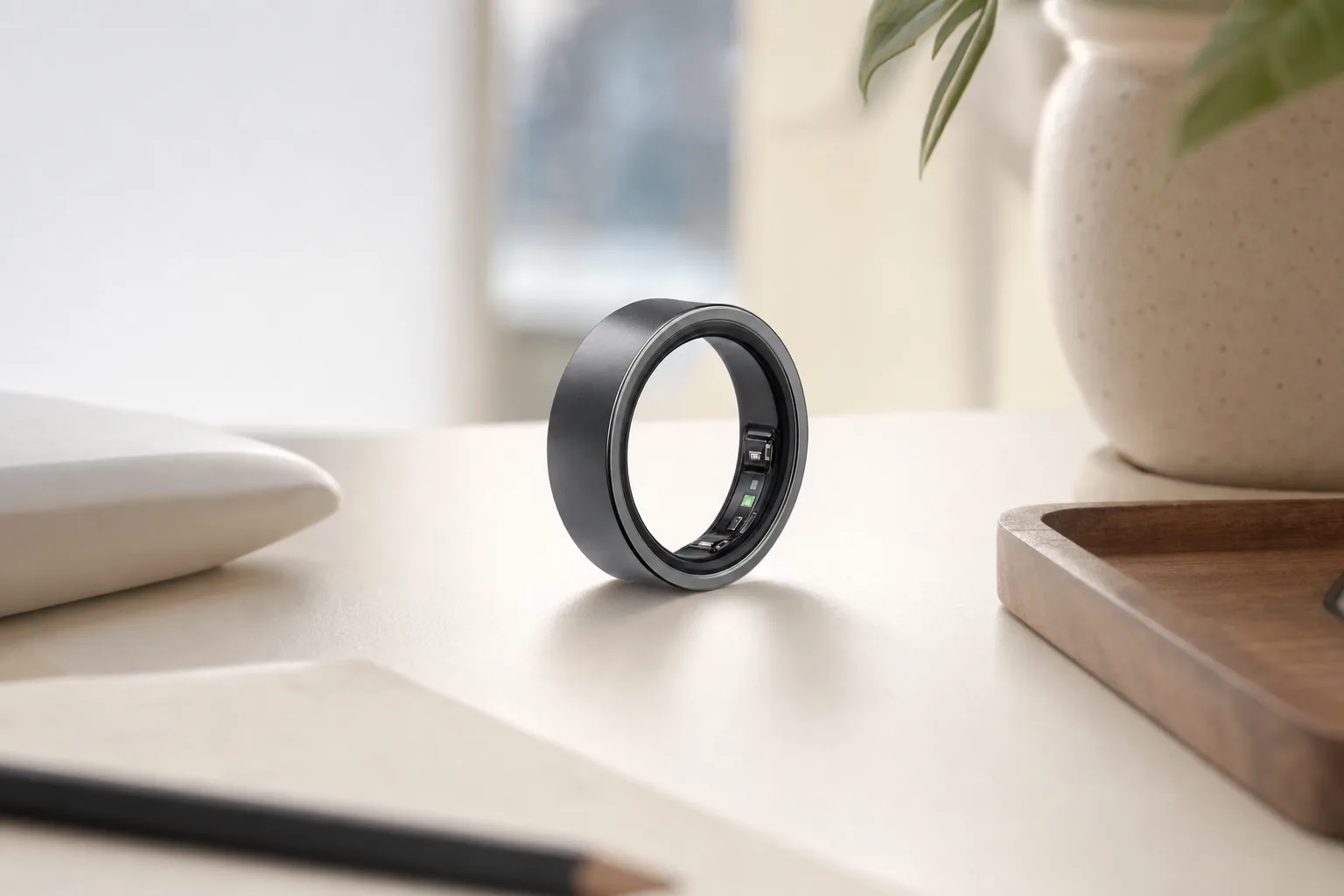
A smart ring lives or dies on comfort, and the design rumours suggest Samsung knows it. The most concrete claim, reported across multiple outlets, is a push to make the Galaxy Ring 2 thinner. One target being thrown around is 2.0mm — described as a stretch goal — down from the 2.6mm of the original. That might sound trivial on paper, but on your finger, shaving off half a millimetre is the difference between "barely noticeable" and "completely invisible".
ETNews, via 9to5Google, also reports the ring will be lighter than its predecessor, though no exact figure has been pinned down. Given the first ring already weighs as little as 2.3g, any further reduction is impressive engineering — and a solid-state battery, being more energy-dense, would help here too.
A target thickness of 2.0mm would make the Galaxy Ring 2 one of the slimmest smart rings on the market — if Samsung pulls it off.
Then there's sizing, which was a genuine pain point first time around. The original launched in US sizes 5 to 13, with sizes 14 and 15 added later. The rumours suggest the Galaxy Ring 2 will span a broader 4 to 15 range, adding a smaller size 4 to match what the Oura Ring 4 offers. That's a smart, inclusive move — there's nothing more frustrating than a wearable that simply doesn't come in your size.
Internally, the sensor placement is also tipped for a rethink. The first ring clustered its sensors into a single quadrant on the inside surface, and industry sources suggest the sequel will optimise that arrangement. Better sensor positioning isn't just about packaging neatness — it can directly improve the accuracy and consistency of the readings, particularly when the ring shifts slightly on your finger throughout the day.
Slimmer Profile
A target of 2.0mm thickness versus the original 2.6mm, for a more discreet fit that disappears on the finger.
Reduced Weight
Tipped to weigh less than the 2.3–3g first generation, helped along by a denser battery if the solid-state rumours hold.
Wider Size Range
A rumoured 4–15 spread, adding a smaller size 4 to better compete with the Oura Ring 4's range.
Optimised Sensors
Improved internal sensor placement that could sharpen the accuracy of heart rate and sleep readings.
One thing I'd not expect to change is the core material. Grade 5 titanium served the first ring brilliantly, balancing strength, lightness and a premium feel, and there's nothing in the rumours to suggest Samsung is moving away from it. If it ain't broke, and all that.
Health Tracking: Where the Real Battle Will Be Won
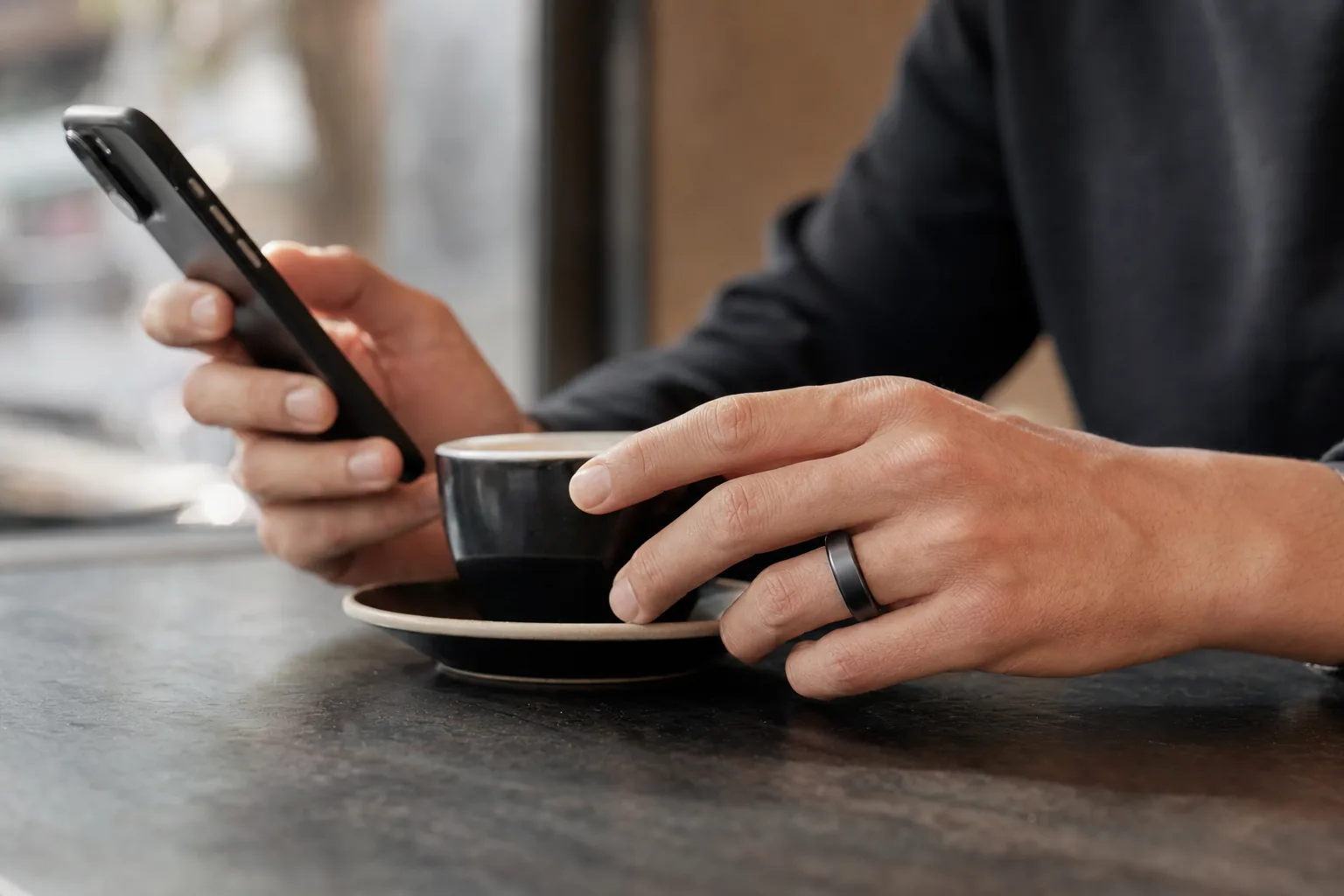
Battery and design grab the headlines, but for most people the entire point of a smart ring is the health insights. This is where the Galaxy Ring 2 rumours get most ambitious — and, frankly, most speculative. Let me sort the likely from the longshots.
Starting with what's most plausible: the PPG sensors are tipped for an upgrade, with talk of improved optical heart-rate monitoring and better motion detection. That's an unglamorous but genuinely useful refinement, since optical heart-rate accuracy is the foundation everything else is built upon. Sleep tracking — already a strength of the first ring — is expected to gain improved accuracy and expanded insights, particularly around cardiovascular health, according to ETNews.
Temperature sensing should evolve too. The original ring measured skin temperature during sleep, but patent filings point towards a more advanced body temperature sensor on the sequel. That's a widely expected upgrade and would feed into more reliable cycle tracking and illness-onset detection.
Samsung Health is the hub for everything the ring measures — and the rumoured sensor upgrades could make those insights considerably richer.
Now for the genuinely exciting — and genuinely uncertain — stuff. Patent filings describe a ring with blood pressure monitoring and an expanded optical sensor array. If that materialised, it'd be a big deal, but I'd urge caution: consumer-grade optical blood pressure measurement faces serious accuracy challenges, and a fingertip-adjacent ring is a tricky place to nail it reliably. I'd treat this as highly speculative.
The same goes for blood glucose monitoring, which is reportedly under development but unlikely to ship on the Ring 2 at launch due to regulatory and accuracy hurdles. Non-invasive glucose tracking is something of a holy grail in wearables, and if anyone cracks it, it's more likely to debut on a Galaxy Watch first. There's also chatter about ECG functionality — potentially to match the AFib detection found in rivals like the Circular Ring 2 — and even sleep apnoea detection, given that Samsung's watches secured FDA De Novo clearance for detecting moderate-to-severe sleep apnoea over a two-night window. Both are pure speculation for now, with no confirmation either is coming to the ring.
A Reality Check on Health Claims
The gap between a patent filing and a shipping feature is enormous. Companies patent dozens of ideas they never commercialise. Blood pressure, blood glucose, ECG and sleep apnoea detection are all things Samsung is clearly interested in — but interest is not a roadmap. My money is on incremental sensor improvements at launch, with the headline-grabbing medical features arriving (if at all) over time and on the watch line first.
Where I'm more confident is the software layer, because that's something Samsung can roll out without any hardware risk.
AI and Software: The Galaxy Watch 8 Connection
See the original Galaxy Ring on Amazon UK
One of the more credible rumours is that the Galaxy Ring 2 could inherit a suite of AI fitness tools from the Galaxy Watch 8. This makes complete sense — Samsung's wearables share the Samsung Health platform, so features developed for one device naturally trickle across the range.
Several new holistic tools are said to be in development. Among them is a sleep environment report, which would factor in room temperature, humidity, light levels and air quality to explain why you slept well or badly, rather than just telling you that you did. There's also talk of sleep time guidance that recommends your optimal sleep and wake times based on your patterns — the sort of gentle, actionable nudge that actually changes behaviour.
A mindfulness tracker is also rumoured, monitoring stress and mood through breathing analysis. Combined with the rearranged sensor structure mentioned earlier, the aim seems to be more accurate, more holistic tracking that's geared specifically towards improving sleep quality and overall wellbeing.
Sleep Environment Report
Combines room temperature, humidity, light and air quality data to explain the quality of your rest.
Sleep Time Guidance
Recommends optimal sleep and wake windows tailored to your personal patterns.
Mindfulness Tracker
Monitors stress and mood via breathing analysis for a more rounded picture of your wellbeing.
Inherited AI Fitness Tools
Features filtering down from the Galaxy Watch 8 across Samsung's shared Health platform.
Why the Software Story Matters
Hardware sells a ring, but software keeps you wearing it. The most reliable predictor of whether you'll stick with a wearable is whether its insights feel useful day after day. If Samsung nails the AI-driven coaching — telling you what to do, not just what happened — the Galaxy Ring 2 could earn its place far better than the first model did.
How the Galaxy Ring 2 Could Stack Up Against Rivals
The smart ring space has matured considerably, and the Galaxy Ring 2 won't have it all its own way. Its two most obvious rivals are the Oura Ring 4 — the long-standing category benchmark — and the Circular Ring 2, which has pushed hard on medical-grade features like AFib detection. Here's how the rumoured Samsung sits between them.
| Feature | Galaxy Ring 2 (rumoured) | Galaxy Ring (Gen 1) | Rival benchmark |
|---|---|---|---|
| Thickness | ~2.0mm target | 2.6mm | Oura Ring 4 sets the slim standard |
| Size range | US 4–15 (rumoured) | US 5–13 (later 5–15) | Oura Ring 4: 4–15 |
| Rated battery | 9–10 days (rumoured) | 6–7 days | Multi-day across the category |
| Charge time | Under 20 min (rumoured) | Over 1 hour | Typically 1 hour+ |
| Battery tech | Solid-state (rumoured) | Standard Li-ion | Standard Li-ion |
| Material | Grade 5 titanium | Grade 5 titanium | Titanium common |
| Water rating | Expected high (TBD) | IP68 / 10ATM | Water resistant |
| Standout sensors | Upgraded PPG, body temp | PPG, accel, skin temp | Circular Ring 2: AFib detection |
The picture this paints is encouraging. If the battery and thickness rumours hold, the Galaxy Ring 2 would match or beat the Oura Ring 4 on the metrics that matter most for everyday comfort and convenience, whilst the broader size range closes a genuine gap. Where Samsung still has ground to make up is on the headline medical features — the Circular Ring 2's AFib detection is the kind of clinically meaningful capability that the Galaxy Ring 2's rumoured ECG would need to match.
The Oura Ring 4 and Circular Ring 2 are the benchmarks Samsung's sequel will be measured against.
There's one significant structural advantage in Samsung's favour, though: the ecosystem. If you already own a Galaxy phone, Galaxy Watch and Galaxy Buds, the Ring slots into Samsung Health alongside them, and that integrated picture of your health is genuinely more useful than the sum of its parts. Oura, for all its excellence, lives in its own app. For a committed Samsung user, that integration could outweigh any single spec on the table above.
Release Date: When Might We Actually See It?
This is the question I get asked most, and the honest answer is: not imminently. The most consistent reports point to a launch in late 2026 or early 2027. That's a longer gap than the annual refresh cycle Samsung uses for its phones and watches, but it makes sense for a couple of reasons.
First, smart rings simply don't need annual updates — the hardware is constrained enough that meaningful generational leaps take longer to engineer. Second, if Samsung really is waiting on solid-state battery technology to mature, that timeline is dictated by manufacturing readiness rather than marketing calendars. Rushing a half-baked battery into a sealed, non-serviceable device you wear constantly would be a recipe for disaster.
There have been scattered references to a "Galaxy Ring 2 Ultra" variant in some sources, hinting Samsung might split the line into standard and premium tiers. This is unconfirmed and could easily be a misreading of internal codenames — don't bank on it.
My read is that a late-2026 unveiling, possibly alongside a Galaxy Unpacked event, with sales early in 2027, feels the most likely scenario. But wearable release windows slip all the time, and if the solid-state battery isn't ready, Samsung may well choose to delay rather than compromise. I'd rather wait for a great ring than rush to buy a rushed one.
Price: What Should You Budget For?
Samsung hasn't breathed a word about pricing, and I won't insult you by inventing a number. What I can tell you is where the original landed for context: the first Galaxy Ring launched at £399 in the UK, $399.99 (about £315) in the US and €449 in Europe. That's premium territory, and there's no reason to expect the sequel to undercut it.
If the solid-state battery and expanded sensor suite both make the cut, I'd actually brace for a price at least in line with — possibly slightly above — the original. Cutting-edge battery technology doesn't come cheap, especially in its early production runs. The one thing working in buyers' favour is competition: with Oura and Circular both pricing aggressively, Samsung has a strong incentive to keep the Galaxy Ring 2 within touching distance of its predecessor's positioning rather than pushing it into a higher bracket.
Looking to Buy Now or Track the Sequel?
Whilst we wait for official Galaxy Ring 2 details, check the latest price and any current bundles on Amazon.
My advice on the money side is simple: don't get hung up on shaving a few pounds off launch day. If you're buying a device you'll wear every day for years, the right time to buy is when it does what you need — not when it's marginally cheaper. And if you can hold out, smart ring prices invariably soften a few months after release.
The Rumoured Pros and Cons at a Glance
Pulling all of this together, here's how I'd weigh up the Galaxy Ring 2 as it currently stands in the rumour mill. As ever, every "pro" here is contingent on the leaks being accurate.
Potential Pros
- Rumoured 9–10 day battery life, up from 6–7 days on the original
- Possible under-20-minute full charge via solid-state cell
- Slimmer 2.0mm target thickness for an even more discreet fit
- Wider US 4–15 size range, matching the Oura Ring 4
- Upgraded PPG sensors and a more advanced body temperature sensor
- New AI sleep, mindfulness and environment tools from the Galaxy Watch 8
- Deep integration with the wider Samsung Health ecosystem
Potential Cons
- Solid-state battery is unconfirmed and notoriously hard to mass-produce
- Headline medical features (BP, glucose, ECG) are highly speculative
- Likely launch not until late 2026 or early 2027 — a long wait
- Premium pricing expected, in line with the £399 original
- Non-serviceable, sealed design means no battery replacement down the line
- Many of the most exciting health features may debut on the watch first
Early Verdict Rating (Based on Rumours)
Rating an unreleased product is a slightly daft exercise, so take this as a measure of promise rather than performance. I've scored each category on how compelling the rumours are and how much they'd improve on the first ring.
The battery and ecosystem scores are where my optimism concentrates — those are the areas where Samsung is best placed to deliver and where the rumours are most credible. The value score is deliberately conservative, reflecting the likely premium price and the uncertainty around whether the flashiest health features will actually arrive.
Who Should Wait for the Galaxy Ring 2?
Not everyone should hold off, and not everyone should hold out. Here's my honest steer on who the sequel is likely to suit.
The Galaxy Loyalist
If you're already deep in Samsung's ecosystem with a Galaxy phone and watch, the Ring 2's integration into Samsung Health makes it the obvious choice. Worth the wait.
The Battery Obsessive
If charging anxiety drives you mad, the rumoured 9–12 day life and 20-minute top-up are exactly what you've been waiting for. Hold out for this one.
The Sleep Tracker
The new sleep environment reports and time guidance tools are squarely aimed at you. If sleep is your priority, the sequel looks compelling.
The Buy-It-Now Type
If you want a smart ring today, don't wait until 2027. The original Galaxy Ring or an Oura Ring 4 will serve you well right now.
Frequently Asked Questions
The Verdict: A Sequel Worth Getting Excited About
Let's be clear-eyed: the Galaxy Ring 2 is, for now, a collection of leaks, patents and supply-chain whispers rather than a real product. But it's an unusually coherent collection, and the picture it paints is genuinely encouraging. The rumoured solid-state battery — promising 9 to 10 days of life and a sub-20-minute charge — would address the single biggest weakness of the original, whilst the slimmer 2.0mm target and wider 4–15 size range tackle comfort and inclusivity in one go.
Where I'd temper expectations is the headline medical features. Blood pressure, blood glucose, ECG and sleep apnoea detection are all things Samsung is clearly exploring, but the gap between a patent and a shipping feature is vast, and I'd expect the most ambitious of these to land on the Galaxy Watch first, if at all. The more credible upgrades — sharper PPG sensors, a proper body temperature sensor, and a fresh suite of AI sleep and mindfulness tools borrowed from the Galaxy Watch 8 — are exactly the kind of meaningful, achievable improvements that'll make this a better daily companion.
With a likely launch in late 2026 or early 2027 and a price that'll almost certainly sit in the premium £399-and-up bracket, this isn't a device to hold your breath for week-to-week. But if you're already invested in Samsung's ecosystem, or you simply want the most refined smart ring Samsung has ever made, the Galaxy Ring 2 is shaping up to be well worth the wait. I'll be watching the leaks closely — and I'll update this piece the moment Samsung makes any of it official.
A Final Word on Rumours
Everything above is unconfirmed speculation drawn from leaks, patent filings and industry sources. Specifications, features, pricing and release timing can and do change before a product ships — and some rumoured features may never appear at all. I'd take the battery and design rumours as the most credible, and the advanced medical sensing as the most likely to be trimmed back. Keep your expectations measured, and you won't be disappointed.