
iPhone Fold vs Galaxy Z Fold 8: Is Apple's First Foldable Worth the Wait?
One of these phones is on shop shelves in Britain today and has been measured in laboratories. The other has never been acknowledged by the company that is supposedly building it. That asymmetry is the whole story, and it changes the answer more than any spec sheet does.
We link to the exact model on Amazon UK. Prices change often, so check the live price before you buy. As an Amazon Associate we earn from qualifying purchases.
Apple has never confirmed that a folding iPhone exists. Samsung has one in Currys. That is not a small difference in a buying guide, and no amount of leaked CAD renders makes it a fair fight. What follows treats the Galaxy Z Fold 8 as a product with measurements, and the iPhone Fold as a set of claims with named sources attached, because that is exactly what each of them currently is.
The Galaxy Z Fold 8 was announced at Unpacked in London on 22 July 2026 and went on general sale on 7 August. It costs £1,699. Reviewers have folded it, measured its screens, run its battery flat and photographed things with it. There is very little left to guess at.
The iPhone Fold, meanwhile, is expected at Apple's September event. Probably. Its name may not even be iPhone Fold. Bloomberg's Mark Gurman has suggested Apple is preparing a wave of "Ultra"-branded products this year and that the foldable could be one, and a well-known leaker told 9to5Mac in April that "iPhone Ultra" is the likely name, because "iPhone Fold" sits uncomfortably close to Samsung's Galaxy Fold.
Why this particular wait is harder than it looks
Waiting for an unreleased phone is normally a low-stakes decision. You hold on for six weeks, the thing launches, you buy it or you do not. This one is different, and it is worth being precise about why.
The first reason is that the gap between "announced" and "in your hand" may be unusually large. Supply-chain analyst Ming-Chi Kuo published a note in July 2026 estimating that assembly shipments of the foldable iPhone in the second half of 2026 will total roughly 7 to 8 million units, with only 0.5 to 1 million of those in the third quarter. That is about 10 per cent of the total, against an estimated 20 to 22 million iPhone 18 Pro and Pro Max units in the same quarter. Kuo's conclusion, reported by 9to5Mac, was that buyers may struggle to get one "until at least December", that delivery estimates could stretch to four to six weeks or longer, and that the launch rush should only settle down in the first quarter of 2027.
Kuo had said something similar in December 2025, telling clients that Apple remained on track to announce the foldable in the second half of 2026 but that "smooth shipments may not begin until 2027", citing early-stage yield problems ahead of mass production. He also raised the possibility that Apple does what it did with the iPhone X in 2017: show the phone in September, open pre-orders in late October, ship in November. None of this is confirmed by Apple, obviously. It is one analyst with a good record, saying the same thing twice, seven months apart.
The second reason is that the Galaxy Z Fold 8 is not a placeholder purchase. Samsung is committing to seven generations of Android upgrades and seven years of security patches on it, which takes the phone through to Android 24. Whatever you think of One UI, that is a phone you can genuinely keep until 2033. Buying it is not a stopgap while you wait for Apple; it is a decision with a seven-year tail.
The third reason is the one nobody enjoys hearing. First-generation folding hardware has historically been the least reliable version of any product. Samsung is on its eighth attempt and has only now, with a new titanium display substrate, got the crease down to something reviewers describe as almost invisible. Apple's hinge is reportedly specified to survive 200,000 folds, and Samsung Display reportedly had to clear an 80 per cent panel yield to win Apple's approval for mass production. Both are encouraging. But a first-generation product is still a first-generation product, and you would be buying it at the highest price it will ever carry.
So the honest framing is not "Samsung now or Apple in six weeks". It is "a finished, supported, £1,699 phone now, or an unannounced phone at an unannounced price that credible analysts think you may not be able to buy until winter, possibly 2027."
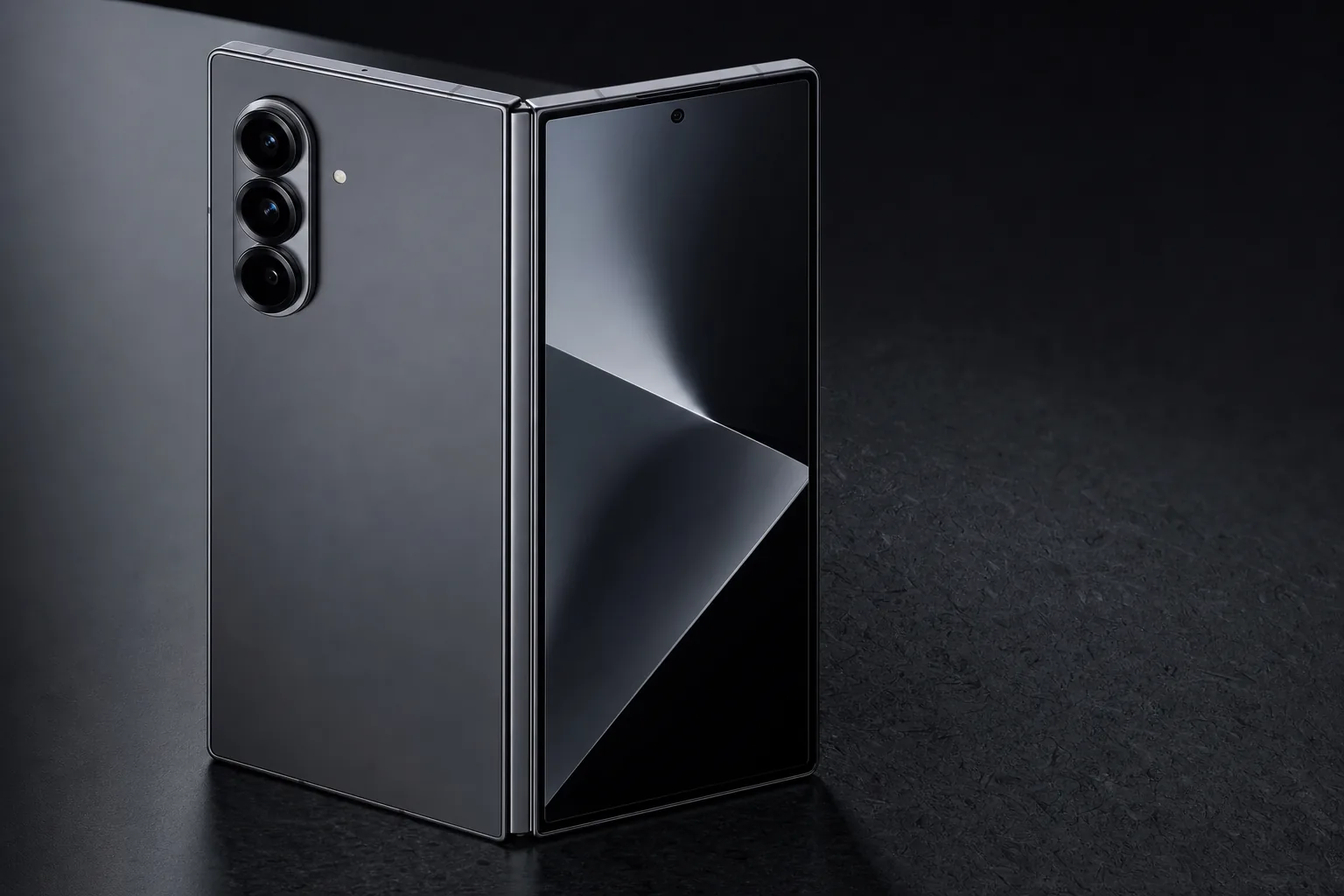
There is one more wrinkle, and it is genuinely strange. Samsung's Z Fold 8 has changed shape this year, into something that looks remarkably like the leaked iPhone. If you have been holding out for Apple because you wanted a squatter, wider, more tablet-like foldable, Samsung has quietly built one and put it on sale first.
At a glance: measured facts versus reported claims
Every figure in the Samsung column below comes from Samsung's published specifications or from independent laboratory measurement. Every figure in the Apple column is a rumour, and the source is named. Please do not read the two columns as equivalent.
| Specification | Galaxy Z Fold 8 (confirmed) | iPhone Fold (reported, unconfirmed) |
|---|---|---|
| Status | On sale in the UK since 7 August 2026 | Not announced. Apple has never acknowledged it |
| Inner display | 7.6in foldable LTPO AMOLED 2X, 1848 x 2448, 120Hz, 3,000 nits peak | Reported 7.76in, 2,713 x 1,920 (CAD leak and iOS 27 code strings); MacRumors cites a 7.6–7.8in range |
| Cover display | 5.5in LTPO AMOLED 2X, 1248 x 1972, 120Hz | Reported 5.49in, 2,088 x 1,422; AppleInsider has cited 5.3in instead |
| Processor | Snapdragon 8 Elite Gen 5 for Galaxy (3nm) | Reported A20 or A20 Pro on TSMC 2nm |
| Memory | 12GB (16GB on 1TB model) | Reported 12GB. Unverified |
| Battery | 4,800mAh silicon-carbon | Reports range from 4,883mAh dual-cell to 5,800mAh. Sources contradict each other |
| Charging | 45W wired, 20W wireless, 4.5W reverse | No credible figure reported |
| Rear cameras | 50MP main with OIS, 50MP ultrawide. No telephoto | Reported dual 48MP main and ultrawide. No telephoto |
| Front cameras | 10MP inner, 10MP cover | Reported 24MP under-display inner, hole-punch cover camera |
| Biometrics | Side fingerprint sensor | Reported side-button Touch ID, no Face ID (Kuo, backed by Gurman) |
| Unfolded thickness | 4.5mm | Kuo: 4.5–4.8mm. CAD leak: 4.8mm |
| Folded thickness | 9.7mm | Kuo: 9–9.5mm. CAD leak: 9.6mm |
| Weight | 201g | Not credibly reported |
| Water resistance | IP48 | Not reported |
| Software support | 7 OS upgrades, 7 years of security updates | Apple does not publish a support commitment |
| UK price | £1,699 (256GB) | Unknown. See the pricing section below |
Left column: measured and published. Right column: reported by named analysts and outlets, with disagreement noted where it exists.
Which Samsung are we comparing? Samsung now sells two book-style foldables. This piece compares the standard Galaxy Z Fold 8 at £1,699, because that is the model whose shape and screen sizes line up almost exactly with the leaked iPhone. The Z Fold 8 Ultra at £1,899 is a taller, more conventional book fold with a telephoto camera and a hinge that holds intermediate angles. It is the better phone. We cover it throughout, and there is more in our Galaxy Z Fold 8 Ultra review.
UK pricing: one real number and a lot of arithmetic
Samsung's UK prices are published and unambiguous. Apple's are not published, do not exist, and cannot be converted from the dollar rumours without several caveats. Here is both, clearly separated.
| Model | 256GB | 512GB | 1TB |
|---|---|---|---|
| Galaxy Z Fold 8 | £1,699 | £1,869 | Listed between £2,059 and £2,209 depending on retailer |
| Galaxy Z Fold 8 Ultra | £1,899 | £2,069 | £2,319 |
| iPhone Fold (rumoured, US dollars, pre-tax) | $1,999 to $2,400 depending on analyst | Reported around $2,199 to $2,610 | Reported around $2,399 to $2,900 |
Samsung prices checked at samsung.com/uk and UK retailer listings on 6 August 2026. The 1TB Z Fold 8 is the one figure sources genuinely disagree on, so check before you commit.
The dollar figures need handling carefully, because people routinely convert them wrongly. US prices are quoted before sales tax. UK prices include 20 per cent VAT. At the sterling rate of roughly $1.35 to the pound in early August 2026, a $1,999 US price is about £1,480 before tax, becoming about £1,780 once VAT is added. Apple does not price on spot rates, so treat that as a floor rather than a forecast.
The better guide is Apple's own recent behaviour. The iPhone 17 Pro is $1,099 in the US and £1,099 in the UK. The 17 Pro Max is $1,299 and £1,199. On that precedent a $1,999 foldable would plausibly land between £1,800 and £2,000, and Fubon Research's $2,400 estimate would imply closer to £2,200. Back Market's UK page guesses £1,599 to £1,699, which looks optimistic against Apple's actual history. Anyone quoting you a confident sterling figure is guessing.
The analyst spread on the dollar price is itself informative, because it is enormous. UBS says $1,800 to $2,000. JPMorgan's Samik Chatterjee says $1,999. Kuo says $2,000 to $2,500. Fubon says $2,400. IDC reckons the average selling price lands at $2,500, with some configurations up to $3,000. When five respected firms disagree by $1,200 on the same product, Apple has either not settled the price or not leaked it.
The number that actually matters
Whatever Apple charges, the Galaxy Z Fold 8 is £1,699 today and will be discounted before Christmas, as every Samsung foldable has been. The realistic price gap by the time both phones are buyable is not the £100 the headline rumours suggest. It is likely to be several hundred pounds.
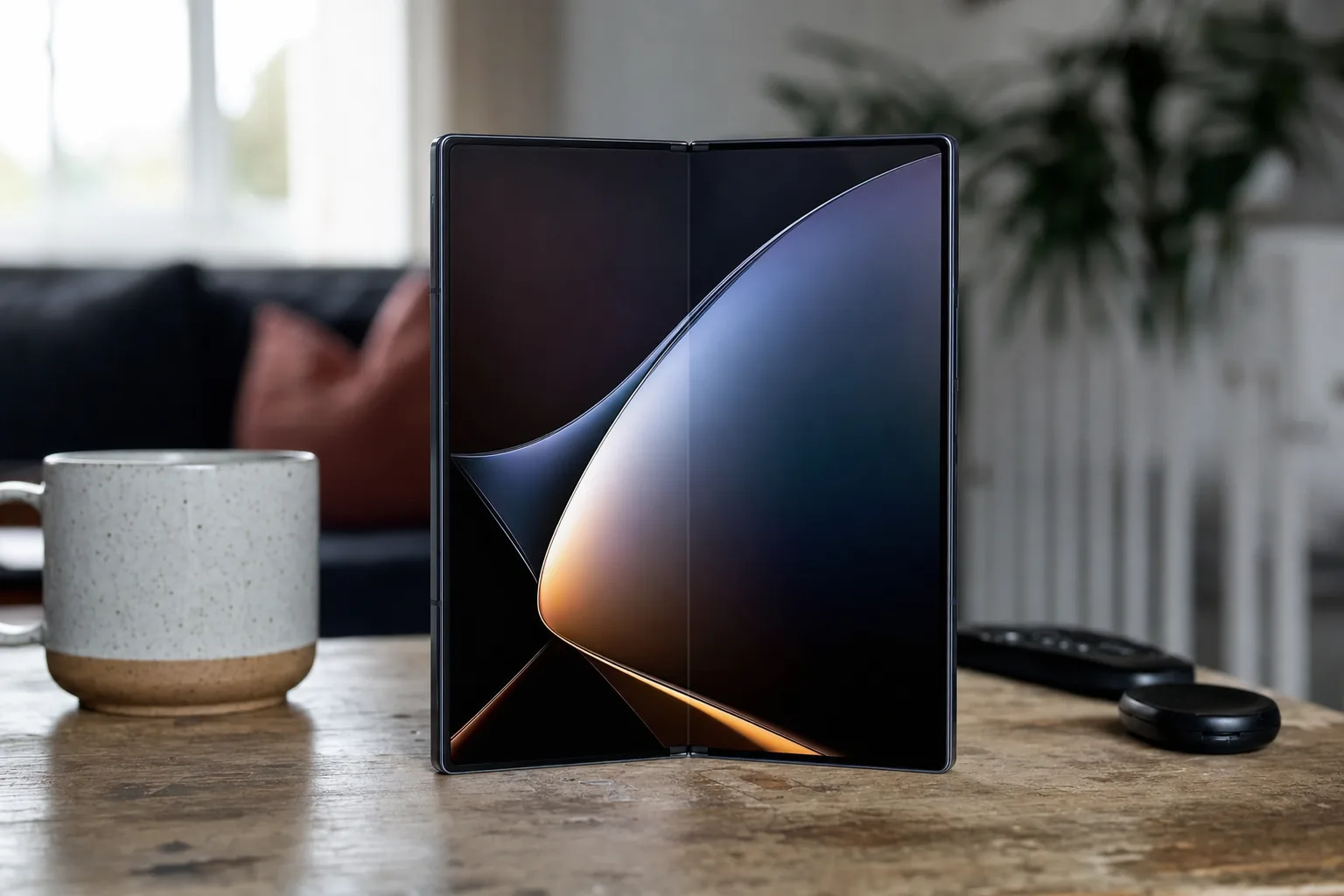
Round one: the two phones are almost the same shape
This is the finding that changes the comparison, and it comes out of simple arithmetic on published and leaked dimensions.
The Galaxy Z Fold 8 measures 81.9 x 123.9 x 9.7mm folded and 161.4 x 123.9 x 4.5mm open. The CAD-based leak published by iphone-ticker.de and reported by GSMArena in December 2025 put the iPhone Fold at 83.8 x 120.6 x 9.6mm folded and 120.6 x 167.6 x 4.8mm open.
Line those up and the two phones are within 2mm of each other on width, within 4mm on height, and within 0.3mm on thickness in both states. The screen sizes are similarly close: 7.6in versus a reported 7.76in inside, 5.5in versus a reported 5.49in outside. Samsung has abandoned the tall narrow book fold for a short wide one. Engadget's reviewer said the folded Z Fold 8 "feels like a passport". TechRadar called it a "passport-shaped oddity". Both descriptions would apply equally to the leaked Apple design.
Both companies are chasing the same thing: an inner screen close to tablet proportions, so unfolding gives you something genuinely iPad-like rather than a slightly wider phone. Samsung's inner panel is 4:3. Apple's leaked 2,713 x 1,920 works out at about 1.41:1, closer to A4 paper than a true 4:3, and the leaked cover panel at 2,088 x 1,422 is about 1.47:1. Outlets have generally rounded both to "4:3". They are not quite that, and you will see the difference in how apps letterbox.
The practical consequence is that buying the Samsung now is not settling for a fundamentally different object. You get roughly the shape Apple is reportedly aiming at, in a lighter body than any previous Fold at 201g, with an IP48 rating covering dust particles over 1mm and immersion to 1.5 metres for half an hour.
The wide shape does have downsides, and Tech Advisor's UK reviewer was blunt about them. One-handed typing on the squat cover screen is "a real challenge". The cover display fits only four app icons per row where a narrow phone fits five. It may not sit properly in a car phone holder. If Apple ships the same proportions, those complaints transfer wholesale.
Round two: screens, and the crease everyone keeps promising to kill
Samsung's headline engineering change this year is Flex Titanium, a titanium-alloy film and plate replacing the carbon-fibre polymer support layer underneath the folding OLED. Samsung says it changes hinge mechanics and display tension in a way that reduces crease visibility, and that it shaves 0.1mm off the stack.
Does it work? Partly. 9to5Google's hands-on described "barely a faint deviation" down the centre of the panel, hard to make out even with the screen off under harsh lighting. Tech Advisor called the crease "almost imperceptible when viewed head-on". Nobody has claimed it is gone. This is the biggest single-generation crease improvement Samsung has made, and it is still detectable if you look for it at an angle.
The measured brightness is excellent and independently verified. GSMArena recorded 3,132 nits on the inner panel and 3,031 nits on the cover panel in a 10 per cent window, falling to 1,525 and 1,468 nits at 75 per cent white on auto. Both panels are LTPO AMOLED 2X running to 120Hz. This is not a compromised foldable screen; it is a flagship screen that folds.
Apple's approach, according to reporting, is more radical and more expensive. MacRumors' roundup says Apple pursued crease elimination "regardless of cost" and developed a new material property to achieve it, with the crease reportedly measuring under 0.15mm deep at a fold angle of under 2.5 degrees. Bloomberg has reported that Samsung Display's crease-less panel technology uses a laser-drilled metal support plate to disperse folding stress, and that panel was shown briefly at CES 2026, where Samsung Display claimed it had "no crease at all".
There is a genuine irony worth sitting with. The panel that may finally eliminate the crease on an iPhone is reportedly made by Samsung Display, the same company that makes the panel in the phone you can buy today. Samsung Display began mass production for Apple at its Vietnam facility after clearing an Apple-mandated 70 per cent yield threshold with a result reported above 80 per cent, and is preparing an order of around 3 million panels.
So if crease elimination is your single reason for waiting, be clear about what you are waiting for: a Samsung-made panel, in an Apple chassis, at a higher price, possibly in 2027.
Galaxy Z Fold 8 display strengths
- 3,132 nits measured on the inner panel, 3,031 on the cover.
- Flex Titanium delivers the least visible crease Samsung has shipped.
- 120Hz LTPO on both panels, HDR10+ on the inner screen.
- 4:3 inner panel makes video and reading genuinely tablet-like.
Galaxy Z Fold 8 display drawbacks
- The crease is reduced, not eliminated. It is visible off-axis.
- The squat cover screen makes one-handed typing awkward.
- Only four app icons per row on the cover display.
- Apps sometimes reposition when you switch orientation.
Round three: cameras, where both phones apparently make the same mistake
The Galaxy Z Fold 8 has a 50MP f/1.8 main sensor with optical stabilisation on a 1/1.56in sensor, and a 50MP f/1.9 ultrawide covering 120 degrees. It does not have a telephoto lens. Zoom is handled by a 2x in-sensor crop from the main camera.
At £1,699 that is difficult to defend, and reviewers have not tried. Engadget called the missing telephoto "probably my biggest issue" with the phone. Tech Advisor described a telephoto omission at this price as "exceedingly rare" and noted a noticeable drop in image quality beyond 4x digital zoom. The cameras are otherwise good in daylight and acceptable in low light. They are simply not the cameras a phone this expensive should have.
If cameras matter to you, this is the strongest argument for spending the extra £200 on the Z Fold 8 Ultra, which adds a 200MP f/1.7 main sensor and a dedicated 10MP f/2.4 telephoto at 67mm for 3x optical zoom, alongside the same 50MP ultrawide.
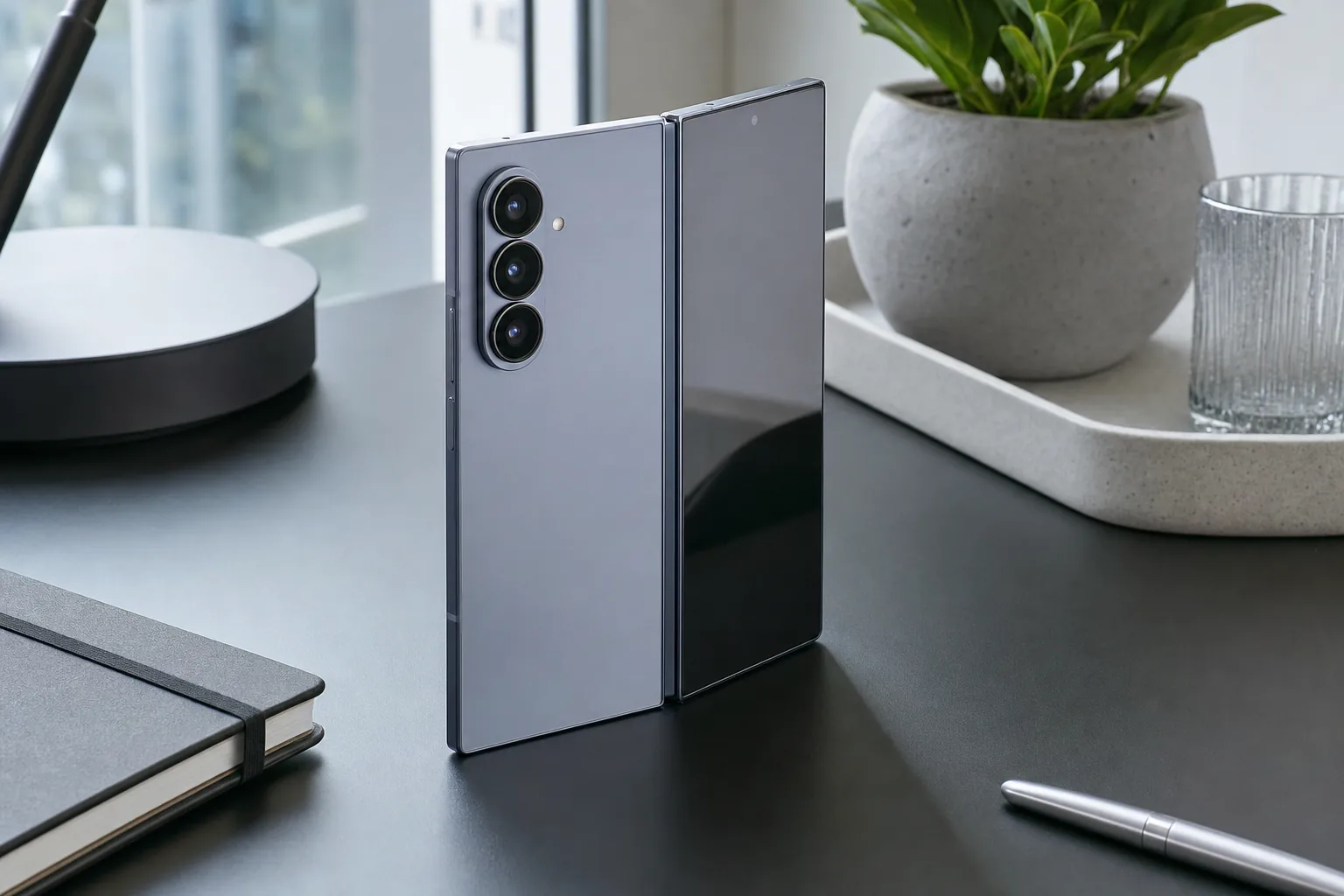
Here is the awkward part for anyone waiting for Apple. According to the reporting collected by MacRumors and Engadget, the iPhone Fold is expected to have exactly the same structural limitation: two rear cameras, both 48MP, a main and an ultrawide, with no telephoto. AppleInsider's August 2026 preview also lists a dual 48MP setup and flags the absence of a telephoto.
Apple's reported front-camera arrangement is more interesting than Samsung's: a 24MP under-display camera on the inner panel, which would be a first for Apple at that resolution, plus a hole-punch camera on the cover screen. Samsung uses a plain 10MP hole-punch on both. Apple also reportedly drops Face ID entirely for Touch ID in the side button, which Kuo attributes to the chassis being too thin to house the Face ID projector stack. Gurman has backed that reporting.
If you use Face ID dozens of times a day and like it, that is a real regression. If you have missed Touch ID since 2017, it is a small gift. Either way, waiting for Apple does not appear to solve the telephoto problem. Both companies have decided a folding phone cannot yet carry a long lens, and only Samsung offers a way around it, by charging you £200 more for the Ultra.
Round four: battery and charging, where measurement beats speculation
The Z Fold 8 carries a 4,800mAh silicon-carbon cell. GSMArena's active-use test returned 17 hours 21 minutes folded. Engadget got 28 hours 14 minutes of local video playback on the cover screen, and CNN Underscored recorded 21 hours 53 minutes of continuous 4K video. TechRadar was less flattering: fine by foldable standards, but you would not want to forget to charge it overnight.
Charging is quick for a foldable. GSMArena measured 39 per cent in 15 minutes, 65 per cent in 30 minutes and a full charge in around 69 minutes at 45W. Wireless runs at 20W, with 4.5W reverse wireless for earbuds.
Note that the smaller-batteried standard Fold 8 outlasts the 5,000mAh Ultra in GSMArena's test, which is a nice reminder that capacity is not endurance. The Ultra pushes a larger, higher-resolution panel.
Apple's battery is a mess of contradictory reporting and we are not going to pretend otherwise. Reports from November 2025 had Apple testing cells between 5,400mAh and 5,800mAh, which would be the largest battery ever fitted to an iPhone. A supplier registration leak reported in July 2026 pointed instead to a 4,883mAh dual-cell arrangement, which is barely more than the Samsung. Strings found in the fourth beta of iOS 27 referring to "the batteries in this iPhone" do at least support the dual-cell idea. Nobody has reported a credible charging figure at all.
Round five: software, updates, and the things Samsung took away
The Z Fold 8 ships on Android 17 with One UI 9, and Samsung commits to seven generations of OS upgrades and seven years of monthly security updates, taking it to Android 24. That is the strongest published support commitment in the industry, and Apple does not publish an equivalent promise at all. Apple's actual track record on iOS updates is excellent, but a track record is not a commitment.
Two Samsung omissions deserve flagging before you buy, because both are the sort of thing you discover a week in and resent.
There is no S Pen support, on either the Fold 8 or the Fold 8 Ultra. The reason is Flex Titanium: a metal layer sitting in the display stack interferes with the digitiser that makes stylus input work. Samsung has told Tom's Guide it is exploring bringing the S Pen back on future Folds. For this generation, if you sketch or annotate, the Fold 8 is simply not the phone.
There is no Flex Mode on the standard Fold 8. The wider, squatter hinge is effectively binary: push it past a certain point and it swings the rest of the way open by itself, so it will not stand up on a table at an angle. The Fold 8 Ultra retains laptop-style free-stop positioning across the range. If you use your foldable as a little tripod for video calls, that difference alone justifies the Ultra.
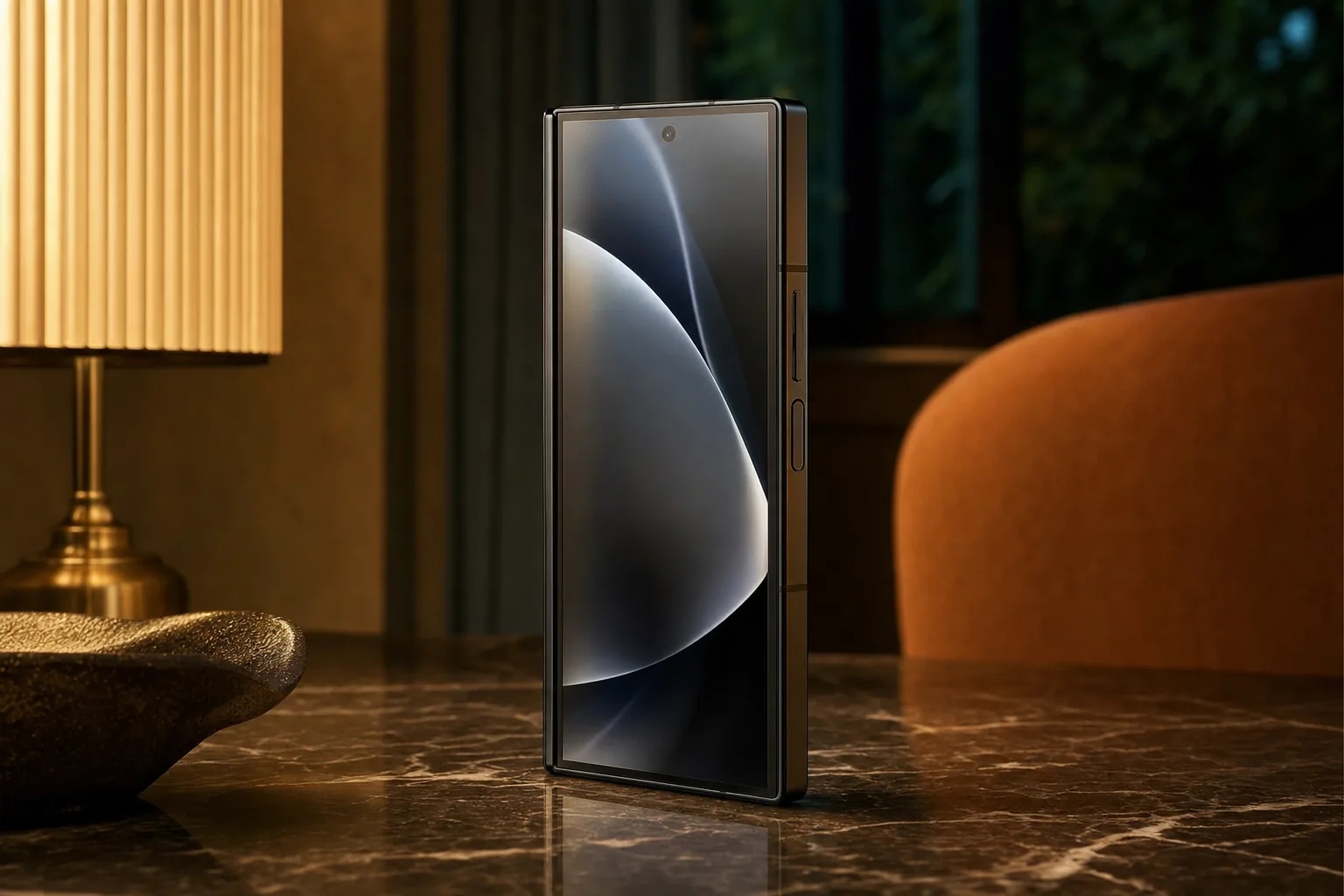
On the Apple side, the software evidence is unusually solid for a rumour. MacRumors reported in June 2026 that iOS 27 contains new framework strings including foldState, angleDegrees and mechanicalAngleDegrees, along with a function for counting built-in displays and a broad push on app resizability. Engadget's assessment was that the iOS 27 beta "pretty much confirms" an Apple foldable is happening. That is a different quality of evidence to a render on social media, and we cover it in more depth in our piece on the foldable iPhone code found in the iOS 27 beta.
How confident are we? Grading the iPhone Fold rumours
Not all leaks are equal. Some are backed by operating-system code, supply-chain registrations or multiple independent analysts. Others are one person's guess repeated until it sounds like fact. Here is our grading of the main iPhone Fold claims, with the reason for each grade.
| Claim | Confidence | Why we grade it this way |
|---|---|---|
| Apple is building a book-style foldable iPhone | High | iOS 27 beta code contains foldState, angleDegrees and mechanicalAngleDegrees strings plus display-counting functions. Samsung Display is reportedly in mass production on the panel. |
| It will be announced in September 2026 | Medium-high | Kuo, Gurman, JPMorgan and multiple supply-chain reports all point to September, but mass production reportedly slipped from June to August, which narrows the window. |
| Supply will be very tight at launch | High | Kuo has said this twice, seven months apart, with numbers: 0.5–1 million units in Q3 2026 out of 7–8 million for the half. |
| It will cost more than the Galaxy Z Fold 8 | High | Every analyst estimate, from UBS's $1,800 floor to IDC's $2,500 average, sits at or above Samsung's $1,899 US price. |
| Exact price | Low | Credible estimates span $1,800 to $3,000. A $1,200 spread between respected firms means nobody knows. |
| Roughly 7.8in inner and 5.5in cover screens | Medium-high | CAD leaks and iOS 27 resolution references agree on 7.76in and 5.49in. AppleInsider has separately cited 5.3in, so the cover size is not settled. |
| Touch ID in the side button, no Face ID | Medium-high | Kuo reported it, Gurman has backed it, and the stated engineering reason (chassis too thin for the Face ID stack) is coherent. Still not confirmed. |
| A near-invisible crease | Medium | Samsung Display demonstrated crease-less panel technology at CES 2026 and Bloomberg has described the laser-drilled support plate. The specific 0.15mm depth figure traces to leaks, not demonstration. |
| Dual 48MP rear cameras, no telephoto | Medium | Consistently reported across MacRumors, Engadget and AppleInsider, but from supply-chain sources rather than anything demonstrable. |
| 24MP under-display inner camera | Medium-low | Widely repeated but thinly sourced, and under-display cameras have slipped from Apple's roadmap before. |
| Battery capacity | Low | Reports range from 4,883mAh to 5,800mAh. The two figures cannot both be right and neither has corroboration. |
| It will be called "iPhone Fold" | Low | A working name used by the press. "iPhone Ultra" is a serious alternative, hinted at by Gurman and asserted by leakers. |
Grades reflect the quality and independence of the sourcing, not how much we would like each claim to be true.
What "waiting" would actually mean in practice
The brief version of this section: waiting probably does not mean six weeks. On the best available reporting, it means somewhere between three months and eight.
Kuo's July 2026 figures are the most specific public estimate anyone has. If Apple assembles 0.5 to 1 million foldables in the third quarter against 20 to 22 million iPhone 18 Pro units, the foldable is a rounding error in Apple's own launch quarter. Kuo's own reading was that a September on-sale date looks improbable, that units will be hard to get "until at least December", and that the situation normalises in the first quarter of 2027.
AppleInsider's August 2026 preview reaches the same place by a different route, noting Apple may repeat the iPhone X pattern: announce in September, take pre-orders in late October, ship in November. Nikkei has reported Apple asked suppliers to prepare roughly 10 million units for 2026, higher than Kuo's estimate but still small.
So a UK buyer who holds off is looking at a plausible sequence like this. September: announcement, price finally known. October or November: first units, likely allocated to the US and China first, with four-to-six-week delivery estimates. December: still difficult. Early 2027: normal availability, by which point the Fold 8 will be several hundred pounds cheaper.
The honest case for waiting
- You are already on iOS and switching to Android has a real cost in time and money.
- Apple's reported crease-elimination work goes further than Flex Titanium does.
- Touch ID returning in the side button, if the reports hold, suits some people better than Face ID.
- Seeing the September announcement costs you nothing if your current phone is fine.
The honest case against waiting
- Kuo's figures suggest you may not be able to buy one until December, or 2027.
- Every analyst estimate puts the price at or above Samsung's, some far above.
- The reported camera system has the same missing telephoto the Samsung is criticised for.
- First-generation folding hardware carries risk, and it never gets cheaper than at launch.
None of this is Apple's official position. Apple has not announced the product, a date, a price or a supply forecast. Everything above is analyst estimate and supply-chain reporting, and analysts get timing wrong. Treat it as the most likely shape of events, not a schedule.
What actually matters when choosing here
Strip away the leak cycle and the decision comes down to five things.
Which operating system you are locked into
This is the whole ballgame. If your photo library, watch, tablet, messages and purchased apps are all Apple, the Galaxy Z Fold 8 is a bigger disruption than any spec sheet suggests. If you are on Android already, waiting for Apple means switching platforms as well as waiting.
Whether you need a telephoto lens
Neither the standard Fold 8 nor, reportedly, the iPhone Fold has one. Only the Z Fold 8 Ultra does, with a 3x optical 67mm lens. If you shoot kids' sport or concerts, that decides it today.
How you hold a phone one-handed
The wide cover screen is divisive. Reviewers loved it for maps and video and struggled with one-handed typing. Go and hold one in a shop before spending £1,699, because this is not a spec you can evaluate from a table.
Whether you want a stylus or a free-standing hinge
The Fold 8 has neither S Pen support nor Flex Mode. The Fold 8 Ultra has the free-stop hinge but still no S Pen. Apple has never supported Pencil on an iPhone and nothing suggests that changes.
When you actually need the phone
If your current handset is dying this month, the decision is made for you. Waiting is only a real option if you have a working phone you are happy with until spring.
Who should buy which
There is a defensible answer for each of these, which is why the question keeps coming up.
Samsung Galaxy Z Fold 8 Ultra
£1,899 buys the 8in inner screen, the 200MP main camera with a real 3x telephoto, the free-stop hinge and 5,000mAh. The £200 over the standard Fold 8 is the easiest upgrade money in this category.
Samsung Galaxy Z Fold 8
£1,699, 201g, measured 3,132-nit inner panel and seven years of updates. Take it if you can live without a telephoto and never prop your phone up on a table.
Committed iPhone owners
If everything you own runs iOS and your current iPhone is healthy, waiting is rational. Plan for early 2027 availability, not September, and do not commit a budget to an unannounced price.
Anyone whose phone is failing now
A cracked screen or a battery at 78 per cent health is not a reason to spend four months on a rumour. Buy the Samsung, or buy a cheap stopgap and revisit in spring.
Anyone who needs a stylus
No S Pen on either Samsung foldable this generation, and Apple has never supported a stylus on iPhone. A Galaxy S-series Ultra or a tablet is the better answer.
First-time foldable buyers
Read our guide to the best foldable phones for UK buyers first. A flip-style foldable costs half as much and suits a lot of people better than a book fold does.
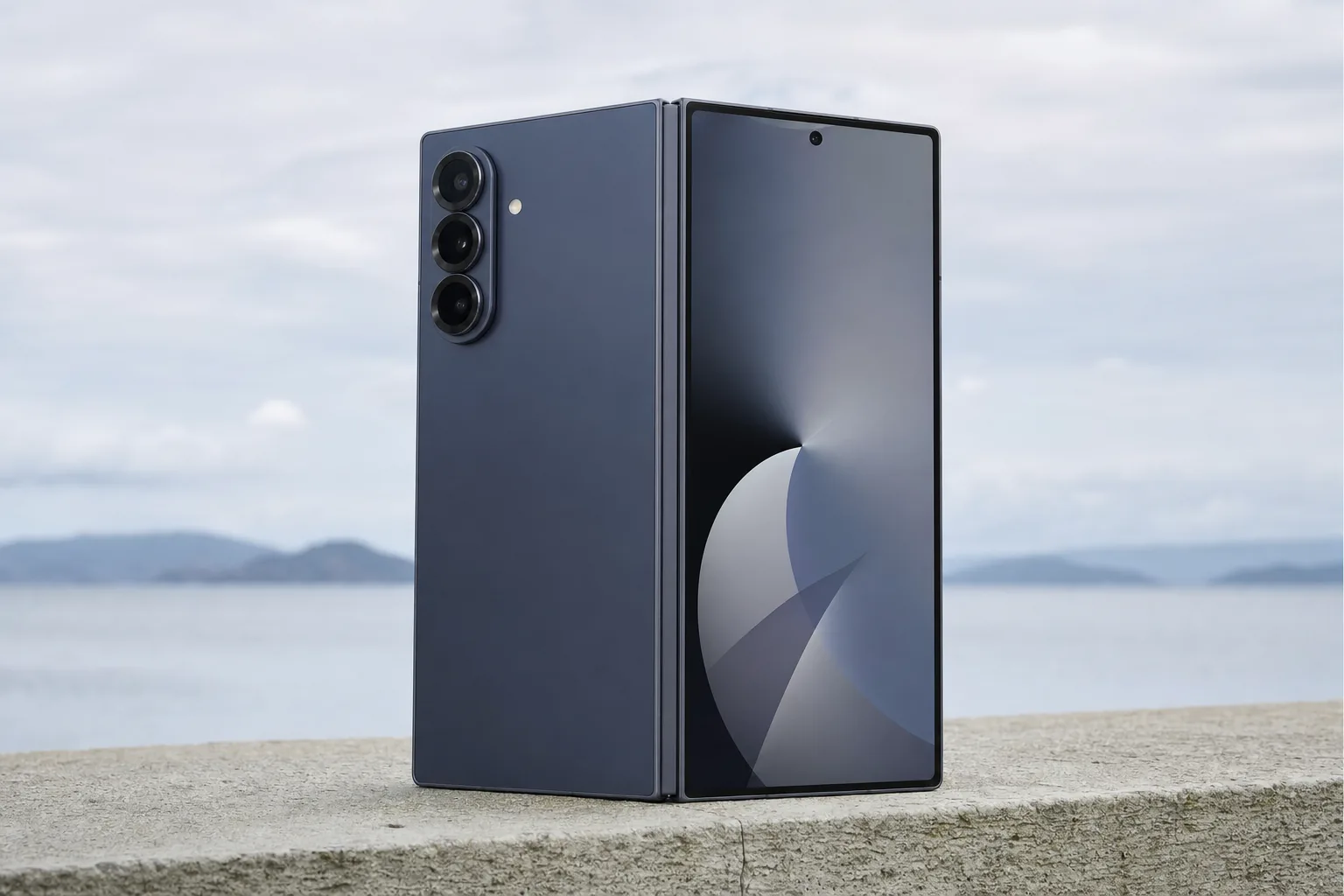
When will we know for sure?
Apple's autumn event has landed in the first or second week of September for years, and every credible source expects the 2026 edition to headline the iPhone 18 Pro and Pro Max alongside the foldable. AppleInsider also expects the Apple Watch Series 12 and Ultra 4, an OLED iPad mini 8 and the release versions of iOS 27 and watchOS 27.
That event answers the four questions that matter and cannot be answered now: the real name, the real UK price, the real specification and the real ship date. Reviews follow shortly before units ship, which on the iPhone X precedent could be six to eight weeks after the announcement.
Our advice is simple. If you can wait until mid-September without inconvenience, wait. It costs nothing and removes the guesswork from this page. If waiting means limping along on a failing handset, or if you are on Android anyway, the September event will not change your answer. We keep our foldable iPhone rumour tracker updated as reports land, with more Samsung detail in our Galaxy Z Fold 8 coverage and the Z Fold 8 Ultra UK pricing piece.
iPhone Fold vs Galaxy Z Fold 8 FAQ
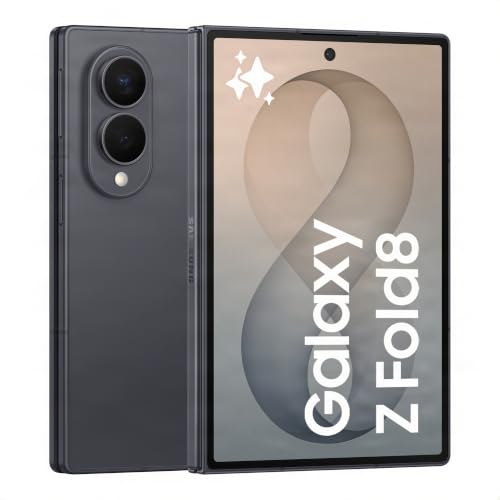
See Samsung Galaxy Z Fold 8 on Amazon UK
Check today's price & availability on Amazon UK

See Samsung Galaxy Z Fold 8 Ultra on Amazon UK
Check today's price & availability on Amazon UK
Final verdict: buy the Samsung, and be honest about why you would wait
For almost everyone, the Galaxy Z Fold 8 Ultra at £1,899 is the foldable to buy today. It has the telephoto lens the standard model lacks, the hinge that holds an angle, the bigger inner screen and seven years of guaranteed updates. The standard Z Fold 8 at £1,699 is the value pick if you can live without a long lens and never prop your phone up.
Waiting for Apple is a defensible choice for exactly one person: the committed iPhone owner with a healthy current handset. For that buyer, the switching cost of Android is real and the September event is close. Everyone else is waiting for a phone with no confirmed name, no confirmed price, no confirmed specification, a reported dual-48MP camera system with no telephoto just like Samsung's, and, on Ming-Chi Kuo's numbers, a genuine risk of not being purchasable in quantity until 2027.
The most useful thing we can tell you is the thing the leak cycle obscures: Samsung has already built the shape Apple is reportedly chasing. Within a couple of millimetres, the Z Fold 8 folded and the leaked iPhone Fold folded are the same object. If the wide, passport-shaped, tablet-when-open foldable is what you have been waiting for, it is on sale now, it has been measured, and it costs less.
- Samsung Galaxy Z Fold 8View on Amazon
- Samsung Galaxy Z Fold 8 UltraView on Amazon