
Galaxy S26 vs iPhone 17: The Flagship Fight Buyers
Two 6.3-inch flagships, two very different ideas of what an everyday premium phone should be. Here is the practical comparison for upgraders and switchers.
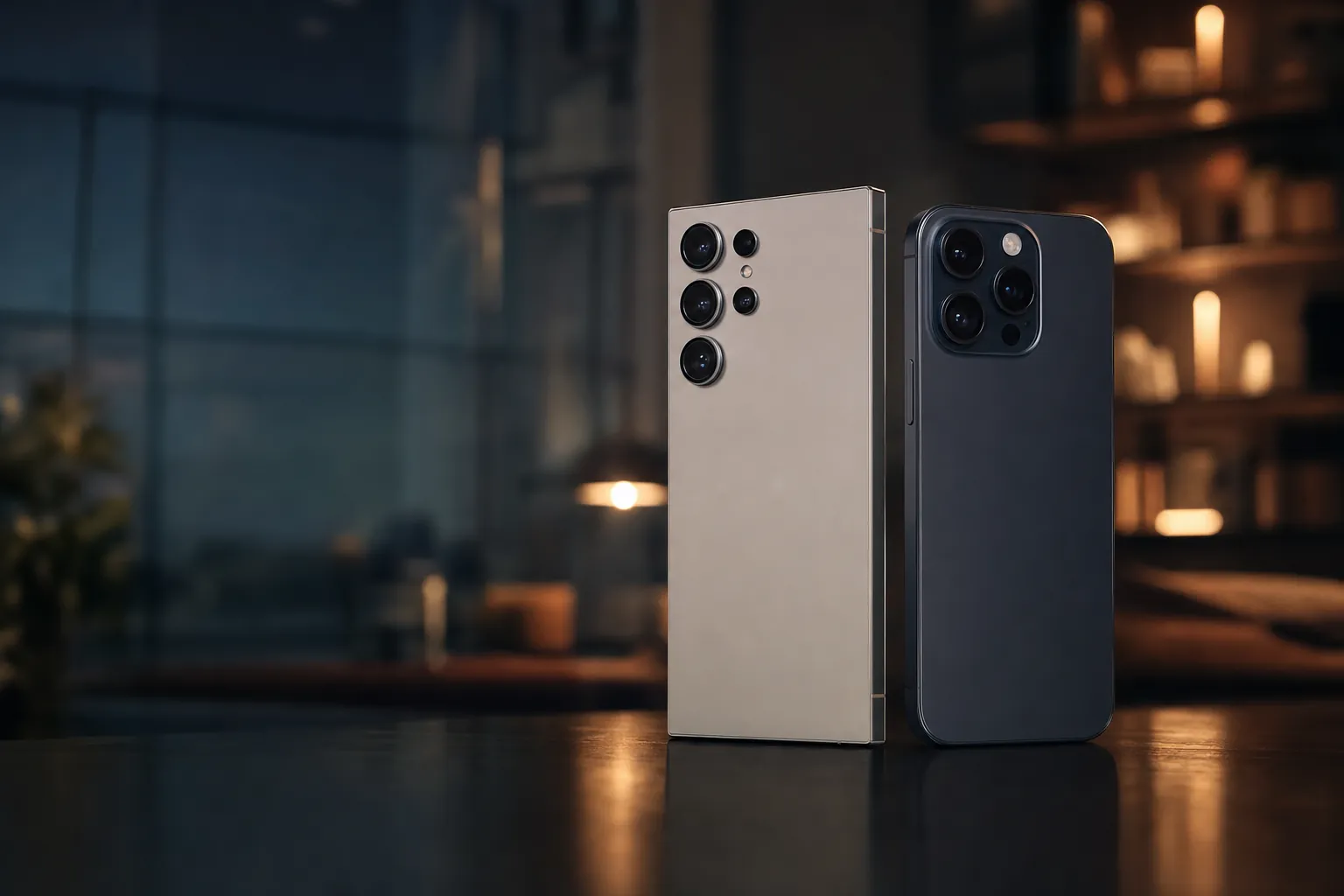
Samsung Galaxy S26 and Apple iPhone 17 take broadly similar compact-flagship territory, but their priorities diverge sharply once you get beyond the front glass.
Galaxy S26 vs iPhone 17: The 2026 Flagship Fight Explained
This is a properly close comparison. The Galaxy S26 and iPhone 17 both arrived as 6.3-inch, 120Hz flagships with 256GB as their starting storage point. Neither is trying to be an enormous "everything plus the kitchen sink" Ultra or Pro Max handset. That is precisely why this is the matchup most people should care about.

See Galaxy S26 on Amazon UK
Check today's price & availability on Amazon UK
For plenty of buyers, the base model is the sensible one. You get a phone that fits a normal pocket, doesn't require a second hand to reach the top of the screen, and still handles the things that actually shape daily satisfaction: photos, messages, maps, banking, streaming, commuting and the occasional bout of doomscrolling you definitely meant to stop 40 minutes ago.
Samsung's Galaxy S26 came at the problem with a familiar Android flagship formula: a 6.3-inch Dynamic AMOLED 2X display, an Exynos 2600 chipset in the UK, 12GB of RAM, a 4,300mAh battery and, crucially, a dedicated 3x telephoto camera. Apple's iPhone 17 used the A19 chip, a 6.3-inch OLED ProMotion display, 8GB of RAM, a 3,692mAh battery and a dual 48MP Fusion camera arrangement. Both began at 256GB, which is a quietly excellent change from the old entry-level-storage dance.
There is no universal winner because the decision is not really Exynos 2600 versus A19, or Android versus iOS, in isolation. It is about the work you want the phone to do. The Galaxy has the more flexible rear camera hardware and more memory. The iPhone has a higher stated peak brightness, a higher-resolution display and Apple's unusually coherent hardware-and-software ecosystem. One is not "better" in the abstract. They are better at different bits of phone life.
I have kept this comparison focused on the standard Galaxy S26 and standard iPhone 17. The Galaxy S26 Ultra, iPhone 17 Pro and iPhone 17 Pro Max sit in another class of size, price and ambition. If you are comparing those, you are shopping for a different kind of device. Here, we are dealing with the phones that make a very credible case for being all the flagship most people need.
Spec Sheet Showdown: The Numbers Before the Narrative
Specs are not the whole story, but they are where the practical differences first become obvious. Samsung's S26 was the slightly lighter handset at 167g and measured 7.2mm thick. Its 1,080 x 2,340 Dynamic AMOLED 2X panel used LTPO technology for variable 120Hz refresh. The iPhone 17 paired its own 120Hz ProMotion OLED screen with a 2,622 x 1,206 resolution and 460ppi density.
Apple also quoted a 3,000-nit peak brightness figure for the iPhone 17, while Samsung quoted 2,600 nits for the Galaxy S26. Numbers like that should be read as a measure of outdoor headroom rather than a promise that every app will sit at maximum brightness all day. Still, if you spend a lot of time reading directions on a bright platform, photographing outdoors or checking a delivery message in direct summer sun, extra brightness is not a frivolous boast. It is a small but useful quality-of-life advantage.
| Feature | Samsung Galaxy S26 | Apple iPhone 17 | Samsung Galaxy S26 Ultra | |
|---|---|---|---|---|
| Display size | 6.3-inch | 6.3-inch | 6.9-inch | |
| Display resolution | 1,080 x 2,340 | 2,622 x 1,206 | 1,440 x 3,120 | |
| Refresh rate | LTPO 120Hz | 120Hz ProMotion | Variable 120Hz | |
| Peak brightness | 2,600 nits | 3,000 nits | 2,600 nits | |
| Chipset | Exynos 2600 (UK/EU) | Apple A19 | Snapdragon 8 Elite Gen 5 | |
| RAM | 12GB | 8GB | 16GB | |
| Storage options | 256GB, 512GB | 256GB, 512GB | 256GB, 512GB, 1TB | 256GB |
| Battery capacity | 4,300mAh | 3,692mAh | 5,000mAh |
The cleanest takeaway from the table is that neither phone skimps on starting storage. Both standard models began at 256GB, so you are not pushed into a higher tier merely to get a comfortable amount of room for photos, downloads and offline media.
The S26's 12GB of RAM is one of those figures that matters more gradually than dramatically. It does not mean the iPhone 17 feels slow; the A19 was built for a very tightly managed software environment. It does mean Samsung had more memory headroom available for keeping several demanding apps alive, shifting between work and personal tools, and leaning into Android's more flexible multitasking habits. If your phone use looks like a desk covered in browser tabs, the S26's approach will appeal.
The standard models share a 6.3-inch class of display, yet the Galaxy S26 prioritises a lighter body while the iPhone 17 pushes resolution and stated brightness higher.
Screen Dreams: Display Quality in Everyday Light
A 6.3-inch screen is a sweet spot. It is large enough for a train journey's worth of video, a spreadsheet glance or navigating a city you have sworn you know without maps, yet it remains meaningfully more manageable than the 6.9-inch devices at the top of each range. Here, Samsung and Apple started from the same physical premise but took subtly different routes.
The Galaxy S26 used a 1,080 x 2,340 Dynamic AMOLED 2X panel with LTPO-enabled 120Hz refresh. LTPO lets the screen vary its refresh behaviour rather than blindly running flat-out, which is important because smooth scrolling is lovely but there is no point spending power animating a static email as though it is the Monaco Grand Prix. Samsung rated the panel at up to 2,600 nits peak brightness.
The iPhone 17 had a 2,622 x 1,206 OLED display at 460ppi and brought ProMotion's 120Hz fluidity to the base model. That was a major practical equaliser versus previous generations where a smoother panel was more obviously reserved for higher tiers. Text scrolls more naturally, interface motion feels less abrupt and touch interaction simply feels more direct. Once you are accustomed to 120Hz, dropping back is a little like putting on someone else's glasses: everything still works, but you notice it.
On outright pixel density, Apple had the advantage. On paper, that gives the iPhone more fine detail in text and dense interface elements. In normal use, though, both panels are comfortably sharp; this is not a situation where the Galaxy looks somehow low-rent beside the iPhone. It is a difference you might appreciate when holding the handsets close, not one likely to transform a group chat.
Protection tells a slightly different story. Samsung used Corning Gorilla Glass Victus 2 on the Galaxy S26, whilst Apple used Ceramic Shield 2 on the iPhone 17's front. Both are premium protective materials, and neither is an argument for treating your phone like a coaster in a pub garden. A decent case and screen protector remain dull advice because dull advice tends to save expensive objects.
The display decision in plain English
Choose the iPhone 17 if maximum stated brightness and a higher-resolution 460ppi screen are your priorities. Choose the Galaxy S26 if you want an equally compact 120Hz panel in a 167g, 7.2mm handset and prefer Samsung's Android presentation.
Power Under the Hood: Exynos 2600 vs Apple A19
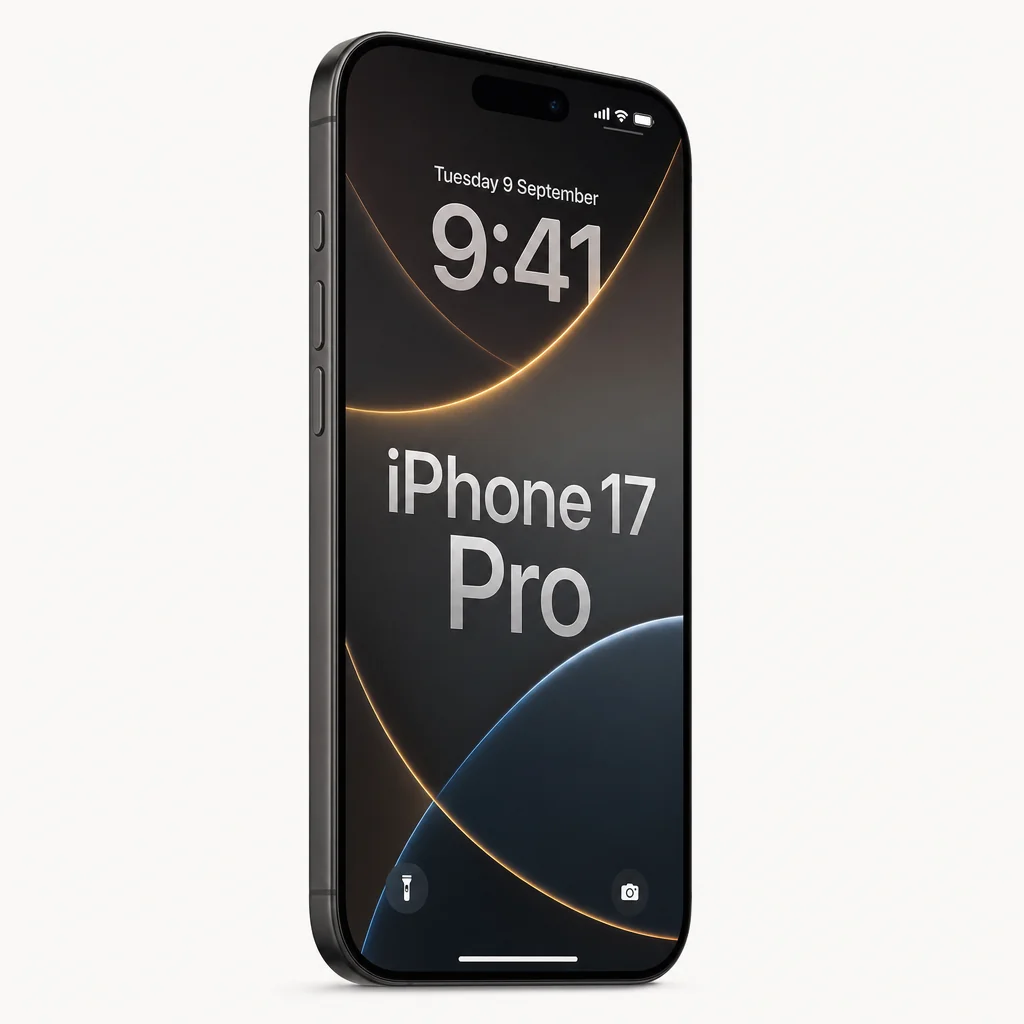
This is where comparison articles can become a bit silly. Both phones had flagship-class silicon. Neither will struggle with messages, navigation, video, social media, photo editing or the usual pile of apps that modern life somehow requires before breakfast. Buying either device because you only want it to open a calendar would be rather like choosing a sports car for its cup holders.
The UK Galaxy S26 used Samsung's own Exynos 2600 chipset, alongside 12GB of RAM. Samsung also redesigned its vapour chamber to spread heat more evenly, claiming up to 29% greater thermal performance. Thermal management matters because a fast chip is only truly useful if it can sustain demanding work without becoming uncomfortable or pulling performance back sharply. Gaming, lengthy video capture, navigation in warm weather and extended camera use are the sorts of tasks that test this rather more than replying "sounds good" on WhatsApp.
The iPhone 17 used Apple's A19 SoC and 8GB of RAM. Apple's own silicon approach is inseparable from iOS: hardware and software are designed together rather than negotiated between several companies. That does not make it inherently superior in every situation, but it is why raw RAM numbers alone do not settle the performance conversation. iPhones have long been excellent at feeling composed under ordinary daily use, and the A19 gives the iPhone 17 a very strong foundation for that familiar experience.
The key point for a switcher is less about "which chip wins?" and more about how you use your current phone. Android power users who keep multiple apps, windows and services moving will find 12GB of RAM reassuring. iPhone users who already value iCloud, AirDrop, FaceTime, Apple Watch integration or a Mac-centred workflow may find the A19's wider role in the Apple environment more meaningful than any component specification.
Galaxy S26 strengths
- 12GB of RAM gives the phone more headroom for demanding multitasking.
- The redesigned vapour chamber was intended to improve heat distribution during sustained workloads.
- The Exynos 2600 is Samsung's own flagship silicon and the chip UK buyers get in the S26.
iPhone 17 trade-offs
- It had 8GB of RAM rather than the Galaxy S26's 12GB.
- Its rear camera hardware omitted a dedicated telephoto lens.
- The base model remained a dual-camera phone whilst Samsung offered three rear cameras.
That "trade-off" heading is deliberately not a verdict on the iPhone as a whole. Apple did not forget how to build a phone. It made a different allocation of hardware. If your priority is a straightforward, polished phone within an Apple household, the A19 and iOS combination remains a very coherent proposition. If you want a handset that looks a bit more generous on memory and hardware flexibility, Samsung has the more obvious spec-sheet lead.
The Galaxy S26's updated internal cooling approach matters most during sustained tasks such as long camera sessions, navigation and demanding games.
Camera Clash: 50MP vs 48MP and the Shots That Actually Matter
The camera section is where this contest becomes properly useful, because it reveals a difference that is not merely technical. The Galaxy S26 had a 50MP main camera, 10MP 3x telephoto and 12MP ultrawide. The iPhone 17 had a 48MP Fusion Main camera and 48MP Fusion ultra-wide, joined by an upgraded 18MP Center Stage front camera.
Both can therefore cover the photographic basics: a standard view, a wider view and front-facing shots. But Samsung supplied a dedicated telephoto lens and Apple did not. That matters. It is the clearest structural hardware advantage the Galaxy S26 has in the whole comparison.
A dedicated 3x camera is useful in the boring, real-world situations that happen to produce the photos you actually care about. A child on a sports pitch. A performer on a stage. A distant animal on a walk. Details on a building when you are travelling. A birthday cake before somebody reaches for the knife. You cannot always move closer, and a lens designed for that focal length gives you a more natural option than asking software to create a tighter view from the main camera.
The iPhone 17's rear setup should not be dismissed, particularly because its ultra-wide had a 48MP Fusion sensor rather than a basic low-resolution secondary camera. That gives Apple more serious hardware at the wide end than the S26's 12MP ultrawide specification suggests. If your photography is mainly landscapes, architecture, group photos, interiors and ordinary main-camera snaps, the iPhone's dual system is not a stripped-down afterthought. It is simply focused differently.
| Camera feature | Samsung Galaxy S26 | Apple iPhone 17 | Samsung Galaxy S26 Ultra |
|---|---|---|---|
| Main rear camera | 50MP | 48MP Fusion Main | |
| Ultra-wide camera | 12MP | 48MP Fusion ultra-wide | |
| Dedicated telephoto | 10MP, 3x | No dedicated telephoto | Upgraded telephoto performance |
| Front camera | AI ISP for more natural selfies | 18MP Center Stage camera | |
| Low-light video | AI-powered Nightvideography processing |
For selfies and video calls, Apple's upgraded 18MP Center Stage camera is the headline. Center Stage is the sort of feature you notice when you are actually talking to people rather than reading a spec sheet: framing and front-camera usefulness are suddenly part of the conversation, not an afterthought. Samsung's response was an AI image signal processor intended to produce more natural, realistic selfies. Both were clearly treating the front camera as more than a perfunctory lens above the display, which is about time.
There is also a philosophical difference. Samsung's triple-camera setup gives you more native focal-length choice. Apple's two 48MP rear cameras concentrate resolution in the main and ultra-wide positions. Neither route is automatically wrong, but your photo library will tell you which one is right for you. Scroll back through it. If it is full of distant subjects, holidays, events and zoomed-in shots, the S26 is easier to recommend. If you mostly shoot people nearby, meals, pets, streets and broad travel scenes, the iPhone's camera array is entirely credible.
Do not buy on megapixels alone
The meaningful camera distinction is not 50MP versus 48MP. It is telephoto versus no telephoto. Samsung gives you a dedicated 3x lens; Apple puts more resolution into its ultra-wide camera. Decide whether you shoot distant subjects or wide scenes more often.
Galaxy AI vs Apple Intelligence: The Smart Features That Matter
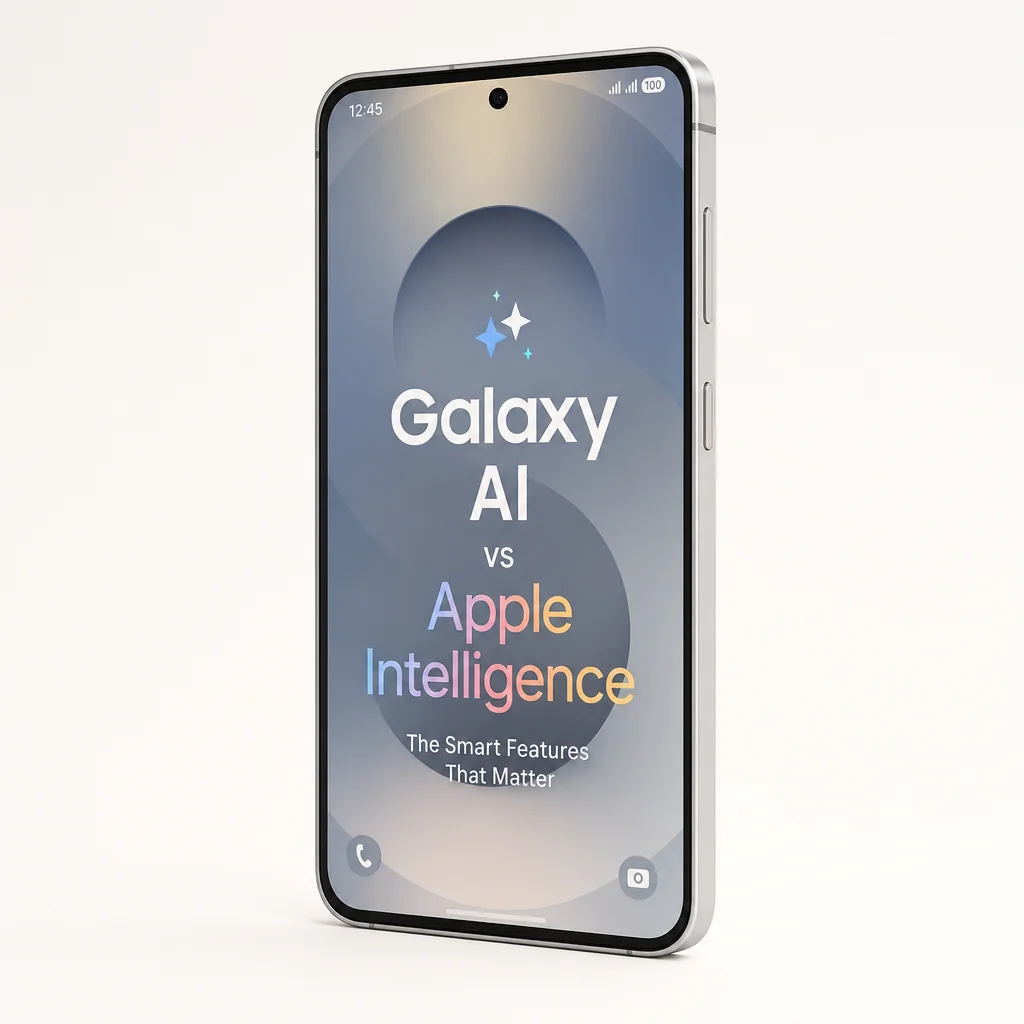
AI had become impossible to ignore in flagship phone marketing by 2026, which is unfortunate for anyone who would simply like to know whether their phone can make a good call in a noisy café. Still, behind the buzzwords is a useful shift: modern flagship chips are being used for more on-device processing, image work and intelligent assistance rather than only faster games.
Samsung's Galaxy S26 used the Exynos 2600 platform in the UK, and the broader Galaxy S26 Ultra implementation was associated with a 39% faster Neural Processing Unit for advanced AI and machine-learning tasks. The base S26 sits in that same flagship family, but it is sensible not to turn one model's stated NPU claim into a universal stopwatch result for another. What matters for an S26 buyer is that Samsung had built its phone around Galaxy AI and a modern flagship chipset designed to support those workloads.
Apple's iPhone 17 used the A19, the chip at the centre of the iPhone's modern intelligence features and Apple's tightly integrated approach to software. The practical appeal of Apple's direction is familiarity. If you already live in the Apple ecosystem, its hardware tends to feel like part of a single environment rather than an isolated gadget. That can be more valuable than a long features list, especially if the devices around you are already doing what you want.
Galaxy S26: hardware built for Samsung's AI direction
The Exynos 2600 platform, 12GB RAM and Samsung's Galaxy AI focus make the S26 the more overtly flexible Android choice for users who want AI-led tools alongside broad multitasking.
iPhone 17: A19 and Apple ecosystem continuity
The A19 gives the iPhone 17 a flagship silicon base within Apple's closely integrated software and hardware environment. For existing iPhone users, continuity is a feature in itself.
AI still has to earn its place
The best intelligent features are the ones that save time or improve a photo without making you stop and think about them. Treat grand AI claims with a healthy British eyebrow until they prove useful in your own routine.
The broader advice here is simple: do not switch platforms solely because of AI branding. Moving from Android to iPhone, or iPhone to Android, changes your messages, cloud storage, accessories, passwords, sharing habits and family setup. Those are more permanent consequences than whether one image-editing trick looks impressive in a launch video. Choose the ecosystem first. Then enjoy the clever tools it provides.
AI has become part of the flagship proposition, but the more important choice remains the ecosystem, apps and connected devices you already rely on every day.
Battery Life and Charging: The Full-Day Reality Check
The Galaxy S26 had a 4,300mAh battery, considerably larger on paper than the iPhone 17's 3,692mAh cell. That is a useful starting advantage for Samsung, but battery capacity is not an end result. Display behaviour, chip efficiency, software management, camera use, signal strength and the particular horrors of a patchy train connection all influence how a phone behaves by 9pm.
The important thing is not to turn capacity into a fake laboratory score. A larger battery gives Samsung more raw energy to work with. Apple's A19 and iOS were designed together, and Apple has long relied on that efficiency to make relatively modest battery figures work well. Without comparable screen-on test results, it would be irresponsible to declare a measured battery winner. Anyone doing so is either guessing or has become emotionally attached to a milliamp-hour. Neither is ideal.
What can be said with confidence is that the S26 is better positioned for people who worry about heavy use. Its 4,300mAh battery, LTPO 120Hz display and improved thermal design form a sensible package for a long day involving navigation, media, camera use and lots of switching between apps. The iPhone 17's smaller 3,692mAh capacity does not mean it cannot last a day; it means its software efficiency has more work to do.
Samsung confirmed fast and wireless charging support for the Galaxy S26, though the phone did not include a charger in the box. You received an ejection pin and data cable, but the power adapter was a separate purchase. This is increasingly normal, if still faintly irritating when you have just spent serious money and discover your best charger is living behind a bookcase somewhere.
For an ordinary British day, think less about abstract "all-day battery" claims and more about your pattern. If you spend an hour commuting with podcasts or video, use maps, work through messaging and email, photograph things after work and stream in bed, battery pressure mounts quickly. The S26's larger stated capacity is the safer bet for that kind of heavy use. If your day is lighter and you value the iPhone platform, the iPhone 17's capacity figure alone should not put you off.
Neither a battery capacity nor a peak-brightness number captures every part of ownership. Signal quality, screen time, navigation and camera use matter enormously. If endurance is your single biggest concern, the Galaxy S26's 4,300mAh capacity is the more reassuring starting point.
Design, Durability and the Everyday Carry Test
The Galaxy S26 was the more obviously compact physical package on confirmed figures: 167g and 7.2mm thick. That is light for a modern flagship, and it matters more than people give it credit for. A phone lives in your hand, pocket and coat for years. A few grams saved may not sound exciting in a keynote, but comfort is one of the reasons you either enjoy using a phone or leave it on the table.
Samsung also shifted to a raised camera bar across the range. Visually, that brought its own character rather than simply repeating the old isolated-camera look. Apple kept the iPhone 17's broader established design direction, with contoured edges, thinner borders and Ceramic Shield 2 on the front. If you already use an iPhone, there is a comforting lack of relearning here. If you want a phone that feels like a fresh Android flagship rather than a continuation, Samsung's update has more obvious novelty.
Apple confirmed an IP68 rating for the iPhone 17, with splash, water and dust resistance at a maximum depth of six metres for up to 30 minutes. It is good protection to have, but it should be treated as accident insurance rather than a permission slip to photograph your lunch underwater. Water resistance is not the same thing as waterproofing, and real-world damage scenarios rarely happen under perfect laboratory conditions.
Both phones use premium front protection technologies. Samsung's Gorilla Glass Victus 2 and Apple's Ceramic Shield 2 are valuable safeguards, not invincibility cloaks. If you are switching from one platform to the other, budget mentally for new cases, cables and possibly accessories. It is a tedious detail, but it is part of the actual cost and friction of changing teams.
The Galaxy S26's 167g weight and 7.2mm profile make it the more clearly documented lightweight option in this compact flagship pairing.
Software, Connectivity and Living With Your Choice
Software is the bit you will touch more than the camera bump, the display coating or the chip name. The Galaxy S26 arrived with Android 16 and Samsung's One UI 8.5 interface. Samsung promised seven years of operating-system upgrades and security patches. That is a major ownership reassurance, especially for buyers who are tired of treating a perfectly good phone as disposable after only a few years.
The iPhone 17 belongs to Apple's iPhone environment, and that matters enormously if the people around you use Apple services or if you already have a Mac, iPad, Apple Watch or other connected hardware. The iPhone experience is not merely iOS on a phone; it is also the convenience of sharing, syncing and continuing tasks between devices. The more embedded you are, the stronger the argument becomes.
Samsung's advantage is that Android tends to reward people who like to customise, manage files more freely, use different app defaults and make their handset behave a little less like a sealed appliance. That freedom can be liberating. It can also be more decision-making than some people want from a phone. Not everybody wishes to become their household's unpaid IT department.
The iPhone 17 included Apple's N1 wireless chip with Wi-Fi 7, Bluetooth 6.0 and Thread support. It used Qualcomm's Snapdragon X80 modem rather than Apple's C1X modem found in the iPhone Air. Those are useful connectivity credentials for someone buying into a phone for several years, particularly in homes where more devices are gradually becoming connected. The Galaxy S26 supported a wide range of 5G and LTE bands, making it a well-equipped handset for modern mobile networks.
Switching platforms is the real commitment
The best hardware cannot remove the effort of moving photos, passwords, paid apps, messaging habits and accessories. If your current ecosystem already works smoothly, staying put is often the rational choice. Switch because the new platform solves a real problem, not because a specification table got a bit too exciting.
Storage, Longevity and Practical Value Without the Sales Pitch
Both phones started at 256GB and were available with 512GB. Samsung's decision to move away from 128GB on its mainline S26 phones was a consumer-friendly one, and Apple likewise removed 128GB from the standard iPhone 17. This is one of the rare moments where the two companies quietly agreed on something that benefits normal buyers.
256GB is a much more relaxed baseline for a flagship in 2026. Photos become larger and more numerous, apps are not getting smaller, downloaded shows are handy when Wi-Fi vanishes at the exact moment you enter a tunnel, and modern games can occupy serious space. With 256GB, you have room to use the phone without constantly performing digital housekeeping. That is not glamorous, but it is excellent.
For long-term use, Samsung's seven-year promise for OS upgrades and security patches is concrete and significant. It allows a buyer to think in terms of keeping the S26 for a genuinely long cycle. Apple's iPhone 17 was also clearly built as a premium, long-term device, but a comparison should not invent a support period where one was not confirmed. What matters for an iPhone buyer is that they are choosing a mature platform and the A19-powered current generation, not a budget compromise.
Value is therefore not just a pound figure. It is storage, support, camera versatility, battery capacity, comfort, ecosystem fit and how much you will need to replace around the phone. The Galaxy S26 makes a strong practical argument with 12GB RAM, a telephoto camera, 4,300mAh battery and seven years of promised updates. The iPhone 17 makes its case through a 3,000-nit display, 460ppi panel, 48MP ultra-wide camera, 18MP Center Stage front camera and Apple integration.
Which Phone Is Best for Different Buyers?
This is the bit to bookmark if you do not want another paragraph about glass chemistry. Both are strong standard flagships. The right answer depends on what you are upgrading from, what you photograph and how you expect the phone to fit around the rest of your technology.
Best for zoom and travel: Galaxy S26
See Galaxy S26 on Amazon UK
Check today's price & availability on Amazon UK
Choose Samsung if a dedicated 10MP 3x telephoto lens will get real use. Sport, wildlife, travel details and distant family moments are simply easier to capture with native telephoto hardware.
Best for Apple households: iPhone 17
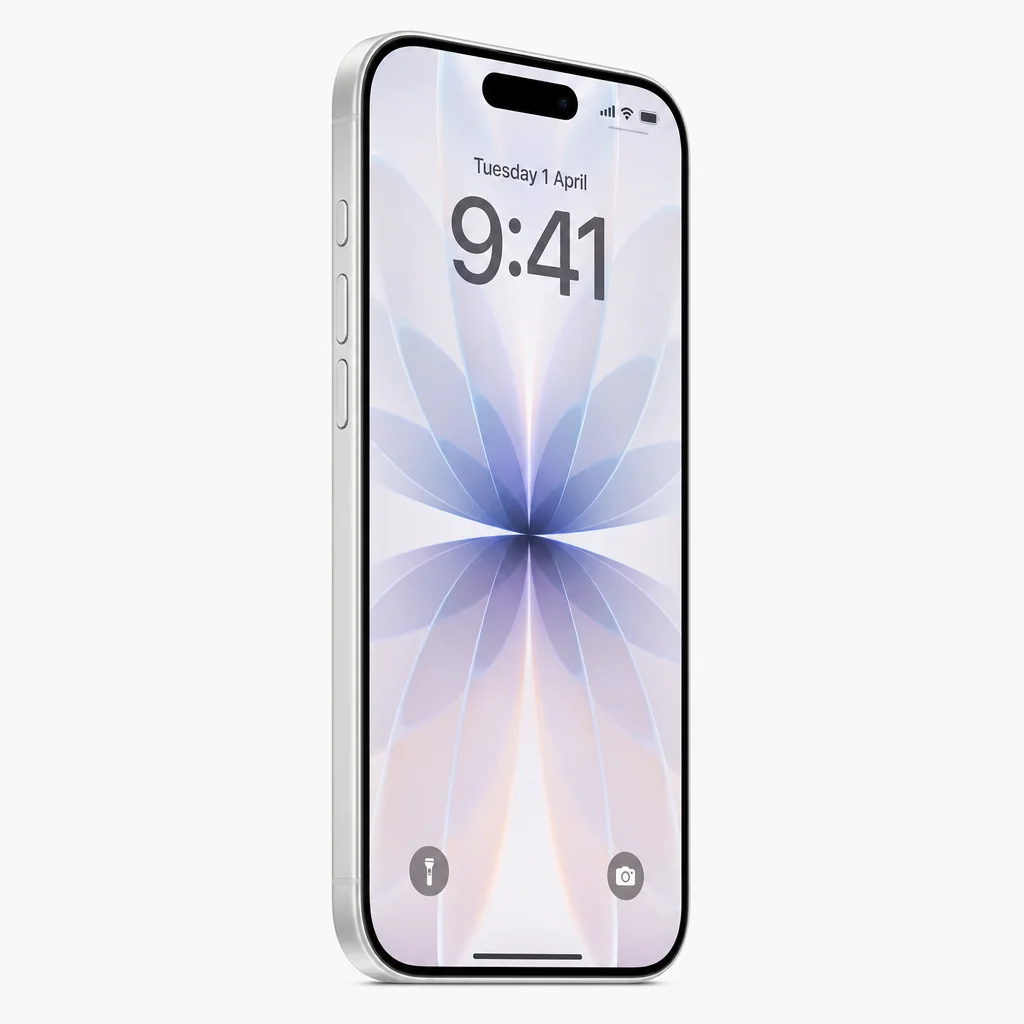
Choose Apple if you already use a Mac, iPad, Apple Watch or Apple services heavily. The iPhone 17's A19-based ecosystem continuity can matter more than an extra camera lens.
Best for multitaskers: Galaxy S26
The S26's 12GB RAM, Exynos 2600 and Android 16 with One UI 8.5 make the more natural fit for buyers who want flexibility and plenty of memory headroom.
Best for bright-screen shoppers: iPhone 17
The iPhone 17's 3,000-nit stated peak brightness and 460ppi OLED display make it the pick for those who prioritise a particularly high-spec compact screen.
Best starting point for endurance: Galaxy S26
The 4,300mAh battery gave the S26 more capacity than the iPhone 17's 3,692mAh battery. Heavy users should start their shortlist here.
Best compact flagship choice: either
Both use a 6.3-inch, 120Hz display and begin at 256GB. Pick the platform you prefer, then let camera needs and ecosystem decide the rest.
For most buyers, the decision comes down less to headline power and more to whether telephoto reach, Android flexibility, Apple integration or a brighter display matters most.
The Shortlist Verdict Before You Buy
If you are coming from an older Galaxy, the S26 is a very logical upgrade. It keeps the Android and Samsung familiarity whilst providing a 120Hz display, Exynos 2600, 12GB RAM, a 4,300mAh battery, 256GB starting storage and a dedicated 3x telephoto camera. You do not have to change your habits to get a phone that is thoroughly current.
If you are upgrading from an older iPhone, the iPhone 17 is equally logical. Its standard model finally carries a 120Hz ProMotion display, starts at 256GB, brings the A19 chip, has a 3,000-nit stated peak brightness and uses a 48MP Fusion ultra-wide alongside the main camera. It is the low-friction choice for Apple users who want the current iPhone experience in a manageable size.
The harder question is for switchers. Android-to-iPhone switchers should be sure they are happy losing the particular freedoms they value before focusing on the iPhone's bright, high-resolution screen and polished Apple continuity. iPhone-to-Android switchers should be certain the telephoto lens, extra RAM and Samsung's feature set are worth the ecosystem transition. It often is. It is not always.
My practical advice is to make a list of the ten things you use your current phone for most. Be brutally honest. If "photograph things far away" is on it, Galaxy S26. If "make my Apple devices cooperate without thinking" is on it, iPhone 17. If "survive a heavy day with lots of apps" dominates, Galaxy S26 starts stronger on capacity and RAM. If "use a beautiful, bright screen in a familiar Apple setup" is the real priority, iPhone 17 remains compelling.
Neither phone is a compromise-led base model: the Galaxy S26 wins practical camera flexibility, whilst the iPhone 17 is the natural continuation for buyers invested in Apple's connected world.
Galaxy S26 vs iPhone 17: Frequently Asked Questions
Final Verdict: Galaxy S26 or iPhone 17?
The better buy depends on the life around the phone
Buy the Samsung Galaxy S26 if you want the more versatile rear camera system, especially its dedicated 10MP 3x telephoto lens; if 12GB of RAM and a 4,300mAh battery appeal; or if Android 16, One UI 8.5 and Samsung's seven-year update promise are the right fit for you.
Buy the Apple iPhone 17 if you are already invested in Apple's ecosystem, value its 3,000-nit stated peak brightness and higher-resolution 460ppi display, or prefer its 48MP Fusion main and ultra-wide camera pairing plus 18MP Center Stage front camera.
For the average buyer, this was not a battle of good versus bad. It was a battle of priorities. The Galaxy S26 is the more compelling hardware-led choice for zoom, multitasking and bigger battery capacity. The iPhone 17 is the more natural choice for committed Apple users who want a bright, polished compact flagship with 120Hz ProMotion and 256GB from the start. Pick the one that removes the most friction from your actual day. That is the flagship feature that never goes out of date.