
Apple's Foldable iPhone: Everything We Know Ahead of the September Event
Apple's first folding phone looked closer than ever, but the name, final hardware and on-sale timing were still wrapped in Cupertino-grade secrecy.
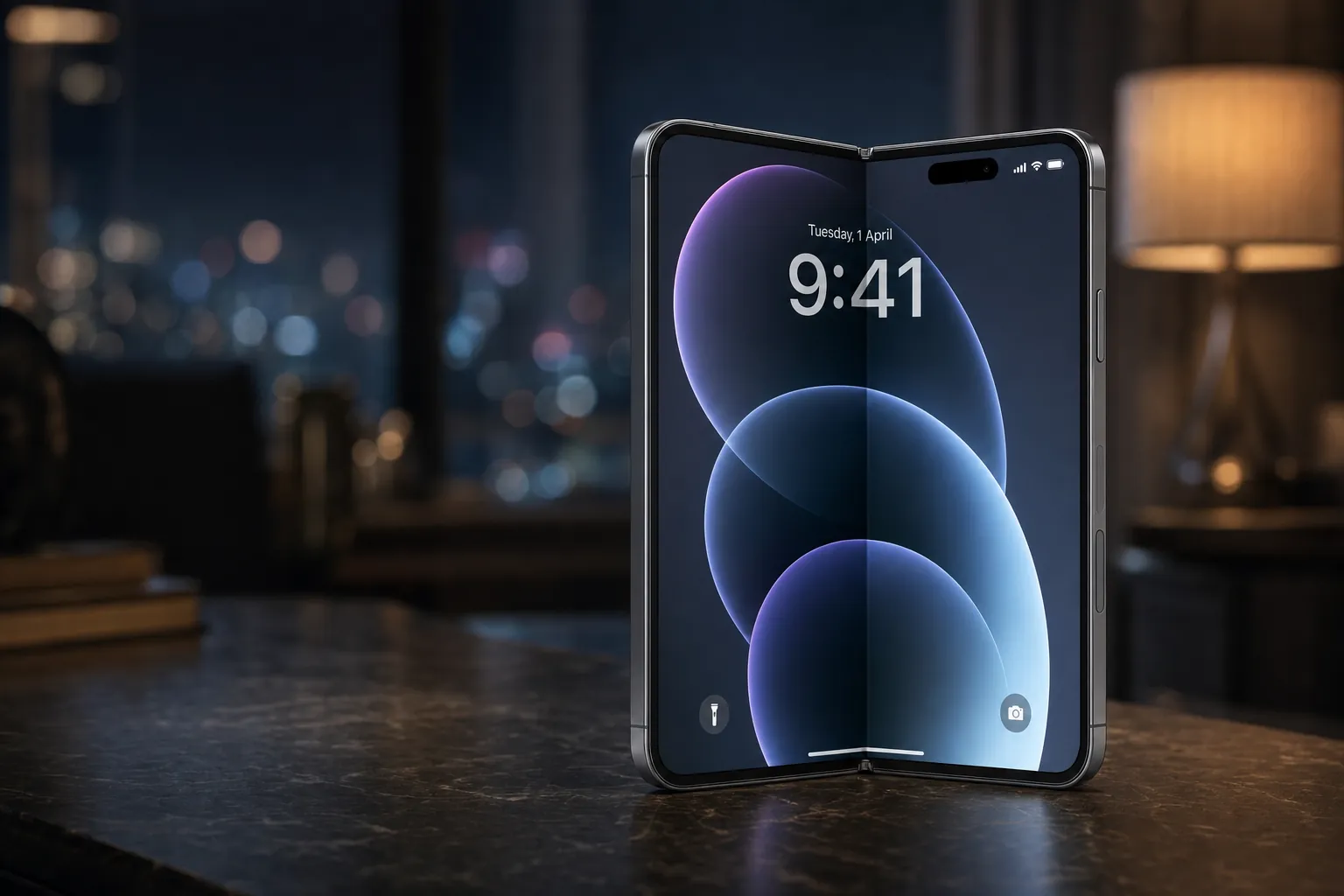
Foldables have spent years being the sort of phones you admire from across the table, then immediately worry about dropping. Apple had stayed conspicuously out of that party. That appeared set to change in 2026. The company was widely expected to show a book-style foldable iPhone at its September event, with reports pointing to a 5.5-inch cover screen, a tablet-like 7.8-inch inner display and a serious attempt at solving the crease problem. That last bit matters. A lot.
Apple had not announced a foldable iPhone as of Wednesday 5 August 2026. Everything beyond Apple's existing public iPhone line came from analysts, supply-chain reporting and leak coverage, so treat every claimed specification as a well-sourced possibility rather than a promise.
Concept visualisation for illustration — based on rumoured specs, not a confirmed design.
1. What Apple's first foldable was expected to be
The broad shape of Apple's first folding phone had become remarkably consistent. This was not thought to be a compact flip phone in the mould of Samsung's Galaxy Z Flip range. Instead, it was expected to be a book-style device: a normal-ish phone on the outside, opening sideways into a small tablet.
The working names were iPhone Fold and iPhone Ultra. "Ultra" had gathered momentum through Weibo leak coverage and subsequent reports, but it remained a nickname rather than something Apple had put on a slide, in a shop or on a carefully lit plinth. Apple is rather good at keeping the actual name back until the last possible moment. It has form.
What makes this more than another "Apple is looking at foldables" rumour is the apparent maturity of the production story. Foxconn reportedly began trial production in April 2026. Subsequent reporting suggested that hinge and circuit-board issues had been addressed, prompting Apple to increase its production target to around 10 million units. Yet later supply-chain reports said Foxconn was still making final mass-production adjustments. In other words: it looked real, it looked advanced, and it was still not a finished retail product in the public sense.
The most persistent design reports pictured a phone-first outer screen that unfolded into an iPad mini-like workspace rather than a tall, narrow tablet.
2. September remained the key window — with an important caveat
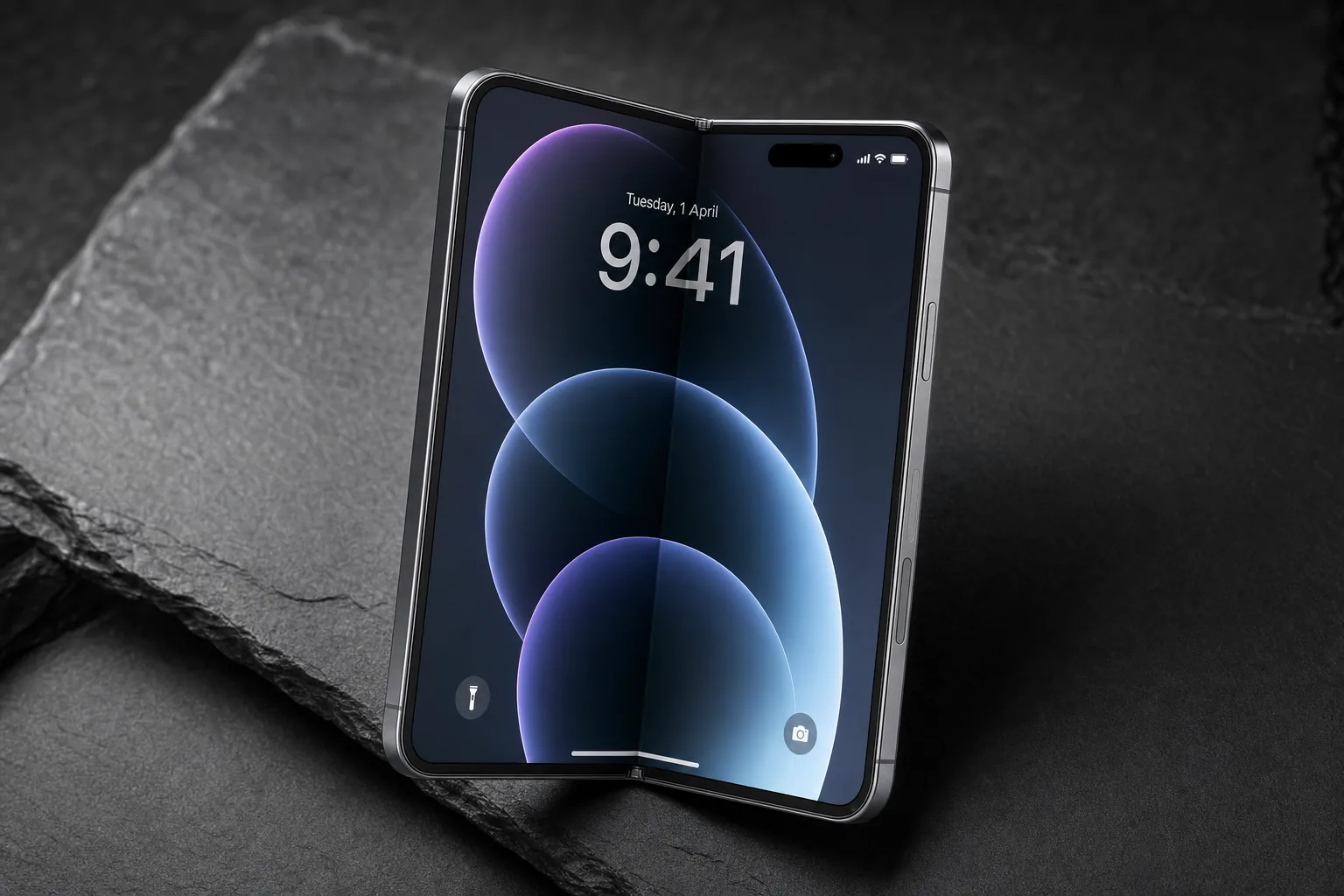
Bloomberg reporting had described the foldable as on track for Apple's usual September iPhone window, alongside the iPhone 18 Pro and iPhone 18 Pro Max. One Bloomberg-based report pointed to 8 September 2026, with 9 September floated as an alternative. Apple had not confirmed an event date, naturally, and this is exactly the stage where invitations and official wording matter more than confident-looking calendar graphics.
The more interesting question was not whether Apple could show the device. It was whether it could make enough of them. A folding phone needs a flexible screen, a complex hinge, tightly packed components and unusually precise assembly. That is a lot of things that need to line up before a single phone reaches anyone's pocket. A lovely keynote render does not make a hinge durable. Ask anyone who has owned an early-generation folding phone.
Reports of final Foxconn adjustments did not necessarily mean a cancellation or a major delay. They did, however, make limited initial supply plausible. Apple could still announce the handset in September whilst sales began later than the usual iPhone rhythm, or stock could be tight through the first wave. Neither outcome had been confirmed, but both were sensible possibilities given the manufacturing backdrop.
The sensible read on timing
September was the leading announcement expectation, not a nailed-on shop date. If you are holding out specifically for Apple's foldable, avoid selling your current phone on the strength of a rumoured calendar. Foldables are hard enough to build when nobody is watching.
3. The display could be the whole point
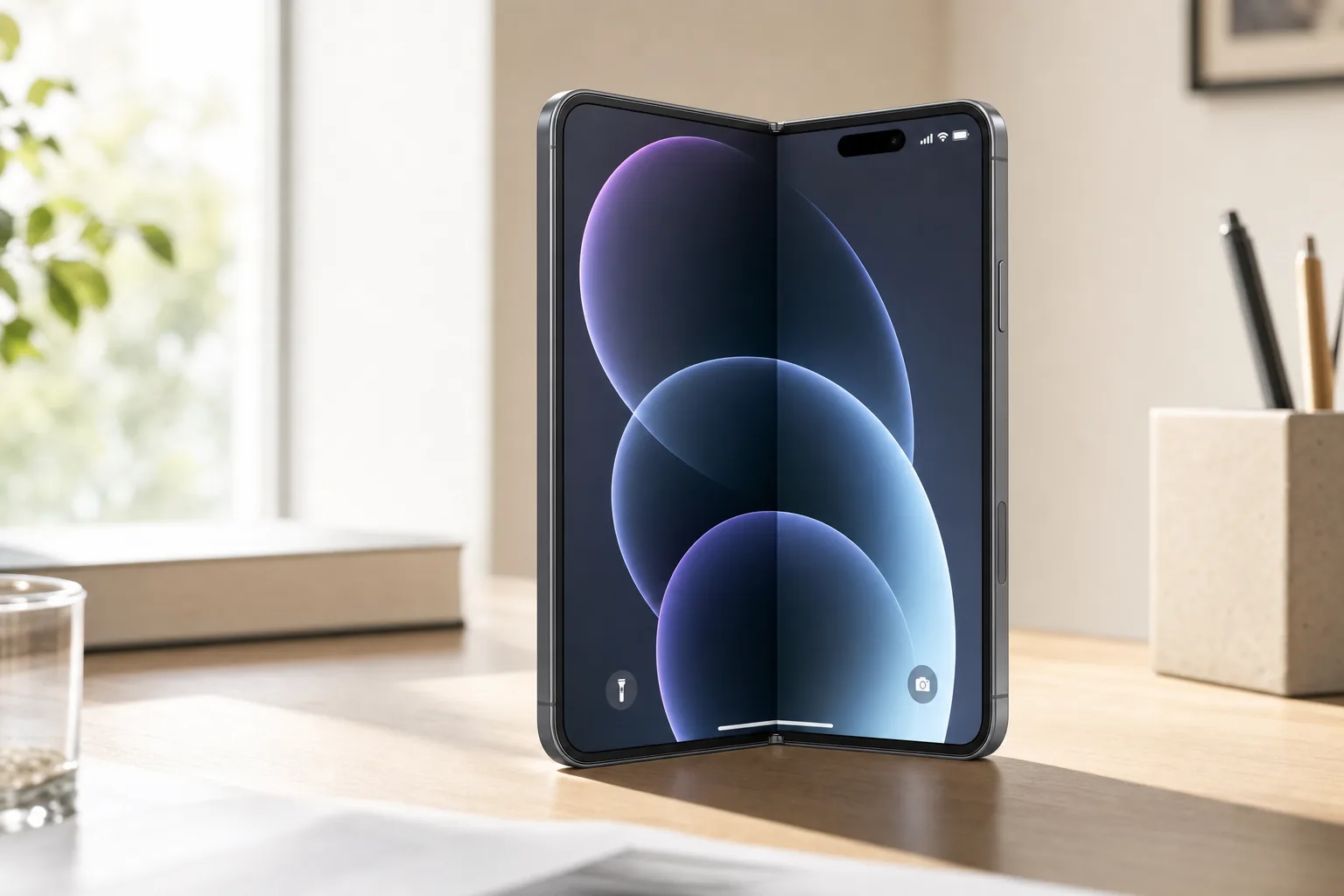
If Apple got the folding screen right, this could be the first foldable that makes immediate sense to people who have never fancied one. The reported 7.8-inch inner panel would put it close to iPad mini territory when unfolded, while the 5.5-inch cover display suggested a smaller, more compact closed device than several current book-style rivals.
The quoted resolutions were approximately 2,713 × 1,920 for the inner panel and 2,088 × 1,422 for the cover screen. Those figures had not been independently verified, but they fitted the wider story of a fairly square, 4:3-ish inner workspace. That shape is worth more than it sounds. A broad display is more natural for reading documents, checking a spreadsheet, editing a photo, arranging two apps side by side or typing with both thumbs. A tall, narrow canvas can feel more like two phones awkwardly glued together.
Then there is the crease. Apple's rumoured "crease-free" approach is one of the most repeated claims around this phone, though I would be cautious with that phrase. A flexible screen has to bend somewhere; physics remains annoyingly difficult to negotiate with. The more realistic ambition is a crease that is difficult to see in normal use and less noticeable under your fingertip. If Apple managed that, it would be a genuine competitive advantage rather than a marketing flourish.
A wider workspace
The reported inner display format looked suited to documents, split-screen tasks and video viewing without the "very tall phone" compromise common to some foldables.
Crease minimisation
Supply-chain reporting repeatedly pointed to a visually reduced crease. That is promising, but it needs to be judged with a production phone in ordinary lighting.
Compact when closed
A 5.5-inch outer screen could make the folded handset easier to handle than larger book-style designs, although proportions will matter as much as the diagonal.
Room for smarter multitasking
The large canvas created an obvious opportunity for Apple Intelligence and multi-app iOS workflows, but Apple had not detailed foldable-specific software behaviour.
A largely square inner panel would be a more natural fit for side-by-side apps, reading and tablet-style work than the very tall screens found on some folding phones.
4. Touch ID may return, and Face ID may sit this one out
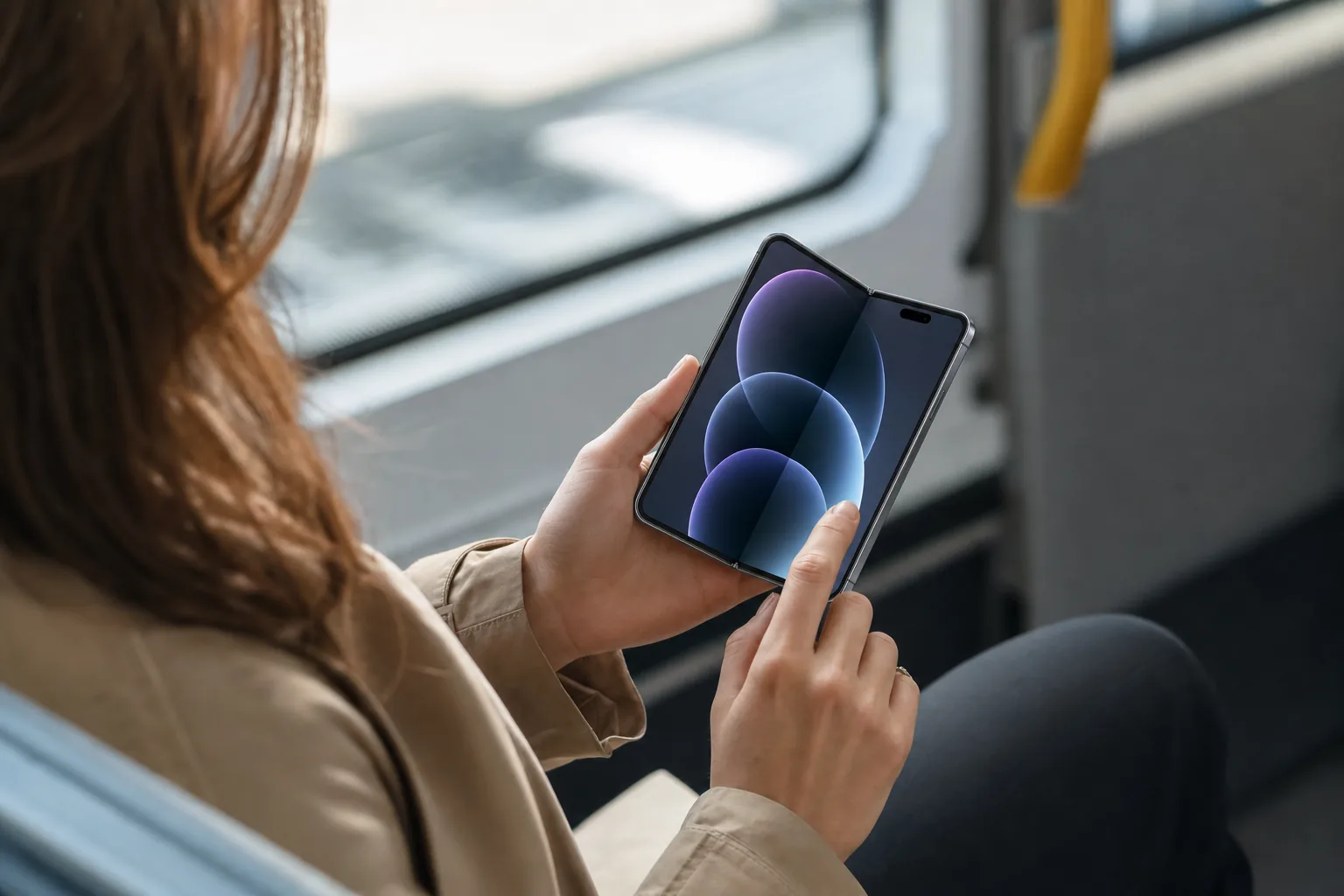
One of the more surprising reports came from analyst Ming-Chi Kuo, who said Apple could omit Face ID on the foldable in favour of a side-mounted Touch ID sensor. The logic was straightforward enough: Face ID hardware takes up space, and foldables have less spare room than the clean exterior suggests. There are batteries, cameras, antennas, display layers and a hinge to accommodate. Nothing in there is keen on sharing.
For some people, that would be a regression. Face ID is deeply embedded in modern iPhone use, from unlocking the phone to authorising payments and approving password fills. A side sensor, on the other hand, has its own practical appeal. It works when a handset is folded or unfolded, is familiar from several existing folding phones and does not care whether your face is partly obscured by a scarf, sunglasses or a particularly uncooperative angle in bed.
The key is implementation. A good side-mounted fingerprint reader feels instant and disappears into the button you naturally touch. A fussy one becomes a daily irritation. Apple had not confirmed either biometric approach, so this remains one of the most consequential rumours to watch at the September event.
5. Performance, battery and cameras: plenty of claims, very little certainty
An A-series processor was the safest expectation because this was still an iPhone, and a flagship one at that. Claims naming the A20 or A20 Pro, however, had not been confirmed. Nor had reports of 12GB of memory, which were linked to alleged Samsung supply. Apple traditionally does not spend launch events reciting RAM figures anyway, so even an official announcement might not settle that particular internet argument.
The battery rumours were bigger than the usual iPhone chatter: approximately 5,400mAh to 5,800mAh. If accurate, that would be a substantial capacity for an Apple phone and entirely understandable for a device driving a large flexible OLED display. Capacity is only part of the story, though. Screen efficiency, chip efficiency, heat management, software and radio use all affect the figure you actually care about: whether it makes it to bedtime without becoming a small emotional burden.
Camera reports commonly described two rear cameras, potentially two 48-megapixel units, with a dedicated telephoto camera possibly absent. That would make sense from a space-saving perspective, but it would be a difficult sell on a halo product if Apple's conventional Pro models retained a more expansive camera system. Apple's image processing has often made the numbers less important than the final shot, yet hardware flexibility still matters when you are trying to photograph a school play from several rows back.
What could work brilliantly
- A large reported battery could offset the inner display's higher power demands.
- Current flagship Apple silicon should make demanding apps and games feel suitably premium.
- A dual-camera arrangement could leave more internal room for the hinge and battery.
- Apple's ecosystem could make a foldable especially useful alongside a Mac, iPad and Apple Watch.
What still worries me
- There were no independent tests of heat, sustained performance or real battery life.
- Two rear cameras may not match the flexibility expected from a top-tier flagship.
- A large claimed capacity does not automatically mean class-leading endurance.
- Foldable hardware makes cooling, repairability and long-term durability harder jobs.
There were no authentic benchmark results, battery tests, camera samples, charging measurements or hinge-cycle figures for Apple's foldable. That is not a minor footnote; it is the central limitation of any pre-launch round-up. A spec sheet can describe intent. It cannot tell you whether the inner display survives everyday grit, whether the phone becomes warm under load or whether the camera struggles at a family birthday in a dimly lit restaurant.
Battery capacity and camera configuration had been widely discussed in leak coverage, but neither tells us how the foldable will perform in a full day of maps, photos, messages and video.
6. The software question is arguably bigger than the hinge
Apple did not merely need to make a folding iPhone. It needed to make iOS make sense on a folding iPhone. That is a more subtle challenge. The hardware can open into a generous screen, but the experience only feels magical if apps move gracefully between the cover and inner display, layouts reflow sensibly and multitasking feels simple rather than like admin.
The rumours suggested an AI-oriented position for the device, with Kuo describing it as a "true AI-driven phone". That was analyst language, not Apple's, but the basic idea was clear. A larger display could make summarising a document whilst composing a reply, organising a trip, comparing images or working with several windows feel less cramped. Apple Intelligence could have more room to breathe — assuming Apple developed the interface around it rather than simply stretching the existing phone layout.
There were no confirmed foldable-specific features, no declared Stage Manager-style mode and no official answer on how iPad-class apps would behave. I would avoid assuming a miniature iPad experience. Apple has historically been careful about product categories, and it may prefer a distinctive foldable iPhone interface rather than blurring the line entirely. Still, continuity with iMessage, FaceTime, iCloud, Apple Pay, Apple Watch and Mac features would be a major reason to choose it over Android competition.
The software test that matters
Do not judge this phone only by whether it folds flat. Watch how a message, a video call, a web page and a document behave as it opens and closes. If that hand-off feels effortless, Apple will have done the difficult bit.
7. Durability will decide whether this is a luxury tool or an expensive worry
Every foldable carries a durability tax in the buyer's mind. There is a moving hinge, a flexible internal screen and more opportunities for dust and debris to get somewhere awkward. Apple may be entering the category later than Samsung and Google, but that delay could prove useful if it has allowed the company to wait for better materials, improved hinges and more mature display manufacturing.
The reports of a custom hinge, including occasional "liquid metal" claims, were intriguing but unverified. Materials alone will not settle the matter. What we need to see is real-world resistance to pocket fluff, the feel of the mechanism after months rather than minutes, the behaviour of the screen under bright light and whether opening the device one-handed feels refined or faintly alarming.
Water and dust resistance were also crucial unknowns. Google's Pixel 10 Pro Fold had an IP68 rating, whilst Samsung listed IP48 protection for the Galaxy Z Fold8. Those are meaningful reference points because they show how much the category has advanced, but also how difficult it remains to protect a folding mechanism completely. Apple's rating had not been disclosed, so there was no basis for assuming it would match either rival.
It is tempting to treat a first-generation Apple product as automatically safer than a first-generation product from anyone else. I would not. Apple has the engineering resources and the patience to obsess over the hinge, but this would still be its first commercial foldable. Sensible buyers should wait for proper durability testing, repair pricing and real owner reports before declaring the problem solved.
8. Apple Foldable iPhone vs Samsung Galaxy Z Fold8 vs Google Pixel 10 Pro Fold
The Apple phone was entering a market that had moved on considerably. Samsung's Galaxy Z Fold8 emphasised thinness and low weight, whilst Google's Pixel 10 Pro Fold leaned into a larger cover display, a large inner panel and IP68 protection. Apple's reported screen sizes would sit neatly between the two in some respects, but its final thickness, weight and durability credentials remained the big blanks.
| Specification | Apple foldable iPhone | Samsung Galaxy Z Fold8 | Google Pixel 10 Pro Fold |
|---|---|---|---|
| Status | Rumoured | Available | Available |
| Outer display | Around 5.5 inches | 5.5 inches | 6.4 inches |
| Inner display | Around 7.8 inches | 7.6 inches | 8 inches |
| Open thickness | — | 4.5mm | 5.2mm |
| Folded thickness | — | — | 10.8mm |
| Weight | — | 201g | 258g |
| Battery capacity | Reported 5,400–5,800mAh | 4,800mAh | 5,015mAh |
| Ingress protection | — | IP48 | IP68 |
Samsung and Google had already established two distinct approaches to book-style foldables: Samsung chased lightness, while Google paired a larger outer display with full IP68 protection.
The diagonal numbers only tell part of the story. The Galaxy Z Fold8's 201g weight is particularly notable because it demonstrates that a book-style foldable does not automatically have to feel like a small paving slab. The Pixel 10 Pro Fold, at 258g, brought a larger 6.4-inch cover screen and a more substantial in-hand presence. Apple's alleged 5.5-inch cover screen could make for a notably compact folded phone, but it could also feel constrained if the aspect ratio is too narrow. This is why I want photos of actual hands holding it, not just rendered slabs floating over a dramatic desert.
Battery capacity offers another useful reality check. Apple's reported range sounded ambitious beside Samsung's 4,800mAh and Google's 5,015mAh figures. But a larger battery can mean extra weight, and higher capacity does not capture display efficiency or power management. Apple has a strong history of extracting good endurance from relatively modest capacities. A foldable changes the equation because it gives you a screen that actively encourages you to use more screen.
9. The performance benchmarks Apple will have to beat
There were no benchmark figures for Apple's foldable, so there is no meaningful way to claim it will be faster than its rivals. What we can do is look at the standard the current competition had already set. Samsung's Galaxy Z Fold8 recorded a Geekbench 6 single-core score of 3,253 and a multi-core score of 7,975 in TechRadar testing. Its 3DMark Wild Life Extreme Stress Test produced a best score of 5,087 and a low score of 2,083.
Google's Pixel 10 Pro Fold recorded 2,344 in Geekbench 6 single-core and 6,332 in multi-core testing cited by Tom's Guide, with a 3DMark Wild Life Extreme result of 3,383, or 20.2fps. The review found that the Pixel's graphics performance lagged Samsung's, even though its software and broader foldable experience had plenty going for it.
Battery testing painted a closer picture. Tom's Guide measured the Galaxy Z Fold8 at 12 hours 19 minutes in its 5G web-browsing test, while the Pixel 10 Pro Fold reached 12 hours 16 minutes. That is effectively a draw in the way people actually use these things: browsing, messages, maps, social apps and the occasional accidental forty-minute scroll through holiday cottages you are not going to book.
Samsung did retain a charging edge in those published figures. The Galaxy Z Fold8 reached 70% after 30 minutes in Tom's Guide testing, and TechRadar's test unit reached a full charge in 65 minutes, having hit 43% after 15 minutes. The Pixel 10 Pro Fold reached 58% after 30 minutes with a 67W charger. Apple's charging approach remained entirely unknown, but it would need to feel suitably modern on a device positioned at the top of the range.
Current foldables already delivered around 12 hours of measured 5G web browsing, setting a useful endurance target for Apple's first entry into the category.
10. Which foldable looks best for different buyers?
This is not a straightforward "wait for Apple" situation. The right answer depends on whether you value iOS, need a foldable now, care about water and dust resistance, or simply want the least cumbersome hardware. Apple's foldable could become the obvious choice for some people, but it did not yet have the proof that Samsung and Google had earned through real devices, published specifications and independent testing.
Best for committed Apple users: Apple foldable iPhone
If your daily life already runs through iMessage, FaceTime, iCloud, Apple Watch and a Mac, Apple's foldable was the one worth watching. Wait for the software details and proper durability testing before making it your next phone.
Best for a lighter book-style foldable: Samsung Galaxy Z Fold8
At 201g and 4.5mm when open, Samsung's Fold8 was the clear choice for buyers who wanted a large folding screen without carrying the heaviest device in the room.
Best for stronger ingress protection: Google Pixel 10 Pro Fold
Google's IP68 rating made the Pixel 10 Pro Fold particularly appealing if dust and water resistance were high on your list. That is a meaningful reassurance in a category full of moving parts.
Best for a bigger cover display: Google Pixel 10 Pro Fold
The Pixel's 6.4-inch outer screen offered considerably more room than the 5.5-inch panels cited for Apple and Samsung, handy if you spend most of your time using the phone while closed.
My advice for Apple fans was simple: wait if you can do so without making your current handset miserable. Buying a mature competitor because you need a foldable right now is sensible. Buying one a few weeks before Apple's expected event when you know you want iOS is the sort of decision that makes you stare at September keynote coverage with a very specific expression.
11. What to watch for at Apple's event
A proper announcement would answer more than a name and a screen size. The first thing I would look for is the closed-device experience. Does the cover display feel like a usable phone, or merely a way to avoid unfolding it? The reported 5.5-inch diagonal could go either way depending on width, bezels and software layout.
Next: the hinge and crease. Apple will almost certainly show glamorous angles under forgiving studio lighting. That is fine; every brand does it. The valuable detail will be whether Apple explains durability, dust resistance, repairability and any protection built into the flexible inner display. A foldable without a clear durability story is asking buyers to do too much imaginative work.
Then comes software. Look for smooth continuity when moving from cover display to inner screen, genuine split-screen functionality, useful keyboard behaviour and a reason to use the big panel beyond making videos larger. Apple has the app ecosystem to make this special, but the company needs to show the workflow rather than merely say "multitasking" three times over a tasteful synth track.
Finally, cameras and battery. A high-end foldable cannot get away with vague camera claims, and it needs an endurance estimate that acknowledges the larger panel. If Apple chooses a two-camera arrangement, it needs to be candid about the photographic trade-offs and confident about the image quality it can deliver.
Apple's event presentation will matter less than the practical answers around hinge durability, display continuity and whether the outer screen is satisfying as a phone in its own right.
12. Apple foldable iPhone FAQ
Apple's first foldable could reshape the category for iPhone users, but the final verdict depended on the details no rumour can settle: the feel, durability and software in everyday use.
Bottom line
Apple's foldable iPhone looked like one of the most credible pre-launch Apple rumours in years: a book-style handset with a reported 5.5-inch cover display, a 7.8-inch tablet-like inner panel, a potentially subtle crease and a September announcement window firmly in view.
It also remained a first-generation foldable with major unanswered questions. The final name, hinge durability, water and dust protection, camera system, charging behaviour, software experience and real-world battery life were all more important than a tidy list of leak figures. Apple may have taken its time getting here. Now it needs to show that the wait was for a reason.