
Dreame INNIX Aura Mini LED R8000F first look: the TV whose speakers physically move to follow you
Dreame's premium INNIX television brand has shown off a Mini LED set with extendable, rotating speakers and mmWave viewer sensing. It is either a properly clever rethink of built-in audio, or an extremely expensive way to make a TV nod at you. Possibly both.
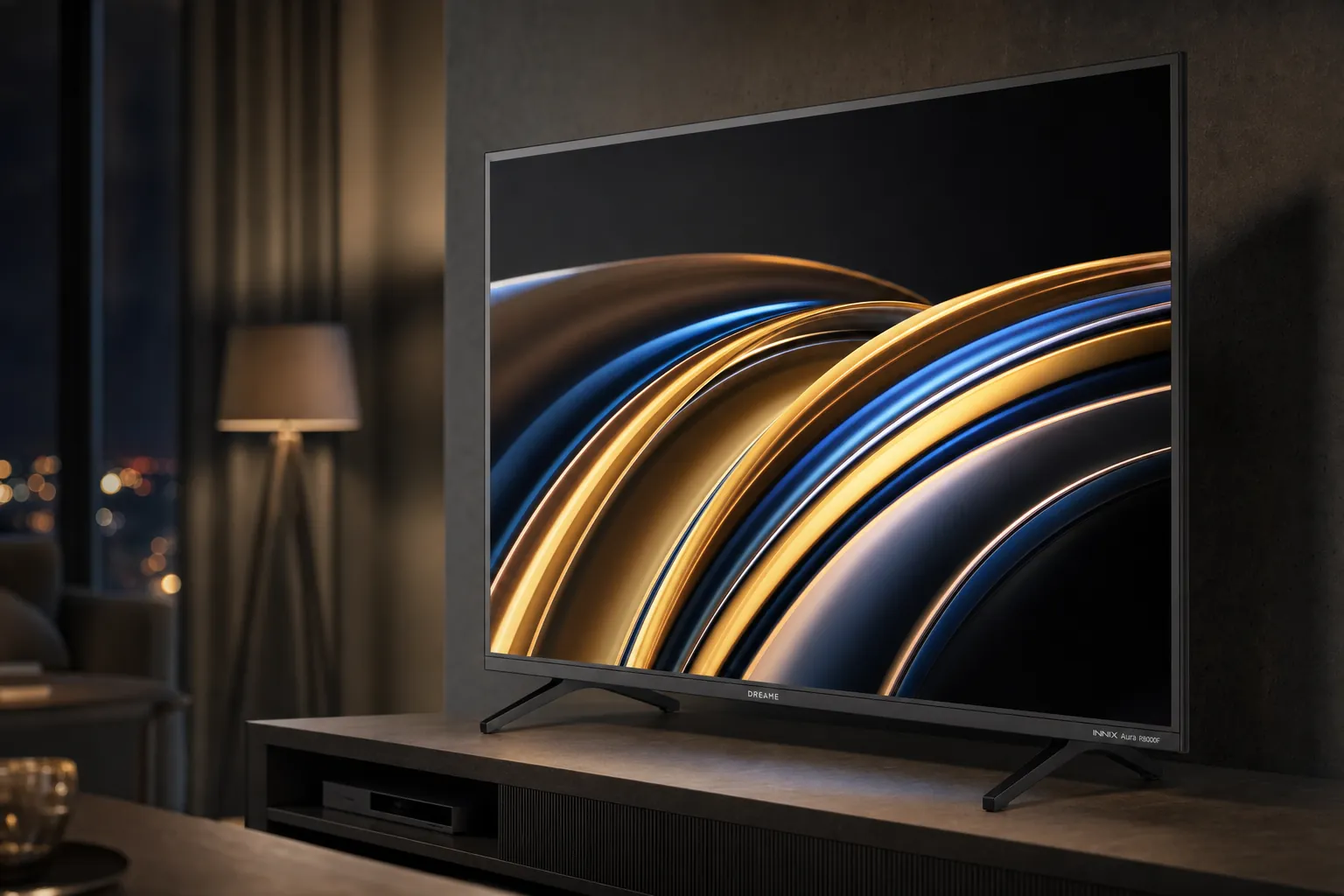
TV audio has spent decades trying to escape the TV. First came thin cabinets and increasingly apologetic downward-firing speakers. Then came soundbars, subwoofers, rear speakers and enough cables to give a media unit a small nervous breakdown. The INNIX Aura Mini LED R8000F takes a very different route: instead of asking you to sit in the perfect place, it is designed to move its speakers so the sound follows where you are sitting.
What the INNIX Aura Mini LED R8000F actually is
The INNIX Aura Mini LED R8000F is a forthcoming flagship television from INNIX, Dreame Technology's premium home-entertainment brand. It was publicly demonstrated at Dreame Next in San Francisco on 28 April 2026, after an earlier appearance at AWE 2026 in China. So this is no longer a whispered product codename buried in a regulatory filing; people have seen the broad idea in person. That said, it remains a first-look story rather than a finished retail verdict.
The headline is the television's claimed Dynamic Sound Engine. INNIX says the R8000F has a 6.2.2-channel integrated audio system with speaker modules that extend and rotate. An Active Follow System, using mmWave sensing, is intended to detect a viewer's position and physically reorient those modules to keep the soundstage aligned with them.
That last bit matters. Plenty of televisions offer AI sound modes, virtual surround settings and dialogue boosts. Most of them are software solutions attempting to make fixed speakers behave a little less like fixed speakers. The R8000F's pitch is much more literal: move the hardware. It is an unusually direct answer to an old problem.
The important distinction: the R8000F is designed to follow the viewer's seating position, not to make speakers chase objects around the screen. The intent is to keep voices, effects and the overall soundstage tied more convincingly to both you and the picture.
The R8000F concept centres on acoustic modules that can extend and rotate, rather than a conventional fixed speaker strip beneath the screen.
The confirmed story versus the rumour mill
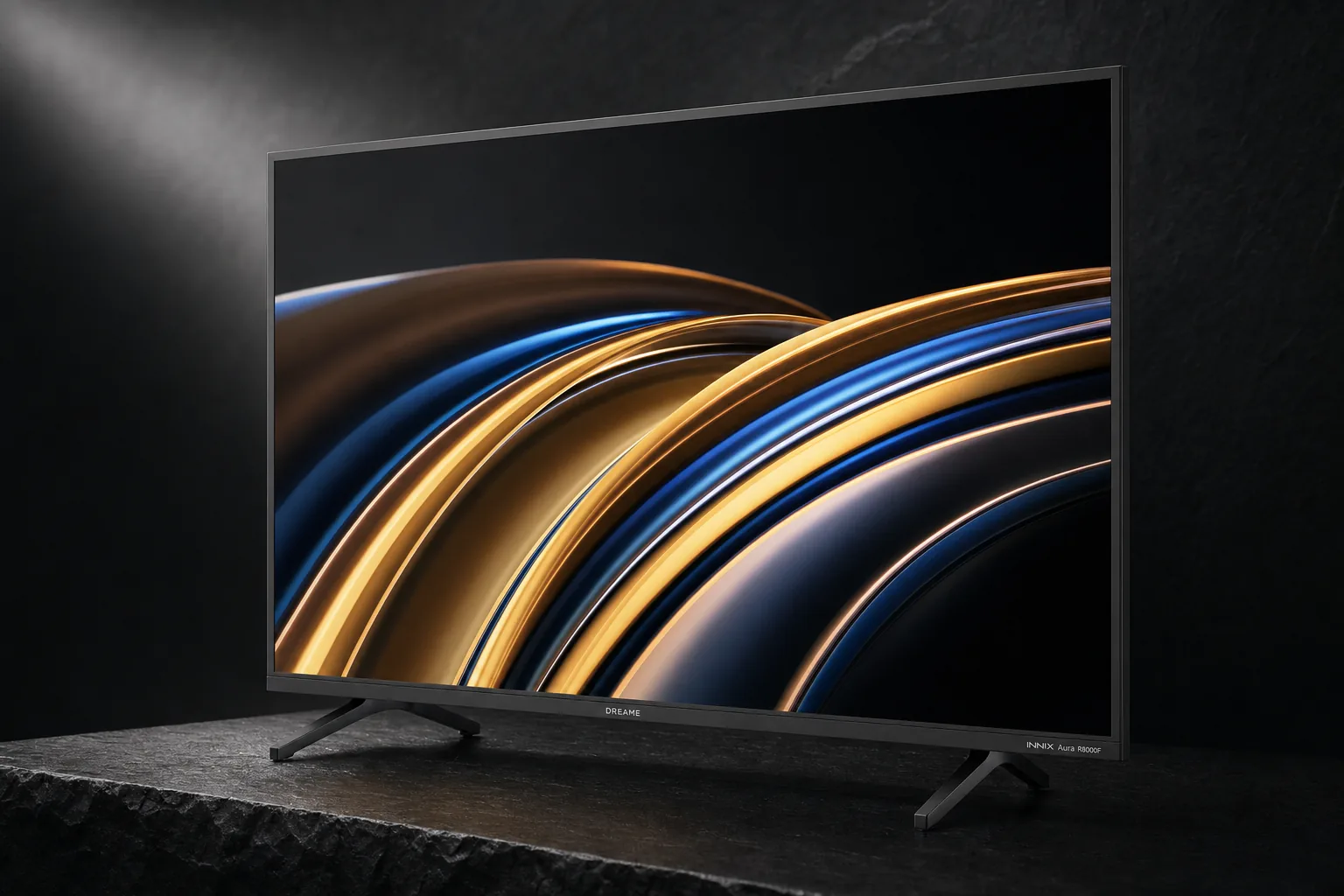
It is worth drawing a clean line here, because new TV launches invite some wildly optimistic filling-in of blanks. A premium Mini LED TV with moving speakers is exactly the sort of product that attracts assumed screen sizes, assumed gaming specifications and assumed Dolby badges before anyone has properly checked the paperwork. Resist the urge. Television rumour season is a bit like pub quiz season: confidence often outruns accuracy.
Confirmed by INNIX's public announcements: the R8000F is positioned as an RGB Mini LED television; it uses the Dreamind Master AI processor; it carries a claimed 6.2.2-channel Dynamic Sound Engine; its speakers extend and rotate; and Active Follow uses mmWave sensing to adapt their direction to the viewer's position. INNIX also claimed 100% BT.2020 colour coverage and colour accuracy below ΔE 0.7.
Those display numbers are eye-catching. BT.2020 is a very wide colour target, considerably broader than what most TV content currently requires, whilst ΔE is a measure of colour error where lower is better. A claimed ΔE below 0.7 would be ambitious territory if it held up in independent calibration work. For now, though, those figures should be read exactly as they were presented: manufacturer claims attached to a pre-release flagship.
What we have not seen is a detailed retail specification sheet capable of settling all the normal TV-buying questions. That means it would be premature to turn this into a ports-and-pictures comparison against an established premium set. The R8000F is currently interesting because of its hardware concept, not because it has supplied a finished checklist for every possible use case.
The sensible way to read the claims
Think of the R8000F's 6.2.2 layout and RGB Mini LED system as a clear statement of intent, rather than a guarantee of how the final television will sound or look in a British sitting room. The clever bit is real enough to discuss. The final execution still needs to earn its stripes.
Why physically moving speakers could make more sense than it sounds
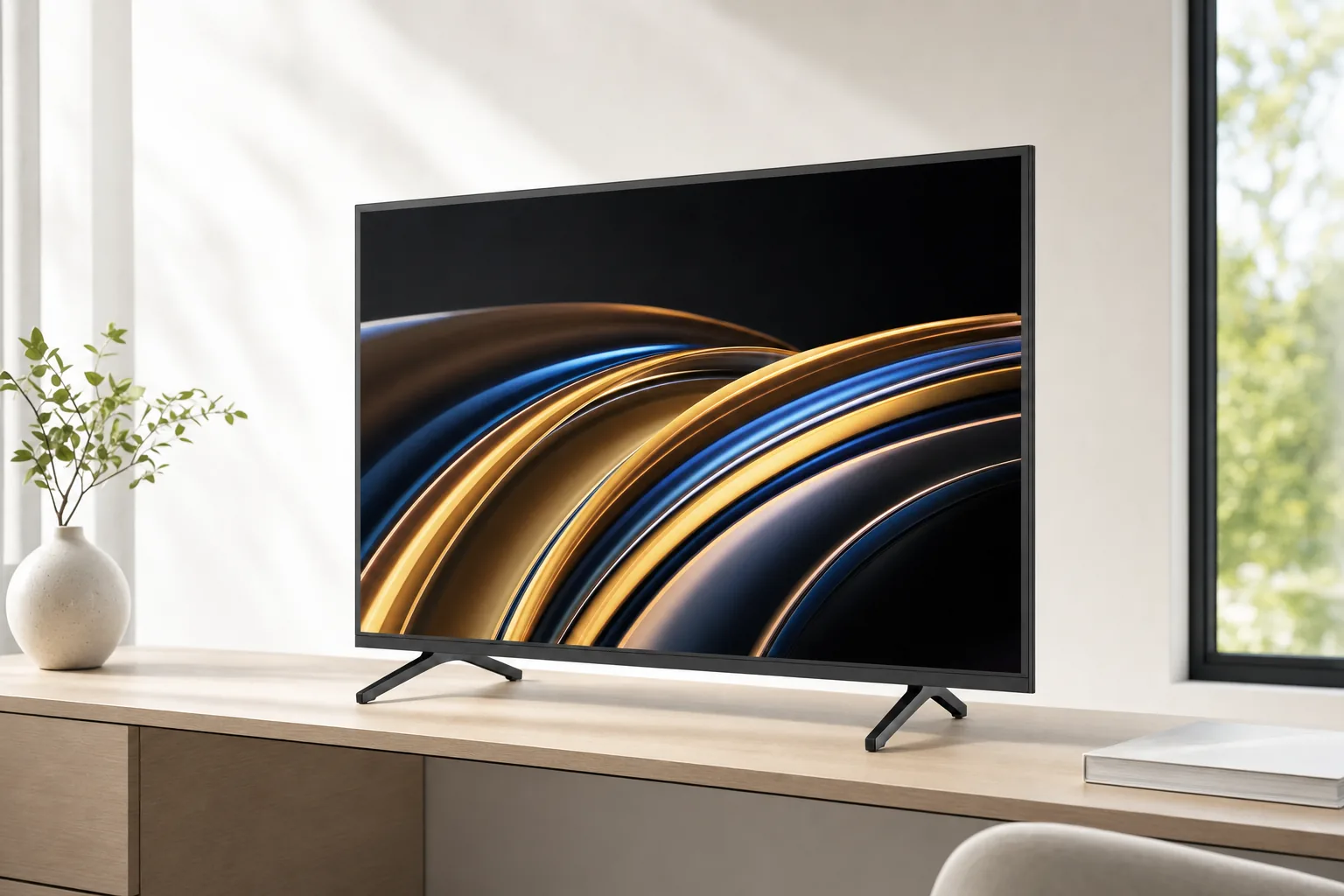
Built-in TV audio has a geometry problem. A television is normally designed around a single ideal listening spot: roughly central, roughly level with the screen, and roughly where the person who bought the TV thought everyone would sit. Real life is less obedient. You might be on the end of an L-shaped sofa. Your partner may be reading in an armchair off to one side. Someone may be perched on the floor with the dog. The "ideal" position is usually occupied by a coffee table.
With fixed left and right speakers, moving sideways changes the relationship between you and the drivers. The stereo image can lean to one side, dialogue can feel detached from faces on screen, and side- or upward-firing effects are no longer aimed as their designers intended. Digital processing can compensate for some of this, but it cannot move the physical origin of the sound.
That is where the R8000F's approach becomes genuinely intriguing. If mmWave sensing locates the primary viewer and the modules then rotate towards that seat, the TV could preserve a more centred front soundstage even when you are not planted precisely in front of it. The extending action may also help give the drivers greater separation or place them in a more acoustically useful position than a slim chassis normally allows.
Listener-aware direction
The intended benefit is not merely louder sound. It is speaker orientation that remains more relevant as one viewer moves around the room.
Dialogue anchored to the image
When sound comes from a better-aligned direction, voices have a better chance of feeling attached to the people speaking rather than floating below the panel.
A wider physical stage
Extendable modules could help the TV create more separation than tightly packed drivers buried behind a narrow lower bezel.
Hardware, not just DSP
The system pairs sensing and processing with physical movement. That is the unusual bit, and the reason this is more than another "AI audio" mode.
There is a small but important caveat. Sound does not behave like a laser pointer. Rooms reflect it, carpets absorb it, walls bounce it about, and sofas swallow a surprising amount of upper-bass energy. Rotating a driver may improve the direct sound reaching your ears, but it cannot repeal acoustics. Nor can it suddenly make a slim television cabinet perform like a large dedicated subwoofer.
Still, aiming speakers more intelligently is a sensible thing to attempt. If you have ever shifted one seat along the sofa and found the "surround" effect went from cinematic to vaguely off-centre, you already understand the problem INNIX is trying to solve.
A conventional TV assumes you will sit in a fixed central position. INNIX's Active Follow concept is intended to adapt the speaker angle when you do not.
What the R8000F is trying to do differently from a soundbar
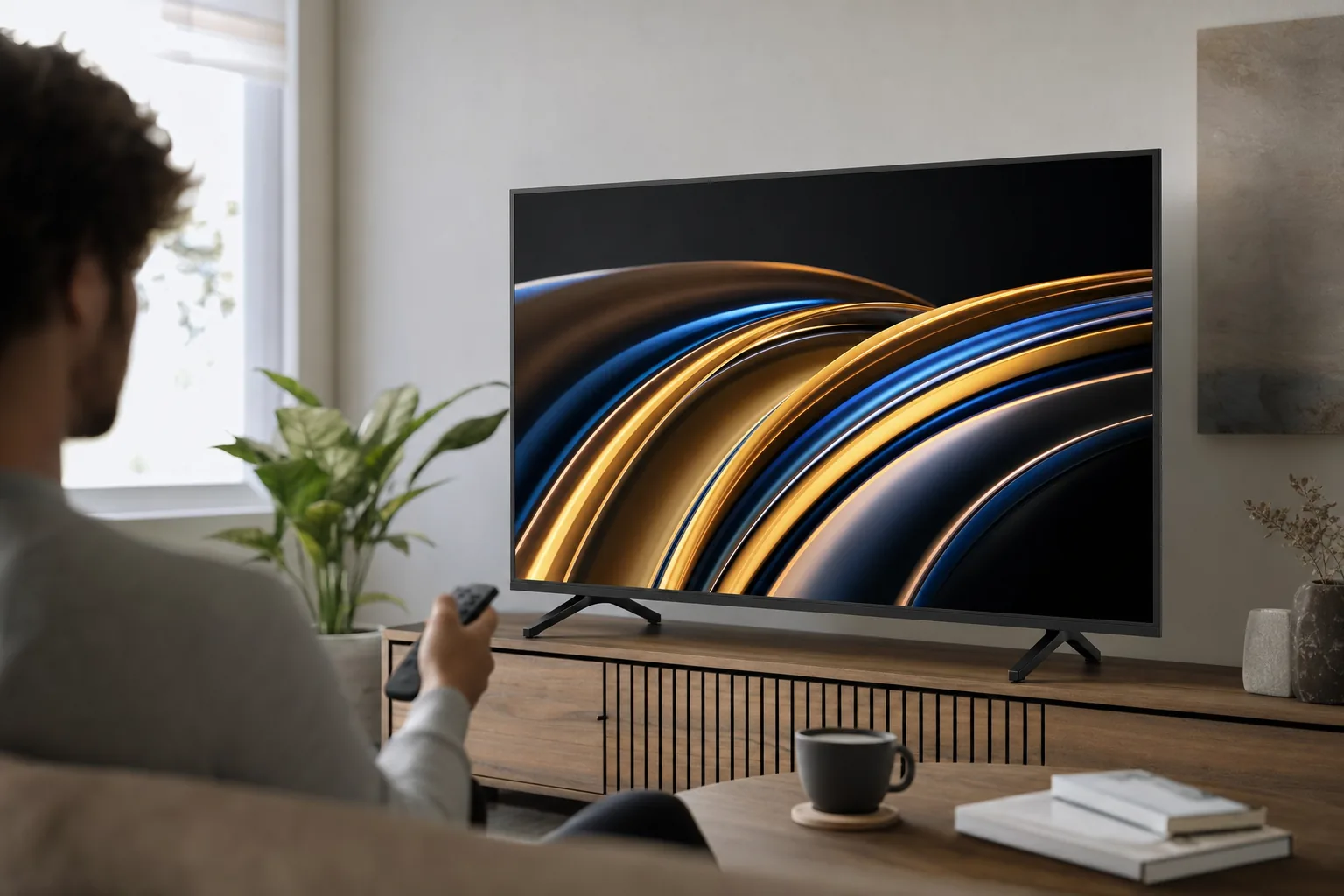
A decent soundbar and the R8000F are not really trying to win the same fight. A soundbar's main advantage is usually brute physical practicality: more enclosure volume, more room for amplifiers and drivers, greater left-right spacing, and sometimes a dedicated subwoofer or rear speakers. It is the traditional fix for TV sound because it supplies the things thin TV cabinets have steadily lost.
The R8000F's distinctive argument is adaptive directivity. A conventional soundbar sits under the screen in one fixed position. If you move away from the middle seat, it remains resolutely where it was. The INNIX television is designed to change the angle and position of its integrated speaker modules so the soundstage remains better aligned with the primary listener.
That could be especially relevant in homes where a soundbar would sit too low, too far forward, or awkwardly beneath a wall-mounted screen. It also has aesthetic appeal. There is no separate bar to power, no extra remote to lose in the sofa, no choice between a soundbar blocking the lower edge of the screen or looking a bit stranded on a wide cabinet. The TV is trying to make "all-in-one" feel like a feature rather than a compromise.
But there is a limit to how far that logic can go. A separate soundbar still has the potential to offer bigger cabinets, deeper bass and an upgrade path that a sealed TV system cannot match. The R8000F's moving drivers are not automatically a substitute for a serious multi-speaker home-cinema system. They are a different solution to a different nuisance: the way soundstage positioning gets worse when people sit off-axis.
Where a moving-speaker TV could be at its best
The most convincing use case is a tidy living room with flexible seating, one main viewer at a time, and no appetite for a separate soundbar. If your priority is room-filling bass, dedicated rear channels and the ability to upgrade one piece at a time, traditional separates still make more obvious sense.
The big real-world questions
For all the promise, the mechanism raises a handful of questions that matter far more than a dramatic launch video. How quickly do the modules move? Does that movement happen continuously, only when you change position, or only when the TV detects a major shift? Can you hear the motors during a quiet drama? What does the system do when there are two people on opposite ends of a sofa? And will owners be able to choose between tracking, a fixed wide setting and fully retracted speakers?
Those are not gotchas. They are the ordinary questions anyone should ask when a television adds motors, sensors and moving panels to an area that has traditionally been fixed in place. The difference between a memorable piece of engineering and an expensive parlour trick will be in those details.
RGB Mini LED is the other half of the R8000F pitch
It would be easy to let the moving speakers steal the whole show, because, frankly, televisions do not normally have bits that politely swivel towards you. But the R8000F is also presented as an RGB Mini LED flagship. Instead of treating the backlight as a conventional white or blue-light arrangement filtered into colour, RGB Mini LED uses separate red, green and blue backlighting.
The broad promise is more direct colour generation and a wider palette. INNIX claimed 100% BT.2020 coverage for the R8000F, alongside colour accuracy below ΔE 0.7. If those claims translate cleanly into real-world performance, the television could potentially produce very saturated colour while retaining the finesse needed for skin tones, subtle skies and the endless beige-grey gradients of prestige television.
That is the theory. The practical test is always more complicated. Colour gamut alone does not determine whether a TV looks natural. Tone mapping, panel uniformity, viewing angle, local dimming behaviour and processing all play their part. More colour is only useful if the set knows when not to shout about it. Nobody wants every BBC period drama to look as if it has been colour-graded inside a sweet shop.
The Dreamind Master AI processor is part of INNIX's image-processing story, and the company describes millisecond-level AI optimisation. It is fair to say that the R8000F is aiming for a premium display experience alongside its more theatrical audio hardware. It is not fair to presume how it will handle films, sport, games or difficult HDR scenes until independent testing has had a proper look at it.
The chart is useful context, not a like-for-like verdict. The R8000F figure is an INNIX claim, while the S100 figures came from independent testing of a different, already commercialised television. What it does show is why the R8000F's RGB Mini LED claim is worth keeping an eye on: it is aiming for a notably broader colour result than Dreame's existing conventional Mini LED reference model measured.
RGB Mini LED backlighting is intended to be the visual counterpart to the R8000F's ambitious audio design, with INNIX claiming full BT.2020 coverage.
Mechanical design: brilliant theatre, or extra things to go wrong?
Let us be honest: motors in consumer electronics create equal and opposite emotions. The gadget enthusiast in me thinks moving speakers are fabulous. The person who has owned anything with a motorised flap, tray or hinge quietly starts calculating future repair bills. Both reactions are reasonable.
Fixed TV speakers are boring partly because they are simple. They have no rails to align, no sensors to interpret a room, no rotating assemblies to keep quiet and no extendable pieces that can be bumped by a toddler, a vacuum cleaner or a Labrador with poor spatial awareness. The R8000F introduces mechanical complexity because the company believes that complexity solves a genuine listening problem.
It may do. The most encouraging part of the concept is that the movement serves a clear purpose. It is not a needlessly animated fascia or a little party trick that activates whenever you turn the TV on. INNIX's stated aim is to keep acoustic output aimed at the viewer. If the movement is quiet, well judged and naturally integrated into normal viewing, it could feel surprisingly useful rather than flashy.
There are some sensible practical questions buyers should keep in mind. Mechanisms need to handle repeated movement over years, maintain alignment, avoid rattles and survive dusty living rooms. The speaker modules will also need to avoid introducing vibrations into the cabinet that colour the sound or disturb the image. These are all perfectly solvable engineering problems. They are simply the things a final production set must prove rather than promise.
Why the concept is compelling
- It tackles off-axis listening with physical speaker repositioning rather than relying only on digital sound processing.
- It could make dialogue and effects feel more closely connected to the screen for viewers sitting to one side.
- The integrated format keeps a room visually cleaner than a TV-plus-soundbar arrangement.
- The combination of movement, sensing and a claimed 6.2.2 layout is genuinely unusual in television design.
- RGB Mini LED gives the product a display story substantial enough to stand alongside the audio headline.
Why some caution is healthy
- Moving parts create more potential points of wear than ordinary fixed speaker assemblies.
- Motor noise, tracking behaviour and long-term durability will matter hugely in day-to-day use.
- A single preferred listening position may be less helpful in a room full of viewers.
- Physical repositioning cannot replace the cabinet volume and bass potential of a dedicated subwoofer.
- Premium presentation does not automatically tell us how the finished TV will handle difficult picture or gaming workloads.
The awkward question: what happens when more than one person is watching?
The R8000F's central idea is easiest to understand when one person is watching television from a slightly off-centre seat. But most living rooms are not one-person laboratories. They contain families, friends, people who insist on sitting diagonally, and one person who talks through every programme but cannot hear dialogue unless the volume is absurdly high.
Soundbars and conventional TV speakers have a blunt advantage here: they do not favour anyone. Their soundstage may be optimised for the central seat, but it is at least static and predictable for everyone else. A viewer-following system has to make a decision about who it is following and how aggressively it should move.
There are a few possible outcomes. It could prioritise the person nearest the centre, detect a primary viewer, widen the stage when it identifies several people, or simply offer a mode that fixes the speakers in a neutral position. The exact behaviour will matter. A system that elegantly adapts when you are watching alone but becomes distracting during a football match with friends would be less versatile than the launch concept suggests.
That does not make the feature pointless. Plenty of people watch alone or as a pair most of the time, and in those situations the R8000F may have a more direct benefit. It just means this is unlikely to be a universal replacement for a conventional surround setup in every household. The feature is best viewed as personalisation, not magic.
A living-room reality check
The R8000F makes the most intuitive sense in a flexible seating layout where one or two people tend to watch from shifting positions. If your household regularly fills every seat for sport, films and gaming nights, a broad fixed soundstage may remain easier to live with than a system optimised around one listener.
INNIX Aura Mini LED R8000G: related, but definitely not the same TV
The R8000F is not the only mechanically ambitious INNIX television shown. The related INNIX Aura Mini LED R8000G also appeared as part of the R8000 family, but it should not be treated as the same product with a different suffix.
Its confirmed concept is a front-mounted acoustic module that glides across the television, creating what INNIX calls a "kinetic facade". That module is intended to mask non-active screen areas and reframe the display for different aspect ratios or presentation modes. In other words, the R8000G's movement is more about the physical presentation of the display and front fascia than about following a seated viewer's position.
It sounds wonderfully impractical in the best possible concept-car sense, but there is a logic to it. Modern TVs have to juggle widescreen films, older 4:3 material, vertical content, dashboards and interface elements. A moving front module that can alter the perceived frame around an image could make those changes feel more intentional and less like a giant rectangle politely displaying the wrong rectangle inside it.
What the R8000G does not share in its public description is the R8000F's explicit mmWave-based Active Follow system or its rotating viewer-aligned speakers. The two sets share premium R8000-family positioning and mechanical ambition, but their mechanisms have different jobs. That distinction is worth preserving, because the R8000F is the one to watch if speaker tracking is the reason you are interested.
The related INNIX Aura Mini LED R8000G uses a sliding front acoustic module as a "kinetic facade", a different idea from the R8000F's viewer-following speaker modules.
Dreame Aura Mini LED S100: the useful reality-check rival
The most useful in-house comparison is Dreame's Aura Mini LED S100. It is a different, already commercialised television line rather than an R8000 model, but it shows what Dreame's conventional all-in-one audio approach looks like when the speakers do not move.
The S100 uses a fixed 4.1.2-channel Master Sound System with 11 speaker units, 70W maximum output, an integrated subwoofer and four up-firing drivers. It supports Dolby Atmos, and Dreame describes its physical coverage as 270 degrees. That is a far more traditional integrated-soundbar approach: build a substantial speaker section into the TV, give it dedicated drivers, and use those drivers to create a broader stage without asking them to rotate towards anyone.
Its television credentials are also much more fully formed. The S100 line spans 55-, 65-, 75- and 86-inch sizes, with 4K Mini LED/QLED panels, up to 144Hz refresh rate, Google TV, HDR10, HDR10+, HLG and Dolby Vision. The official specification lists three HDMI ports, two USB ports, Ethernet, optical output, a headphone jack, dual-band Wi-Fi and Bluetooth 5.1.
Independent testing of the 65-inch S100 adds some useful context. One review measured HDR brightness at around 503 nits on one scene and 589 nits in a bright full-scene test. It also reported 160 local-dimming zones, input lag of roughly 12–15ms at 60Hz and around 5–6ms at 120Hz, plus a maximum tested refresh rate of 144Hz and G-Sync support. Those are good practical numbers for a mid-to-upper-tier living-room television, especially if gaming is part of the brief.
There were caveats. The same testing found some small HDR highlights could fall to 42 nits because of aggressive local-dimming behaviour, while measured contrast varied substantially with scene content. Another review measured maximum close-range sound around 90dB, but found audio quality grew less composed at maximum volume. That is exactly why "many drivers" and "lots of watts" are useful clues rather than a full verdict on sound.
The S100 is relevant because it frames the R8000F's ambition. Dreame already knows how to put a powerful fixed sound system into a TV. The R8000F is trying to add a more adaptive layer on top: not just sound from the screen, but sound that reorients itself around the person watching.
INNIX R8000F vs R8000G vs Dreame Aura Mini LED S100
This is not a winner-and-loser table, because these televisions occupy different stages of development and have different mechanical ideas. It is, however, a useful antidote to the temptation to bundle every INNIX and Dreame television feature into one imaginary mega-set. The R8000F is the moving-speaker model. The R8000G is the moving-facade model. The S100 is the fixed integrated-soundbar reference.
| Feature | INNIX Aura Mini LED R8000F | INNIX Aura Mini LED R8000G | Dreame Aura Mini LED S100 |
|---|---|---|---|
| Core mechanical idea | Extendable, rotating speaker modules | Sliding front acoustic module and kinetic facade | Fixed integrated sound system |
| Audio approach | Claimed 6.2.2-channel Dynamic Sound Engine | Front acoustic module integrated into the kinetic facade | 4.1.2-channel system with 11 speakers |
| Viewer-position sensing | mmWave Active Follow System | — | — |
| Speaker direction | Designed to rotate towards the viewer | Designed to glide across the television front | Fixed speaker placement |
| Backlight positioning | RGB Mini LED | R8000-series RGB Mini LED positioning | Mini LED/QLED |
| Colour figure | Claimed 100% BT.2020; ΔE < 0.7 | R8000 family claims: DCI-P3 ≥ 98%; ΔE < 1 | Measured 94.6% DCI-P3; 71.6% BT.2020 on 65-inch review unit |
| Audio power | — | — | 70W maximum output |
| Refresh rate | — | — | Up to 144Hz |
| Available screen sizes | — | — | 55in, 65in, 75in and 86in |
The dashes are deliberate. A comparison table can look impressively complete while quietly inventing differences that have never been published. Here, the usable takeaway is simple: the S100 is the safer reference if you want a conventional fixed system with clearly defined mainstream TV features, while the R8000F is the more interesting proposition if moving speakers are the thing that excites you. The R8000G is the art-school cousin with the clever sliding facade.
The S100 provides a useful fixed-speaker comparison: 4.1.2 audio, 11 drivers and 70W in a more conventional integrated-soundbar arrangement.
What this could mean for films, sport and games
For films and prestige drama, the potential appeal is straightforward. Dialogue is the most important thing a television audio system does, and the R8000F's speaker alignment could help voices retain a more screen-centred quality when you are sitting away from the middle. The effect would be especially welcome in long, quiet scenes where a drifting dialogue image is much more noticeable than it is during explosions, car chases or another Marvel city receiving a fairly aggressive redesign.
Sport may be an equally good showcase. Commentators, crowd noise and directional on-pitch effects can create a broad front stage, but viewers often spread around a sofa during a match rather than sitting in an ideal central chair. A system that maintains a better sense of centred commentary as someone shifts seat could have more everyday value than a flashy demo suggests.
Games are more nuanced. A television with an adaptive soundstage could make single-player games feel more involving if voices and environmental effects remain better placed when you are sitting off-centre. But gaming buyers also care about refresh rate, input lag, variable refresh support and HDMI capabilities. Those areas are where finished specifications and independent testing matter most, so the R8000F should currently be viewed as an audio-led prospect rather than a fully defined gaming recommendation.
There is also a nice quality-of-life argument here. Plenty of people use TV speakers because they do not want a soundbar, not because they love TV-speaker sound. If INNIX can make integrated audio more directional and more robust without adding clutter, it may appeal to buyers who value simple living-room design as much as raw home-cinema horsepower.
Best fit: solo viewers
The R8000F's Active Follow idea is most compelling when one main person watches from a shifting seat rather than dead centre.
Best fit: clean setups
If you dislike separate soundbars, cables and extra remotes, an ambitious integrated system could be far more appealing than another black box below the screen.
Best fit: dialogue-first film fans
Viewers frustrated by voices seeming detached from faces may find the speaker-direction concept more meaningful than another generic surround mode.
Best fit: conventional certainty
The Dreame Aura Mini LED S100 remains the more straightforward choice for buyers who want a known fixed integrated system and a mature feature list.
The things that will decide whether this is clever or gimmicky
The R8000F will live or die on subtlety. The most successful smart-home technology tends to disappear into the background. You do not want to think about the sensor in a thermostat every time you walk through a room. You do not want to admire the motor in a speaker assembly while trying to hear a whispered line in a thriller.
For INNIX, that means the speaker movement needs to feel natural rather than restless. The system should avoid hunting around when you lean over to pick up a cup of tea, and it should not make the TV look like it is nervously trying to maintain eye contact. The best version of Active Follow is one you only notice when you sit somewhere awkward and realise the audio still feels nicely centred.
It also needs to preserve the virtues of an ordinary television. The cabinet should remain solid. The screen should not feel compromised by vibration. The speakers should sound good when fully extended, fully retracted and in whatever middle positions the system uses. It should work cleanly with the room, rather than behaving as though every lounge has the acoustic properties of a trade-show demo booth.
The Dreamind Master AI processing may have a role here, not only in picture work but in deciding how and when the audio system responds. A sensor can tell a TV where somebody is; intelligent software has to decide whether that movement deserves a physical response. That decision-making may be as important as the motors themselves.
What to listen for when hands-on testing arrives: whether dialogue remains centred as a viewer moves, whether the mechanism is audible in quiet content, whether the soundstage improves meaningfully off-axis, and whether two viewers receive a satisfying result at the same time.
The eventual test is not whether the modules move, but whether their movement becomes inaudible, natural and genuinely helpful during normal viewing.
What to watch for before making a decision
For now, the R8000F belongs firmly in the "watch closely" category. It is not sensible to make a buying decision based on an engineering concept alone, no matter how much fun that concept is. The television needs the boring details as well as the exciting ones: a finished picture specification, real-world measurements, reliable software, a clear view of how it behaves in different rooms and proper long-term impressions of the mechanism.
That does not diminish the idea. Quite the opposite. The R8000F stands out because it is trying to solve a problem that television makers have mostly ignored. TVs have become dramatically better at brightness, contrast, gaming response and smart software, whilst their built-in sound has often been left to make the best of an increasingly skinny chassis. INNIX is suggesting that sound direction deserves a hardware rethink too.
There is also something refreshingly specific about it. This is not "AI makes everything better" in the vaguest possible sense. It is a concrete chain: sensor notices listener, system calculates position, speaker moves, sound aims more usefully. You can agree or disagree about whether the benefit will be large enough, but you can at least understand the intended benefit without a marketing degree.
If the finished product manages robust RGB Mini LED picture quality, genuinely good integrated audio and smooth, quiet movement, it could give soundbar-averse buyers a compelling premium option. If the effect is mild, noisy or unreliable, it risks becoming an expensive talking point that everyone shows visitors once and then leaves disabled. There is very little middle ground with this sort of hardware.
INNIX Aura Mini LED R8000F FAQ
Bottom line
The INNIX Aura Mini LED R8000F is one of the more interesting television ideas of 2026 because it identifies a very real weakness in integrated TV sound: speakers are normally fixed, whilst people are not. Its answer is wonderfully literal — use mmWave sensing, extend the speaker modules and rotate them towards the viewer.
Whether that turns into a meaningful listening advantage remains the key question. A good soundbar may still win on bass, outright scale and upgrade flexibility. But for buyers who want premium sound without another box under the screen, the R8000F could offer something conventional televisions and soundbars simply do not: a soundstage designed to shift with the seat you actually use.
For now, file it under genuinely promising, gloriously over-engineered and absolutely worth watching. Which, in television terms, is a much more interesting place to be than merely another black rectangle with a louder menu sound.