
Dreame Aqua10 Ultra First Look: The Robot Vacuum That Mops the Skirting Boards
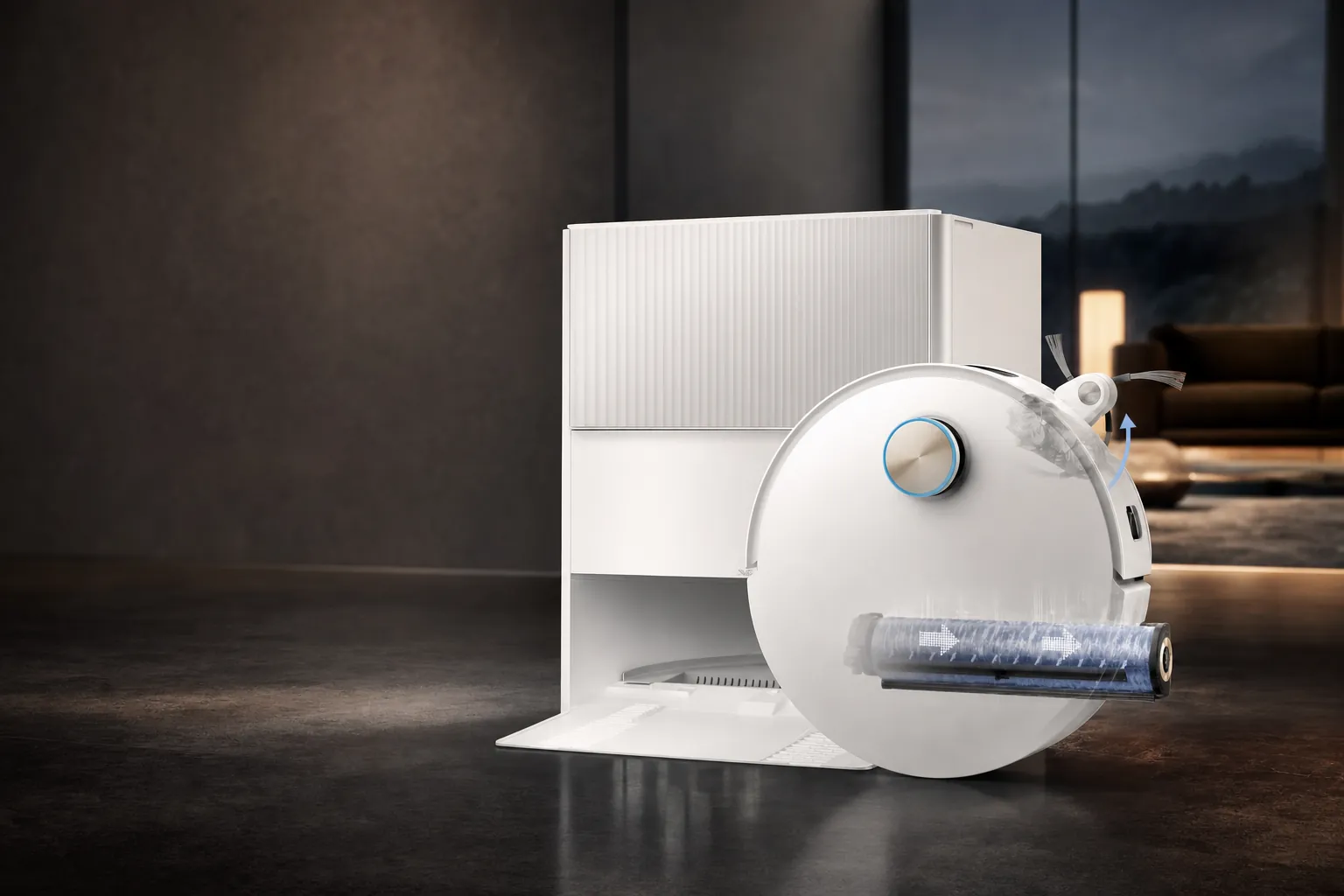
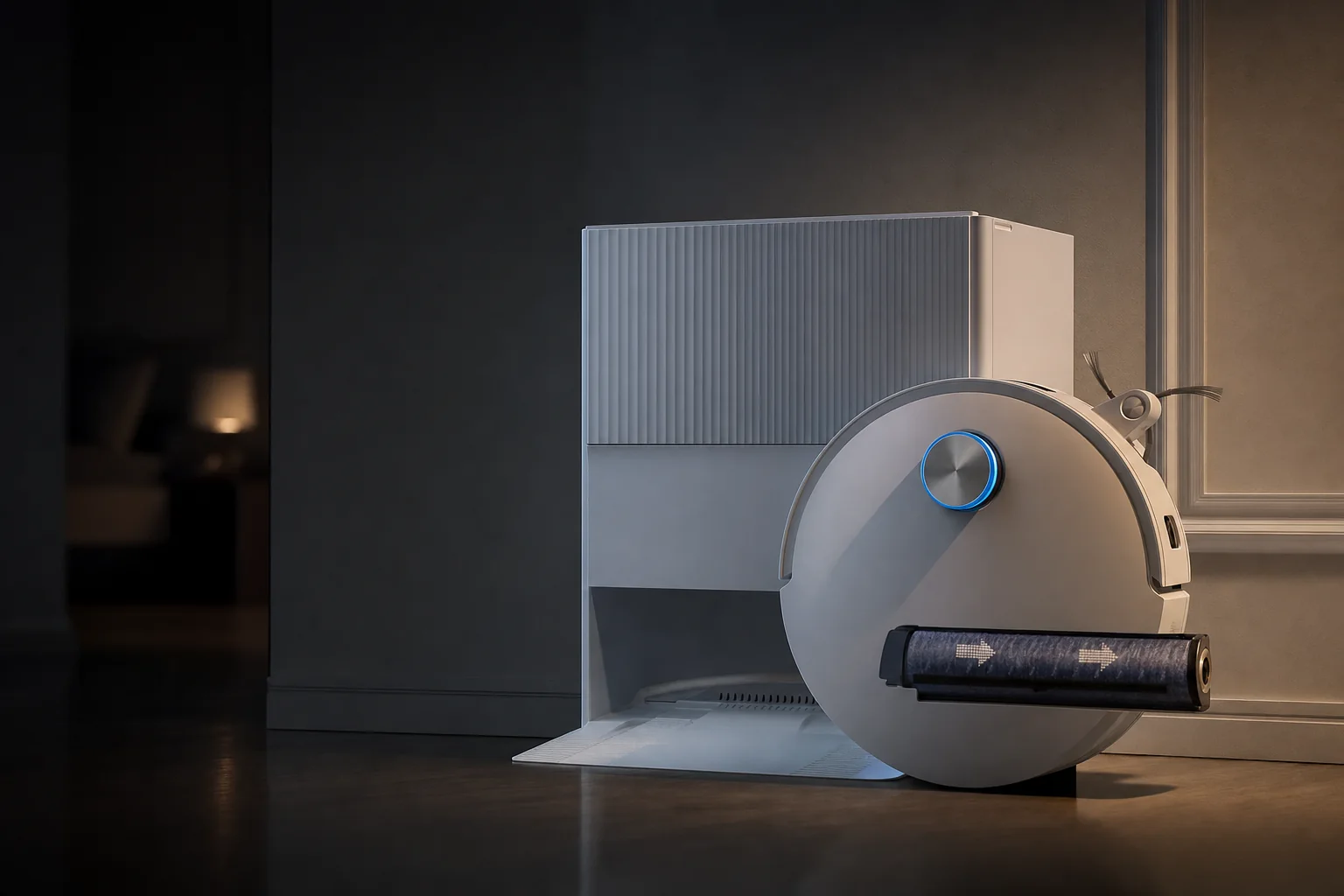
The Aqua10 Ultra Roller Complete has a serious answer to the usual robot-mop problem: a fresh-water roller that reaches towards the wall rather than stopping short of it.

We link to the exact model on Amazon UK. Prices change often, so check the live price before you buy. As an Amazon Associate we earn from qualifying purchases.
The short version: the Dreame Aqua10 Ultra Roller Complete looks most compelling for hard-floor-heavy UK homes where sticky kitchen spills, muddy paw prints and grime beside skirting boards matter more than deep carpet cleaning. Its continuously rinsed roller mop, extending edge hardware and comprehensive dock are unusually well specified. Independent tests also point to slower cleaning and weaker battery efficiency than competing models such as the Roborock Saros 10R, so it is not an automatic choice for a large, carpeted home.
This is a researched first look rather than a hands-on review. The focus here is the UK's Aqua10 Ultra Roller Complete, which is the same specification as the US-market Aqua10 Ultra Roller according to RTINGS. Dreame also sells an Aqua10 Ultra Track Complete in Europe, but it is a distinct machine with a heated track mop, different chassis and lower stated suction. The two should not be treated as simple trim levels.
Why the name matters: UK and European listings use "Aqua10 Ultra Roller Complete"; US coverage commonly drops "Complete". The hardware specification is the same. This article concentrates on the Roller model because it has far more independently reported cleaning, runtime and navigation evidence.
What makes the Dreame Aqua10 Ultra Roller Complete different?

See Dreame Aqua10 Ultra on Amazon UK
Check today's price & availability on Amazon UK
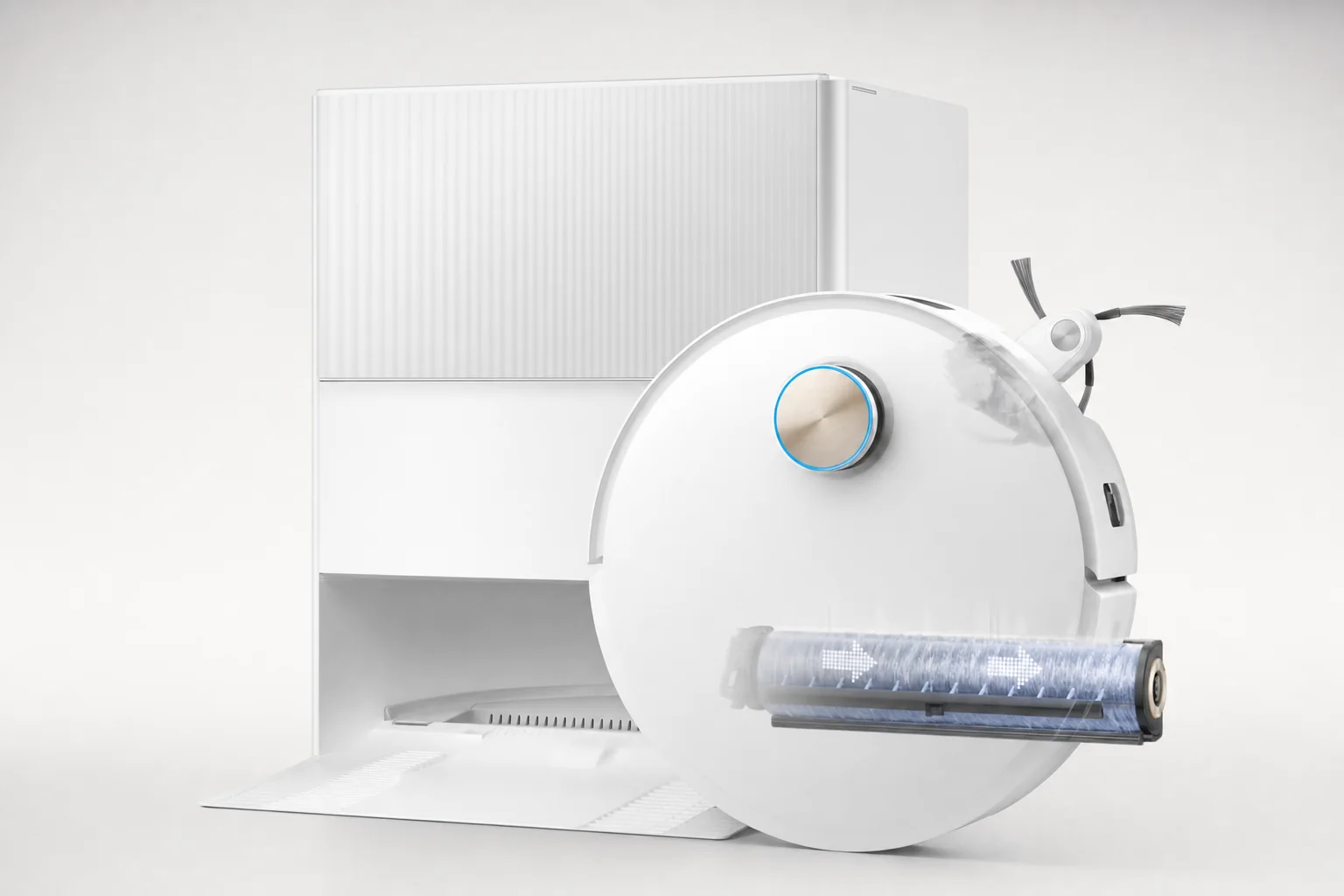
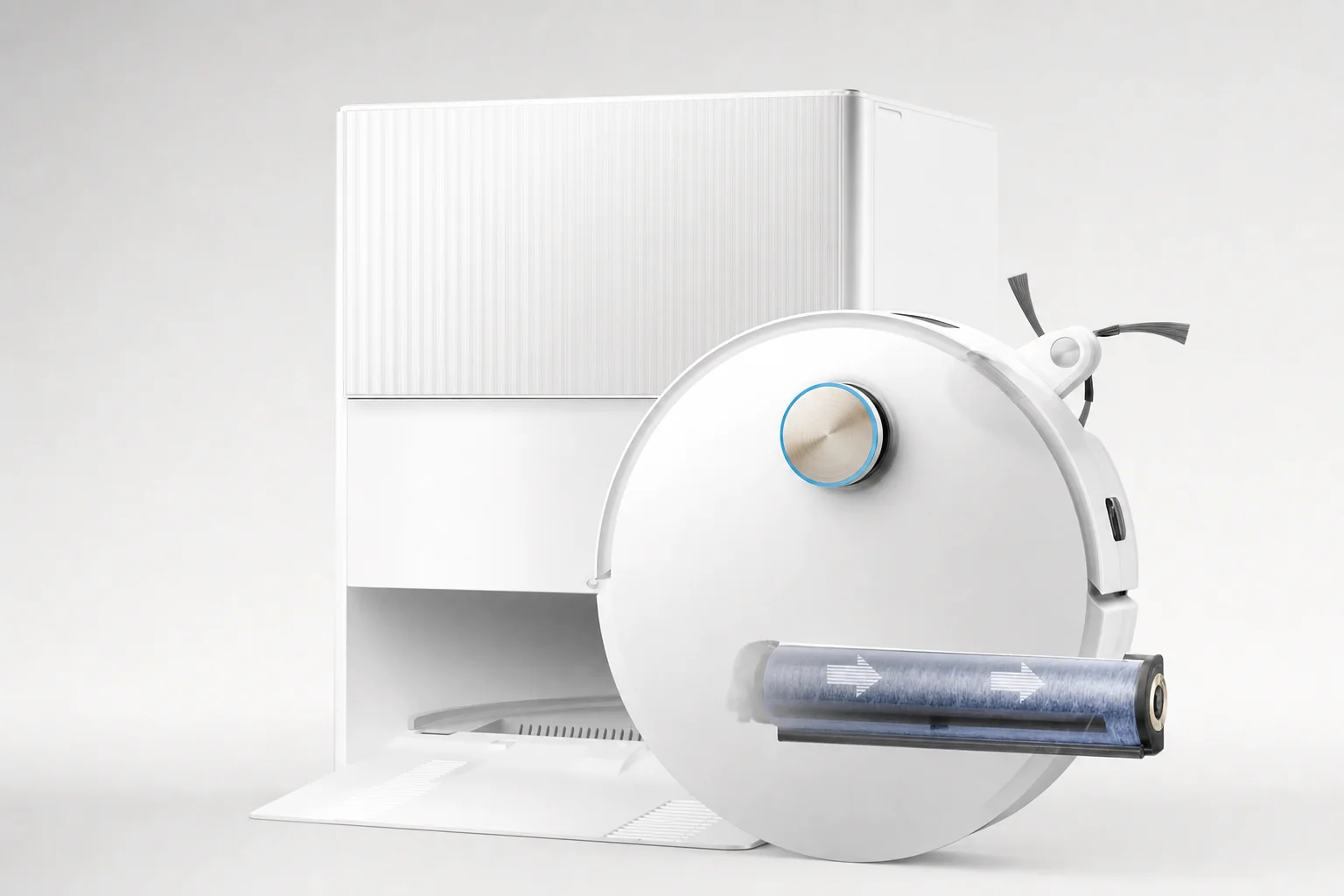
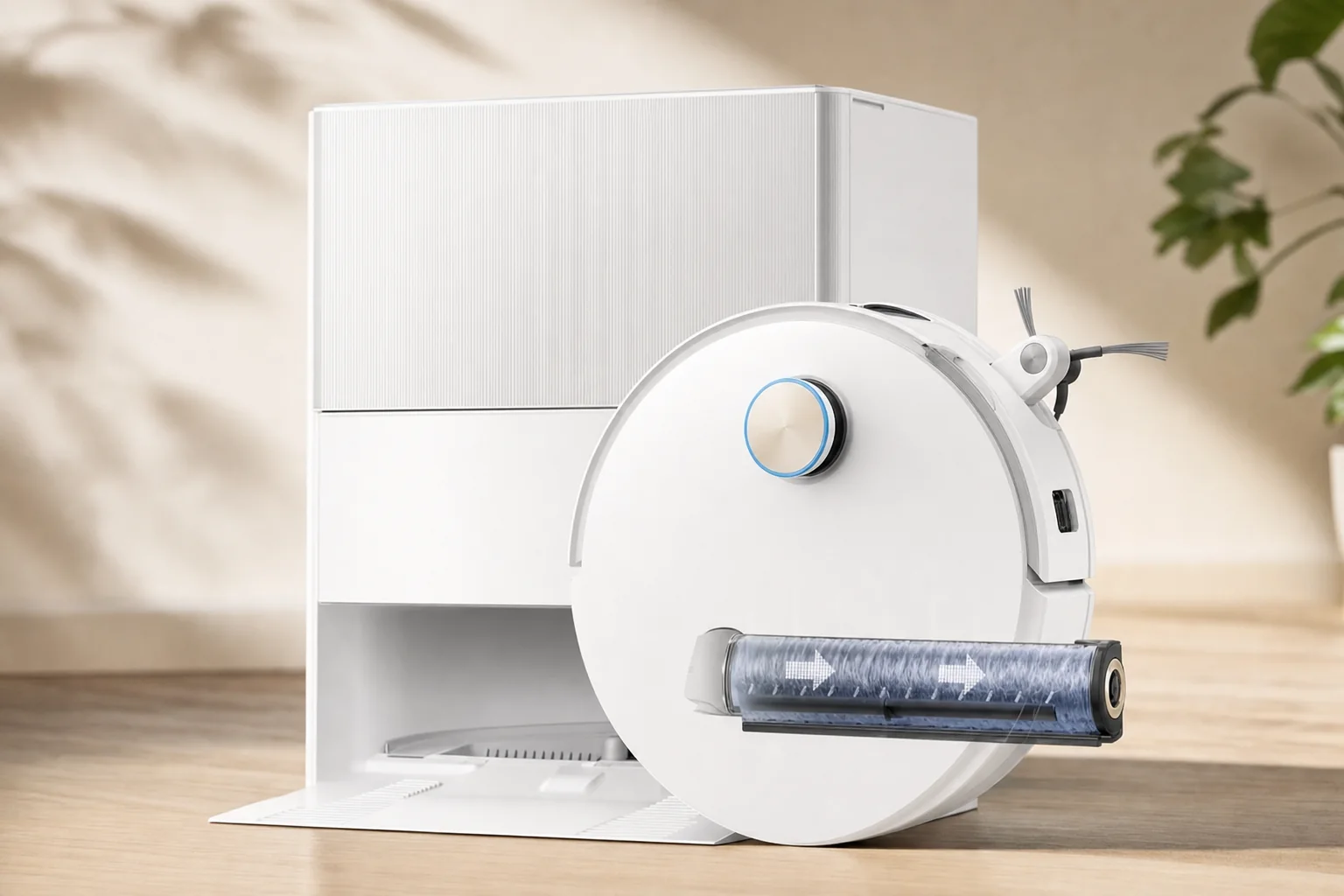
Most premium robot mops still use two spinning pads or a flat vibrating pad. They can scrub effectively, but the dirty cleaning surface remains on the floor until the robot decides to return to its dock. Dreame's AquaRoll approach is different: the roller is continuously rinsed with fresh water during cleaning, while wastewater is collected separately. The stated aim is to keep the wet cleaning surface cleaner as it moves through the house.
That idea is paired with a second roller, called FluffRoll, which is designed to lift the fibres on the main mop. The design is particularly relevant in a UK kitchen or hallway, where the robot may encounter dried splash marks, cereal, wet footprints and the occasional muddy patch rather than just fine dust.
The more eye-catching promise is edge cleaning. The Aqua10's side brush extends sideways, and so does the roller mop. Its off-centre position gives it a better chance of reaching alongside skirting boards than a centrally mounted pair of mop pads. Available reviewer evidence supports "better than average" wall-edge cleaning on hard floors, rather than an implausible claim of perfect cleaning in every corner.
Extending mop and side brush
The Roller's mop and side brush move laterally towards the wall, targeting the strip that fixed cleaning modules routinely miss.
AutoSeal carpet protection
The mop can lift automatically, while the AutoSeal guard physically shields the roller when the robot crosses carpet.
Retractable navigation tower
VersaLift lowers the robot to 97.5mm with the sensor retracted, useful beneath beds, sofas and low media units.
Camera-led obstacle avoidance
Two AI cameras, lateral 3D structured light and LED lighting are intended to identify clutter before the robot reaches it.
Can it really clean the skirting boards?
The answer is: more effectively than a typical fixed-mop robot, but not with the precision of a person using a narrow mop head. The side extension is meaningful because wall-edge dirt tends to collect in exactly the area that a round robot cannot cover with its body alone. The laterally extending mop is intended to address the same problem with wet cleaning rather than merely flicking dry debris around with a side brush.
For an eventual UK hands-on review, the useful test is not just a clean kitchen floor. It is the gap between the extended roller and painted skirting board; how the mechanism behaves around convex corners; dirt beside radiator feet; and whether the side brush pushes crumbs towards the wall or into the vacuum path. Dried mud, pet food, hair and a narrow strip of kitchen grease would be more revealing than a broad spill in the middle of the room.
The buying point is the roller, not the 30,000Pa number
Suction figures are useful only up to a point because robot-vacuum manufacturers do not publish them under one universal test method. The Aqua10's more tangible advantage is that it rinses its mop continuously and can extend that mop towards the wall. For hard-floor homes, that is likely to be more meaningful than an unusually large Pascal claim.
What independent tests said about cleaning, noise and battery
The Aqua10 Ultra Roller Complete has stronger independent support for mopping than for endurance. Vacuum Wars described its mopping performance as the highest score the publication had recorded at the time of testing.
Dry vacuuming is strongest on hard floors. RTINGS called hard-floor pickup exceptional, clearing most everyday debris with only small edge and corner residue. Carpet is the more cautious part of the story: RTINGS found that fine debris could remain on high-pile carpet, and rated pet-hair pickup as mediocre.
Noise: restrained at the robot, but dock cycles remain separate
Les Numériques measured the Roller at 51dB(A) in standard suction mode, the most useful controlled operating figure located in research. CHIP separately reported 9.2 sones in minimum mode and 17.6 sones in maximum mode, though sone and dB(A) measurements use different methods and are not directly interchangeable.
For a flat or open-plan room, Les Numériques' 51dB(A) standard-mode figure is the most useful controlled reference available. For an overnight schedule, the dock's emptying and washing routine is the more important practical concern, and there is no directly comparable independent dock-noise figure in the available research.
Battery life is the major caveat
Dreame does not publish a conventional runtime figure for the Roller, so real-world battery behaviour is best judged from independent testing. Vacuum Wars found coverage of 0.62m² per minute in its studio testing and 0.5m² per minute in home testing. It also reported around 1% battery consumption per minute, with 684 square feet covered in studio testing and 742 square feet in a home; its comparable average was around 1,100 square feet.
Notebookcheck's 50m² vacuum-and-mop cycle left roughly 45% battery remaining and took about four hours to recharge. Its conclusion was that homes with 70–80m² or more of relevant floor area would struggle to finish in one charge under comparable settings. TechRadar similarly saw the battery fall from full to around 40% after 30 minutes of intense vacuuming in early runs, improving to around 62% remaining after the robot had completed more cleaning cycles and appeared to optimise its behaviour.
Recharge-and-resume means this does not prevent the robot cleaning a larger home. It does mean that buyers wanting a fast, single-session whole-floor clean should treat the Aqua10's mopping strength and its endurance as a trade-off, rather than assuming the headline runtime settles the matter.
Navigation in a real UK home: clever, low and occasionally cautious
The Aqua10's VersaLift sensor system is a practical design choice. With its top navigation tower lowered, the robot is 97.5mm tall; raised, it reaches around 120mm. That can make the difference between a genuinely automated bedroom clean and a strip of dust left under furniture week after week.
Reviewers found route planning generally logical after initial mapping, with the robot adapting to moved furniture and open doors without demanding a complete remap.
The downside is pace. Vacuum Wars described home coverage of 0.5m² per minute, versus its 0.75m²-per-minute comparison average, and Expert Reviews also characterised the machine as slow. That cautious behaviour may be welcome around pets and clutter, but it makes scheduled cleaning more attractive than waiting for a quick last-minute kitchen reset.
Obstacle avoidance is well equipped on paper, using two AI cameras, 3D structured light and LED illumination. Reviewers broadly found it capable around shoes, bowls, toys and furniture. Thin wires, very low objects and awkward dark-on-dark items were less reliable. As with any camera-based robot, tidying charging leads and clearing low clutter remains the most reliable way to get consistent results.
Hard-floor households
Its strongest evidence is on sealed hard flooring, particularly where spills and wall-edge grime are common.
Pet owners with mixed messes
The fresh-water roller and object avoidance may suit homes dealing with paw marks, bowls and everyday pet clutter.
Homes with low furniture
The retractable navigation tower gives it a useful advantage beneath furniture with around 10cm clearance.
The self-wash dock should reduce daily work — but it needs room and cleaning
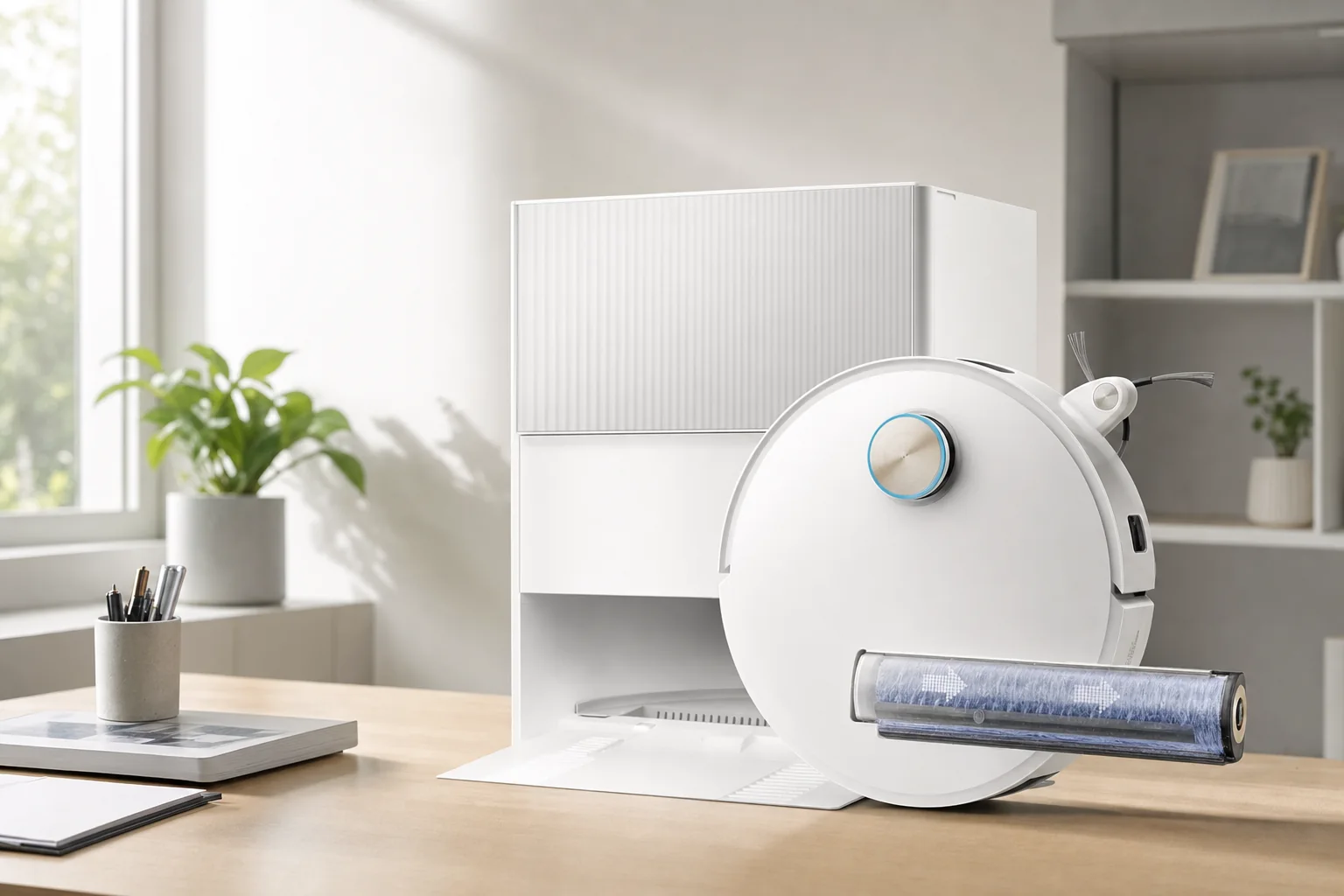
The Aqua10's station is not a modest charging plinth. It measures roughly 420 × 440 × 505mm and weighs about 11.1kg. It carries a 4-litre clean-water tank, a 3.5-litre dirty-water tank and a 3.2-litre dust bag, for which Dreame claims up to 100 days of use. It automatically empties the robot's 220ml onboard dust box, refills water, handles detergent and collects wastewater.
On returning to the dock, the Roller can be washed with water at up to 100°C and dried with hot air. Dreame's app guidance specifies around four hours for mop drying, plus around three hours for dust-bag drying.
This is the part of the system that most directly supports the Aqua10's central promise. A roller mop is only useful if it does not become a damp, smelly strip of fabric between cleans. The dock makes a credible attempt to solve that. It is not, though, maintenance-free. Dreame says the removable washboard and its underside need regular cleaning, which is an entirely reasonable task but one that should be part of ownership expectations.
There is also a decision-relevant reliability concern. Vacuum Wars removed the Aqua10 Ultra Roller from its Top 20 list after receiving reports from multiple Amazon customers of water leaking from the base station. It did not reproduce the issue in its own lab. That does not establish a universal fault, but prospective buyers should check the retailer's return policy, place the dock on an appropriate surface and inspect the station during the early ownership period.
Reasons to consider it
- Fresh-water roller mopping has very strong independent evidence on hard floors.
- Extending mop and side brush offer a credible improvement beside skirting boards.
- Retractable sensor helps the 97.5mm body clean beneath low furniture.
- Dock washing, drying, emptying and water handling reduce routine intervention.
- Obstacle avoidance was generally effective around ordinary household clutter.
Reasons to pause
- Independent tests found below-average area coverage per charge.
- It is deliberate rather than quick, especially in a cluttered home.
- High-pile carpet and embedded debris are not its strongest use case.
- The dock is large, heavy and still needs regular washboard cleaning.
- Reported dock leaks warrant caution despite not being reproduced in lab testing.
UK price and value: shop the deal, not the old list price
UK review coverage referenced an original price of £1,299 for the Aqua10 Ultra Roller Complete. By the research date, retailer pricing had moved sharply below that level.
Dreame Aqua10 Ultra Roller Complete
Boots listed the same model at £749 during research, against a former £1,099 price. Stock and promotions can change quickly.
Dreame Aqua10 Ultra Track Complete
Dreame's UK store showed a former £949 price. It uses the TrackSync warm-water track mop rather than AquaRoll.
At around £600, the Roller Complete becomes a much easier proposition than it was at £1,299. That price places it against serious competition, but its dock, roller system and retractable navigation sensor no longer demand an unusually large premium. At £749, it remains credible if the retailer offers the preferred warranty, delivery or return arrangements. At anything close to its original reference price, the decision needs more scrutiny because battery efficiency and carpet limitations are well documented.
The Track Complete deserves careful consideration rather than automatic dismissal. It has 25,000Pa stated suction, uses approximately 45°C water during TrackSync mopping and has a triple-wheel AgiLift chassis with up to 6cm double-step clearance. However, independent measurements for its runtime, noise and cleaning performance were not available in the research used here. The Roller's higher 30,000Pa claim, 8cm double-step claim and much better documented test record make it the less speculative option.
Setup, controls and practical ownership
Control is through the Dreamehome app, which supports mapping, room selection, zones, routines, carpet controls and no-go areas for the Roller. Built-in "OK Dreame" voice control is available, alongside third-party voice control.
The breadth of adjustment is useful, but several reviewers found the app menu structure potentially overwhelming. That is a familiar trade-off with high-end robot vacuums: there are settings for water flow, mop pressure, carpet treatment, cleaning routes and obstacle behaviour, but the most consistent results usually come from beginning with a sensible automatic mode and adjusting only after observing how the robot behaves in particular rooms.
For a typical UK home, the practical setup priorities are straightforward:
- Give the large dock enough side and overhead access to remove and refill its tanks comfortably.
- Place it on a waterproof, level hard floor rather than an absorbent rug or delicate timber surface.
- Create no-go zones around trailing cables, pet feeding stations if desired, and areas where water should not travel.
- Check transition strips and door thresholds before relying on the stated 4.2cm single-step capability.
- Schedule full cleans when the slower route planning and possible recharge cycle will not be inconvenient.
The robot's claimed 8cm double-step ability is impressive on paper, but it should not be confused with an ability to climb ordinary stairs. In real homes, threshold shape, the available landing space and whether the surface is slippery will influence success. A robot vacuum should always be prevented from reaching open stair edges unless its mapped boundary is reliable.
Who should choose the Dreame Aqua10 Ultra Roller Complete?
The strongest match is a medium-sized, mostly hard-floor home with regular wet messes and enough room for a sizeable dock. Think kitchen-diner, hall, utility room and sealed wood or tile floors where crumbs collect at the wall and a conventional mop feels like another chore. The roller system's independent mopping results are the clearest reason to shortlist it.
It also makes sense for someone whose favourite room-cleaning problem is under-furniture dust. The retractable sensor is not merely a styling trick: a 97.5mm profile can reach into areas that taller robot vacuums leave untouched.
It is a less obvious fit for a large property covered mainly in thick carpet. Reviewers found the Aqua10 competent rather than class-leading in that setting, and the available battery evidence suggests a big mixed-floor clean may involve a recharge-and-resume pause. Buyers who value rapid coverage and deep carpet pickup above wet mopping should compare it closely with carpet-led alternatives before committing.
Dreame Aqua10 Ultra Roller Complete FAQ
First-look verdict
The Dreame Aqua10 Ultra Roller Complete is one of the more convincing attempts to make robot mopping genuinely useful rather than merely convenient. The evidence supports excellent hard-floor cleaning, strong mopping and a meaningful improvement at the skirting-board edge. Its large dock and slower, less battery-efficient operation are real compromises, while reports of dock leaks deserve attention. At the reduced UK prices seen on 28 August 2026, it looks like a strong specialist choice for hard-floor homes rather than an all-rounder suited to every floorplan.
Sources and methodology
This researched first look uses manufacturer specifications and independently attributed testing available by 28 August 2026. Prices were retailer snapshots on that date and may have changed.
- Dreame Aqua10 Ultra Roller product specifications
- RTINGS: Dreame Aqua10 Ultra Roller review and regional naming clarification
- Vacuum Wars: cleaning, coverage, battery and reported dock-leak context
- Notebookcheck: 50m² vacuum-and-mop runtime and charging observations
- Expert Reviews: UK pricing and battery/efficiency observations
- Dreame UK store listings
Similar reads
- Cordless stick vacuums for UK homes: seven worth buying — the other half of this category, from GBP 178 to GBP 799
- Dreame Aqua10 UltraView on Amazon
Sources and evidence (18)
- rtings.com (other)
- dreametech.com (other)
- dreametech.com (other)
- vacuumwars.com (other)
- dk.dreametech.com (other)
- presseportal.de (other)
- lavelab.com (other)
- vacuumchef.com (other)
- notebookcheck.net (other)
- techradar.com (other)
- homesandgardens.com (other)
- argos.co.uk (retailer)
- dreamestore.co.uk (other)
- de.dreametech.com (other)
- expertreviews.co.uk (other)
- us.narwal.com (other)
- ecovacs.com (other)
- uk.roborock.com (other)