
Roborock Saros 20 vs Dreame X60 Ultra: Has Robot Vacuum Tech Gone Too Far?
Two hyper-intelligent, self-washing, threshold-climbing floor robots go head-to-head. The clever bits are impressive. The useful bits matter more.
We link to the exact model on Amazon UK. Prices change often, so check the live price before you buy. As an Amazon Associate we earn from qualifying purchases.
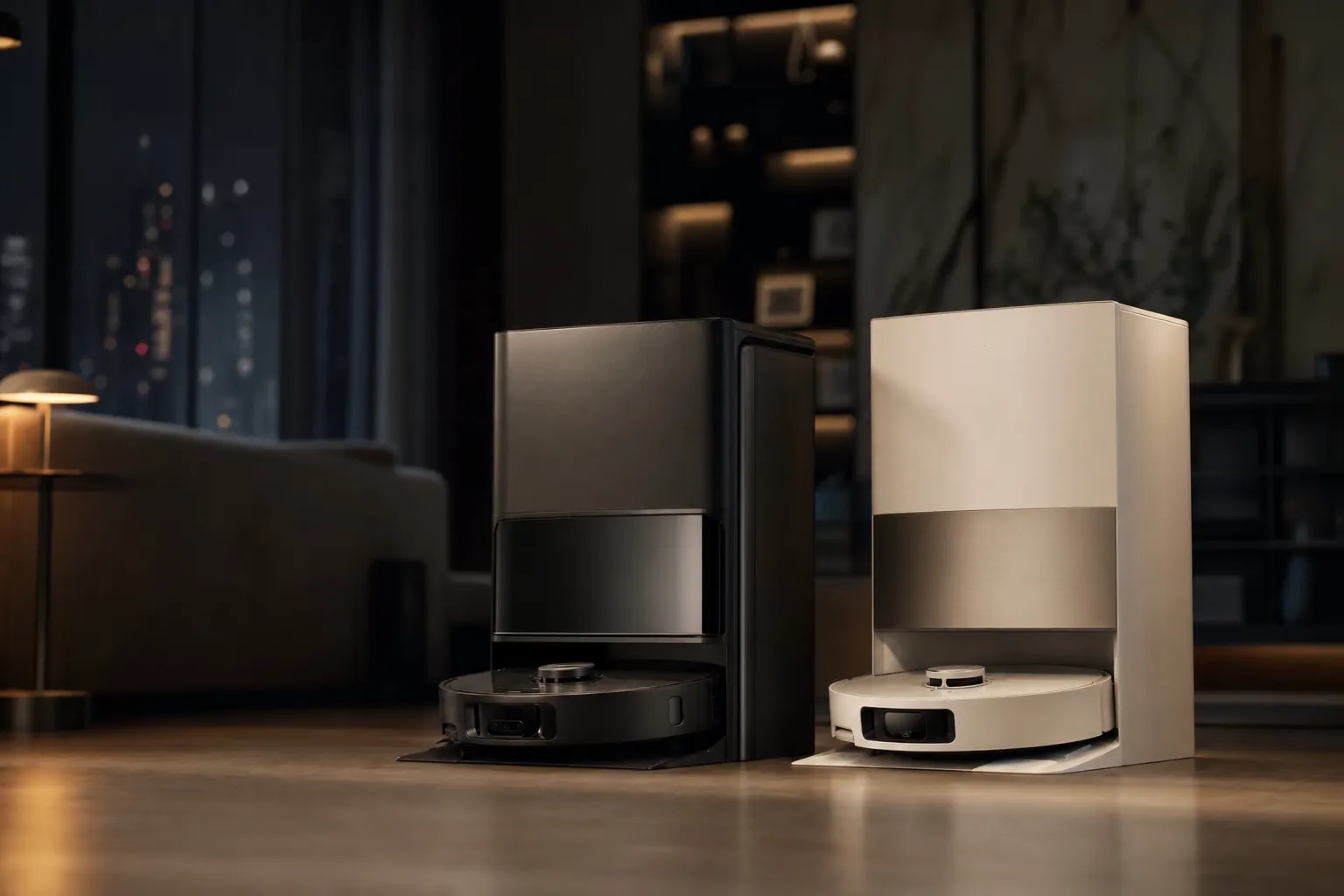
Roborock Saros 20 and Dreame X60 Ultra represent the current flagship idea of a robot vacuum: low enough for furniture, strong enough for carpets and accompanied by docks that look more like small appliances.
There was a time when buying a robot vacuum meant accepting a tiny circular thing that bounced off chair legs, got trapped under the sofa and occasionally ate a charging cable for breakfast. The Roborock Saros 20 and Dreame X60 Ultra had very different ambitions. These were flagship cleaning systems with cameras, structured-light sensors, extendable brushes, retractable navigation towers, heated wash stations and enough AI language to make your Wi-Fi router feel underqualified.
The short answer to the "has tech gone too far?" question is: sometimes, yes. You do not need a robot that can identify hundreds of object types if it still gets confused by a shoelace. You do not need 36,000Pa on the box if the brush design is what actually decides whether dog hair leaves the carpet. And you definitely do not need a 100°C cleaning figure presented as if your kitchen floor is being steam-cleaned like a hospital theatre.
But some of this extravagance was properly useful. Both machines tackled raised thresholds that stopped older robots dead. Both could protect carpets from damp mop pads. Both removed a remarkable amount of routine work from vacuuming and mopping. If your home has pets, children, mixed flooring or awkward transition strips, these are not just expensive toys. They can genuinely change how often you touch a mop bucket.
At a glance: Saros 20 vs X60 Ultra
| Specification | Roborock Saros 20 | Dreame X60 Ultra |
|---|---|---|
| Maximum suction | 36,000Pa HyperForce | 35,000Pa Vormax |
| Battery capacity | 6,400mAh | 6,400mAh |
| Robot dimensions | 353 × 350 × 79.8mm | 350 × 350 × 79.5mm with sensor retracted |
| Robot weight | 5.05kg | 4.7kg |
| Robot dustbin | Approximately 260ml | 235ml |
| Dock dust bag | Approximately 2.7L | 3.2L |
| Clean / dirty water tanks | Approximately 4L / 3.5L | 4.2L / 3.0L |
| Mop washing | Up to 100°C | Up to 100°C |
| Mop pressure | Up to 13N | Up to 15N |
| Maximum threshold claim | 8.8cm double-layer threshold | 8.8cm double-layer threshold |
| US listed price | $1,599.99 MSRP | $1,499.99 |
That 1,000Pa suction difference is the least interesting number here. It is barely a difference at all in practical shopping terms. Brush contact, airflow, software decisions, carpet detection and how willingly the robot makes a second pass all matter far more than the headline figure. Put bluntly: neither machine lacked power. Their personalities were the deciding factor.
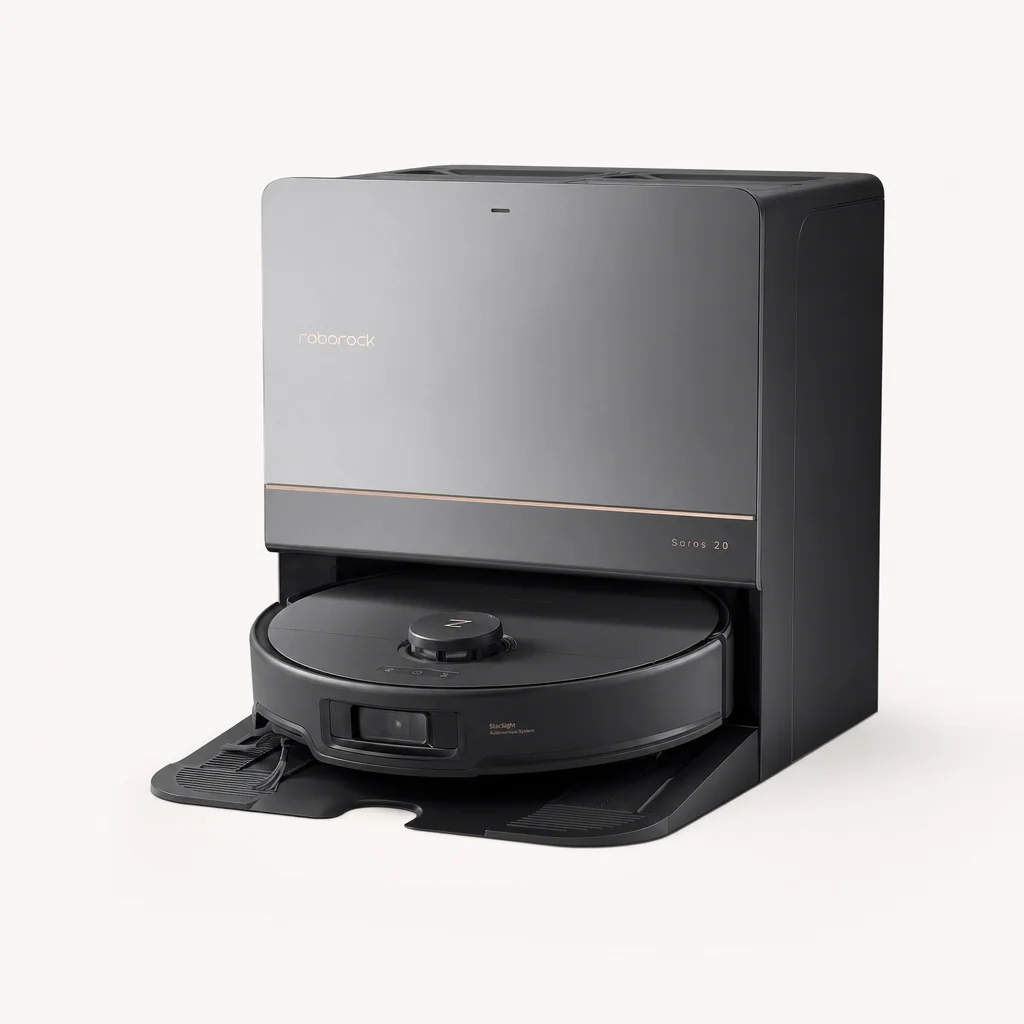
The Saros 20's low StarSight body and the X60 Ultra's retractable VersaLift sensor both aim to reach under furniture without surrendering obstacle awareness.
Pricing, availability and the awkward flagship premium
These were not casual purchases. In the US, the Roborock Saros 20 carried a $1,599.99 MSRP, while Dreame listed the X60 Ultra at $1,499.99. In the UK, the Saros 20 had a £1,309 list price, although Roborock's own store displayed it at £999 during a promotion. That is a very meaningful gap, and it turns the Saros from "absurdly expensive cleaning robot" into "still expensive, but more defensible".
The X60 family needs a little care when shopping because the name covered several different machines. The standard X60 Ultra was the direct rival here. The US-market X60 Max Ultra Complete added chassis lifting, dual-solution dosing and multi-spectral turbidity dirt detection, and carried a $1,699.99 MSRP. It was not simply another name for the X60 Ultra. Likewise, newer X60 Pro models were separate second-generation products rather than quiet revisions of the standard unit.
Roborock Saros 20
UK list price: £1,309. Roborock UK displayed a £999 promotional price.
Dreame X60 Ultra
The closest price rival, with the same 6,400mAh battery and very similar core hardware.
Dreame X60 Max Ultra Complete
The more elaborate US variant, with chassis lifting and dual-solution dosing.
The useful way to think about value
Do not compare these only with each other. Compare them with the time and annoyance they removed. If a robot can reliably vacuum daily, keep pet hair under control and mop hard floors without you babysitting it, the premium starts to make sense. If you mostly have one small flat, no pets and no awkward thresholds, a £1,000-plus dock may be a very elaborate way to avoid ten minutes with a cordless vacuum.
Vacuuming performance: huge numbers, more nuanced results
Roborock made the bigger suction claim: 36,000Pa versus Dreame's 35,000Pa. On paper, that makes the Saros 20 the winner. In real homes, it is a rounding error wearing a superhero cape. Both were dramatically beyond the suction ratings common in previous generations, and both combined that power with a dual-brush approach designed to keep long hair moving rather than wrapping itself into a furry belt around the roller.
The Saros 20 had the clearer independent cleaning evidence. In a small household debris test, it picked up 100% of Cheerios from carpet and 90% from hard floor. It managed 100% of kitty litter from both carpet and hard floor. Pet hair was less immaculate: 70% from carpet and 90% from hard floor. That is still solid, but it is the useful corrective to any claim that enormous Pa ratings had made carpets irrelevant. Hair in carpet remains awkward. Physics is stubborn like that.
Another set of Saros 20 measurements recorded 454ft/min airflow, 0.25kPa pressure and 100% carpet coffee-ground pickup. A separate test programme rated its pet performance at 4.55 out of 5. The Saros was particularly persuasive for homes with shedding pets, big crumbs and the sort of hallway detritus that seems to regenerate overnight.
The Dreame X60 Ultra's 35,000Pa rating, HyperStream Detangling DuoBrush 2.0 and extendable side brush made it every bit a credible flagship vacuum. Its issue was not a lack of promising hardware. It was simply that its independently documented pickup figures did not line up neatly against Roborock's published debris tests. I would not call it weaker based on a 1,000Pa deficit; I would call the Saros 20 the safer pick for buyers who want hard numbers supporting their cleaning decision.
Roborock Saros 20 vacuum strengths
- Excellent results with litter, crumbs and coffee grounds.
- DuoDivide main brush and FlexiArm side brush target hair and edge debris.
- Strong 4.55/5 pet-performance rating.
- Automatic mop removal means carpets can stay genuinely dry.
Roborock Saros 20 vacuum caveats
- One carpet pet-hair test returned 70%, not a clean sweep.
- The robot dustbin was smaller than the category average.
- More suction did not make it the most efficient navigator.
- Maximum-power operation was properly audible.
Mopping: where the specs get flashy and the floor tells the truth
This is the category where both brands started throwing the kitchen sink at the problem. Quite literally, in some cases. The Saros 20 used two rotating mop pads, could detach them automatically and claimed up to 13N of pressure for stubborn marks. Its RockDock washed pads at up to 100°C, dried them with air up to 55°C and could rewash or remop based on dirt detection.
The X60 Ultra raised the paper specification a little higher: dual Omni-Scrub rotating thermal mop pads at up to 230rpm, up to 15N pressure, an extendable mop and 40°C water during floor mopping. Its dock also used up to 100°C water for mop self-cleaning, plus a self-cleaning AceClean DryBoard and 20 hot-water spray nozzles.
Now for the important bit: 100°C dock washing was not the same as putting 100°C water on your laminate. It described the station cleaning the mop pads. The X60 Ultra's 40°C figure was the floor-mopping temperature, and that was the more relevant claim when discussing the actual clean. Still, neither machine should be treated as a replacement for deep cleaning a kitchen disaster zone that has been ageing gracefully for three days.
Dual rotating pads are now table stakes at this level, but the more important practical questions are water delivery, edge reach and whether the machine keeps carpets dry.
Roborock's mopping results were mixed enough to matter. The dock automation was excellent, and the Saros 20 earned praise for edge reach and corner cleaning. But real-world testing also found streaky or patchy passes, missed areas and relatively restrained water use. In one report, the pads were not always saturated enough. Another observed a visible gap between the paths of the two spinning pads. Those are small things until you have dark tiled flooring and sunlight streaming through the patio doors. Then you will notice them. Every time.
The X60 Ultra had a stronger technical argument for mopping, particularly if you care about fresh stains and regular kitchen-floor maintenance. Hot-water floor mopping, 15N pressure and 230rpm pads were all sensible ingredients. The caveat is that stronger technical claims did not automatically establish a clear real-world lead. Cleaning floors well is less glamorous than manufacturing a very impressive diagram of cleaning floors well.
Carpet protection matters more than a temperature claim
The Saros 20's automatic mop detachment was one of the genuinely useful premium features. It avoided the compromise of lifting damp pads and hoping a thick carpet stayed dry.
Dreame's warmer floor mop is meaningful
The X60 Ultra's 40°C water during mopping was a more directly useful cleaning claim than dock-only heat. It was aimed at loosening everyday grime rather than simply freshening pads.
Edges are where expensive robots earn their keep
Roborock's FlexiArm edge system and Dreame's extendable mop and side brush were designed for skirting boards and furniture edges, where circular robots traditionally leave a dusty apology.
Navigation and obstacle avoidance: impressive, not infallible
Robot-vacuum marketing likes to talk about "recognising" objects, as though your cleaner has spent a semester studying anthropology. The Saros 20 claimed recognition of more than 300 obstacle types through its StarSight Autonomous System 2.0, combining vision, 3D sensing and lateral obstacle avoidance. The X60 Ultra claimed more than 280 object types using a retractable VersaLift DToF sensor, two AI cameras, lateral 3D structured light and a proactive light for dark corners.
Dreame had the more elaborate-looking vision story. Two cameras, structured light and a built-in light gave it a serious advantage on paper, particularly in cluttered rooms and poorly lit spaces. Its retractable navigation assembly was also clever. Lower the sensor and the X60 could get below low furniture rather than treating it as an impenetrable no-go zone. It was shown passing beneath an approximately 80mm barrier after lowering that sensor.
Roborock had the stronger collection of real-world observations. It generally avoided furniture and cable nests very well, and one review described obstacle detection as almost perfect. But there was a shoelace failure, and another test found it missed a cable nest during mopping. That is not an indictment of the Saros; it is an overdue reminder that "AI obstacle avoidance" does not mean you can abandon a room like a teenager leaving for university.
The Saros 20 earned 3.47 out of 5 for obstacle avoidance in one comparative test system, slightly above that category's 3.29 average. Its navigation-efficiency score was less flattering at 2.88 out of 5 against a 3.05 average. In other words, it was clever at avoiding disaster, but not always the fastest or most ruthlessly efficient cleaner while doing so.
The grown-up expectation: both machines can handle ordinary household clutter far better than older robots, but cables, shoelaces, socks and small pet toys still deserve a quick pre-clean sweep. The point is fewer rescues, not zero responsibility.
Thresholds, furniture clearance and the bits that change daily life
This is where the Saros 20 was particularly compelling. Its AdaptiLift Chassis 3.0 could tackle up to an 8.8cm double-layer threshold under specified conditions, while its body stayed around 79.8mm tall. That combination meant it could move through homes with raised transition strips, awkward bathroom lips and doors where a standard robot would stop, beep and silently accuse you of poor flooring choices.
The X60 Ultra matched the 8.8cm double-layer threshold claim and could tackle a 4.5cm single step. It also measured 79.5mm high with its sensor retracted, making it essentially tied with Roborock for getting under furniture. For homes full of low sofas, TV units and beds that collect dust like they are being paid for it, both were a major step beyond robots with a permanently raised LiDAR turret.
Threshold climbing is not a party trick in older homes. It can be the difference between one whole-home schedule and manually carrying a robot between rooms.
There was, however, a small philosophical difference. Roborock's advantage was the more established real-world evidence for threshold handling and dynamic chassis behaviour. Dreame's advantage was its sensor arrangement and low-clearance adaptability. If your house has ugly little floor transitions everywhere, I would prioritise Roborock. If the bigger battle is navigating beneath low furniture and around a cluttered living room, Dreame made a very persuasive case.
Dock maintenance: hands-off cleaning, not no-maintenance cleaning
Both docks were impressively capable. The Saros 20 RockDock automatically emptied dust, washed mop pads at up to 100°C, cleaned its tray at up to 100°C, dried pads at up to 55°C, dosed detergent, refilled the robot with warm water and could dry the dust bag with fresh air. Roborock claimed up to 65 days between bag changes.
Dreame's X60 Ultra dock auto-emptied into a 3.2L bag and claimed up to 100 days of dust disposal. It used a 4.2L clean-water tank and 3.0L dirty-water tank, automatically refilled the robot, added cleaning solution, washed pads at up to 100°C and dried them with hot air. The AceClean DryBoard washboard was designed to keep the dock's own cleaning area from becoming a grubby science experiment. That last part is more important than it sounds.
Neither dock made maintenance disappear. Dirty water still had to be emptied. Clean water still had to be topped up. Bags, filters, brushes and pads still had finite lives. The station tray still deserved periodic attention. These machines moved you from frequent, fiddly labour to occasional appliance housekeeping. That is a very good trade, but it is not magic.
| Dock and maintenance detail | Roborock Saros 20 | Dreame X60 Ultra |
|---|---|---|
| Dock dimensions | 381 × 475 × 488mm | 390 × 423 × 499mm |
| Dock weight | 10.54kg | 10.6kg |
| Dust bag | Approximately 2.7L | 3.2L |
| Claimed bag interval | Up to 65 days | Up to 100 days |
| Clean-water tank | Approximately 4L | 4.2L |
| Dirty-water tank | Approximately 3.5L | 3.0L |
| Mop-pad cleaning | Up to 100°C | Up to 100°C |
| Detergent dosing | Automatic | Automatic |
The Saros dock was slightly deeper, while the X60 dock was slightly taller. Neither was discreet. Treat them as a compact laundry-basket-sized appliance that needs a proper permanent home, clearance around it and access to mains power. Do not buy either one imagining it will tuck invisibly behind a plant.
There was one useful energy number for the Saros 20: a defined 50m² daily-cleaning scenario, including station cleaning, drying and charging, measured at approximately 11kWh per month. That is not frightening, but it is another reminder that all this automation has a background cost. The X60's dock was rated at 640W during hot-water cleaning, which described peak dock demand rather than constant consumption.
Noise, charging and living with them day to day
Flagship robots are quieter than old-school upright vacuums, but they are not silent. The Saros 20 measured around 60dB in standard vacuuming, climbed to roughly 70dB at maximum suction and reached about 70dB during dust emptying. Mop washing was around 60dB, while drying registered approximately 38dB at one metre. The ordinary cleaning sound was easy enough to live with; the self-emptying phase was the bit that could make a sleeping cat reconsider the entire arrangement.
Dreame's X60 Ultra was reported at 55dB in one test, although the precise test mode and distance were not matched to Roborock's measurements. It would be unfair to declare it categorically quieter from that single number. What is fair to say is that both machines were suited to daytime or work-from-home schedules, while dust emptying was best timed for when you were not in a meeting pretending your house is perfectly serene.
Roborock claimed up to 200 minutes of runtime from its 6,400mAh battery and charged in approximately 2.5 hours. Dreame also used a 6,400mAh battery and advertised an 80-minute fast charge. The X60's settings also allowed charge cutoff between 80% and 100%, a thoughtful feature for owners who prefer to be a little kinder to a battery that will spend much of its life on a dock.
Real-world runtime was more complicated than either headline. Carpet boost, repeated passes, mop washing, threshold climbing, navigation detours and return journeys all consumed time and charge. The Saros 20's battery score was 1.84 out of 5 in one comparative system, below the 2.17 average, despite the healthy headline runtime. Again: specs are not lies, but they are not the whole story either.
The loudest moment with either machine is usually the dock's auto-empty cycle, not the robot moving around the room.
App quality, smart-home controls and feature overload
Roborock's app remained the safer recommendation for buyers who like maps, granular controls and the ability to tune nearly every cleaning decision. It supported multi-level maps, room and zone cleaning, no-go zones, carpet settings, mop options and a long menu of more specialist behaviours. Matter support was confirmed, alongside Alexa, Siri and Google Home compatibility. There was also the built-in "Hello Rocky" voice assistant, including local operation without Wi-Fi.
That is all excellent, right up until it becomes homework. Roborock's feature list could feel like a flight simulator menu. Some advanced modes needed to be manually enabled, and there was a genuine risk that an owner would spend the first evening configuring their floor cleaner as though commissioning a smart home for a minor royal.
Dreamehome offered mapping, room and zone cleaning, voice control, pet detection, pet activity features, extra-cleaning zones and customisable cleaning behaviour. It had all the core ingredients most people actually needed. The X60 also leaned more heavily into camera-based sensing and dirt detection as part of its automated story.
Room-by-room schedules are a genuine quality-of-life feature
Being able to vacuum bedrooms but mop the kitchen, or send the robot to the hallway after the dog has returned from a wet walk, is much more useful than a novelty pet-camera mode.
No-go zones prevent expensive silliness
Virtual boundaries are especially valuable around feeding stations, cable-heavy offices, floor-length curtains and the one rug that neither robot quite understands.
Automation is only clever when it is predictable
The best setting is usually not the most aggressive one. It is the one that produces a consistently clean floor without dragging every session into a long, over-detailed ritual.
What is genuinely useful, and what is spec-sheet padding?
Let us separate the proper innovations from the things that look lovely in a launch presentation. Reliable threshold climbing was useful. Low-clearance navigation was useful. Mop removal or a genuinely effective carpet strategy was useful. Anti-tangle brushes were useful. A dock that washed, dried and emptied itself properly was useful. These were the things that made a robot work in a normal home without constant interventions.
The 35,000Pa and 36,000Pa figures were impressive, but the difference between them was not important. The 280-plus and 300-plus object-recognition claims were interesting, but less valuable than whether the robot avoided a black charging cable in low light. Pet cameras and video calls were pleasant extras, although most people would get more daily value from a dependable "clean the kitchen after dinner" routine.
And 100°C dock washing? Useful, within reason. It should help with mop hygiene and reduce the grotty smell that older self-cleaning stations could develop. But it did not make the robot a steam mop, and it did not remove the need to clean the station tray occasionally. Everything becomes less glamorous when it meets dirty water. That includes artificial intelligence.
Roborock Saros 20 vs Dreame X60 Ultra: who should buy which?
Neither of these machines was the universal winner because they approached the same problem from different directions. The Saros 20 was the better all-round practical cleaner for difficult layouts, pet hair, carpet care and people who want a mature app with lots of control. The X60 Ultra was the more appealing choice if you value advanced camera sensing, low-furniture access, hot-water floor mopping and a larger dust bag.
The right choice depends less on the suction headline and more on your home: thresholds, carpet coverage, pets, floor clutter and how much dock maintenance you are prepared to tolerate.
Roborock Saros 20

See Roborock Saros 20 on Amazon UK
Check today's price & availability on Amazon UK
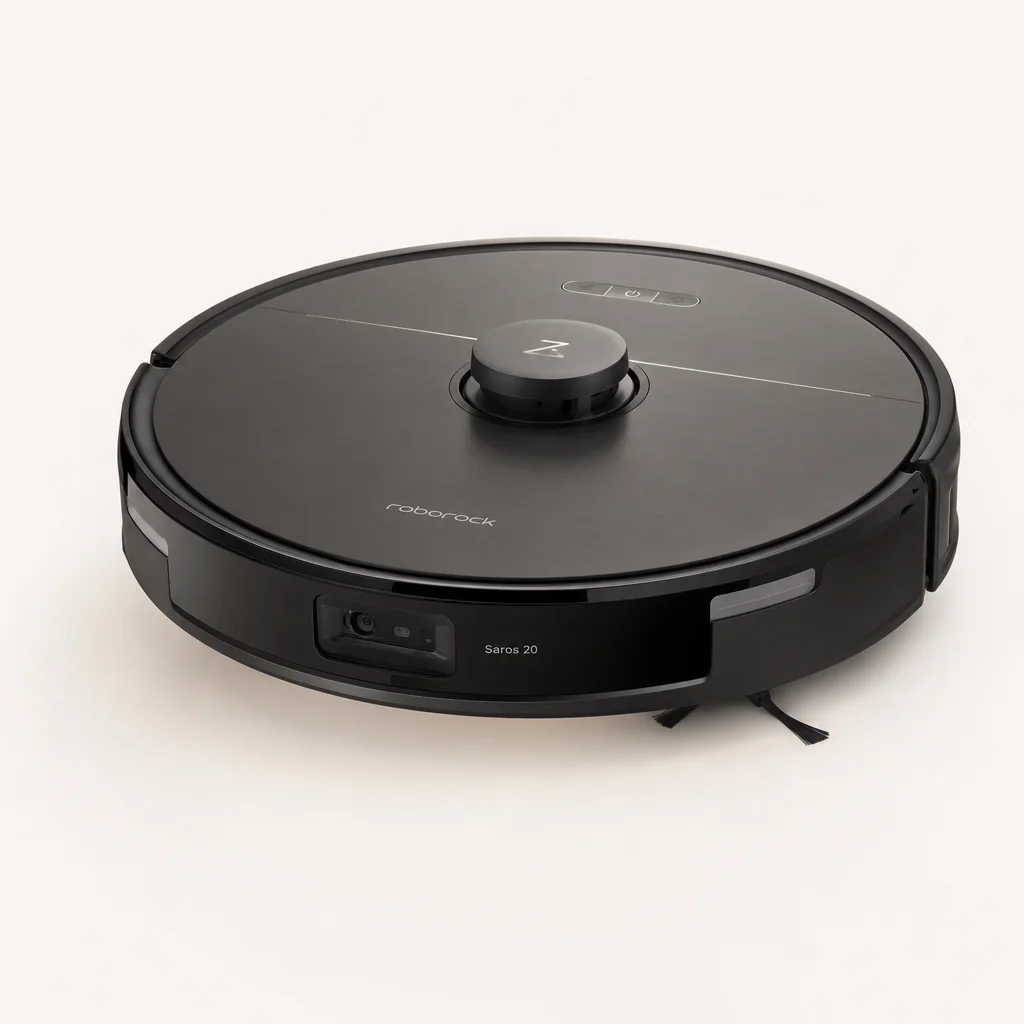
Choose it for raised thresholds, carpet-heavy rooms, pets, edge cleaning and a well-established control experience. Its AdaptiLift chassis was the headline feature with the clearest everyday payoff.
Dreame X60 Ultra
See Dreame X60 Ultra on Amazon UK
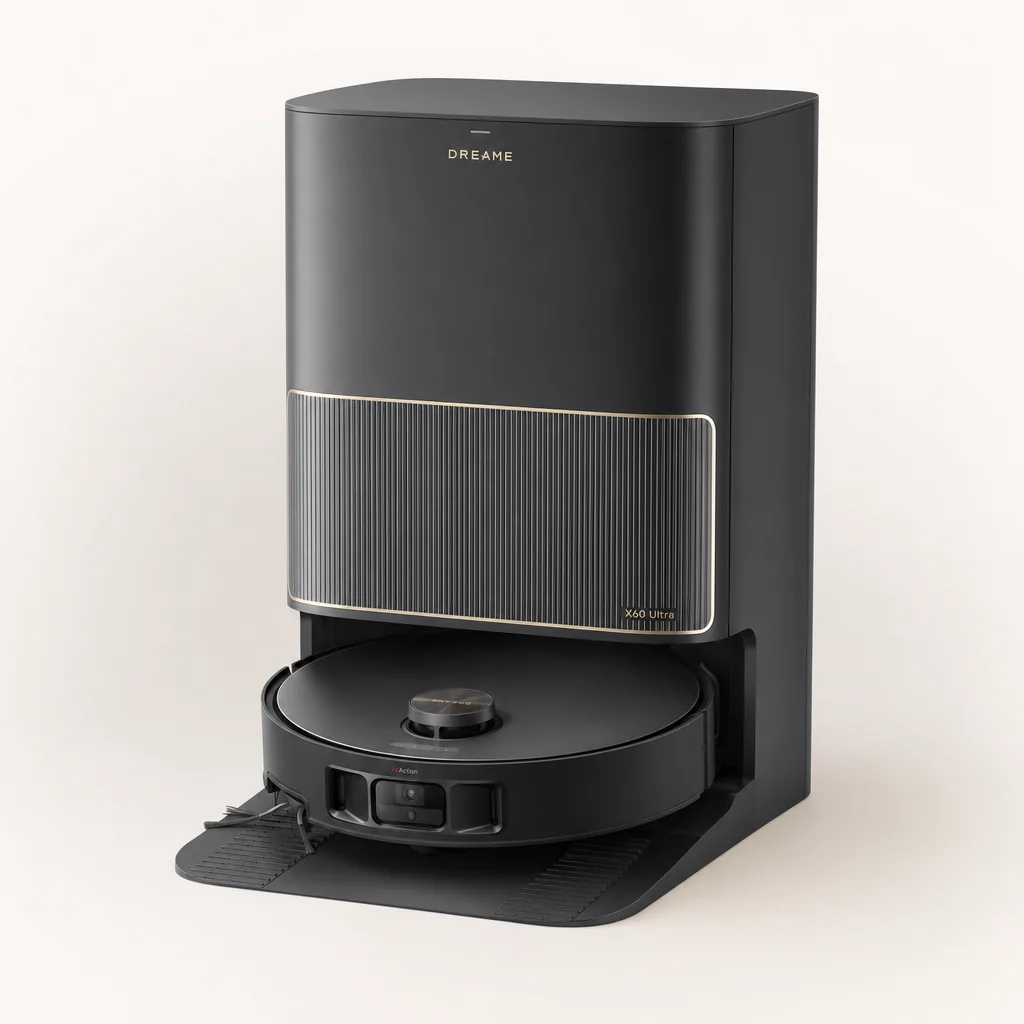
Choose it for its dual AI cameras, lateral 3D structured light, proactive light and retractable navigation system. It made the strongest case for cluttered homes and low furniture.
Dreame X60 Ultra
Its 40°C floor-mopping water, 15N pressure and 230rpm rotating pads were the more ambitious technical mopping package, even if neither robot established a runaway independent mopping lead.
Roborock Saros 20
The combination of strong pet-performance results, anti-tangle brushes, mop removal and excellent threshold handling made it the more proven choice for messy multi-surface homes.
How they compare with nearby rivals
It is worth zooming out before spending flagship money. The Saros 20 sat above Roborock's Saros 10R in suction terms, at 36,000Pa versus 22,000Pa, while both were cited at $1,599 in one comparison. If the 10R was heavily discounted, it could still be worth a look, but the Saros 20 offered the more advanced chassis, stronger suction and newer cleaning hardware.
The Roborock Q7 M5 made the opposite argument. At $229.99 and 10,000Pa, it was a much simpler device, without the full flagship dock and mopping sophistication. Yet it served as a useful reminder that basic daily vacuuming did not suddenly become impossible without a £1,000-plus robotic water-treatment centre living in the kitchen.
| Model | Maximum suction | Price cited | Buyer takeaway |
|---|---|---|---|
| Roborock Saros 20 | 36,000Pa | $1,599.99 MSRP | Full flagship system with threshold climbing, heated dock care and mop removal. |
| Dreame X60 Ultra | 35,000Pa | $1,499.99 | Closest direct rival, with advanced camera sensing and 40°C floor mopping. |
| Roborock Saros 10R | 22,000Pa | $1,599 | Older Roborock flagship that made more sense when discounted. |
| Roborock Q7 M5 | 10,000Pa | $229.99 | Much simpler, dramatically cheaper route to routine robot vacuuming. |
The honest conclusion is that neither Saros 20 nor X60 Ultra was "good value" in the conventional sense. They were luxury appliances. But they were luxury appliances with a credible case: they could absorb the daily cleaning chores that cheaper robots often only partially solve. The value depended entirely on whether you had the right kind of home to exploit them.
Frequently asked questions
These are not simple robot vacuums with a charging puck. They are substantial floor-care systems, and their real value comes from how reliably they reduce cleaning chores over months of use.
Final verdict: buy the home solution, not the biggest number
Buy the Roborock Saros 20 if you have pets, difficult thresholds, mixed flooring, carpets you want protected and a preference for the more mature app ecosystem. It had the stronger practical case for threshold crossing, hair management, edge cleaning and proven vacuum performance. Its mopping was capable rather than class-leading, but the overall package made sense for demanding homes.
Buy the Dreame X60 Ultra if your home is cluttered, your furniture sits low, you like the idea of advanced camera-led sensing and you want the stronger technical mopping proposition. Its 40°C floor mopping, 15N pressure, 230rpm pads and large 3.2L dust bag made it a very compelling alternative, especially at its lower US listed price.
So, has robot-vacuum technology gone too far? A little. There is no need for your floor cleaner to sound like it has joined a research lab. But when all that engineering means it crosses the bathroom threshold, avoids the dog's toy, keeps your carpet dry and washes its own mop pads, it stops being gimmickry. It becomes the rare bit of smart-home tech that quietly earns its place.
Similar reads
- Cordless stick vacuums for UK homes: seven worth buying — the other half of this category, from GBP 178 to GBP 799
- Roborock Saros 20View on Amazon