Canon EOS R8 Mark II First Look: is this the full-frame camera to buy?
Canon has added stabilisation, a joystick and serious video to its lightest full-frame body. We weigh the evidence on whether that is enough to beat tougher rivals at the same money.

Black Friday week is on at Amazon until 30 November. See Amazon's deals

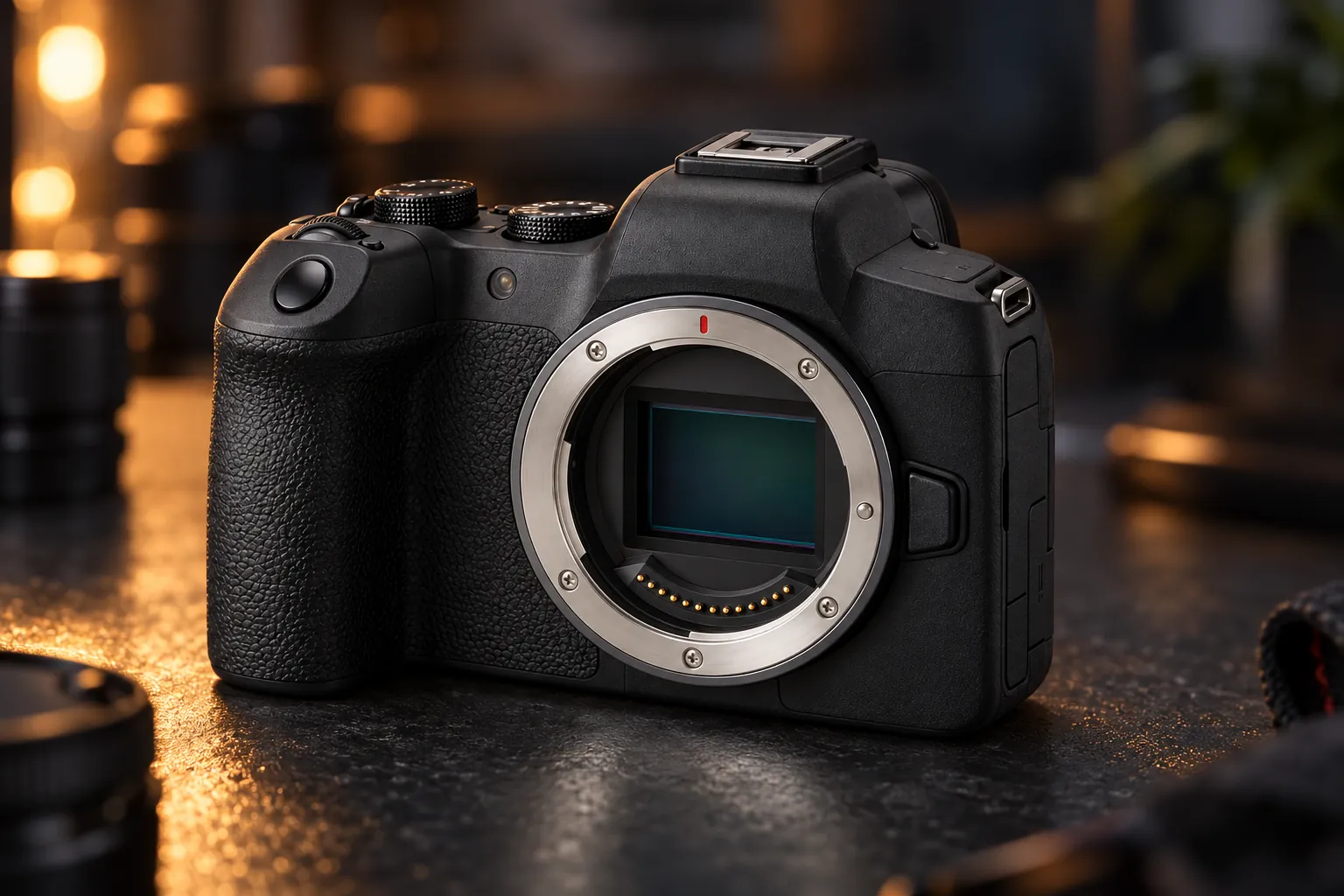
A 546g full-frame hybrid with 7.5-stop rated IBIS and 6K-oversampled 4K/60p; budget for spare batteries and accept one card slot.
Check price on AmazonWe link to the exact model on Amazon UK. Prices change often, so check the live price before you buy. As an Amazon Associate we earn from qualifying purchases.
Picture a weekend in Edinburgh: the light is fading over the Old Town, and your phone is turning every lamp-lit close into a watercolour smudge. You want full-frame, but you don't want to haul a professional body up Calton Hill, or spend professional money to do it. Canon's EOS R8 Mark II is aimed squarely at that gap. The stakes are real, because at its launch price it sits right beside cameras that are tougher, last longer on a charge and, in one case, currently cost less.
The short answer
Buy the Canon EOS R8 Mark II if low weight matters most and you already use Canon's RF system, or are happy to join it. It pairs a proven 24.2MP full-frame sensor with stabilisation rated at up to 7.5 stops, subject-detecting autofocus and 6K-oversampled 4K/60p video in a 546g body. Budget for at least one spare battery from day one.
If you shoot weddings, paid events or long days outdoors, a discounted EOS R6 Mark II or a Nikon Z5 II gives you dual card slots, a mechanical shutter and more stamina for similar money.
At a glance
| Specification | Canon EOS R8 Mark II |
|---|---|
| UK launch RRP (body only) | £1,729.99 |
| UK kit with RF 24-105mm F4-7.1 IS STM | Approx. £2,119.99 at launch |
| Sensor and processor | 24.2MP full-frame CMOS, DIGIC X |
| Stabilisation | 5-axis IBIS, up to 7.5 stops centre / 7.0 stops edge |
| Maximum burst | 40fps electronic; approx. 6fps electronic first curtain |
| Video | Uncropped 4K/60p from 6K; Full HD up to 180fps; 10-bit |
| Battery rating (CIPA) | 150 to 340 shots, depending on display and power mode |
| Weight | Approx. 546g with battery and card |
| Storage | One SD slot, UHS-II |
What Canon Actually Changed From the Original R8
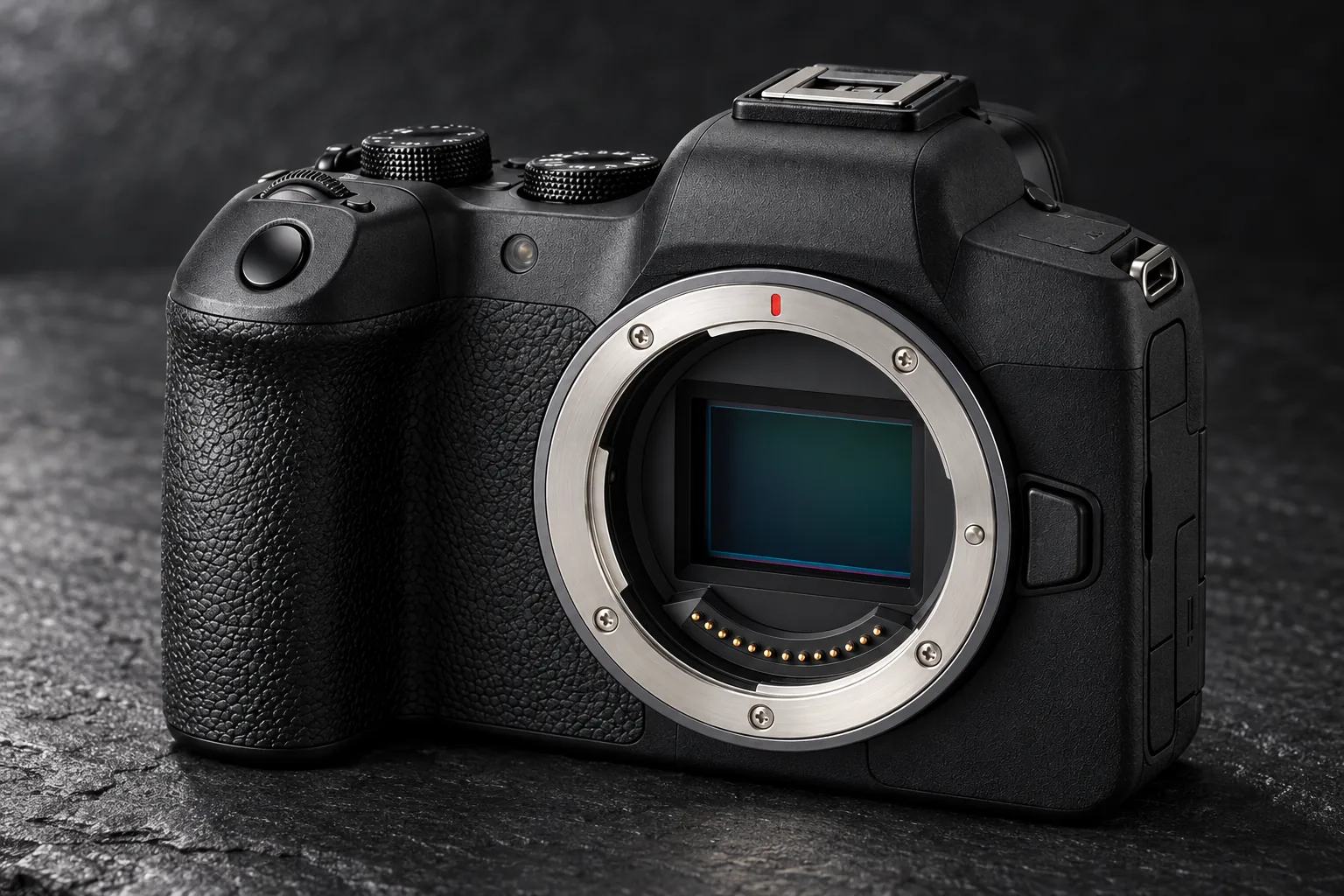
The EOS R8 Mark II is the second-generation R8, announced on 16 September 2026. It went on sale in the UK on 20 October 2026, with a body-only RRP of £1,729.99. The UK body-only model code is 7503C004, it comes in black, and the original 2023 R8 was reported to remain on sale alongside it. That matters when you shop: the original R8 lacks in-body stabilisation, so check you are looking at the Mark II.
The core imaging hardware is deliberately familiar. The 24.2MP full-frame CMOS sensor and DIGIC X processor carry over, and image quality is broadly the same as before because the sensor is essentially unchanged. That's no bad thing: early reviews found high detail, low noise and attractive JPEG colour, with high-ISO noise at comparable output sizes broadly similar to Sony's A7 IV.
The changes are about the shots you actually manage to keep. The headline is five-axis in-body image stabilisation, rated at 7.5 stops centrally and 7.0 stops at the periphery under Canon's CIPA 2024 test conditions with the RF 24-105mm F2.8 L IS USM Z at 105mm. The original R8 had no IBIS at all. Canon describes the Mark II as the lightest EOS camera with in-body stabilisation.
Canon EOS R8 Mark II Mirrorless Camera Body: what carried over and what is new
Upgrading from the original R8?
Don't expect your pictures to look dramatically different at base ISO. What should change is your hit rate: steadier handheld shots at slower shutter speeds, one-thumb focus point selection, and pre-capture for the moment you were a fraction late. If those were your frustrations, this is a meaningful upgrade. If they weren't, the sensor gives you little reason to move.
Check today's price: Canon EOS R8 Mark II Mirrorless Camera Body on Amazon UK
Stabilisation and Burst Speed: the Numbers Worth Interrogating
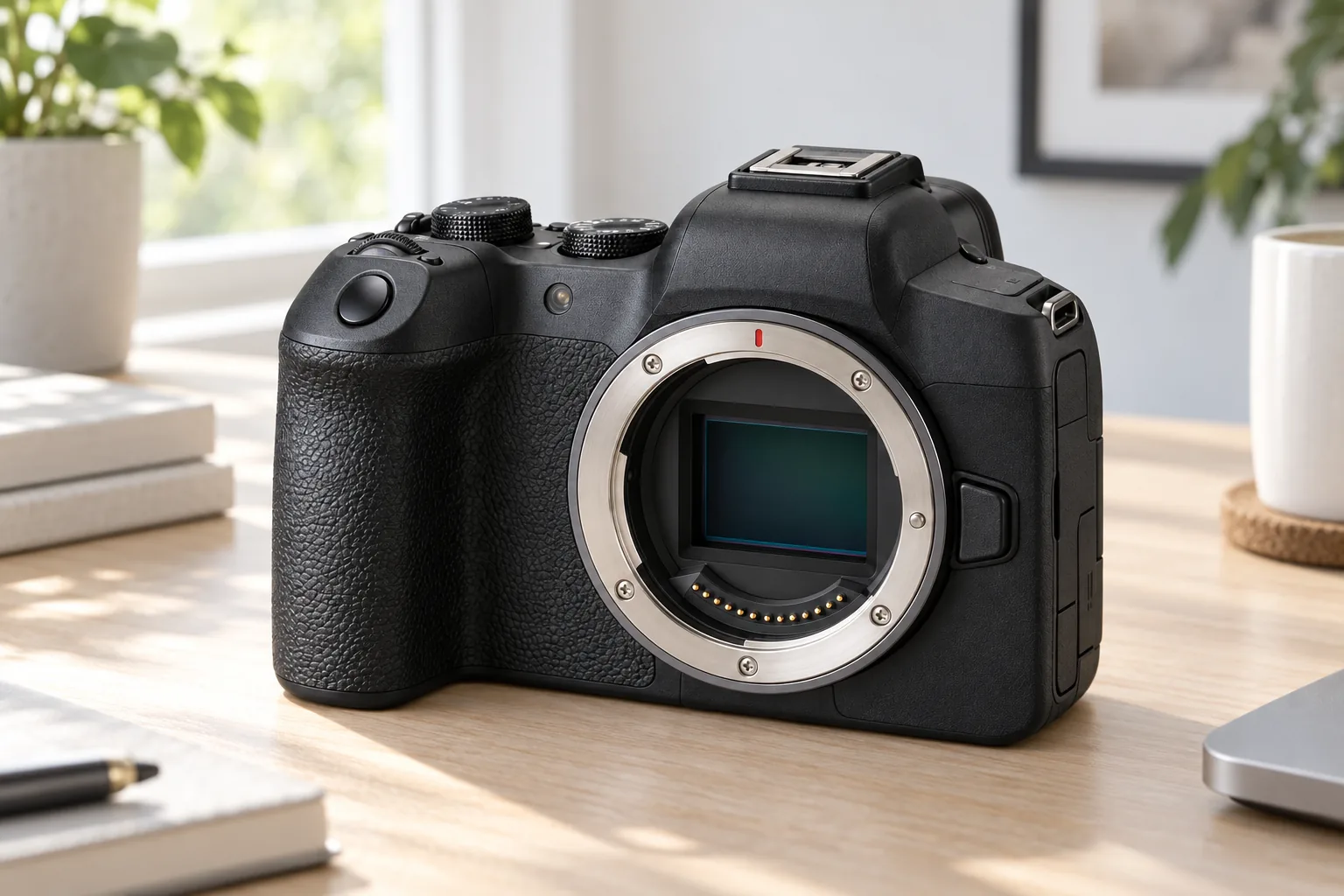
Both headline numbers are real, but both come with conditions. The 7.5-stop IBIS figure was achieved with a premium L-series zoom at 105mm. Pair the body with a different lens and focal length and your results will vary. DPReview cautions that ratings like this can be optimistic and depend heavily on lens, focal length and subject movement. Stabilisation steadies your hands; it does nothing for a toddler who refuses to sit still.
Even so, this is the upgrade that will matter most to everyday shooters. Indoor family shots, dim museums and dusk street scenes all benefit when you can drop the shutter speed without camera shake. Video gets a boost too, with optical IBIS working alongside Canon's Movie Digital IS modes for walk-and-talk footage.
The 40fps burst rate needs more context. It uses the electronic shutter only, and this camera has no mechanical shutter at all. Canon itself warns that speed can fall depending on lens, shutter speed, aperture, subject, brightness and flicker. Switch to electronic first-curtain shooting and the ceiling drops to roughly 6fps, which is a more modest figure for situations where you'd rather avoid electronic-shutter trade-offs.
Pre-capture is the smarter feature for most people. Half-press and the camera continuously buffers, saving up to 0.5 seconds, or 20 frames, from before you fully press the shutter. For wildlife taking off, a child blowing out candles or a goal-line moment, that half-second is often the difference between the shot and the aftermath.
Electronic shutter limits: the sensor reads out progressively, so very fast camera movement can still skew straight lines, although rolling shutter is reported as well controlled in most modes. Shutter speeds reach 1/16,000 sec electronically and 1/4,000 sec with electronic first curtain. Flash sync with a Canon Speedlite is up to 1/200 sec. Under flickering artificial light, test before an important shoot.
Autofocus in Practice: Subject Recognition, Joystick and Low-Light Limits
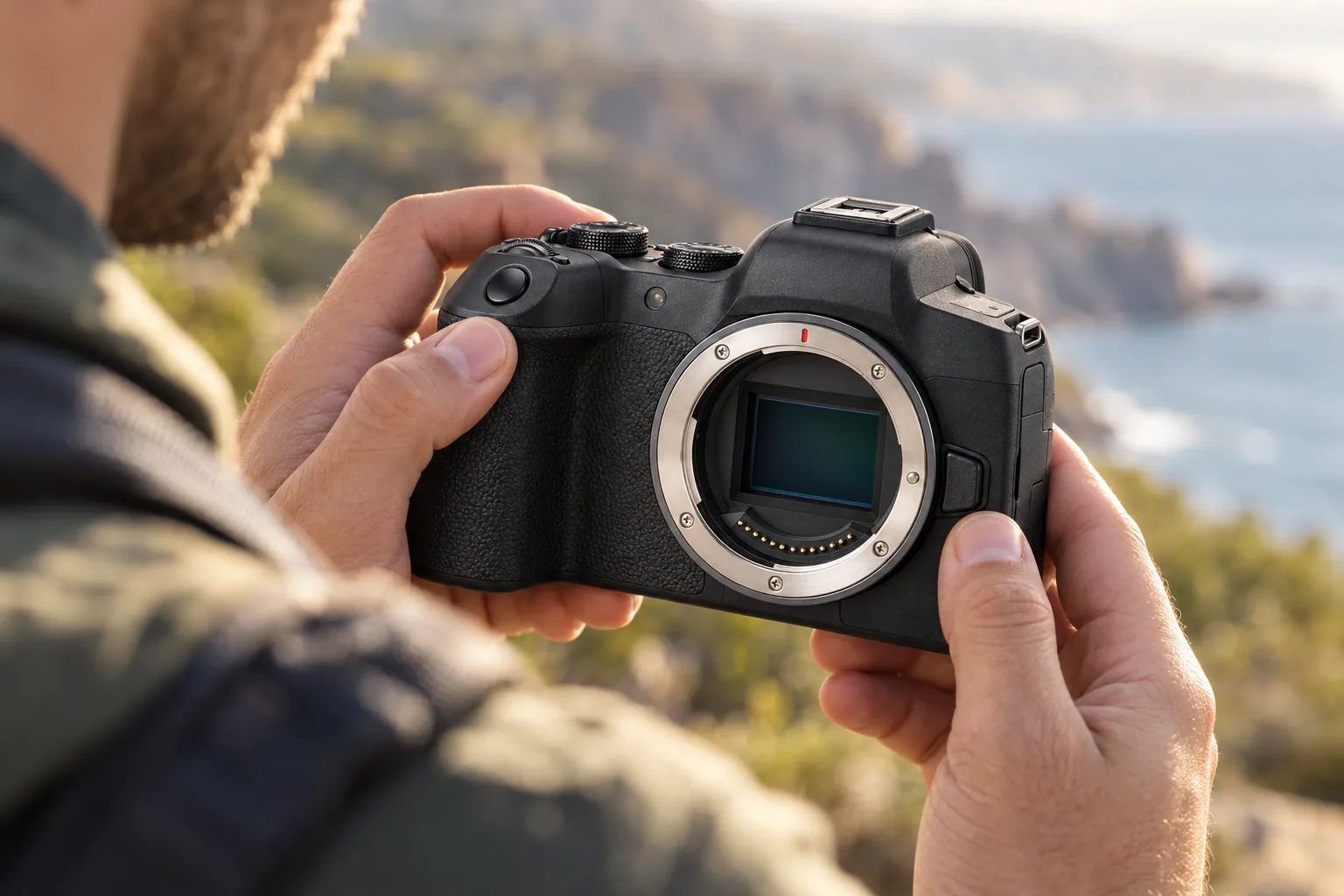
Autofocus is where the R8 Mark II feels least like a budget camera. It uses Canon's Dual Pixel CMOS AF II system with up to 1,053 AF zones and up to 4,368 selectable positions for stills (3,588 for movies). Early reviews were consistent: focus is quick, eye detection is dependable even when subjects wear glasses, and it handles most stills and video work without fuss.
Subject recognition
Detects people, animals and vehicles, so you can frame and let the camera find the eye or the bonnet.
Register People Priority
Store up to 10 faces and the camera prioritises them in a crowd. It is ideal for a school sports day or a family wedding where you're a guest with a camera.
Low-light sensitivity
Rated to EV -7.5 for stills with an f/1.2 lens, and EV -5.5 when shooting 4K/29.97p video.
Rear multi-controller
A proper joystick for moving the focus point one-handed. This was a much-requested fix, and reviewers singled it out as one of the most welcome changes.
The system isn't flawless. One early review found bird-eye detection less reliable when subjects were partly hidden by branches, which is a common complaint across mirrorless systems but worth knowing if garden birds are your thing.
Your lens shapes your autofocus
Some of Canon's cheaper STM lenses focus more slowly or clumsily than the body is capable of. Canon's RF mount also offers a more restricted range of third-party autofocus lenses than some rival systems. Before you commit, list the two or three lenses you'll actually want and check they exist at a price you like. EF and EF-S lenses work via Canon's EF-EOS R adapter; EF-M lenses do not.
Video Credentials: Does 6K-Oversampled 4K/60p Hold Up Against the Price?
For hybrid shooters, this is where the Mark II earns its money. It records uncropped 4K at up to 59.94/50p, downsampled from 6K capture for extra fine detail. It also shoots Full HD at up to 180fps for slow motion, a substantial step up from the original R8's video specification.
The codec choices are grown-up. You get 10-bit internal recording in XF-HEVC S (H.265) and XF-AVC S (H.264), including 4:2:2 10-bit modes. At 59.94p, bitrates run up to roughly 250Mbps in XF-AVC S and around 225Mbps in XF-HEVC S. Canon Log 3 and HDR PQ are there for grading, whilst Filmtone colour filters, Picture Styles and LUT support give you a polished look straight out of camera.
The catch is endurance rather than quality. Canon quotes about 40 minutes of 4K/50p or 59.94p on a fresh battery at 23°C, and about two hours of Full HD at 25p or 29.97p. If your plans involve recording an entire school concert or a long interview, a bigger-bodied option will be less stressful. Panasonic's Lumix S5II is the more video-focused rival with 6K recording, whilst the Canon leans towards autofocus, compactness and stills speed.
Heat and long takes: Canon's own manual warns that recording time can be shorter than rated because of battery condition or heat shutdown. There's no fan, so treat the R8 Mark II as a superb short-form and travel video camera, and plan around it for long continuous recording.
The Battery Problem: Why a Spare LP-E17 Isn't Optional
This is the weakness every review circled. The R8 Mark II uses the same small LP-E17 battery as its predecessor, and the CIPA ratings are low for a full-frame hybrid. Using the viewfinder, you get 150 shots in Smooth mode and 220 in Power Saving mode. Using the rear screen, those figures are 270 and 340 respectively.
DPReview called the 150-shot viewfinder figure "particularly poor" and said a spare battery or power bank would probably be necessary for anything beyond occasional shooting. The reason is simple: Canon added stabilisation, which draws extra power, without adding battery capacity.
CIPA tests are conservative, and real-world use often beats them. Digital Camera World shot more than 350 stills and still had battery left, yet still recommended carrying a spare for long shoots. Think of the numbers as a floor, not a forecast, but don't head out for a full day with one battery and good intentions.
What to budget for
Add at least one spare LP-E17 to the effective purchase price, two if you shoot video or travel without easy charging. The camera charges over USB-C from a supply of at least 7.5W, which means a power bank in your bag can top it up between locations. A USB-C charger isn't included in the UK box, so use one you already own or buy one of Canon's recommended PD-E1 or PD-E2 adapters.
No battery grip: the optional EG-E2 Extension Grip (reported at £89 in the UK) improves handling with bigger lenses but holds no extra battery, and no battery grip is offered for this body.
Handling, Displays and Build: Where the Entry-Level Roots Show
The handling story is mixed. The grip is comfortable, the controls are more advanced than on the original, and beginner-friendly modes sit alongside them for anyone stepping up from a phone. The angular, 1980s-inspired styling split opinion: some reviewers loved it, whilst others felt it looked more Sony than Canon and stopped short of being a true retro design.
Build is where you feel the price-cutting. The body mixes aluminium alloy and polycarbonate, and TechRadar felt it was less premium than rivals such as the Nikon Z5 II. It also criticised the lack of weather resistance. One other early review mentioned dust and weather seals similar to the original R8's, but Canon doesn't market the camera as weather resistant. Buy it expecting a fair-weather companion and pack a rain cover for the Lake District.
The displays are carried over from the original R8, and they feel dated at this price. The 0.39-inch OLED viewfinder has 2.36 million dots and 0.70× magnification. The 3.0-inch vari-angle touchscreen has 1.62 million dots, and one review found it somewhat dim and hard to read in bright sunshine.
Pros
- 546g loaded weight with IBIS and a full-frame sensor
- New joystick makes one-handed focus point selection easy
- Comfortable grip and approachable beginner modes
- Vari-angle touchscreen suits vlogging and awkward angles
- Fast USB-C with in-camera charging
Cons
- Viewfinder and screen unchanged from the 2023 model
- Rear screen reported as dim in bright light
- Part-polycarbonate body; not marketed as weather resistant
- Single card slot: no instant backup copy
- Styling divides opinion
Full-Frame for Less: How the Price Compares to Nikon's Z5 II and Canon's Own R6 Mark II
At launch, the R8 Mark II body cost £1,729.99, or approximately £2,119.99 with the RF 24-105mm F4-7.1 IS STM kit lens. Retail prices move, so check current offers. As launch prices go, it doesn't undercut its rivals as dramatically as the "entry" badge suggests.
The Nikon Z5 II is the obvious rival. It matches the 7.5-stop stabilisation claim and adds a second SD slot, a far sharper 3.69-million-dot viewfinder, autofocus rated to EV -10, a mechanical shutter and a bigger battery. In exchange, it weighs 620g against the Canon's 546g and tops out at 30fps for JPEGs.
The awkward rival is Canon's own EOS R6 Mark II. This month it has been reported at around £1,699 in the UK, slightly below the new R8 Mark II body's RRP. For that money you get the same 24.2MP resolution, a larger LP-E6NH battery, dual card slots, a full mechanical shutter and sturdier build. The R8 Mark II fights back with lower weight, pre-capture and its 7.5-stop IBIS rating.
| Feature | Canon EOS R8 Mark II | Nikon Z5 II | Canon EOS R6 Mark II |
|---|---|---|---|
| Sensor | 24.2MP full-frame | 24.5MP full-frame BSI | 24.2MP full-frame |
| IBIS rating | Up to 7.5 stops | Up to 7.5 stops | Not confirmed |
| Mechanical shutter | No | Yes (mechanical / EFC) | Yes (full mechanical) |
| Card slots | 1× SD | 2× SD | 2 |
| Battery | LP-E17, 150–340 shots CIPA | Approx. 330–380 shots (EVF modes) | LP-E6NH (larger) |
| Max burst | 40fps electronic | 30fps JPEG; 14fps RAW/mechanical | Not confirmed |
| Low-light AF (stills) | EV -7.5 | EV -10 | Not confirmed |
| Viewfinder | 2.36m dots | Approx. 3.69m dots | Not confirmed |
| Weight | 546g loaded | 620g | Not confirmed |
| UK price | £1,729.99 RRP (body) | Not confirmed | Reported around £1,699 (Nov 2026) |
R8 Mark II body
UK launch RRP, model 7503C004
R8 Mark II + RF 24-105mm
UK kit at launch; F4-7.1 IS STM zoom
EOS R6 Mark II body
Reported UK discount, November 2026
Sony's A7C II deserves a brief mention for travellers. It offers 33MP, a compact rangefinder-style body at around 514g and a larger NP-FZ100 battery, but it tops out at 10fps and has generally been priced higher. The Canon trades resolution for speed and a chunkier, more traditional grip.
Reading the Early Reviews: Where DPReview, PetaPixel and TechRadar Agree (and Don't)
The early verdicts are warm, but read them with their conditions in mind. PetaPixel awarded 8.5/10 and an Editors' Choice. It praised the grip, controls, autofocus reliability, beginner modes, colour filters and IBIS. However, it reviewed a pre-production camera and said plainly that it couldn't run a full pixel-level image-quality analysis.
TechRadar's verdict came from a two-hour session at Canon Europe's London offices rather than a long-term test. It liked the ergonomics and the multi-controller, along with the IBIS rating, pre-capture and 1080/180p, but marked the camera down for build quality and dated displays. DPReview's fuller assessment called the Mark II a meaningful upgrade over the original. It highlighted IBIS and the joystick, and identified battery life as the clearest weakness.
Where reviewers agree
- IBIS and the joystick fix the original R8's biggest gaps
- Autofocus and eye detection are dependable
- Image quality is high-detail and low-noise
- Battery life is the main operational weakness
- Displays lag behind the price point
Where they differ
- Styling: admired by some, called derivative by others
- Weather protection: one report mentions seals; Canon doesn't claim resistance
- Value: attractive to some, squeezed by the Z5 II and R6 Mark II for others
- Real-world battery: CIPA figures look grim, but one review comfortably exceeded them
Who Should Buy the R8 Mark II
Light travellers
Full-frame quality and stabilisation in a 546g body that won't punish your shoulder on a long city break.
Original R8 owners
IBIS, a joystick, pre-capture and better video fix the first model's gaps whilst your lenses stay the same.
Families and portrait shooters
Reliable eye detection, Register People Priority and pre-capture are made for unpredictable kids and crowded parties.
Short-form hybrid creators
6K-oversampled 4K/60p, 10-bit 4:2:2, Canon Log 3 and a vari-angle screen cover vlogs, reels and travel films.
Event and wedding pros
Dual cards, a mechanical shutter and a larger battery matter more; look at a discounted R6 Mark II instead.
All-weather hikers and value hunters
With no weather-resistance claim and a tighter value case, the Nikon Z5 II is the sturdier pick if you're not tied to Canon.
Verdict
The Canon EOS R8 Mark II answers the brief it set itself. It gives enthusiasts genuine stabilisation, dependable subject-detecting autofocus and credible 10-bit 4K/60p video in a body light enough to carry every day, without reaching R6-class prices at launch. For travel, family, portrait and short-form hybrid work, especially if you already own RF lenses, it's an easy camera to recommend.
What it doesn't do is make the compromises disappear. The small battery, single card slot, lack of a mechanical shutter, dated displays and fair-weather build are all real, and with the R6 Mark II reported below the R8 Mark II's RRP, weight is now the main reason to choose the newer, smaller camera. If 75g and a smaller bag matter to you, buy it with two spare batteries. If they don't, the R6 Mark II or Nikon Z5 II will serve you better for long, demanding days.
Sources
- Canon UK: EOS R8 Mark II body product page (7503C004)
- Canon U.S.A.: EOS R8 Mark II launch announcement and product page
- Canon: EOS R8 Mark II online user manual, specifications
- DPReview: Canon EOS R8 II review
- PetaPixel: Canon EOS R8 Mark II review
- TechRadar: Canon EOS R8 Mark II review
- Digital Camera World: Canon EOS R8 Mark II review, and R6 Mark II discount report
- Camera Jabber: EOS R8 Mark II price, specifications and availability
- The Society of Photographers: EOS R8 Mark II UK pricing report
- Nikon USA: Z5II overview and comparison chart
- Sony: ILCE-7CM2 specification sheet
- Canon EOS R8 Mark II Mirrorless Camera BodyBest for light travelView on Amazon
Sources and evidence (22)
- canon.co.uk (other)
- camerajabber.com (other)
- techradar.com (other)
- dpreview.com (other)
- petapixel.com (other)
- digitalcameraworld.com (other)
- usa.canon.com (other)
- canon.co.uk (other)
- usa.canon.com (other)
- usa.canon.com (other)
- dpreview.com (other)
- techradar.com (other)
- petapixel.com (other)
- camerajabber.com (other)
- thesocieties.net (other)
- digitalcameraworld.com (other)
- usa.canon.com (other)
- cam.start.canon (other)
- the-digital-picture.com (other)
- digitalcameraworld.com (other)
- nikonusa.com (other)
- businesssolutions-support.sony.eu (other)