Apple AirPods Max 2 Review: Five Years in the Making & Apple Still Skipped the Upgrade Everyone Asked For
New H2 silicon, noise cancelling that finally troubles Sony and Bose, lossless listening over USB-C - the AirPods Max 2 fixes almost everything that dated the original. Almost. We dig into what £499 really buys, and the one spec Apple left exactly where it was in 2020.

Check the AirPods Max 2 on Amazon
£499.00price at 23 Aug, may change
1. What the AirPods Max 2 actually is (and why it took so long)
Let's set the scene properly, because the AirPods Max 2's story only makes sense against the strange life of the original. When the first AirPods Max launched in December 2020 at an eye-watering £549, it was mocked for the price and the case, then quietly went on to become the default premium headphones for a lot of iPhone owners anyway - the build quality, spatial audio and ecosystem magic saw to that. What nobody predicted was the neglect. Five years and three months passed between the original and this sequel - the longest gap Apple has ever left a flagship product - and the only change in all that time was a September 2024 refresh that swapped Lightning for USB-C, repainted the colours and touched literally nothing else.
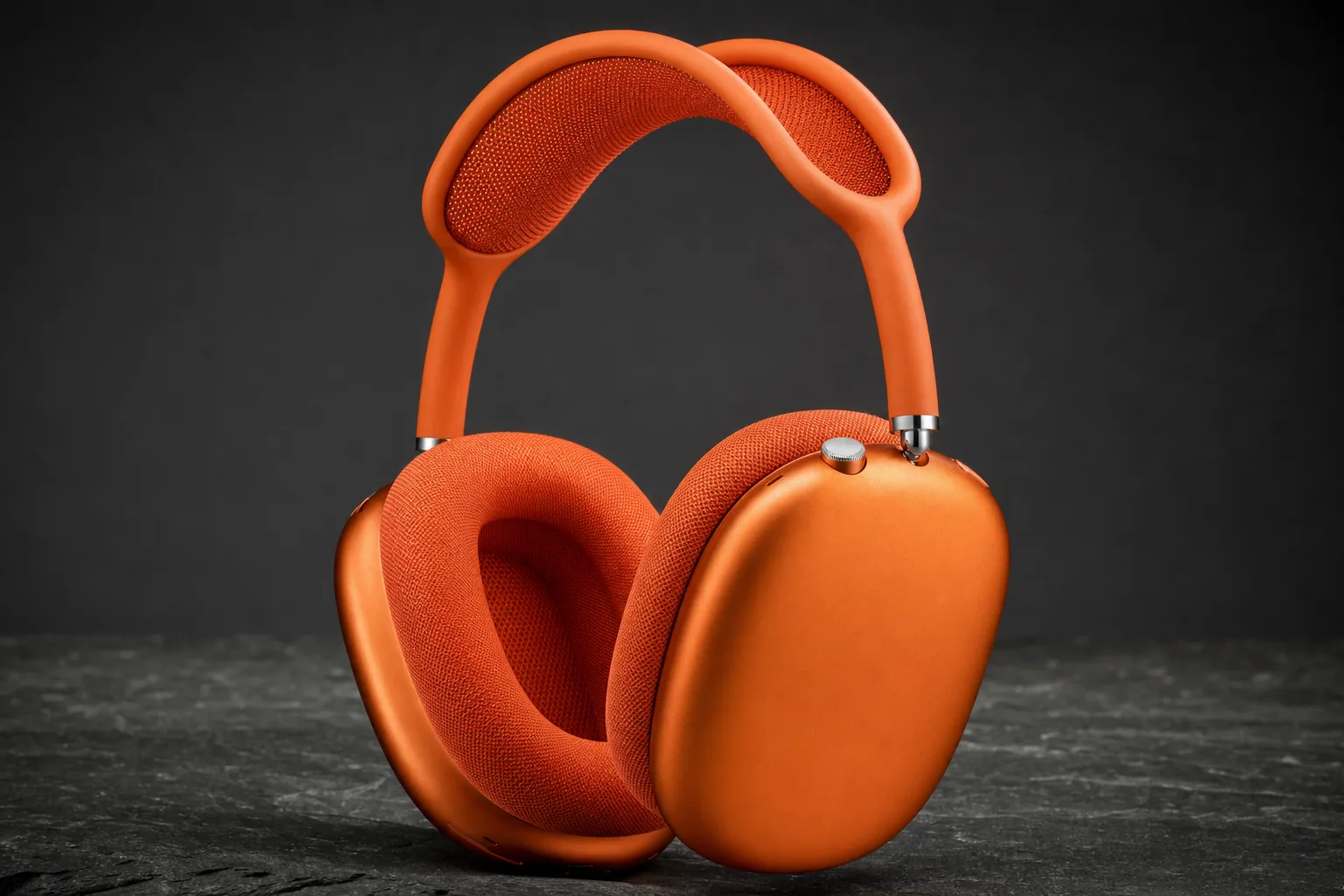
The AirPods Max 2, then, is Apple's overdue answer, and its shape is easy to summarise: everything that runs through silicon has been upgraded; everything physical has not. The old H1 chip - 2019 technology - gives way to the H2 that has powered the AirPods Pro line since 2022, and that one change unlocks nearly the entire spec sheet: noise cancellation Apple rates at up to 1.5 times the original, a new high dynamic range amplifier with a rebuilt DSP, Adaptive Audio, Conversation Awareness, Voice Isolation, Live Translation and ultra-low latency for gaming. The frame around all that cleverness, though, is the 2020 design to the gram: same stainless-steel headband, same aluminium cups, same Digital Crown, same 20-hour battery, same Smart Case.
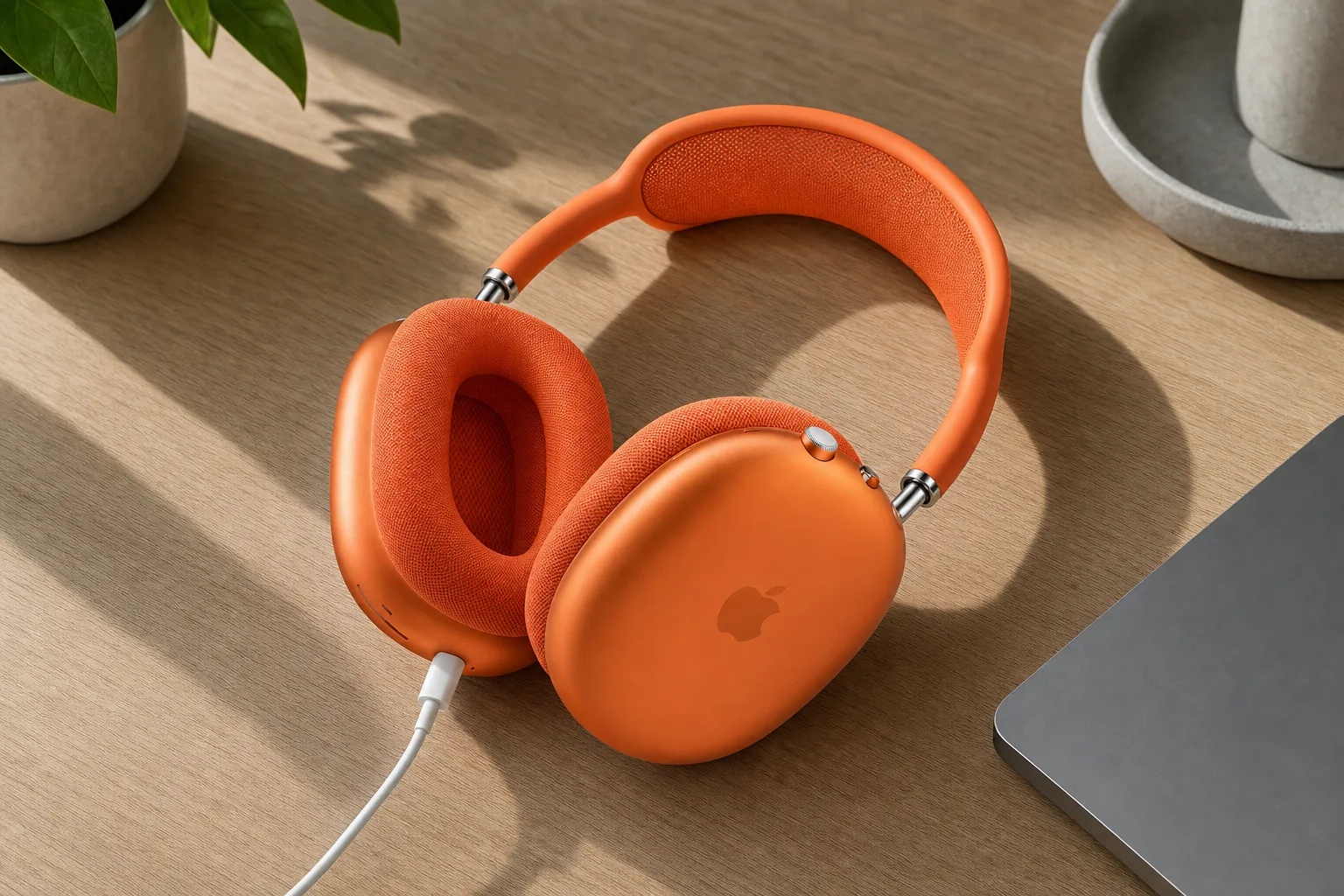
Apple announced the AirPods Max 2 on 16 March 2026, pre-orders opened on 25 March, and they reached shelves in more than 30 countries in early April. They are on sale in the UK now in five colours - midnight, starlight, blue, purple and a genuinely lovely orange - and Apple is actively developing for them, with new firmware already in beta testing as of July 2026. This review is based on the full published record: Apple's own announcement and spec sheets, plus the measurements and hands-on verdicts from the major independent reviewers - SoundGuys, Tom's Guide, TechRadar, Macworld and others - all attributed as we go, with launch prices only.
2. UK price, release date and what you get in the box
The UK price is £499 ($549 in the US) - and in Apple terms that counts as restraint. It matches what the USB-C refresh of the original was selling for, and it undercuts the first AirPods Max's infamous £549 launch price by £50. Five years of inflation absorbed and a price cut on top is not nothing; it is also, as we'll see in the comparison section, still a £100 premium over Sony's flagship and £50 over Bose's.
- Announced: 16 March 2026, via Apple Newsroom rather than a staged event.
- Pre-orders: 25 March 2026.
- On sale: early April 2026, in over 30 countries including the UK.
- Colours: midnight, starlight, blue, purple and orange - the orange being the eye-catching newcomer of the range.
- In the box: the headphones, the Smart Case and a USB-C charge cable. No 3.5mm adapter and no charging brick - both are separate purchases, which stings at this price.
One planning note for UK buyers: Apple products almost never see meaningful discounts in their first six months, but the original AirPods Max became a regular Prime Day and Black Friday fixture in its later years. If £499 is painful, the pattern says patience will eventually be rewarded - though "eventually" with Apple headphones has historically meant a year or more, not weeks. There is also a knock-on bargain here: the outgoing USB-C AirPods Max is being cleared through third-party retailers, and for buyers who only ever listen over Bluetooth and never use noise cancelling on planes, the old model at a deep discount remains a rational, if dated, buy.
Check the AirPods Max 2 on Amazon
£499.00price at 23 Aug, may change
3. Design and comfort: familiar to a fault
Put the AirPods Max 2 next to a 2020 original and you will need the colour chart to tell them apart. The design is carried over essentially unchanged: anodised aluminium ear cups, a polished stainless-steel frame, telescoping arms, the breathable knit-mesh canopy across the top and the watch-style Digital Crown for volume and playback. Even the weight is the same to within a couple of grams - 386g against the original's 385g - and the ear cushions still attach magnetically and are still made from the same acoustic memory foam, now wrapped in fully recycled polyester.
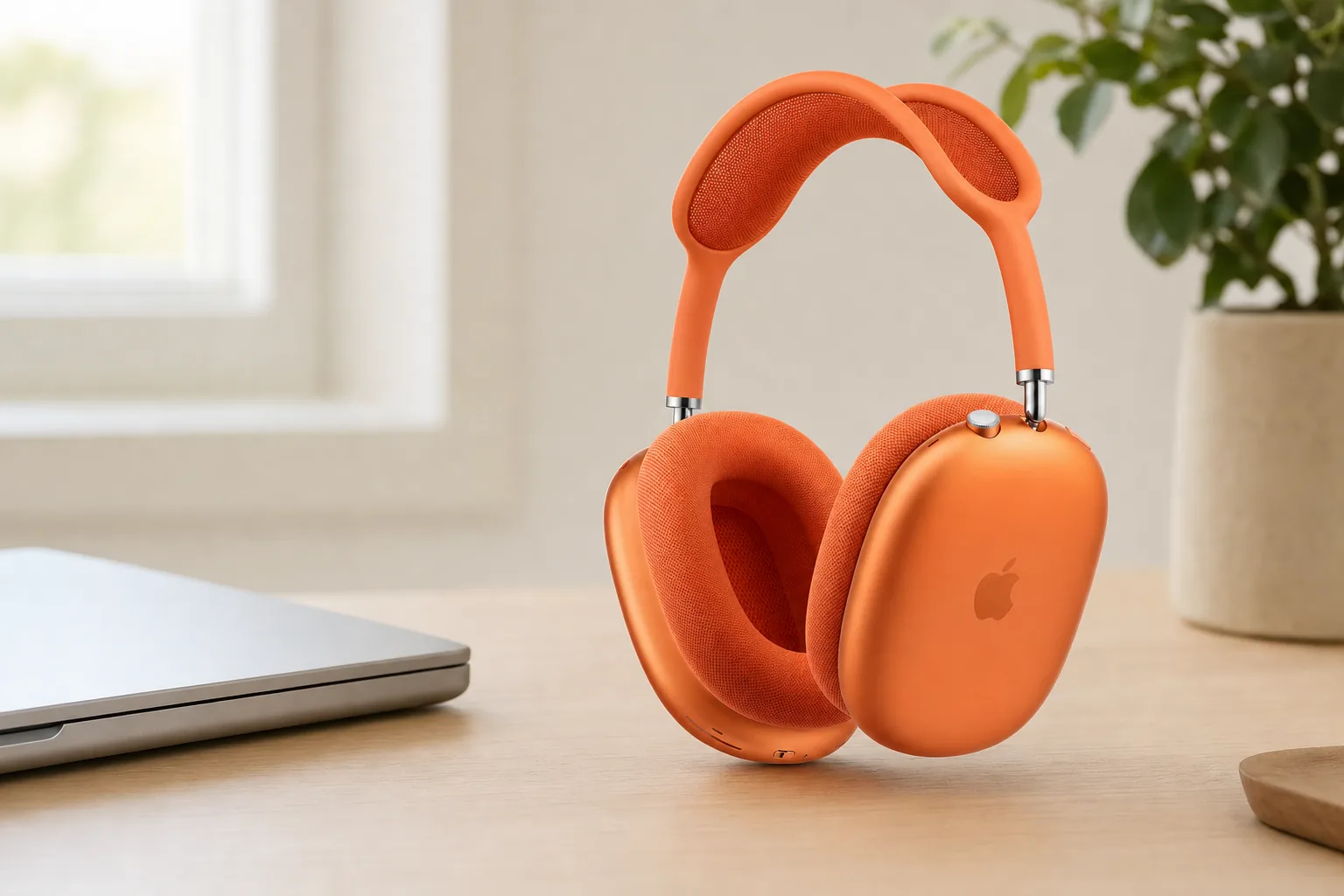
Whether that is a compliment or a criticism depends on where you sit. In the hand, nothing else in this class comes close: Sony's WH-1000XM6 and Bose's QuietComfort Ultra are well-made plastic, and the Max 2 is a machined-metal object that feels like it costs what it costs. The knit canopy spreads the load well, the clamping force is judged nicely, and for an hour or two on the sofa these are genuinely comfortable headphones. The colours deserve a mention too - the orange is bold without being garish and instantly identifies you as an owner of the new one, which, let's be honest, is part of the appeal.
On the head over a long day, physics reasserts itself. 386g is a third heavier than the 254g Sony XM6, and every long-haul review of the original's five-year run said the same thing: the metal build that feels premium in the hand becomes a literal pain in the neck around hour four. That critique transfers to the Max 2 wholesale, because nothing has changed. The cups still don't fold flat into a compact form for travel, and the Smart Case - that much-mocked flexible cover that protects the cushions and little else - returns identical. Apple's environmental story is better (100% recycled rare-earth magnets, recycled gold plating and tin solder in the boards), but the ergonomic one hasn't moved since 2020. If you tried the original and found it heavy, stop reading here: this is the same hat.
4. The H2 chip: one transplant, an entire spec sheet
Nearly everything the AirPods Max 2 does better traces back to a single component. The original shipped with two H1 chips - silicon announced in 2019 - and by 2026 that had become the product's central absurdity: £500 headphones running two generations behind Apple's £179 earbuds. The Max 2 moves to the H2, the chip from the AirPods Pro line, and it transforms what the software can do:
- Noise processing at 48,000 times per second. The H2 samples and counters outside noise at a rate the H1 simply couldn't, which is where the headline "up to 1.5x better ANC" claim comes from - more on how that holds up below.
- A rebuilt audio path. The H2 arrives alongside a new custom high dynamic range amplifier and a reworked DSP - the components reviewers credit for the Max 2's cleaner, tighter sound.
- The modern AirPods feature set. Adaptive Audio, Conversation Awareness, Voice Isolation, Personalised Volume, Loud Sound Reduction and Live Translation all require the H2; the original was locked out of every one of them. The Max 2 gets the lot at launch.
- Ultra-low latency. Apple has cut wireless audio lag for gaming and video - a quiet but real quality-of-life gain, and the Max 2 pairs it with lossless support when you go wired.
It is worth being clear-eyed about the other side of this coin: the H2 is an upgrade to Apple's own timeline, not beyond it. This is the same generation of chip the AirPods Pro 2 shipped with in 2022, not new silicon built for this product, and rivals have not been standing still either. What the H2 buys you is parity with the rest of Apple's line-up and the processing headroom that makes everything in the next four sections possible. On a product Apple intends to sell - on past form - well into the 2030s, starting from a four-year-old chip is the one strategic choice that may age poorly. Today, though, it is enough, and the results speak for themselves.
5. Sound quality: the amplifier is the real story
The original AirPods Max always sounded good; the sequel sounds noticeably better, and reviewers are unusually aligned on both the improvement and its character. The combination of the H2, the new high dynamic range amplifier and the rebuilt DSP produces what Tom's Guide called the original "dialled up to 11": tighter, deeper sub-bass, cleaner and more natural mids, and better separation between instruments, with spatial audio placement that is more precise about where each element sits around your head. Apple's tuning philosophy hasn't changed - this is still a balanced, refined signature rather than a bass cannon - but there is more texture and control at both ends than the original ever managed.
Now for the honest part, because the numbers add nuance. SoundGuys - one of the few outlets that measures headphones rather than just listening to them - scored the Max 2 a very good 4.3 overall on its MDAQS perceptual audio benchmark, against 4.8 for the Sony WH-1000XM6, with Sony ahead on timbre, distortion and immersiveness alike. Put plainly: by the measurements, the £399 Sony still sounds better, and the £499 Apple closes most but not all of the gap. Subjective reviews are kinder to Apple than the charts are - several testers preferred the Max 2's more neutral, less processed presentation - but nobody credible is calling it the outright best-sounding headphone in the class.
Where the Max 2 does have a genuine edge is consistency and processing. Spatial audio with dynamic head tracking remains the best implementation in mainstream headphones, film and TV content is superb, and the new amplifier keeps things composed at high volume where the original could smear. Personalised Volume and Adaptive EQ quietly tune output to your ears and environment. The realistic summary for a UK buyer: you will not be disappointed by how these sound, but you are not paying the £100 premium over Sony for audio quality - you're paying it for the build, the ecosystem and what comes in the next section.
6. Lossless over USB-C - and the Bluetooth catch
Here is the feature that will sell the Max 2 to a certain kind of listener on its own: plug in the USB-C cable and you get true lossless audio at 24-bit/48kHz, fed directly through that new amplifier, with the entire Apple Music lossless catalogue available at full quality. Wired listening also enables ultra-low latency - effectively zero for gaming or video editing - and the DAC-in-the-headphone arrangement means you get the identical signal chain from any USB-C source: iPhone, iPad, Mac, or a Windows laptop.
The USB-C refresh of the original technically gained this ability in 2025 via a firmware update, but the Max 2 is the first AirPods Max designed around it, and the pairing with the new amplifier is where reviewers heard the clearest daylight between old and new. This is also, quietly, the best studio story Apple has ever had in headphones: the Max 2 supports studio-quality recording and monitoring over the wire, which makes it a plausible one-device solution for a podcaster or mobile editor in a way the original never was.
And now the catch, which longtime Apple watchers will recite before we do: over Bluetooth, the AirPods Max 2 still speaks only AAC and SBC. No LDAC, no aptX of any flavour, and no lossless over the air - while the Sony XM6 offers LDAC to any Android phone and even Apple's own Vision Pro gets a special low-latency lossless link the iPhone doesn't. AAC is a perfectly good codec, and blind-test honesty compels us to say most people cannot reliably hear the difference on the move. But at £499, in 2026, wireless hi-res remains a box Apple simply refuses to tick, and if you're an Android user the calculus is brutal: you lose the ecosystem magic and the better codecs. Android owners should read our guide to earbuds beyond AirPods before spending flagship money here.
7. Noise cancelling: the 1.5x claim, measured
Apple's headline claim is that the H2 makes the Max 2's active noise cancellation up to 1.5 times more effective than the original's - and for once the independent measurements largely back the marketing. SoundGuys' lab testing found the Max 2 blocks roughly 89% of outside noise overall, edging the Sony WH-1000XM6's 87%, and the way it gets there matters for real life: Apple's cancellation is exceptional in the low frequencies, attenuating 30-40dB across the bass range - precisely the band occupied by jet engines, train rumble and traffic drone, and a region where Sony's low-end is comparatively weaker.
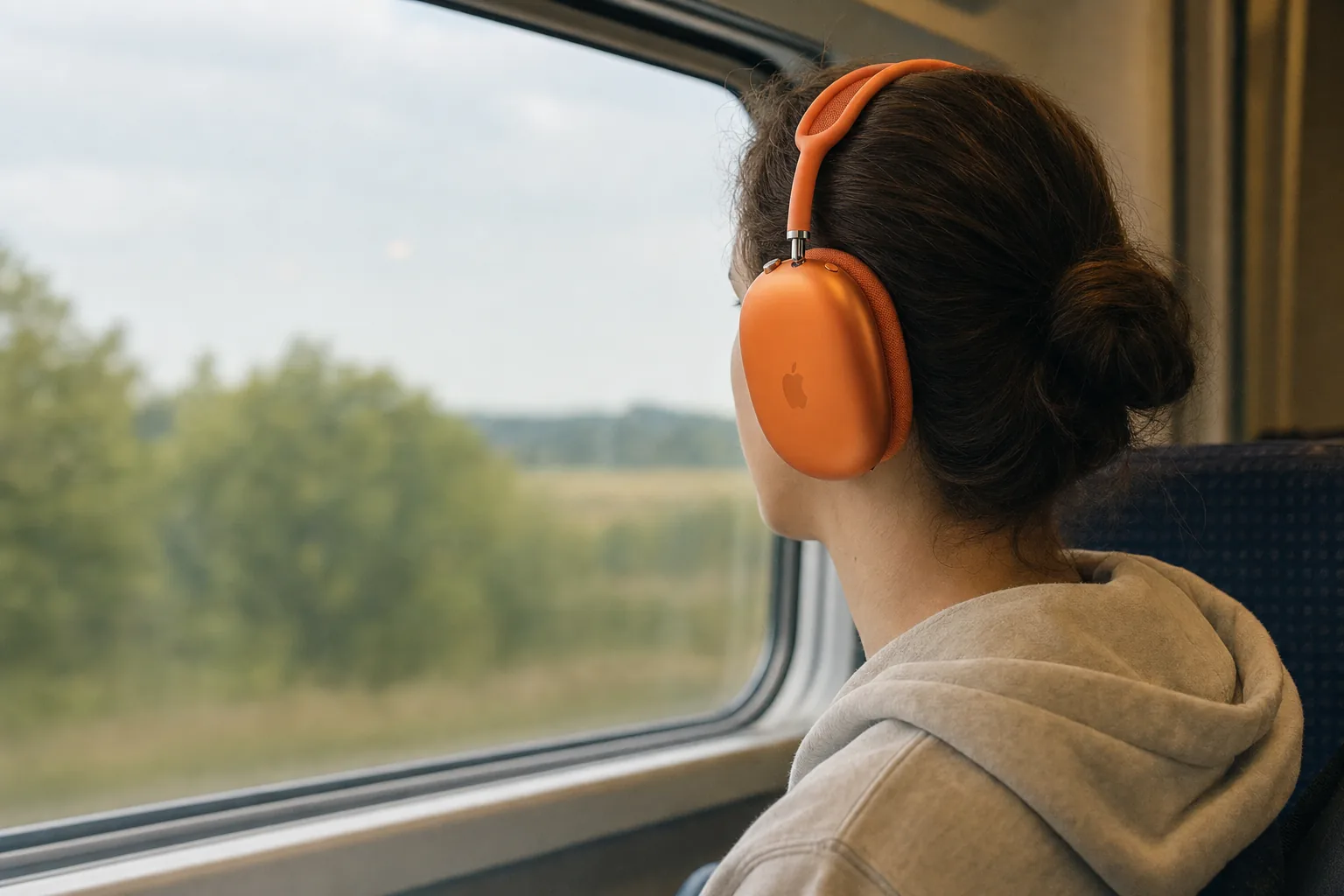
In practice that makes the Max 2 arguably the best headphone you can buy for the specific job of silencing a commute or a long-haul flight, and it means the five-year gap to the ANC leaders hasn't just closed - on this one axis it has flipped. The caveats are worth recording: Sony's cancellation remains at least as good across the midrange where voices and office chatter live, most reviewers still hand the XM6 the crown for total all-round silencing versatility, and "up to 1.5x" is Apple's best case, not a constant. Call it a draw at the top of the class - which, given where the original stood by 2026, is a remarkable recovery.
Transparency and Adaptive Audio
Transparency mode was the original's party trick - the most natural pass-through in the business - and the H2 makes it better still, with Conversation Awareness automatically ducking your music when you start speaking and Adaptive Audio blending cancellation and transparency on the fly as your surroundings change. Walk from a quiet office onto a loud street and the headphones simply handle it; no other brand's implementation feels this effortless. Loud Sound Reduction also caps sudden spikes - sirens, gig PA systems - without muting the world. These are the features that make the Max 2 feel like it thinks, and they're precisely what the H1 could never run.
8. The clever stuff: Live Translation, head gestures and ecosystem magic
Beyond the core audio upgrades, the H2 brings the Max 2 level with the AirPods Pro 3's software suite - and adds a few tricks that make more sense on headphones you wear for hours:
- Live Translation. The genuine showpiece: have a face-to-face conversation across a language barrier and hear the translation in your ears near-instantly, powered by Apple Intelligence on a compatible iPhone. Reviewers consistently describe it as the kind of feature you demo to friends - imperfect with fast speakers, remarkable when it lands.
- Siri head gestures. Nod to accept a call, shake to decline, without a word - genuinely useful on a train.
- Voice Isolation. Machine-learning noise stripping on your outgoing calls. Worth enabling: SoundGuys found the standard mic mode underwhelming in noise, and Voice Isolation is what rescues call quality. Even then, Sony's six-mic beamforming array remains the stronger call-headset overall.
- Camera remote. Press the Digital Crown to fire the iPhone shutter remotely - niche, occasionally brilliant.
- The ecosystem glue. Instant pairing across everything on your Apple ID, automatic switching between iPhone, iPad and Mac, audio sharing to a second set of AirPods, Find My tracking, and hands-free Siri. Half-decade-old magic, still unmatched by anyone else.
The through-line - and the fairest one-sentence critique of the whole product - is that every feature above assumes an iPhone. On Android the Max 2 pairs as ordinary Bluetooth headphones: no Live Translation, no spatial audio personalisation, no auto-switching, no firmware updates without borrowing an iOS device, and only AAC to listen over. Apple has built the smartest headphones it has ever made and locked every smart in them to one platform. Inside that platform, nothing else comes close; outside it, you're paying £499 for the aluminium.
9. Battery life and the case: the upgrade that never came
And so to the spec that gives this review its headline. The AirPods Max 2's battery life is up to 20 hours with noise cancelling on - the exact figure the original posted in December 2020. Five years and three months of battery chemistry progress, an efficiency-focused new chip, a £499 price, and the number on the box has not moved by a single hour.
Twenty hours is not unusable - it covers any flight on Earth with margin, and a couple of commuting days between charges. But context is damning: SoundGuys measured the Sony WH-1000XM6 at over 37 hours of real-world ANC playback - nearly double - and Bose, Sennheiser and half the £150 mid-range routinely clear 30. Nor is there any fast-charge heroics to soften it: around five minutes of charge buys you roughly an hour and a half of listening, fine but unremarkable. The original's most-requested fix, by some distance, was stamina. Apple heard, and shipped the same cell.
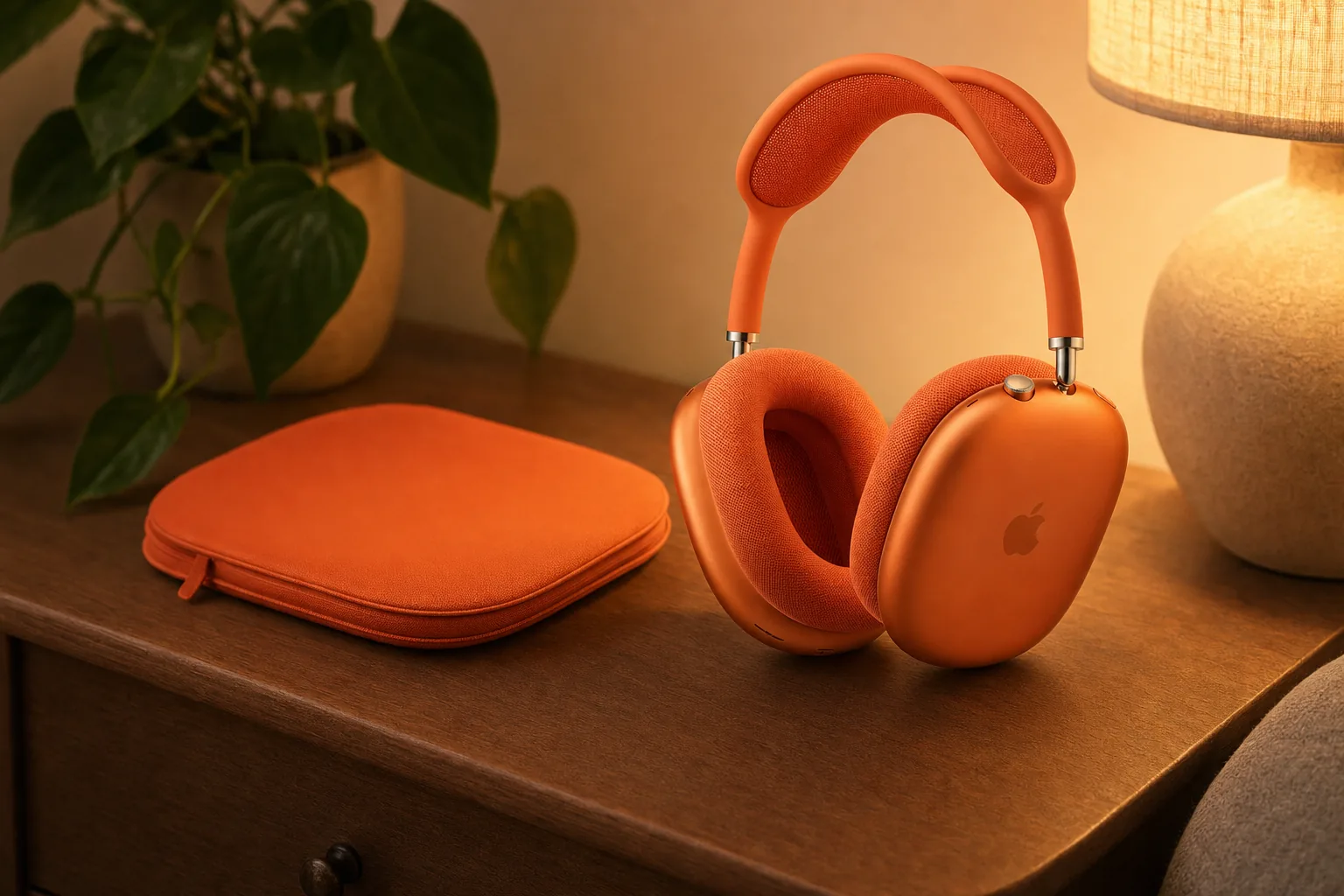
The Smart Case completes the deja vu. It is the identical soft cover - famously compared to a handbag, a bra and worse - that shields the cushions and leaves the headband bare, and it still doubles as the power manager, dropping the headphones into an ultra-low-power state when stowed. That state management works well, and standby drain (an occasional bug-driven complaint on the original) is reportedly solid. But the Max 2 still doesn't fold, the case still doesn't really protect it, and stuffing £499 of aluminium into a rucksack under a laptop remains an act of faith. A proper hard case from a third party is a near-mandatory £20-30 addition, and it says something that five years of user feedback couldn't get one in the box.
10. AirPods Max 2 vs Sony WH-1000XM6 vs Bose QuietComfort Ultra
Here is how the Max 2 stacks up against the two rivals every buyer will cross-shop, using launch RRPs and the published measurements. (Street prices move constantly - Sony's XM6 in particular has already been spotted well below RRP.)
| AirPods Max 2 | Sony WH-1000XM6 | Bose QC Ultra (2nd gen) | |
|---|---|---|---|
| UK RRP | £499 | £399 | £449 |
| Weight | 386g | 254g | ~250g |
| Battery (ANC on) | 20h claimed | 30h claimed / 37h+ measured | Up to 30h |
| ANC (SoundGuys) | ~89% blocked; superb low-end | ~87% blocked; superb mids | Class-leading 1st gen legacy |
| Sound (MDAQS) | 4.3 | 4.8 | Not directly compared |
| Codecs | AAC/SBC + USB-C lossless | LDAC, AAC, SBC, LC3 | aptX Adaptive, AAC, SBC |
| Folds for travel | No | Yes, with hard case | Yes, with hard case |
| Best with | iPhone (essential) | Anything | Anything |
The pattern is the one that has defined this category for years, only with the gaps narrowed. For most people, most reviewers - SoundGuys explicitly - still conclude the Sony WH-1000XM6 is the better buy: lighter, far longer-lasting, measurably better-sounding, better on calls, folding, £100 cheaper and platform-agnostic. What has changed is that the Apple is no longer losing on the headline feature: its noise cancellation now meets or beats Sony's where it matters most, its build remains in a class of one, and inside an iPhone household its software does things no Sony or Bose can. The Bose splits the difference on price with superb comfort and cancellation, and our Nothing Headphone (1) piece covers the value end of the premium market if all three RRPs feel silly.

Check the Sony WH-1000XM6 on Amazon
£349.00 · 13% offprice at 23 Aug, may change
11. Who should buy the AirPods Max 2 - and who shouldn't
Buy the AirPods Max 2 if...
...you're an iPhone owner who wants the best-built, best-integrated headphones money buys and you mostly listen in sessions of a couple of hours rather than all-day marathons. The commute-and-long-haul crowd gets the best low-frequency noise cancelling in the class; the Apple Music subscriber gets true lossless over a cable; the multi-device Apple household gets switching magic nobody else offers. If the original tempted you but the ancient chip put you off, this is the one to buy - the upgrade is real and it touches everything you hear.
Skip it if...
...battery life, weight or travel-friendliness sit anywhere near the top of your list - the Sony XM6 wins all three by huge margins for £100 less - or if you use Android, where the Max 2 loses every smart feature and its best codec story. Owners of the USB-C original with no complaints should also hold: your headphones already do lossless over the wire, and the sound and ANC gains, while real, are refinements on a product you presumably already like.
Consider earbuds instead if...
...£499 is really a ceiling rather than a target. Apple's own AirPods Pro 3 delivers the same H2 feature set - Live Translation included - plus heart-rate tracking and hearing-aid capability for under half the price; our full AirPods Pro 3 review makes the case, and our Sony WF-1000XM6 vs AirPods Pro 3 head-to-head settles the premium earbuds question for both platforms. Over-ears win on immersion and battery; the earbuds win on price, portability and - remarkably - feature parity.
The one-paragraph buying rule
iPhone + shorter sessions + build quality matters = AirPods Max 2. Any other combination - Android, long-haul days, tight budget, travel-light packing - and the Sony WH-1000XM6 remains the sensible default it has been all generation. Neither choice is wrong; they are simply optimised for different owners.
Frequently asked questions
When did the AirPods Max 2 come out?
Apple announced the AirPods Max 2 on 16 March 2026, opened pre-orders on 25 March, and put them on sale in early April 2026 in more than 30 countries including the UK. They cost £499 and come in midnight, starlight, blue, purple and orange.
What's the difference between the AirPods Max and AirPods Max 2?
The sequel swaps the 2019-era H1 chip for the H2, which brings noise cancelling Apple rates at up to 1.5x stronger, a new high dynamic range amplifier with noticeably tighter and cleaner sound, lossless 24-bit/48kHz audio over USB-C, and the modern feature set: Adaptive Audio, Conversation Awareness, Voice Isolation, Live Translation and Siri head gestures. The design, 386g weight, 20-hour battery and Smart Case are unchanged from 2020.
Is the AirPods Max 2 better than the Sony WH-1000XM6?
It depends what you value. Measurements give the Max 2 the edge in low-frequency noise cancelling (about 89% blocked overall) and it has the nicer build, while the £399 Sony is 132g lighter, lasts nearly twice as long per charge, scores higher for sound quality, folds for travel and works fully with any phone. Most reviewers still name the Sony the better buy for most people; the Apple wins inside an iPhone household.
Does the AirPods Max 2 support lossless audio?
Yes - wired. Connect the USB-C cable and you get true lossless 24-bit/48kHz playback plus ultra-low latency, fed through the new amplifier. Over Bluetooth it still uses only AAC and SBC: there's no LDAC, aptX or wireless lossless, which remains the spec sheet's biggest gap at £499.
How long does the AirPods Max 2 battery last?
Up to 20 hours with noise cancelling on - exactly the same as the 2020 original, and the review's biggest criticism. Rivals do far better: Sony's WH-1000XM6 measured over 37 hours in independent testing and Bose's QuietComfort Ultra claims up to 30. Twenty hours still covers any flight with room to spare, but at this price the stagnation is hard to excuse.
Do the AirPods Max 2 work with Android?
Only as basic Bluetooth headphones. They'll pair and play over AAC/SBC, but you lose Live Translation, Adaptive Audio, automatic device switching, spatial audio personalisation and easy firmware updates - all of which need an Apple device. Android owners get far better value from the Sony WH-1000XM6 or Bose QuietComfort Ultra, which also carry superior codecs for Android phones.
Should I upgrade from the original AirPods Max?
If you own the 2020 Lightning model and use it daily, yes - the ANC jump, the sound upgrade and five years of missing features arrive at once, at £50 less than you originally paid. If you own the 2024 USB-C version, the case is weaker: you already have wired lossless, so you'd be paying £499 mainly for better ANC, the amplifier and the H2 features. Wait for a discount unless one of those is a daily pain point.
The bottom line on the AirPods Max 2
The AirPods Max 2 is the upgrade the original should have received years ago, and judged on what changed, it is excellent: the H2 transplant delivers class-leading low-frequency noise cancelling, a genuine and audible sound improvement, wired lossless done properly, and the smartest feature set in headphones - all £50 cheaper than the original launched at. Inside the Apple ecosystem, nothing else offers this combination, and for commuters and frequent flyers with an iPhone it is an easy recommendation.
But Apple's choice to freeze the hardware makes the verdict conditional. The 20-hour battery was mediocre in 2020 and is indefensible against a Sony that doubles it; 386g remains a lot of headphone to wear past hour three; and the unprotective Smart Case returns as a five-year-old punchline. That is why the measured, cross-platform pick for most people is still the Sony WH-1000XM6 at £399 - and why the Max 2, for all its silicon brilliance, wins on terms only Apple loyalists will fully accept. If that's you, buy with confidence. If it isn't, the £100 you save on the Sony buys a lot of forgiveness. Meanwhile our AirPods Pro 3 review covers the same brains in a £219 package - the quiet threat to both.
Sources & further reading: Apple Newsroom (16 March 2026 announcement) · Macworld · MacRumors · SoundGuys (lab measurements & MDAQS scores) · Tom's Guide · TechRadar · Trusted Reviews · T3 · Digital Trends. Launch RRPs only, correct as of July 2026; street prices move daily and we don't publish scraped prices in reviews.