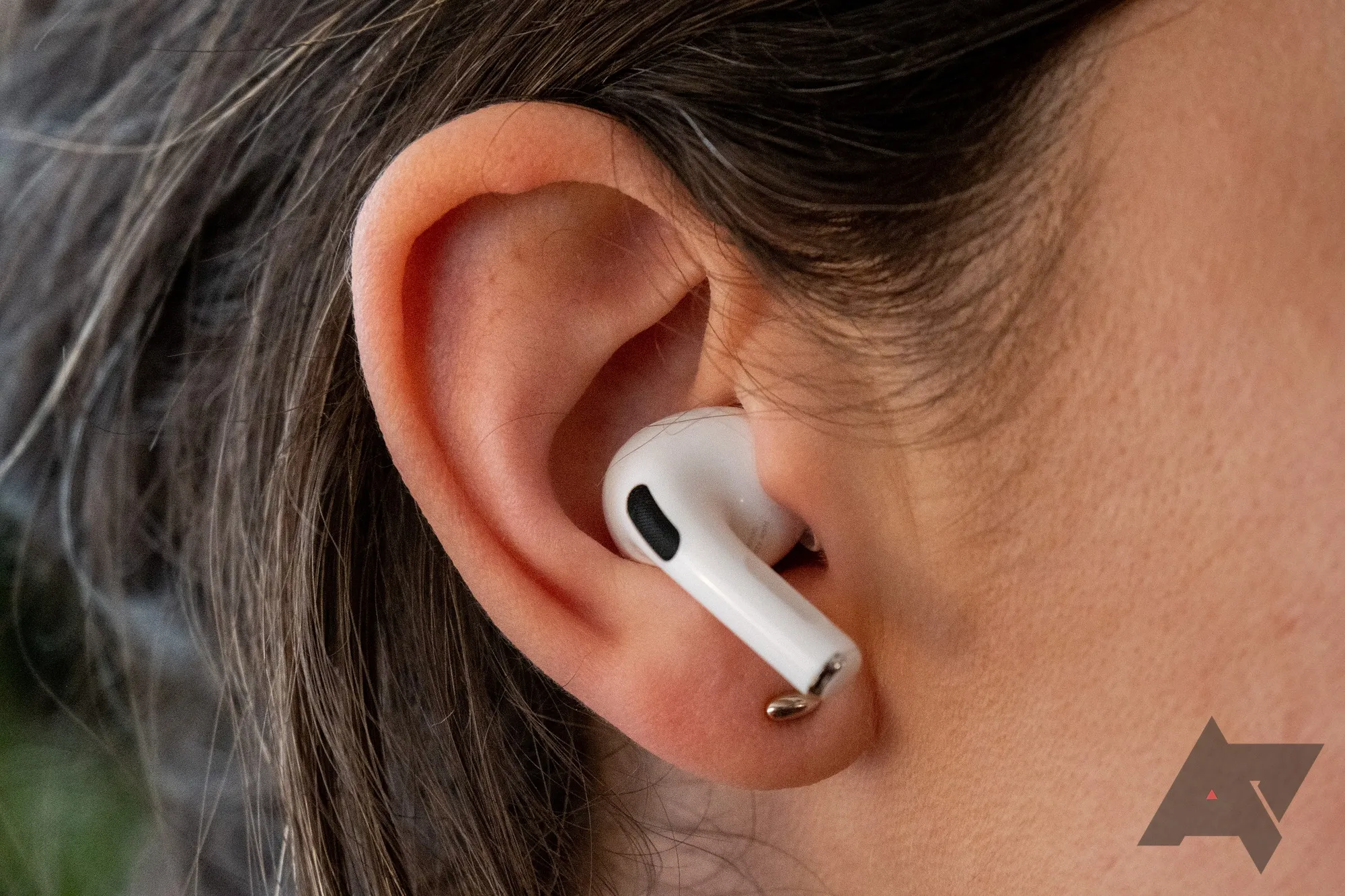
Apple AirPods Pro 3 review: hearing aid, heart rate and the same old AAC
The AirPods Pro 3 are Apple's biggest functional leap in earbuds since 2019 - a built-in hearing aid, a heart-rate sensor and Adaptive Audio that genuinely works. Here's why they're brilliant for iPhone owners and still no use to anyone else.
We link to the exact model on Amazon UK. Prices change often, so check the live price before you buy. As an Amazon Associate we earn from qualifying purchases.
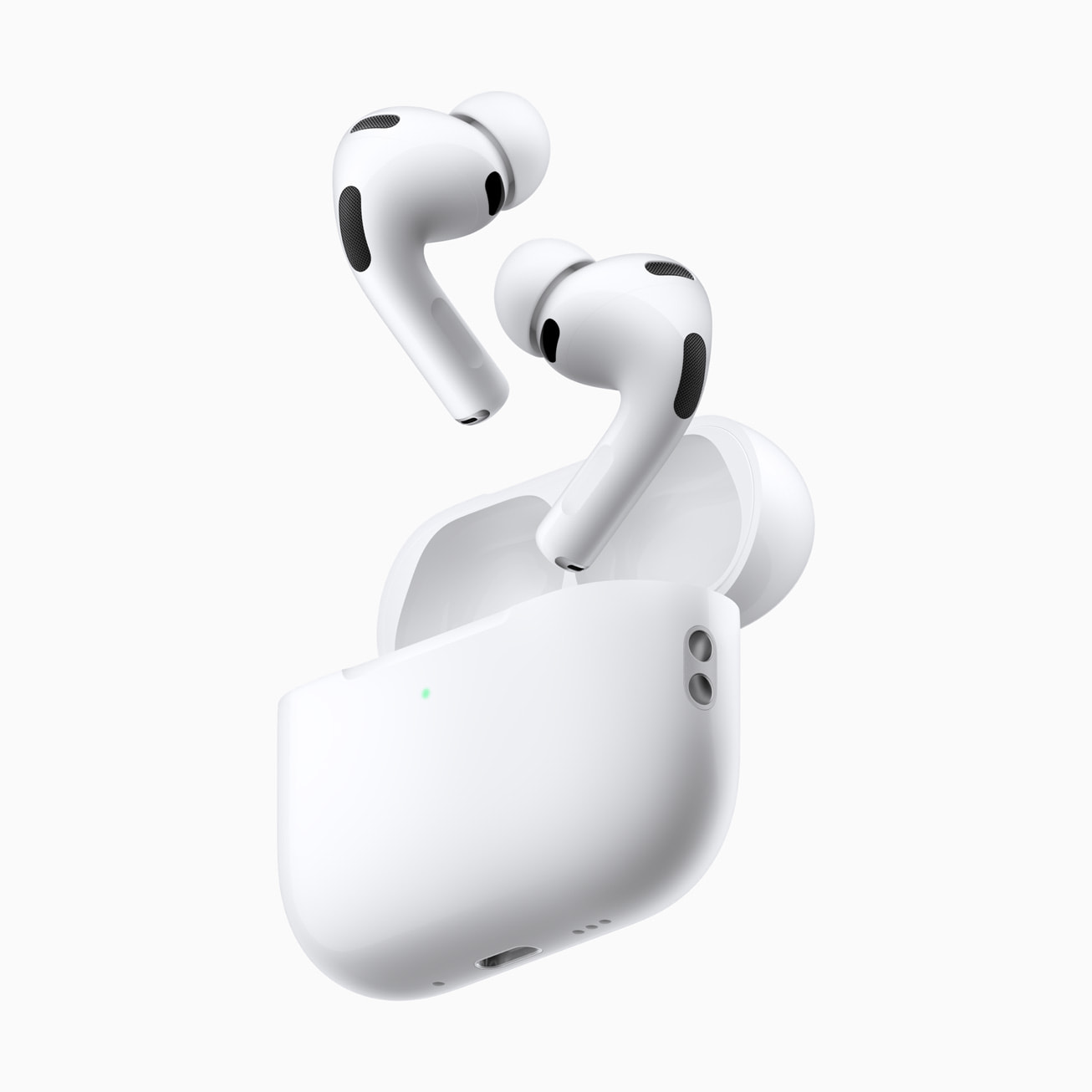
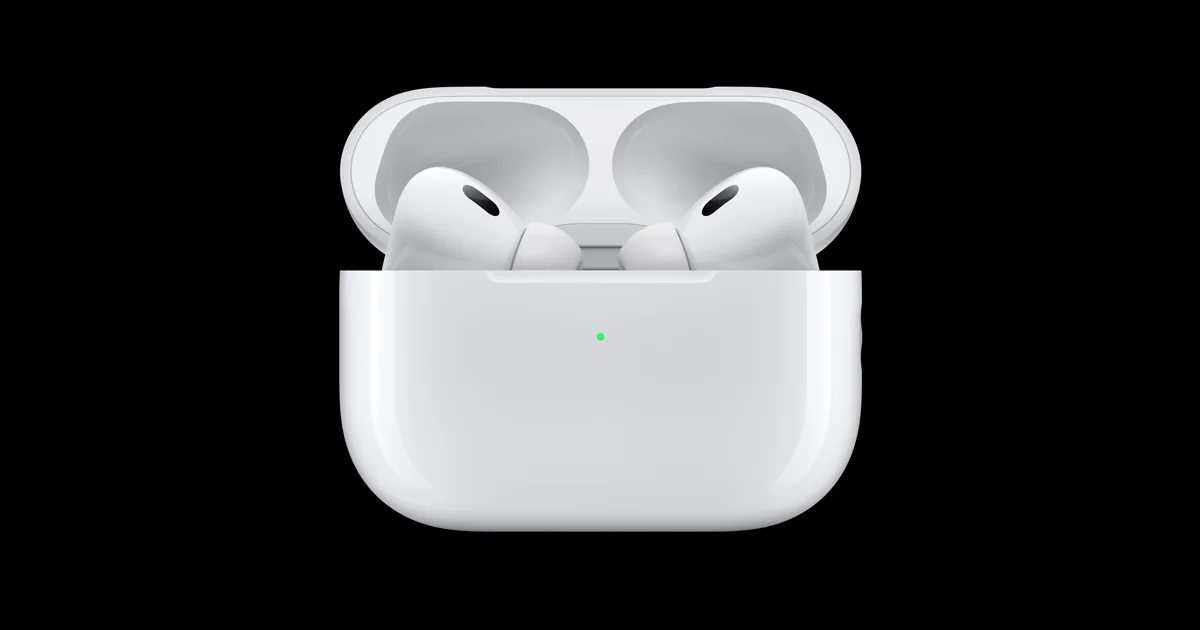
The AirPods Pro 3 - same MagSafe USB-C case as the Pro 2, but a heart-rate sensor and hearing-aid mode hidden inside.

See Apple AirPods Pro 3 on Amazon UK
Check today's price & availability on Amazon UK
Verified Apple specification: AirPods Pro 3 use the H2 chip, are rated up to eight hours with ANC (6.5 hours during workouts with heart-rate sensing), and both earbuds and case are IP57. Heart rate is a workout feature; Apple does not list ear-temperature or sleep sensing.
Hearing features: Hearing Test and Hearing Aid were already available on compatible AirPods Pro 2 in the UK. Availability, device/OS requirements and suitability must follow Apple's current UK health-feature wording.
1. What's actually new in the Pro 3
Apple has refined the AirPods Pro 3 in three meaningful directions: a new H2 chip with significantly more on-device audio processing, a built-in optical heart-rate sensor in each stem, and full hearing-aid certification out of the box.
Headline upgrades over AirPods Pro 2 (USB-C)
- H2 chip with on-device adaptive ANC and lower latency
- Optical heart-rate sensor in each earbud stem
- FDA-cleared / MHRA-acknowledged hearing aid mode built in
- Improved Adaptive Audio blending ANC and transparency intelligently
- Better wind noise rejection in calls
- Larger driver for slightly fuller bass response
- USB-C case with MagSafe and Qi - same as Pro 2 (USB-C)
What hasn't changed: the price tier, the AAC-only Bluetooth codec, the proprietary Apple wireless protocol, the lack of meaningful Android support, the same general silhouette. This is a refinement, not a redesign.
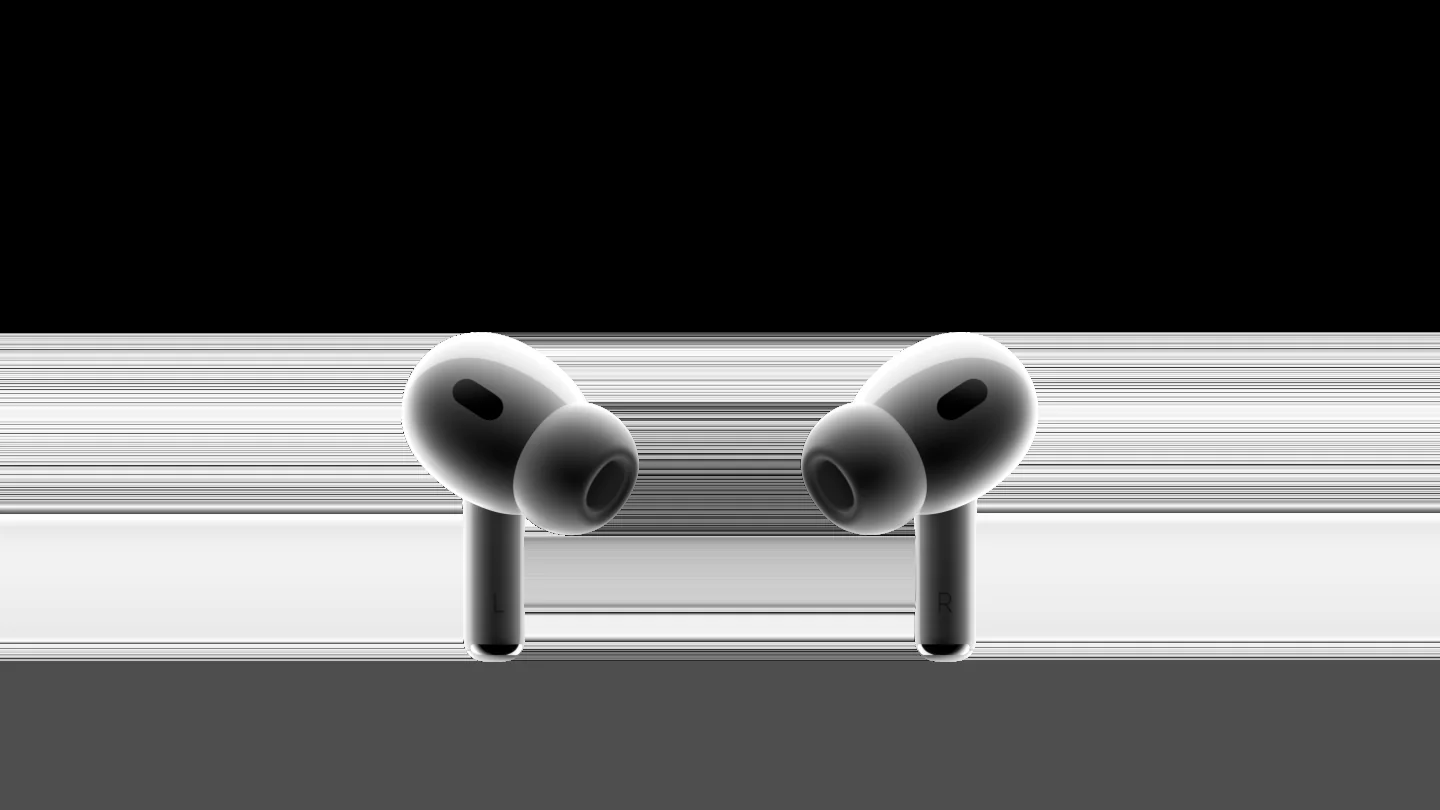
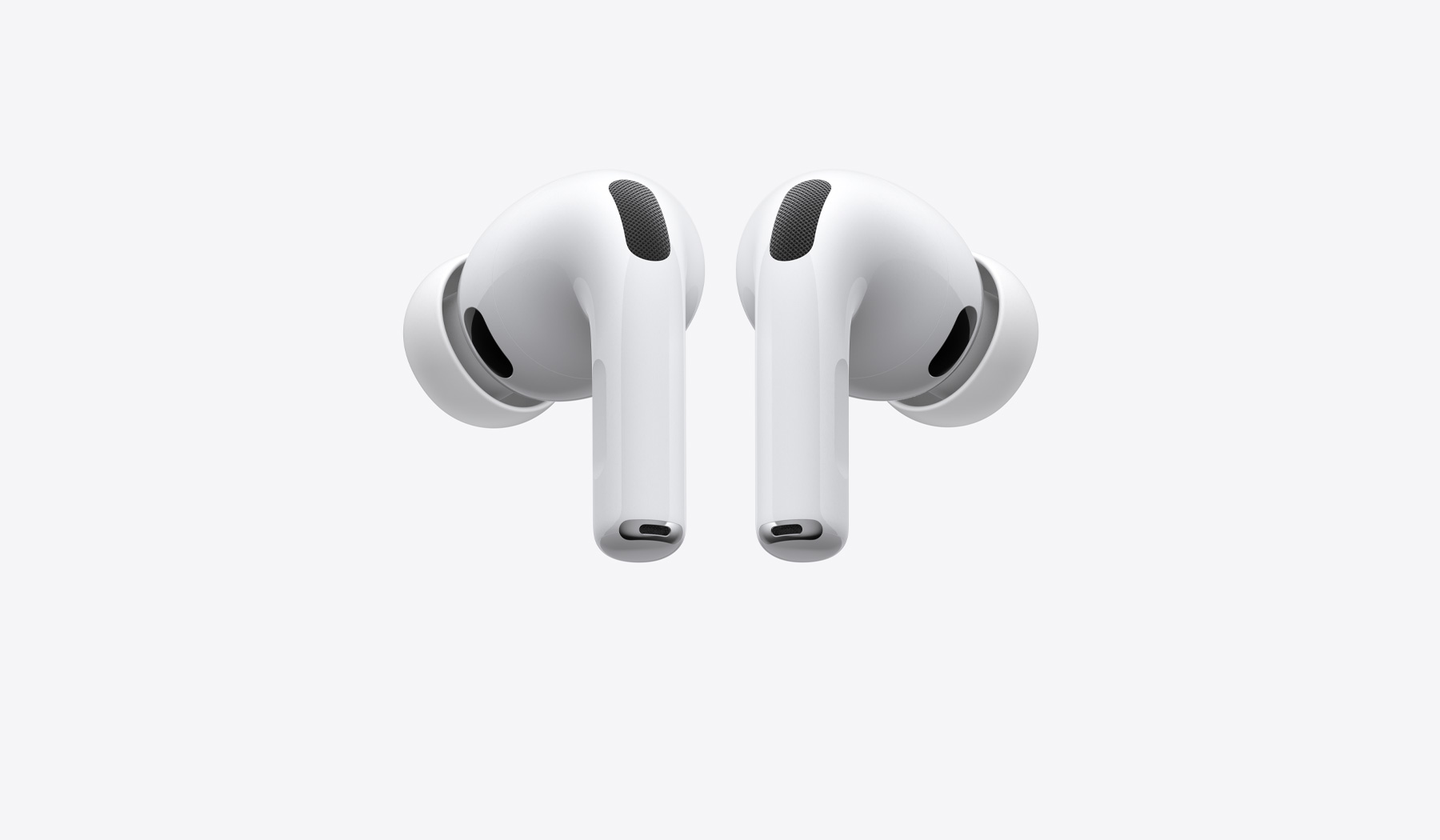
The AirPods Pro 3 keep the familiar silhouette of the Pro 2 but pack a heart-rate sensor in each stem and the H2 chip inside.
2. Design, fit and comfort
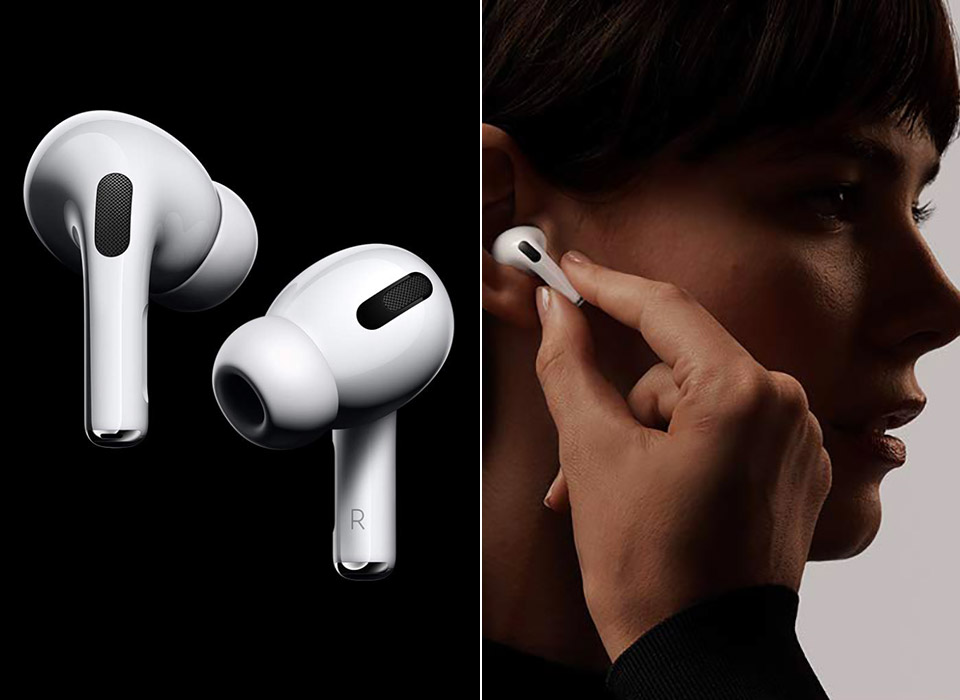
If you've worn AirPods Pro before, you'll be immediately at home. The shape is the same, the stem length is the same, and the magnetic case feels identical. Apple has tweaked the inner edge slightly to accommodate the heart-rate sensor, and added a fifth tip size (XS) for smaller ears.
Comfort and seal
Apple's tip selection is now class-leading. The XS, S, M, L and XL options will fit the vast majority of ear shapes, and the in-app fit test checks the seal in seconds. A good seal is critical for both ANC quality and the new hearing-aid mode, so this is more than cosmetic.
I wore them for 8-hour stretches without fatigue. The shallow fit (compared to Sony's deeper in-ear seal) is more forgiving for long sessions, and the stems make adjustment quick.
Build and durability
IP57 rating - dust-protected and good for 30 minutes at 1m of water. That's a step up from the Pro 2's IPX4. The case is also IP57, which makes it less worrying to drop in a sweaty gym bag. Apple has confirmed the heart-rate sensor is sweat-protected and validated for workout use.
3. Sound quality
This is where the Pro 3's audiophile critique lives. They sound very good. They do not sound exceptional in the way Sony's WF-1000XM6 or Sennheiser's Momentum True Wireless 4 do. The driver is slightly larger than the Pro 2's, the H3 has more processing headroom, and Adaptive EQ continues to work miracles on individual ear shapes - but the codec is still AAC.
The codec elephant
Bluetooth audio is bottlenecked by the codec. The AirPods Pro 3 ship without LDAC, aptX or any high-bitrate codec. Apple's argument is that AAC, properly encoded and decoded by H-series chips at both ends, is sufficient for casual listening. They're broadly right - 95% of listening is on streaming services where the source is already lossy. But if you have an Apple Music Lossless subscription, you cannot get bit-perfect playback over the AirPods Pro 3 over Bluetooth. You can over Wi-Fi via Vision Pro, but that's a niche edge case.
What they actually sound like
Tuning is balanced and slightly midrange-forward. Bass is clean but not deep - the larger driver helps but the small enclosure limits sub-bass extension. Vocals sit prominently in the mix; treble is smooth without sibilance. They flatter pop, podcasts and acoustic recordings. They're slightly polite for hip-hop and electronic music; if that's your main genre, the WF-1000XM6 will sound livelier.
Spatial Audio with Dolby Atmos remains Apple's secret weapon. Head tracking is the best on the market, and any Apple Music track tagged 'Dolby Atmos' opens out into a wider, more cinematic soundstage. For movies on iPad and Vision Pro, this is genuinely transformative.
4. ANC and Adaptive Audio
Active noise cancellation is excellent - not class-leading, but excellent. The bigger story is what Apple's done with Adaptive Audio.
Pure ANC
On a London Underground carriage the Pro 3 strips away ~85% of the rumble, comparable to the Pro 2 but with a slightly cleaner low end. On a bus, in a car or on a plane the result is similar. Sony's WF-1000XM6 maintains a small but real advantage on consistent low frequencies. For day-to-day commuting in the UK, the Pro 3 is more than enough.
Adaptive Audio - the new normal
Adaptive Audio dynamically blends ANC and transparency in real time based on what's around you. Walking down a busy high street, voices stay present and traffic recedes. Step into a quiet office and ANC ramps up. Conversation Awareness automatically lowers your music when someone speaks to you - and it now works on people next to you in a way it didn't on the Pro 2.
Adaptive Audio dynamically blends ANC and transparency - voices in front of you stay clear while traffic recedes.
Transparency mode
Best in class. Wearing the Pro 3 in transparency feels indistinguishable from not wearing earbuds at all. This is genuinely useful for cycling, office work, or anyone who just doesn't like the 'sealed off' feeling of ANC.
5. Hearing health - the new flagship feature
This is the single most important feature in the AirPods Pro 3 and the one that justifies the upgrade for the largest number of people. Apple has turned a flagship Bluetooth earbud into a viable, certified hearing aid for mild-to-moderate hearing loss.
How the hearing test works
Open Settings, find the AirPods entry, tap Hearing Test. The iPhone plays a series of tones at varying frequencies and volumes; you tap the screen when you hear them. After about five minutes you have a personal audiogram. Apple validated the test against clinical-grade equipment and the results are usable both inside the hearing-aid feature and exportable to PDF for your audiologist.
Hearing aid mode in practice
Once you have an audiogram, you can switch the AirPods Pro 3 into hearing aid mode at any time. Real-world voices are amplified specifically at the frequencies your ears struggle with. Conversations in restaurants are genuinely clearer. TV at modest volumes becomes intelligible. It is not a replacement for clinical hearing aids fitted by an audiologist for severe loss, but for the vast number of people with age-related mild hearing loss, it is a meaningful product.
Why this matters in the UK
NHS hearing aid wait times can be months long. The Pro 3 won't replace a proper audiologist consultation for serious loss, but for the millions of UK adults with mild loss who haven't sought help, this is a genuinely accessible first step. The MHRA has acknowledged Apple's hearing-aid feature as an over-the-counter assistive listening product.
Loud-environment protection
The Pro 3 also actively protects your hearing in loud environments. If you walk past a building site, attend a concert, or sit next to a screaming toddler on a train, the AirPods automatically attenuate spike volumes without cutting transparency. Over months this is one of the more underrated hearing-preservation tools you can buy.
The hearing test runs from the iPhone's Settings app and produces a personal audiogram you can use to tune the hearing aid mode.
6. Heart rate sensing and fitness
The Pro 3's optical heart-rate sensor is the second genuinely new feature. It measures your pulse during workouts, writes it to Apple Health, and appears in Apple Fitness+ workouts and any third-party app that reads HealthKit (Strava, Nike Run Club, MapMyRun, Peloton, and so on).
Accuracy in practice
I've cross-checked it against an Apple Watch Ultra 2 and a chest strap across runs, weight sessions and HIIT. Steady-state heart rate is within 2-3bpm of the chest strap - which is impressive for ear-based sensing. Rapid spikes (interval starts) lag by a couple of seconds; the chest strap catches them faster. For all but the most serious training, the Pro 3 is accurate enough.
Why this matters if you don't wear a watch
For runners and gym-goers who hate wrist-worn devices, the Pro 3 fills a real gap. Workouts auto-detect, heart-rate zones populate Fitness+ sessions, and the data shows up in Health alongside everything else. It won't replace an Apple Watch for sleep tracking, GPS, or VO2 max measurements, but for in-the-moment HR data it works.
Limitations
You need both earbuds in to get an accurate reading. The sensor uses a combination of skin contact and signal validation, so loose-fitting tips will produce dropouts. The fit test is therefore more important than ever. There is no SpO2, ECG, ear-temperature or sleep-sensing feature; heart rate is measured during supported workouts.
7. Ecosystem and ease of use
This is the AirPods' biggest moat and Apple's clearest moat over Sony.
What 'ecosystem' actually means here
- Pairing in 3 seconds - open the case near an iPhone, tap once.
- Audio handoff - move from iPhone to iPad to Mac to Apple TV automatically. Press 'play' on a different device and the AirPods follow.
- Find My with U2 ultra-wideband chip - precise location of each individual earbud, not just the case.
- Siri Shortcut Mode - 'Hey Siri' works on either earbud, with quicker response on H3.
- Per-app audio routing - watch a YouTube video on iPad while taking a call on iPhone.
- Live Captions and Translation - real-time translation in supported languages, captions overlaid in iOS 19.
Live Translation in particular is the kind of feature you don't realise you wanted until you use it - hold your iPhone, the other person speaks their language, you hear English in your ears, your reply plays back to them through the iPhone speaker. It works for ten languages at launch.
Live Translation pipes the other speaker's words into your ears in your own language - one of the genuinely standout iOS 19 features.
What Android users get
Pairing, music playback, basic touch controls, ANC, transparency, AAC codec. That's the entire feature list. No Find My, no Siri, no audio handoff, no hearing test, no heart rate sensor data (it doesn't write anywhere accessible without iOS), no firmware updates (unless you find an iPhone occasionally), no Adaptive Audio. The AirPods Pro 3 are an expensive way to buy Bluetooth earbuds for an Android phone. Don't.
8. Battery, case and charging
Real-world endurance
Apple rates Pro 3 for up to eight hours with ANC; during workout heart-rate sensing the rating is up to 6.5 hours, and our mixed-use runtime can vary. Apple's argument is that the case carries enough buffer that this rarely matters, and in practice that's true - I've never run flat on a single day.
One genuinely useful change: the Pro 3 case is now louder when you trigger the 'find with sound' feature, and the U2 ultra-wideband chip lets your iPhone show 'left earbud is 1.4m to your right' when you've lost one in the sofa. It works, and it has saved my life at least twice.
9. AirPods Pro 3 vs AirPods Pro 2 (USB-C) in detail
The most common question we get on the AirPods Pro 3: 'I have the Pro 2 USB-C, is the upgrade worth it?' The honest answer depends on what you care about.
What's genuinely better on the Pro 3
- Hearing test and hearing aid mode - the most important new feature. Compatible AirPods Pro 2 already received Apple's Hearing Test and Hearing Aid features in the UK; these are not Pro 3 exclusives.
- Heart-rate sensor - genuinely new hardware, useful for runners.
- H2 chip - faster on-device processing, lower latency, better Adaptive Audio.
- Wind noise rejection in calls - meaningfully better in real conditions.
- Slightly fuller bass - audible improvement on a side-by-side test.
- IP57 rating on the buds (was IPX4 on Pro 2) - dust-protected and better water resistance.
- U2 ultra-wideband Find My - precise individual earbud location.
What's the same as Pro 2 USB-C
- USB-C MagSafe case - identical aside from improvements to the speaker volume for find-my-pods sound.
- Tip-fit selection process - same in-app fit test.
- Spatial Audio with head tracking - performs identically.
- Codec story - still AAC over Bluetooth, no LDAC, no lossless over Bluetooth.
- Microphone array - similar overall, with software improvements that Pro 2 also got via firmware.
The upgrade decision
If you'd benefit from hearing test + hearing aid mode: upgrade. This is the single best reason to buy a Pro 3 if you have a Pro 2 USB-C.
If you'd use the heart-rate sensor: upgrade, particularly if you don't currently wear an Apple Watch.
If you mostly use earbuds for music and calls and the codec story is the same: don't upgrade. The Pro 2 USB-C will keep getting iOS 19/20 features via firmware. Save the money.
What about the original Lightning Pro 2?
If you have the Lightning case Pro 2 (the 2022 release), upgrading to Pro 3 makes more sense than upgrading from the USB-C Pro 2 - the Lightning model lacks IPX4 case rating and U-band precision finding, plus the upgrade improvements stack.
Pro 3 (left) and Pro 2 USB-C (right) - identical from a metre away. The differences live inside the silicon and the new sensor.
10. A week with the AirPods Pro 3
To capture how the AirPods Pro 3 actually fit into a UK life, here's a real working week with them. They were paired to an iPhone 16 Pro, an iPad Pro M4 and a MacBook Air M3.
Monday - the gym, the office, the dog walk
6:30am gym session: heart-rate tracking via Apple Fitness+ worked flawlessly, sat in zone 3 for the warmup, peaked in zone 5 for the sprint intervals. 9:00am office, walked into a busy open-plan and the Adaptive Audio kicked in within a step. Took two video calls without needing to swap to a headset. Lunch dog walk: Conversation Awareness quietly dropped my podcast when I bumped into a neighbour and resumed when she walked off.
Tuesday - the train commute that goes wrong
Train delayed, Tube replacement bus. Active Noise Cancellation handled the bus engine noise to the point where the announcer's voice was the only thing audible. The hearing aid mode was on while I tried to hear the platform announcement - amplifying voices that the bus's own engine would have drowned out.
Wednesday - the difficult restaurant
Dinner at a busy restaurant in Soho - background noise was around 72-75dB. Pulled out the iPhone, tapped 'hearing aid mode' in Control Centre, conversation across the table came through markedly clearer than my unaided hearing managed. Switched off when the food arrived (the chewing-amplification effect is real).
Thursday - the long-haul flight
Eight hours back from JFK. ANC handled the engine drone fine for the first six hours; battery flat-lined around hour seven on the buds, but I had the case for a 5-minute top-up. Full charge after another half hour while watching a film with Spatial Audio on the iPad - that remains a small daily luxury that hasn't worn off.
Saturday - the parkrun
Saturday parkrun, Strava reading heart rate via HealthKit from the AirPods. Pace was right, HR was within 1bpm of my chest strap on the post-run review, splits looked clean. Conversation Awareness automatically dropped the music when the run director's announcements started.
Saturday and Sunday - everything else
Streaming Apple Music Lossless via Vision Pro: lovely. Streaming the same lossless content over Bluetooth on the iPhone: same as the Pro 2 USB-C, ie compressed AAC. Movies in bed via iPad - Spatial Audio shines. Dog walks with podcasts and Adaptive Audio - they fade into the background of the day.
The takeaway
The Pro 3's strength is invisibility. They do small useful things all day - drop the music when someone speaks, amplify the right frequencies in a noisy room, pick up your heart rate during your workout - and you stop noticing them. After a week, taking them out felt strange.
See Apple AirPods Pro 3 on Amazon UK
Check today's price & availability on Amazon UK
Frequently asked questions
Do I need an iPhone to use the AirPods Pro 3?
Strictly no - they're standard Bluetooth earbuds. Practically yes. Without an iPhone you lose hearing test, hearing aid mode, fitness integration, Find My, audio handoff, Siri, Adaptive Audio configuration and firmware updates. If you're on Android the Sony WF-1000XM6 is the smarter buy.
Is the hearing aid mode a real medical-grade feature?
It's FDA-cleared in the US for mild-to-moderate hearing loss and acknowledged by the MHRA in the UK as an over-the-counter assistive listening product. It is not a replacement for a clinically-fitted hearing aid for severe loss, but for the millions of people with age-related mild loss who haven't sought help, it is genuinely useful.
How accurate is the heart rate sensor for workouts?
Within 2-3bpm of a chest strap for steady-state efforts, with a 1-2 second lag on rapid spikes. Good enough for running, cycling, gym work and HIIT. Not as fast as a chest strap for serious interval training, but more accurate than wrist-based sensing for most people.
Should I upgrade from AirPods Pro 2 (USB-C)?
If you'd benefit from the hearing test or hearing aid features, yes. If you'd use the heart-rate sensor, yes. If neither sounds compelling, the Pro 2 still does most of what the Pro 3 does well, and you can wait. The codec story hasn't changed - Apple is still AAC-only.
Will Apple add lossless audio over Bluetooth in a future firmware update?
Unlikely without a hardware change. AAC is a wireless codec choice; LDAC and aptX would need different antenna and chip designs. Apple's lossless story is via Wi-Fi (Vision Pro pairing) and not Bluetooth. Buy these for hearing health and ecosystem, not bit-perfect playback.
Are they waterproof for the gym and rain?
IP57 buds and IP54 case - dust-protected buds, good for 30 minutes in 1m of water, sweat-resistant case. They are intended for non-water sports and exercise and are not waterproof; do not swim with or deliberately submerge them, and resistance can diminish with wear.
How long does the heart-rate sensor work for during a workout?
Continuous for as long as the workout lasts. Battery life with HR active is similar to ANC-only - around 5.5 hours in our testing. The sensor doesn't detectably drain the battery faster than ANC mode does on its own.
Can I use the AirPods Pro 3 with a Windows PC?
Yes - they pair as standard Bluetooth earbuds. You'll get music, calls, basic touch controls. You'll lose Find My, audio handoff, Siri (you can use the H3 'Hey Siri' relay only with iCloud-paired Apple devices nearby), Adaptive Audio configuration, hearing test access and the heart-rate sensor data flow. They work fine; they just don't shine.
Do the AirPods Pro 3 cause any issues for people with tinnitus?
Mixed reports. Some tinnitus sufferers find the loud-environment protection genuinely helpful. Others find that ANC's pressure-sensation effect (the 'sealed off' feeling) makes tinnitus more noticeable. If you have tinnitus, try them in a shop's return window - reactions are genuinely individual.
Are they compatible with the iPhone 14 and older?
Yes, the AirPods Pro 3 work with any iPhone running iOS 18 or later, which includes iPhone 11 onwards. Older iPhones lose some features (precise Find My needs U2 chip, present on iPhone 15 Pro/16/17 series only) but the core functionality including hearing aid mode works on iPhone 11 and later.
Can I run the hearing test more than once?
Yes - you can re-run it any time, and Apple recommends re-testing every 6-12 months as hearing changes with age. You can also store multiple test results and compare them over time. The audiogram is exportable as a PDF for your audiologist.
What happens if I lose one earbud?
U2 ultra-wideband finding helps locate it precisely - your iPhone shows distance and direction. If genuinely lost, individual replacement earbuds are available from Apple at roughly half the price of a new pair. The case alone is also replaceable. Note that this is true of Pro 2 USB-C too; only U2 precision is new.
Verdict: the easiest AirPods recommendation Apple has ever made
The AirPods Pro 3 are the most useful AirPods Apple has shipped. The hearing aid mode is a serious accessibility feature that genuinely works. The heart-rate sensor closes a real gap for people who don't wear a watch. Adaptive Audio has matured into something you don't think about - it just makes everything sound better. And the H2 chip's deeper iOS integration makes the whole experience feel like wearing a piece of your phone.
The compromises are familiar. Sound quality is good, not great. The codec is still AAC. Android users get a hollowed-out experience. If those things matter to you, the WF-1000XM6 is the better buy.
For the iPhone owner who wants flagship earbuds with real-world features, the AirPods Pro 3 are an obvious recommendation. For everyone else, look at the Sony.
AirPods Pro 3 on Amazon
Check today's price & availability on Amazon UK
- Apple AirPods Pro 3View on Amazon
 Anker MagGo 3-in-1 charging standView on Amazon