
Nothing Headphone (1) vs Sony and Bose: Can a Newcomer Compete?
Nothing's first pair of over-ears arrives with a KEF-tuned soul, a transparent shell and a genuinely fresh control scheme. But against the noise-cancelling royalty, is bold design enough?
We link to the exact model on Amazon UK. Prices change often, so check the live price before you buy. As an Amazon Associate we earn from qualifying purchases.
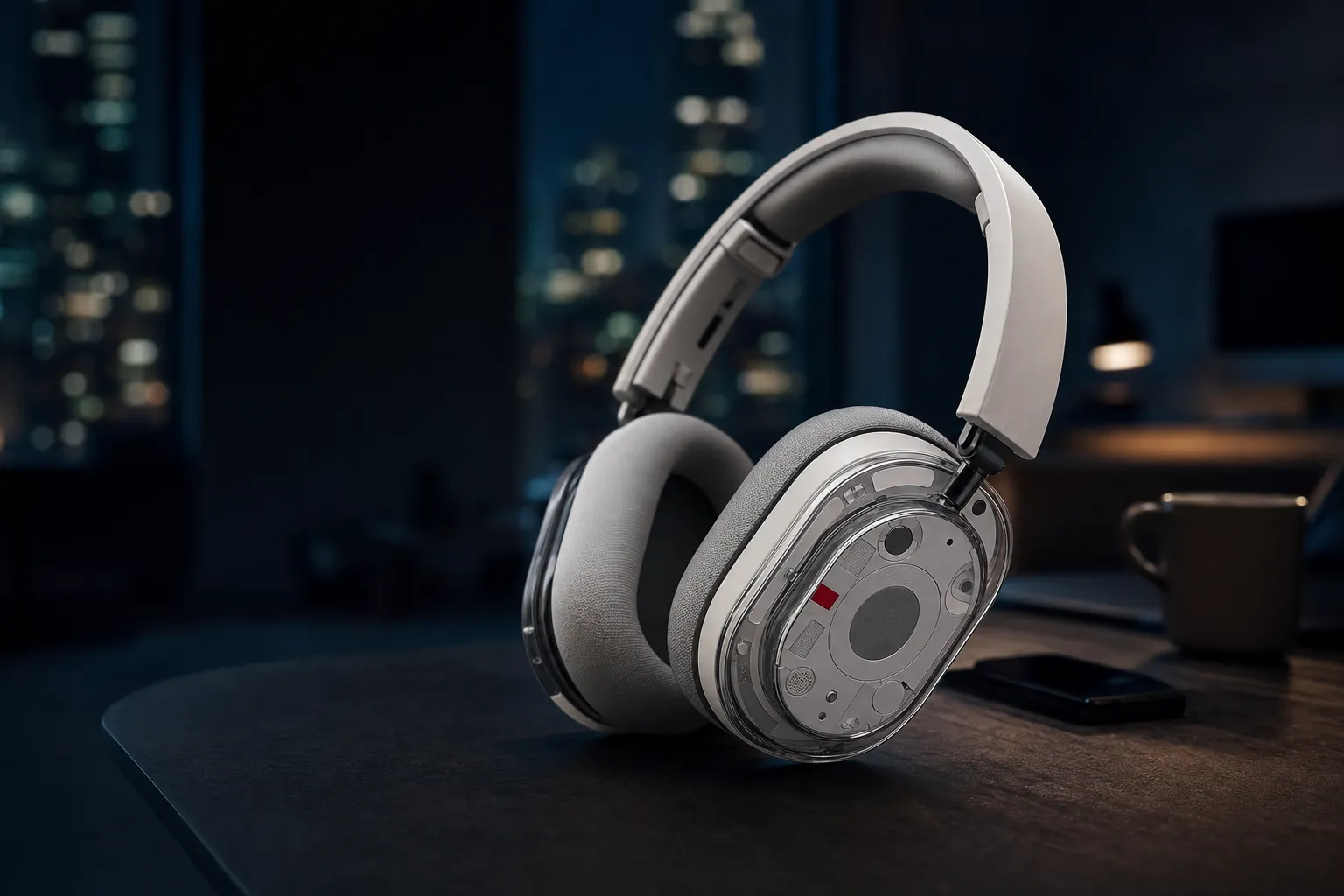
The Nothing Headphone (1) makes no attempt to blend in — and that's rather the point.
Nothing has spent four years quietly building a reputation for products that look like nothing else on the shelf — those see-through earbuds, the glyph-lit phones, the deliberately retro-futurist aesthetic. With the Headphone (1), announced on 1 July 2025, the London brand finally tackles the over-ear category. And it's walking straight into a ring occupied by two heavyweight champions: Sony, with its all-conquering 1000X series, and Bose, with the QuietComfort dynasty that more or less invented mainstream noise cancellation. So the question that hangs over this entire review is a simple one — can a newcomer genuinely compete? I've spent a good while with the Headphone (1), and the answer is more interesting than a straight yes or no.
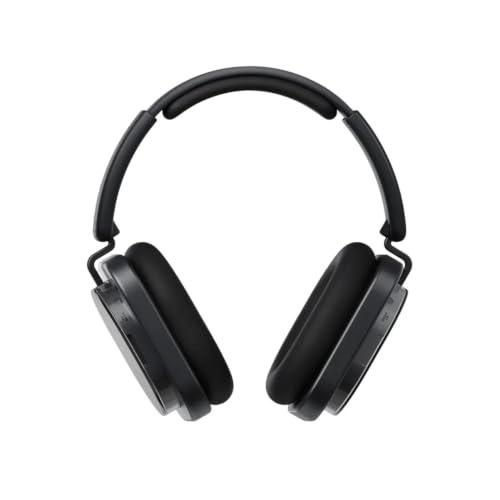
See Nothing Headphone (1) on Amazon UK
Check today's price & availability on Amazon UK
What makes this launch worth your attention isn't just the styling, though we'll get to that shock-of-the-new cassette-deck design soon enough. It's that Nothing has partnered with KEF — the venerable British high-end audio house — to tune the sound, fitted a generous 40mm dynamic driver into each cup, and built a control system that, frankly, embarrasses the touch panels on rivals costing more. Throw in 42 dB of active noise cancellation, LDAC support, and a battery figure that runs rings around the establishment, and you've got a debut that refuses to be dismissed as a vanity project.
Over the next several thousand words I'll dig into the design, the sound signature, the noise cancelling, the battery, the controls and the software — and at every step I'll line the Headphone (1) up against what Sony and Bose are doing in the same space. By the end you'll know exactly where this newcomer earns its place and where it still has growing up to do.
The Headphone (1) at a Glance
Before we get philosophical about whether design language matters more than driver size, let's lay the hard facts on the table. These are the headline specifications that define what you're actually buying, and they tell a confident story for a first-generation product.
A few of these figures deserve a double-take. That 40mm driver with a PU diaphragm and nickel coating is a properly substantial transducer — bigger isn't automatically better in headphones, but it gives Nothing room to move air and produce authoritative bass without straining. The 20 Hz to 40 kHz frequency response comfortably spans the limits of human hearing and then some, which matters chiefly when you're feeding it high-resolution material over LDAC.
And then there's that battery. Up to 80 hours with ANC switched off, or 35 hours with it on, over AAC. If you prefer to run the higher-bandwidth LDAC codec, you'll see roughly 54 hours ANC-off and 30 hours ANC-on. We'll return to those numbers when we put them next to Sony and Bose, but suffice to say the Headphone (1) is built to go the distance.
The Headphone (1) carries a 1,040 mAh internal battery and charges over USB Type-C in roughly two hours. A quick five-minute top-up returns up to five hours of ANC-off playback, or around 2.4 hours with ANC engaged — handy when you're dashing out the door.
Design: Nothing Plays Its Own Tune
See Nothing Headphone (1) on Amazon UK
Check today's price & availability on Amazon UK
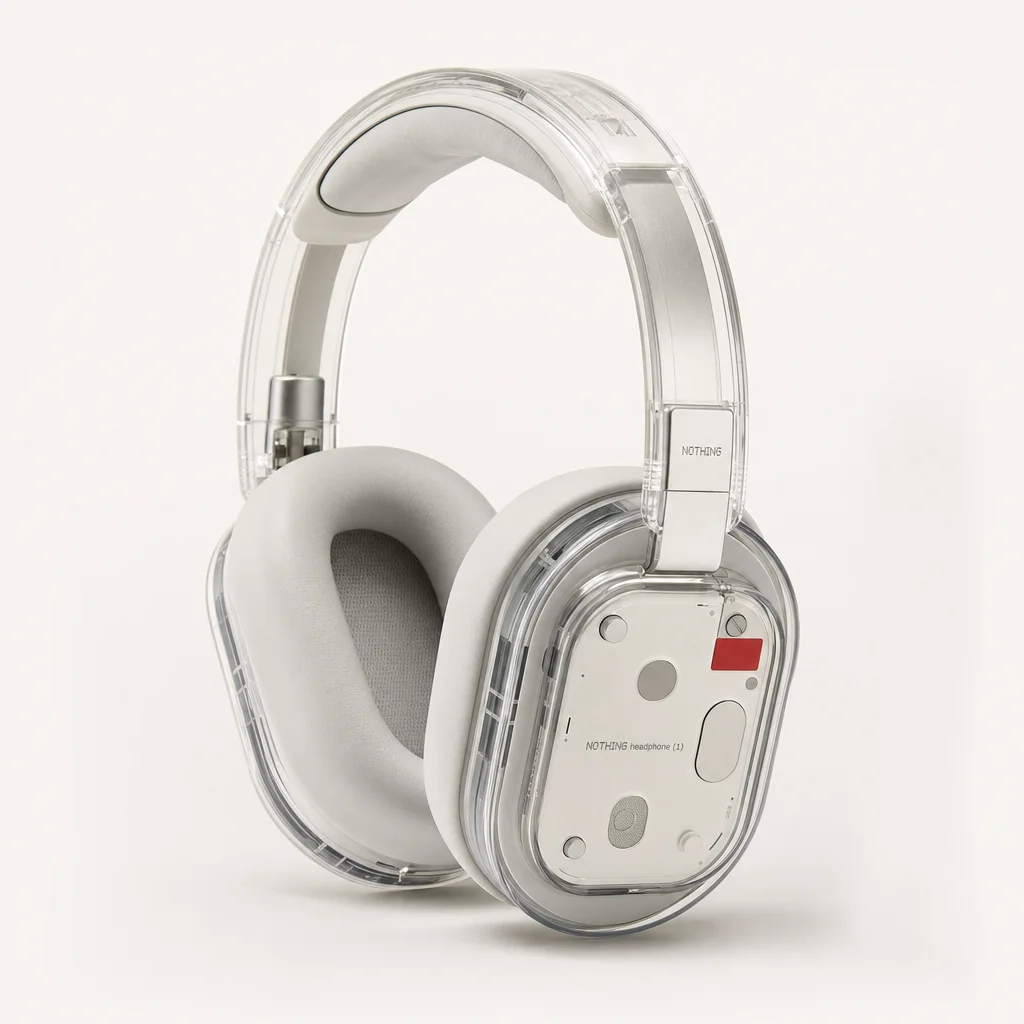
Let's be honest about why most people will pick these up in a shop in the first place: they look extraordinary. Where Sony's WH series leans into smooth, understated minimalism and Bose chases an almost invisible inoffensiveness, Nothing has done the opposite. The Headphone (1) is a deliberate object — a transparent panel reveals hints of the internals, the shape borrows from cassette decks and vintage hi-fi, and the whole thing photographs like a design-museum piece rather than a commodity gadget.
Whether that's to your taste is entirely personal, but I'd argue it's the single most distinctive over-ear design to launch in years. In a category where almost everything has converged on the same matte ovals, standing out is itself a feature. People notice these on the train.
The transparent panelling and squared-off cups give the Headphone (1) a presence that Sony and Bose deliberately avoid.
The substance behind the style holds up reasonably well. At 329 g the headphones sit in the same broad weight class as full-fat premium over-ears — they're not feathery, but they're not punishing either, and the clamping force on my head was firm without becoming a vice over a couple of hours. The supplied carrying case weighs 264 g and measures a fairly chunky 52 × 220 × 220 mm, so it's not the most pocketable thing to sling in a bag, but it protects the contents properly.
The headphones themselves come in at 173.8 mm tall, 78 mm deep and 189.2 mm wide. Build quality feels a cut above what the brand's earbud heritage might lead you to expect — there's metal where it counts, and the panels don't creak. It's a genuinely premium object, and that confidence in materials is part of how Nothing justifies pitching itself against the establishment rather than the budget shelf.
Why the Design Choice Actually Matters
It's tempting to dismiss styling as superficial in an audio review, but consider this: most people never take their over-ears off their head to admire them. The real design win here is functional. Nothing has used the distinctive shape to fit physical controls that are far easier to use blind than the swipe-and-pray touch panels rivals rely on. Form and function are pulling in the same direction.
Controls: The Best Idea on the Whole Headphone
If I had to single out one thing the Headphone (1) does better than anything else on the market, it would be the controls. This is the part I genuinely didn't want to give back. Nothing has ditched the capacitive touch surface — that fiddly, weather-sensitive, accidental-tap-prone approach that Sony and Bose both lean on — in favour of proper tactile mechanisms.
Rotary Wheel for Volume
On the right earcup there's a physical roller you spin to adjust volume. It's precise, satisfying, and works perfectly with gloves on or in the rain — two scenarios where touch panels routinely fall apart.
Side Lever for Playback
A lever handles play, pause and track skipping with genuine mechanical feedback, so you always know whether your input registered.
Multifunction Button
A configurable button lets you map a shortcut — toggling ANC modes, summoning your assistant, or whatever you use most.
Dedicated Bluetooth Button
A discrete pairing button means no more long-pressing a power key and counting flashing lights to enter pairing mode.
This matters enormously in daily use. I've spent years grumbling at Sony's touch panel skipping tracks when I scratch my ear, or Bose mishearing a double-tap as a triple. The Headphone (1) simply doesn't have those problems, because there's nothing to mis-touch. Spin the wheel, flick the lever, done. It's the rare case of a newcomer noticing an industry-wide annoyance that the incumbents had all stopped questioning, and fixing it outright.
On the convenience side, you also get Google Fast Pair and Microsoft Swift Pair for near-instant connection to Android phones and Windows machines respectively, dual-device connection so you can stay paired to your laptop and phone at once, on-head detection that pauses playback when you lift a cup, and Find My Device integration if you misplace them. There's even a low-lag gaming mode for when audio sync matters.
Sound Quality: The KEF Effect
Here's where a debut product usually shows its inexperience — and where the Headphone (1) leans on a clever piece of insurance. Nothing brought in KEF, the British high-end speaker maker, to handle the sound tuning. That's not a marketing footnote; it's the difference between a first-generation headphone sounding like a first-generation headphone and one that arrives with the poise of something more mature.
A 40mm dynamic driver per cup, tuned in collaboration with KEF, gives the Headphone (1) a surprisingly grown-up signature.
The character is confident and full-bodied. That large 40mm driver delivers bass with real weight and texture — not the bloated, one-note thump some consumer headphones chase, but a low end that has shape to it. The midrange is where the KEF collaboration earns its keep, with vocals and acoustic instruments rendered with a clarity and naturalness that genuinely surprised me at this level. The treble is detailed without tipping into harshness over long sessions.
With the 20 Hz to 40 kHz frequency range and LDAC support, there's headroom for high-resolution streaming, and feeding it well-mastered Hi-Res material rewards you with a noticeably more open soundstage than you'd get over plain AAC. If you care about codec quality, the inclusion of both LDAC and LHDC alongside the standard SBC and AAC is a properly forward-thinking spread — many rivals support only one of the high-bandwidth options.
How it stacks up sonically
Sony's house signature tends towards an engaging, slightly bass-forward consumer tuning that flatters modern pop and electronic music. Bose historically aims for an even, easy-listening balance designed to be inoffensive over hours. Nothing, via KEF, lands somewhere thoughtfully in between — energetic enough to be fun, refined enough to satisfy when you sit down and actually listen. For a debut, that's an impressively assured place to land.
One genuinely useful extra is the personal sound profile, which tailors the output to your hearing. Combined with the analogue and digital wired options — there's a USB-C to USB-C cable for digital audio and a USB-C to 3.5mm cable for analogue connections — the Headphone (1) is more flexible than the average wireless can that assumes you'll only ever stream. Wired-out support also means you can keep listening if the battery ever runs flat, or plug into airline entertainment systems and older gear.
Noise Cancellation: Punching at the Champions
Active noise cancellation is the battlefield where Sony and Bose have built their legends, so this is the toughest test for any challenger. The Headphone (1) brings up to 42 dB of attenuation, powered by three microphones per earpiece feeding the cancellation algorithm — and crucially that's an adaptive system rather than a fixed setting.
In practice that 42 dB figure translates to seriously effective real-world cancellation. The droning low frequencies — aircraft cabins, train rumble, the bass hum of an open-plan office air-conditioning unit — get smothered convincingly. That's exactly the band where ANC does its most valuable work, because passive isolation alone struggles with low rumble. Higher-frequency, sharper sounds like nearby chatter are reduced rather than erased, which is true of essentially every ANC headphone on the market regardless of badge.
Is it the absolute best ANC ever made? I'd stop short of crowning it over Bose's most accomplished QuietComfort efforts, which remain the benchmark for sheer silence, or Sony's best, which pairs strong cancellation with clever adaptive smarts. But — and this is the headline — the gap is now small enough that for the vast majority of listeners it simply won't be the deciding factor. The Headphone (1) cancels noise well enough that you'd happily wear it on a long-haul flight and emerge less frazzled. For a first attempt, closing the distance to the established leaders this much is genuinely remarkable.
Real-World Verdict on ANC
The honest takeaway: if you're a frequent flyer who values the very last decibel of silence above all else, Bose still edges it. If you want excellent, adaptive noise cancellation alongside better controls, longer battery and a more distinctive design, the Headphone (1) is more than competitive. The newcomer hasn't dethroned the champions on ANC, but it's earned a seat at the same table.
Battery Life: A Knockout Round
If ANC is where the Headphone (1) draws level, battery is where it lands a clean punch. The numbers are simply enormous. Up to 80 hours of playback with ANC switched off, or 35 hours with it engaged, over AAC. Switch to LDAC and you'll see around 54 hours ANC-off and 30 hours ANC-on. Those figures put it comfortably ahead of what the typical premium over-ear quotes for a charge.
To frame it bluntly: most flagship rivals talk in terms of around 24 to 30 hours with ANC on. The Headphone (1) clears 35 hours in the same scenario and a staggering 80 hours if you're happy to listen without cancellation. That's the difference between charging weekly and charging every few weeks. If you're the sort who never remembers to plug things in, this matters more than any spec sheet line about driver materials.
| Battery Scenario | Nothing Headphone (1) | Typical Premium Over-Ear |
|---|---|---|
| ANC off (AAC) | Up to 80 hours | Around 30–40 hours |
| ANC on (AAC) | 35 hours | Around 24–30 hours |
| ANC off (LDAC) | 54 hours | Lower with Hi-Res codecs |
| ANC on (LDAC) | 30 hours | Lower with Hi-Res codecs |
| 5-min fast charge | Up to 5 hrs (ANC off) | Varies |
| Full charge time | ~2 hours via USB-C | ~2–3 hours |
| Buy | Check price |
The fast charging deserves a mention of its own. Five minutes on the cable gives you up to five hours of ANC-off listening, or roughly 2.4 hours with ANC running. That's a proper get-out-of-jail feature for the moment you realise mid-commute that you forgot to charge overnight. Plug in while you make a coffee and you're sorted for the day.
Worth noting the codec trade-off: running LDAC for the highest-quality wireless audio does cost you battery compared with AAC. That's true of every headphone with high-bandwidth codecs — it's simply moving more data — but with the Headphone (1) you're starting from such a high baseline that even the LDAC figures comfortably outlast many rivals' best-case numbers.
Head to Head: Nothing vs Sony vs Bose
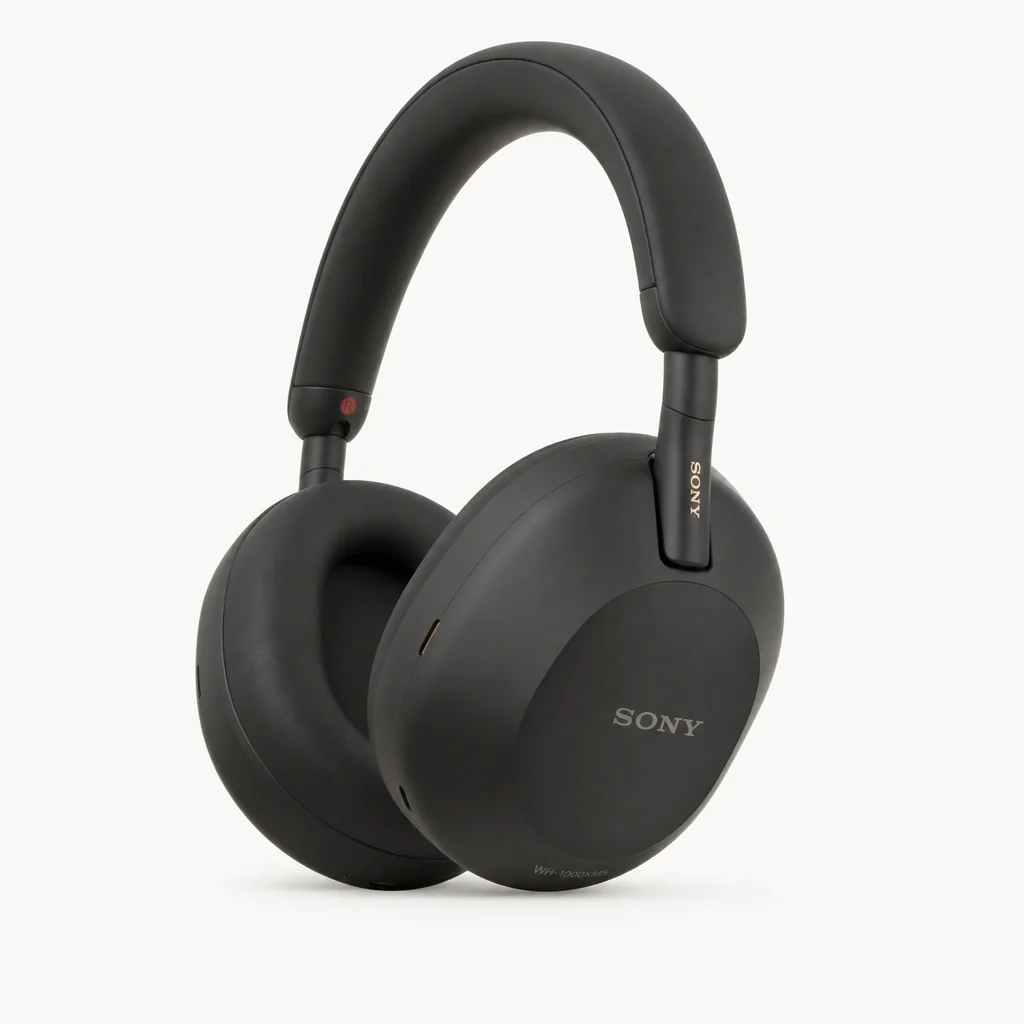
Time to put the three contenders side by side on the criteria that actually decide a purchase. The Headphone (1) is the upstart; Sony and Bose are the establishment that built this category into what it is. Here's how the newcomer fares against the broad strengths of its rivals.
The newcomer versus the establishment: design, battery and controls versus a decade-plus of refined noise cancellation.
| Criteria | Nothing Headphone (1) | Sony | Bose |
|---|---|---|---|
| Design distinctiveness | Bold, transparent, unmistakable | Understated minimalism | Discreet, inoffensive |
| Sound tuning | KEF-tuned, 40mm drivers | Engaging, bass-forward | Even, easy-listening |
| Controls | Physical wheel & lever | Touch panel | Touch / button mix |
| ANC strength | Up to 42 dB, adaptive | Strong, adaptive | Class-leading silence |
| Battery (ANC on) | 35 hours | ~30 hours typical | ~24 hours typical |
| Hi-Res codecs | LDAC + LHDC | LDAC | Limited Hi-Res |
| Wired listening | Digital + analogue cables | Analogue | Analogue |
| Multipoint pairing | Yes, dual device | Yes | Yes |
| Buy | Check price | Check price | Check price |
What the table reveals is that the Headphone (1) competes by playing to a different scoreboard. It doesn't try to out-Bose Bose on raw silence or out-Sony Sony on ecosystem polish. Instead it wins decisively on battery, controls and codec flexibility, draws on sound quality thanks to KEF, and trails only slightly on the very last percentage of ANC performance. For a first-generation product entering a category dominated by two giants, that's an astonishing competitive position to be in.
The pattern that emerges is clear: Bose remains the choice for someone who wants the quietest possible cocoon and nothing else; Sony remains the all-rounder with the deepest feature set and most mature software; and Nothing arrives as the genuine alternative for people who've grown bored of both and want something with character, stamina and brilliant tactile controls.
Pros and Cons
No headphone is perfect, and a debut product always has a few rough edges. Here's my honest balance sheet after living with the Headphone (1).
Pros
- Genuinely distinctive, premium-feeling transparent design that stands out in a sea of lookalikes
- Physical rotary wheel and lever controls that work flawlessly with gloves or in the rain
- Outstanding battery — up to 80 hours ANC-off and 35 hours ANC-on over AAC
- KEF-tuned 40mm drivers deliver a confident, refined sound for a first effort
- Effective adaptive ANC rated up to 42 dB with three mics per earpiece
- Broad codec support including both LDAC and LHDC for Hi-Res streaming
- Both digital (USB-C) and analogue (3.5mm) wired listening options
- Fast charging returns up to 5 hours of playback from a 5-minute top-up
Cons
- Bose still edges it on the very last decibel of outright noise cancellation
- The bold styling won't suit everyone — some will find it too attention-grabbing
- At 329 g it's not the lightest over-ear for marathon sessions
- The carrying case is fairly bulky at 220 × 220 mm
- As a debut, it lacks the years of software refinement Sony has accumulated
- Running LDAC for best audio quality noticeably reduces battery versus AAC
Gadget Scout Rating
Pulling all of this together, here's how I'd score the Headphone (1) across the categories that matter — judged not as a curiosity, but as a serious contender against the best over-ears money can buy.
That overall figure tells the story of the whole review in one number. The Headphone (1) is held back from the very top tier only by ANC that's excellent rather than absolutely class-leading, and by the inevitable software immaturity of a first attempt. Everything else — battery, controls, design, sound — is firmly in flagship territory. For a debut, scoring this highly against entrenched champions is a serious achievement.
Who Should Buy the Headphone (1)?
This isn't a one-size-fits-all recommendation, so let me break down who'll genuinely love these and who might be better served elsewhere.
The Forgetful Charger
If you constantly forget to charge your headphones, the up-to-80-hour battery and five-minute fast-charge are transformative. You'll charge these so rarely you might lose the cable.
The Control Sceptic
If touch panels drive you round the bend with their accidental taps and weather sensitivity, the physical wheel and lever will feel like a revelation.
The Design Lover
If you want headphones that look like nothing else and start conversations, the transparent, cassette-inspired styling is unmatched at this level.
The Hi-Res Streamer
With both LDAC and LHDC plus digital and analogue wired options, anyone serious about codec quality and flexibility is well catered for.
Who might look elsewhere
If the single most important thing to you is the absolute quietest noise cancellation on the planet — say you fly long-haul every week — Bose's best still holds a narrow lead. And if you're deeply invested in a mature software ecosystem with years of refinement, Sony's options remain the safe, polished choice. For everyone in between, though, the Headphone (1) is a thoroughly compelling alternative.
Thinking of Buying?
See Nothing Headphone (1) on Amazon UK
Check today's price & availability on Amazon UK

See Sony WH-1000XM6 on Amazon UK
Check today's price & availability on Amazon UK

See Bose QuietComfort Ultra on Amazon UK
Check today's price & availability on Amazon UK
Availability and bundles shift around quickly with a newly launched product. Check the latest price and any current bundles on Amazon before you commit.
Frequently Asked Questions
For a debut over-ear, the Headphone (1) earns far more than a polite welcome — it earns serious consideration.
The Verdict: Can a Newcomer Compete?
After all this, the answer to the question in the headline is an emphatic yes — though with a sensible caveat. The Nothing Headphone (1) does not arrive and immediately dethrone Sony and Bose at everything; that would be an unrealistic ask of any first-generation product against two giants who've spent over a decade perfecting this craft. What it does do is genuinely compete, and on several fronts it wins outright.
On battery life, it delivers a knockout blow — up to 80 hours ANC-off and 35 hours ANC-on simply leaves the establishment trailing. On controls, the physical wheel and lever are the best implementation I've used and make every touch-panel rival feel slightly fiddly by comparison. On design, it's in a class of one, with a transparent, characterful look that nothing else can match. And on sound, the KEF tuning gives a refined, confident signature that punches well above what a debut has any right to.
Where it falls just short is the very last sliver of noise-cancelling silence, where Bose retains a narrow crown, and in the years of software polish Sony has banked. But these are the margins, not the substance. For the overwhelming majority of buyers, the Headphone (1) offers a smarter, longer-lasting, better-controlled and more distinctive package that holds its own against the best in the business.
Nothing set out to prove a newcomer could compete with the ANC royalty. With the Headphone (1), it hasn't just competed — it's redrawn the conversation. This is one of the most assured debuts the over-ear category has seen, and a genuinely exciting alternative to the usual two-horse race.
- Nothing Headphone (1)View on Amazon
- Sony WH-1000XM6View on Amazon
- Bose QuietComfort UltraView on Amazon