
Best Wireless Earbuds for Android: Beyond AirPods
The Android-friendly earbuds worth buying, from affordable all-rounders to Galaxy-native flagships, with codec support, pairing tricks and proper noise cancellation firmly in view.

We link to the exact model on Amazon UK. Prices change often, so check the live price before you buy. As an Amazon Associate we earn from qualifying purchases.
Wireless earbuds are not a one-size-fits-all purchase on Android. The right pair can unlock better codecs, sensible multipoint switching and genuinely useful noise cancellation. The wrong pair can leave a very capable phone behaving like it has been invited to the party only as somebody's plus-one.
See Sony WF-1000XM6 on Amazon UK
Why Android Deserves Its Own Earbuds Guide — And Why AirPods Aren't the Answer
AirPods still dominate the conversation whenever somebody says "wireless earbuds". That is understandable: they are recognisable, polished and everywhere. But for Android owners, they are rarely the clever answer. Apple's buds work as basic Bluetooth headphones, yet the experience is deliberately stripped back compared with using them alongside an iPhone. There is no proper ecosystem handoff, no seamless Apple device switching, and the connection is limited to AAC rather than the broader codec options Android supports.
That last point matters more than it sounds. Bluetooth audio is not a single fixed quality level. SBC and AAC are the baseline codecs you will encounter almost everywhere. They are perfectly serviceable for podcasts, YouTube and a surprising amount of everyday music. Android, however, also gives you access to more interesting options: Sony's LDAC, the newer LC3 codec used with LE Audio, Qualcomm's aptX family, and Samsung Scalable Codec. Some of these can carry more information; others concentrate on efficiency, stability or lower latency. The best choice is not automatically the codec with the biggest number attached to it. It is the one your phone and earbuds can actually agree to use reliably.
Samsung owners have their own particularly tempting route. Galaxy Buds 4 Pro can use Samsung Scalable Codec for 24-bit/96kHz Hi-Fi audio when paired with a compatible compatible Galaxy device — the S26 and Tab S10+ among others running One UI 7.1 or later. Sony and Technics take a more manufacturer-neutral approach through LDAC and LC3. Google's Pixel Buds Pro 2 keep things simpler with SBC, AAC and LC3, but compensate with deep Google integration. Different priorities, different winners. That is the whole point of this guide.
The three things I would prioritise
Codec support tells you what your Android phone can send. Pairing and switching determine whether the earbuds feel invisible or irritating in daily use. ANC, meanwhile, is the feature that earns its keep on trains, flights and in open-plan offices. Get those three right before becoming overly invested in a shiny charging case.
Codec support: more than a badge on a box
LDAC, LC3, aptX and Samsung Scalable Codec each make sense in different Android ecosystems. The headline is compatibility, not simply chasing "hi-res" wording.
Seamless pairing and switching
Fast Pair, Galaxy Auto Switch and multipoint are the small conveniences that stop you digging through Bluetooth menus every afternoon.
ANC at every sensible price
A great earbud does not need to erase the universe. It does need to make a commute, a shared office or a long-haul cabin noticeably less tiring.
Android's real advantage is choice: Galaxy users can lean into Samsung's ecosystem, whilst Sony and Technics give codec flexibility across a much broader range of phones.
How We Tested: Our Android Earbud Methodology
I approached this roundup as an Android buyer would, rather than treating "Bluetooth" as the end of the conversation. Each model was considered alongside a Samsung Galaxy S26 Ultra running One UI 7.1 or later, a Google Pixel 9 Pro and a mid-range OnePlus 13. That mix exposed the important distinction between earbuds that are good everywhere and earbuds that become especially clever inside one manufacturer's ecosystem.
Codec behaviour is a classic area for marketing optimism. A pair may list LDAC, aptX or Samsung Scalable Codec, but that does not mean every phone automatically uses it at its highest mode. Codec-checker tools and Android Developer Options were used to verify the active codec after pairing, rather than assuming the most glamorous logo on the retail page had somehow done all the work. Bluetooth has a gift for quietly choosing the safe option when left unattended.
For noise cancellation, I looked at attenuation in a consistent set of everyday environments: an open-plan office, London Underground-style low-frequency rumble and an 80dB pink-noise reference. Published measurement figures are included where they exist; the practical labels in this guide are deliberately more human. "Excellent" means you can get on with a journey or a work session without constantly turning the volume up. "Best-in-class" means the world takes a meaningful step backwards.
A note on battery claims: manufacturer ratings remain useful for comparing a product with itself, but real-world results change with ANC, volume, codec and call use. The Galaxy Buds 4 Pro, for example, were measured at 4.8 hours with ANC on at 70% volume in a 2026 retest, despite higher rated figures.
Fit is part of the ANC test
Active noise cancellation cannot repair a poor seal. If an earbud includes multiple tip sizes, take five extra minutes to try them properly. The best codec in the world is less persuasive when the left bud is slowly making a break for freedom.
The Android Earbuds Picks at a Glance: Full Comparison Table
These are the seven models that make the most sense for Android buyers in 2026. The Sony WF-1000XM6 is the broadest recommendation because it combines LDAC, LC3, strong measured ANC and a platform-agnostic feature set. Galaxy Buds 4 Pro are the more focused recommendation: they are brilliant if your phone, tablet and daily habits already live in Samsung's world. Bose is here for people who want quiet first and everything else second.
The table deliberately separates battery figures from noise cancellation and codec support. Those categories are often muddled together in quick shopping lists, which is how somebody ends up choosing a pair for its "30-hour battery" only to discover that number includes the case and assumes conditions rather kinder than a packed commuter train.
| Product | Best for | Price | Key codec(s) | ANC focus | Battery | Water rating | Bluetooth | Weight per bud |
|---|---|---|---|---|---|---|---|---|
| Sony WF-1000XM6 | Best overall Android option | £250 / $330 | LDAC, LC3 | 88% average measured noise reduction | Up to 8h / 24h total | IPX4 | 5.3 | 6.5g |
| Samsung Galaxy Buds 4 Pro | Galaxy owners | £219 / $249.99 | SSC, 24-bit/96kHz on compatible Galaxy devices | Adaptive ANC 2.0 | Up to 7h / 30h total | IP57 | 6.1 | 5.1g |
| Bose QuietComfort Ultra Earbuds (Gen 2) | Noise cancellation | £299 / $299 | SBC, AAC, aptX Adaptive | Best for noise cancellation | Up to 6 hours | IPX4 | 5.3 | 6.24g |
| Technics EAH-AZ100 | Three-device switching | £259 / $299 | LDAC, LC3 | Balanced | 10h 40m tested | IPX4 | 5.3 | 5.9g |
| Google Pixel Buds Pro 2 | Pixel owners | SBC, AAC, LC3 | Speech enhancement | 8h with ANC | IP54 (case IPX4) | 5.4 | 4.3g | |
| Samsung Galaxy Buds 3 Pro | Lower-cost Galaxy upgrade | $179.99 launch price | AAC, SBC, Samsung Seamless Codec, SSC-UHQ | Adaptive Noise Control | 6h with ANC / 26h with case | IP57 | 5.4 | 5.4g |
| EarFun Air Pro 4 Plus | Budget buyers | Under $70 | LDAC, AAC, SBC | Balanced | Up to 10 hours | IP54 | 5.3 | 5.8g |
The Sony WF-1000XM6 sets the all-round benchmark, while Samsung and Technics make stronger cases when your ecosystem or multi-device routine is more specific.
Codec, Pairing and ANC: What Actually Matters Before You Buy
Let's cut through a little jargon. SBC is the universal fallback. AAC is common and can sound very good, particularly when the implementation is solid. Neither is a reason to panic. But if you bought a recent Android flagship partly because it supports better Bluetooth audio, there is no harm in choosing earbuds that let it stretch its legs.
LDAC is the obvious draw for Sony and Technics buyers. Sony WF-1000XM6 supports SBC, AAC, LDAC and LC3; Technics EAH-AZ100 supports LDAC and LC3. That gives both pairs a wide appeal across Android brands. LC3 is particularly notable because it belongs to the LE Audio direction of travel, prioritising efficient transmission rather than simply making a bigger number for the box.
Samsung Scalable Codec is different. It is a compelling reason to buy Samsung buds if you own the right Galaxy hardware, but not a general Android advantage. Galaxy Buds 4 Pro can deliver 24-bit/96kHz Hi-Fi audio through SSC with a compatible Galaxy device — the S26 and Tab S10+ among others on One UI 7.1 or later. Outside that lane, they remain functional earbuds, but the headline mode is not the reason to choose them.
Then there is pairing. Google Fast Pair makes Pixel Buds Pro 2 an easy fit for Pixel users. Samsung Auto Switch is equally useful for someone hopping between Galaxy phone and tablet. Technics' three-way multipoint goes further still, keeping three devices in the picture at once. That can be more valuable than any codec if your working day involves a phone, laptop and tablet all wanting your attention. Which, frankly, it probably does.
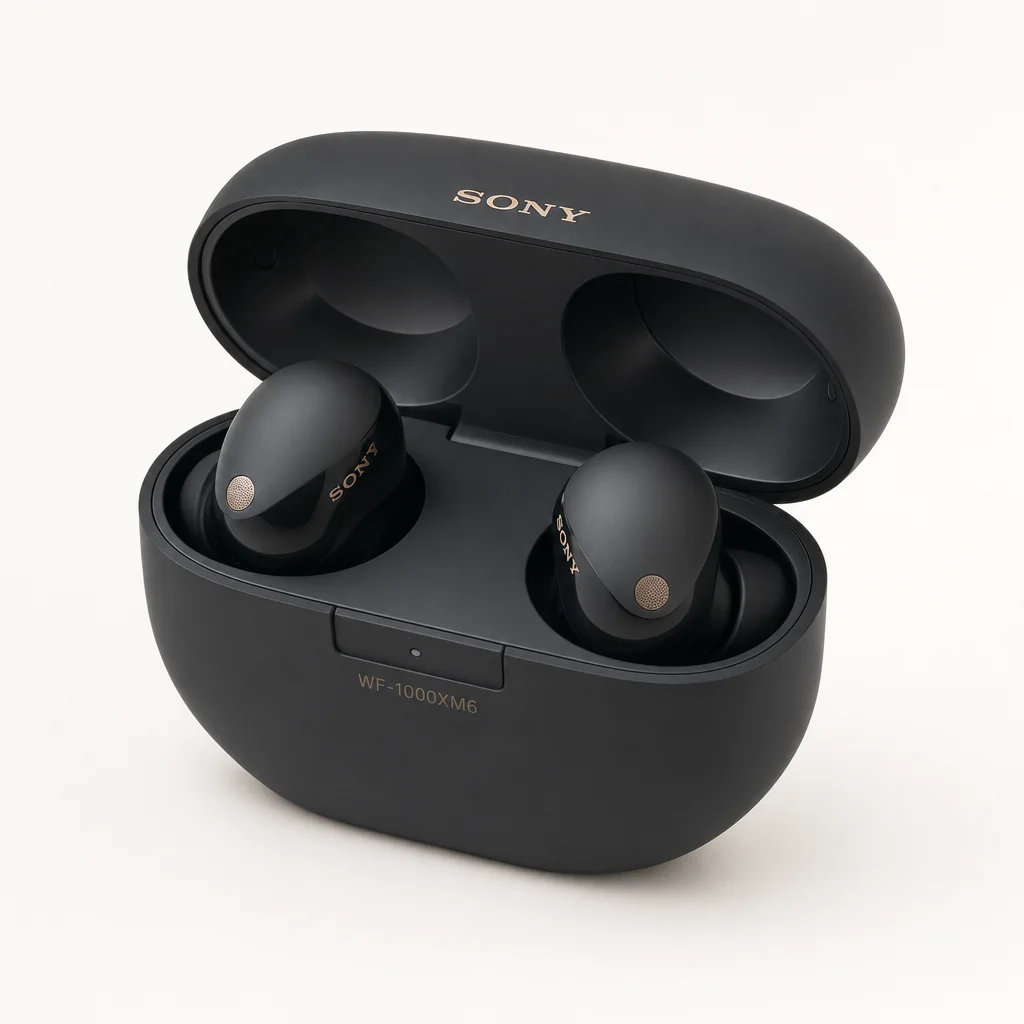
Sony WF-1000XM6
See Sony WF-1000XM6 on Amazon UK
1. Sony WF-1000XM6 — Best for Android All-Rounders
The Sony WF-1000XM6 is the safest premium recommendation for Android users because it does not make you choose a side. It works sensibly with Samsung, Pixel and other Android phones, supports SBC, AAC, LDAC and LC3, and brings serious active noise cancellation without locking its best ideas behind one phone manufacturer's garden wall.
That broad compatibility is the reason it sits at the top of this list. A Galaxy Buds 4 Pro can be the more exciting choice for a Galaxy S26 owner. Pixel Buds Pro 2 can be the friendlier pick for someone who lives in Google's services. But Sony is the one I would recommend to the person who changes phone brands every few years, shares devices across a household, or simply does not want their earbuds to have opinions about their handset.
The hardware also tackled a familiar complaint about the earlier Sony shape. The WF-1000XM6 body is 11% slimmer than the XM5, uses a matte finish, and weighs 6.5g per earbud including the M tips. It is still a substantial, feature-heavy earbud rather than a tiny invisible pebble, but the reduction in bulk matters when you are wearing it for a whole working day.
The 8.4mm driver and 32-bit audio processing are the important sound ingredients. In plain English, Sony has the hardware and processing headroom to handle busy arrangements without turning everything into a slightly anxious wall of sound. The measured sound-quality score of 4.8/5 MDAQS reinforces the point. It is not just a quiet earbud; it is an earbud designed for people who actually sit and listen.
ANC is equally persuasive. Sony claimed a 25% improvement in noise cancelling versus the XM5, using its QN3e processor and four microphones per earbud. Measurement results recorded 88% average noise reduction across frequencies. That is not quite the 90% measured for AirPods Pro 3, but the difference is not the complete story for Android buyers. Sony offers an experience that makes sense on the phone in your pocket, not merely a very capable earbud with an iPhone-shaped asterisk attached.
Battery is good rather than miraculous: Sony rated up to eight hours per charge with ANC active and 24 hours including the case, while testing went beyond nine hours with ANC on. IPX4 protection is enough for sweat and light rain, though it is less reassuring than the IP57 rating offered by both Samsung options below.
Pros
- LDAC and LC3 support makes it a strong fit across Android brands.
- 88% average measured noise reduction is genuinely excellent.
- 11% slimmer than the previous design, with Qi charging included.
- 10-band EQ gives Android users useful sound adjustment.
Cons
- IPX4 is modest beside Samsung's IP57 protection.
- The £250 / $330 price puts it firmly in premium territory.
- Samsung owners can get more ecosystem-specific features elsewhere.
Why Sony wins overall
The WF-1000XM6 does not require you to own a particular flagship phone to feel like you bought the right thing. That flexibility is worth a great deal. It is also the rare flagship that makes codec support, ANC, fit improvements and battery all feel like parts of one coherent package.
Sony's slimmer WF-1000XM6 design matters because comfort is the feature you notice for every minute of a long listening session.
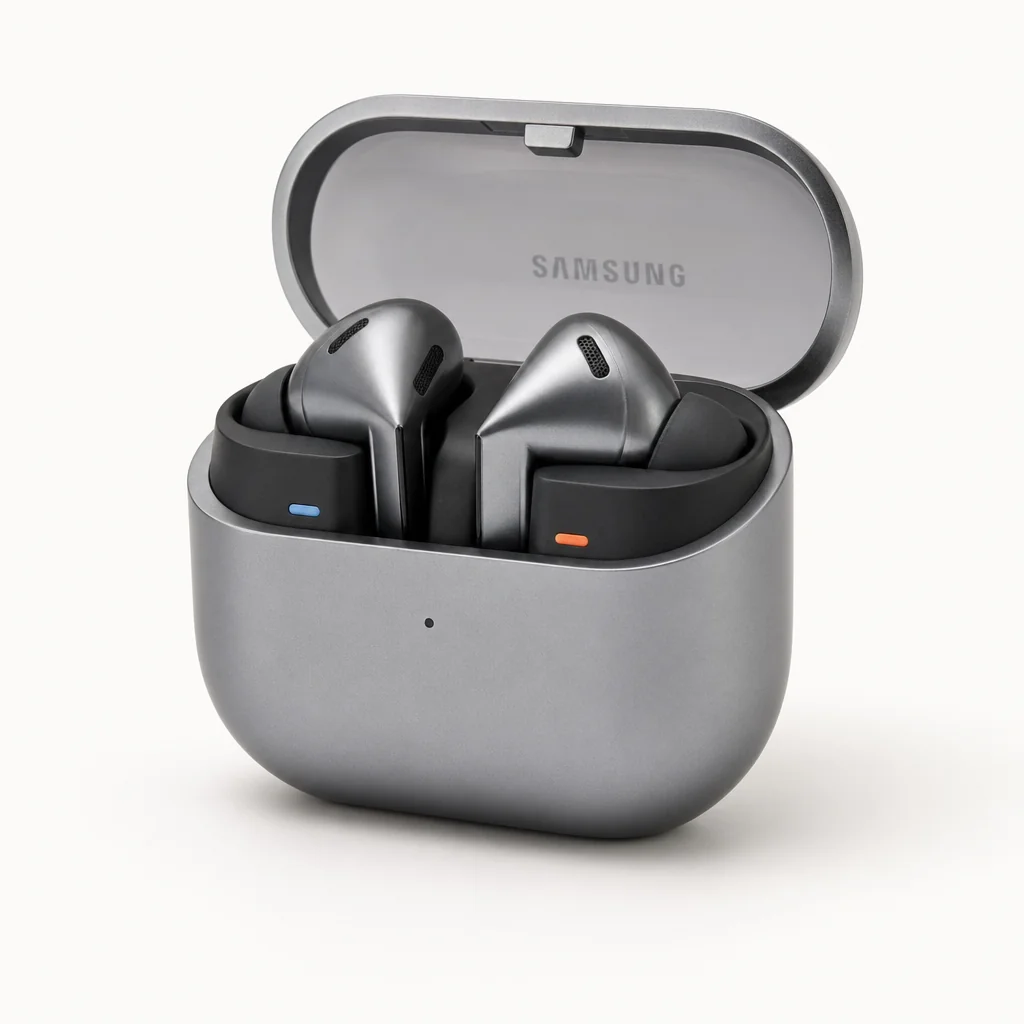
Samsung Galaxy Buds 4 Pro

See Samsung Galaxy Buds 4 Pro on Amazon UK
Check today's price & availability on Amazon UK
2. Samsung Galaxy Buds 4 Pro — Best for Galaxy Owners
Samsung Galaxy Buds 4 Pro launched globally on 11 March 2026 at £219 / $249.99. They are Samsung's current flagship earbuds, and they make the strongest case when your Android phone is a Galaxy rather than merely an Android phone that happens to be nearby.
The headline is Samsung Scalable Codec. With a compatible Galaxy device — the S26 and Tab S10+ among others running One UI 7.1 or later, the Buds 4 Pro support 24-bit/96kHz Hi-Fi audio through SSC. That is the kind of integration Apple owners have become accustomed to seeing inside one ecosystem, except Samsung is doing it in a way that gives Galaxy buyers a genuinely distinctive reason to choose its own buds.
Galaxy caveat, and it matters: the Buds 4 Pro's full 24-bit/96kHz SSC mode requires a compatible Galaxy device — the S26 and Tab S10+ among others with One UI 7.1 or later. With other Android devices, the core earbud experience remains available, but this specific high-resolution mode is not the reason to buy them.
Samsung's new two-way speaker system is also more interesting than the usual "larger driver equals better" marketing. Each earbud contains an 11mm Super Wide Woofer and a 5.5mm Planar Tweeter. A planar tweeter is notable in an in-ear design because it is intended to handle high-frequency detail separately from the low-end driver. The practical result is a more controlled division of labour: bass does not need to carry every job, and delicate treble information has a dedicated component.
Measurements suggested the tuning was meaningfully tighter than the Galaxy Buds 3 Pro. Frequency response was measured at ±2.1dB from 20Hz to 20kHz, compared with ±3.8dB for the prior generation. Bass decay time was also reduced by 37%. Those figures should not be treated as a substitute for personal preference, but they do support Samsung's claim that the new model is a more disciplined listen, not just a new case with a newer number.
Galaxy Buds 4 Pro
UK MSRP
Galaxy Buds 4 Pro
US MSRP
Galaxy Buds 3 Pro
Original launch price
Adaptive Active Noise Cancellation 2.0, Auto Switch, Auracast support and Bluetooth 6.1 with LE Audio readiness make this feel like a proper forward-looking Galaxy accessory. Battery claims are up to seven hours from the earbuds and up to 30 hours in total with the case. In real-world retesting at 70% volume with ANC enabled, the figure was 4.8 hours. That is not unusual in the category, but it is worth setting expectations before you plan a full day of back-to-back calls.
The improved ear-hugging design and changeable tips are welcome because previous-generation comfort is not the sort of thing anyone misses nostalgically. The IP57 rating is another serious practical advantage: Samsung's flagship has substantially stronger water and dust protection than Sony's IPX4 option.
Pros
- Excellent Galaxy integration with Auto Switch and SSC audio.
- Two-way driver system with 11mm woofer and planar tweeter.
- IP57 protection is strong for workouts and everyday weather.
- Tighter measured frequency response than Galaxy Buds 3 Pro.
Cons
- Full 24-bit/96kHz SSC needs specific recent Galaxy hardware.
- 4.8 hours measured with ANC at 70% volume is below the rated claim.
- Less compelling than Sony or Technics for phone-brand independence.
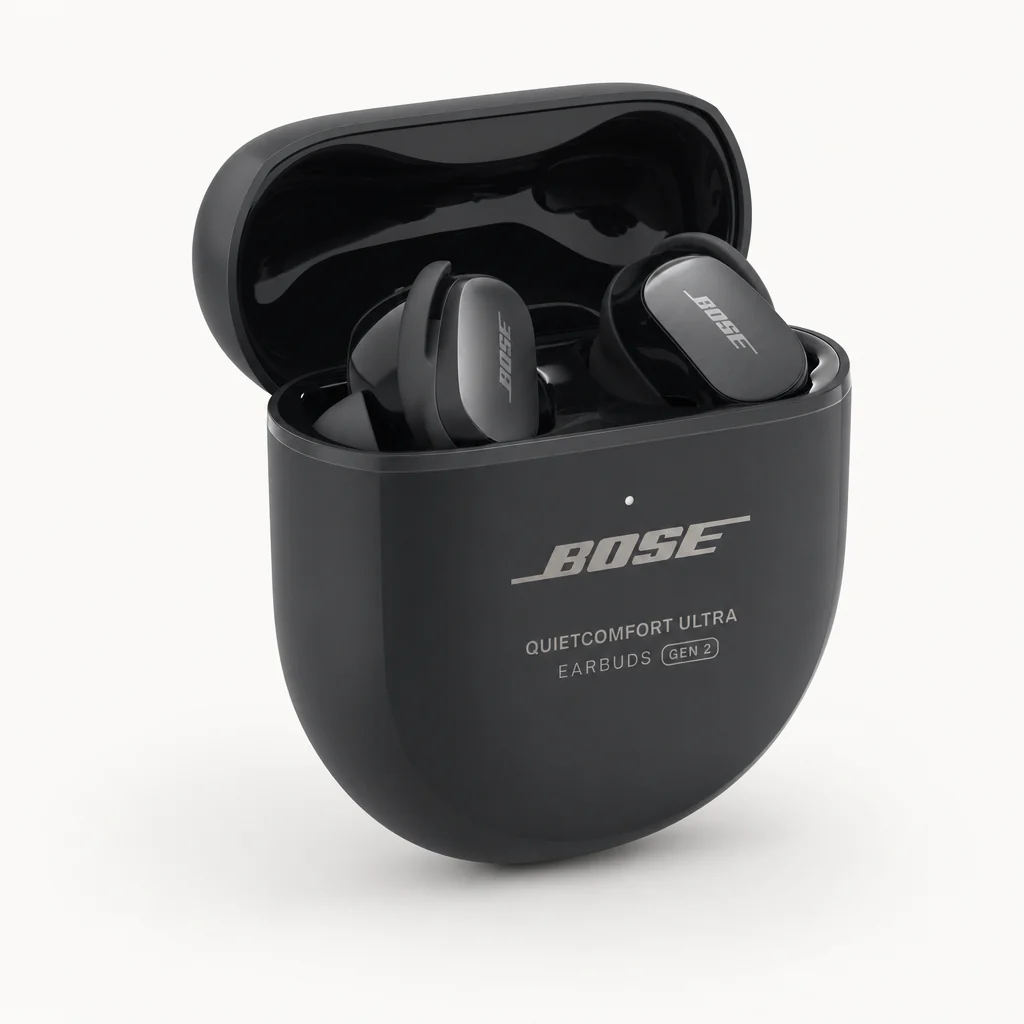
Bose QuietComfort Ultra Earbuds (Gen 2)

See Bose QuietComfort Ultra Earbuds on Amazon UK
Check today's price & availability on Amazon UK
3. Bose QuietComfort Ultra Earbuds (Gen 2) — Best for Noise Cancellation
If your priority is silencing the world, start here. Bose QuietComfort Ultra Earbuds (Gen 2) are the pick for frequent flyers, commuters, open-plan office workers and anyone who has recently discovered that their neighbour's video meetings involve a lot of enthusiastic throat-clearing.
Bose has a long history in consumer noise cancellation, dating back through products such as the QC15 headphones. The second-generation QuietComfort Ultra Earbuds continue that role in this roundup: they are not here because they offer the widest codec list or the deepest Android ecosystem tricks. They are here because ANC is their main event.
That distinction is useful. Sony WF-1000XM6 is an excellent all-round noise-cancelling earbud, recording 88% average noise reduction across frequencies. AirPods Pro 3 measured 90% in the same broad context, but they are not the smart Android purchase. Bose remains the dedicated recommendation when your shopping list begins and ends with "make this train quieter".
Bose QuietComfort Ultra Earbuds (Gen 2) were priced at £299 / $299. They are a specialist premium purchase: choose them because noise cancellation is your most important feature, not because you want the broadest Android codec support.
Pros
- The clearest choice for buyers who put ANC above everything else.
- A sensible premium option for flights, trains and noisy workplaces.
- Android owners can focus on the core listening and noise-reduction experience.
Cons
- £299 / $299 is the highest listed price in this guide.
- Not the codec-led pick for Android enthusiasts.
- Samsung, Sony and Technics offer more explicit Android ecosystem advantages.
Bose belongs at the top of the shortlist when the commute, cabin or office is the problem you are trying to solve first.
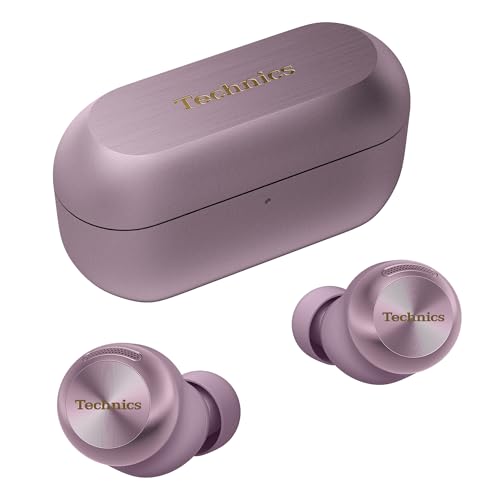
Technics EAH-AZ100
4. Technics EAH-AZ100 — Best for Multi-Device Power Users
See Technics EAH-AZ100 on Amazon UK
Check today's price & availability on Amazon UK
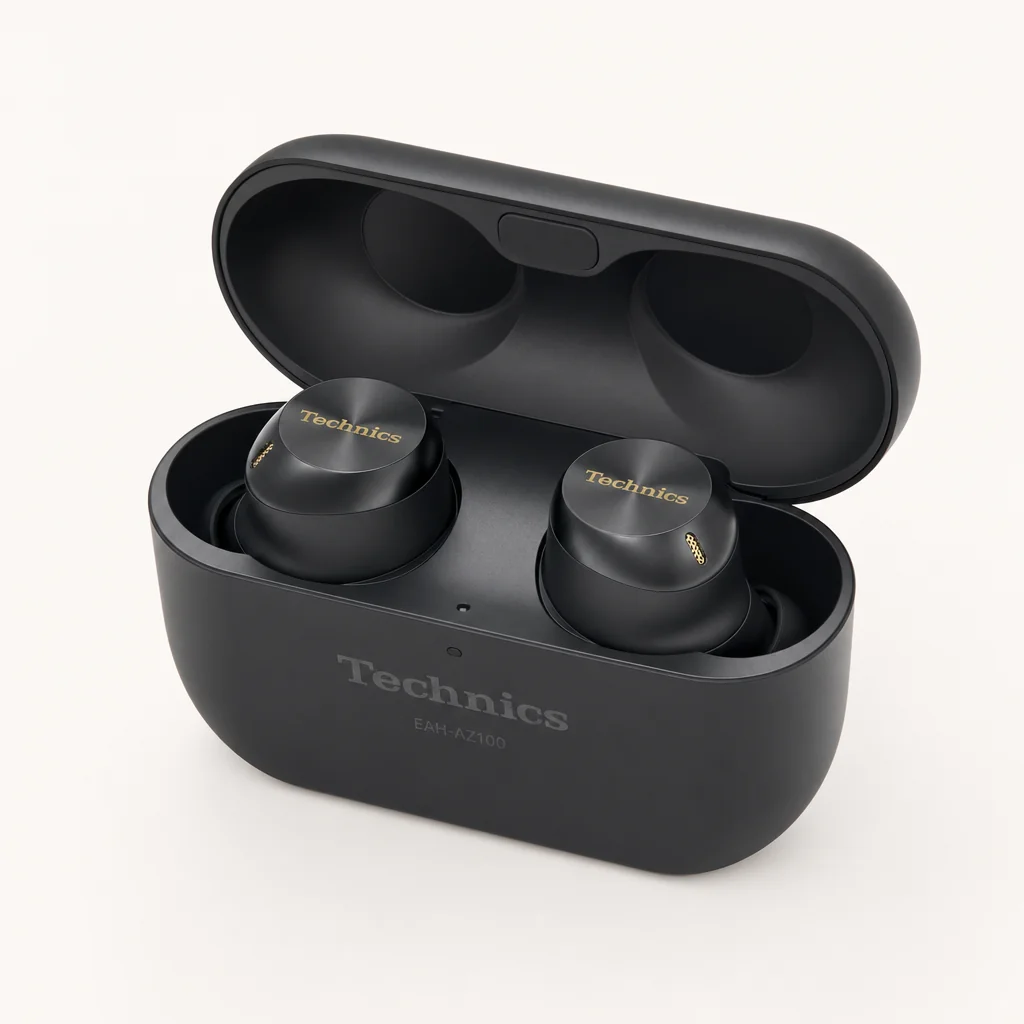
The Technics EAH-AZ100 is the underdog pick in this guide. Technics is Panasonic's premium audio brand, and these earbuds deserve more attention than they tend to receive in mainstream roundups. Their killer feature is not a flashy app trick. It is three-way multipoint connectivity.
Most multipoint earbuds allow two connected devices. Technics allows three. For someone who moves among an Android phone, tablet and laptop, that is not a small upgrade. It is the difference between treating earbuds as a flexible work tool and treating them as another Bluetooth gadget that needs a little ceremony every time a notification arrives on the wrong screen.
Codec support is equally strong. The EAH-AZ100 supports LDAC and LC3, matching the most useful parts of Sony's codec proposition and outgunning Samsung's lack of LDAC and the Pixel Buds Pro 2's AAC-and-aptX arrangement. That does not automatically make Technics better sounding for every listener, but it makes them a strong candidate for Android enthusiasts who want choice without becoming tied to Sony hardware.
Three-way multipoint
Maintain connections to three devices at once. This is the standout feature for people who regularly shift among phone, tablet and computer.
LDAC and LC3
Technics covers both a high-quality Android codec route and the efficient LE Audio-oriented LC3 option.
10 hours 40 minutes in testing
That tested result is notably healthy for a premium pair and makes the AZ100 attractive for long workdays.
At £259 / $299 / AU$499, the Technics are firmly premium. They make most sense when their specific strengths align with your routine. If you only ever use one Android phone and your main concern is ANC, Bose or Sony may be the cleaner choice. If you are constantly swapping sources, the Technics' three-way multipoint becomes a daily quality-of-life feature that is difficult to unlearn.
Pros
- Three-way multipoint is exceptional for a phone, tablet and laptop setup.
- LDAC and LC3 give it excellent Android codec credentials.
- 10 hours 40 minutes of tested battery life is very competitive.
Cons
- £259 / $299 pricing makes it a specialist premium choice.
- Its strongest case is for multi-device users rather than everyone.
- It lacks the Galaxy-specific advantages of Samsung's own buds.
Google Pixel Buds Pro 2

See Google Pixel Buds Pro 2 on Amazon UK
Check today's price & availability on Amazon UK
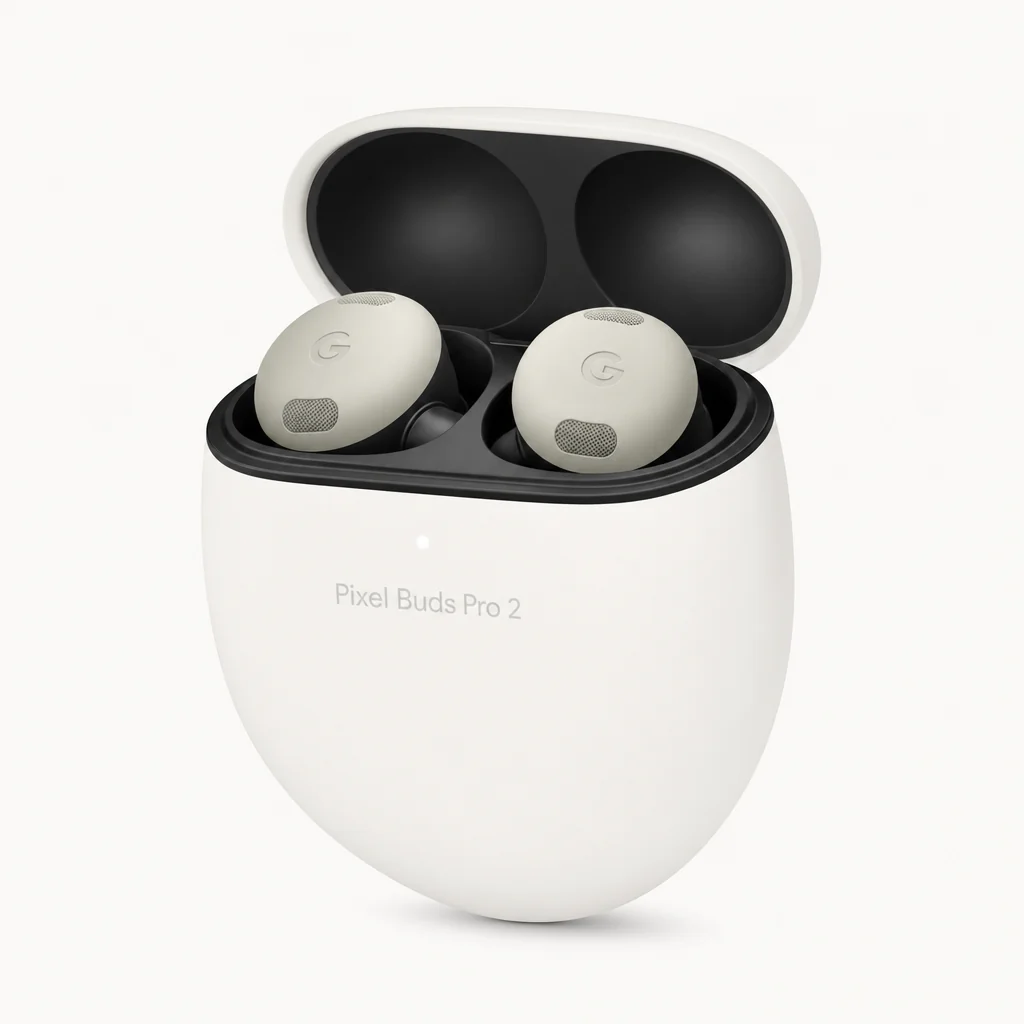
5. Google Pixel Buds Pro 2 — Best for Pixel Owners
Pixel Buds Pro 2 are the natural extension of a Pixel phone. They support Fast Pair for quick setup, integrate with Find My Device, and provide seamless Google Assistant access. Those are not laboratory-chart features, but they are the features you notice when you are trying to leave the house and cannot remember where one bud has disappeared to.
Google's tuning favours clarity and vocal presence, which makes the Pixel Buds Pro 2 especially sensible for podcasts, calls, spoken-word listening and tracks where you want the singer to feel clearly placed rather than wrapped in a huge low-end cushion. Battery life reaches eight hours with ANC active.
Codec support is AAC and aptX, with no LDAC. That is the principal reason they sit below Sony and Technics for Android enthusiasts. They are not trying to win the codec arms race. They are trying to feel completely natural beside a Pixel, and for many users that is the more valuable objective.
Pros
- Fast Pair, Find My Device and Google Assistant integration suit Pixel owners.
- Eight hours with ANC is a strong single-charge figure.
- Clear, vocal-forward sound is well suited to calls and spoken content.
Cons
- No LDAC support.
- Less compelling for Samsung users seeking SSC integration.
- Does not offer Technics' three-way multipoint proposition.
Samsung Galaxy Buds 3 Pro

See Samsung Galaxy Buds 3 Pro on Amazon UK
Check today's price & availability on Amazon UK
6. Samsung Galaxy Buds 3 Pro — Best for a Lower-Cost Galaxy Upgrade
The Samsung Galaxy Buds 3 Pro remain worth considering because they offer deep Samsung integration at a lower launch price than the newer Buds 4 Pro. They launched in July 2024 at $179.99, with a stem-style design, IP57 protection and a feature set that still feels distinctly Galaxy-first.
Codec support includes AAC, SBC, Samsung Seamless Codec and SSC-UHQ. Bluetooth 5.4 with LE Audio, Auto Switch and a six-microphone array add to the feeling that these were designed to sit neatly inside a Samsung device collection rather than operate as generic earbuds with a logo attached.
Battery was rated at six hours with ANC and 26 hours with the case. Adaptive Noise Control, Voice Detect, Siren Detect, ANC and Ambient Sound give the Buds 3 Pro a broad range of listening modes. The newer Buds 4 Pro are the more complete flagship, with their tighter measured tuning, revised comfort and SSC mode for compatible Galaxy hardware. But the Buds 3 Pro remain the sensible step-down option if you want Samsung's ecosystem benefits without moving to the latest model.
Pros
- Strong Samsung integration with Auto Switch and Samsung codecs.
- IP57 durability is excellent for this category.
- Adaptive Noise Control, Voice Detect and Ambient Sound provide flexibility.
- $179.99 launch price undercut the current Buds 4 Pro.
Cons
- Measured frequency response was less tightly controlled than Buds 4 Pro.
- Six-hour ANC battery rating trails newer premium alternatives.
- Not the right choice for Android users outside Samsung's ecosystem.
Samsung's Buds 3 Pro remain a practical Galaxy-first choice, especially for buyers who value IP57 protection and Auto Switch more than owning the newest flagship.
EarFun Air Pro 4 Plus
See EarFun Air Pro 4 Plus on Amazon UK
Check today's price & availability on Amazon UK
7. EarFun Air Pro 4 Plus — Best for Budget Android Buyers
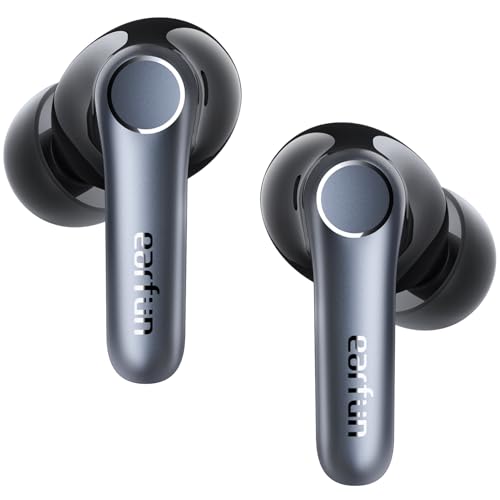
Not everybody needs a £250 flagship earbud to listen to a podcast on the bus. The EarFun Air Pro 4 Plus is the budget pick here, positioned below $70. That price category matters because it is where many buyers accidentally buy something cheap twice instead of something decent once.
The appeal is straightforward: this is the pick for an Android owner who wants the convenience of wireless earbuds, active noise cancellation as part of the shopping brief, and a much gentler hit to the wallet than Sony, Bose, Technics or Samsung's current flagship. It is also the pair to look at if you need a backup set for a gym bag, work drawer or travel kit and do not want to spend premium money on something likely to become separated from its charging case at some point.
There are limits to a value pick, naturally. The specialist advantages of the premium models are not what you are buying here. You are not choosing EarFun over Technics for three-way multipoint, over Sony for LDAC-and-LC3 flexibility, or over Galaxy Buds 4 Pro for Samsung's 24-bit/96kHz SSC path. You are choosing it because sensible budget buying should still involve a recognisable feature set, not just hope and a suspiciously long product name.
Budget buying rule
If you are spending under $70, prioritise fit, stable connectivity and the features you will use every day. A cheap pair that stays comfortable for a commute beats a feature-packed bargain that lives permanently in a drawer.
Pros
- Positioned under $70, making it the accessible pick in this list.
- A sensible route into ANC-equipped Android earbuds on a budget.
- Ideal for buyers who do not need flagship ecosystem extras.
Cons
- Does not have the premium codec and switching credentials of Sony or Technics.
- Not the ecosystem-led option for Galaxy or Pixel owners.
- Buy it for value and everyday convenience, not flagship refinement.
Who Should Buy Which Android Earbuds?
If you have read this far, you have probably noticed that there is no single "best" earbud in the abstract. There is only the best one for your phone, your commute and the number of devices trying to steal your attention before lunch. Here is the short version.
Best all-rounder: Sony WF-1000XM6
Choose Sony if you want LDAC and LC3, excellent measured ANC, Qi charging and a premium experience that stays useful if you switch Android brands.
Best for Galaxy users: Samsung Galaxy Buds 4 Pro
Choose the Buds 4 Pro if you own a compatible compatible Galaxy device — the S26 and Tab S10+ among others and want SSC at 24-bit/96kHz, Auto Switch and IP57 protection.
Best for ANC: Bose QuietComfort Ultra Earbuds (Gen 2)
Choose Bose if commute noise, flights and office chatter are your main enemy. This is the specialist quiet-first pick.
Best for power users: Technics EAH-AZ100
Choose Technics if three-way multipoint would simplify your life. Phone, tablet and laptop users will notice the difference daily.
Best for Pixel users: Google Pixel Buds Pro 2
Choose Pixel Buds Pro 2 for Fast Pair, Find My Device, Assistant integration and an eight-hour ANC battery claim.
Best on a budget: EarFun Air Pro 4 Plus
Choose EarFun if staying below $70 matters more than advanced codec support or manufacturer-specific extras.
The smartest purchase is the one that matches your phone and routine: codec flexibility for mixed Android households, or ecosystem integration when you are firmly committed to Galaxy or Pixel.
Frequently Asked Questions
A good Android earbud should disappear into your day: pairing quickly, staying comfortable and making the outside world a little less demanding when you need it to.
Final Verdict: Buy for Your Android Life, Not the Hype
The Sony WF-1000XM6 is the best wireless earbud for Android overall in 2026. It pairs excellent ANC performance with LDAC and LC3 support, solid battery life, Qi charging and the freedom to work well across Samsung, Google and other Android phones.
If you own a compatible recent Galaxy phone or tablet, Samsung Galaxy Buds 4 Pro are the more specialised and arguably more satisfying choice, thanks to SSC 24-bit/96kHz support, Auto Switch, IP57 protection and the new two-way speaker design. Bose QuietComfort Ultra Earbuds (Gen 2) win when noise cancellation is the whole mission. Technics EAH-AZ100 win for multi-device people. Pixel Buds Pro 2 are the easy Pixel choice. And EarFun Air Pro 4 Plus proves you do not need to spend flagship money to get into the category sensibly.
In short: buy the earbuds that make your actual daily routine easier. Your commute will thank you. Your Bluetooth settings will thank you. Even that colleague with the extremely loud keyboard might thank you, although you will not be able to hear them.
- Bose QuietComfort Ultra EarbudsView on Amazon
- Samsung Galaxy Buds 4 ProView on Amazon
- Technics EAH-AZ100View on Amazon
- Google Pixel Buds Pro 2View on Amazon
- EarFun Air Pro 4 PlusView on Amazon