
Sonos Era 100 First Look: Still the Smart Speaker to Beat for Under £200?
The affordable Sonos range now has a choice: pay £199 for voice control and Android Trueplay, or £169 for the microphone-free Era 100 SL with the same core speaker hardware.
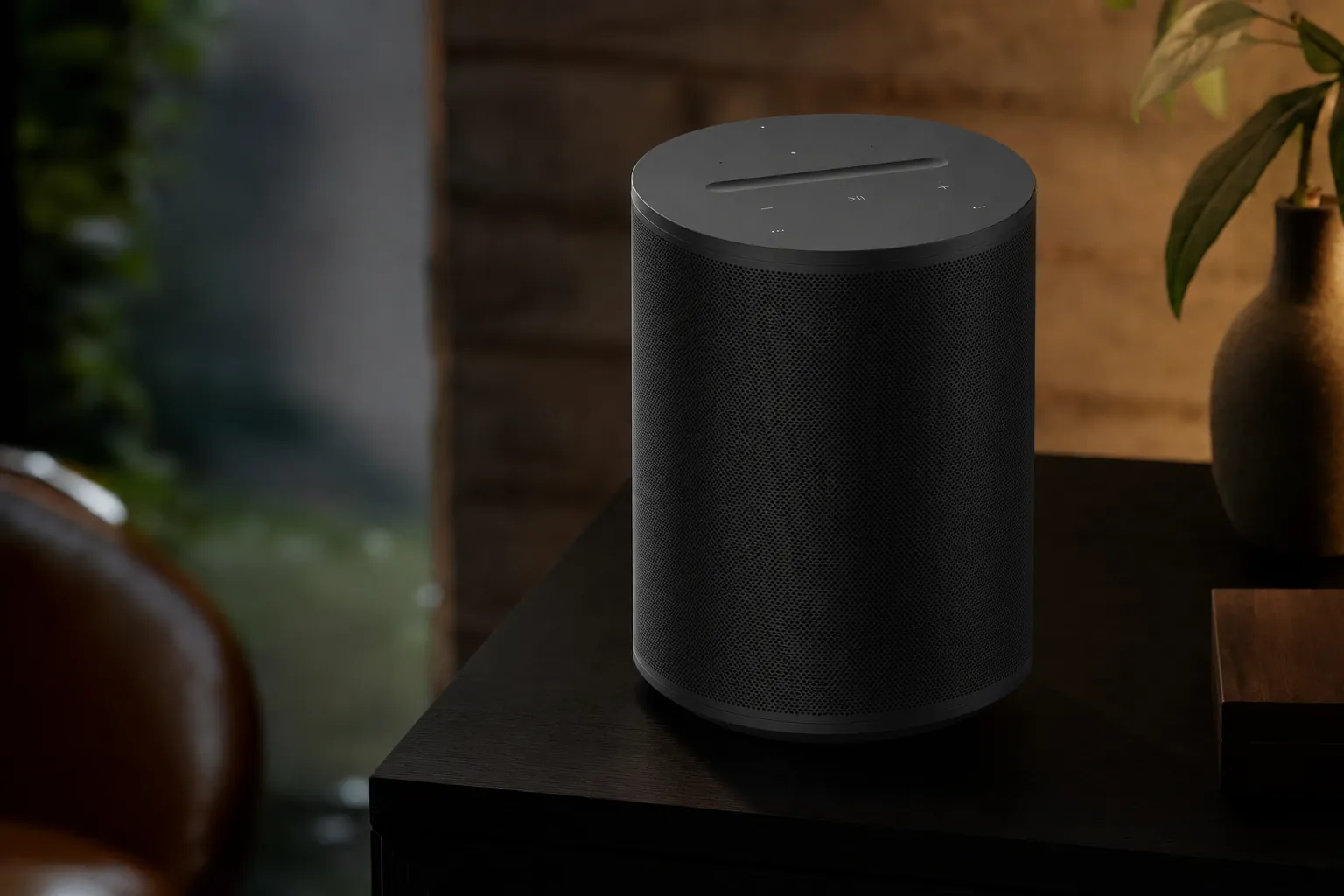

We link to the exact model on Amazon UK. Prices change often, so check the live price before you buy. As an Amazon Associate we earn from qualifying purchases.
For someone adding Sonos room by room, the important question is no longer simply whether the Era 100 sounds good. It is which version makes sense in each room, and how much the small extras cost once a system grows beyond one speaker. The standard Sonos Era 100 remains a compact, mains-powered smart speaker at £199, whilst the newer Sonos Era 100 SL costs £169 and removes microphones rather than the acoustic hardware. That £30 distinction shapes almost every buying decision.
Two Speakers, One Platform: Making Sense of the Sonos Era 100 Line-Up
The consumer Era 100 family consisted of two models as at 13 September 2026. The original Sonos Era 100 arrived in March 2023. The Sonos Era 100 SL, announced in March 2026 and available from 31 March 2026, became the lower-cost, microphone-free alternative. They should not be confused with the separately sold, professionally installed Era 100 Pro, which sits outside the normal consumer retail proposition.
Sonos Era 100 SL
Microphone-free consumer speaker with iOS Trueplay.
Sonos Era 100
Voice-enabled model with Android and iOS Trueplay.
Sonos listed the standard Era 100 at $219 in the US and the Era 100 SL at $189, mirroring the £30 UK gap. Retail promotions can alter the immediate purchase price, but the official prices make the split unusually clear: the SL is not a stripped-down acoustic edition. It is chiefly an Era 100 without a microphone array, voice assistants and the standard model's Android room-tuning support.
The shared hardware matters. Both speakers use two angled tweeters, one midwoofer and three Class-D digital amplifiers in the same sized enclosure. The Era 100 weighs 2.02kg and the SL 1.95kg, but neither is a portable battery speaker. Both need a nearby mains socket.
| Feature | Sonos Era 100 | Sonos Era 100 SL |
|---|---|---|
| UK official price | £199 | £169 |
| Acoustic layout | Two angled tweeters, one midwoofer, three Class-D amplifiers | Two angled tweeters, one midwoofer, three Class-D amplifiers |
| Wi-Fi, Bluetooth and AirPlay | Wi-Fi 6, Bluetooth 5.3 and AirPlay 2 | Wi-Fi 6, Bluetooth 5.3 and AirPlay 2 |
| Built-in microphones | Far-field microphone array | No microphones |
| Built-in voice control | Sonos Voice Control and Amazon Alexa, subject to market and language availability | No built-in voice assistant |
| Trueplay support | iOS and Android | Compatible iOS devices |
| Processor | Quad-core, 4×A55 at 1.9GHz | Quad-core, 4×A55 at 1.4GHz |
| Stereo pairing and surround use | Supported in the Sonos system | Supported in the Sonos system |
For a kitchen, bedroom or hallway speaker controlled mainly from the Sonos app, the SL's omission may be a straightforward saving. For an Android household, however, the standard Era 100's broader Trueplay support changes the calculation. That is a practical difference rather than an abstract specification: the model choice can affect how easily a buyer can tune the speaker to its placement.
In UK homes, that placement question is often more important than the modest weight difference. A compact speaker can suit a bookshelf, desk, bedside table or kitchen counter, but it still needs a permanent power connection. Buyers planning a speaker where the nearest socket is already occupied should settle that practical issue before deciding between models, because neither the £169 SL nor the £199 Era 100 can simply be moved around like a battery Bluetooth speaker. The two versions make the most sense when the room already has a sensible, repeatable place for mains-powered listening.
What Sonos Actually Confirms — and What It Conspicuously Doesn't
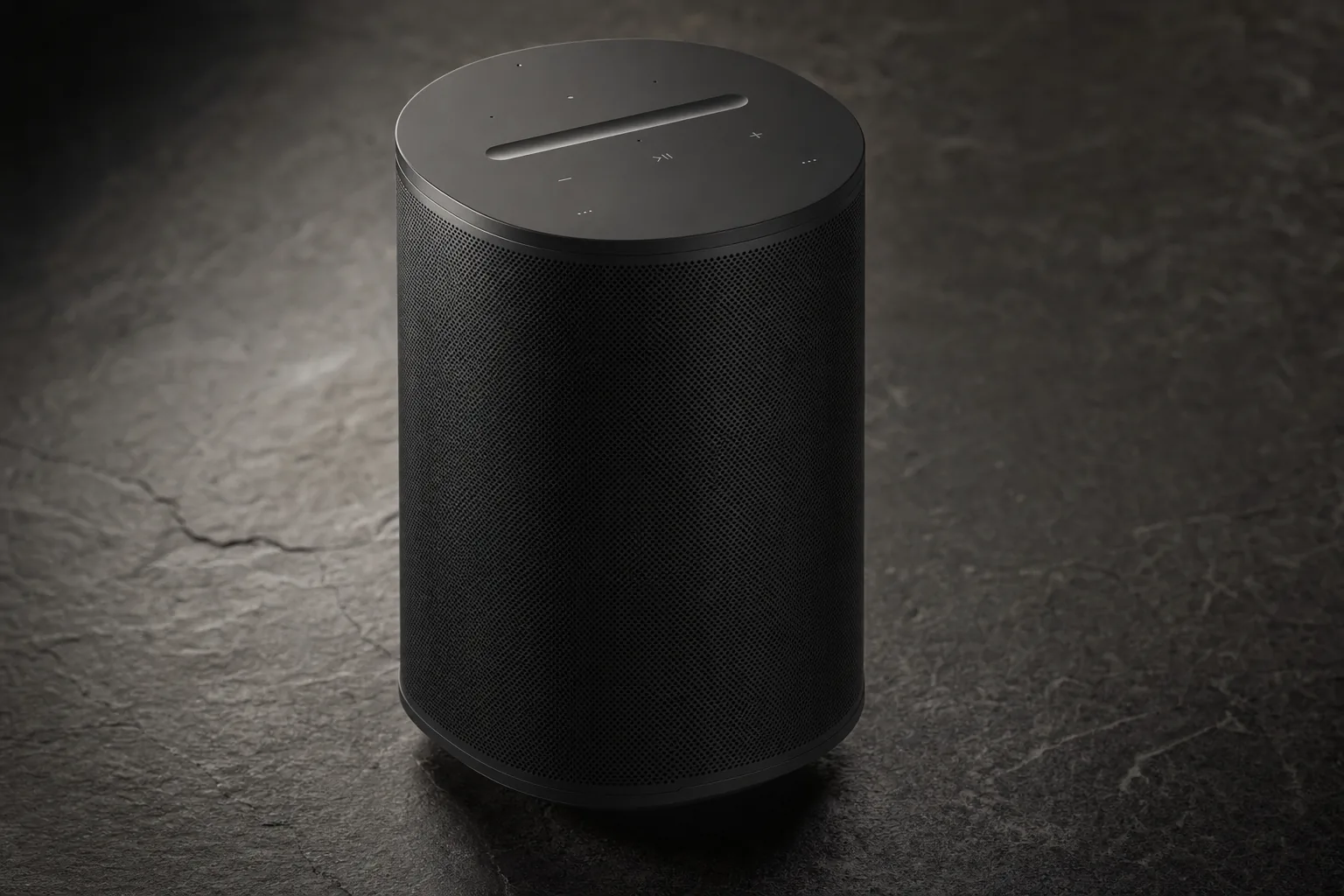
Sonos provides plenty of useful core information. It confirms the driver arrangement, internal amplification count, dimensions, networking, Bluetooth version, AirPlay 2, touch controls and adapter-based USB-C connectivity. The Era 100 also has a far-field microphone array with beamforming and multichannel echo cancellation. Both models offer bass, treble and loudness controls in the Sonos app, can join multi-room groups, can be stereo-paired and can work as surrounds with compatible Sonos home-theatre products.
Yet buyers should avoid treating unpublished figures as facts. Sonos does not publish a wattage output for either consumer model. More watts would not, by themselves, settle questions about loudness or sound quality anyway; speaker efficiency, DSP tuning and driver behaviour matter too. Independent sound-pressure measurements are therefore more helpful than attempting to infer performance from a power figure.
Humidity resistance is not a waterproof rating
Sonos describes both consumer Era 100 models as humidity resistant, which may suit locations such as a kitchen or bathroom shelf where they are kept clear of water. That wording is not a certified dust or water-resistance rating. Neither speaker should be chosen as a portable outdoor product or a splashproof bathroom speaker.
The same caution applies to frequency response. Sonos has not published a frequency-response range for the consumer Era 100 or Era 100 SL. The pro-install Era 100 Pro carries a 45Hz–20kHz ±3dB specification, but it has different networking, power and deployment characteristics. That number should not be carried across to the domestic models.
Physical connections also need a careful reading. Each consumer speaker has a USB-C connection designed for Sonos accessories, rather than a built-in 3.5mm socket or Ethernet socket. A separately purchased Sonos Line-In Adapter enables an analogue source such as a turntable. A separate Sonos Combo Adapter provides Ethernet. Those options are useful, particularly in a mixed old-and-new system, but neither connection is included as standard.
This is a meaningful trade-off against speakers with conventional sockets. A buyer who only streams over Wi-Fi, Bluetooth or AirPlay 2 may never need either accessory. Conversely, someone with a pre-amplified turntable or an existing wired network point should include the appropriate adapter in the decision from the outset. The USB-C port should not be read as confirmation of general USB-C digital audio input: Sonos describes it as an adapter-based connection, and the available information does not confirm ordinary direct USB-C audio use.
How Loud Is Loud Enough? Reading the Independent SPL Data
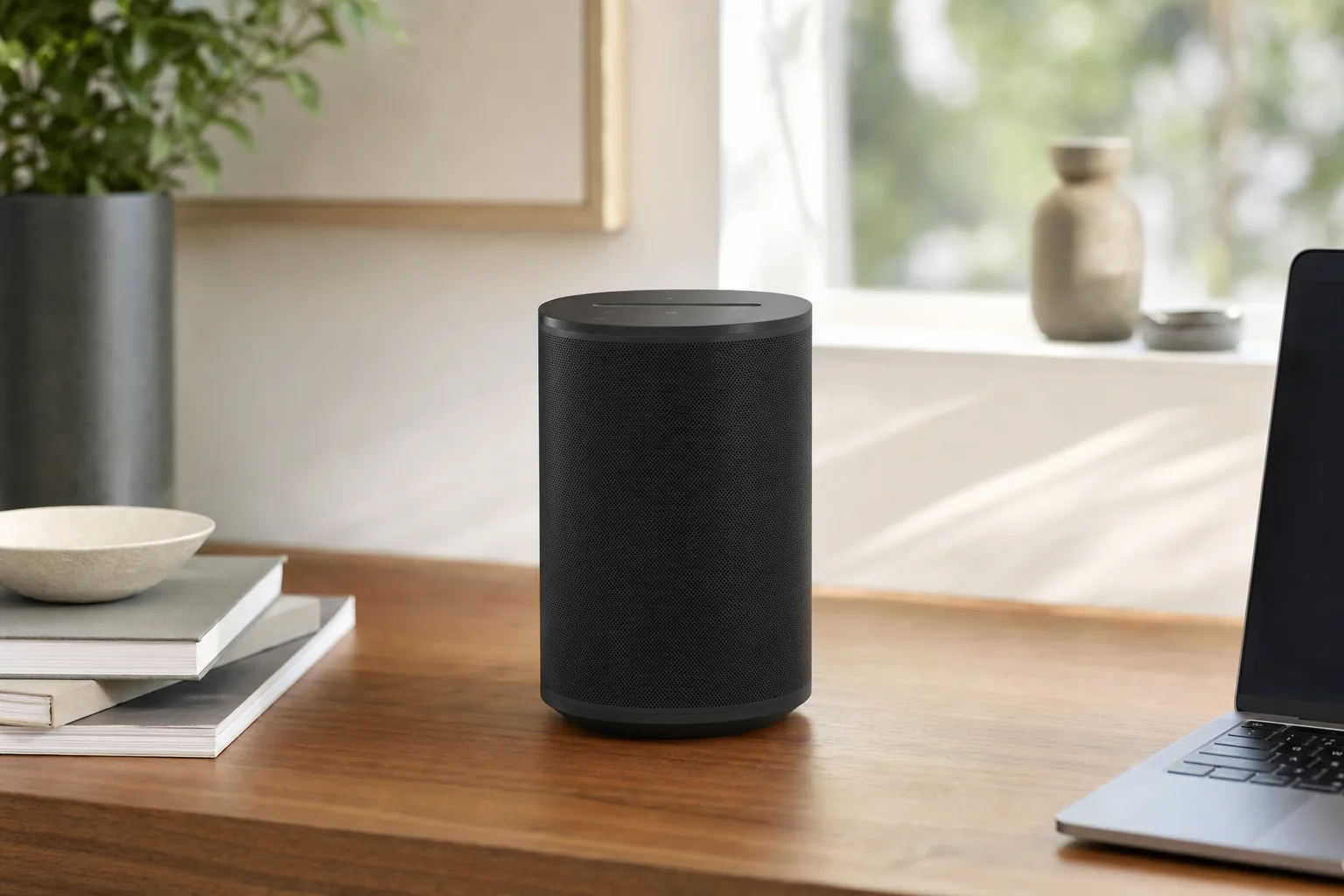
Compact speakers can sound surprisingly substantial at a desk or on a kitchen counter, yet domestic suitability depends on room size, music and listening distance. The available independent figures suggest that the Era 100 has useful output for typical rooms, without pretending to be a high-output party speaker.
DXOMARK recorded 87.2dBA from correlated pink noise at maximum volume. In the same methodology, the older Sonos One reached 85.6dBA and the Harman Kardon Citation 200 reached 86dBA. This puts the Era 100 modestly ahead of those two reference points under that particular signal. It does not mean every song will reach the same level: programme material produces markedly different readings.
DXOMARK's music figures underline why a single maximum-volume number should be treated carefully. It recorded 81.7dBA with hip-hop, 76.2dBA with classical music, 84.9dBA with Latin music and 75.4dBA with Asian pop. Mastering levels, dynamics and bass content all influence the outcome. Someone expecting the same apparent loudness from a quiet classical recording as from aggressively mastered pop is likely to be disappointed by any small all-in-one speaker.
PCWorld reported a separate set of measurements: approximately 90dB peak while streaming from Tidal, Qobuz, Amazon Music and Nugs.net; around 88dB from a pre-amplified turntable; and roughly 82dB from internet radio streams. The differing results are not necessarily contradictory. They illustrate differences in source level, material and measurement method.
| Measurement source and programme | Sonos Era 100 |
|---|---|
| DXOMARK correlated pink noise | 87.2dBA |
| DXOMARK hip-hop programme | 81.7dBA |
| DXOMARK classical programme | 76.2dBA |
| PCWorld streaming sources | Approximately 90dB peak |
| PCWorld internet radio | Approximately 82dB |
RTINGS described the Era 100 as not loud enough for larger rooms, whilst DXOMARK reported that unwanted artefacts were generally controlled. Taken together, that points to a sensible use case: a bedroom, office, kitchen, living room or average open-plan area is credible territory; a very large room, garden gathering or high-volume party is not the job this product was designed around. A stereo pair improves scale and separation, but it does not turn two compact speakers into a dedicated PA system.
Stereo in a Single Box: Why the Sonos Era 100 Differs From Sonos One
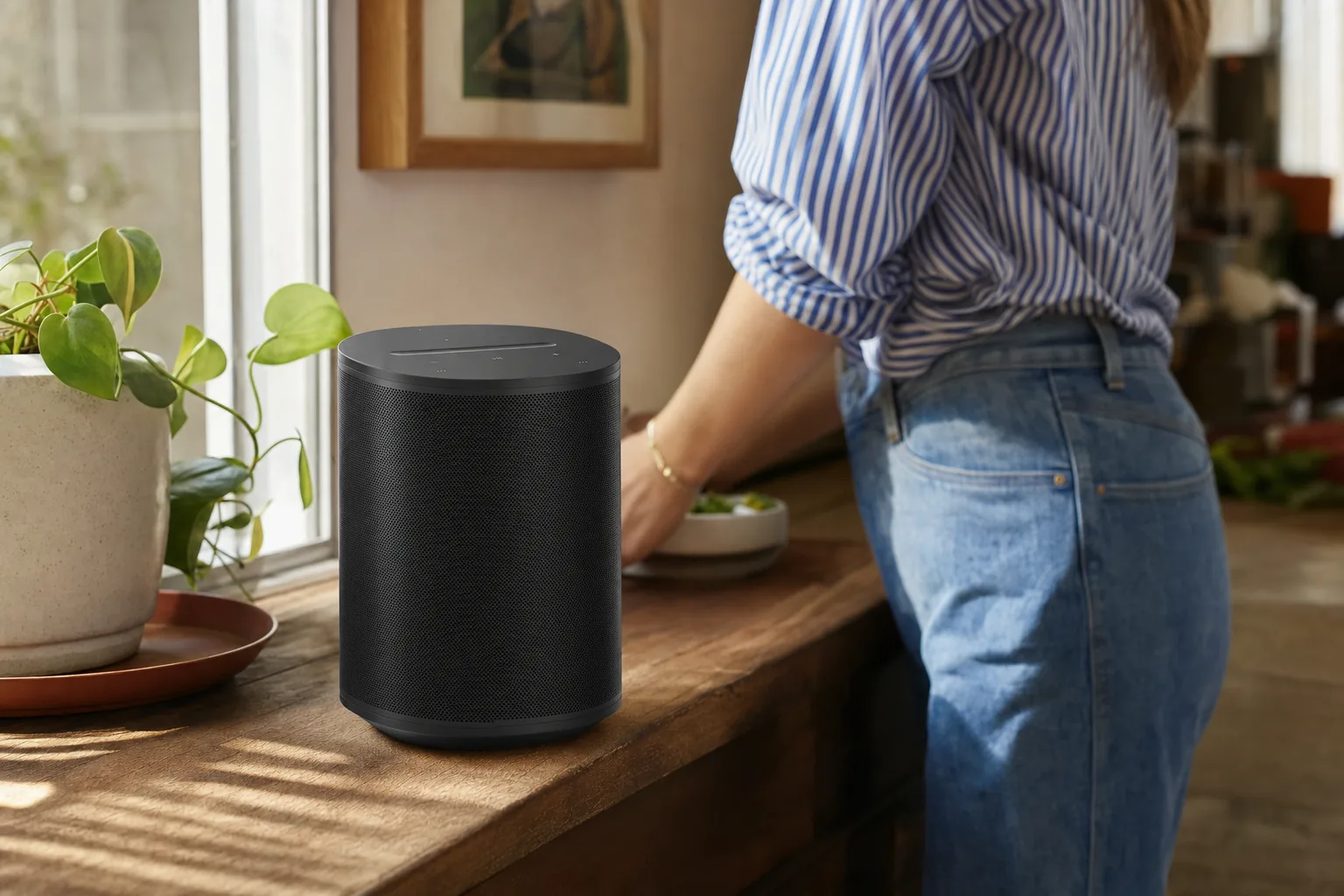
The central acoustic change from the older Sonos One and One SL is that the Era 100 uses two angled tweeters to create stereo playback from one enclosure. The older One design was mono from a single speaker. This does not replace the left-right spacing of two separate speakers, but it gives the Era 100 a wider presentation from one compact cabinet and avoids downmixing stereo material in the same manner.
Angled tweeters, not separate cabinets
Sonos positions the tweeters and custom waveguides to spread high frequencies left and right. The effect is useful from a single unit, but reviewers have consistently distinguished it from a properly spaced stereo pair.
One midwoofer for the main body of the sound
The midwoofer handles midrange and bass. DXOMARK described the result as having clean bass, a warm midrange and solid dynamics for the enclosure size.
A clear route to greater separation
A matching pair can be configured as stereo speakers in the Sonos system. That costs more and needs two suitable positions, but it remains the more convincing choice for focused music listening.
What Hi-Fi positioned the Era 100 as a strong compact performer, whilst making an important distinction: it does not provide the Dolby Atmos or spatial-audio capability associated with Sonos Era 300. Buyers drawn to immersive music formats should not assume that the Era 100's internal stereo design delivers that feature. Its proposition is conventional stereo playback with Sonos multi-room flexibility.
Reported strengths
- Clear and detailed midrange with bass improved over Sonos One, according to reviewer consensus.
- Wider single-speaker presentation than Sonos One's mono design.
- Clean bass and solid dynamics for the compact enclosure, as reported by DXOMARK.
- Bluetooth 5.3 adds direct streaming alongside Wi-Fi-based Sonos playback.
Sound-related limits
- Very low bass rumble remains limited, according to RTINGS.
- Stereo spread from one box is not equivalent to physically separated speakers.
- Compression and light distortion can become more noticeable near maximum volume.
- No Dolby Atmos or spatial-audio music support for the consumer Era 100 range.
The Multi-Room Maths: What Building a Whole-Home System Actually Costs
At one-speaker scale, £30 may feel like a minor premium for microphones, Alexa and Android Trueplay. Across several rooms it becomes tangible. Two Era 100 SL speakers cost £338, compared with £398 for two standard Era 100 speakers. The £60 difference could matter more than voice control in a room where playback is always started from a phone, tablet or another Sonos controller.
Two Era 100 SL speakers
Potential stereo pair or two separate microphone-free rooms.
Two Sonos Era 100 speakers
Equivalent layout with voice control and Android Trueplay on both.

See Two Sonos Era 100 speakers on Amazon UK
Check today's price & availability on Amazon UK
That arithmetic becomes particularly relevant for surround sound. Both models can be used as rear speakers with compatible Sonos home-theatre products. In a rear position, built-in voice control may be of limited value, making the SL a rational way to reduce the cost of a matching pair. For music-first stereo speakers at the front of a room, the choice is more dependent on the household's preferred setup device and voice habits.
Budget for connectivity, not just speakers
A Line-In Adapter is required for a 3.5mm analogue source and a Combo Adapter is required for Ethernet. This is easy to overlook when comparing headline prices. It matters most for buyers connecting a turntable, retaining wired network drops or integrating older source equipment into a new Sonos room.
There is also an operational advantage to staying within the Sonos platform. Both models can be grouped with compatible Sonos products, streamed to as separate rooms, combined into a stereo pair and reassigned as surrounds. That is the stronger case for paying for an Era 100 rather than choosing a similarly priced standalone Bluetooth speaker. The value is not merely in one cabinet's sound; it is in the ability to expand a coherent system over time.
Setup expectations should be realistic as well. Both speakers require the current Sonos app and an internet connection for setup and core Sonos functionality. Once added to a system, the useful day-to-day decision is whether to treat a room as independent, group it with other compatible Sonos rooms, or reserve two speakers for a stereo or surround role. The SL is especially compelling where that role is fixed and voice interaction is unnecessary; the standard Era 100 is more flexible if a speaker may move later into a room where Alexa, Sonos Voice Control or Android Trueplay will matter.
Microphones, Privacy and the Voice Control Question
The standard Era 100 contains a far-field microphone array designed with beamforming and multichannel echo cancellation. It supports Sonos Voice Control and Amazon Alexa, although specific language and market availability varies. UK buyers should verify the voice features they want rather than assuming every service listed internationally is available in the same form locally.
A physical microphone switch electrically disconnects the Era 100's microphone hardware. This is more meaningful than a purely software-based mute setting because it provides a direct hardware privacy control. It may reassure someone who wants voice features occasionally but does not want the microphones active all the time.
The Era 100 SL takes the more decisive route: it has no microphones and no built-in voice assistant. This is not simply a privacy mode on the same hardware. For a buyer who will never issue voice commands to a speaker, or who wants a speaker in a privacy-sensitive room, the SL removes the hardware entirely and saves £30.
| Decision point | Sonos Era 100 | Sonos Era 100 SL |
|---|---|---|
| Microphone hardware | Built-in far-field array | Absent |
| Privacy approach | Physical switch electrically disconnects microphones | No microphone hardware to disconnect |
| Sonos Voice Control | Supported where available | Not supported |
| Amazon Alexa | Supported where available | Not supported |
| Room tuning for Android users | Supported | Not supported |
| Room tuning for iPhone and iPad users | Supported | Supported |
The slower 1.4GHz processor in the SL versus 1.9GHz in the standard model is a real specification difference, but it should not be mistaken for a documented sound-quality difference. The core drivers and amplifier arrangement are shared, and reviewer coverage of the SL reported no significant sonic penalty for the microphone-free design.
Where the Reviews Agree — and Where the Cracks Show
Across DXOMARK, What Hi-Fi, PCWorld, RTINGS and TechRadar, the positive case is consistent. Reviewers praised the compact dimensions, solid construction, tactile controls, stronger bass than Sonos One and the convenience of the established Sonos multi-room platform. The Era 100's ability to play stereo material from one enclosure and accept Bluetooth audio are practical advances over older compact Sonos models.
The critical case is equally consistent. Neither model has a battery, so neither can replace a portable speaker away from a mains outlet. The speakers are humidity resistant but lack a published dust or water-resistance rating. Their wired options rely on separately purchased adapters. They do not support Dolby Atmos or spatial audio, and RTINGS placed a limit on their usefulness in larger rooms. Sonos's EQ is limited to bass, treble and loudness, rather than the more granular parametric adjustment available on some rivals.
Reasons the range makes sense
- Shared acoustic hardware means the lower-priced SL keeps the central sound proposition.
- Wi-Fi 6, Bluetooth 5.3 and AirPlay 2 offer several routes for playback.
- Multi-room grouping, stereo pairing and surround duties provide an expansion path.
- The standard model adds voice control, a hardware mic switch and Android Trueplay.
- Sonos stated that Era 100 used under 2W in idle mode and 42% less idle energy than Sonos One in the same state.
Reasons to look elsewhere
- Mains-only design rules out genuinely portable use.
- Analogue line-in and Ethernet add accessory cost.
- No published IP rating makes outdoor or wet-area use a poor fit.
- Single-speaker stereo is helpful but not a substitute for a separated pair.
- Those seeking spatial audio should consider a different Sonos model or category.
Who the Sonos Era 100 Range Is Actually Built For
Budget multi-room starters
The Era 100 SL is the logical entry point for someone adding rooms gradually and controlling music through the Sonos app. It retains the same drivers, multi-room functions, Bluetooth and AirPlay 2 for £30 less.
Voice-control households
The standard Sonos Era 100 is the more suitable model for Alexa or Sonos Voice Control, and for Android users who want the current Trueplay workflow. The premium is £30 per speaker.
Privacy-conscious buyers
The Sonos Era 100 SL removes microphones rather than asking the owner to disable them. It is a tidy choice for bedrooms, customer-facing spaces or any room where voice control is unwanted.
For someone replacing a Sonos One or One SL, the Era 100 adds Bluetooth and an internal stereo layout, while DXOMARK's correlated pink-noise figure was 1.6dBA higher than the Sonos One result. The upgrade is easier to justify where the speaker is used alone, because that is where the wider stereo presentation and Bluetooth flexibility are most immediately useful. A discounted older One can still make sense where price is the only concern, but it retains the older mono design.
The Apple HomePod 2 is a different alternative for Apple-first homes. It brings Siri and spatial-audio features, but the Era 100 has a lower listed price in the cited comparison, Bluetooth audio, optional analogue line-in and the broader Sonos grouping system. Meanwhile, the WiiM Sound Lite appeals to buyers wanting conventional Ethernet and 3.5mm connectivity, a published 100W peak figure and more extensive EQ. The Era 100's stronger argument is ecosystem consistency and room-by-room Sonos expansion, not a long physical-input list.
The most useful alternative choice depends on the problem being solved. Choose the HomePod 2 when Apple integration, Siri and spatial audio are the priority. Choose the WiiM Sound Lite when conventional physical inputs, Ethernet and parametric EQ matter more than Sonos integration. Consider an Era 300 or another category when spatial audio is the desired feature, rather than expecting it from either Era 100 model. And choose a battery-oriented product rather than either Sonos speaker if regular portable or outdoor use is non-negotiable.
Gadget Scout first-look verdict
The Sonos Era 100 range remains a persuasive route into multi-room audio below £200 because its key strengths are system-level rather than limited to a single speaker: Wi-Fi and Bluetooth playback, compact stereo-oriented acoustics, app-based grouping, stereo pairing and home-theatre surround compatibility.
For many iPhone and iPad users building several rooms, the £169 Sonos Era 100 SL is the more economical choice because it keeps the same driver layout and core Sonos functions while removing hardware they may not use. The £199 Sonos Era 100 earns its premium for Android Trueplay, Alexa, Sonos Voice Control and a physical microphone-disconnect switch. Neither is designed for portability, high-output parties, wet environments or connection-heavy hi-fi systems, so those limits should be considered before committing to a wider Sonos setup.
Sonos Era 100 and Era 100 SL FAQs
Sources
- Two Sonos Era 100 speakersView on Amazon
Sources and evidence (14)
- sonos.com (other)
- sonos.com (other)
- sonos.com (other)
- dxomark.com (other)
- sonos.com (other)
- newsroom.sonos.com (other)
- newsroom.sonos.com (other)
- pcworld.com (other)
- rtings.com (other)
- assets.sonos.com (other)
- whathifi.com (other)
- techradar.com (other)
- sonos.com (other)
- techradar.com (other)