
Best Blood Pressure Smart Rings and Biometric Wearables
The clever new rings promising blood-pressure insight, the established wearables worth considering, and the rather important line between wellness data and a medical diagnosis.
We link to the exact model on Amazon UK. Prices change often, so check the live price before you buy. As an Amazon Associate we earn from qualifying purchases.
Best Blood Pressure Smart Rings & Biometric Wearables for 2026: Our Top Picks at a Glance
Blood pressure is the next big prize for wearable tech. The pitch is very appealing: no noisy pump, no arm-squeezing cuff, just a ring that quietly watches for meaningful cardiovascular changes whilst you sleep. But this is also one of those categories where the marketing can sprint considerably faster than the science. A smart ring can be extremely useful. It cannot, at this point, replace the proper cuff your GP trusts.

See Oura Ring 5 on Amazon UK
Check today's price & availability on Amazon UK
I've ranked the six most relevant rings and biometric wearables for 2026 by looking at what they actually claim to do, how sensibly those claims are framed, the hardware underneath, and whether the wider package makes sense beyond a single headline feature. Oura Ring 5 is the polished all-rounder and my overall pick. RingConn Gen 3 is the compelling no-subscription alternative. Signal Ring is the fascinating wild card, although it is very much a pre-order proposition at the time of writing.
The regulatory reality: as of 18 July 2026, no smart ring has FDA clearance specifically for blood-pressure measurement or hypertension management. Treat ring-derived blood-pressure information as wellness insight and an invitation to check with a validated upper-arm cuff, not as a diagnosis or a reason to alter medication.
The American Heart Association put it especially clearly in its December 2025 scientific statement. Cuffless blood-pressure devices "show great promise", but are "not yet proven accurate enough to diagnose high blood pressure or guide treatment decisions". That is not a tiny footnote. It is the central fact of this entire buying guide.
Best overall: Oura Ring 5
Its redesigned sensor system and focus on nighttime blood-pressure patterns make it the most rounded choice for someone who wants cardiovascular context alongside sleep and recovery tracking.
Best subscription-free option: RingConn Gen 3
It provides vascular-trend insight rather than single cuff-style blood-pressure readings; up to 14 days of battery life and no ongoing subscription fee remain practical advantages.
Most ambitious newcomer: Signal Ring
It claimed to be the first wearable designed to measure and understand blood pressure without the squeeze, noise or setup of a traditional cuff. Ambition is not validation, though.
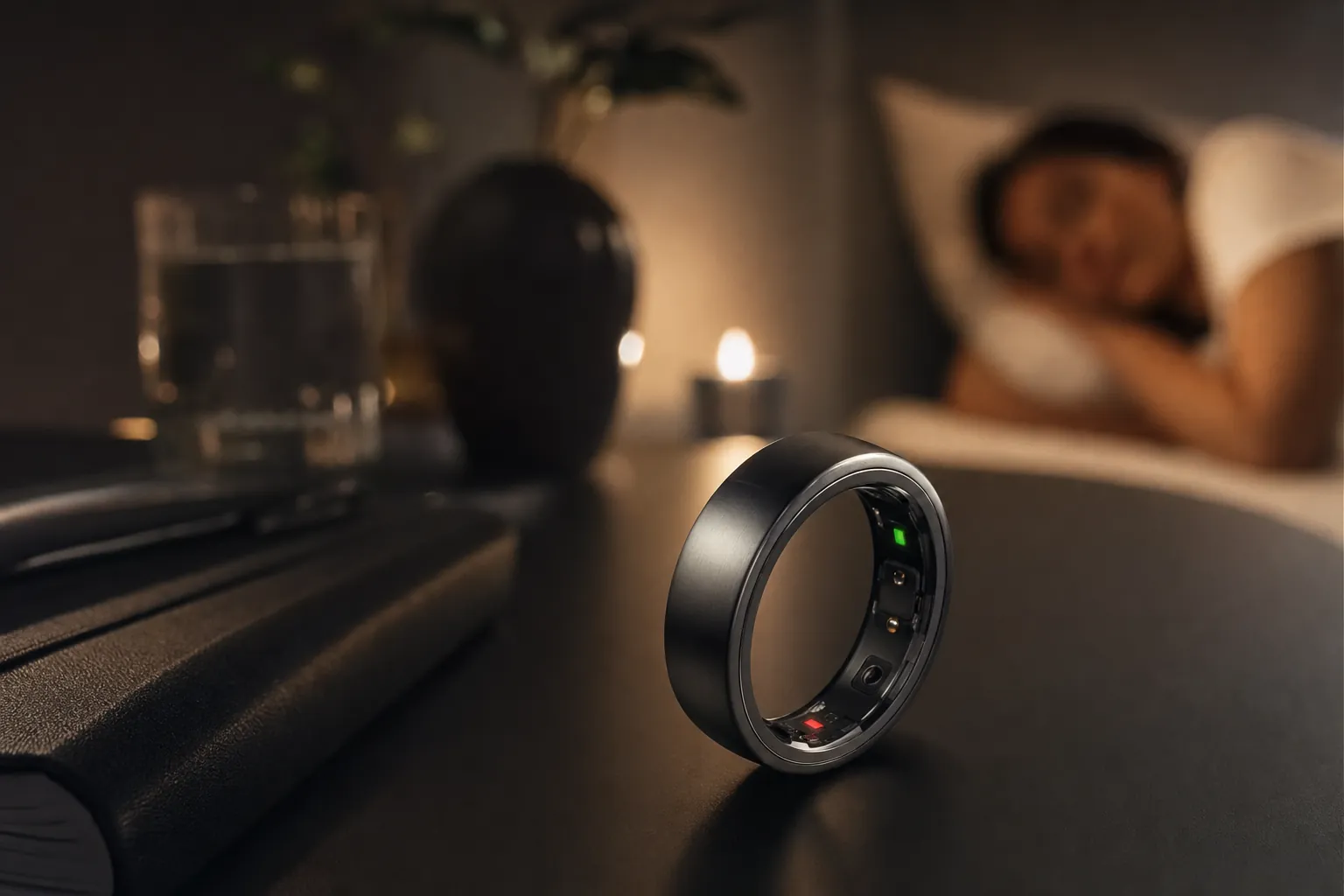
Blood-pressure-aware smart rings are designed to collect quiet, long-term patterns rather than replace a properly validated upper-arm cuff reading.
How We Tested & What Makes a Blood Pressure Wearable Worth Buying
Buying a ring on the strength of a single blood-pressure promise would be a bit like buying a car because the cupholders look excellent. Nice to have, perhaps. Not remotely enough. In my assessment, the useful question is whether a wearable gives you repeatable, understandable trends while remaining comfortable enough to wear through the boring bits of life: sleep, washing up, a weekend away, and the odd day when charging it simply slips your mind.
For this category, I prioritised extended wear, day-to-night consistency, comfort, sensor contact, charging frequency and the clarity of the health claims. Blood-pressure-oriented readings need extra scepticism, so the sensible benchmark is always a validated upper-arm cuff. A cuff remains the clinical gold standard because it directly uses pressure around the artery rather than inferring a cardiovascular picture from optical signals.
That comparison matters because a ring can identify a change in your usual pattern without necessarily producing a medically reliable systolic and diastolic number. Those are different jobs. The former can be genuinely helpful for noticing a trend worth discussing. The latter is what doctors use to diagnose and manage hypertension.
The bars above are not an accuracy score. They are a quick reality check on ownership friction. A wearable that spends too much time on its charger gathers less useful longitudinal data. Likewise, a ring that pinches, rotates or loses consistent skin contact can weaken the very signal an algorithm depends on.
The five things I weighted most heavily
First, the kind of blood-pressure insight offered: broad trend detection, pattern analysis or a claim of measurement. Second, sensor hardware and contact engineering. Third, battery life and form factor. Fourth, subscription commitments over the long term. Finally, regulatory transparency. A product earns more trust by being honest about what its readings cannot tell you.
RingConn Gen 3 should be described as a vascular-trend wearable, not as a source of single systolic and diastolic readings. Follow the current app and regional product guidance for any calibration workflow rather than publishing a fixed 28-day schedule that RingConn does not specify in its product material.
All 6 Picks Side by Side: The Master Comparison Table
Here is the quick cross-shopping view. The wording in the blood-pressure column is deliberate. "Trend" and "pattern" do not mean a conventional cuff-equivalent reading in millimetres of mercury, and none of these products has FDA clearance for blood-pressure measurement or hypertension management.
| Product | Blood-pressure feature | Battery life | Water resistance | Notable hardware or ownership point | FDA clearance for BP |
|---|---|---|---|---|---|
| Oura Ring 5 | Nighttime BP Signals pattern detection — US, India and UAE only; not available in the UK | 6–9 days | 100m | Titanium body; 12 signal pathways | None |
| RingConn Gen 3 | Vascular-trend insights; not single systolic/diastolic readings | 10–14 days | IP68 | Titanium; vibration motor; no subscription fees | None |
| Signal Ring | Designed to measure and understand BP without a traditional cuff experience | $399 pre-sale; delivery planned for October 2026 | None | ||
| Circular Ring 2 | Blood-pressure and glucose monitoring signalled on its roadmap | ECG sensor; FDA-cleared Afib detection | None | ||
| Samsung Galaxy Ring | Does not track blood pressure | Up to 7 days | 5 ATM water resistant | Broader health features | None |
| Oura Ring 4 | Blood Pressure Profile is an investigational Oura Labs study, not a shipped feature — US-only, ages 22+, and it uses no cuff at all | Up to 7 days | 10 ATM water resistant | Still sold in 2026 | None |
How to read the gaps: I have not padded the table with guessed specifications. Where a detail is not established here, it is simply left out. That is a better basis for a purchase than a neat-looking but fictional comparison.
The clear split is between mature wellness tracking and more aggressive blood-pressure ambition. Oura Ring 5 focuses on overnight cardiovascular patterns. RingConn Gen 3 uses optical data and a regularly refreshed cuff baseline to flag elevated-risk trends. Signal Ring is aiming at a much bolder experience, but it was still in pre-sale on 18 July 2026. Circular Ring 2 is an interesting ECG-equipped health ring with future-facing BP ambitions, while Galaxy Ring belongs on this list mainly as a useful control: a strong health wearable need not claim blood-pressure tracking at all.
A sensible comparison starts with the distinction between a blood-pressure pattern, an elevated-risk flag and a clinical cuff reading.
The Ranked Picks: Every Blood Pressure Ring Reviewed
1. Oura Ring 5 — Best for Overall Blood Pressure Pattern Tracking
See Oura Ring 5 on Amazon UK
Check today's price & availability on Amazon UK
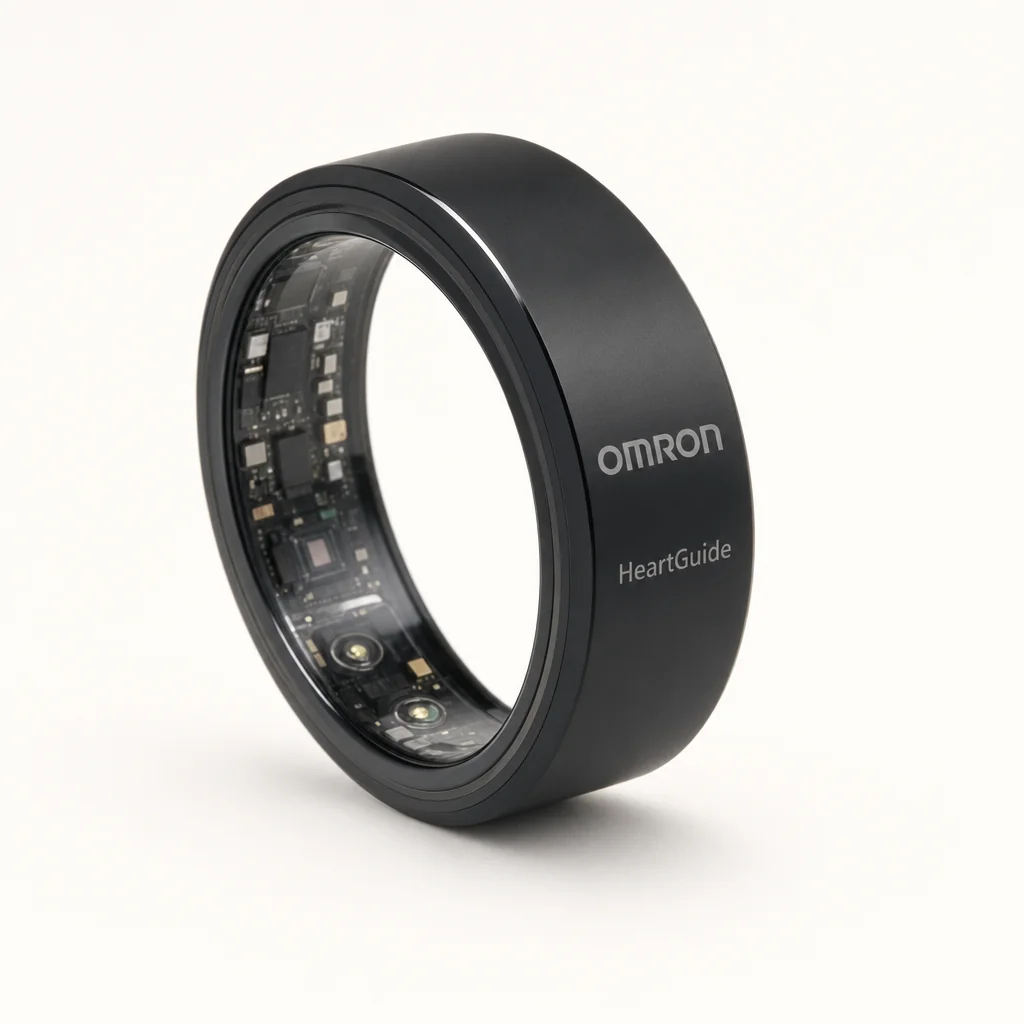
Oura Ring 5 is the clearest recommendation for someone who wants the most refined smart-ring experience and sees blood-pressure awareness as one part of a larger wellness picture. It is not trying to impersonate an upper-arm cuff. Instead, its BP Signals feature watches nighttime patterns by analysing changes in blood flow and vessel behaviour during sleep, when cardiovascular patterns are generally more stable and blood pressure should naturally dip.
That overnight dip is important. If it does not happen as expected, it can be a potential sign of cardiovascular strain worth following up. Oura's approach is therefore about looking for a meaningful shift in your own baseline, rather than serving up a falsely precise number that might tempt you into playing amateur cardiologist over breakfast.
The hardware redesign is not just aesthetic housekeeping. Oura made Ring 5 materially narrower and thinner than the previous generation: 6.09mm wide and 2.29mm thick, down from 7.99mm and 2.88mm. The lightest size 6 weighs 2g. Those numbers matter because a ring intended for sleep needs to disappear on your hand rather than announce itself every time you turn over.
Underneath, the sensing system has been overhauled with precision-engineered sensor domes, more powerful LEDs and 12 signal pathways. The aim is improved skin contact and stronger accuracy across different finger types and skin tones. For a device deriving insight from optical signals, this is exactly the sort of boring-but-important engineering I want to see. It is rather more reassuring than a flashy dashboard full of unexplained percentages.
Beyond BP Signals, Ring 5 adds Nighttime Breathing Analysis with a 30-day rolling view of sleep-related breathing disturbances, plus GLP-1 medication tracking tools. It is a good example of why Oura remains the premium all-rounder: the blood-pressure feature lives within a richer story about recovery, breathing and cardiovascular stress rather than sitting alone as a one-trick party piece.
Pros
- Exceptionally compact redesign, with a 2g lightest configuration.
- 12-pathway sensing architecture and engineered sensor domes prioritise consistent contact.
- Nighttime pattern analysis is a sensible use of a ring's always-on sleep role.
- 100m water resistance makes all-day, all-night wear realistic.
- Useful health context beyond BP, including breathing analysis and GLP-1 tracking tools.
Cons
- BP Signals identifies patterns and possible strain; it does not provide a clinical diagnosis.
- No FDA clearance for blood-pressure measurement or hypertension management.
- The Oura membership is an ongoing £5.99 monthly cost.
2. RingConn Gen 3 — Best for Subscription-Free BP Monitoring
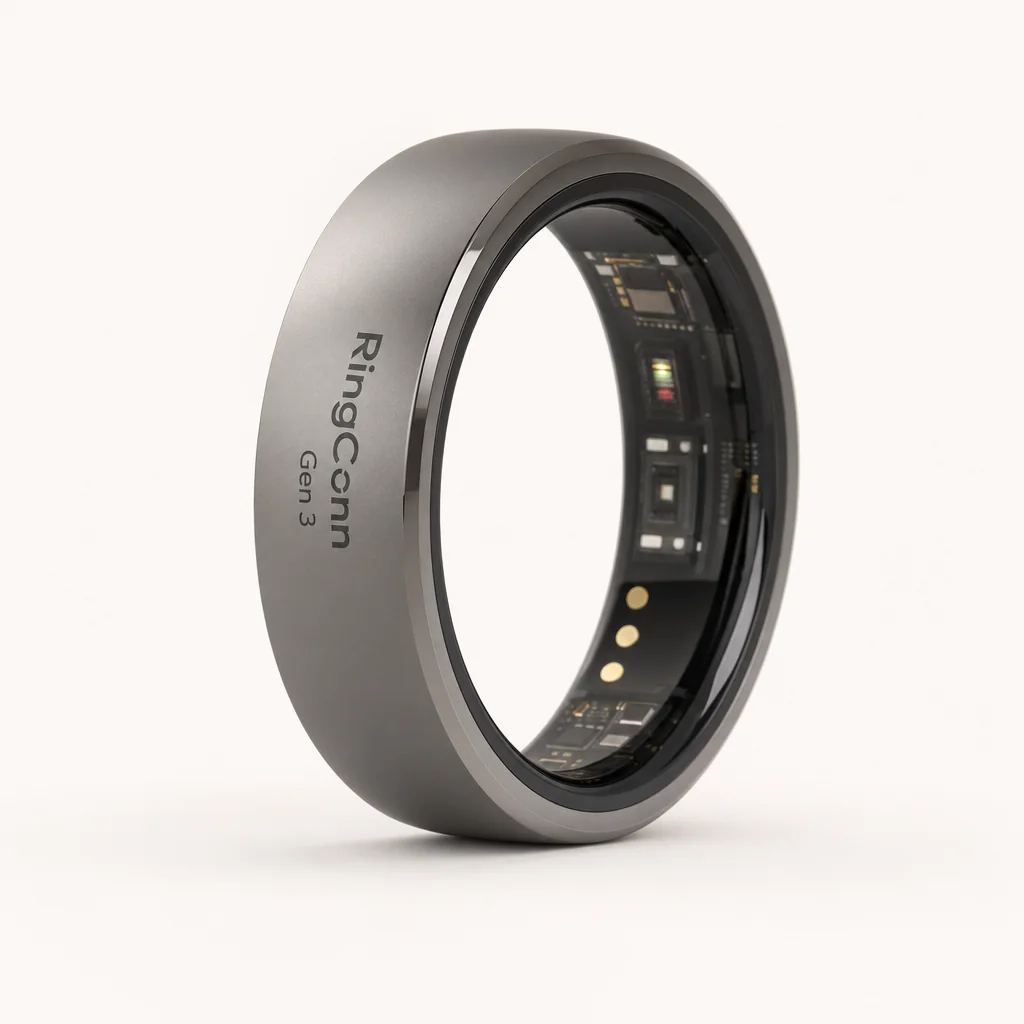
RingConn Gen 3 is the practical alternative for anyone who likes the idea of blood-pressure-related insight but has had enough of paying rent to their gadgets. Unveiled at CES 2026, it combines an optical heart-rate system, SpO2 sensing, skin-temperature sensing, a 3-axis accelerometer and a vibration motor in a titanium body. It comes in five finishes and spans 10 sizes, from US 6 to 15.
The big selling point is its approach to ownership. There are no subscription fees, ever. If you wear a ring for years rather than months, that can matter more than a small difference in interface polish. Its quoted battery life of 10 to 14 days also leads this group, versus Oura Ring 5's quoted six to nine days. With vibration enabled, real-world expectations sit closer to 10 to 13 days, which is still comfortably useful.
For vascular insight, RingConn does not give you single systolic and diastolic readings. It combines optical heart-rate, SpO2, skin-temperature and movement data to surface longer-term trends. That is a more conservative proposition than Signal Ring's headline-grabbing promise, and I rather like it for that.
Pros
- Up to 14 days of battery life is the standout endurance figure here.
- No subscription fee keeps long-term ownership simpler.
- 10 sizes provide a notably broad fitting range.
- IP68 protection suits swimming and everyday wear.
- Silent vibration alerts add a little smartwatch-like usefulness.
Cons
- It does not provide single systolic and diastolic blood-pressure readings.
- It flags elevated-risk insight rather than giving clinical BP numbers.
- Vibration use can reduce the practical battery advantage.
- No FDA clearance for BP measurement or hypertension management.
RingConn Gen 3's long battery target, vascular-trend focus and lack of a subscription make it a practical pick for buyers who dislike ongoing fees.
3. Signal Ring — Best for Cuff-Free Ambition
Check Signal Ring pre-order details
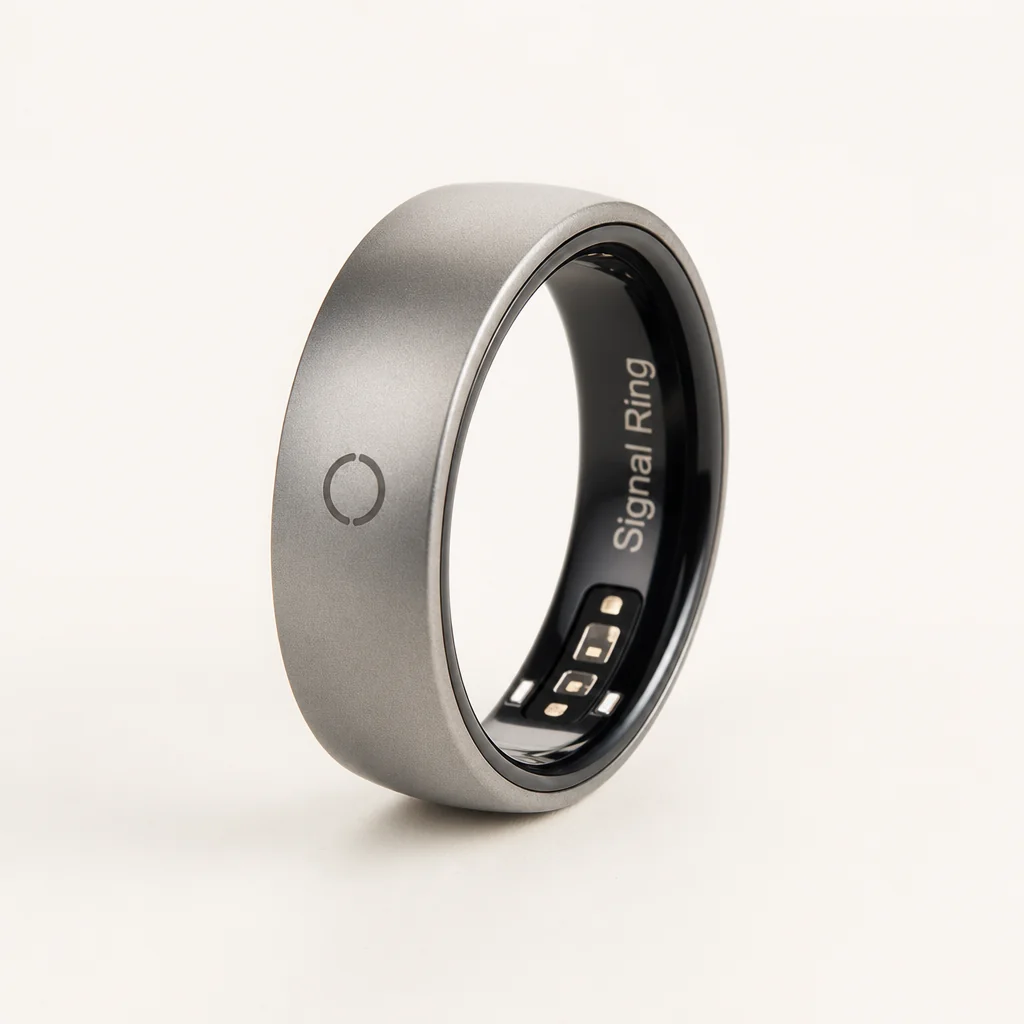
Signal Ring is the most intriguing product in this roundup precisely because its claim is so large. It was due to open for pre-sale later on 18 July 2026 at $399, with delivery planned for October 2026. Its stated goal is to be the first wearable designed to measure and understand blood pressure without the squeeze, noise or setup of a traditional cuff.
That is the dream, isn't it? A ring you put on once and largely forget, which quietly understands your pressure without requiring a monthly calibration ritual or a hard plastic cuff sitting in a bathroom drawer. If it works consistently in the real world, it could be a very significant step forward for friction-free cardiovascular monitoring.
But "if" is doing an enormous amount of work there. At the time of writing, Signal Ring had not shipped to ordinary users and had not accumulated the kind of independent, long-term scrutiny this sort of health claim demands. The $399 pre-sale price is premium territory for first-generation hardware. That does not make it a bad bet for an enthusiastic early adopter. It makes it a bet.
Signal Ring pre-sale
Pre-sale opened on 18 July 2026, with delivery planned for October 2026.
Oura Ring 5 expected UK price
Oura membership is listed at £5.99 per month.
Pre-order warning: separate promise from proof
Signal Ring's ambition is exciting, but an October 2026 delivery target was still in the future on 18 July. Do not buy it to replace a validated cuff, do not change treatment based on its eventual data, and do not assume a product's first shipping version will match the smoothness of its launch presentation.
Pros
- The most direct cuff-free BP ambition in the category.
- Designed to remove the noise, squeeze and setup of conventional cuff checks.
- $399 pre-sale pricing provides a clear entry point for early adopters.
Cons
- It had not yet shipped or built a body of independent real-world testing.
- It is premium-priced for an unproven first release.
- No FDA clearance for BP measurement or hypertension management.
4. Circular Ring 2 — Best for ECG-Centred Health Tracking
Shop Circular Ring 2 on Amazon UK
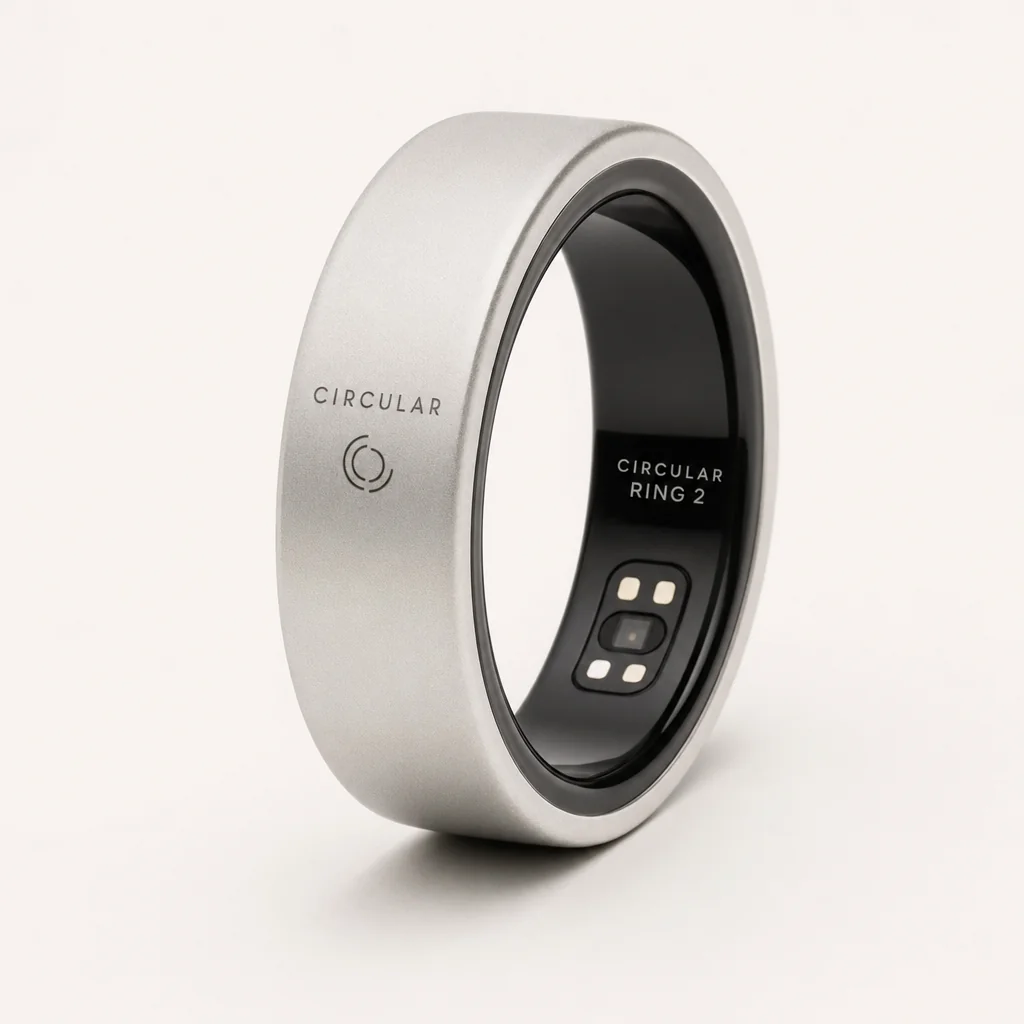
Circular Ring 2 earns its place because it is tackling health tracking from a slightly different angle. It includes an ECG sensor, an unusual feature in a smart ring, and has FDA-cleared Afib detection. That is a meaningful distinction: its Afib clearance is not the same thing as blood-pressure clearance, but it shows Circular is playing in a more clinically minded part of the wearable market than many wellness-first rivals.
Blood-pressure and glucose monitoring were signalled as part of the product's roadmap. That makes Circular Ring 2 worth watching, particularly if heart-rhythm awareness is already higher on your list than blood-pressure trends. It does not make it the ring to buy specifically for BP today. Roadmaps are useful context, not an installed feature. Anyone who has ever bought a gadget for "future software updates" has learned that lesson at least once, usually the expensive way.
Pros
- ECG hardware is rare in a smart ring.
- FDA-cleared Afib detection gives its rhythm-tracking feature a stronger regulatory footing.
- Future BP and glucose ambitions make it an interesting platform to follow.
Cons
- Blood-pressure monitoring was signalled for the roadmap rather than established as a current clinical capability.
- No FDA clearance specifically for BP measurement or hypertension management.
5. Samsung Galaxy Ring — Best for Buyers Who Don't Need BP Tracking
Shop Samsung Galaxy Ring on Amazon UK
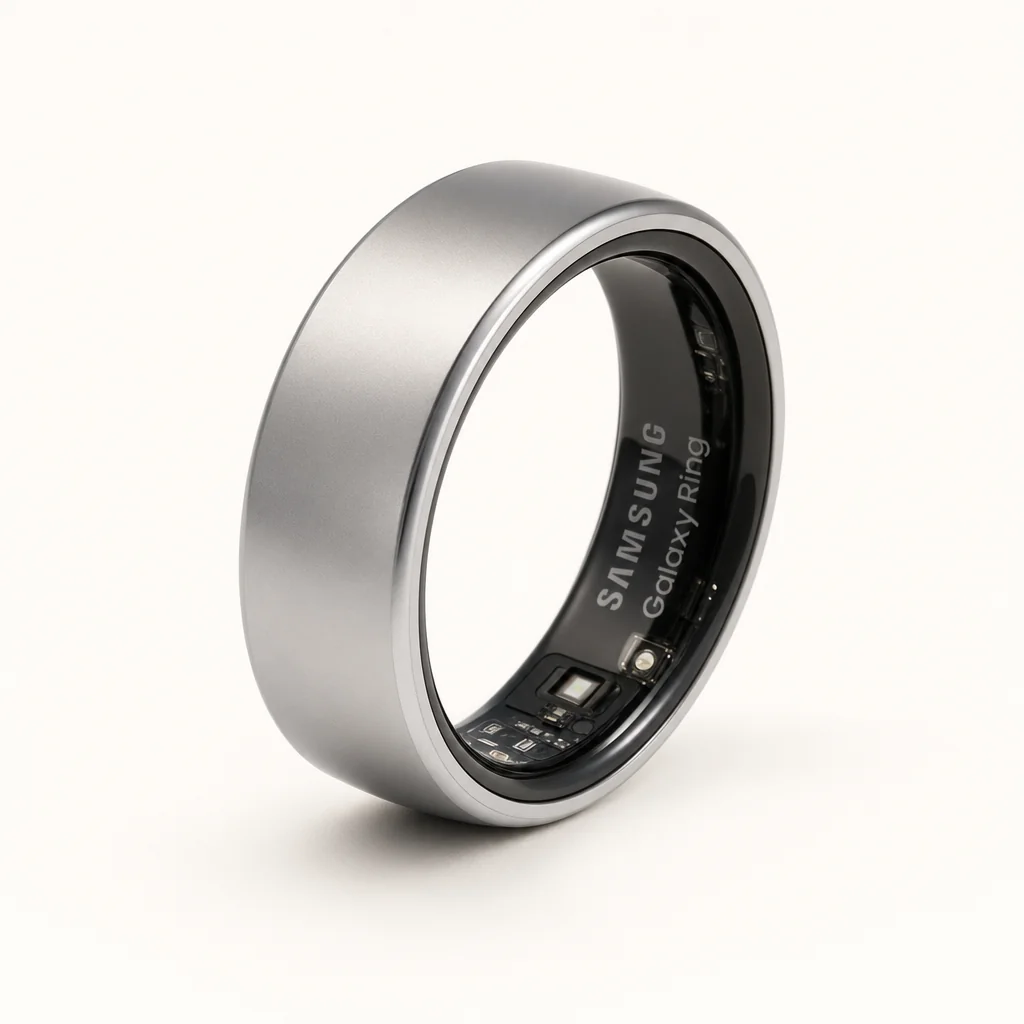
Samsung Galaxy Ring is a useful inclusion because it keeps this guide honest. It does not track blood pressure. That may initially sound like a reason to leave it out, but it is actually a reminder that general biometric tracking and blood-pressure tracking are not interchangeable labels for the same thing.
If you want broader health features and are not specifically shopping for BP trends, Galaxy Ring remains relevant. If your priority is blood pressure, though, this is not the one to choose. There is no point trying to read between lines that are not there. A product that makes no BP claim is, in this particular area, more straightforward than one making a dramatic claim without robust validation.
Pros
- Offers broader health features without overstating blood-pressure capability.
- A sensible option for ring buyers whose priority is not BP tracking.
Cons
- Does not track blood pressure.
- Not the right purchase if cardiovascular pressure trends are your key reason for buying a ring.
6. Oura Ring 4 — Best for Existing Oura Buyers Interested in the Oura Labs Study

See Oura Ring 4 on Amazon UK
Check today's price & availability on Amazon UK
Oura Ring 4 was still sold in 2026, making it relevant for shoppers already in the Oura ecosystem. Its Blood Pressure Profile is an investigational Oura Labs study for eligible US adults, not a shipped blood-pressure measurement feature, and it does not use cuff calibration.
Do not present the study as a cuff-equivalent feature or imply that it supplies a personal calibrated baseline. Readers outside the eligible US study population should treat it as research, not a capability of the retail ring.
Pros
- Still available in 2026 for shoppers who prefer the established Oura ecosystem.
- Blood Pressure Profile is an investigational, eligibility-limited Oura Labs study.
- Fits naturally into a wider cardiovascular tracking approach.
Cons
- It is not a shipped cuff-calibrated BP feature.
- Like every ring here, it lacks FDA clearance specifically for BP measurement or hypertension management.
Blood Pressure by the Numbers: How Ring Sensors Actually Work
Most blood-pressure-aware rings begin with photoplethysmography, better known as PPG. It sounds like a small printer from 2004. In practice, it is an optical method that has become central to modern wearables. LEDs shine light into your finger, and sensors examine how much light is absorbed or reflected as blood moves through the tissue.
Each heartbeat changes the blood volume in tiny vessels. That changes the optical signal. From there, software can identify pulse timing, pulse shape and changes from your usual pattern. Heart rate is the obvious result. More ambitious systems use the same family of information, often alongside temperature, oxygen saturation and movement data, to infer something about vascular behaviour and possible blood-pressure trends.
Pulse wave velocity, or PWV, is another concept often discussed in cuffless blood-pressure technology. It refers to the speed at which a pressure wave travels through arteries. Stiffer arteries generally transmit that wave faster, and arterial stiffness has a relationship with blood pressure. It is clever physiology, but extracting reliable PWV-style insight from a tiny ring on a moving hand is technically demanding. Skin contact changes. Temperature changes. You move. You sleep on your hand. Your body refuses to behave like a laboratory instrument.
Rings do have one possible advantage over wrist wearables: fingers have a rich capillary network, and a ring can provide close, continuous skin contact around the finger. That is why Oura Ring 5's precision-engineered sensor domes and 12 signal pathways are meaningful. Better contact can improve the raw optical signal before the algorithm has even begun its work.
Trend data is not "fake" data
The limitation is not that a ring's data is worthless. The limitation is that it has a different role. A well-designed ring can help you see whether sleep, stress, recovery or cardiovascular patterns are moving in an unhelpful direction. The clinical cuff remains the tool for confirming what that direction means in actual blood-pressure terms.
Optical sensing works by detecting subtle changes in light caused by blood flow, then using algorithms to turn those signals into useful trends.
The Regulation Reality Check: What No Ring Can (Yet) Legally Claim
Let's make this wonderfully unambiguous: as of 18 July 2026, no smart ring holds FDA clearance specifically for blood-pressure measurement or hypertension management. This applies to Oura Ring 5, RingConn Gen 3, Signal Ring, Circular Ring 2, Samsung Galaxy Ring and Oura Ring 4.
This does not mean all wearable health features are identical. Circular Ring 2's Afib detection was FDA-cleared, for example. It means that clearance is feature-specific. A device can have a legitimately regulated capability in one health area without gaining a free pass for every adjacent metric shown in its app. "It has an ECG" does not translate to "its blood pressure is clinically proven." That leap is exactly what a careful buyer should avoid.
The December 2025 American Heart Association statement is worth repeating because it captures the balance properly: cuffless devices "show great promise" but are "not yet proven accurate enough to diagnose high blood pressure or guide treatment decisions". It also made a practical recommendation that matters: if you share a ring or smartwatch blood-pressure reading with a doctor, disclose that it came from a cuffless device.
For UK readers, that means telling your GP or practice nurse exactly what you used. Say it came from a ring. Say whether the app was showing an overnight pattern, an elevated-risk insight or a number. Bring the wider context if it is useful, but do not present it as though it were a validated home blood-pressure monitor reading. Your clinician can then decide whether you need conventional monitoring, ambulatory testing or a different follow-up.
If a ring flags a change: use a validated upper-arm cuff to check it, follow the cuff's instructions carefully, and speak to a healthcare professional if readings are concerning or you have symptoms. Never start, stop or change prescribed blood-pressure medication based on a wearable trend.
A useful script for a GP appointment
"My cuffless ring has shown a sustained change in my overnight cardiovascular pattern. I know it is not a clinical BP device, but I would like to check whether I should monitor with a validated arm cuff." Clear, calm, and much more helpful than arriving with 400 screenshots and a rising sense of doom.
Who Should Buy Which Blood Pressure Wearable?
The best choice depends heavily on what you mean by "blood-pressure tracking". If you want a polished overnight wellness picture, Oura Ring 5 leads. If you want a subscription-free ring that incorporates regular cuff calibration, RingConn Gen 3 is the practical winner. If you want to back the most ambitious new idea and accept early-adopter risk, Signal Ring is the one to watch rather than the one to trust blindly.
Best all-rounder
Buy Oura Ring 5. It has the strongest blend of refined design, sensor engineering, nighttime BP Signals, breathing context and general health tracking.
Best for avoiding subscriptions
Buy RingConn Gen 3. Its no-fee model, up-to-14-day battery claim and vascular-trend approach are compelling for pragmatic buyers.
Best for early adopters
Watch Signal Ring. It has the boldest cuff-free ambition, but its October 2026 delivery plan means patience and caution are required.
Best for ECG interest
Consider Circular Ring 2. Its ECG sensor and FDA-cleared Afib detection are the more immediate reasons to look at it.
Best if BP is not the priority
Choose Samsung Galaxy Ring. It offers health features but does not make a blood-pressure claim it cannot support.
Best for existing Oura users
Consider Oura Ring 4. It remains sold, but Blood Pressure Profile is an investigational US-only Oura Labs study rather than a shipped measurement feature.
The right ring depends on whether you value broader wellness context, subscription-free ownership, ECG features or a cautious route into cuffless trends.
Before You Buy: A Sensible Blood Pressure Wearable Checklist
Before pressing buy, ask yourself one blunt question: what decision am I hoping this ring will help me make? If the answer is "I want a medical diagnosis", pause and buy a validated upper-arm cuff instead, or speak to a clinician. If the answer is "I want to understand my sleep, recovery and longer-term cardiovascular patterns better", then a ring can make real sense.
Prioritise fit before features
Optical sensing needs consistent contact. A ring that spins, presses uncomfortably or comes off overnight is a poor data collector, regardless of how impressive its app appears.
Think in weeks, not launch-day specs
Battery life influences whether you actually collect continuous trends. RingConn Gen 3's 10–14-day target is especially appealing if you tend to forget chargers.
Add up recurring costs
Oura's £5.99 monthly membership changes the long-term equation. RingConn's no-subscription model may be preferable if you want straightforward ownership.
Keep a validated cuff in the picture
Even the most interesting cuffless ring should sit alongside, not above, conventional blood-pressure monitoring when health decisions are involved.
I would also resist obsessing over isolated readings. Blood pressure changes with sleep, stress, caffeine, exercise, illness, alcohol, medication timing and approximately seventeen other things on a normal Tuesday. The value of a ring is in repeated context: do your patterns look different over time, and does that prompt a sensible cuff check or conversation with a professional?
Frequently Asked Questions
No. As of 18 July 2026, no smart ring has FDA clearance specifically for blood-pressure measurement or hypertension management. The American Heart Association said cuffless devices show promise but are not yet proven accurate enough to diagnose high blood pressure or guide treatment decisions.
Oura Ring 5 is the best overall pick for nighttime blood-pressure pattern tracking thanks to its BP Signals feature, redesigned sensor architecture and broader sleep and breathing context. It should still be treated as a trend tool, not a cuff replacement.
No. RingConn Gen 3 uses optical heart-rate, SpO2, skin-temperature and movement data to surface vascular trends. It does not provide conventional single systolic and diastolic BP readings.
It is a high-risk early-adopter purchase rather than a proven health-monitoring recommendation. Signal Ring's $399 pre-sale began on 18 July 2026 and delivery was planned for October 2026, so independent real-world evidence was not yet available.
Optical measurements vary between people and can drift with physiological changes. Calibration requirements vary by device and supported feature. Neither RingConn's current product material nor Oura Ring 4's investigational Blood Pressure Profile supports the fixed calibration claims previously stated here.
A finger has a rich capillary network and a ring can maintain close, continuous contact around it, both of which can help optical sensing. That potential advantage does not automatically make ring-based blood-pressure results clinically equivalent to an upper-arm cuff.
Check with a validated upper-arm cuff, following its instructions carefully. If you discuss the result with a GP or other clinician, disclose that the initial observation came from a cuffless wearable. Do not change prescribed medication based on ring data.
No. Samsung Galaxy Ring offers other health features, but it does not track blood pressure. It is therefore not the right choice if BP insight is your principal reason for buying a biometric ring.
The most responsible way to use a smart ring is alongside a validated cuff and a clinician when a sustained change needs investigating.
Final Verdict
Buy Oura Ring 5 if you want the best all-round blood-pressure-aware smart ring in 2026. Its smaller titanium design, 12-pathway sensing architecture, 100m water resistance and focus on nighttime patterns make it the most complete package. Just budget for the £5.99 monthly membership and remember that BP Signals is trend analysis, not a diagnosis.
Choose RingConn Gen 3 if long battery life and no subscription matter more. Its up-to-14-day endurance, IP68 rating and vascular-trend approach make it the sensible, pragmatic alternative. Signal Ring is the exciting one to watch, but it remained an unproven October 2026 delivery bet on this date.
The bigger takeaway is refreshingly simple: smart rings are becoming useful cardiovascular companions, not tiny doctors. Use them to spot patterns, sleep better and ask better questions. Use a validated cuff and qualified clinician for the answers that actually affect your health.
Oura Ring 5 is the strongest overall choice, but every buyer should keep the distinction between wellness patterns and clinical blood-pressure measurement firmly in view.
- Oura Ring 5View on Amazon
- Oura Ring 4View on Amazon