
DJI Osmo Pocket 4 First Look: a serious pocket vlogging camera?
A 1-inch sensor, 4K at 240fps and a mechanical gimbal make a persuasive case for creators — but this is not the camera to throw into the sea or strap to a mountain bike.
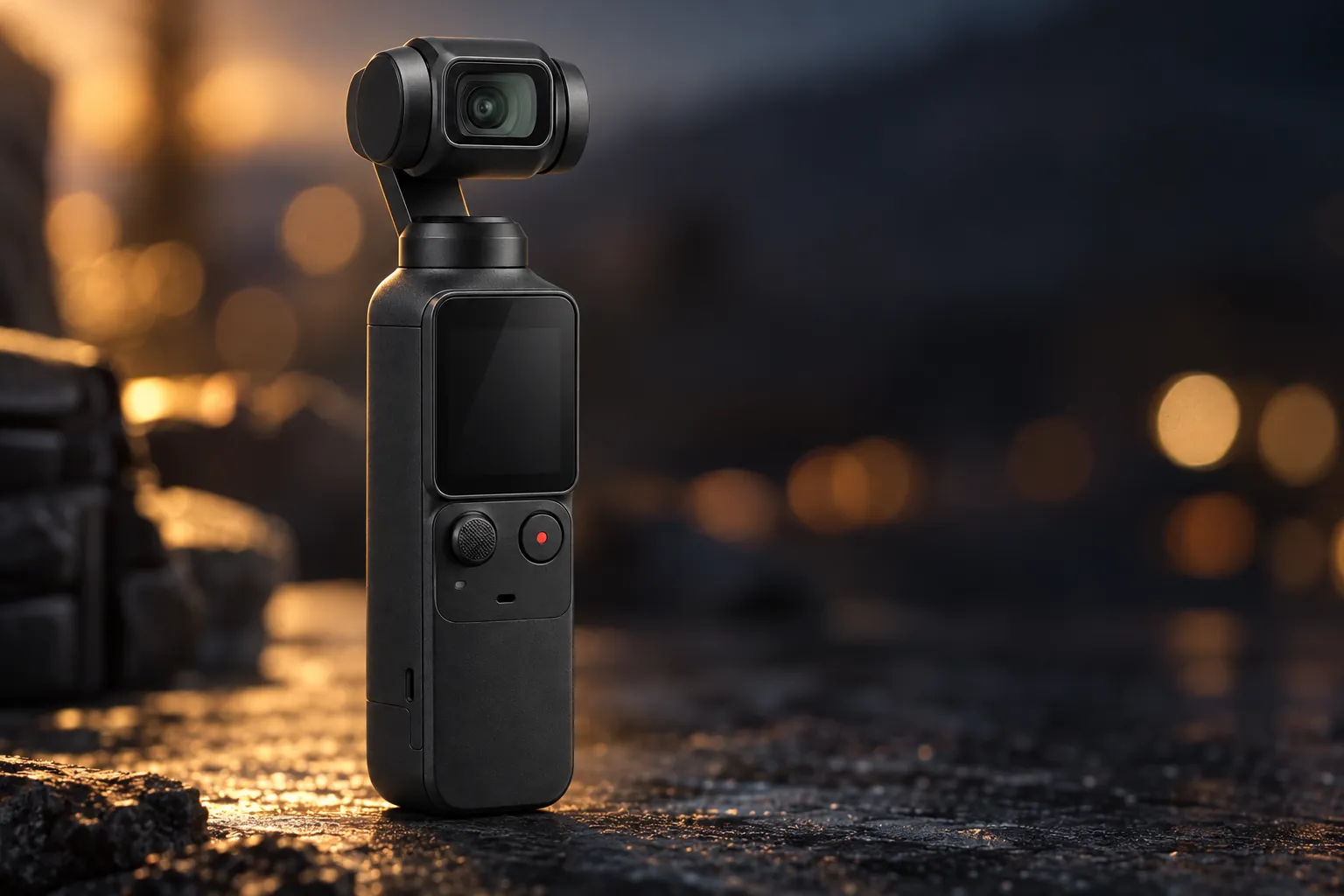

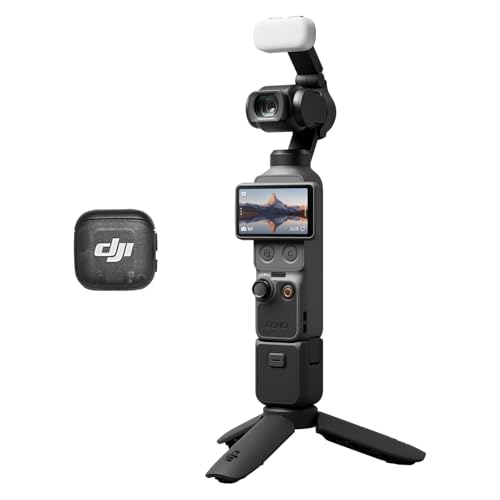
A compact 1-inch gimbal camera with 4K/240fps, internal storage and Creator Combo audio tools for solo video work.
Check price on AmazonWe link to the exact model on Amazon UK. Prices change often, so check the live price before you buy. As an Amazon Associate we earn from qualifying purchases.
You are about to film a walk-and-talk through a busy station, then grab a few slow-motion shots outside before the light goes. An action camera is easier to abuse, but the DJI Osmo Pocket 4 is aimed at a different problem: making solo video look controlled without a separate camera, gimbal and audio rig. The short answer: the DJI Osmo Pocket 4 Creator Combo suits buyers starting a vlogging kit who value smooth footage, strong audio options and compactness over waterproofing. Reviewers rated it well for travel creators, presenters and journalists; it is less suitable for wet, dusty or high-impact filming.
For UK buyers, the important practical point is that the Amazon listing is for the Creator Combo, not a differently specified Pocket 4. The £549 UK RRP buys the same single-camera body found across the range, plus the accessories that make a solo shoot viable from day one. That matters if you are comparing marketplace prices: judge the contents as well as the headline figure, and do not mistake the separate dual-camera Pocket 4P for an upgraded version included in this bundle. It is a different model with its own lens arrangement and buying case.
| At a glance | DJI Osmo Pocket 4 |
|---|---|
| Camera and lens | 1-inch stacked CMOS sensor, 20mm-equivalent fixed f/2.0 lens |
| Stabilisation | Three-axis mechanical gimbal |
| Video | Up to 4K/60fps standard recording; up to 4K/240fps in Slow Motion mode |
| Colour | 10-bit D-Log, with DJI claiming up to 14 stops of dynamic range |
| Storage | 107GB internal storage plus microSD support up to 1TB |
| Screen | Rotating 2-inch OLED touchscreen, 1,000 nits |
| Weight | 190.5g |
| Weather protection | DJI does not rate it as waterproof |
DJI Osmo Pocket 4: what you are actually buying
The Amazon UK listing covered here is the DJI Osmo Pocket 4 Creator Combo, a single-camera model with a 1-inch sensor. It is not the separate DJI Osmo Pocket 4P, which has a dual-camera arrangement and different zoom hardware. That distinction matters: this is the straightforward pocket gimbal camera intended to cover wide-angle vlogging, travel footage and everyday creator work.
DJI announced the Osmo Pocket 4 on 16 April 2026, and official UK sales began on 22 April 2026. The body measures 144.2 × 44.4 × 33.5mm and weighs 190.5g, putting a rotating-screen camera and three-axis gimbal into something that can live in a jacket pocket or a small sling bag.
That compact format changes the decision for someone who would otherwise use a phone. A phone may already be in your pocket, but the Pocket 4 is purpose-built around a gimbal head, physical controls and a screen that rotates for framing. It is most compelling when those tools let you capture footage you would otherwise skip: a smooth walking introduction, a quick static piece on the mini tripod or a tracked self-shot where holding a handset would be awkward. It is less persuasive if your filming is almost entirely static or social clips already handled comfortably on a phone.
The Creator Combo adds a DJI Mic 3 transmitter, magnetic fill light, wide-angle lens, mini tripod, carrying bag and handle accessories. Whether the Battery Handle is included varies by source — DJI's own UK listing does not show it in the box, but at least one reviewer describes a battery grip as included, so check the exact bundle contents on the current DJI UK listing before buying.
Whether a Battery Handle is bundled is worth confirming before checkout rather than after a first long filming day, since sources disagree on the current Creator Combo contents. The internal battery is non-removable, so the included USB-C charging route is central to the standard kit either way. For most short city breaks, interviews and day trips, fast PD charging and the measured 4K runtime may be more useful than extra bulk. For longer unattended sessions or travel away from regular power, check the current DJI UK listing to confirm whether the handle is included or needs to be bought separately.
DJI Osmo Pocket 4: the sensor upgrade doing the heavy lifting
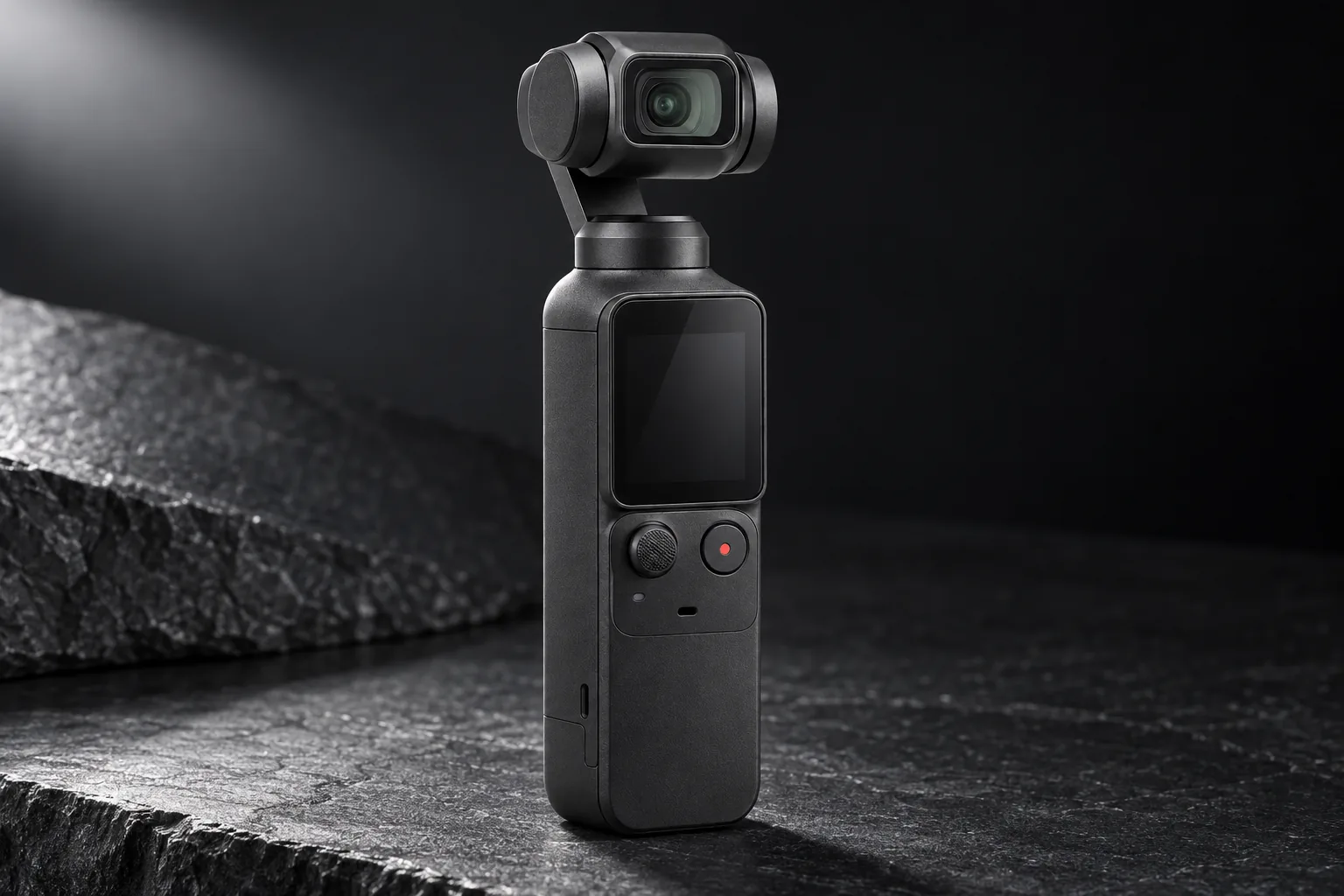
The central argument for paying more than an action camera is not simply the headline frame rate. It is the combination of a new stacked 1-inch CMOS sensor, a 20mm-equivalent f/2.0 lens and mechanical stabilisation. An action camera is designed to capture a great deal of a scene with an ultra-wide perspective; the Pocket 4's 20mm view is still broad, but less exaggerated for faces and walking presentations.
DJI claimed up to 14 stops of dynamic range in Normal and D-Log modes, while the 10-bit D-Log profile gives editors more latitude than a standard compressed colour setting. That does not turn the Pocket 4 into an interchangeable-lens cinema camera, but it gives creators more scope to retain skies, window light and shadow detail when a scene is difficult.
There is a workflow trade-off behind those headline image tools. Normal colour is the simpler option for creators who want clips ready quickly for a travel edit or social upload. D-Log gives more room for colour work, but it asks for an editing step and should not be treated as an automatic route to better footage. Likewise, the fixed 20mm-equivalent lens is useful for fitting a presenter and surroundings into frame, yet it cannot replace the perspective choice offered by interchangeable lenses or the dedicated 60mm-equivalent camera on the separate Pocket 4P.
Full-pixel PDAF autofocus
DJI specifies intelligent autofocus with subject-priority functions, aimed at keeping a presenter rather than a busy background in focus.
Register up to three subjects
The camera can register three people and prioritise them for focus and tracking — useful for interviews, family filming or a creator working with guests.
Rotating shooting screen
The 2-inch OLED touchscreen rotates between horizontal and vertical composition, without requiring a phone to frame a self-shot.
Why the 1-inch sensor matters more than a spec-sheet boast
A larger sensor is not a guarantee that every frame will look cinematic. It does, however, give the Pocket 4 a stronger starting point than the smaller sensors common in action cameras, particularly for low-light scenes and more natural-looking separation between a subject and background. Tom's Guide and Digital Camera World both praised its low-light and standard-colour results, whilst noting that very dark scenes can reveal aggressive noise reduction.
DJI Osmo Pocket 4: is 4K/240fps a genuine upgrade?
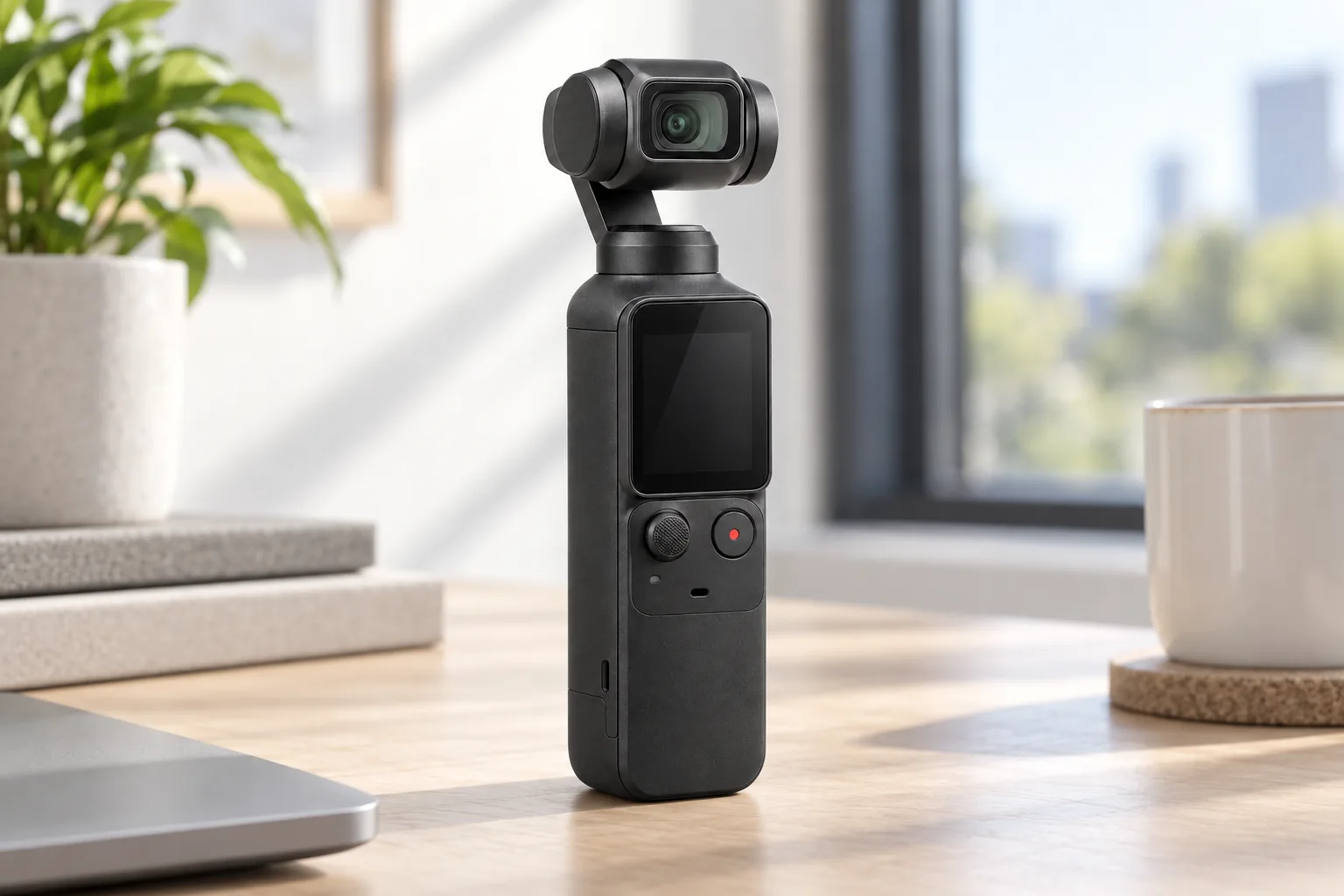
Yes, with an important qualification. Normal video recording reaches 4K/60fps. The 4K/240fps figure belongs specifically to Slow Motion mode, where it can create an eight-times slowdown on a 30fps timeline. Tom's Guide noted that this doubled the previous Pocket 3's 4K slow-motion ceiling, making it a clear generational advance rather than a minor numerical bump.
For travel sequences, a quick burst of 240fps can turn passing trains, moving water, sport or a hand-held detail shot into useful cutaway footage. It is especially valuable because it arrives in a camera that remains small enough to carry all day, rather than as a capability locked into a large camera body.
In day-to-day use, the sensible approach is to set the camera for the frame rate that matches the final edit, then switch to Slow Motion only for moments that benefit from it. That keeps clips easier to manage and avoids treating 240fps as a default setting simply because it is available. It also matters for vertical-first creators: portrait recording reaches up to 3K/60fps, so a project that requires full 4K social crops may be better captured horizontally and reframed later, rather than relying on the vertical mode for every shot.
The catch is colour flexibility. RedShark reported that 4K/240fps does not support D-Log, so creators intending to match slow-motion clips precisely to heavily graded footage need to plan around the standard profile. RedShark also described the result as capable but sometimes overly sharpened or electronic-looking. It is a useful production tool, not a reason to assume every shot should be captured at 240fps.
DJI Osmo Pocket 4: gimbal, tracking and the case against an action camera
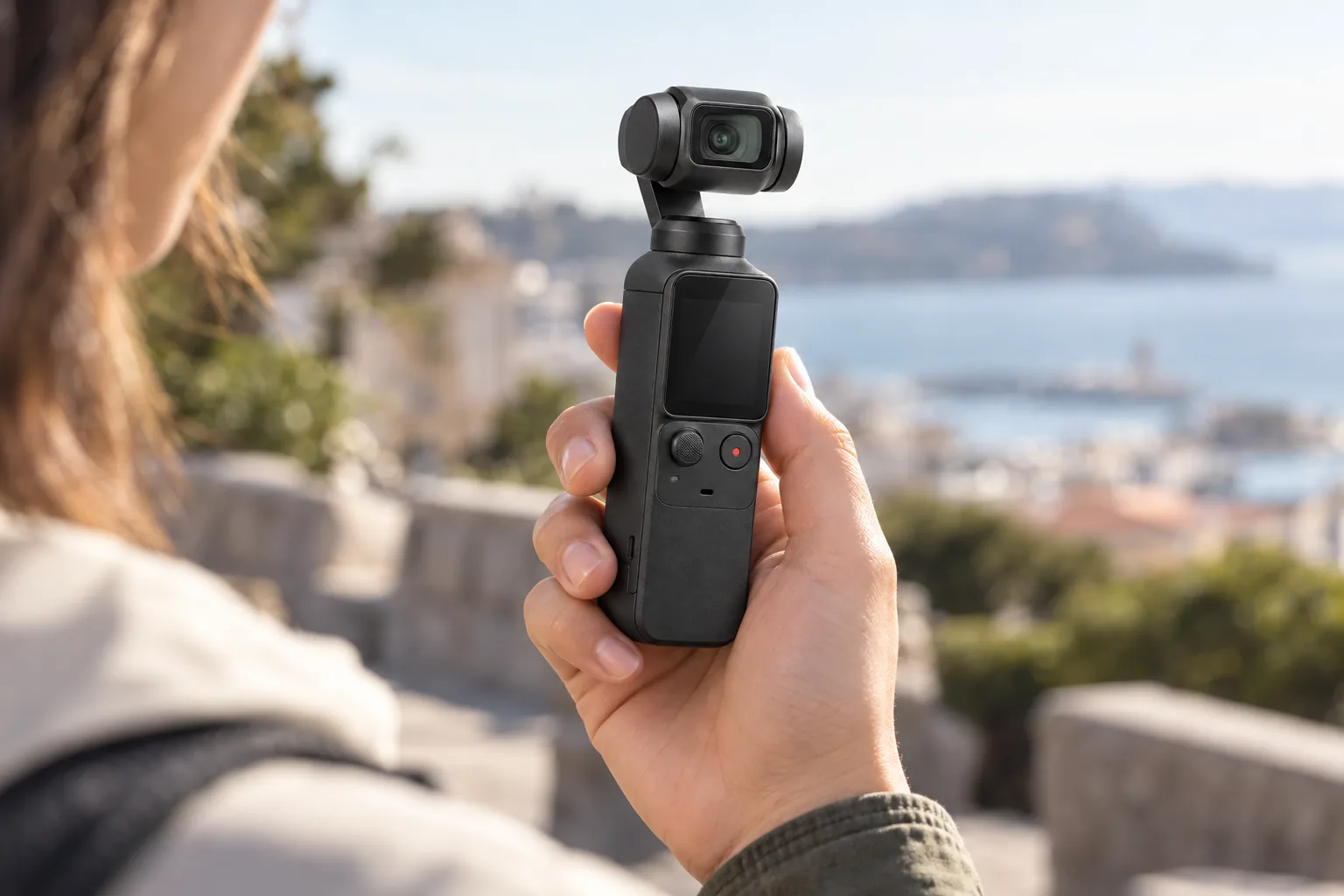
The Pocket 4's defining difference from a conventional action camera is its three-axis mechanical gimbal. DJI specifies pan movement from -235° to +58°, tilt from -120° to +70°, roll movement of ±45°, a maximum controllable speed of 180° per second and angular vibration range of ±0.005°. Those figures describe a camera head that physically counters movement, rather than relying only on electronic cropping and software correction.
Reviewers consistently described walking shots and pans as smooth. TechRadar praised the discreet, controlled feel of using it in public, and Digital Camera World highlighted both smooth stabilisation and quick subject tracking. This is the appeal for a presenter moving through a market, a museum or a city street: the frame can glide rather than bob with every footstep.
ActiveTrack 7.0, gesture control and subject registration strengthen the solo-creator case. A palm can lock a subject and a V sign can start or stop recording, reducing the number of times a creator needs to reach for the touchscreen while standing in frame. RedShark also reported that tracking worked at 2× zoom and in D-Log.
The setup benefit is clearest when filming alone. Place the Pocket 4 on the supplied mini tripod, rotate the display to the intended orientation, frame yourself and use tracking or gesture control rather than repeatedly returning to the camera. That does not make it a replacement for a crew or a proper tripod in every situation, but it removes several small frictions from a quick presenter-led shoot. Conversely, the gimbal's moving parts reward careful packing: fit the clamp only after removing the wide-angle lens, rather than forcing the camera into a bag with accessories attached.
What the gimbal approach delivers
- Natural-looking walking movement without carrying a separate gimbal.
- Smooth pans and reframing for travel pieces and presentation clips.
- Subject tracking and gesture control that help a lone creator stay in shot.
- A less aggressively wide view than the typical action-camera perspective.
Where an action camera remains easier
- The exposed gimbal is less suited to knocks, rough mounting and fast action.
- DJI does not rate the Pocket 4 as waterproof.
- Digital Camera World observed slight judder during a very slow pan following a moving boat.
- The gimbal can reach its rotational limit during some self-filming moves.
DJI Osmo Pocket 4: the battery reality check
DJI's headline battery claim is up to 240 minutes, but the conditions matter: 1080p/24fps, Wi-Fi off, screen off and 25°C. That is a useful maximum reference, not a realistic estimate for someone filming 4K clips, checking framing on the OLED display and using wireless features during a day out.
Tom's Guide recorded about 140 minutes during continuous indoor 4K/60fps recording. The camera became warm but continued recording until its battery ran out rather than stopping from overheating. In mixed use, the same publication estimated about 160 minutes from a battery drop to around 50% after approximately 80 minutes of recording.
Fast charging softens the limitation. DJI specifies 80% in 18 minutes and a full charge in around 32 minutes with a compatible 65W PD charger; TechRadar recorded the same approximate timing. Use the supplied fill light and the official estimates drop to up to 210 minutes at medium brightness or 186 minutes at high brightness.
For UK travel and commuting use, that points to a straightforward routine: start charged, capture selectively rather than continuously, and use a compatible PD charging stop when one is available. The camera's quoted fast-charge timing is useful because even a short break can restore a meaningful amount of shooting capacity. It is not, however, evidence that all USB-C chargers will produce the same result; the stated timing depends on a compatible 65W PD charger. Those filming lengthy 4K sequences should plan power around the measured figures, not the 1080p maximum.
Tom's Guide and TechRadar both reported warmth during demanding capture without a shutdown in their reported use. DJI advises that high-frame-rate shooting, high ambient temperatures and long screen-on sessions can trigger thermal protection, so 4K slow-motion is best treated as a selective mode rather than an all-afternoon recording format.
DJI Osmo Pocket 4: why 107GB built in changes day one
Internal storage is one of the Pocket 4's least glamorous but most practical upgrades. With 107GB built in, a new owner can record immediately rather than discovering a missing microSD card five minutes before leaving for a trip. DJI estimates that capacity accommodates roughly 220 minutes of 4K/60 footage at standard bitrate, or around 600 minutes of 1080p/24 footage.
There is still a microSD slot for compatible cards up to 1TB, which matters for longer trips or anyone routinely filming 4K. But the internal capacity changes the camera from a device that demands an accessory before it works into one that can be taken from bag to filming without preparation.
Offloading should also be quick. DJI claims up to 800MB/s wired transfer from internal storage over USB 3.1 under laboratory conditions. Fstoppers transferred almost 10GB in under 15 seconds to a computer, which supports the broad point even though speeds will vary with the cable, computer and file mix.
That combination makes the internal storage best viewed as both a safety net and a practical working drive. It is enough to start shooting immediately, but it should not remove the habit of offloading clips after a busy day, especially before a long journey or event. A compatible microSD card remains the better route for extended recording, while USB-C transfer gives internal footage a quick route to a computer. The advantage is flexibility: no single missed card or full card has to end a shoot.
DJI Osmo Pocket 4: audio and the Creator Combo's vlogging-kit logic
The camera has three built-in microphones, but the more meaningful point for Creator Combo buyers is the included DJI Mic 3 transmitter. Clear spoken audio is often more important than a slightly sharper video image for walking presentations, travel narration and short interviews. A wireless transmitter lets the speaker's voice stay closer to the microphone whilst the camera is held farther away.
The Pocket 4 connects directly to compatible DJI Mic transmitters. OsmoAudio supports four-channel output when transmitters are connected, which offers useful flexibility for creators recording multiple speakers. It is a neater route than building a pocket camera around separate receiver hardware and cables.
The bundle's fill light is more situational. Fstoppers measured 12, 25 and 40 lux at 0.6m across its three brightness settings, with measured colour temperatures of 2,800K, 4,000K and 5,500K. That makes it more useful for a close face in a dim café, hotel room or evening street than for trying to overpower daylight outdoors. Fstoppers also found its output somewhat harsh, so it is a handy emergency tool rather than a substitute for a larger soft light.
In practical terms, the Creator Combo suits a presenter who needs to arrive with fewer decisions to make. Clip the Mic 3 transmitter to the speaker, use a windscreen when appropriate, place the camera on the mini tripod for static pieces and reserve the fill light for close-range dim scenes. It is not a complete lighting or multi-camera studio, but it covers the most common weak links in pocket-camera vlogging: distant speech, unstable static framing and faces that need a little local light.
DJI Osmo Pocket 4: Creator Combo versus Standard and Essential
DJI's UK pricing separated the Osmo Pocket 4 into accessory-led bundles rather than different camera versions. The Essential Combo launched at £429, the Standard Combo at £445 and the Creator Combo at £549. The camera body, sensor and gimbal remain the same; the buying decision is about how much of a starter kit you need in the box.
Essential Combo
Entry route for buyers who need the core camera and plan to choose accessories independently.
Standard Combo
A modest step up for buyers who already own compatible audio or creator accessories.
Creator Combo
The Amazon UK listing covered here: adds Mic 3, fill light, mini tripod, wide-angle lens and carrying accessories.
DJI also sold Travel, Vlog, Family, Glow Portrait, Spotlight Live, Selfie Fill and Audio bundles in the UK, priced across roughly the £467 to £553 range. Think of those as different answers to the same question: do you need audio, lighting, a tripod or a wider selfie view immediately?
For a new solo vlogger, the Creator Combo has the clearest logic. The Mic 3 handles the weak point of many small cameras, the mini tripod makes static pieces easier, and the wide-angle lens helps when the camera is held at arm's length. If you already own DJI microphone hardware, the Standard Combo is more sensible value because it avoids paying twice for overlapping kit.
A useful buying shortcut is to divide buyers into three groups. First-time creators get the most value from the Creator Combo because every included accessory addresses a common setup job. Existing DJI audio owners should compare the Standard Combo closely, since the camera itself is unchanged. Buyers who primarily want stabilised family clips may prefer the lowest-priced package and add only what they actually use. The range is less about image quality tiers than avoiding unnecessary duplicate accessories, so a higher bundle price is justified only when its kit will leave the bag regularly.
DJI Osmo Pocket 4: should Pocket 3 owners move on?
The Pocket 4 brought meaningful upgrades: an all-new stacked 1-inch sensor, DJI's 14-stop dynamic-range claim, 10-bit D-Log, 4K/240fps, 107GB of internal storage, Wi-Fi 6, faster USB 3.1 transfers, improved ActiveTrack, gesture control and two additional buttons beneath the screen. Taken individually, each improvement is welcome. Together, they make the new model more self-contained and faster to operate.
That does not mean every Pocket 3 owner needs to replace a working camera. Digital Camera World judged that the image-quality gain was not large enough to make an upgrade essential. The fundamental design remains familiar: a compact 1-inch-class camera on a three-axis gimbal with a rotating screen.
A simple upgrade test
The Pocket 4 makes the strongest case if internal storage, 4K/240fps, D-Log or improved tracking would change how you shoot. If your current workflow is already centred on 4K/60 walking footage and basic talking-head clips, the improvement is more about convenience and control than a completely different image.
DJI Osmo Pocket 4: where it falls short
This is a creator camera, not a rugged action device. DJI does not give the Pocket 4 a waterproof rating, and the exposed mechanical gimbal deserves more care than the fixed lens assembly on an action camera. Rain, sand, ski slopes, watersports and hard-mounted action footage remain poor matches for this design.
There is no optical zoom on the standard single-camera Pocket 4. DJI offers up to 2× lossless zoom in supported modes and up to 4× digital zoom, but 2× lossless zoom is unavailable in modes including Low Light and Slow Motion. Buyers wanting a dedicated telephoto perspective would need to look at the separate Pocket 4P rather than assume it is part of this camera.
Portrait recording also tops out at 3K/60fps, so full 4K resolution requires filming horizontally. Tom's Guide found the custom button had limited assignable functions, and reviewers flagged practical niggles around the magnetic accessories: Fstoppers reported that the gimbal clamp cannot be properly fitted with the wide-angle lens still attached. These are not deal-breakers, but they make the Pocket 4 less friction-free than its compact shape suggests.
The clearest alternative is an action camera such as DJI's Osmo Action 6 if your priority is a lighter, IP68-rated device that can go to 20m underwater without a case. Its £329 launch price, 149g weight and mounting-friendly form make it the more rational tool for wet weather, water and rough use. The Pocket 4 instead earns its premium when framing, natural gimbal movement and the creator screen affect the footage you can make. Neither is the universal winner; they solve different filming problems.
DJI Osmo Pocket 4: who this first look suggests it is for
Travel vloggers
Choose it for stabilised walking footage, quick storage-free filming and a small kit that does not draw much attention in public.
Solo presenters
The Creator Combo's Mic 3, mini tripod, tracking and rotating screen make talking pieces and walk-and-talk clips easier to manage alone.
Family and documentary shooters
It suits people who want smooth, polished holiday footage and B-roll without carrying a mirrorless camera, lens kit and separate gimbal.
Skip it if the camera will regularly be wet, muddy, mounted to sports equipment or exposed to hard impacts. The Pocket 4's price premium over an action camera buys a larger sensor, a gimbal, a rotating creator screen, internal storage and more deliberate subject tracking. It does not buy ruggedness.
For a journalist or documentary shooter, the appeal is speed: the camera is small, has storage ready to use and can move between an unobtrusive handheld shot and a tripod-based talking piece. For a family buyer, the strongest use is polished holiday and event footage rather than children's sports in poor weather. For a dedicated social creator, the 3K vertical ceiling is the key compromise to accept. And for an existing Pocket 3 owner, this remains a feature-led upgrade, not an urgent replacement unless slow motion, D-Log, storage or tracking directly solves a current limitation.
Verdict: a vlogging camera first, an action camera alternative second
The DJI Osmo Pocket 4 makes a strong argument for creators who care about controlled movement and image flexibility more than indestructibility. Its 1-inch stacked sensor, mechanical three-axis gimbal, 4K/240fps mode, 107GB of internal storage and direct microphone integration address the practical frustrations of filming alone. Choose the Creator Combo if you need a ready-made vlogging setup; choose a conventional action camera instead if water resistance, mounting and rough-weather confidence matter more than the smoothest possible hand-held footage.
Sources
- DJI Osmo Pocket 4Creator vlogging pickView on Amazon
Sources and evidence (24)
- mynewsdesk.com (other)
- store.dji.com (other)
- store.dji.com (other)
- tomsguide.com (other)
- techradar.com (other)
- fstoppers.com (other)
- digitalcameraworld.com (other)
- engadget.com (other)
- dl.djicdn.com (other)
- repair.dji.com (other)
- dpreview.com (other)
- dji.com (other)
- store.dji.com (other)
- dji.com (other)
- redsharknews.com (other)
- dji.com (other)
- store.dji.com (other)
- dl.djicdn.com (other)
- cined.com (other)
- store.dji.com (other)
- techradar.com (other)
- prnewswire.com (other)
- t3.com (other)
- actioncameraauditor.com (other)