
Bose QuietComfort Ultra Earbuds 2 vs Sony WF-1000XM6: Which Noise-Cancelling Buds Win?
Bose brings comfort-first silence and a clever stability fit; Sony counters with bigger battery numbers, serious codec support and the more ambitious app. Here is where each one genuinely earns its place.
We link to the exact model on Amazon UK. Prices change often, so check the live price before you buy. As an Amazon Associate we earn from qualifying purchases.
Bose QuietComfort Ultra Earbuds (2nd Gen) and Sony WF-1000XM6 are both flagship noise-cancellers, but they solve the daily commute rather differently.
Bose vs Sony: the premium earbud fight in one minute
This is one of those comparisons where the wrong winner is very easy to pick. Both pairs are premium, both have proper active noise cancellation, both support wireless charging and multipoint, and both are designed for people who want a quiet little bubble around their music. But the priorities are different. Bose QuietComfort Ultra Earbuds (2nd Gen) are the comfort-and-isolation specialist. Sony WF-1000XM6 are the feature-heavy all-rounder with better stamina.
If your main reason for buying expensive earbuds is to make trains, aircraft cabins, traffic and the person loudly eating crisps beside you less of a problem, Bose remains the safer choice. Its isolation has the stronger reviewer consensus, especially for travel rumble and the general mush of a busy office. The Bose approach is pleasingly direct: get a reliable seal, tune the sound to your ears with CustomTune, and let the noise cancelling do its thing.
Sony's answer is less single-minded but arguably more complete. The WF-1000XM6 are lighter, last much longer per charge, offer LDAC and LC3 alongside SBC and AAC, and give you a far deeper set of controls in the Sony Sound Connect app. They are not merely "Sony buds with more settings", either. Their ANC is excellent, with genuinely strong measured attenuation, and their call hardware is more elaborate than Bose's.
There is a small wrinkle on price. Bose launched the second-generation QuietComfort Ultra Earbuds in the UK in June 2025 at £299, but Bose UK listed them at £229.95 when checked. Sony's WF-1000XM6 arrived in 2026 at £250 and were listed at £249 directly from Sony. So the Bose can be the cheaper buy today, but that lower number reflected a discount rather than its original positioning.
The short version
Buy Bose for the most dependable "leave me alone, world" experience and a fit that stays put. Buy Sony if you want eight-hour claimed ANC battery, stronger wireless-audio flexibility and more room to tailor the sound. Neither is a bad choice. They simply flatter different habits.
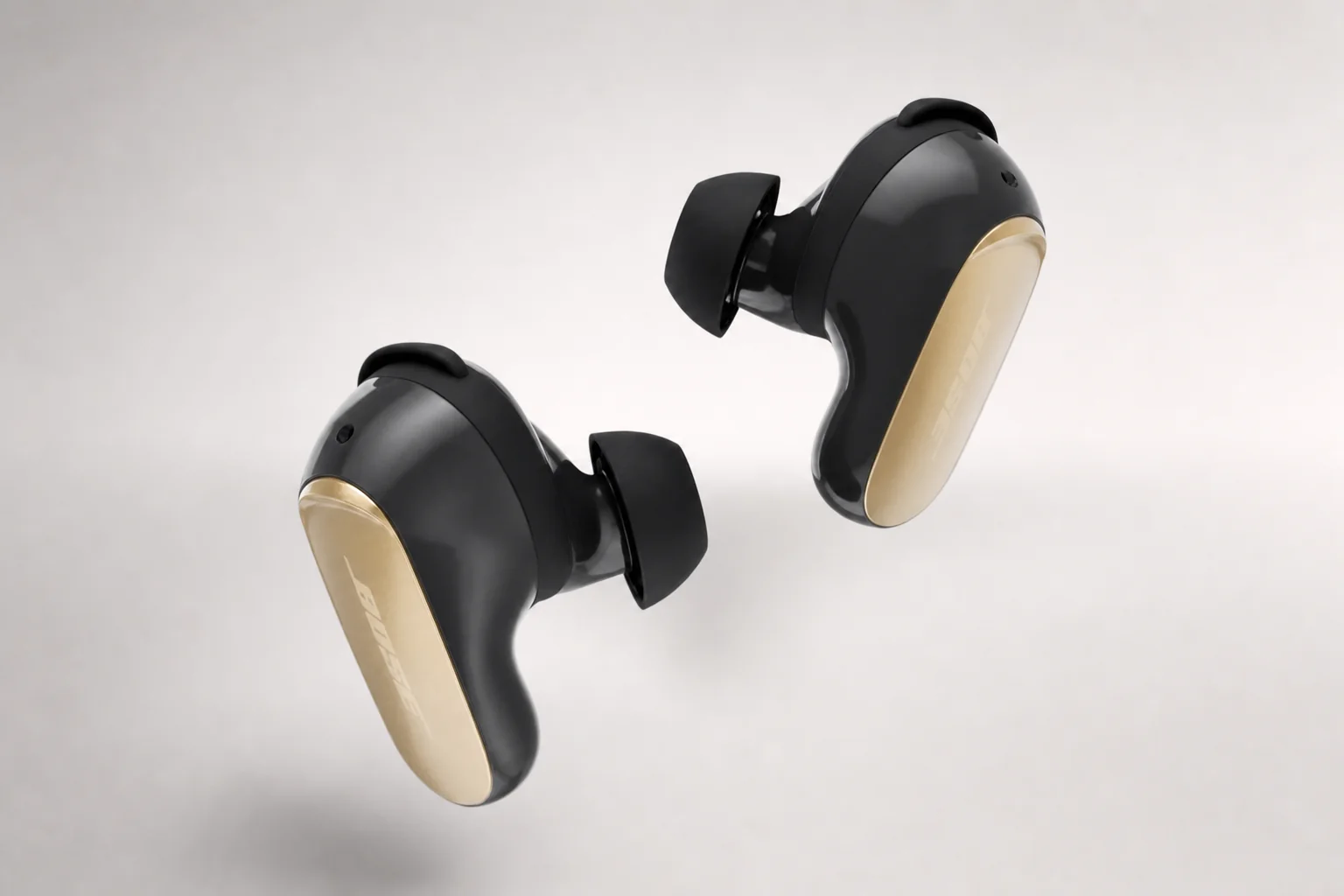
Bose QuietComfort Ultra Earbuds (2nd Gen)
Current Bose UK direct price checked; £299 UK launch price
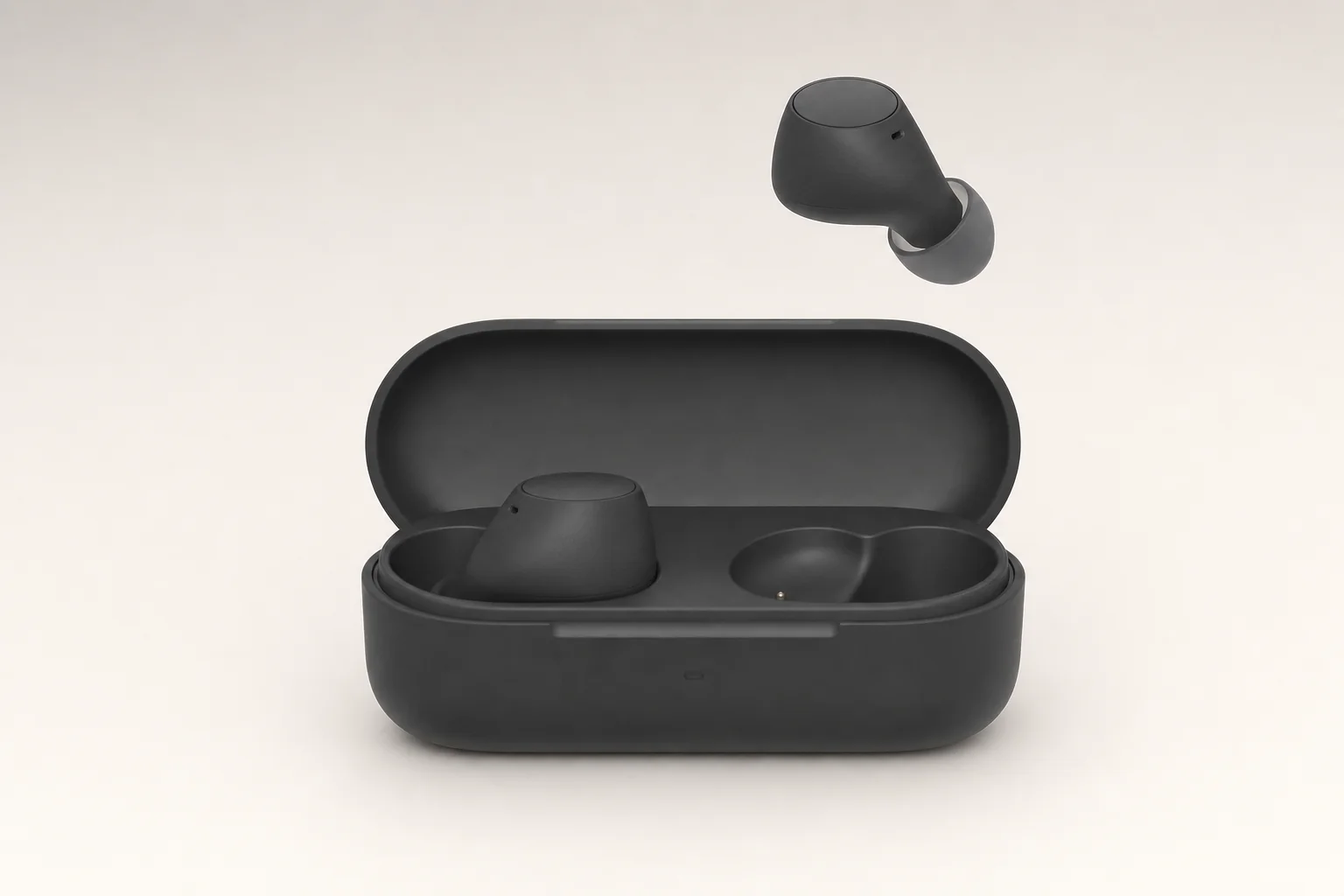
Sony WF-1000XM6
Current Sony UK direct price checked; £250 recommended price
US pricing context
Bose MSRP / Sony WF-1000XM6 MSRP
The numbers that decide the match
Before getting into subjective matters such as comfort and sound signature, it is worth putting the practical figures in one place. The headline is simple: Sony is lighter and runs longer from each charge; Bose has the more substantial fit system and a slightly larger driver. Both retain the basics that matter in a flagship pair, including Bluetooth 5.3, IPX4 water resistance for the earbuds, Qi charging and multipoint connection.
| Key specification | Bose QuietComfort Ultra Earbuds (2nd Gen) | Sony WF-1000XM6 |
|---|---|---|
| Current UK direct price | £229.95 | £249 |
| UK launch / recommended price | £299 | £250 |
| Driver | 9.3mm dynamic driver (reviewer-reported; not confirmed by Bose) | 8.4mm dynamic driver |
| Earbud weight | Approximately 7.3g | Approximately 6.4g |
| Bluetooth | Bluetooth 5.3 | Bluetooth 5.3 |
| Water resistance | IPX4 earbuds | IPX4 earbuds |
| Claimed ANC-on battery | Up to 6 hours | Up to 8 hours |
| Total battery with case | Approximately 24 hours | Up to 24 hours with ANC on |
| Quick charge | 20 minutes for up to 2 hours | 3 minutes for up to 60 minutes |
| Wireless charging | Qi wireless charging | Qi wireless charging |
| Multipoint | Supported | Two devices simultaneously |
| Buy | Check price | Check price |
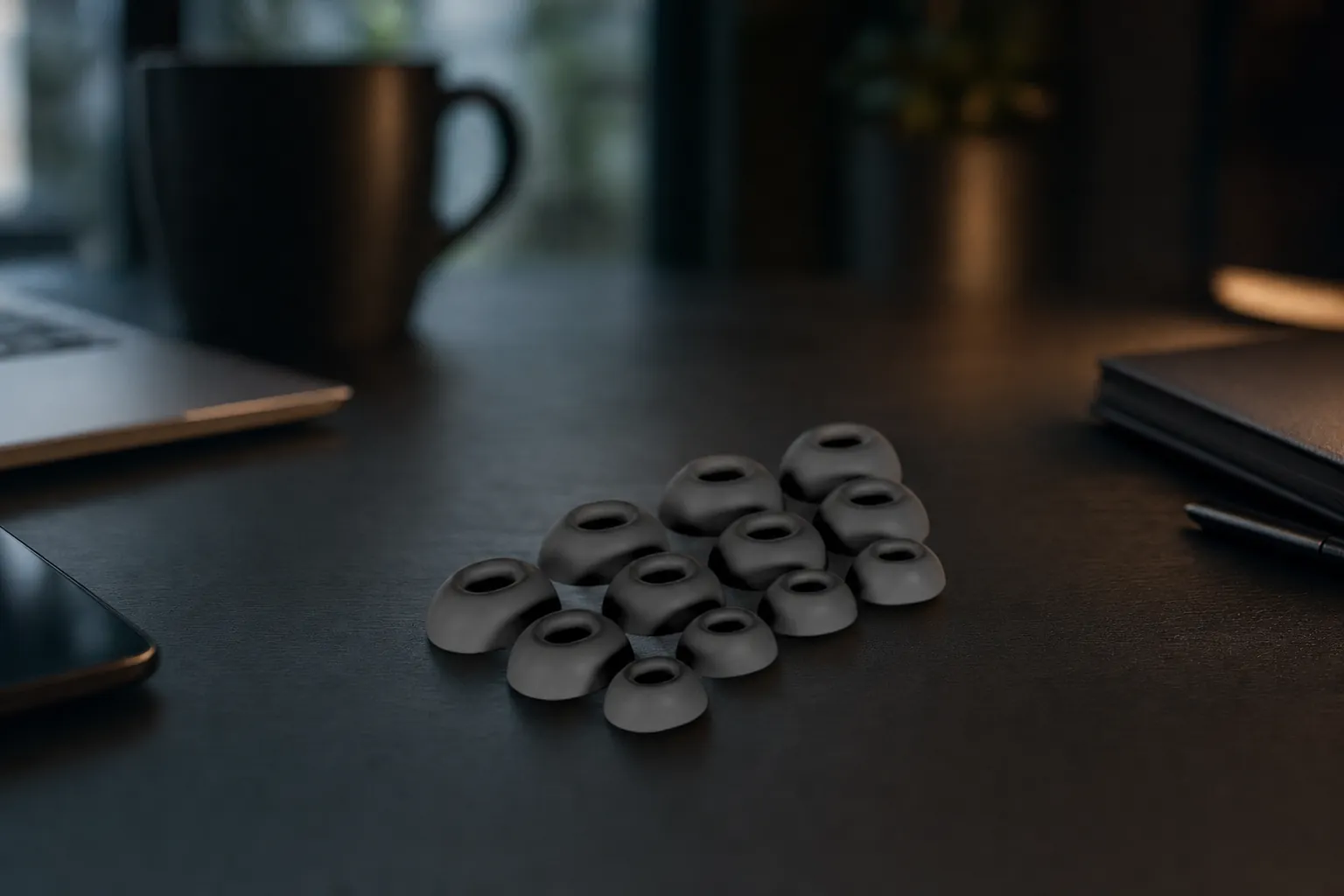
The physical differences matter more than they initially appear. Bose's earbuds measure approximately 30.0 × 12.4 × 24.9mm, with a 66.0 × 59.7 × 26.9mm case. Sony's case is approximately 61 × 41 × 26mm. Neither case is absurdly large, but Sony's is the slimmer object in a trouser pocket. Bose's case is more of a little pebble. A lovely pebble, perhaps, but still a pebble.
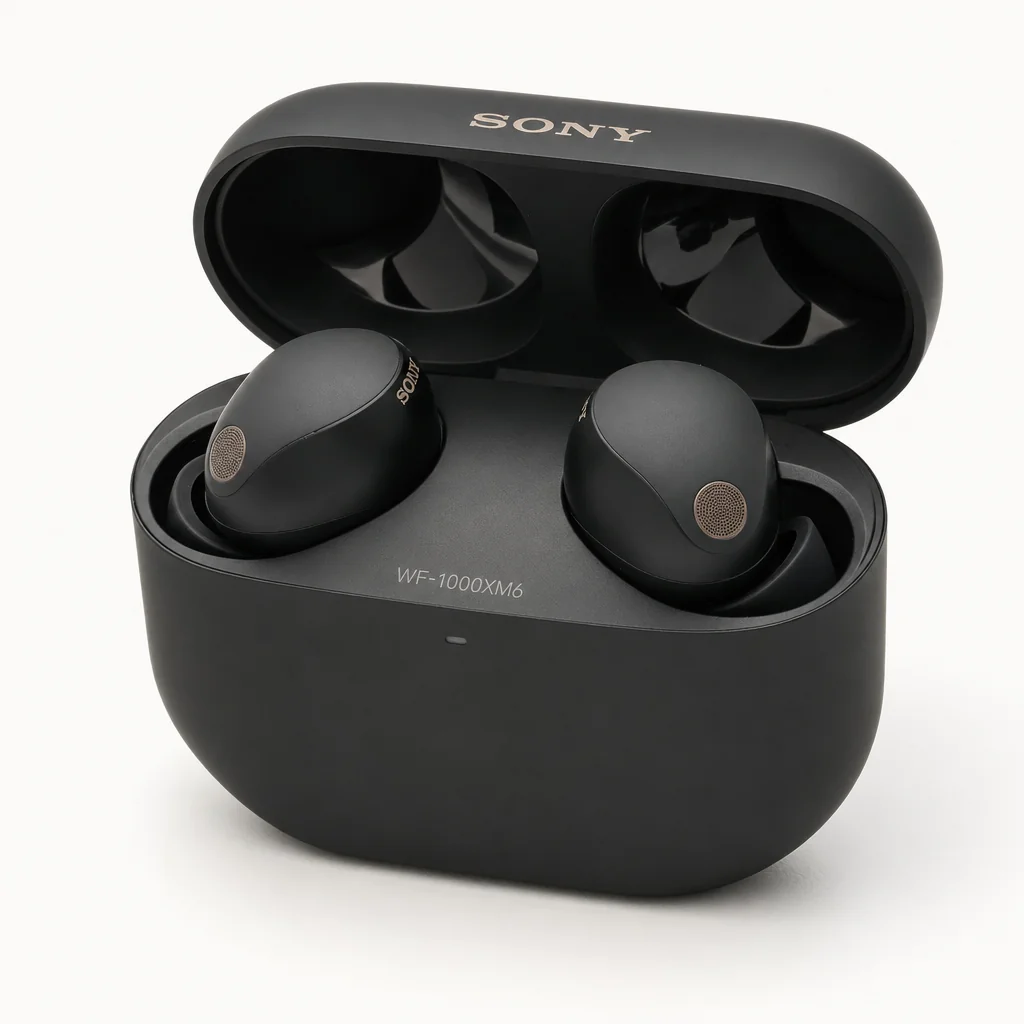
The Bose case is broader, while Sony's charging case is slimmer and lighter to carry between desk, train and gym bag.
Driver diameter is not a league table for sound quality. Fit, tuning, digital processing and the seal in your own ears will make a much bigger difference than 9.3mm versus 8.4mm.
Silence test: which pair makes the outside world disappear?
Bose is still the answer if you want the least complicated recommendation for maximum perceived silence. That does not mean Sony is playing in a different division. It absolutely is not. The WF-1000XM6 are among the strongest noise-cancelling earbuds available, and their low-frequency performance is particularly impressive. The difference is that Bose has been more consistently praised for broad isolation across the awkward real-life mix of rumble, chatter, ventilation hum and occasional sharp noise.
For frequent flyers, this is the bit to focus on. Aircraft noise is not one sound; it is a rolling blend of low-frequency engine rumble, air movement and cabin chatter. Bose's QuietComfort line has built its reputation on making that blend recede, and the second-generation Ultra buds retained that knack. Reviews described their isolation as outstanding for aircraft rumble, road traffic and office noise. The Bose advantage is not a neat single dB figure, but the repeated conclusion from listening and lab-led reviews is persuasive.
Sony has more hardware to talk about. The WF-1000XM6 use the HD Noise Cancelling Processor QN3e with the Integrated Processor V2 and four microphones per earbud. Sony said the XM6 reduced noise by 25% compared with the preceding WF-1000XM5. More usefully, SoundGuys measured an 88% average reduction in perceived loudness, with more than 40dB attenuation around 100Hz and more than 50dB around 2kHz. Those are excellent figures, not marketing wallpaper.
Where Sony can give up a little ground is the midrange, roughly the band where voices, office chatter and certain clattery public-transport sounds live. Its ANC is less uniform there. You may still hear the rhythm of a nearby conversation even if you cannot make out every word. Bose is more likely to turn that same situation into distant, irrelevant texture. That is a subtle but valuable distinction if you work in an open-plan office or take a train four days a week.
Best for flights: Bose
Bose's strength with low-frequency rumble and its generally consistent isolation make it the conservative pick for long-haul cabins and regular rail travel.
Best for office noise: Bose
Voices and general workplace noise are where Bose's more even isolation has the practical advantage.
Excellent for traffic: Sony
Sony's measured low-end attenuation is serious. Busy roads and engine noise are very much within its comfort zone.
Wind and changing conditions
Both improve on their predecessors, though Sony's adaptive behaviour can occasionally feel less consistent in changing environments.
ANC is only as good as the seal
A loose earbud can make a class-leading ANC system sound merely decent. This is the quiet little reason Bose's stability bands are so important: they improve comfort and, by helping preserve a dependable seal, give the noise cancelling a better chance to work properly.
Fit, comfort and the commute test
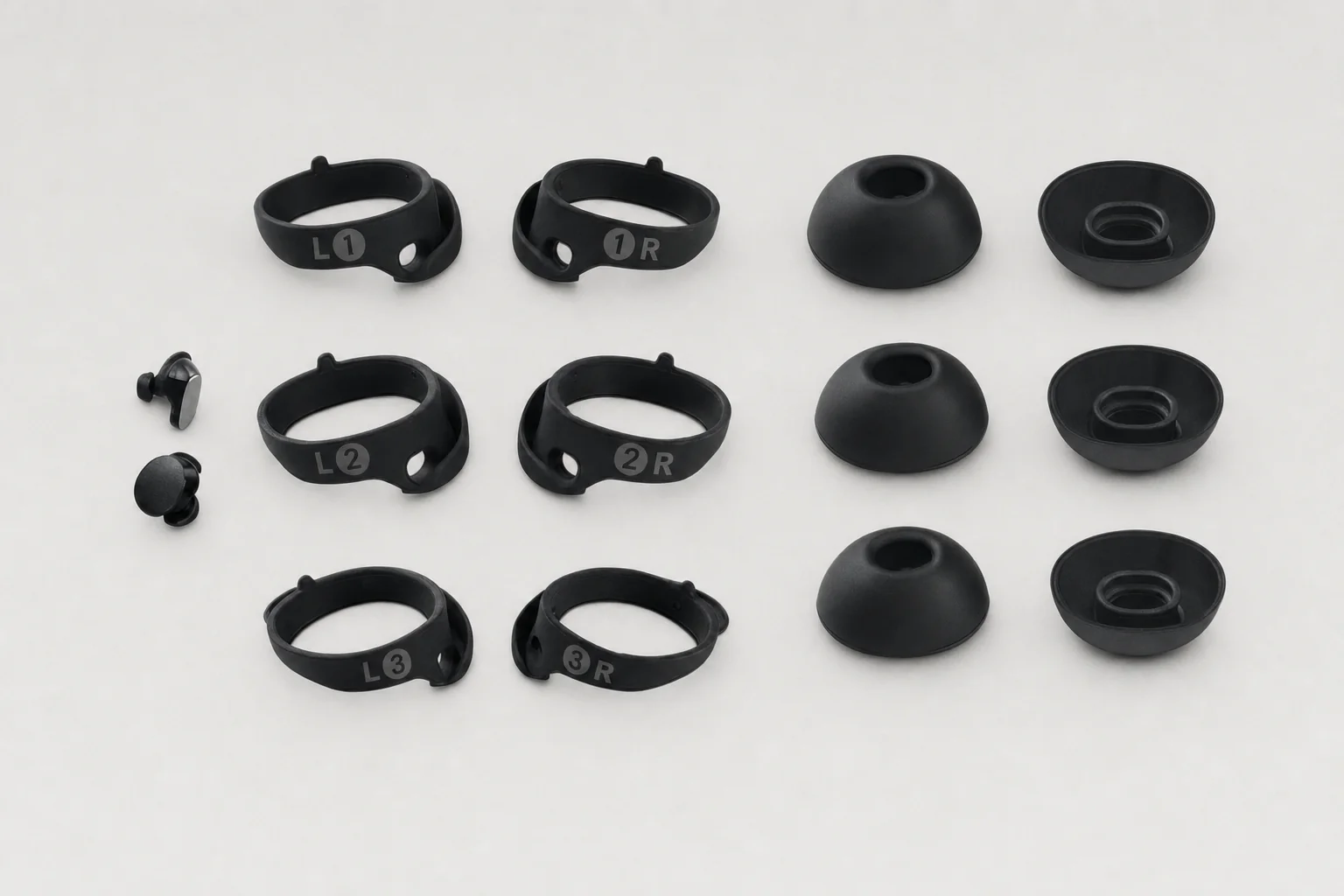
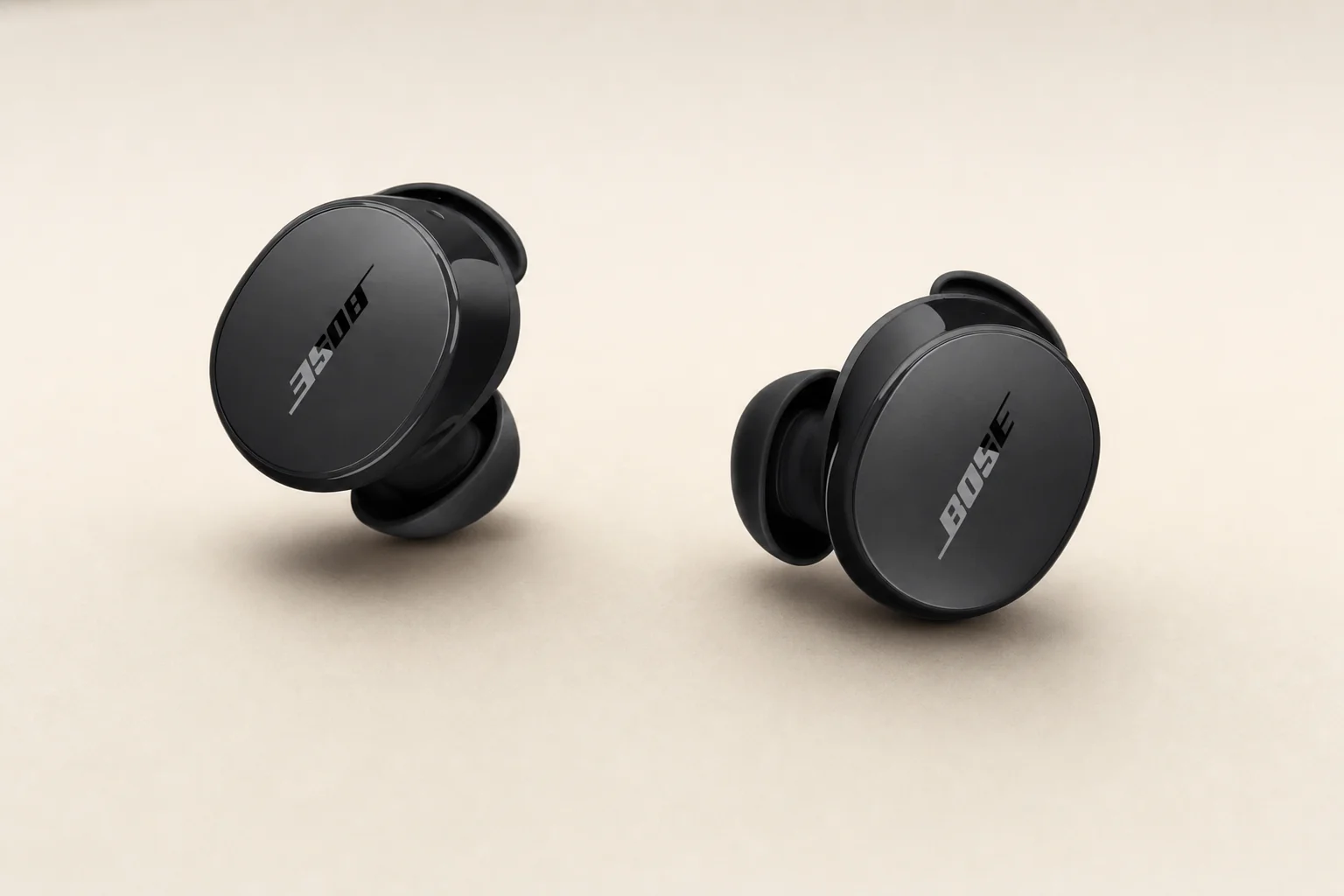
Comfort is infuriatingly personal. One person's "barely there" earbud is another person's oddly expensive earplug. Still, Bose has a structural advantage here because it gives you more ways to make the QuietComfort Ultra Earbuds fit. In the box are three eartip sizes and three sizes of stability band. The band braces the earbud against the shape of your outer ear, so you do not have to ram the tip deeper into the canal just to stop it moving.
That is a smarter arrangement than it sounds. On a brisk walk, while carrying bags, or during a gym session, tiny movements can gradually break the seal of conventional buds. The music gets thinner, the ANC weakens, and you start performing that familiar little "push both earbuds back in" dance. Bose's bands are designed to reduce precisely that sort of faff. The fit is comparatively shallow yet secure, which is a good recipe for listeners who find deep in-ear designs fatiguing.
Bose lists each bud at approximately 7.3g, while one reviewer listing put them at 7.7g. They are not tiny buds, and they do protrude more than some alternatives, but their weight is spread reasonably well once the correct band is fitted. For commuting, I would take a slightly more visible bud that stays put over a sleek one that decides to escape when you turn your head to check the platform display.
Sony took a sensible route with the WF-1000XM6 and made them smaller than the XM5. Their width was reduced by around 11% compared with the previous generation, and at approximately 6.4g per earbud they undercut Bose on the scales. They are more comfortable than the older Sony flagship for many ears, especially during long listening sessions. Yet they remain relatively substantial earbuds and do not include stabilising wings.
Bose's interchangeable stability bands are the practical differentiator for listeners who struggle to keep conventional in-ear buds secure.
That absence is not automatically a deal-breaker. If Sony's supplied noise-isolating tips suit your ears, the XM6 can be secure enough for everyday walking and commuting. But for high-intensity exercise, Bose provides more reassurance. The distinction is not "Sony falls out and Bose never does". Ears are awkwardly individual. It is simply that Bose gives you a better toolkit for solving an awkward ear shape.
Bose fit strengths
- Three stability-band sizes work alongside three eartip sizes.
- Secure, comparatively shallow fit reduces reliance on deep insertion.
- Especially useful for walking, travel and workouts.
- A consistent seal also helps ANC and bass response.
Sony fit compromises
- Smaller than XM5, but still not a particularly petite earbud.
- No stabilising wing for intense activity.
- Slight protrusion may matter if you rest your head against a seat.
- Fit depends more heavily on finding the right tip alone.
Neither model's charging case has the same stated water resistance as the earbuds. IPX4 here is useful protection against sweat and light rain for the buds, not permission to treat the whole set as swimming equipment.
Sound quality, codecs and the app arms race
Both pairs can sound very good. Bose takes a warmer, more energetic route, with a bass-forward presentation that gives pop, electronic music and blockbuster soundtracks an easy sense of weight. The reviewer-reported 9.3mm dynamic driver (not officially confirmed by Bose) is part of that picture, but CustomTune is just as important: Bose calibrates the sound to your ear shape, helping compensate for the little acoustic quirks created by how the buds sit in your ears.
The Bose tuning makes low-volume listening enjoyable. You do not need to crank it just to feel a kick drum or the body of a bass guitar. Vocals tend to arrive with welcome presence, and the overall effect is engaging rather than flatly analytical. The trade-off is that listeners who want to make very fine adjustments may find Bose's three-band EQ a little too basic. It is enough for broad strokes. It is not a miniature recording studio in your pocket.
Sony's 8.4mm driver aims for a more broadly balanced sound with elevated bass and controlled treble. The XM6 have enough detail and separation to make busy tracks feel organised rather than crowded, while the bass does not have to dominate the mix. If you listen across lots of genres, from spoken podcasts to jazz, grime, metal and low-key acoustic material, that adaptable baseline is useful.
Then there is the wireless side. Sony supports SBC, AAC, LDAC and LC3, and adds DSEE Extreme processing for upscaling compressed music. LDAC can handle up to 24-bit/96kHz under compatible conditions, though it is not lossless Bluetooth. LC3 and LE Audio make the Sony better prepared for compatible newer devices. For Android owners especially, that is a proper reason to choose it rather than a spec-sheet trophy.
| Sound and app feature | Bose QuietComfort Ultra Earbuds (2nd Gen) | Sony WF-1000XM6 |
|---|---|---|
| Sound character | Warm, energetic and bass-forward | Balanced with elevated bass and controlled treble |
| Personalisation | CustomTune calibration and three-band EQ | Personalised sound controls and multi-band EQ |
| Codec support | Snapdragon Sound and aptX Adaptive support | SBC, AAC, LDAC and LC3 |
| Upscaling | Not confirmed | DSEE Extreme |
| Companion app | Bose app | Sony Sound Connect |
| Touch control customisation | Supported | Supported |
That gap in the upscaling row is a useful illustration of why Sony is the enthusiast-friendly option, since Bose has no confirmed equivalent to DSEE Extreme. Sony has more menus, more adjustment and more compatibility to explore. Bose is the pair for people who want their earbuds to sound good without disappearing down an app-settings rabbit hole. Sony is for those who quite enjoy the rabbit hole. No judgement. Some of us have spent an alarming amount of time moving an EQ slider by 1dB.
Sony Sound Connect offers the broader set of EQ, codec and control options, while Bose keeps sound adjustment simpler and more immediate.
Sony for tinkerers
Multi-band EQ, DSEE Extreme, LDAC and LC3 give Sony more ways to suit a particular phone, music library and listening taste.
Bose for straightforward enjoyment
CustomTune and a warm default sound make Bose rewarding without demanding much intervention.
Android advantage: Sony
LDAC and LC3 are the standout practical reasons Android listeners may lean toward the WF-1000XM6.
Spatial audio: cinematic trick or everyday upgrade?
Spatial audio is one of those features that can feel magical for ten minutes, then quietly become something you leave off forever. The good versions add space without making dialogue weird or instruments drift away from where they ought to be. The bad versions can make music sound as though it is playing in the next room. Bose and Sony both take spatial sound seriously, but they approach it from different directions.
Bose calls its system Immersive Audio. It includes a Cinema Mode using Bose TrueSpatial processing, designed to widen presentation for films and television. The attraction is that Bose's spatial processing is comparatively platform-agnostic. You do not need to build your listening around a narrow catalogue of specially prepared content for the feature to have an effect. That makes it easier to try with stereo music, streamed shows, podcasts and games.
In ordinary stereo music, Immersive Audio can produce a wider, more out-of-head presentation. Whether that is an upgrade depends on the recording and your taste. With a spacious live recording or a carefully mixed electronic track, it can be entertaining. With a close-miked vocal track, you may prefer the directness of normal stereo. Cinema Mode makes more immediate sense for films because it can make dialogue and effects feel less trapped between your ears.
There is a price, literally in battery life: Bose quotes up to four hours with Immersive Audio enabled rather than six hours in Quiet Mode with it disabled. That is not a minor penalty. If you commute for an hour each way and use the feature for a film at lunch, you may not care. If you are planning a transatlantic flight, it is worth thinking about before you casually leave it on all day.
Sony's system is 360 Reality Audio with head tracking where the compatible content and device setup support it. The potential is strong, and head tracking can make the soundstage feel more anchored as you move. Sony's implementation is more dependent on the relevant service ecosystem and compatible devices, though. That makes it less of a universal "press this for better sound" feature and more of a benefit for listeners already using the services that support it.
My practical spatial-audio rule
Use spatial processing for films, television and the occasional immersive album. For everyday playlists and podcasts, standard stereo usually gives you the more natural, predictable result. Bose wins on convenience; Sony can be excellent when your services and devices line up.
| Spatial feature | Bose QuietComfort Ultra Earbuds (2nd Gen) | Sony WF-1000XM6 |
|---|---|---|
| Spatial platform | Bose Immersive Audio | 360 Reality Audio |
| Film-focused mode | Cinema Mode with TrueSpatial processing | 360 Reality Audio ecosystem support |
| Head tracking | Spatial processing support | Supported with compatible content and devices |
| Best practical use | Flexible movie and general-content listening | Compatible music and device ecosystems |
Battery reality: six hours versus eight—and what the cases add
Here Sony wins decisively. Its official claim is up to eight hours with ANC enabled and up to 12 hours with ANC off. Independent results were even stronger under some conditions: SoundGuys measured 9 hours 41 minutes, while RTINGS found approximately 8.6 hours. In plain English, the WF-1000XM6 can comfortably cover a full workday of intermittent listening without forcing you to hunt for the charging case.
Bose quotes up to six hours with ANC or Quiet Mode and Immersive Audio off, falling to up to four hours when Immersive Audio is enabled. RTINGS measured approximately 6.5 hours, while SoundGuys recorded 5 hours 34 minutes under its own conditions. That variation is normal because volume, connection settings, environmental processing and test method all affect small wireless earbuds. Still, the pattern is unmistakable: expect roughly five and a half to six and a half hours from Bose, not Sony-like endurance.
Both cases land at approximately 24 hours of total listening with ANC in play. On paper, that sounds like a draw. In real life, it is not quite one. Sony gets more done before you have to put the buds away, which is enormously convenient when you are on a long work call, travelling, or simply prone to leaving the case at home. Bose gets you to a similar overall total through more frequent top-ups.
Fast charging also favours Sony on the headline claim: three minutes in the case provides up to 60 minutes of playback. SoundGuys measured closer to 45 minutes from a three-minute charge with ANC on, which is still very useful. Bose claims that 20 minutes in its case gets you up to two hours. Both can rescue a forgotten charge before you leave the house, but Sony's tiny top-up is the more impressive emergency option.
Sony's longer single-charge endurance is the practical winner for full workdays, long travel days and people who routinely forget to recharge.
LDAC and intensive feature use can reduce Sony's real-world endurance. Bose Immersive Audio has an even clearer impact, cutting its quoted earbud life from six hours to four.
Calls, controls and the small features you notice every day
Call quality has become a bigger part of the premium-earbud brief than it used to be. Plenty of us now take Teams calls while walking the dog, speak to family from a windy platform, or join a meeting from a café that seems to contain four blenders. Bose improved its second-generation Ultra Earbuds with AI-based background-noise suppression and SpeechClarity. The aim is to keep your voice intelligible while reducing the nasty background stuff.
Sony has the more elaborate technical setup. Each WF-1000XM6 has four microphones, with two voice microphones plus a bone-conduction sensor per side, alongside AI beamforming and AI noise reduction. Reviewer feedback suggested a meaningful step forward over the XM5, particularly outdoors and in wind. Sony is the stronger choice for people who make a lot of calls away from a quiet room.
Bose is still perfectly capable for ordinary calls, and its improvements matter. But under loud, sustained environmental noise, its microphone performance can become merely adequate rather than exceptional. In a quiet room, both should sound clear. In traffic, Bose prioritises getting your voice through intelligibly; Sony's sensor and beamforming array gives it more hardware assistance in separating your speech from the surrounding racket.
Both models support multipoint, so you can keep a phone and laptop connected. That is one of those features you do not care about until you have used it for a week, at which point manually disconnecting and reconnecting devices starts to feel like going back to charging a phone every afternoon. Sony explicitly supports two simultaneous devices. Bose supports multipoint too, making both practical for mixed work-and-personal use.
Bose: SpeechClarity
AI-based background-noise suppression improves the Ultra Earbuds' handling of calls compared with the earlier generation.
Sony: bone-conduction sensors
Sony combines sensors, voice microphones, beamforming and AI processing for its more ambitious call system.
Multipoint on both
Both are built for switching between a laptop and phone rather than living permanently attached to one device.
Daily controls
Both offer customisable touch controls. Bose also lets you disable touch controls, useful if you are tired of accidental taps while adjusting fit.
Everyday Bose wins
- Simple app experience and useful CustomTune setup.
- Touch controls can be disabled.
- Stable fit means fewer interruptions to adjust an earbud.
Everyday Sony caveats
- Connection drops were occasionally reported without the most stable connection setting.
- No stabilising wing for exercise-focused users.
- More app options also mean more settings to understand.
Price, ownership and which deal is genuinely better
At their original UK prices, the choice was straightforward: Bose began at £299, while Sony entered at £250. That made the Sony look like unusually strong value even before its battery and codec advantages were factored in. By 16 August 2026, though, Bose UK listed the QuietComfort Ultra Earbuds (2nd Gen) at £229.95. At that number, the decision becomes much more interesting.
Bose is now £19.05 cheaper than the Sony WF-1000XM6 at £249. If maximum ANC confidence and stability bands are your priorities, that discount is enough to make the Bose feel like the better deal rather than merely the specialist option. The important caveat is that the lower Bose price was promotional or discounted relative to its launch price. It may persist, or it may not. Treat it as a current opportunity, not an eternal law of nature.
Sony still makes a powerful value argument at £249 because you get notably better individual battery endurance, LDAC, LC3, DSEE Extreme, a more flexible EQ, a strong call system and two-device multipoint. The £19.05 gap is not large enough to overwhelm those differences if they matter to you. For a listener who uses Android, likes tweaking sound, and regularly goes a full day without charging, Sony's specification-to-price ratio remains excellent.
In the US, Bose's confirmed MSRP was $299, while Sony's was $329.99. That gives Bose a clearer price advantage at list level than in the UK. Even so, value is not just about the initial checkout number. A pair that fits securely, lets you work without battery anxiety and makes your commute tolerable earns its keep rather quickly.
The current UK pricing makes Bose the cheaper option, while Sony justifies its modest premium through battery life, codecs and deeper customisation.
The verdict: two winners for two very different listeners
There is no need to force a single winner here, because the Bose QuietComfort Ultra Earbuds (2nd Gen) and Sony WF-1000XM6 are both excellent at the jobs they have chosen. The sensible answer is to match the earbuds to the listener rather than declare one universally superior because it has a shinier spec sheet.
Choose Bose if silence is the whole point. Frequent commuters, air travellers, open-plan office workers and anyone who finds conventional earbuds gradually working loose should start here. Bose has the stronger case for consistent, broad noise isolation, and its stability bands are a genuinely useful design choice rather than an accessory-box filler. You also get CustomTune, engaging sound, Immersive Audio and Qi charging, with a current UK direct price that undercuts Sony.
Choose Sony if you want the fuller technology package. The WF-1000XM6 offer eight hours of claimed ANC battery versus Bose's six, with independent testing placing Sony at roughly 8.6 to 9.7 hours. They support LDAC and LC3, deliver a better-equipped app, have a more flexible EQ and use more ambitious call hardware. For Android owners, audio tinkerers and people who regularly spend long days away from a charger, Sony is the easier recommendation.
Best for travel ANC: Bose QuietComfort Ultra Earbuds (2nd Gen)

See Bose QuietComfort Ultra Earbuds on Amazon UK
Check today's price & availability on Amazon UK
Choose Bose for the safer bet on aircraft rumble, trains, traffic and broadly consistent isolation.
Best for stable workouts: Bose QuietComfort Ultra Earbuds (2nd Gen)
The interchangeable stability bands make Bose the stronger fit choice for active use.
Best for battery: Sony WF-1000XM6
See Sony WF-1000XM6 on Amazon UK
Check today's price & availability on Amazon UK
Sony's eight-hour ANC claim and 8.6–9.7-hour independent results are comfortably ahead.
Best for Android audio fans: Sony WF-1000XM6
LDAC, LC3, DSEE Extreme and more comprehensive app controls make Sony the richer option.
Bottom line: Bose wins the quietest-feeling commute; Sony wins the better-equipped day.
At £229.95, Bose QuietComfort Ultra Earbuds (2nd Gen) are the buy for listeners who value isolation and a secure fit above all else. At £249, Sony WF-1000XM6 are the more versatile recommendation for battery endurance, codecs, calls and customisation. Pick Bose with your ears and journey in mind. Pick Sony with your phone, music habits and charging anxiety in mind.
The final choice is less about a universal winner than whether your daily priority is dependable quiet and fit, or battery life and wireless flexibility.
Bose QC Ultra 2nd Gen vs Sony WF-1000XM6: reader questions answered
- Bose QuietComfort Ultra EarbudsView on Amazon
- Sony WF-1000XM6View on Amazon