
Galaxy Z Fold8 Ultra vs Honor Magic V6: Book-Style Foldable Showdown
Samsung's camera-first Ultra takes on Honor's astonishingly slim, big-battery foldable. Two very different ideas of what a £2,000 phone ought to do.
Samsung's Galaxy Z Fold8 Ultra and Honor's Magic V6 represent the two most distinct approaches to a flagship book-style foldable in summer 2026.
Two Titans, One Ring: The 2026 Foldable Battle Explained

Foldables have spent years asking us to forgive a few compromises: a smaller battery here, a less ambitious camera there, perhaps a hinge you were politely encouraged not to think about. The Galaxy Z Fold8 Ultra and Honor Magic V6 arrived with a more useful proposition. They are trying to be proper flagship phones first, then fold in half as a party trick.
See Samsung Galaxy Z Fold8 Ultra on Amazon UK
Honor got its Magic V6 into UK shops on 2 July 2026. Samsung announced the Galaxy Z Fold8 Ultra on 22 July 2026, with general availability set for 7 August. The timing made this a rather deliciously direct contest. Both use Qualcomm's Snapdragon 8 Elite Gen 5 platform. Both offer a tablet-sized inner screen, a normal-ish cover screen and up to 1TB of storage. Neither is remotely cheap. And yet the priorities could not be clearer.
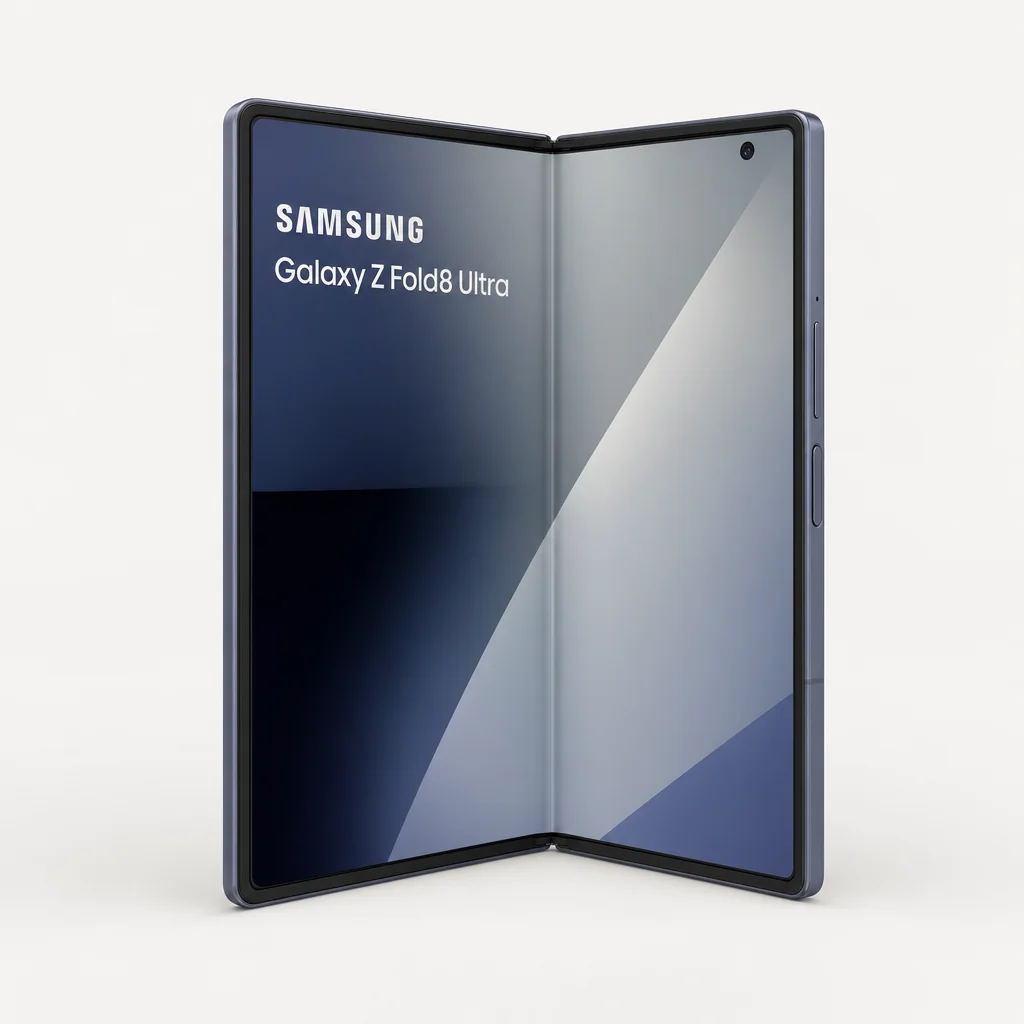
Samsung's pitch is creative firepower. The Z Fold8 Ultra brings a 200MP main camera, a newly upgraded 50MP ultrawide, 8K video through its APV codec and Cine LUT colour controls. It is also the lighter device at 215g, and its 8.0-inch main display is fractionally larger. This is Samsung looking straight at people who expect their phone to shoot, edit, review and share serious work without reaching for another device.
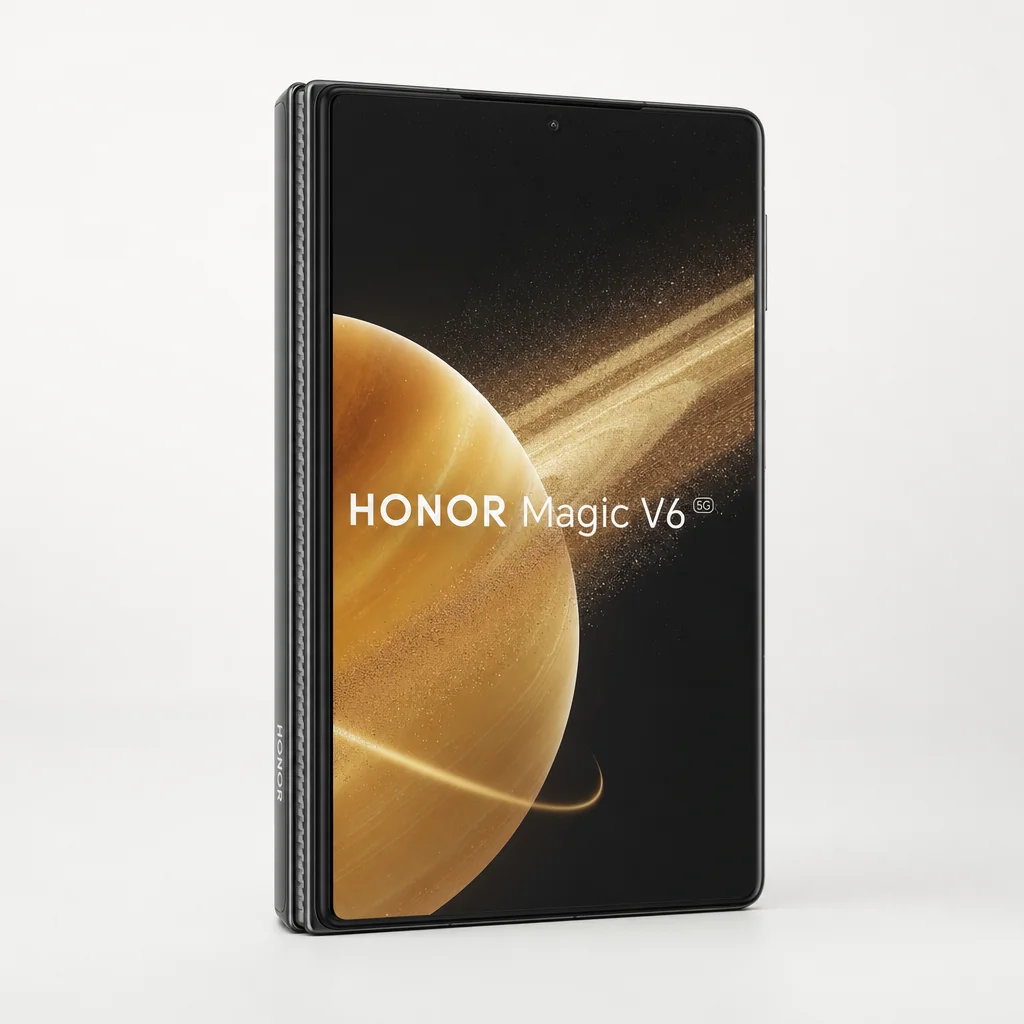
Honor, meanwhile, has attacked the everyday annoyances. The Magic V6 packs a 6,660mAh battery, 80W wired charging, 66W wireless charging, stylus support on both displays and IP68 plus IP69 protection. That is a remarkably practical list. It has the sort of specification that makes you stop mid-comparison and mutter, "Why doesn't every foldable do that?" Usually whilst looking pointedly at the other one.
The short version
The Galaxy Z Fold8 Ultra is the camera-led, slightly lighter choice with Samsung's biggest foldable screen. The Honor Magic V6 is the endurance, charging, durability and stylus-led choice. The better phone depends very heavily on what you actually do with it after the first week of showing off the folding bit.
This is not a contest with one universal champion. A photographer, a frequent traveller, a note-taker and a buyer who simply wants the least frightening battery percentage at 7pm could all reasonably land on different answers. That is exactly how a comparison like this should work.
Specs at a Glance: Everything You Need in One Place
Before getting lost in the weeds, here are the numbers that define this match-up. The headline is not merely that both are powerful foldables. It is that Honor uses its hardware budget on battery capacity, charging and resilience, whilst Samsung concentrates on a higher-resolution main camera and a slightly larger internal canvas.
| Feature | Samsung Galaxy Z Fold8 Ultra | Honor Magic V6 |
|---|---|---|
| Processor | Snapdragon 8 Elite Gen 5 for Galaxy, Adreno 840 | Snapdragon 8 Elite Gen 5 |
| Memory | Up to 16GB | 12GB or 16GB |
| Storage | 256GB to 1TB | 256GB to 1TB, UFS 4.1 |
| Inner display | 8.00in AMOLED, 2,504 x 2,256, 421ppi | 7.95in LTPO2 AMOLED, 2,172 x 2,352, 403ppi |
| Cover display | 6.5in AMOLED, 2,560 x 1,080, 120Hz | 6.52in LTPO2 OLED, 1,080 x 2,420, 120Hz |
| Battery | 5,000mAh | 6,660mAh |
| Wired charging | 45W; 67% in 30 minutes | 80W |
| Wireless charging | 20W, plus Wireless PowerShare | 66W, reverse wireless |
| Rear cameras | 200MP main, 50MP ultrawide, 10MP 3x telephoto | 50MP main, 64MP 3x periscope, 50MP ultrawide |
| Weight | 215g | 219g or 224g |
| Durability rating | IP48 | IP68 and IP69 |
| Stylus | Not supported — the Fold8 Ultra drops S Pen | Supported on both screens |
The numbers need a tiny bit of context. Samsung's listed battery capacity is 5,000mAh, whilst its rated capacity is 4,854mAh. Honor's headline capacity is 6,660mAh. Whatever way you slice it, Honor has built in vastly more battery headroom: a 1,660mAh gap against Samsung's stated 5,000mAh figure, or roughly 33% more capacity. That is not a rounding error. That is a different design philosophy.
The side-by-side specification story is simple: Samsung prioritises camera resolution and a larger inner panel, while Honor puts serious physical space aside for battery capacity and protection.
Screen Queens: Inner Display, Cover Glass and the Crease War
Open these phones and the size difference is almost comically small. Samsung offers an 8.00-inch AMOLED inner display at 2,504 x 2,256 pixels and 421ppi. Honor's 7.95-inch LTPO2 AMOLED panel runs at 2,172 x 2,352 pixels and 403ppi. On a specification sheet, Samsung wins both size and pixel density. In the hand, I would not choose between them on those figures alone. At normal reading distance, this is absolutely not the sort of gap that makes text look sharp on one and fuzzy on the other.
What may matter more is how the panels behave. Honor specifies 120Hz refresh, one billion colours and 4,320Hz PWM dimming on both screens. The inner panel is rated at 5,000 nits peak brightness, whilst the cover panel reaches 6,000 nits. Those are attention-grabbing figures, especially for a phone intended to be used outside as often as it is opened indoors. Bright cover displays are not glamorous in the shop. They are extremely glamorous when the sun is doing its best to turn your map, camera viewfinder or train ticket into a mirror.
Samsung's cover screen is 6.5 inches, a hair smaller than Honor's 6.52-inch outer display, though its 2,560 x 1,080 resolution gives it a different shape. Both run at 120Hz. Samsung also uses Corning Gorilla Glass Ceramic 3 protection on the cover. Honor counters with its Anti-scratch NanoCrystal Shield on the outside, alongside anti-reflective coating on both displays. These are different routes to the same reassuring goal: a foldable that does not feel like it should be handled with oven gloves.
Honor Magic V6: brightness and dimming credentials
The Magic V6 pairs 5,000-nit inner-screen peak brightness with a 6,000-nit cover-screen claim and 4,320Hz PWM dimming. For readers sensitive to display flicker, that is a particularly meaningful part of the specification rather than just a large number for a launch slide.
Samsung Galaxy Z Fold8 Ultra: the bigger workspace
The extra 0.05 inches are modest, but Samsung's 8.0-inch panel remains the larger inner canvas. For document review, split-screen browsing and editing a photo at full size, every little bit of usable space is welcome.
Crease and hinge approach
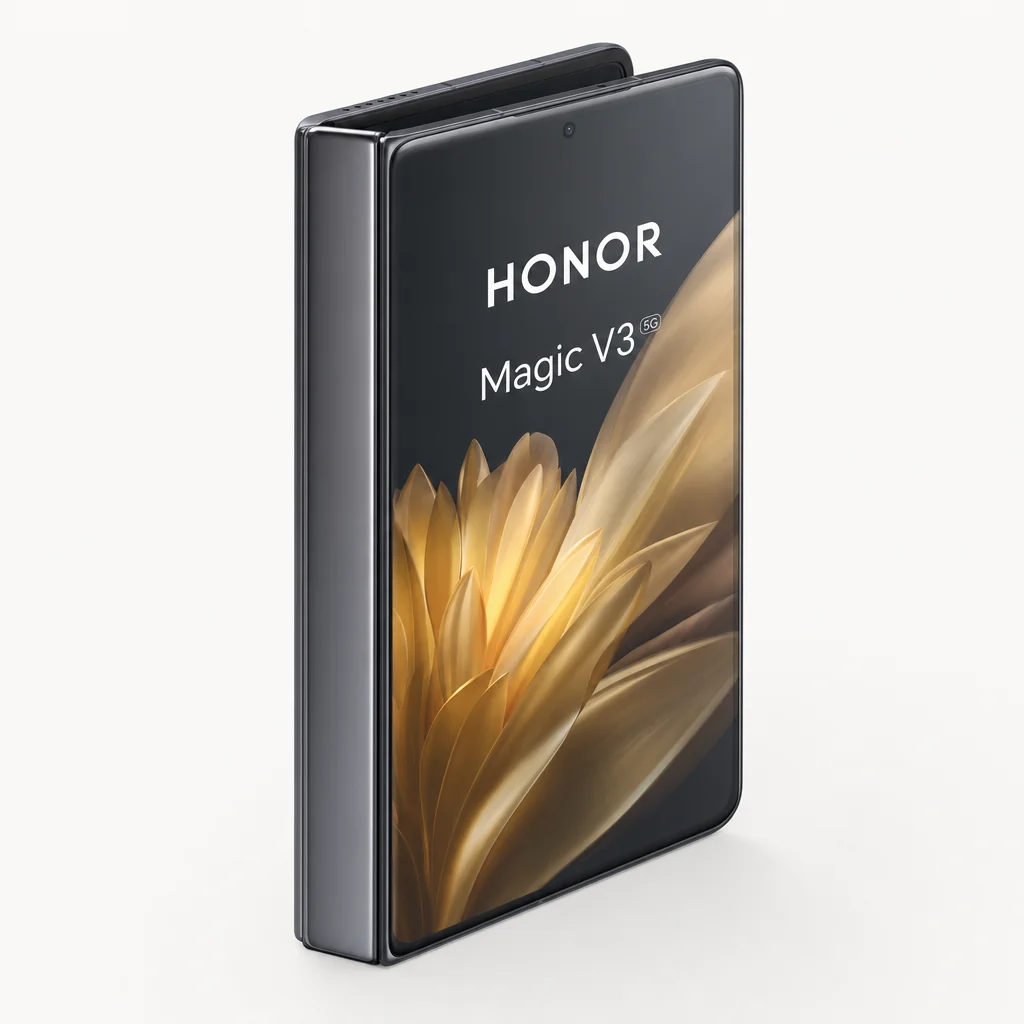
Honor said the Magic V6 crease was reduced by 44% compared with the Magic V5, using reinforced ultra-thin glass and a redesigned hinge. Samsung's Smooth Armor FlexHinge and widened inner bezel aim for easier opening.
There is a practical distinction in how these displays encourage use. Samsung's inner screen feels like the centrepiece of its creative proposition: an 8-inch canvas coupled to the 200MP camera makes sense for someone who shoots, crops and edits on the phone itself. Honor's display story has more of an all-day productivity flavour. Its anti-reflective treatment, exceptionally high peak claims and stylus compatibility on both screens make it easier to imagine using the cover display for a quick note, then opening the phone to mark up a document without changing tools.
Display verdict
Samsung takes the narrow win for raw inner-screen size and density. Honor takes the more practical win for specified brightness, PWM dimming, anti-reflective treatment and stylus support across both displays. If you spend more time outdoors than admiring pixels from two centimetres away, Honor's strengths are likely to feel larger.
Camera Clash: 200MP Muscle vs Periscope Precision
This is where Samsung makes its loudest case. The Galaxy Z Fold8 Ultra has a 200MP main camera, a 50MP ultrawide and a 10MP telephoto with 3x optical zoom. A 200MP sensor is a very different proposition from merely adding another lens. It gives Samsung enormous resolution to work with for detailed captures and cropping flexibility. If you photograph architecture, landscapes, products, family events or anything that often needs rescuing with a crop later, that headline number is not just marketing glitter.
Honor takes the more balanced route. Its main camera is a 50MP f/1.6 wide unit on a 1/1.56-inch sensor with PDAF and OIS. It is joined by a 64MP f/2.5, 70mm periscope telephoto with OIS and 3x optical zoom, plus a 50MP f/2.2 ultrawide with a 122-degree field of view. This is a properly considered trio. The 64MP 3x periscope is especially notable because it gives Honor more resolution at that useful portrait-and-beyond focal length than Samsung's 10MP 3x telephoto.
| Camera detail | Samsung Galaxy Z Fold8 Ultra | Honor Magic V6 |
|---|---|---|
| Main camera | 200MP | 50MP, f/1.6, 23mm, 1/1.56in, OIS |
| Ultrawide | 50MP, f/1.9 | 50MP, f/2.2, 13mm, 122° |
| Telephoto | 10MP, 3x optical zoom | 64MP periscope, f/2.5, 70mm, 3x optical zoom, OIS |
| Cover camera | 10MP, f/2.2, 24mm | 20MP, f/2.2 |
| Inner camera | 10MP, f/2.2, 18mm ultrawide | — |
| Video tools | 8K via APV codec, Cine LUT | — |
Samsung's upgraded ultrawide deserves more than a footnote. It moved from 12MP to 50MP and uses an f/1.9 aperture. Samsung said this delivered 34% improved brightness compared with the previous generation. Against Honor's 50MP f/2.2 ultrawide, the shared 50MP resolution makes this a much fairer fight than a simple megapixel count suggests. Samsung's wider aperture is the more appealing starting point for indoor rooms, evening streets and the universally tricky situation of trying to photograph a restaurant table without making everyone look vaguely haunted.
Honor has the stronger set of specified optics around its main sensor. The f/1.6 aperture and 1/1.56-inch sensor describe a camera designed to collect plenty of light, while the stabilised 64MP periscope looks well placed for portraits and distant subjects. Samsung's 200MP main camera will be the more tempting option for people who value detail and post-capture latitude, but Honor's 3x camera is not simply there to complete a checklist. It has real resolution behind it.
Samsung Galaxy Z Fold8 Ultra camera strengths
- 200MP main camera gives it the headline resolution advantage.
- 50MP f/1.9 ultrawide is a major step up from Samsung's previous 12MP approach.
- 8K APV recording and Cine LUT controls are useful creative tools rather than a simple spec-sheet flourish.
- Dedicated 3x optical telephoto broadens the system beyond the main sensor.
Honor Magic V6 camera trade-offs
- No single sensor matches Samsung's 200MP resolution headline.
- Its photographic argument is spread across three cameras, so it is less immediately obvious in a shop comparison.
- Buyers who prioritise detailed cropping from the main camera may still prefer Samsung's approach.
Samsung's camera system leans hard into 200MP detail and creative video controls, while Honor answers with a stabilised 64MP periscope and a balanced set of three 50MP-or-higher rear cameras.
For most buyers, the choice is surprisingly simple. Choose the Z Fold8 Ultra if the main camera is your most-used camera and you like the idea of maximum source detail, strong ultrawide hardware and cinematic controls. Choose the Magic V6 if you care more about the complete range: a bright f/1.6 main camera, a high-resolution periscope at 3x and an equally high-resolution ultrawide. Neither is pretending that cameras are an afterthought, which is a welcome change in foldable land.
Power Play: Chipset, RAM and Real-World Performance
At their core, these two are close relatives. Samsung uses the Snapdragon 8 Elite Gen 5 for Galaxy with Adreno 840 graphics, whilst Honor uses Qualcomm's Snapdragon 8 Elite Gen 5. This is flagship-class silicon on both sides, the sort of platform intended to cope with demanding multitasking, large-screen applications, camera processing and gaming. Samsung's "for Galaxy" branding signals its own version of the chip and tuning; Honor's specifications identify the Snapdragon 8 Elite Gen 5 as a 3nm part.
Memory and storage are appropriately generous. Samsung goes up to 16GB of memory and offers 256GB, 512GB and 1TB storage options. Honor sells 256GB/12GB, 512GB/12GB, 512GB/16GB and 1TB/16GB variants, with UFS 4.1 storage. For anyone who treats a foldable as a work machine, those 16GB versions are worth recognising. Several apps open at once on a large screen, a browser full of tabs and a few sizeable camera files can make even a very fast phone feel less heroic than its launch presentation suggested.
The Magic V6's measured performance came with an important caveat. In Performance mode, it topped charts or scored at the level of chart leaders. In its default setting, however, Honor significantly underclocked the CPU compared with the performance mode available to the user. That means the phone can be extremely quick, but users who want every last bit of performance need to actively choose that setting. It is not a problem for casual messaging or watching video. It matters more if you bought a Snapdragon 8 Elite Gen 5 foldable precisely because you are going to hammer it.
Under heavy sustained load in Performance mode, the Magic V6 ran hot and could not complete a demanding graphics stress test. That does not erase its headline performance, but it does make it a less straightforward recommendation for someone whose main hobby is long, high-intensity gaming sessions on the inner screen.
There is no need to overcomplicate the everyday conclusion. Either phone has the processor, memory ceiling and storage capacity to feel like a serious small computer. Honor offers clearly defined 12GB and 16GB tiers plus UFS 4.1. Samsung offers up to 16GB and its own Galaxy-tuned Snapdragon version. But Honor's default-versus-Performance-mode behaviour and heat under stress are genuine things to understand before treating raw chipset names as the full story.
Battery Life and Charging: David vs Goliath in mAh
There is no subtle way to say this: the Honor Magic V6 has a much larger battery. Its 6,660mAh cell is 1,660mAh bigger than Samsung's stated 5,000mAh capacity. That is approximately a 33% advantage, and on a book-style foldable it has real significance. Larger displays are wonderfully useful, but they can be remarkably efficient at making even a flagship battery feel ordinary. Honor has responded by giving the V6 a genuinely enormous reserve.
Better still, this was not merely a capacity claim that looked nice in a presentation. The Magic V6 recorded an active-use score of 15 hours 21 minutes using its large screen, and 18 hours 20 minutes using its cover screen. Those are strong results for a foldable, particularly because they cover the two ways people genuinely use one. Open it for documents, streaming, work and games; close it for the ordinary phone jobs that fill the gaps between.
The charging gap is just as clear. Honor supports 80W wired charging, 66W wireless charging, reverse wireless charging and 5W reverse wired charging. With 80W charging, it can be brought back up for daily use in roughly 20 to 30 minutes. Samsung supports 45W wired charging and reaches 67% in 30 minutes. That is perfectly respectable in isolation. Once you have looked at 80W wired and 66W wireless support next door, though, it stops feeling like an obvious advantage.
| Power and charging | Samsung Galaxy Z Fold8 Ultra | Honor Magic V6 |
|---|---|---|
| Battery capacity | 5,000mAh | 6,660mAh |
| Capacity difference | — | 1,660mAh larger; around 33% |
| Wired charging | 45W | 80W |
| 30-minute charging result | 67% | Daily-use recharge in roughly 20–30 minutes |
| Wireless charging | 20W | 66W |
| Reverse charging | — | Reverse wireless and 5W reverse wired |
| Measured active use, inner display | — | 15 hours 21 minutes |
| Measured active use, cover display | — | 18 hours 20 minutes |
Battery verdict
Honor wins this category decisively. The larger battery is backed by measured endurance, and its charging options are simply broader. Samsung's 45W charging is not slow, but it is difficult to view the power comparison as anything other than a Magic V6 victory.
Honor's 6,660mAh battery and 80W charging are not minor advantages: measured active-use results showed 15 hours 21 minutes on the inner screen and 18 hours 20 minutes on the cover display.
Build, Durability and the IP Rating Elephant in the Room
Foldables are inherently more complicated objects than normal slab phones. More moving parts, more exposed edges, a flexible inner display and a hinge all mean the details of durability matter more here than they do on an ordinary handset. This is why the Magic V6's IP68 and IP69 ratings are such a major advantage on paper.
IP68 and IP69 give Honor an unusually confidence-inspiring durability position. It combines dust and water resistance with protection against high-pressure, high-temperature water jets. This is not an invitation to take your phone into the shower for a documentary project, obviously. It is a meaningful layer of reassurance for the ordinary mishaps of life: wet weather, a spilled drink, a messy kitchen, a dropped phone beside the sink and all the other moments when technology gets introduced to the real world.
The Samsung Galaxy Z Fold8 Ultra does not carry an IP68 rating. At this price, that is a serious point to weigh rather than a small line in the specifications. Samsung does have Corning Gorilla Glass Ceramic 3 on the cover display and its Smooth Armor FlexHinge is designed for easier opening, but those things answer different questions. Screen protection and a smooth hinge are welcome. They do not offer the same formal dust-and-water protection as Honor's dual rating.
On physical dimensions, Samsung is 4.1mm unfolded and weighs 215g. Honor is 4.0mm or 4.1mm unfolded, 8.8mm or 9.0mm folded and weighs 219g or 224g, depending on version. This is a remarkably tight battle for slimness. Samsung gets the clear weight win by 4g to 9g, which you may notice if you swap them directly from one hand to the other. Over a normal day, I doubt many people will choose a phone on that difference alone. Both are astonishingly thin for devices that open into near-tablet screens.
Honor Magic V6: IP68 and IP69
Honor has the stronger protection credentials, pairing dust and water resistance with IP69 protection. For a phone you will carry everywhere and unfold in all sorts of places, it is one of the most persuasive V6 advantages.
Samsung Galaxy Z Fold8 Ultra: lighter in the pocket
At 215g, Samsung is lighter than Honor's 219g or 224g figures. It is not transformative, but it is a real comfort advantage in a category where every gram is usually earned through compromise.
Two genuinely slim devices
Samsung measures 4.1mm unfolded. Honor measures 4.0mm or 4.1mm unfolded and 8.8mm or 9.0mm folded. Neither asks you to carry an old-school brick simply because you want a folding screen.
Productivity, Software and the Everyday Foldable Question
Specs are useful. The reason to buy a book-style foldable, though, is that it can make ordinary tasks feel less fiddly. Reading long documents, comparing tabs, replying to messages while watching a video, editing photos, reviewing a spreadsheet or writing a long note all benefit from the larger screen. The question is which phone gives you the most useful version of that idea.
Honor's stylus support on both displays gives it an immediate productivity distinction. Being able to use a stylus on the cover screen as well as the inner panel matters because you do not always want to open the phone just to jot something down. It makes the V6 feel more like a device designed around flexible work rather than one that merely happens to have a large display.
Samsung's Z Fold8 Ultra does not support the S Pen. That is worth stating plainly because the Fold name has long been associated with productivity ambitions. Instead, Samsung's practical creative advantage comes through the camera system and 8.0-inch screen: take a high-resolution shot, open it on the larger display and work with it there. For a certain type of user, that will matter more than handwriting or sketching.
Software support is another area where Honor provides a meaningful long-term figure. The Magic V6 runs Android 16 with MagicOS 10 and is promised up to seven major Android upgrades. Samsung runs Android 17. Buyers who keep a folding phone for several years should pay attention to the wider ownership picture, not only to the chipset printed on a comparison chart. A premium foldable should not feel like a disposable experiment after the novelty of opening it has worn off.
Pick Honor for practical productivity
- Stylus support works on both the inner and cover displays.
- The cover display's 6,000-nit peak claim and anti-reflective coating suit work away from a desk.
- Up to seven major Android upgrades gives the long-term proposition real weight.
Pick Samsung for camera-led creation
- No S Pen support limits its appeal for handwritten notes and drawing.
- Its productivity case is more about a large screen plus serious camera tools.
- People who want a stylus-first folding notebook should look more closely at Honor.
Honor's ability to use a stylus on both its outer and inner screens makes the Magic V6 especially compelling for note-taking, annotation and quick work between meetings.
UK Price and Value: Which Foldable Makes More Sense?
There is no getting around the fact that these are ultra-premium purchases. Samsung's Galaxy Z Fold8 Ultra starts at £1,899 for the 256GB model, or $2,099.99 in the United States. Honor's confirmed UK RRP is £1,999.99. Honor launched at £1,499.99 through selected UK channels, with promotional bundles, but that promotional period was limited and its prices reverted afterwards. The current comparison is therefore best made against the regular UK price rather than treating a past launch promotion as permanent reality.
On straightforward UK RRP, Samsung costs £100 less at entry level. That is useful, but it is not the end of the value discussion. Honor's price buys you the 16GB/512GB configuration in Europe and the UK, plus the much larger battery, much faster wired and wireless charging, IP68/IP69 protection and stylus support. Samsung's £1,899 entry point buys 256GB storage, its 200MP main camera, 50MP ultrawide, 8K APV video tools and a lighter 215g body.
Samsung Galaxy Z Fold8 Ultra
UK starting price for the 256GB model.
Honor Magic V6
Confirmed UK RRP; sold in a 16GB/512GB configuration in Europe and the UK.
The expensive truth is that neither is a bargain in the conventional sense. But "value" at this level is not merely the lowest price. It is about paying for fewer compromises in the areas you care about. If your priority is photography, Samsung's pricing looks defensible because its camera proposition is so clearly differentiated. If you are after a device that can survive a more demanding daily routine and needs less time tethered to a charger, Honor's extra £100 at RRP brings a lot of hardware with it.
Value is configuration-dependent
Samsung's starting price is lower, but Honor's UK and European configuration includes 16GB RAM and 512GB storage. Compare like with like before deciding that either price label tells the whole story. At this end of the market, storage and memory can materially change the equation.
Galaxy Z Fold8 Ultra vs Honor Magic V6: Best For Different Buyers
This is the bit to bookmark. Both are superbly specified foldables, but they reward different habits. Buying the one that best fits your daily routine is smarter than buying the one with the loudest headline feature. A 200MP camera is wonderful; it is less useful if what you really needed was a phone that can go two days between charges. Equally, a gigantic battery is lovely; it may not satisfy the person who wants maximum detail from every photograph.
Samsung Galaxy Z Fold8 Ultra
See Samsung Galaxy Z Fold8 Ultra on Amazon UK
£1899.00price at 23 Aug, may change
The 200MP main camera, 50MP f/1.9 ultrawide, 3x telephoto, 8K APV video and Cine LUT controls make Samsung the more obvious choice for camera-first buyers.
Honor Magic V6

See Honor Magic V6 on Amazon UK
£1999.00price at 23 Aug, may change
Its 6,660mAh battery, 15:21h inner-screen active-use score, 18:20h cover-screen score, 80W charging and 66W wireless charging put Honor well ahead.
Honor Magic V6
Stylus support on both displays, anti-reflective screens and a bright 6,000-nit cover panel make the V6 the more naturally flexible working companion.
Honor Magic V6
IP68 and IP69 protection is a major real-world advantage for anyone who uses their phone in rain, around water or in less-than-gentle daily conditions.
Samsung Galaxy Z Fold8 Ultra
At 215g, Samsung undercuts Honor's 219g or 224g weight. It is a modest gap, but every gram counts in a device this capable.
Samsung Galaxy Z Fold8 Ultra
Samsung's 8.0-inch, 421ppi inner AMOLED is slightly larger and denser than Honor's 7.95-inch, 403ppi panel.
The best choice comes down to what you value most: Samsung's creative camera package and lighter body, or Honor's battery, charging, stylus support and comprehensive protection.
The Final Category Scorecard
Some comparisons are settled by one knockout feature. This one is more of a points decision, and that makes it more interesting. Samsung wins meaningful rounds: camera resolution, creative video tools, the largest inner display and lower weight. Honor wins an even longer list of practical rounds: battery size, measured endurance, wired and wireless charging, durability ratings, stylus support, specified brightness and the stronger 3x camera resolution.
| Category | Better fit | Why |
|---|---|---|
| Inner-screen size | Samsung Galaxy Z Fold8 Ultra | 8.0 inches and 421ppi versus 7.95 inches and 403ppi. |
| Outdoor display credentials | Honor Magic V6 | 5,000-nit inner and 6,000-nit cover peak claims, 4,320Hz PWM and anti-reflective coating. |
| Main-camera resolution | Samsung Galaxy Z Fold8 Ultra | 200MP main camera versus 50MP. |
| 3x telephoto hardware | Honor Magic V6 | 64MP stabilised periscope versus Samsung's 10MP 3x telephoto. |
| Battery and charging | Honor Magic V6 | 6,660mAh, measured 15:21h/18:20h active-use scores, 80W wired and 66W wireless. |
| Durability credentials | Honor Magic V6 | IP68 and IP69 ratings. |
| Stylus work | Honor Magic V6 | Stylus support on both screens. |
| Weight | Samsung Galaxy Z Fold8 Ultra | 215g versus 219g or 224g. |
| UK entry price | Samsung Galaxy Z Fold8 Ultra | Starts at £1,899 versus Honor's £1,999.99 UK RRP. |
It would be easy to look at that table and call Honor the winner on volume. I would resist that temptation. Foldable buyers are not a single species. Samsung has deliberately built a device for someone who regards the camera as the centre of the experience and wants the largest possible internal display without adding unnecessary weight. Honor has deliberately built one for someone who wants fewer practical caveats: better endurance, better charging, more formal protection and stylus compatibility.
The encouraging part is that neither company has treated foldability as an excuse to fit middling hardware. Whether you choose the camera-first Ultra or Honor's slim heavyweight, you are getting a device designed to replace both a premium phone and a small tablet. That is the promise foldables have always made. In 2026, these two get rather closer to delivering it.
There is no single winner for every buyer: Samsung's Fold8 Ultra is the creative specialist, while Honor's Magic V6 is the more complete choice for endurance, protection and pen-enabled productivity.
Galaxy Z Fold8 Ultra vs Honor Magic V6 FAQs
Verdict: Buy the Foldable That Matches Your Real Life
Buy the Samsung Galaxy Z Fold8 Ultra if your foldable is primarily a creative camera: you want the 200MP main sensor, stronger detail-first proposition, 50MP f/1.9 ultrawide, 8K APV video tools, the largest inner display and the lighter 215g design. It is the pick for photographers and creators who want their phone to feel like a pocketable editing suite.
Buy the Honor Magic V6 if you want the more practical all-round foldable. Its 6,660mAh battery, excellent measured active-use results, 80W wired and 66W wireless charging, IP68/IP69 protection, brighter specified displays and stylus support on both screens make it exceptionally well equipped for demanding daily ownership.
So no, there is not one absolute winner. Samsung wins when the camera and creative workflow are the whole point. Honor wins when you want a foldable that asks for the fewest compromises after the launch-day excitement has faded. For most productivity-focused buyers, frequent travellers and battery-anxious humans, the Magic V6 is the smarter fit. For serious mobile photographers, the Z Fold8 Ultra remains the more tempting splurge.