
Samsung Flex Titanium aims to banish the foldable crease for good
Samsung has revealed the dual-titanium display architecture heading to its next Galaxy foldables, just one week before Galaxy Unpacked lands in London.
What you need to know
- Samsung has unveiled Flex Titanium, a two-component titanium display system designed to reduce crease visibility and improve durability in foldable phones
- The technology combines a titanium-alloy film (roughly one-third the thickness of a human hair) with a perforated titanium plate that flexes without sacrificing rigidity
- Flex Titanium will debut in the Galaxy Z Fold 8 and a new device tentatively called the Galaxy Z Wide Fold, expected to go on sale 7 August
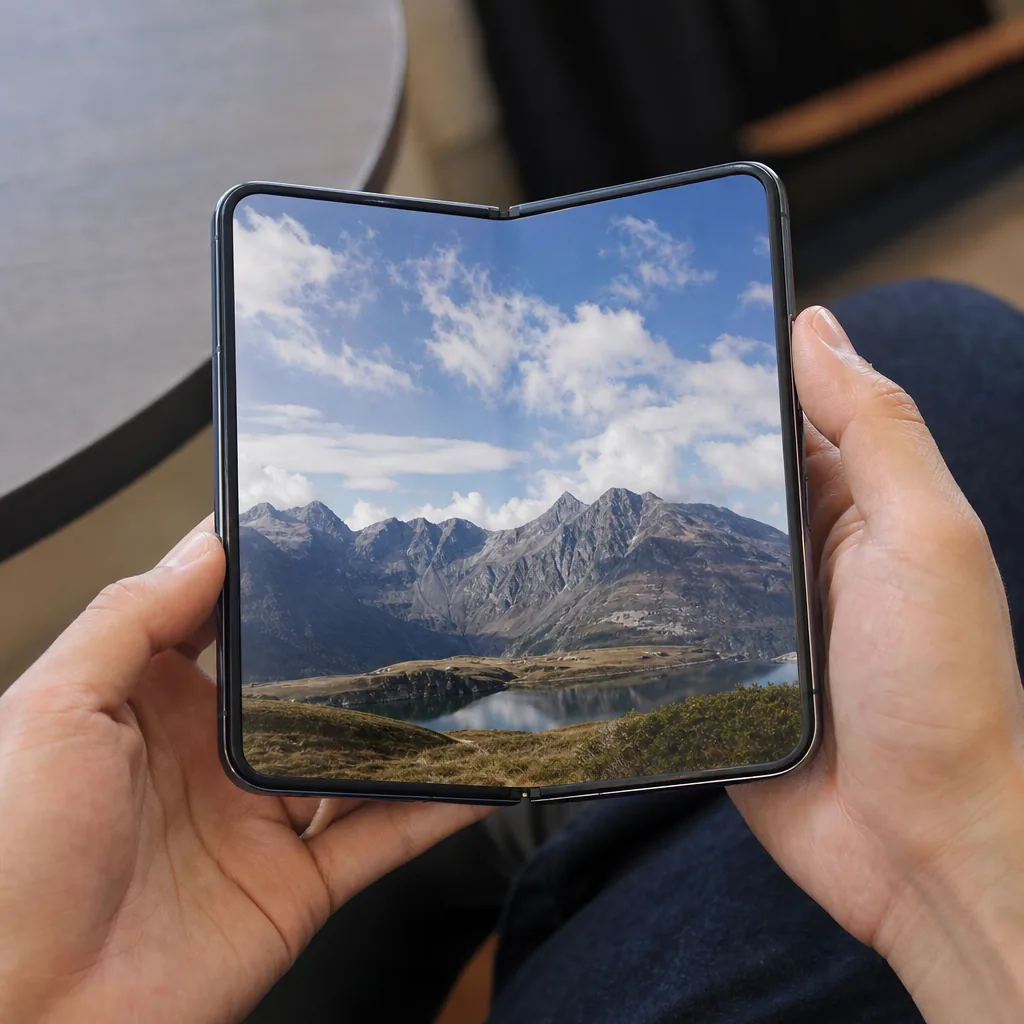
Samsung has today unveiled Flex Titanium, a redesigned display architecture for its next generation of Galaxy foldable smartphones. The announcement, made simultaneously across Samsung's global, UK, US and Australian newsrooms on Wednesday 15 July 2026, sets out how two titanium-based components will work together to make future foldables slimmer, tougher and — most importantly — less creased.
Two titanium components, one engineering goal
Flex Titanium is not a single material change. It integrates two distinct components beneath the OLED panel, each tackling a different weakness in conventional foldable display construction.
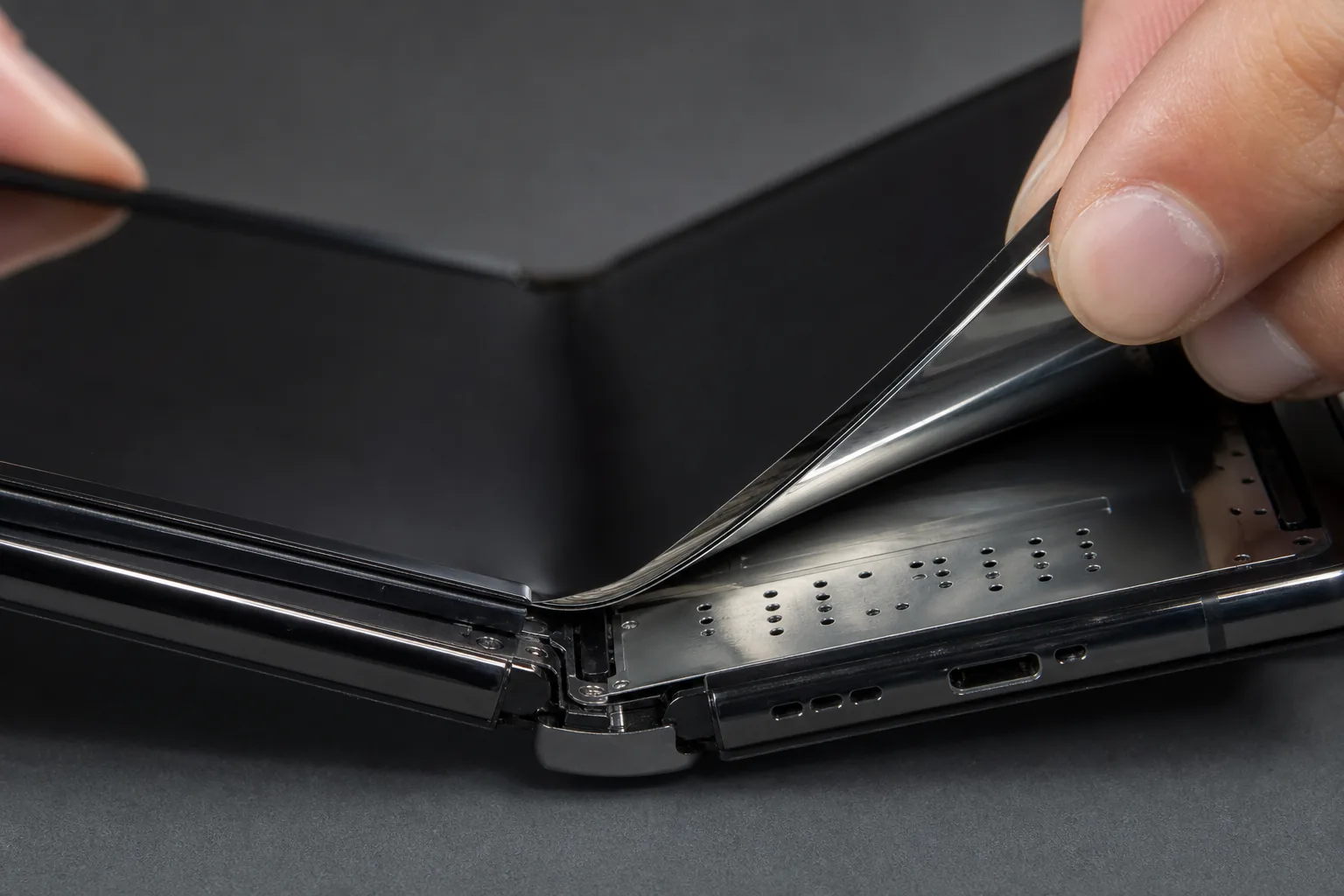
The first is a titanium-alloy film that sits directly below the OLED layer. Samsung says it provides 20 times greater mechanical stiffness than the polymer film used in previous designs, yet a precision rolling process makes it extraordinarily thin — measuring roughly one-third the thickness of an average human hair. That thinness allows the overall display panel to be slimmer without sacrificing the structural support the screen needs.
Below that film sits a titanium plate, and this is where the more novel engineering comes in. Conventional rigid materials and folding mechanisms do not naturally coexist — stiffer supports tend to fight against the bend. Samsung's solution is a perforated plate: thousands of microscopic openings are incorporated into the section of the plate that bends during folding. The result, according to the company, is a structure that retains titanium's inherent rigidity across most of its surface while providing the localised flexibility needed for repeated opening and closing. The holes also eliminate air gaps between the display module and the adhesive on the plate, improving how tightly everything bonds together.
Kyung-Jin Yoo, EVP and Head of Mobile Display Product Development Team at Samsung Display, described the approach directly: "By introducing sophisticated micro-patterned holes to the folding section of the titanium plate, we have successfully secured flexibility with robust durability."
It is worth noting that Samsung has not provided a specific percentage figure for crease reduction. The improvement is presented as meaningful and measurable, but the company is framing Flex Titanium as the latest step in a multi-year engineering effort rather than a wholesale reinvention — an honest framing, even if it leaves the marketing claim somewhat open-ended.
Display performance gets an upgrade too
Beyond the structural overhaul, Samsung says the new display also integrates a high-resolution architecture alongside next-generation organic materials. The company claims this combination delivers ultra-vivid resolution while reducing power consumption — a notable pairing, since brighter and sharper panels typically demand more energy, not less. Yoo added: "Combining high-resolution display architecture with new organic materials that maximize power efficiency, we will further strengthen the competitiveness of next-generation Galaxy foldable devices."
Which devices will get it — and when
Samsung has confirmed that Flex Titanium will debut in the Galaxy Z Fold 8 and a new form factor currently going by the tentative name Galaxy Z Wide Fold. The devices are expected to launch at Galaxy Unpacked on 22 July and go on sale on 7 August.
Unpacked itself will be held in London — a pointed choice of venue — and streamed live from 2 p.m. BST on Samsung.com, Samsung Newsroom and Samsung's YouTube channel. The event carries the motto "A New Shape Unfolds", with Samsung pointing unusually clearly towards an expansion of its foldable family.
Sunghoon Moon, EVP and Senior Executive of Samsung Electronics' Mobile R&D Office, framed the announcement in broader terms: "Samsung's strength in the foldable category comes from connecting user needs with our technologies that deliver tangible benefits in everyday life. For the next generation of Galaxy foldables, Samsung is building on years of expertise to bring display innovations into devices that enhance user experiences, anchored by exceptional viewing experiences."
Context: an incremental path with real stakes
Flex Titanium does not arrive from nowhere. Samsung had already revised the display structure on the Galaxy Z Fold 6 and Flip 6, introducing a new Protect Layer and stronger adhesive to create a shallower crease and improve durability. The titanium approach extends that existing redesign path rather than replacing it entirely. Samsung also briefly showcased a crease-free foldable display concept at CES 2026, though that panel has not been confirmed for any specific product.
The material itself has serious credentials. Titanium has been used in satellite antennas and the wheels of the Mars rover — and Samsung is now applying comparable material science to the inner workings of a consumer smartphone display.
Community posts about earlier Galaxy Z Fold models have repeatedly flagged screen delamination, black lines along the fold and hinge failures over the past year. That history underlines why crease engineering is not a vanity exercise — it is directly tied to whether customers trust a £1,699 phone to last.
What UK buyers need to know about price
Leaked pricing figures, attributed to leaker Roland Quandt and reported by Android Headlines, suggest the Galaxy Z Fold 8 will start at £1,699 for a 256GB model, with a Galaxy Z Fold 8 Ultra at £1,899 and Galaxy Z Flip 8 at £1,149. Samsung has not confirmed any of these figures, and official UK prices are expected at Unpacked on 22 July. Full hardware specifications — processor, battery, cameras — remain unconfirmed until then.
- Galaxy Unpacked: 22 July 2026, London — live stream from 2 p.m. BST
- Expected on-sale date: 7 August 2026
- Leaked UK starting price for Galaxy Z Fold 8: £1,699 (256GB, unconfirmed)
- Flex Titanium confirmed for: Galaxy Z Fold 8 and Galaxy Z Wide Fold (tentative name)
Samsung has spent seven generations building the case that foldables are ready for everyday use. Flex Titanium is its most technically specific answer yet to the one objection that has lingered longest.
Why it matters
The crease on a foldable display has never been a purely cosmetic problem — it is the single biggest reason most people still will not spend serious money on one. By moving to titanium-based components, Samsung is directly targeting the durability and trust gap that has kept foldables a niche purchase. For UK buyers already weighing leaked starting prices of £1,699 for the Fold 8, the engineering story needs to be convincing — especially with Apple widely expected to enter the foldable market this year with its own premium device. If Flex Titanium delivers on its promise, it could mark the point where foldables finally feel like proper flagship alternatives rather than ambitious experiments.