
Ring Battery Doorbell Pro (2nd Gen) First Look: Radar, Head-to-Toe View and 4K
Ring's refreshed premium battery doorbell adds 4K video, a square head-to-toe view and Wi-Fi 6. The more difficult question is whether those changes justify replacing the 2024 model, whose radar system already covered much of the detection story.
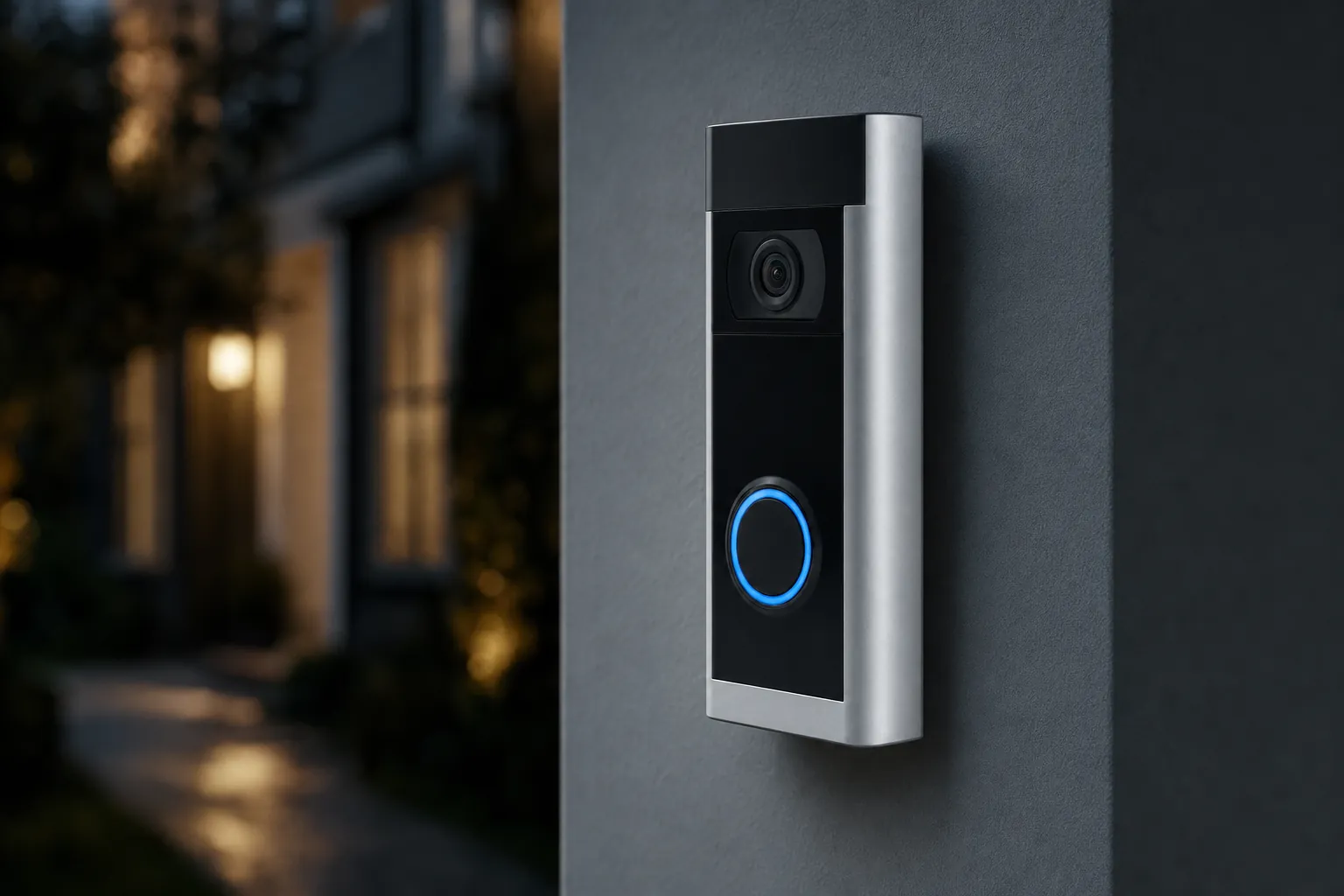

We link to the exact model on Amazon UK. Prices change often, so check the live price before you buy. As an Amazon Associate we earn from qualifying purchases.
For a battery doorbell at a busy UK entrance, sharper footage is useful only if it still catches the right activity, reaches the router reliably and does not spend most of its life on charge. The Ring Battery Doorbell Pro (2nd Gen) makes a substantial video upgrade on paper, but its strongest case is for people who want clearer daylight detail and a better view of parcels at their doorstep rather than radically different motion sensing.
One Doorbell, Two Names: What Actually Changed

See Ring Battery Doorbell Pro (2nd Gen) on Amazon UK
Check today's price & availability on Amazon UK
There is an avoidable naming wrinkle around this product. Ring sold it in the UK as the Ring Battery Doorbell Pro (2nd Gen), whilst its current US product page used the name Ring Battery Doorbell 4K Pro. Ring stated that the two names refer to the same device, with identical features and model number 5DFYA6. That matters if you have encountered US coverage, import listings or retailer copy that makes the product appear to be a separate version.
This was not a lower-cost branch of the Ring range or a minor trim revision. It replaced the first-generation Ring Battery Video Doorbell Pro, which arrived in March 2024. That older doorbell already had the Pro line's notable technology: radar-powered 3D Motion Detection, dual-band Wi-Fi, a removable battery and a premium price. The second generation's changes centre on capture quality, framing, wireless capability and the new Quick Release Ultra Battery Pack.
Buying note: UK buyers can treat "Battery Doorbell Pro (2nd Gen)" and "Battery Doorbell 4K Pro" as the same product when checking specifications. The model number, rather than the regional title, is the clearest way to identify it.
Ring announced the doorbell on 25 March 2026, opened pre-orders that day, and it reached general availability on 29 April 2026 according to TechSpot. As of 10 September 2026, Ring listed it in the US for $249.99. Ring UK listed it at £219.99, although the stock indicator embedded on Ring's page was inconsistent; retailer availability should therefore be checked before buying. Argos had listed it at £149.99 at the time of research, which appeared to be a retailer discount rather than the standard price.
Retinal 4K vs 1536p HD+: The Headline Video Upgrade on Paper
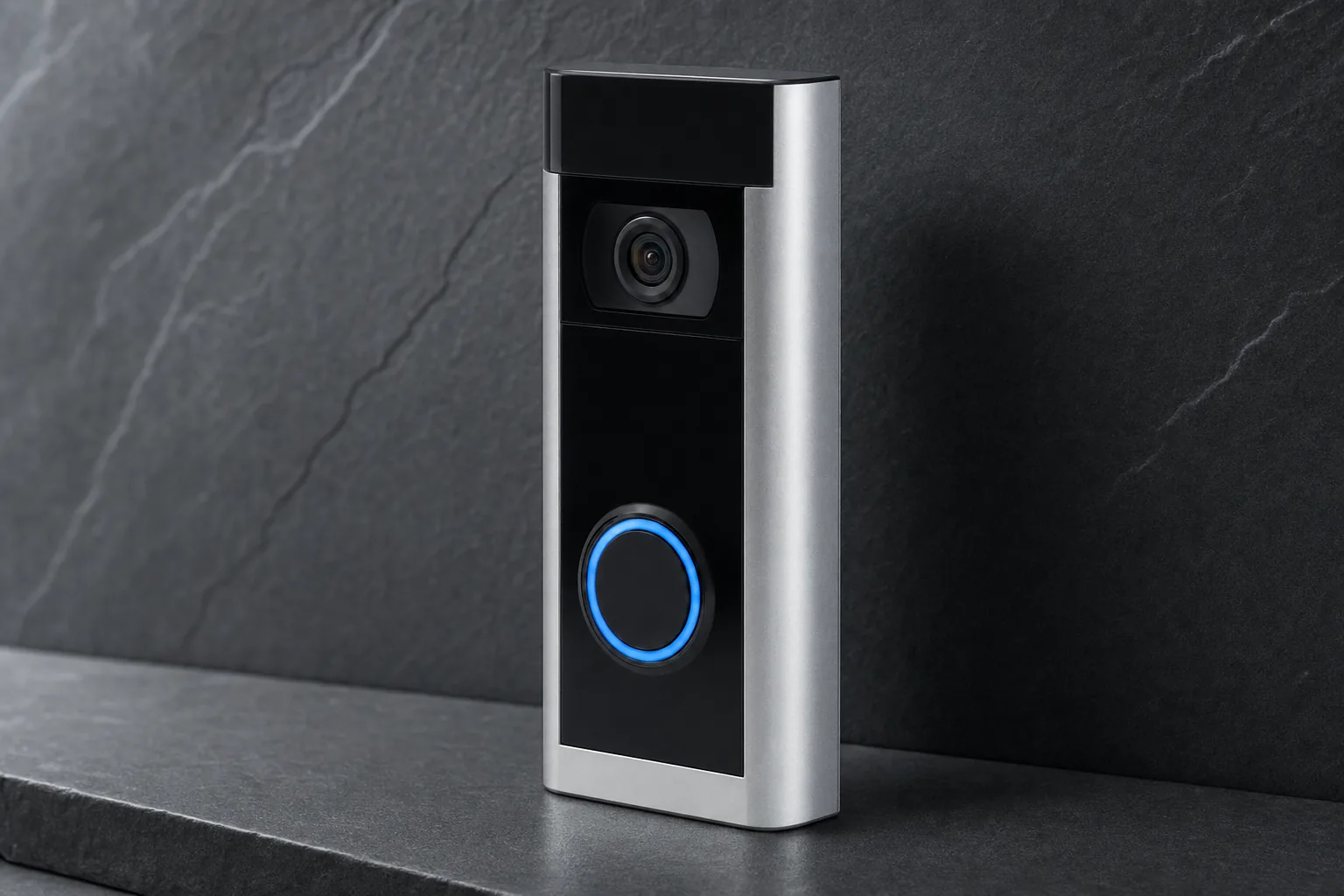
The straightforward upgrade is resolution. The first-generation Ring Battery Video Doorbell Pro captured 1536p HDR/HD+ footage. The new model moved to Retinal 4K, specified in US retailer material as 3840 × 2160, and adds up to 10x Enhanced Zoom. In practical terms, a higher-resolution starting image should make cropping into a visitor, parcel label or vehicle more useful than it was from a 1536p source.
That does not mean a 10x crop creates detail that was never captured. It means the camera starts with more pixels to work with, provided the connection delivers that feed cleanly. Tom's Guide reported that daylight footage preserved small text and fine detail particularly well, but also saw reduced sharpness when its upload speed fell to 7–12Mbps. Ring recommended at least 15Mbps upload for its 4K devices. The figure is therefore a household broadband check, not a decorative line on a spec sheet.
| Specification | Ring Battery Doorbell Pro (2nd Gen) | Ring Battery Video Doorbell Pro (2024) |
|---|---|---|
| Video resolution | Retinal 4K, 3840 × 2160 | 1536p HDR / HD+ |
| View | 140° horizontal × 140° vertical, 1:1 aspect ratio | 150° field of view |
| Zoom | Up to 10x Enhanced Zoom | Not confirmed |
| Motion system | 24GHz radar with 3D Motion Detection | Radar-based 3D Motion Detection |
| Wi-Fi | Wi-Fi 6, 2.4GHz and 5GHz | 802.11b/g/n, 2.4GHz and 5GHz |
| Battery type | Quick Release Ultra Battery Pack | Quick Release Battery Pack |
| US launch/list price | $249.99 | $229 at launch |
| UK launch/list price | £219.99 listed by Ring UK | £199.99 at launch |
Low-light performance still has limits. Ring described the system as able to retain true colour in low light before switching to black-and-white vision in near-total darkness. Tom's Guide said the camera remained useful after dark, but small text and number plates became difficult to resolve. That is a more realistic expectation than treating 4K as a promise of forensic detail at night: ambient light, distance and upload capacity still matter.
Head-to-Toe View: A More Useful Shape for the Doorstep
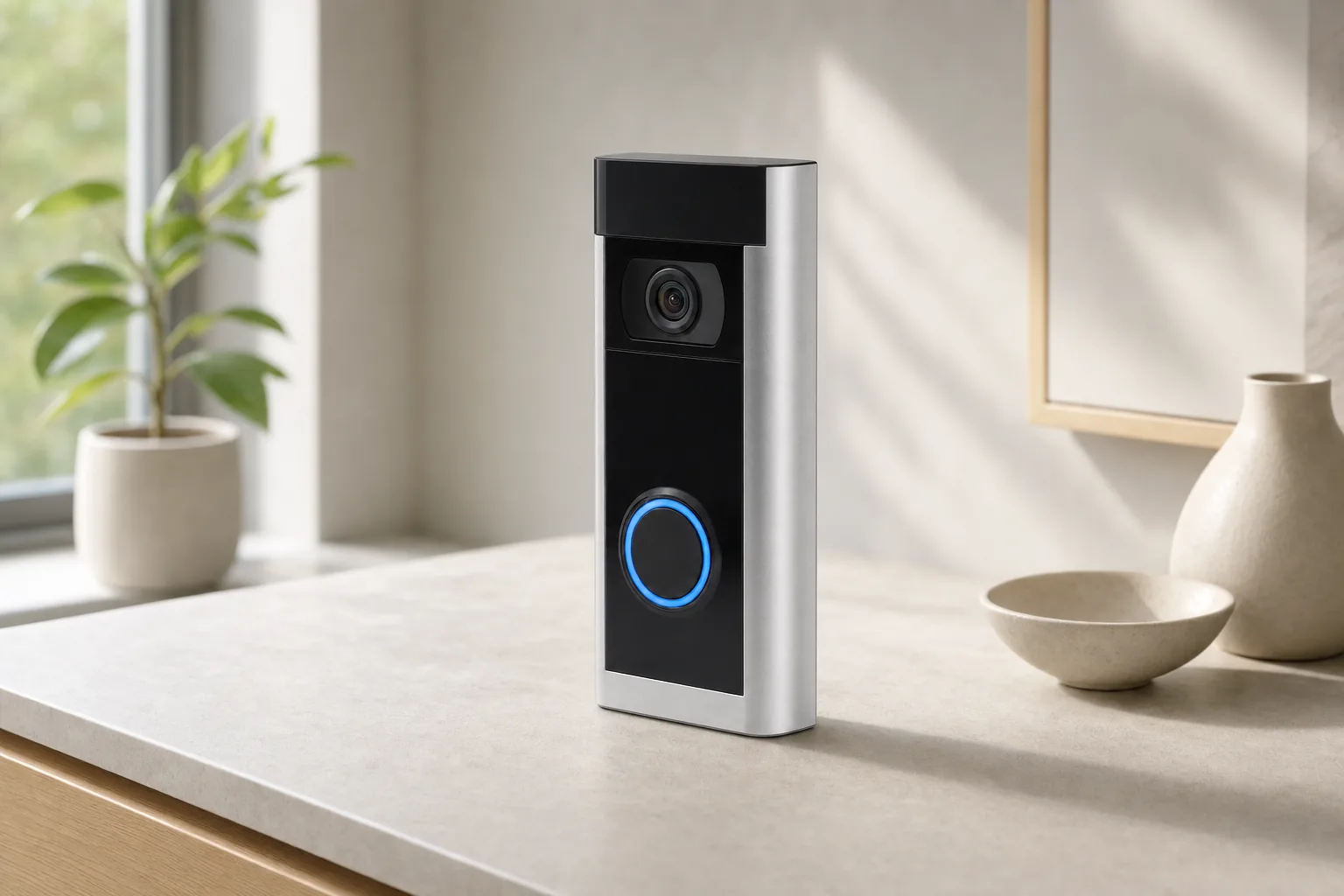
Doorbell cameras have often made a compromise between a wide street-facing view and the lower area where a parcel is left. Ring's answer here was not simply to widen the lens. The second-generation Pro used a 1:1 aspect ratio, with 140 degrees of coverage horizontally and vertically, to create a square head-to-toe frame.
This is a significant practical change from a conventional landscape camera view. The intended benefit is that the footage can include a visitor's face, their full body and the ground directly in front of the threshold in one image. For someone who regularly receives deliveries, that lower section is arguably more valuable than a little extra width at the edge of the scene. It also gives a clearer view of how a parcel was placed, moved or collected.
The framing trade-off
The newer Ring's 140-degree horizontal view was narrower than the 150-degree field quoted for its predecessor. Buyers whose priority is watching a broad driveway or pavement should consider the mounting position carefully. The 2nd Gen favours doorstep context over maximum side-to-side coverage.
Better parcel context
The square frame is designed to retain the area immediately below the button, where packages are commonly left.
Full-height visitor view
Vertical coverage can show more of a caller than a landscape-led composition, useful when identifying clothing or direction of travel.
More room for a crop
4K capture and 10x Enhanced Zoom should offer more scope to inspect a chosen section of the scene, subject to lighting and connection quality.
Radar-Powered 3D Motion Detection: What Changed, and What Did Not
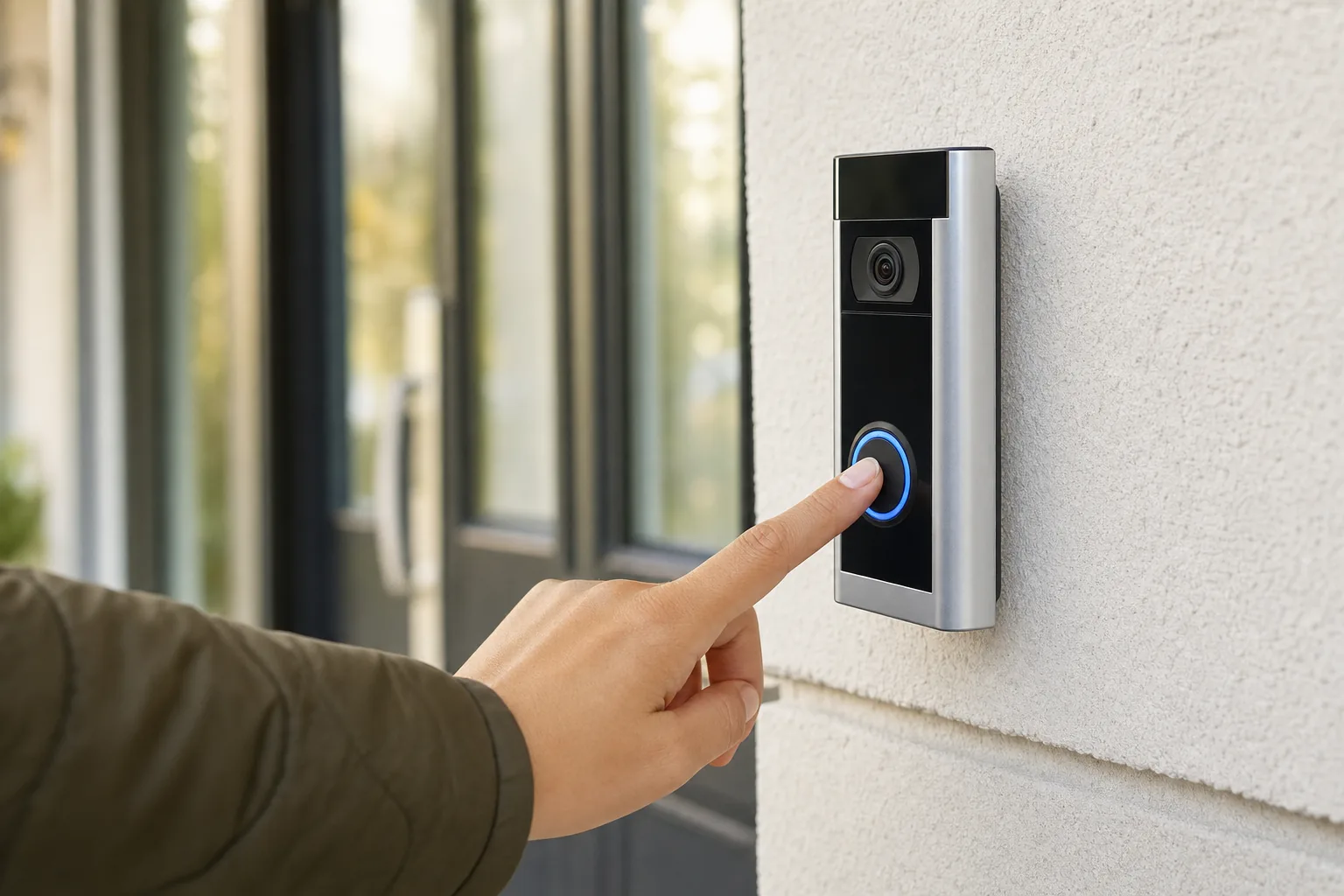
Radar was a Pro feature before this refresh. Ring's safety documentation confirmed a 24GHz radar sensor in the 2nd Gen, which feeds its 3D Motion Detection system. Ring said the system can use configured zones to focus notifications on activity within a chosen area and reduce irrelevant triggers from a road, pavement or neighbouring route.
It is important not to overstate the generational leap. The 2024 Battery Video Doorbell Pro also used radar-powered 3D Motion Detection and supported Bird's Eye View, which overlaid movement on an overhead map. Reviews of that earlier platform described person detection at up to roughly 30 feet. Radar itself was therefore not introduced by the second generation; the newer model paired familiar distance-aware detection with sharper, more vertically useful footage.
What can be said with confidence: radar-based zoning is present on both generations. Ring's current 2nd Gen product material confirmed 3D Motion Detection, but did not clearly present Bird's Eye View as a separately named feature. It should not be assumed that the earlier presentation or controls carried over unchanged.
Published evidence does not provide a controlled false-alert rate, missed-event percentage or direct accuracy comparison between the two battery Pro generations. That limits any claim that the newer doorbell is categorically more accurate. The sensible interpretation is narrower: radar should offer more deliberate boundary control than motion sensing that relies only on image changes, but setup still matters. A zone that reaches a public pavement may still invite unwanted alerts, whilst an overly tight zone could miss a person approaching from an angle.
There is another limitation inherent to the technology. Radar may estimate movement and distance, but it does not turn an obstructed camera view into useful visual evidence. Earlier Ring radar coverage noted that trees and physical objects could undermine the usefulness of map-style tracking. A pillar, hedge, parked vehicle or wall can still prevent the camera from showing the subject clearly. For front doors set well back from a pavement, this is less troublesome; for narrow terraces facing a busy public route, careful positioning becomes more important.
Battery Life in the Real World: A Wide and Honest Range
Ring did not publish a fixed battery-life figure for this doorbell. That is frustrating if you want a simple answer, but it is also more honest than attaching a months-long claim to a product whose workload varies hugely. Motion alerts, Live View sessions, 4K streaming, night vision, lighting, Wi-Fi conditions and local temperatures all influence runtime.
The independent reports located for the second generation pointed to a useful but broad range. Techwalla reached a low-battery notification after approximately six weeks with 4K enabled, the spotlight activating for every motion event, several Live View sessions per week and moderate daily traffic. Homes & Gardens reported charging approximately every two months in a household with frequent visitors and deliveries. Tom's Guide saw less than 25% battery loss after two weeks, though it did not publish the event count or full settings used.
For context, Tom's Guide's report on the 2024 first-generation model was much harsher: at about 10 motion events a day, battery level dropped 7% over 24 hours, leading to an estimated recharge interval of about two weeks with regular motion frequency plus HDR and colour night vision active. These reports were not run under matching conditions, so they cannot prove a fixed percentage improvement. They do, however, suggest the newer hardware can provide longer intervals in ordinary use, even while carrying a more demanding 4K video load.
Plan for the busy-door scenario
A reasonable planning range from the available reviewer reports is around six weeks to two months, with lighter activity potentially lasting longer. A spare Quick Release Ultra Battery Pack is the straightforward way to avoid a recording gap during charging, particularly at a high-traffic entrance.
Charging deserves its own caution. Homes & Gardens reported a charge taking up to 10 hours, without a standardised empty-to-full methodology. The older model's reported four-hour charge from roughly 30% to full cannot be directly compared because the battery hardware, charger and starting state differed. The practical conclusion is simply that a removable pack is useful: instead of taking the entire doorbell down or leaving the doorway uncovered, the battery can be swapped after removing the faceplate with the supplied tool.
Ring also supported connection to existing 8–24VAC doorbell wiring for trickle charging, as well as compatible Solar Panel and Solar Charger accessories. Neither option removes the need to consider actual activity levels, but they can reduce the routine of battery removal. Solar is most plausible where the panel has reliable daylight; a shaded north-facing UK entrance should not be treated as an automatic maintenance-free solution.
Wi-Fi 6, Upload Speed and the Fine Print of 4K Streaming
The move to dual-band Wi-Fi 6, using 802.11ax across 2.4GHz and 5GHz, is a genuine infrastructure update over the first-generation model's dual-band 802.11b/g/n connection. It does not automatically improve broadband speed, and it cannot help much if your router is older or the signal at the front door is weak. It can, however, be valuable in a busy home network with a compatible Wi-Fi 6 router and many connected devices.
Ring recommended a minimum 15Mbps upload speed for its 4K devices. UK broadband adverts tend to foreground download figures, whilst a doorbell that sends high-resolution clips to the cloud depends heavily on upstream capacity. Before paying for the Pro model, it is sensible to look at the upload result from the part of the home closest to the door, rather than relying on a speed result obtained next to the router.
No wired fallback: the doorbell had no wired network port. Even when connected to doorbell wiring for power, its data connection remained Wi-Fi. Brick walls, foil-backed insulation, render and a router positioned at the rear of a long house can all have a greater bearing on daily experience than the Wi-Fi 6 label.
Tom's Guide's experience illustrates the point. On a connection that often reached only 7–12Mbps upload, below Ring's 15Mbps recommendation, the reviewer reported a reduction in visible sharpness. That does not invalidate the 4K specification; it shows that the system is adaptive to the connection it has, not guaranteed to deliver maximum detail in every installation. For a property with weak door-step coverage, improving router placement or mesh-node positioning may be a more valuable first purchase than upgrading from a working 1536p doorbell.
Subscription Reality: What Ring Protect Unlocks
Ring's ownership costs need to be considered alongside the doorbell price. There was no local storage confirmed for the Battery Doorbell Pro (2nd Gen); recorded footage is cloud-based through Ring Protect. Live View and real-time two-way communication remained available without a plan, so the doorbell still functions as a live visitor camera and intercom.
The distinction is that recorded-event playback, video history and some detection functions depend on a Ring Protect subscription, with entitlement varying by plan and region. Inter-device linking with selected Ring products was also supported subject to subscription requirements. For a buyer who wants a record of a delivery, not merely a notification at the moment it occurs, that ongoing plan is a core part of the product rather than an optional extra.
Reasons the Ring approach may suit
- Live View and two-way Audio+ communication work without a subscription.
- The Ring app and Alexa integration make sense for homes already using Ring cameras, Chimes or Alexa displays.
- Radar-based zones can help control alerts at a front door near a public path.
Costs and constraints to weigh up
- Recorded footage and useful history rely on Ring Protect rather than local storage.
- Some smart detection features are subscription-dependent.
- The total cost can rise if a second battery, solar accessory or plan is needed.
Smart Home Compatibility: Where Ring Draws the Line
Alexa support was confirmed, which is unsurprising within Amazon's hardware ecosystem. The doorbell can be managed in the Ring app and linked with compatible Ring products, giving existing Ring households a relatively coherent route to shared alerts and devices.
Consumer Reports listed Apple Home support as unavailable, and also listed Google Home support as unavailable. Those are meaningful limits, not minor footnotes. A household built around HomeKit or Google Home should not assume that a well-known doorbell brand will appear alongside its existing cameras, displays and routines in the way it expects.
Alexa and Ring app
Alexa support and Ring app control were confirmed, making this the natural fit for an existing Ring or Alexa setup.
Privacy controls
Customisable privacy zones and two-factor authentication were listed for the device, useful controls for a camera facing a shared approach.
Cloud-led experience
Events, notifications and recordings are built around Ring's app and cloud service rather than local network storage.
Installation, Weatherproofing and Life on a UK Doorstep
Ring estimated installation at around 10 minutes. The box included a universal mounting plate, corner kit, faceplate, installation hardware, setup guide, security sticker and tools, along with the Quick Release Ultra Battery Pack. That should cover a straightforward surface installation and gives some flexibility for a doorbell that needs angling away from a wall or towards an approach.
The corner kit is particularly relevant for UK housing where a door sits at the side of a porch, close to a boundary wall or on a narrow terraced frontage. A square view is only helpful if the camera is aimed at the right patch of ground. Before drilling, it is worth considering where visitors naturally stand, where deliveries are placed and whether a passing pavement will sit inside the intended motion area.
The unit was rated IP55 and specified for operation from -20°C to 50°C. IP55 means it has protection against dust ingress sufficient for normal operation and against low-pressure water jets; it is not an immersion rating. That should be appropriate for many exposed UK doorways, but it does not make the unit indifferent to every weather condition. A recessed porch, a suitable mounting surface and sensible cable routing for wired or solar accessories still matter.
At approximately 320–326g including its battery according to retailer and consumer sources, this was a substantial battery doorbell rather than a lightweight button camera. Techwalla described it as solid once mounted, with no obvious shift or flex. The faceplate and security screw offer a degree of deterrence against casual removal, although the supplied removal tool needs to be kept safely because it is required to access the battery.
First-Gen Owners: Is the Ring Battery Doorbell Pro (2nd Gen) Worth Upgrading For?
For existing owners of the 2024 Battery Video Doorbell Pro, the answer turns on what currently frustrates you. If the issue is irrelevant alerts, the case is less compelling: both products used radar-driven 3D Motion Detection, and no direct published comparison established a major accuracy gain for the newer version. The core sensing proposition was carried forward.
The upgrade case is stronger if the old camera's framing feels too shallow or its 1536p footage does not leave enough room to inspect a visitor or a parcel. Retinal 4K, 10x Enhanced Zoom and the 1:1 140° × 140° head-to-toe view address those problems directly. Daylight quality received particularly positive comments from Tom's Guide and SafeWise, although a connection that cannot sustain Ring's recommended upload capacity will dilute the benefit.
Wi-Fi 6 is also worthwhile for homes with compatible network equipment and congestion around the front door. It is not a reason alone to replace an otherwise reliable first-generation unit if the router remains Wi-Fi 5 or the broadband upload is constrained. Likewise, the better battery reports are encouraging but not a promise of identical results: the first-generation and second-generation reports came from different homes, different workloads and different configurations.
Delivery-heavy households
The vertical framing and 4K image make the strongest case where parcels are regularly left at the door and a wider view of the ground is useful.
Homes with strong upload speeds
It makes most sense where the front door has reliable Wi-Fi and at least Ring's recommended 15Mbps upload capacity for 4K devices.
Existing Ring and Alexa users
See Ring Battery Doorbell Pro (2nd Gen / 4K Pro) on Amazon UK
Check today's price & availability on Amazon UK
Ring app integration, Alexa support and compatible-device linking create the clearest value for households already in this ecosystem.
Buyers who may prefer another route
If local storage, Google Home or Apple Home integration is essential, this Ring's cloud-led setup is likely to be a poor fit.
First-look view
The Ring Battery Doorbell Pro (2nd Gen) was a meaningful image-and-framing refresh rather than a reinvention of Ring's radar technology. Its 4K capture, 10x Enhanced Zoom and square head-to-toe view offer a clearer reason to upgrade than motion detection alone. Buyers should check Wi-Fi coverage, upload speed and Ring Protect costs before treating the higher resolution as an automatic improvement.
Common Questions
Sources
This researched first look is based on Ring documentation and named external reporting available on 10 September 2026.
- Ring product pages and safety documentation for the Battery Doorbell Pro (2nd Gen) / Battery Doorbell 4K Pro, including model number, video, radar, Wi-Fi, installation, power and environmental specifications.
- Amazon/Ring announcement coverage dated 25 March 2026 for launch information and solar compatibility.
- Tom's Guide coverage of the 2026 Battery Doorbell Pro and the 2024 Battery Video Doorbell Pro for reported image quality, network observations, battery observations and predecessor context.
- Techwalla and Homes & Gardens for reported battery-runtime, charging, build and installation observations.
- Consumer Reports for weather rating, local-storage status, Alexa, Apple Home, Google Home and two-factor authentication listings.
- SafeWise, TechSpot, Target, Lowe's, Argos, Google and Reolink product information for supporting product and comparison details.
- Ring Battery Doorbell Pro (2nd Gen)View on Amazon
Sources and evidence (19)
- ring.com (other)
- tomsguide.com (other)
- d1kusojqr3t85q.cloudfront.net (other)
- en-uk.ring.com (other)
- target.com (other)
- tomsguide.com (other)
- techwalla.com (other)
- homesandgardens.com (other)
- aboutamazon.com (retailer)
- consumerreports.org (other)
- lowes.com (other)
- assets.ctfassets.net (other)
- tomsguide.com (other)
- ring.com (other)
- techspot.com (other)
- aboutamazon.co.uk (retailer)
- safewise.com (other)
- argos.co.uk (retailer)
- consumerreports.org (other)