
Report: Big Three Memory Makers Have Allocated 2027 DRAM and HBM
DigiTimes says Samsung, SK hynix and Micron have reportedly committed their 2027 DRAM and HBM capacity early, as AI buyers soak up supply.
What you need to know
- DigiTimes reports that Samsung, SK hynix and Micron have allocated all of their 2027 DRAM and HBM capacity.
- AI servers and HBM demand could take nearly 70% of available DRAM capacity, according to the report.
- UK laptop, desktop and phone buyers could face higher prices and weaker specifications through 2027.
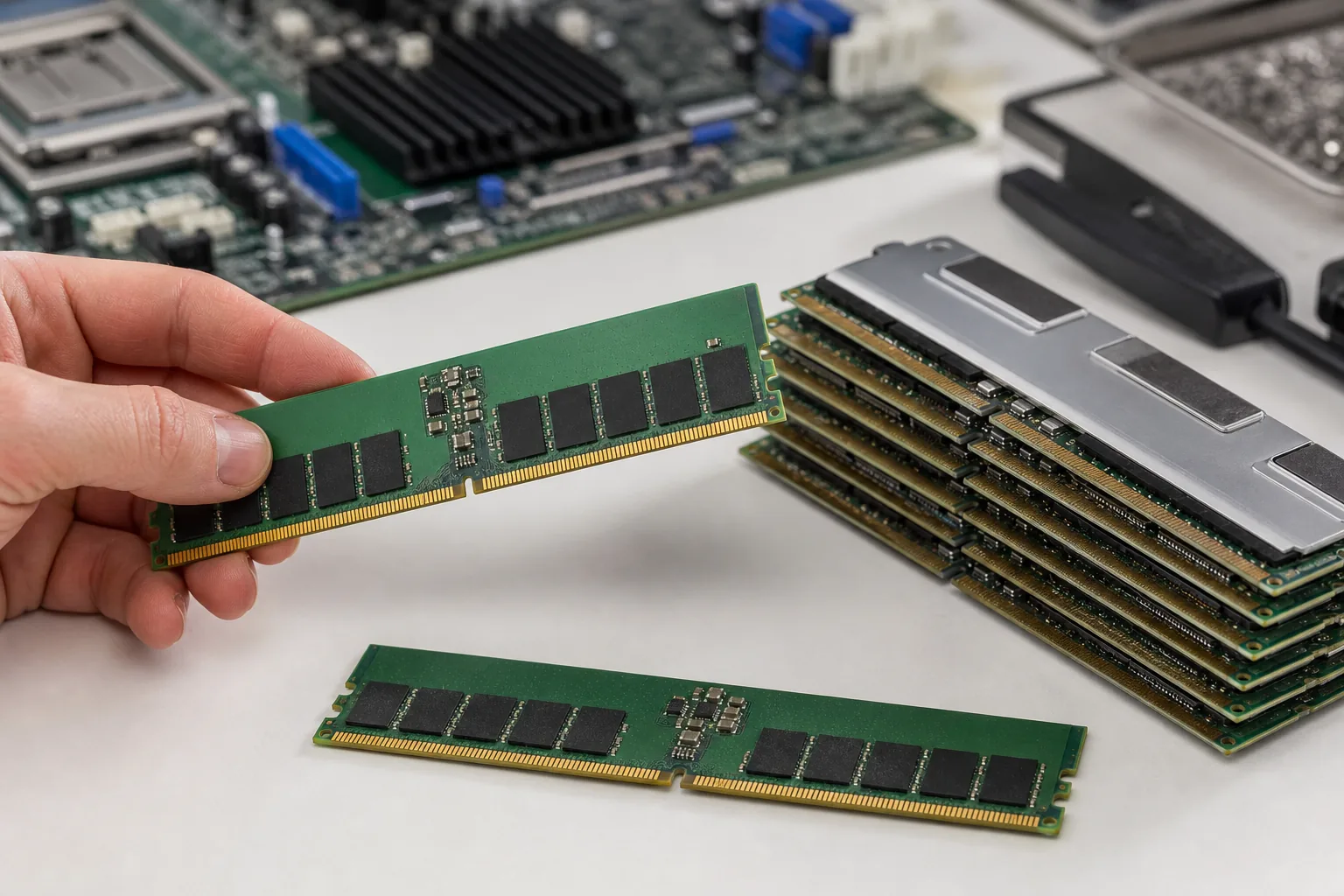
The world’s three largest memory chipmakers have reportedly allocated all of their 2027 DRAM and high-bandwidth memory production before the year has even begun. Taiwanese trade publication DigiTimes reported on or around 4–5 August that Samsung Electronics, SK hynix and Micron Technology have completed negotiations over next year’s capacity allocation, leaving their DRAM and HBM output sold out ahead of schedule.
The report is based on unnamed industry insiders rather than direct confirmation from the three companies. It was subsequently picked up by outlets including TweakTown and Phandroid, while Seeking Alpha also reported that DigiTimes had said much of the industry’s 2027 capacity-allocation negotiation was already complete.
If accurate, the claim points to an unusually tight memory market extending well beyond the shortages and price rises already affecting PCs, phones and servers in 2026. It also indicates that the fiercest competition is not for ordinary desktop RAM, but for the advanced memory used alongside AI processors in data centres.
AI demand is taking priority
According to DigiTimes, HBM and AI server applications could account for nearly 70% of available DRAM capacity. HBM is a specialised type of memory used in AI hardware, where processors need extremely high data throughput. The biggest cloud service providers and AI companies are reportedly being prioritised as suppliers decide where limited output should go.
That has a direct knock-on effect for the conventional memory used in laptops, desktops, phones and other consumer devices. The report says PC and handset manufacturers are expected to receive significantly smaller DRAM quotas in 2027 than they did in 2026.
ADATA chairman Simon Chen publicly confirmed the broader supply squeeze in comments reported by Phandroid. He said AI-related chips could consume nearly 70% of memory production, while industry estimates suggest overall supply may satisfy only 60% to 70% of what buyers want next year. Smaller companies without existing supply agreements could be left without memory supply altogether and may have to wait until 2028, according to that coverage.
Long-term supply agreements appear to be central to the current rush. DigiTimes says AI demand is pushing suppliers towards deals that lock in capacity for three to five years. Buyers are also reportedly using advance-payment deposits regardless of whether they have signed long-term agreements, giving memory makers more certainty around future production.
July and August are traditionally the months when companies secure memory supply for the following year. This time, however, the report suggests some prospective customers may simply miss out. It adds that some AI companies and hyperscalers have been paying substantially more while scrambling to obtain HBM supply.
NAND could be next
The pressure may not stop at RAM. DigiTimes also expects NAND flash capacity for 2027 to be fully booked by the end of August 2026. NAND is the storage technology found in SSDs and phone storage, so a similar shortage would affect not only how much RAM devices ship with, but also their storage capacity and price.
This would continue a pattern that has been building for several years. SK hynix had already said its DRAM, NAND and HBM capacity was fully booked through 2026, driven in large part by AI demand. In 2024, the company said its HBM chips were sold out for that year and almost sold out for 2025.
SK hynix’s Kim Kyu-hyun, head of DRAM marketing, said in a separate statement about 2026 capacity: “We’ve sold out our DRAM, NAND, and HBM capacity for next year.” That comment did not refer to 2027, but it shows how rapidly AI demand has tightened the market.
Samsung, SK hynix and Micron dominate the sector. Counterpoint Research put Samsung’s share of the DRAM market at 39% in the second quarter of 2026, followed by SK hynix at 26% and Micron at 25%. In HBM, TrendForce estimates that SK hynix holds more than half of the global market, while Samsung and Micron account for roughly a quarter each.
What it could mean for UK buyers
For shoppers, this is unlikely to appear as a single “memory shortage” surcharge on a receipt. Instead, it is more likely to show up in higher laptop and desktop prices, fewer aggressive promotions, or lower RAM and storage specifications at a given price point.
IDC had already warned that DRAM and NAND shortages could persist well into 2027, increasing costs for laptops and mini PCs. Many PC makers are expecting price rises of 15% to 20% from the second half of 2026, while Dell and Lenovo have said they will adjust prices by as much as 15%.
Phones are exposed too. IDC estimates that memory makes up around 10% to 20% of the cost of building a smartphone. Manufacturers can absorb that increase, raise prices, or make compromises elsewhere. Low-margin Android brands are considered more exposed, while Apple and Samsung may be better able to absorb some of the pressure because of their higher margins.
Memory prices have already climbed sharply. Samsung raised the price of 32GB DDR5 modules to $239 from $149 in September, while DDR5 contract pricing rose above $19.50 per unit from around $7 earlier in 2025. There are no confirmed UK pound prices tied specifically to the new 2027 allocation report, but its implication is clear: the hoped-for easing in 2027 may not arrive.
Why it matters
Memory is a core cost in everything from budget laptops to flagship phones, but suppliers are reportedly putting cloud providers and major AI firms first. That leaves PC and mobile makers competing for a smaller pool of conventional DRAM, which can mean higher retail prices, fewer discounts and cutbacks to RAM or storage configurations. The report does not set UK prices, but it suggests the memory pressure already visible during 2026 is unlikely to fade next year.