
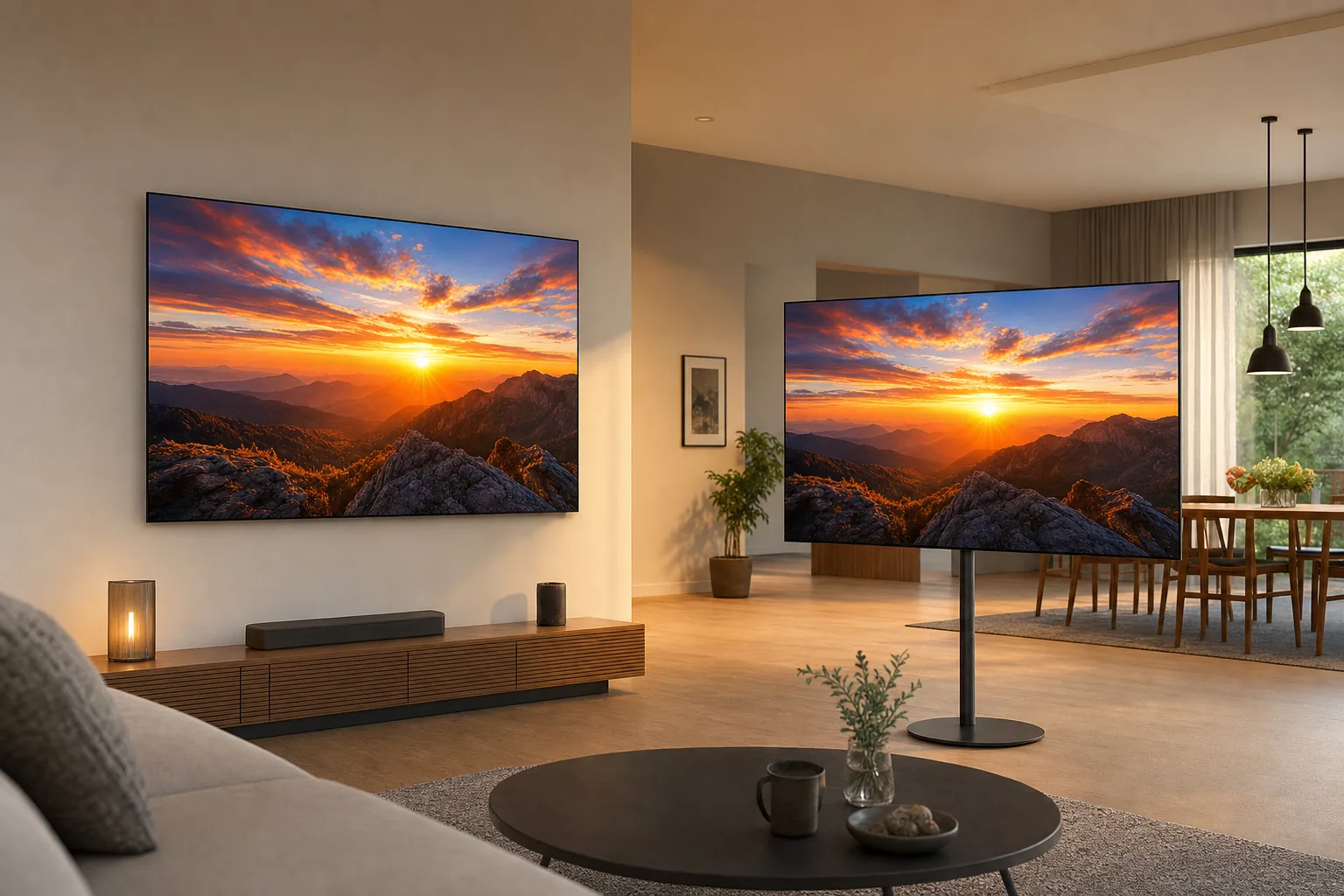
LG vs Samsung TV 2026: G6 vs S99H, C6 vs S90H — Which OLED Should You Actually Buy?
LG's brightest OLEDs ever meet Samsung's most refined QD-OLEDs in the closest flagship fight in years. We compare every 2026 model — G6, C6 and B6 against S99H, S90H and the Neo QLEDs — with the fine print, the spec tables and a straight answer for every budget and every room.

We link to the exact model on Amazon UK. Prices change often, so check the live price before you buy. As an Amazon Associate we earn from qualifying purchases.

Check the LG G6 — our Best TV of 2026 — on Amazon UK
Check today's price & availability on Amazon UK
1. The 2026 line-ups at a glance
Both brands sell a ladder of TVs, and the fastest way to understand the fight is rung by rung. Here's who lines up against whom in 2026:
| Tier | LG (WOLED) | Samsung (QD-OLED / OLED) | Who it's for |
|---|---|---|---|
| Flagship | G6 (£2,199+) | S99H (£2,499+) | Best picture, statement design, money-light |
| Sub-flagship | — | S95H | Flagship QD-OLED panel, plainer design, less money |
| All-rounder | C6 (£1,699+) | S90H (£1,699+) | The sweet spot most people should buy |
| Entry OLED | B6 (£1,499+) | S85H | Cheapest way into a genuine OLED |
| Bright-room LCD | QNED (Mini LED) | Neo QLED QN80H / QN70H | Sun-blasted rooms, big screens, less money |
| Lifestyle | — | The Frame / The Frame Pro | A TV that hangs as art when it's off |
| Halo / 8K | G6 97", M6 wireless | QN990H 8K | Because you can |
Two things fall straight out of that table. First, Samsung fields more variety — a lifestyle range (The Frame), a proper 8K flagship and a sub-flagship OLED that LG simply doesn't answer. Second, the head-to-head money fights are astonishingly close: G6 versus S99H at the top, C6 versus S90H in the middle, and B6 versus S85H at the entry. Those three duels are where this article spends most of its energy, because they're the decisions you'll actually face in a shop. But you can't referee them without understanding the one thing the marketing works hardest to blur: what's behind the glass.
2. WOLED vs QD-OLED: the panel tech that decides everything
LG and Samsung both make OLED TVs, and OLED's headline gifts — perfect per-pixel black, infinite contrast, superb motion — belong to both. But they get there with fundamentally different panels, and the differences are exactly where the 2026 fight is won and lost.
LG: WOLED, now with "Primary RGB Tandem 2.0"
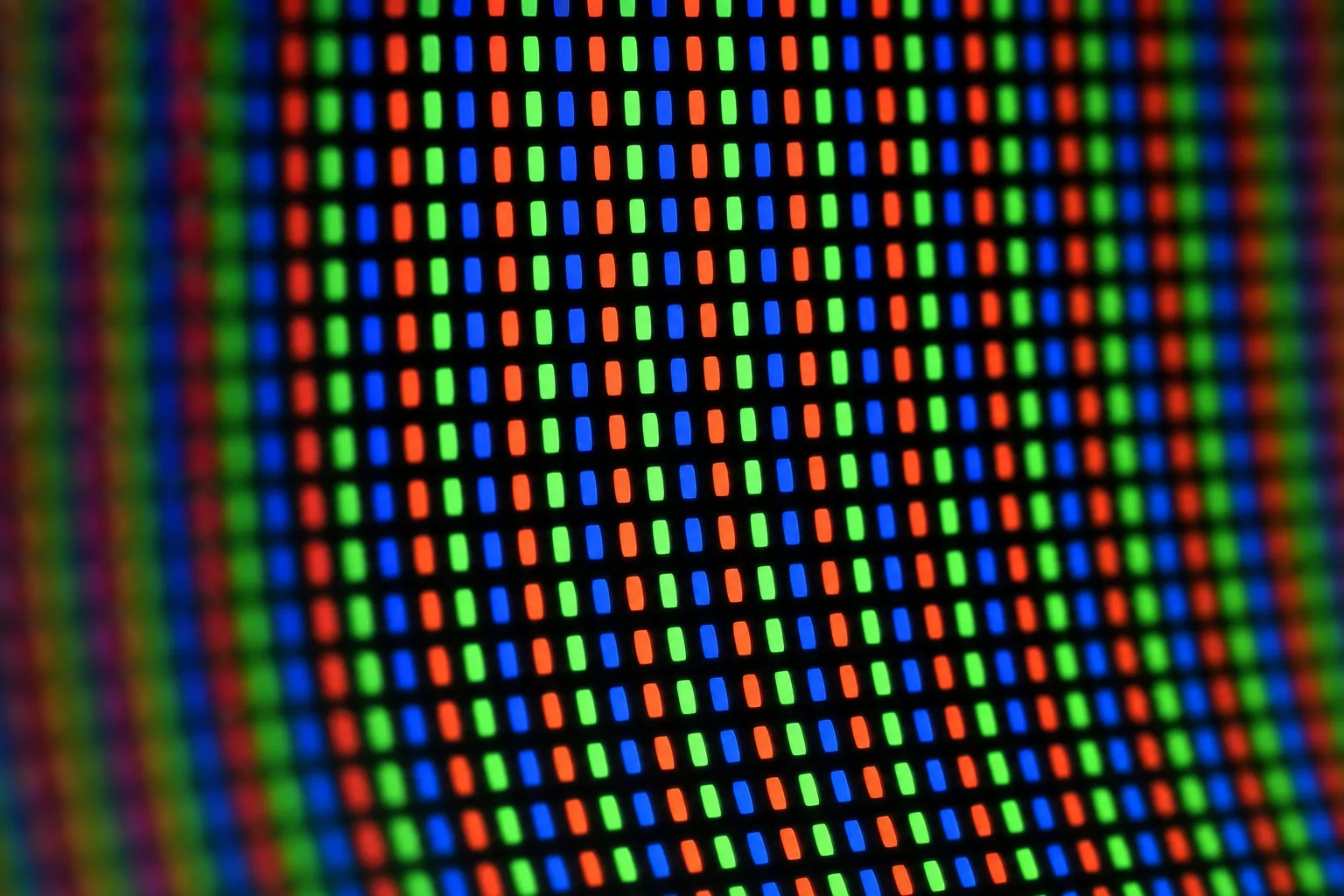
LG's OLED (built by LG Display) is a white-OLED design: white light generated by the pixels passes through red, green, blue and white colour filters. Its historic weakness was that the white sub-pixel, added for brightness, could slightly dilute colour at extreme saturation. For 2026 LG's flagship panels move to Primary RGB Tandem 2.0 — a four-layer "tandem" stack that lays down separate red, green and blue emitter layers rather than leaning on a colour filter alone. The payoff is enormous brightness headroom (LG claims up to 4,500 nits peak on the G6) and richer colour at those high brightness levels, because the colour is being generated more directly. It's the biggest single-generation OLED brightness jump we've seen from LG.
Samsung: QD-OLED, brightness by quantum dot
Samsung's flagship OLED (built by Samsung Display) is QD-OLED: a blue OLED layer excites a sheet of quantum dots that convert that energy into pure, vivid red and green. There's no white sub-pixel and no colour filter sapping saturation, so QD-OLED has long led on colour volume — its colours stay saturated as they get brighter — and on off-angle consistency, holding colour and contrast when you sit off to the side. Samsung pairs it with a matte, glare-killing coating ("Glare Free") that scatters reflections better than almost anything else on the market.
The one-line version
LG WOLED (Tandem 2.0) = the brightest highlights, Dolby Vision, and a slightly glossier picture that punches in a bright room. Samsung QD-OLED = the richest colour volume, the best off-angle viewing and the best matte anti-reflection, with HDR10+ instead of Dolby Vision. Hold those two sentences in your head and the rest of this guide is just detail and money.
Crucially, this only describes the flagships. Further down each range, the good panels get diluted — LG's cheaper sets use conventional WOLED without the Tandem stack, and Samsung quietly swaps some sizes from QD-OLED to standard WOLED. That "panel lottery" is section 12, and it's the part most buyers get burned by.
3. The flagship mega-table: G6 vs S99H
Bookmark this. Everything that should influence a 2026 flagship decision, side by side (65-inch models, UK):
| LG G6 | Samsung S99H | |
|---|---|---|
| Panel | WOLED, Primary RGB Tandem 2.0 (55–83") | QD-OLED (55–77"); WOLED on 83" |
| Peak brightness (claimed) | ~4,500 nits | ~2,700 nits (10% window) |
| Screen coating | Reflection-Free Premium (~0.3%) | Glare Free matte |
| Processor | Alpha 11 Gen 3 AI | NQ AI Gen 3 (Tizen) |
| Smart platform | webOS 26 | One UI Tizen / Vision AI |
| HDR formats | Dolby Vision, HDR10, HLG | HDR10+, HDR10, HLG (no Dolby Vision) |
| Gaming | 4× HDMI 2.1, 4K/120 (165Hz PC), VRR, G-Sync + FreeSync, ULL under 2.5ms | 4× HDMI 2.1, 4K/165Hz Motion Xcelerator, VRR, FreeSync |
| Design | One Wall gallery mount, slim; optional stand | FloatLayer metal frame, floats off wall |
| Connections box | Built-in | Wireless One Connect (option) |
| Audio | 4.2ch, WOW Orchestra with LG soundbars | 4.2.2ch OTS+, AI Sound Controller Pro |
| Sizes | 48, 55, 65, 77, 83, 97" | 55, 65, 77, 83" |
| UK price (55/65/77") | £2,199 / £2,999 / £3,999 | £2,499 / £3,299 / £4,299 |
| Buy | Check price | Check price |
Brightness figures are manufacturer claims measured on small windows; real-scene brightness is lower for both, and the two brands measure differently, so treat the numbers as a direction of travel rather than a like-for-like score. The G6's 48" uses an older panel (~2,400 nits) and the S99H's 83" is a WOLED panel, not QD-OLED — see section 12.
The table tells a clear story: on paper the G6 out-punches the S99H on brightness, format support and gaming, and undercuts it on price. Samsung's counter is everything numbers struggle to capture — colour volume, matte reflection-handling, off-angle consistency and a design that genuinely turns heads. The next four sections weigh those intangibles properly.
4. Brightness and reflections: 2026's plot twist
Here's the shock of the year: LG is now the brightness brand. For years Samsung's QD-OLED held the "brightest OLED" title; the G6's Tandem 2.0 panel takes it back, and not narrowly. In a sun-filled living room — the condition most British buyers actually watch in — the G6's extra headroom means HDR highlights (sunlight on water, a torch beam, a nebula) retain punch and detail that the S99H, for all its quality, renders a touch more gently.
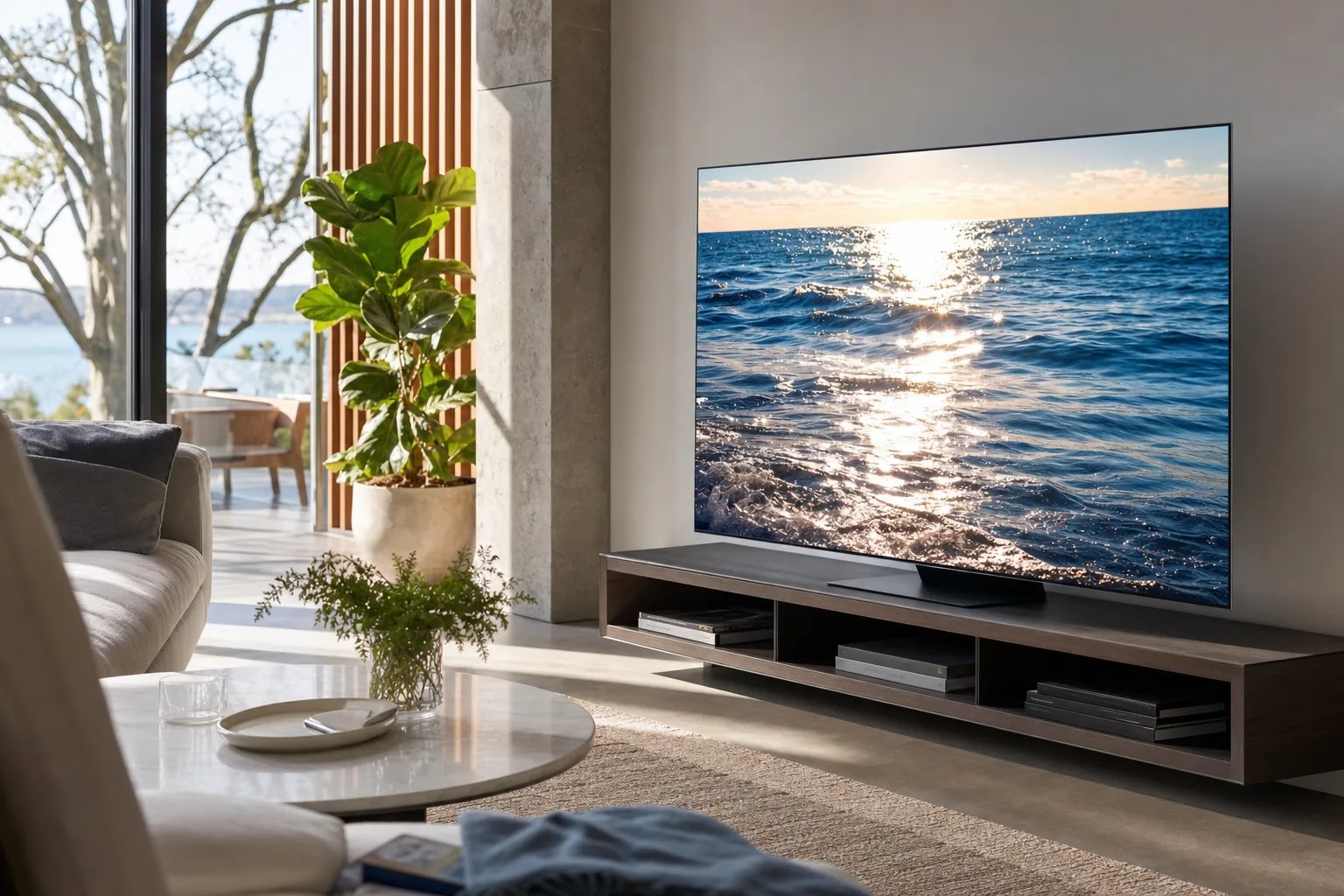
But brightness is only half of "watchable in daylight". The other half is reflections, and here Samsung's matte Glare Free coating remains a genuine marvel — it diffuses a bright window or a lamp into a barely-there haze rather than a mirror image. LG has closed the gap dramatically with its Reflection-Free Premium finish (a claimed 0.3% reflectance, among the lowest ever), and on the G6 it's excellent. The honest split most reviewers land on: the G6 wins the highlights, the Samsung wins the mirror test, and in a really punishing room — patio doors directly opposite the screen — Samsung's matte panel is still the one that disappears.
There is a taste element too. A minority of viewers find aggressive matte coatings slightly "raise" black level in a bright room or lend a faint texture to the picture; glossy fans prefer LG's punchier, more mirror-like pop in a dark room. Neither is wrong. If your room is bright and reflective, prioritise the coating and lean Samsung; if it's a mix and you crave HDR wallop, the G6's brightness is intoxicating.
5. Dolby Vision vs HDR10+: the format war that might decide it
This is the section that ends more arguments than any spec. LG and Samsung back opposite "dynamic HDR" formats, and the difference is not academic — it changes what you actually see on the services you already pay for.
- LG supports Dolby Vision (plus HDR10 and HLG), but not HDR10+.
- Samsung supports HDR10+ (plus HDR10 and HLG), but not Dolby Vision — on any TV, at any price. This is a deliberate, long-standing Samsung position.
Both formats do the same clever thing — carry scene-by-scene metadata so the TV tone-maps each moment optimally rather than using one setting for a whole film. The question is which one your content is actually mastered in, and here the picture is lopsided: Dolby Vision is everywhere — Netflix, Disney+, Apple TV+, most 4K Blu-rays and a growing slice of games — while HDR10+ appears mainly on Amazon Prime Video and a smaller set of discs. Both fall back gracefully to plain HDR10 when their preferred format is absent, so a Samsung never shows a "broken" picture; it simply doesn't get the frame-by-frame optimisation on Dolby Vision content, which is the majority of premium content.
Why this quietly favours LG in 2026
If you watch a lot of Netflix, Disney+, Apple TV+ or 4K Blu-rays, an LG set applies dynamic tone-mapping to that content and a Samsung set doesn't. On a bright, forgiving panel the visible gap is small — but it is real, it's free, and it lands on exactly the services most people use most. For many buyers this single line settles the flagship duel before brightness or colour is even discussed.
The counter-argument for Samsung: HDR10+ is royalty-free and slowly growing, Prime Video is huge, and QD-OLED's raw colour advantage can matter more to your eyes than the metadata format. All true. But if you forced us to reduce the format war to a buying rule, it's this: heavy streamers and disc collectors lean LG for Dolby Vision; Prime-first households and colour purists can happily ignore the whole issue and buy Samsung for the panel.
6. Gaming: the closest it has ever been
OLED is the gamer's panel — instant pixel response, no backlight blooming, per-object contrast — and in 2026 both brands bring a genuinely elite gaming spec. The common ground is large: four HDMI 2.1 ports on the flagships (still rare, and a real LG/Samsung advantage over rivals who fit only two), 4K/120Hz for PS5 Pro and Xbox, VRR, sub-10ms input lag and full HDR game modes.
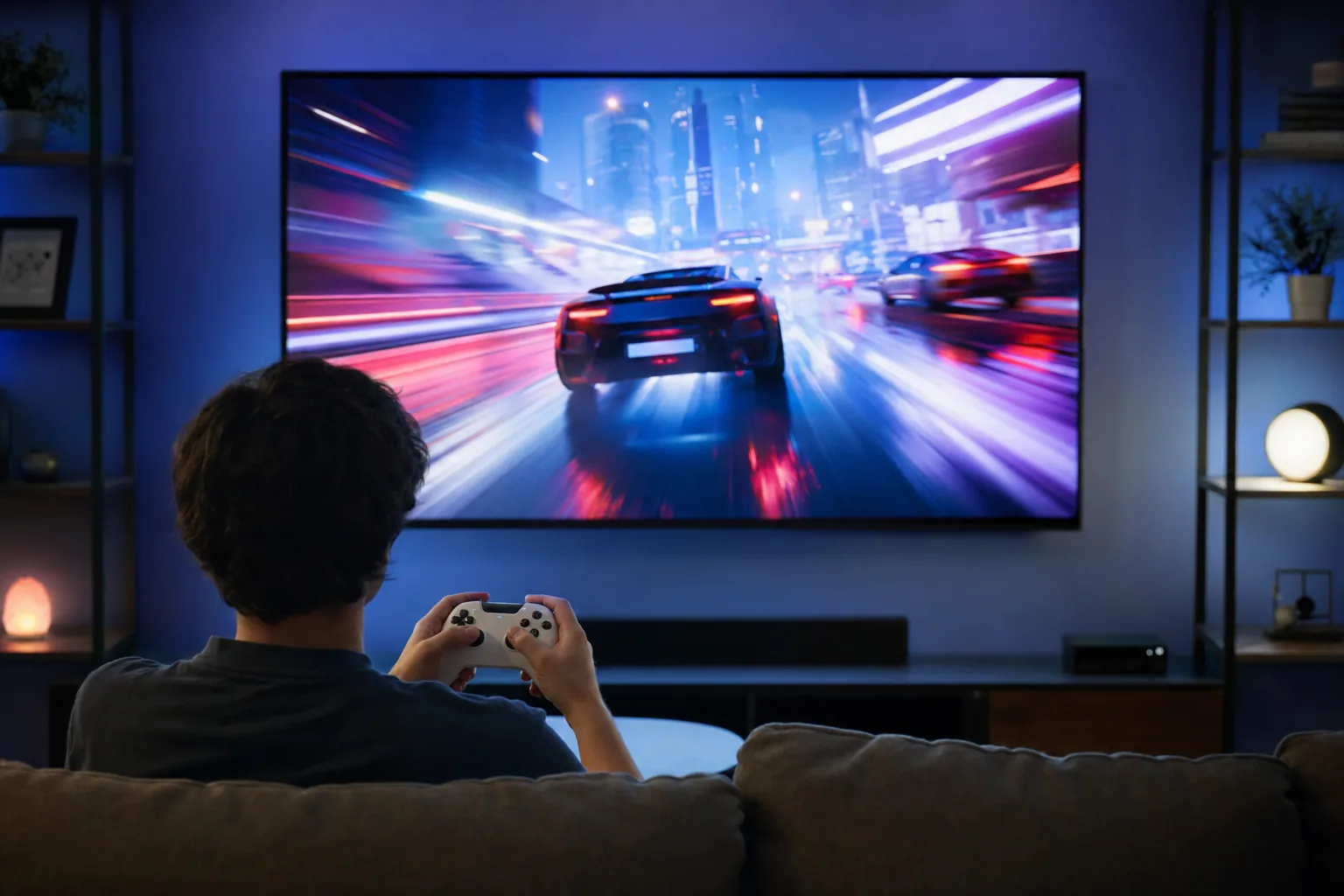
The tie-breakers go LG's way, narrowly:
- Refresh headroom: LG's 2026 OLEDs run up to 165Hz from a PC (consoles remain 120Hz on both); Samsung's flagships also reach 165Hz via Motion Xcelerator. Line ball, but LG's implementation and G-Sync + FreeSync dual certification give PC players the broadest compatibility.
- Cloud gaming: LG adds GeForce Now at 4K/120 baked into webOS — a console-grade experience with no console.
- Latency extras: LG introduces Bluetooth ULL (ultra-low-latency) audio at around 1ms, so a wireless headset stops lagging your game.
- Game dashboards: both have excellent ones (LG's Game Optimiser, Samsung's Gaming Hub with cloud services and a proper ultrawide 21:9 / 32:9 mode set that PC players love).
Verdict: if gaming is your headline use, LG has the deeper toolkit — the extra Hz, GeForce Now and ULL audio add up. But this is the closest the two have ever been, and a Samsung flagship will not leave any console gamer wanting. Console-only players can treat gaming as a near-tie and decide on picture and price instead.
7. Sound, design and living with it
Nobody should rely on any flat TV's speakers for film night — buy a soundbar and both brands reward you — but out of the box the Samsung flagship is the better-sounding set, with a 4.2.2-channel Object Tracking Sound system that genuinely steers effects around the panel, plus 2026's AI Sound Controller Pro that isolates dialogue intelligently. LG's built-in audio is competent and its trump card is WOW Orchestra, which plays the TV's speakers in concert with an LG soundbar rather than muting them — a real reason to keep an LG set in the LG family if you're adding a bar.
On design and day-to-day living, the two philosophies could not be more different, and this matters more than spec-hunters admit:
- Samsung S99H — the statement: the new FloatLayer construction makes the screen appear to hover in a slim metal frame, and the optional Wireless One Connect box means a single power cable to the panel with every HDMI, aerial and console lead hidden in a box you can place elsewhere in the room. For a wall-mount in a tidy living room, it's the cleanest install in the business.
- LG G6 — the flush gallery: LG's One Wall Design sits the panel almost flat to the wall with no gap, and ships with a slim stand in the box (Samsung's premium stands are sometimes extra). It's beautifully judged, though the connections are on the panel, so cable management is the traditional kind.
The install that decides it
Wall-mounting in a room where the sockets aren't behind the TV? Samsung's wireless box is a quiet killer feature. Standing it on a unit with a soundbar and everything close by? LG's in-box stand and WOW Orchestra tilt it back. Design isn't a tie-breaker here — for a lot of buyers it's the whole decision.
8. The flagship duel: LG G6 vs Samsung S99H, settled
The one most people came for. Two magnificent televisions; here's how to choose without agonising:
Buy the LG G6 if you want the brightest OLED highlights money can buy, you watch a lot of Dolby Vision content (Netflix, Disney+, Apple TV+, 4K Blu-ray), gaming is a headline use, or you simply want the most complete all-round performance for slightly less money. In 2026 the G6 is, by a nose, the best television most people can buy — it reclaimed brightness without giving up any of LG's traditional strengths, and it undercuts the Samsung at every shared size.
Buy the Samsung S99H if your room is bright and reflective (that matte coating is still the best in the business), you sit at wide angles or have a broad sofa, you value the richest colour volume, you're wall-mounting and the wireless One Connect box would transform your cable chaos, or you simply want the more beautiful object in the room. It is the more refined television — the one that feels like a design piece — and its picture, especially in a controlled room, is sublime.
Our call
For the widest range of British living rooms and viewing habits, the LG G6 is the 2026 flagship to beat — brightness, Dolby Vision and gaming, for less. The Samsung S99H is the connoisseur's and the design-lover's pick, and the right buy for bright, reflective rooms and wide seating. There is no wrong answer here; there's only your room and your streaming habits. If you want the same flagship QD-OLED panel for less and can live without the floating frame and wireless box, the S95H is Samsung's value route to this picture.
9. The value duel: LG C6 vs Samsung S90H (read this one)
If you're spending your own money rather than chasing the best possible picture, this is the most important section in the guide. The mid-range OLEDs — LG's C6 and Samsung's S90H — deliver the lion's share of the flagship experience for hundreds of pounds less, and for most people one of these two is the correct television.
| LG C6 | Samsung S90H | |
|---|---|---|
| Panel | WOLED; 77/83" ("C6H") get Tandem 2.0 | WOLED (some sizes QD-OLED — panel lottery) |
| Anti-reflection | Standard | Glare Free matte (new for 2026) |
| HDR | Dolby Vision, HDR10, HLG | HDR10+, HDR10, HLG |
| Gaming | 4× HDMI 2.1, 4K/120 (165Hz PC) | 4× HDMI 2.1, 4K/120 (up to 165Hz VRR) |
| Processor / OS | Alpha 11 Gen 3 / webOS 26 | NQ AI / One UI Tizen |
| UK price (65") | £2,499 | ~£2,699 |
The C6 is the classic all-rounder — the descendant of the famous "C" line that has been the default recommendation for years. It keeps LG's whole toolkit (Dolby Vision, four HDMI 2.1, the full gaming suite, webOS 26) and its 77 and 83-inch versions even inherit the flagship's Tandem panel. The S90H answers with Samsung's colour, and the big 2026 news is that Glare Free matte anti-reflection has finally trickled down to the S90 — a real upgrade for bright rooms at this price.
Our call
The LG C6 is our best all-rounder of 2026 — the most complete television per pound, with Dolby Vision and the deepest gaming spec, and it's typically a little cheaper than the S90H at matched sizes. Pick the Samsung S90H instead if you specifically want that matte glare-killing coating for a bright room, or if you prefer QD-OLED colour and can confirm your chosen size ships the QD-OLED panel (see the panel lottery, next-but-one). Either way, spending here rather than on a flagship is the smart-money move for the vast majority of buyers.
10. Best on a budget: B6 vs S85H — and when to skip OLED
Want a genuine OLED for the least money? The entry rungs are LG's B6 (from £1,499 at 55") and Samsung's S85H. Both give you OLED's headline magic — perfect blacks and pixel-level contrast — at the lowest price each brand offers. The compromises are brightness (the B6 tops out around 1,155 nits versus the G6's ~4,500) and processing polish, not the fundamentals. Between them the LG B6 is our budget OLED pick for the same reasons as its bigger siblings: Dolby Vision and the better gaming spec at the price. The S85H is a fine alternative if you're already in Samsung's ecosystem.
When a cheaper LCD is the smarter buy
OLED isn't always right. If your room is extremely bright, you want the biggest screen for the money, or you leave static logos on screen for hours (rolling news, a games HUD), a Mini LED LCD makes more sense: no burn-in worry, higher sustained full-screen brightness, and far more inches per pound. Samsung's Neo QLED QN80H / QN70H and LG's QNED are the sets to look at — you give up OLED's perfect blacks and get a superb, bright, big-screen picture for notably less. For a bright kitchen-diner or a sports-and-gaming den, a 75-inch Neo QLED can be a wiser buy than a 55-inch OLED at the same money.
One more budget truth: last year's flagship is often the real bargain. As the 2026 sets land, 2025's superb LG G5 and Samsung S95F get heavily discounted while stock lasts — frequently a better picture-per-pound than a brand-new mid-ranger. If you see a 2025 flagship at 2026 mid-range money, grab it.
11. The lifestyle wildcard: Samsung's The Frame (LG has no answer)
One whole category has no LG entry: the lifestyle TV. Samsung's The Frame — and 2026's step-up The Frame Pro — wraps a TV in a matte, art-panel finish and a real picture-frame bezel so that, switched off, it displays artwork and looks like a framed print on your wall rather than a black rectangle.

The standard Frame prioritises the art illusion over outright picture quality — it's a very good TV, not a flagship one, and you pay a small premium for the aesthetic. The 2026 Frame Pro narrows that gap significantly by fitting a Neo QLED Mini LED panel (much brighter, better contrast than the standard Frame) plus the wireless One Connect box, in sizes from 55 to 85 inches. It's the pick if you want the art-on-the-wall trick and a picture you'd happily watch a film on.
If a television that disappears into your décor matters to you — in a bedroom, a stylish living room, a holiday let — Samsung wins this by default, because LG doesn't make one. It's a genuine, and often overlooked, reason to choose Samsung that has nothing to do with panels or nits.
12. The panel lottery: the fine print that changes what you get
This is the section that saves you from buyer's remorse. Both brands vary the panel by screen size within the same model name, so the exact television you receive depends on the size you pick — and the marketing rarely spells it out.
| Model | Gets the premium panel | Gets a lesser / different panel |
|---|---|---|
| LG G6 | 55, 65, 77, 83" — Primary RGB Tandem 2.0 (~4,500 nits) | 48" — older WOLED (~2,400 nits) |
| LG C6 | 77, 83" ("C6H") — Tandem 2.0 (~3,700 nits) | 42, 48, 55, 65" — standard WOLED |
| Samsung S99H | 55, 65, 77" — QD-OLED | 83" — WOLED (LG Display panel) |
| Samsung S90H | Some sizes — QD-OLED (unconfirmed by size) | Other sizes — standard WOLED |
Read that table twice before you buy. The practical traps:
- The 48" G6 is not "a small flagship" — it uses an older, dimmer panel. If you want the Tandem 2.0 experience, 55" is the smallest that delivers it.
- The LG C6 only becomes a "brightness monster" at 77"+ (the C6H). At 55 and 65 inches it's a very good conventional OLED, not a Tandem one — which is completely fine, just not the same TV the big sizes are.
- The 83" Samsung S99H is a white-OLED, not QD-OLED — ironically an LG Display panel inside the Samsung. If you're buying the S99H specifically for QD-OLED colour, buy 77" or below.
- The S90H is a genuine lottery — Samsung hasn't cleanly confirmed which sizes are QD-OLED versus WOLED for 2026. If QD-OLED colour is your reason to buy it, check the specific size's panel before ordering, or buy from a retailer with a generous return policy.
None of the "lesser" panels are bad — they're all excellent televisions. The point is simply to match your expectations (and your money) to the panel you're actually getting, not the one the model name implies.
13. The 2026 awards: the best TV for every buyer
| Category | Winner | Runner-up / alternative |
|---|---|---|
| Best TV overall 2026 | 🏆 LG G6 | Samsung S99H |
| Best all-rounder (most people) | 🏆 LG C6 | Samsung S90H |
| Best on a budget (OLED) | 🏆 LG B6 | Samsung S85H |
| Best for bright, reflective rooms | 🏆 Samsung S99H (matte) | LG G6 (brightness) |
| Best for movies (Dolby Vision) | 🏆 LG G6 | LG C6 |
| Best for gaming | 🏆 LG G6 / C6 | Samsung S99H |
| Best colour / off-angle | 🏆 Samsung S99H (QD-OLED) | Samsung S95H |
| Best design / lifestyle | 🏆 Samsung The Frame / S99H | LG G6 (One Wall) |
| Best big-screen value (non-OLED) | 🏆 Samsung Neo QLED QN80H | LG QNED |
| Money no object | 🏆 LG G6 83"/97" | Samsung S99H 83" / QN990H 8K |
Check the LG G6 — our Best TV of 2026 — on Amazon UK
Price-checked at the time of writing; as an Amazon Associate we earn from qualifying purchases
If we were spending our own money: the LG C6 for the living room (all the performance most of us can perceive, none of the flagship tax), the LG G6 if the budget stretched and the room was bright, and the Samsung S99H the moment cable-free wall-mounting or that floating-frame design tipped the scales. Three different right answers — which is the whole point of this guide.
14. The 2026 price ladders (UK)
Launch RRPs for the models we've compared — useful as a map, but remember TVs fall fast: expect meaningful discounts within weeks, and big ones at Prime Day (mid-July), Black Friday and whenever the next range is announced.
| Model | 55" | 65" | 77"/83" |
|---|---|---|---|
| LG G6 (flagship WOLED) | £2,199 | £2,999 | £3,999 (77") |
| LG C6 (all-rounder) | £1,699 | £2,499 | £3,499 (77") |
| LG B6 (entry OLED) | £1,499 | £2,299 | £2,999 (77") |
| Samsung S99H (flagship QD-OLED) | £2,499 | £3,299 | £4,299 (77") / £6,099 (83") |
| Samsung S90H (value OLED) | ~£1,699 | ~£2,699 | — |
Where to buy (exact models, price-checked on Amazon UK)
- LG G6 (65") on Amazon UK — the flagship / best overall
- LG C6 (65") on Amazon UK — best all-rounder
- LG B6 (65") on Amazon UK — best budget OLED
- Samsung S95H (55") on Amazon UK — flagship QD-OLED (the UK S99H isn't on Amazon yet)
- Samsung S90H (65") on Amazon UK — value OLED alternative
- Samsung The Frame (65", 2026) on Amazon UK — the lifestyle pick
Prices and stock change constantly; as an Amazon Associate we earn from qualifying purchases.
Two money rules that survive every price cut: the mid-range set at a discount beats the flagship at RRP for value nearly every time, and last year's flagship, clearanced, beats this year's mid-ranger on raw picture. If a 2025 LG G5 or Samsung S95F appears at 2026 C6/S90H money, it's often the smartest buy on the page.
15. Buying by room: pick the TV your space actually needs
The best TV for you is mostly a function of your room, not the spec sheet. Match yours:
- Bright living room, big windows: Samsung S99H (matte coating disappears reflections) or LG G6 (brightest highlights). Below flagship money, Samsung S90H for its new Glare Free coating.
- Dedicated cinema / dark room: either flagship sings; LG G6 for Dolby Vision films, Samsung S99H for QD-OLED colour. Save money with the S95H or a clearanced 2025 flagship.
- Wall-mount where sockets aren't behind the TV: Samsung, for the wireless One Connect box — a single power lead to the panel. Genuinely transformative for a clean install.
- Console / PC gaming den: LG C6 or G6 — four HDMI 2.1, 165Hz PC, GeForce Now, ULL audio.
- Style-led room / bedroom / holiday let: Samsung The Frame (art when off) or The Frame Pro for a better panel.
- Sun-blasted kitchen-diner / sports & HUD gaming: a Mini LED LCD — Samsung Neo QLED QN80H or LG QNED — for brightness, big sizes and no burn-in worry, for less.
- Tight budget, want real OLED: LG B6, or hunt a discounted 2025 C5/S90F.
16. Six mistakes 2026 TV buyers keep making
- Buying the model name, not the panel. A 48" G6 and a 55" G6 are different televisions; a 65" S99H and an 83" S99H are different technologies. Check the panel for your size (section 12).
- Paying the flagship tax you can't see. In a normal room with normal content, the C6/S90H deliver most of what the flagships do. The upgrade money is often better spent on a soundbar.
- Ignoring the HDR format war. Heavy Netflix/Disney+/ Apple TV+/Blu-ray viewers quietly benefit from LG's Dolby Vision every night; it's free and it's on the content you actually watch.
- Forgetting reflections exist. The brightest panel still loses to a matte one if your sofa faces a window. Match the coating to the room before the nits to the spec sheet.
- Skipping a soundbar. No flat TV, LG or Samsung, sounds as good as it looks. Budget for audio from day one — it's the single biggest upgrade to the experience.
- Buying at RRP the week of launch. TVs only get cheaper. Unless you need it now, wait for the first sale — or buy the clearanced previous flagship and pocket the difference.
17. How we researched this comparison
This guide is a research-led buying comparison, not a lab report. We built it from manufacturer specifications for the 2026 ranges, cross-checked against the independent measurements and hands-on reviews of the specialist press — FlatpanelsHD, RTINGS, TechRadar, Tom's Guide, What Hi-Fi and others — whose calibrated testing we cite below and lean on wherever a number needed corroboration. Brightness figures are manufacturer claims on small windows unless stated; the two brands measure differently, so we treat them as directional, not like-for-like. Prices are UK launch RRPs at the time of writing and move constantly — we revisit these pages when the ladder shifts or a model's real-world reviews change our recommendation. No manufacturer had any involvement in, or sight of, this article, and our affiliate links never influence a verdict: the awards above put an LG at the top and a Samsung at the top of different categories precisely because the right answer depends on you, not on us.
Frequently asked questions
Is LG or Samsung better for TVs in 2026?
It's the closest it has ever been. LG's G6 is the best all-round pick for most people — brighter than ever thanks to its Primary RGB Tandem 2.0 panel, with Dolby Vision and the deepest gaming spec, usually for less money. Samsung's S99H is the pick for bright, reflective rooms (its matte coating is the best around), for the richest colour, for wide seating, and for design (the floating frame and wireless connections box). Neither is 'better' outright — it depends on your room and viewing habits.
Why doesn't Samsung support Dolby Vision?
It's a long-standing business decision: Samsung backs the royalty-free HDR10+ format instead and has never fitted Dolby Vision to any of its TVs. Both formats do the same job (scene-by-scene HDR optimisation), but Dolby Vision is far more widely used — Netflix, Disney+, Apple TV+ and most 4K Blu-rays — while HDR10+ appears mainly on Amazon Prime Video. Samsung TVs still play all that content beautifully in standard HDR10; they just don't get the dynamic layer on Dolby Vision titles.
What is the difference between the Samsung S99H and S95H?
In the UK the S99H is the flagship: FloatLayer metal-frame design that floats off the wall, wireless One Connect box option, the highest brightness and extras like AI Sound Controller Pro and the Art Store. The S95H sits one tier below with a plainer bezel-less design and a slim (wired) One Connect stand, but keeps the flagship QD-OLED panel across all its sizes — making it the value route to Samsung's best picture if you don't need the floating design or wireless box.
Is the LG G6 really brighter than Samsung's OLED now?
Yes — that's the big 2026 story. LG's new Primary RGB Tandem 2.0 panel pushes the G6 to a claimed ~4,500 nits peak, well above the Samsung S99H's ~2,700 nits, reversing years of Samsung holding the 'brightest OLED' crown. Real-scene brightness is much lower for both and the two measure differently, but in a bright room the G6's HDR highlights genuinely have more punch. Samsung's counter is its matte coating, which handles reflections better than LG's.
Which is the best value TV — do I need a flagship?
Most people don't. The mid-range LG C6 and Samsung S90H deliver the large majority of the flagship experience — perfect OLED blacks, excellent colour, four HDMI 2.1 ports, strong gaming — for hundreds of pounds less. The C6 is our best all-rounder of 2026. Spend the saving on a soundbar and you'll enjoy the result more than a bare flagship.
What is QD-OLED versus WOLED, in plain English?
Both are OLED, so both have perfect blacks. WOLED (LG) makes white light and filters it into colours, and in 2026 LG's 'Tandem' panels add extra emitter layers for huge brightness. QD-OLED (Samsung) fires a blue OLED through quantum dots to make pure red and green, which gives richer colour that stays vivid as it brightens, plus better viewing angles. Roughly: LG = brighter highlights and Dolby Vision; Samsung = richer colour, better off-angle and better matte reflections.
Are these TVs good for PS5 Pro and Xbox gaming?
Excellent — both brands' flagships fit four HDMI 2.1 ports (rare and valuable), do 4K/120Hz with VRR, and have sub-10ms input lag. LG edges it with up to 165Hz for PC, GeForce Now cloud gaming at 4K/120 and a 1ms Bluetooth audio mode, so LG is the gamer's pick if that's your headline use — but a Samsung flagship will satisfy any console player.
Should I buy an OLED or a cheaper Mini LED (QLED/QNED)?
Buy OLED for the best contrast, perfect blacks and the finest film and dark-room picture. Choose a Mini LED LCD — Samsung Neo QLED or LG QNED — if your room is very bright, you want the biggest screen for the money, or you leave static images on screen for hours (news tickers, game HUDs) and want zero burn-in worry. A 75-inch Neo QLED can be a smarter buy than a 55-inch OLED at the same price for a bright, casual room.
Does LG make anything like Samsung's The Frame?
No — this is a category Samsung has to itself. The Frame (and 2026's brighter Frame Pro, which adds a Neo QLED Mini LED panel) displays artwork behind a real picture-frame bezel and matte finish so it looks like framed art when off. If a TV that blends into your décor matters, Samsung wins by default because LG doesn't offer one.
Is the 83-inch Samsung S99H really not QD-OLED?
Correct, and it's a classic gotcha. The S99H uses QD-OLED at 55, 65 and 77 inches, but its 83-inch version switches to a white-OLED panel (made by LG Display). If you're buying the S99H specifically for QD-OLED colour, choose 77 inches or smaller; if you just want a superb big OLED, the 83-inch is still excellent.
When is the best time to buy a 2026 TV?
TVs launch at their highest price and only fall. The reliable discount windows are Prime Day (mid-July), Black Friday/Cyber Week, and the weeks around a new range announcement, when the outgoing models are cleared out. Unless you need it immediately, waiting for the first proper sale — or buying a clearanced 2025 flagship — saves real money.
If money were no object, which should I buy?
The LG G6 in 83 or 97 inches is the do-everything statement television — reference brightness, Dolby Vision, elite gaming. Choose the Samsung S99H 83-inch instead if design and reflection-handling top your list, or Samsung's QN990H 8K Neo QLED if you want the biggest, brightest halo set and future-proof resolution. But note our most useful finding: even unlimited budgets are often best served by the C6-class set plus a great soundbar, not the priciest panel on the shelf.
The bottom line: three right answers, one for your room
Truth one: the flagship fight flipped in 2026 — LG's Tandem panel made the G6 the brightest OLED going and kept Dolby Vision and the best gaming, so it's the best television most people can buy, and it costs less than Samsung's flagship. Truth two: Samsung didn't lose — the S99H answers with the best matte reflection-handling, the richest QD-OLED colour, the best off-angle picture and a floating, wireless-box design that no LG matches, making it the connoisseur's and the bright-room buyer's champion. Truth three: and this is the one that saves you the most money — the best TV for the vast majority of buyers isn't either flagship. It's the LG C6 (or the Samsung S90H), which give you almost the whole experience for hundreds less, with the change better spent on a soundbar.
So: bright, reflective room or design-led install — Samsung. Heavy streaming, gaming and best-brightness-for-the-money — LG. Spending sensibly — the C6. Money no object — the G6 at 83 inches, with a Samsung The Frame in the bedroom for good measure. Whichever way you lean, you're choosing between two of the finest televisions ever made — in 2026 there genuinely is no bad answer, only the right one for your four walls.
Sources & further reading: FlatpanelsHD 2026 TV line-ups · RTINGS TV reviews · TechRadar televisions · Tom's Guide TVs · What Hi-Fi? · TFTCentral panel analysis. Prices are UK RRPs at the time of writing and will change.
- LG G6 — our Best TV of 2026 —View on Amazon
 Samsung S99HView on Amazon
 LG C6 (65")View on Amazon
 LG B6 (65")View on Amazon
 Samsung S95H (55")View on Amazon
 Samsung S90H (65")View on Amazon