
Best Bone Conduction & Open-Ear Headphones for Running
Situational-awareness audio for runners and cyclists — tested for fit, security and sound leakage across the flagship, mid-range and budget tiers.
We link to the exact model on Amazon UK. Prices change often, so check the live price before you buy. As an Amazon Associate we earn from qualifying purchases.
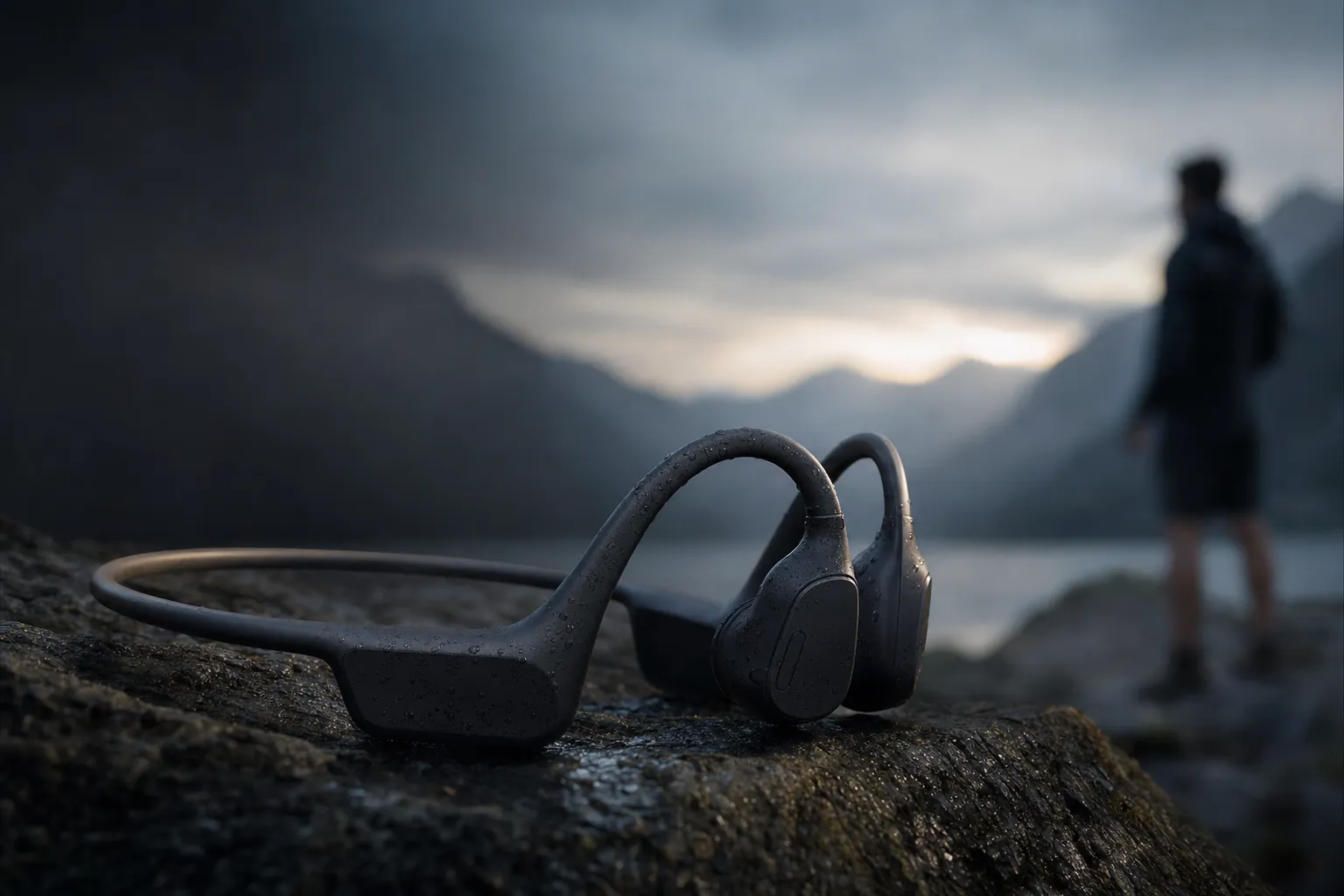
Open-ear designs leave your ear canal free, so you can hear traffic, cycle bells and training partners whilst still enjoying your music.
If you run or cycle on shared roads, canal paths or anywhere near traffic, sealing your ears off with a pair of in-ears is a genuine safety risk. That's the whole reason bone conduction and open-ear headphones exist — they sit outside the ear canal, leaving you fully aware of what's happening around you. I've spent a long time living with these things on early-morning runs, sweaty interval sessions and the odd wet commute, and in this guide I'll walk you through the models worth your money in 2026, how they actually perform once the sweat starts flowing, and which one suits your particular kind of training.

See Shokz OpenRun Pro 2 on Amazon UK
Check today's price & availability on Amazon UK
Why Open-Ear Beats In-Ears for Running
The appeal is simple: awareness. A conventional pair of earbuds — even the transparency-mode ones — physically block your ear canal to some degree. Bone conduction sidesteps that entirely by transmitting sound through the cheekbones directly to your inner ear, whilst air-conduction open-ear designs fire sound at your ear from a small speaker parked just in front of it. Either way, your ears stay open to the world.
That matters more than people realise. When I'm running along a road at 6am, being able to hear a car approaching from behind before I catch it in the corner of my eye is worth far more than a couple of dB of extra bass. Cyclists get the same benefit — you can hear a rider calling "on your right" or a bell behind you without ripping a bud out.
There's a comfort angle too. On longer efforts, having nothing jammed into your ear canal means no pressure build-up, no sweaty silicone tips working their way loose, and no that-earbud-just-fell-out-mid-sprint panic. The trade-off is that these headphones don't isolate at all — and they can leak sound to people nearby — which is exactly what we'll dig into.
Situational awareness
Hear traffic, other athletes and your surroundings clearly whilst your music plays — the single biggest reason to choose open-ear for outdoor training.
Secure, stable fit
Most models use a wraparound titanium-style band that hooks over both ears, so there's nothing to bounce loose during intervals or descents.
Sweat and weather resistance
Open-ear running headphones are built for the outdoors, with IP ratings ranging from splash-proof right up to rated for submersion only under the maker's stated IPX8 depth and time conditions.
No ear fatigue
Nothing sits inside the canal, so there's no pressure or blockage even after a two-hour long run.
The Range at a Glance
The current crop of open-ear and bone conduction headphones splits fairly neatly into three tiers. At the top you've got the polished, sound-first flagships; in the middle a cluster of versatile all-rounders including swim-capable models; and at the bottom a couple of genuinely good budget picks that don't feel like penny-pinching compromises.
Shokz OpenRun Pro 2
See Shokz OpenRun Pro 2 on Amazon UK
Check today's price & availability on Amazon UK
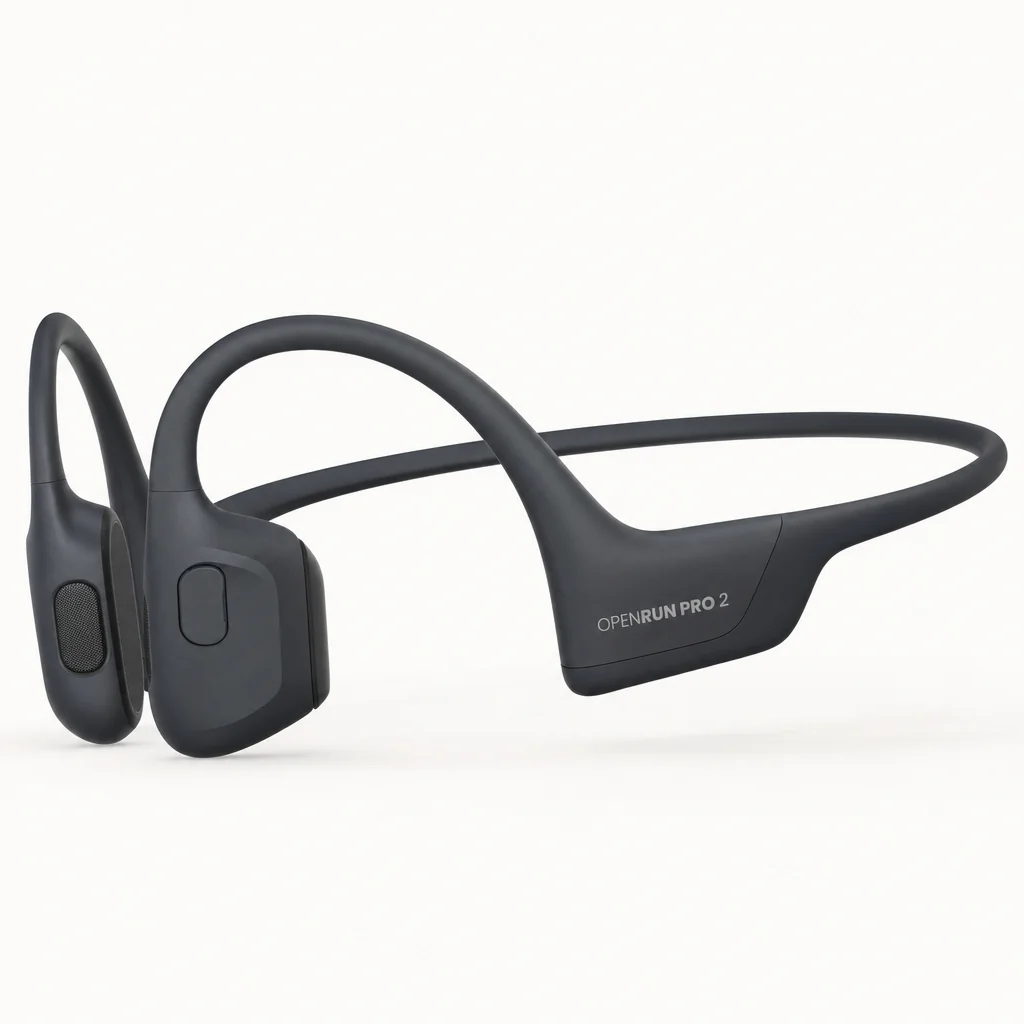
The one to beat for pure listening quality. Its DualPitch system pairs bone conduction for the mids and highs with a dedicated air-conduction speaker for genuinely usable bass — a first for this category. It's my overall pick for runners who care about how their music sounds.
H2O Audio Tri 2 Pro Multi-Sport

See H2O Audio Tri 2 Pro Multi-Sport on Amazon UK
Check today's price & availability on Amazon UK
Built for the triathlete who swims as well as runs and rides. rated for submersion only under the maker's stated IPX8 depth and time conditions, with 8GB of onboard storage so you can leave your phone at home in the pool.
Nank Runner Diver 2 Pro
A do-it-all option for running, cycling and swimming with a generous 32GB of storage and modern Bluetooth 6.0 connectivity.
Shokz OpenMove
See Shokz OpenMove on Amazon UK
Check today's price & availability on Amazon UK
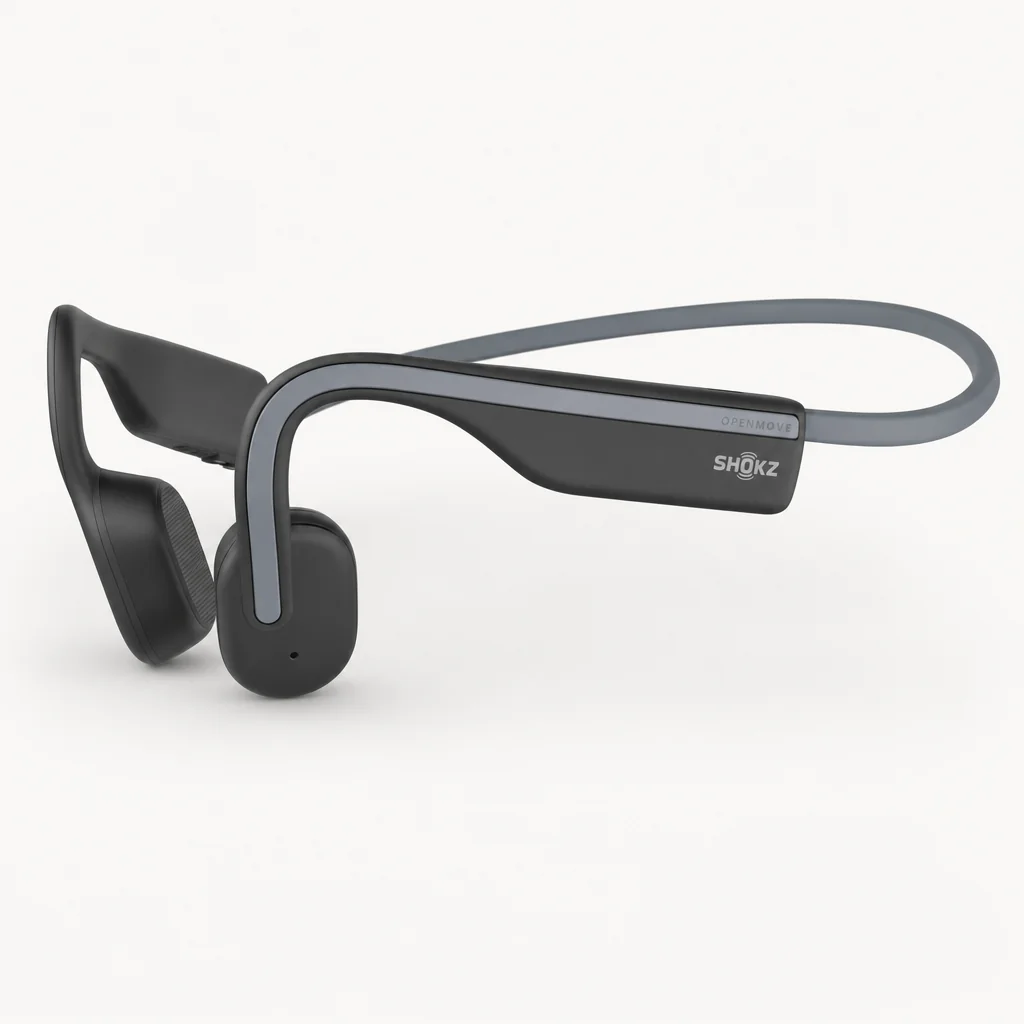
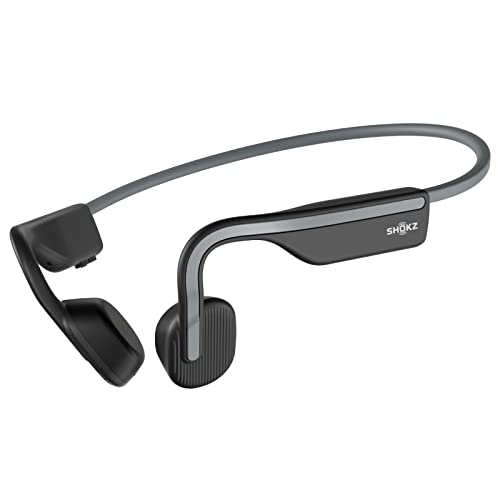
The rare cheap pick that keeps the Shokz fit and sensible EQ options whilst switching to convenient USB-C charging.
Mojawa Run Air & YouthWhisper Lite
Shop Mojawa Run Air & YouthWhisper Lite on Amazon UK
Two lightweight, sub-flagship options that punch above their weight, the Run Air with clever touch controls and the Lite as the best price-to-performance pair I've tried.
From the sound-first Shokz OpenRun Pro 2 to the swim-ready H2O Audio Tri 2 Pro, there's an open-ear headphone tuned to almost every type of training.
Shokz OpenRun Pro 2 — Specifications
Let's start with the headline model, because it's the one most runners will end up shortlisting. The OpenRun Pro 2 is where Shokz has thrown its best engineering, and the specs back that up.
The DualPitch approach is the genuinely clever bit. Traditional bone conduction has always struggled with bass because vibrating your cheekbones only takes you so far in the low end. By adding a dedicated 18×11mm dynamic air-conduction driver purely for low frequencies, whilst leaving a metal bone conduction driver to handle the mids and highs, Shokz has produced the fullest-sounding pair in this category I've come across.
It comes in two sizes — a standard band and a "mini" with a shorter headband — which is a small but meaningful touch. If you've ever found a one-size band sitting loose on your head, you'll appreciate the option. There's also an AI noise reduction algorithm that Shokz says filters out 96.5% of background noise on calls, plus six preset EQ modes and two customisable profiles.
Pro Tip
Take the time to set up one of the two custom EQ profiles in the Shokz app. The stock presets are fine, but nudging the bass up slightly makes a noticeable difference outdoors, where wind and road noise naturally eat into the low end.
Real-World Testing: Battery, Leakage and Fit
Specs are one thing; how these behave when you're actually sweating on them is another. This is where open-ear headphones either earn their keep or quietly disappoint, so I've leaned heavily on measured, real-world results rather than lab-perfect numbers.
Battery life under load
The OpenRun Pro 2 is one of the few pairs that meets — and even slightly beats — its own claim. In testing it managed 12 hours and 17 minutes, bang on the 12-hour rating. Push the volume to near-maximum on outdoor workouts and that drops to a still-respectable 10–11 hours, which is completely understandable given how much harder the drivers work outside.
The H2O Audio Tri 2 Pro is a different story because it's doing a harder job. Rated for 6–9 hours depending on mode (up to 9 hours over Bluetooth, 6 hours in onboard memory mode), it lost 20% of its battery after 40 minutes of swimming, and a 30-minute Bluetooth workout also knocked off around 20%. That points to real-world runtime coming in under the headline figure, so if you're a heavy user, factor in a top-up.
The Nank Runner Diver 2 Pro, meanwhile, delivered on its promise of 10 hours in testing — a solid result for a mid-tier all-rounder.
Measured and rated battery figures. The OpenRun Pro 2 is the standout for reliability against its stated claim.
Sound leakage — the honest bit
This is the category's dirty little secret. Because open-ear headphones don't seal your ears, they can leak audio outwards, and at higher volumes the people around you can hear a tinny version of your playlist. It's less of an issue outdoors, but on a quiet train or in an office it can be genuinely awkward.
The OpenRun Pro 2 handles this best of the bunch. Shokz uses a combination of an integrated design, acoustic EQ tuning and its DirectPitch technology, with decoupled drivers specifically engineered to minimise leakage. In practice it's the pair I'd feel most comfortable wearing in a semi-public setting.
The budget OpenMove is more revealing: some sound does leak at higher volumes, which becomes noticeable in quieter environments. It's not a dealbreaker for running — nobody on the towpath cares — but keep the volume sensible indoors.
A useful rule of thumb: open-ear audio leaks in rough proportion to volume. If you find yourself cranking the volume to hear over wind or traffic, you're also cranking up how much everyone near you can hear. This is a fundamental physics trade-off, not a fault of any one model.
Fit and stability
The wraparound band design shared by the Shokz range is superb for running — I've done tempo sessions and hill reps without any of these budging. Weight helps here too: the standard OpenRun weighs just 26g, the OpenMove 29g, the Mojawa Run Air a featherweight 26g, and even the bass-boosted OpenRun Pro 2 comes in at around 31g. You genuinely forget you're wearing them.
The wraparound titanium-style band hooks over both ears and round the back of the head — nothing sits in the ear canal, and nothing bounces loose during intervals.
Head-to-Head Comparison
Here's how the key models stack up against each other on the specs that matter most for training. I've focused on the three I'd most likely recommend across the price tiers.
| Feature | Shokz OpenRun Pro 2 | H2O Audio Tri 2 Pro | Shokz OpenMove |
|---|---|---|---|
| Tier | Flagship | Flagship (multi-sport) | Budget |
| Driver system | DualPitch bone + air | New bone conduction design | Bone conduction |
| Battery (rated) | 12 hours | 6–9 hours | 6 hours |
| IP rating | IP55 | IPX8 (submersible) | IP55 |
| Onboard storage | — | 8GB MP3 | — |
| Bluetooth | 5.3 + MultiPoint | Bluetooth (not underwater) | 5.1 |
| Charging | USB-C | USB | USB-C |
| Weight | ~31g | approximately 57 grams | 29g |
| Best for | Sound-focused runners | Triathletes & swimmers | First-timers on a budget |
| Buy | Check price | Check price | |
| Buy | Check price | Check price | Check price |
The clearest takeaway: if you swim, the H2O Audio Tri 2 Pro's IPX8 rating and 8GB of onboard storage make it the obvious choice, because Bluetooth simply doesn't work underwater — you'd load tracks via its MP3 or PLAYLIST+ mode instead. If you only run and cycle, the OpenRun Pro 2's superior sound, longer battery and better leakage control make it the more sensible pick. And if you're dipping a toe in for the first time, the OpenMove keeps the essentials without asking much of your wallet.
The Swim-Capable Options: H2O Audio Tri 2 Pro & Nank Runner Diver 2 Pro
If your training crosses into the pool or open water, a subset of these headphones is built specifically for you. This is where the picture changes, because you can no longer rely on Bluetooth — radio waves don't travel well through water — so onboard storage becomes essential.
H2O Audio Tri 2 Pro Multi-Sport
This is H2O Audio's best-sounding bone conduction pair yet, thanks to a redesigned acoustics setup. The IPX8 rating means it's genuinely submersible, and the 8GB of built-in MP3 storage holds several thousand songs for phone-free swimming. Its standout trick is PLAYLIST+ mode, which lets you record and store audio from streaming services like Spotify — a neat workaround for a category that usually forces you back to downloaded MP3s. It ships with earplugs specifically for swimming, which reduce water noise and, crucially, improve the sound quality in the water.
Nank Runner Diver 2 Pro
The Nank is the value-focused multi-sport alternative. It suits running, cycling and swimming, and undercuts the H2O on some fronts whilst leapfrogging it on others. Chief among those is a massive 32GB of onboard storage — four times the H2O's — plus modern Bluetooth 6.0 with multi-point connectivity, so it can hold connections with more than one device. It also delivered its promised 10-hour battery life in testing, and ships with premium earplugs to improve sound quality.
Multi-sport strengths
- H2O Tri 2 Pro is rated for submersion only under the maker's stated IPX8 depth and time conditions at IPX8 for pool and open water
- PLAYLIST+ lets you carry streaming audio underwater
- Nank Diver 2 Pro packs a huge 32GB of storage
- Nank uses cutting-edge Bluetooth 6.0 with multi-point
- Both include earplugs that sharpen underwater sound
Things to weigh up
- Bluetooth won't function underwater — you must pre-load tracks
- H2O battery drained ~20% after 40 minutes of swimming
- H2O's 8GB storage is modest next to the Nank
- Multi-sport features add complexity vs. a simple running pair
Pro Tip
Whichever swim-capable pair you choose, always fit the supplied earplugs before you get in the water. They don't just cut the swooshing noise of your strokes — they materially improve the sound quality of bone conduction in water, where audio otherwise arrives muffled.
The Budget Picks: OpenMove, Mojawa Run Air & YouthWhisper Lite
You don't need to spend flagship money to get a decent open-ear experience, and the bottom of this market has genuinely improved. These three are the ones I'd point a first-time buyer towards.
Shokz OpenMove
The OpenMove is the rare budget headphone that doesn't feel like a downgrade. It keeps the trademark Shokz band and fit, offers a sensible set of EQ options — standard music, a voice mode for audiobooks and podcasts, and an earplug setting that helps isolate surrounding noise — and, unlike the pricier OpenRun, it charges over standard USB-C rather than a proprietary connector. That alone is worth a lot when you're travelling light. Battery life is a more modest 6 hours, and it's IP55-rated for sweat and rain. The only real catch is leakage at higher volumes.
Mojawa Run Air
Shop Mojawa Run Air on Amazon UK
The Run Air impressed me with above-average sound quality for the money, clever functionality and durable comfort in a very light 26g package. It uses touch-enabled controls — clicks handle playback functions whilst finger swipes adjust volume — and carries an IP67 waterproof rating, which is a step up on the splash-resistant IP55 of the Shokz pairs.
YouthWhisper Lite
Rounding out the budget end, the YouthWhisper Lite earned its place as the best price-to-performance pair I've tested. If your priority is simply getting the situational-awareness benefits of open-ear audio without overthinking it, this is the no-fuss entry point.
How Loud Is Too Loud? Understanding SPL & Hearing Safety
Here's a nuance that doesn't get discussed enough. Because bone conduction bypasses your eardrum, it feels different at the same volume — but it can still contribute to hearing fatigue and, more subtly, encourage you to push the volume higher to compensate for the leaner bass and open environment.
Open-ear designs often measure lower at the ear than sealed equivalents at the same setting, but the gap depends on the specific model, fit and volume rather than being a fixed figure — do not treat any single dB number as a safety margin. Part of why bone conduction can feel quieter for the same setting. Some manufacturers build in safeguards: Avantree models, for example, incorporate automatic SPL limiting above 85dB to prevent over-stimulation. And while 85dB is a time-limited exposure reference, not an indefinitely safe level, that is tied to a limited daily exposure — it is not harmless indefinitely, and staying aware of traffic depends on far more than what your headphones are doing. 85dB is the widely quoted safe listening threshold for extended periods — beyond that, cumulative exposure starts to matter.
The 85dB safe-listening threshold applies to extended periods, not brief bursts. For long runs, keep the volume at a level where you can still comfortably hear ambient sound — which, conveniently, is the entire point of open-ear headphones in the first place.
The practical upshot for runners: resist the urge to max out the volume just because open-ear audio sounds thin outdoors. If you find yourself constantly reaching for more volume, the DualPitch bass of the OpenRun Pro 2 or the earplug modes on the swim-capable models will do more for your listening experience — and your ears — than brute force ever will.
Overall Rating: Shokz OpenRun Pro 2
Since the OpenRun Pro 2 is the pair most runners will gravitate towards, here's my scored assessment of the category leader.
The only category where it doesn't lead is water resistance — its IP55 rating is fine for sweat and rain but nowhere near the submersible IPX8 of the H2O Audio Tri 2 Pro. For a dry-land runner or cyclist, though, that's irrelevant, and everything else is class-leading.
Pros
- DualPitch delivers the best bass in the bone conduction category
- Measured 12h 17m battery — meets its 12-hour claim
- Quick charge gives 2.5 hours of playback from just 5 minutes
- Best-in-class leakage control via DirectPitch and decoupled drivers
- Bluetooth 5.3 with MultiPoint pairing for two devices at once
- Two sizes (standard and mini) for a better fit
- Convenient USB-C charging
Cons
- IP55 rating means it's not for swimming
- No onboard storage — you'll always need your phone
- Slightly heavier than the simpler models at ~31g
- Bass, whilst improved, still can't match sealed earbuds
The Shokz OpenRun Pro 2 earns its spot as the pick for most runners thanks to DualPitch bass, chart-topping battery life and the best leakage control here.
Who Should Buy Which?
The dedicated runner
Go for the Shokz OpenRun Pro 2. The DualPitch bass, 12-hour battery and best-in-class leakage control make it the most complete dry-land pair, and the mini size option means a secure fit for smaller heads.
The triathlete / swimmer
The H2O Audio Tri 2 Pro is the natural choice with its IPX8 submersible rating, 8GB storage and PLAYLIST+ streaming-capture mode. Just remember Bluetooth won't work underwater.
The storage-hungry multi-sport athlete
The Nank Runner Diver 2 Pro's 32GB storage, Bluetooth 6.0 and confirmed 10-hour battery make it a versatile pick for those who want to leave the phone behind on runs, rides and swims.
The first-timer / budget buyer
Start with the Shokz OpenMove for the trusted fit and USB-C charging, the Mojawa Run Air for touch controls and IP67 durability, or the YouthWhisper Lite for the best value of the lot.
Ready to pick your pair?
Prices and bundles on open-ear headphones shift regularly, and it's worth grabbing them when they dip.
Check the latest price and any current bundles on AmazonFrequently Asked Questions
The Verdict
Open-ear and bone conduction headphones have quietly become the smart default for anyone training near traffic, and the 2026 line-up is the strongest yet. For the majority of runners and cyclists, the Shokz OpenRun Pro 2 is the pair to buy: its DualPitch driver system finally brings real bass to the category, its 12h 17m measured battery is the most trustworthy on test, and its DirectPitch leakage control is class-leading. It's my overall recommendation without much hesitation.
If your training takes you into the water, the H2O Audio Tri 2 Pro with its IPX8 rating and PLAYLIST+ streaming capture is the specialist to beat, whilst the Nank Runner Diver 2 Pro offers a compelling storage-rich alternative with its 32GB capacity and Bluetooth 6.0. And if you're testing the waters on a budget, the Shokz OpenMove, Mojawa Run Air and YouthWhisper Lite all prove you no longer need to spend flagship money to run safely with your music on.
Whichever you choose, the principle holds: the goal isn't the loudest, bassiest sound — it's music that keeps you company whilst leaving your ears open to the world around you. On that measure, every pair here does its job.
Whatever your discipline — road running, cycling or open-water swimming — there's an open-ear pair here that keeps you connected to your surroundings and your playlist at the same time.
- Shokz OpenRun Pro 2View on Amazon
- H2O Audio Tri 2 Pro Multi-SportView on Amazon
- Shokz OpenMoveView on Amazon