
EU Top Court Makes Google's €4.1bn Android Fine Permanent
Europe's highest court has dismissed Google's final appeal, cementing an eight-year legal battle over anticompetitive Android practices with a €4.125 billion penalty that cannot be challenged further.
What you need to know
- The EU Court of Justice dismissed Google and Alphabet's final appeal on 2 July 2026, making the €4.125bn Android fine legally permanent
- Google was found to have abused its dominant position by forcing manufacturers to pre-install Search and Chrome as a condition of accessing the Play Store
- The ruling unlocks follow-on damages claims across 13 European Economic Area courts, with no structural ceiling on their aggregate value
Google's final appeal thrown out as EU apex court delivers definitive verdict
Europe's highest court ended Google's eight-year legal battle on Thursday, 2 July 2026, dismissing the company's last remaining challenge to a €4.125 billion antitrust fine over the way it used the Android operating system to entrench its dominance in mobile search. The ruling, issued by the EU Court of Justice's Second Chamber in Case C-738/22 P, is legally binding and admits no further appeal.

The court was unambiguous in its conclusion, stating: "The appeal brought by Google and its parent company Alphabet against the judgment of the General Court is dismissed, thereby confirming the penalty imposed for Google Search's abuse of a dominant position in the context of the Android operating system."
Alphabet's shares fell approximately 1% in premarket trading on the day of the ruling — a modest reaction to a fine that, while enormous in nominal terms, represents less than 3% of the company's annual profit. But the headline figure is arguably the least consequential part of what happened on Thursday.
How the case got here
The European Commission opened its investigation in 2015 and handed down what was then a record-breaking €4.34 billion penalty in 2018. The core allegation was that Google had required smartphone manufacturers to pre-install Google Search and Chrome as a condition for receiving a licence to distribute the Google Play Store. Regulators also found that Google blocked manufacturers from shipping devices that ran rival Android forks. With Google holding over 80% market share in general search across several European countries, regulators concluded the arrangement had effectively insulated its position from meaningful competition.
In September 2022, the EU General Court largely upheld those findings but trimmed the fine marginally to €4.125 billion. Google appealed to the Court of Justice — Europe's apex judicial authority — and lost comprehensively. The fine is now fixed.
Google says it already adapted — but liability stands
A Google spokesperson told CNBC: "Android provides more choice for everyone and supports thousands of businesses. This judgment fails to recognize our significant investment to ensure Android remains open, interoperable and free."
The company added: "In any event, we adapted our agreements to comply with the initial decision back in 2018 and we remain focused on continued innovation and openness for our users, partners and developers."
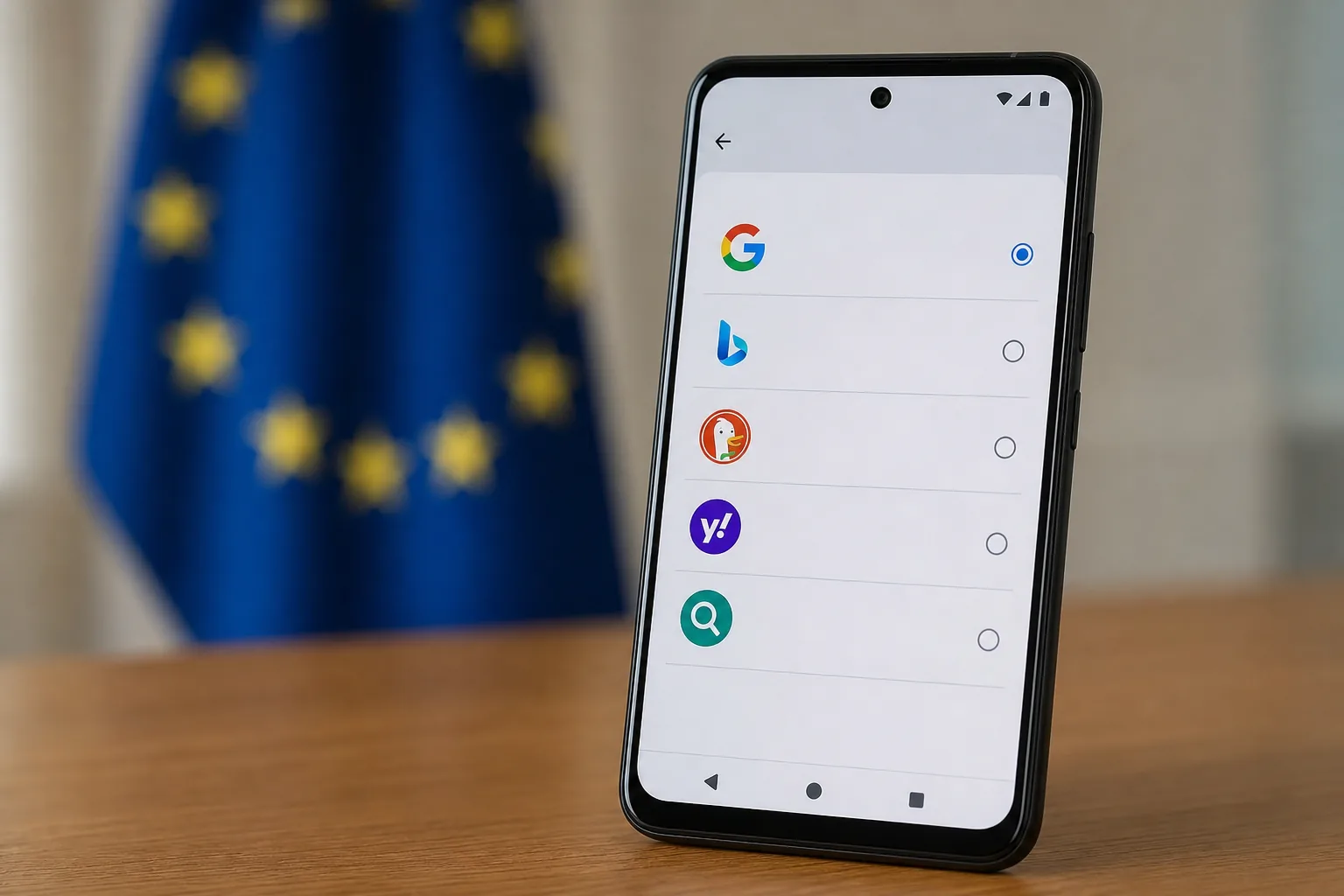
Google has not announced any further operational changes following Thursday's ruling. The European Commission had previously required the introduction of choice screens on European Android devices — prompting users to select a default search engine during setup. The ECJ ruling confirms, however, that this remediation did not erase liability for the historical conduct. The original fine stands in full.
The follow-on damages wave that matters more
Consumer groups welcomed the judgment. The European Consumer Organisation (BEUC) said the decision sent a clear signal that dominant technology companies could not use their market power to restrict competition or limit consumer choice. FairSearch, the group that originally filed the complaint in 2013, called it "an important victory in Europe's highest court against Google's anti-competitive conduct in mobile markets."
Those reactions, while welcome, point to what legal observers consider the ruling's more significant long-term consequence. Under the EU Antitrust Damages Directive, any competitor that suffered provable losses because of Google's Android conduct between 2011 and 2018 can now bring a follow-on damages claim in any of the 13 European Economic Area national courts covered by the original Commission decision. Crucially, claimants need not re-prove that Google broke the law — the ECJ ruling serves as binding proof of the underlying violation. They need only demonstrate how much they lost. There is no structural ceiling on the aggregate value of such claims.
A taste of what that can mean arrived just one day earlier. On 1 July 2026, the Patent and Market Court in Stockholm ordered Google to pay Klarna's price-comparison unit PriceRunner approximately $1.97 billion in damages — including interest — for illegally favouring its own Google Shopping service in search results. That case concerned a separate infringement but operated through precisely the same damages mechanism. It is the largest antitrust damages award in Swedish history.
Critically for UK readers, the PriceRunner judgment directly included harm suffered in the British market, covering Google's conduct in Britain from January 2008. The court awarded £950 million in principal damages and a further £300 million in accrued interest for UK losses alone. Google said it disagrees with the decision and will consider its legal options; PriceRunner's counsel told Reuters that any appeals process could take "over a year and likely years," meaning payment remains some way off.
Other follow-on cases are already under way. A German court previously ordered Google to pay approximately €465 million to price-comparison site Idealo and €107 million to another German platform. Italy's Moltiply Group is seeking €2.97 billion linked to its Trovaprezzi.it service. Further proceedings are active in Britain.
Google's wider EU antitrust bill
Thursday's ruling brings Google's confirmed EU competition fines to close to €11 billion across three separate cases: €2.42 billion for its Google Shopping comparison service (2017), €4.125 billion for Android (2018, confirmed 2026), and €2.95 billion for advertising technology imposed in 2025. That figure does not include any follow-on damages awards, which could ultimately dwarf the original penalties.
Google also faces additional scrutiny under the EU's Digital Markets Act, including a pending compliance deadline later this month requiring it to give rival AI services equal treatment in certain product placements, and a separate investigation into whether it demotes news publishers' content in search results. In the United States, the company filed an appeal in the DC Circuit on 22 May 2026 challenging a ruling that it illegally maintained a search monopoly through exclusive default-placement payments — a practice structurally similar to the conduct confirmed as unlawful by the ECJ this week.
What changes for Android users
For most people picking up an Android phone in the UK this weekend, the practical difference will not be immediate. Google's services remain dominant because they are widely used and, for many, genuinely preferred. However, the ruling reinforces the legal and regulatory framework compelling manufacturers to offer genuine search engine choices during device setup, while increasing competitive pressure on pre-installed browsers and app stores over time. The more tangible near-term consequence may be felt by businesses rather than individuals — with damages cases across multiple European courts now significantly easier to pursue, the cost of having defaulted consumers away from rivals is about to become considerably more concrete for Google's bottom line.
Why it matters
For UK Android users, the ruling legally confirms that arriving at Google Search and Chrome by default was never an accident — it was an unlawful arrangement baked into manufacturer contracts. While phones will not change overnight, the decision reinforces pressure for genuine choice screens during device setup, more varied pre-installed apps, and greater competition among app stores. Meanwhile, the PriceRunner case already awarded £950 million in principal damages plus £300 million in interest specifically for harm suffered in the UK market, showing that the financial consequences of anticompetitive defaults are now flowing directly back to British consumers and businesses.