
Best Wireless Earbuds Under £100 That Don't Sound Cheap
I put the mid-range field head-to-head with the premium kit to find the buds that punch genuinely above their price. Here's what actually earned its place in my ears.
The sub-£100 field has quietly become one of the most competitive corners of the audio world.
I've spent years cycling through earbuds at every price point, and the most surprising thing about testing in this bracket is how little you actually give up now. LDAC, aptX Lossless, multipoint, adaptive ANC — features that used to be reserved for flagships — have trickled down into buds you can buy without flinching. The catch is that no single pair nails everything, so the right choice depends entirely on what you care about most. Below, I've broken down five standout models, with the data to back up every claim and an honest list of where each one falls short.
What's covered
- The contenders at a glance
- Sony WF-C710N — the all-rounder
- Nothing Ear (a) — the stylist
- EarFun Air Pro 4+ — the spec monster
- Anker Soundcore Space A40 — the ANC value pick
- Cambridge Audio Melomania A100 — the audiophile's choice
- Battery life, compared
- Head-to-head comparison
- Who should buy what
- FAQs and final verdict
Price-cap note: the Melomania A100 is an aspirational comparison pick, not a guaranteed sub-£100 recommendation. Keep it only when its live price is £100 or less; otherwise choose one of the four core picks.
The Five That Earned a Place
Plenty of buds get recommended in this bracket, but only a handful keep showing up across reviewer consensus for the right reasons. These five each represent a different philosophy: Sony's polished balance, Nothing's design-led flair, EarFun's relentless feature-stuffing, Anker's noise-cancelling-for-pennies approach, and Cambridge Audio's hi-fi pedigree squeezed into a stem bud. I've included the Melomania A100 as the aspirational "just-above-the-ceiling" pick — it occasionally nudges past £100 at full price but drops back under on the street, and it's the natural bridge to the premium world this whole article is measured against.
Five very different approaches to the same brief — and not one of them sounds like a compromise.
Sony WF-C710N — The Sensible All-Rounder
See Sony WF-C710N on Amazon UK
£69.00 · 30% offprice at 23 Aug, may change
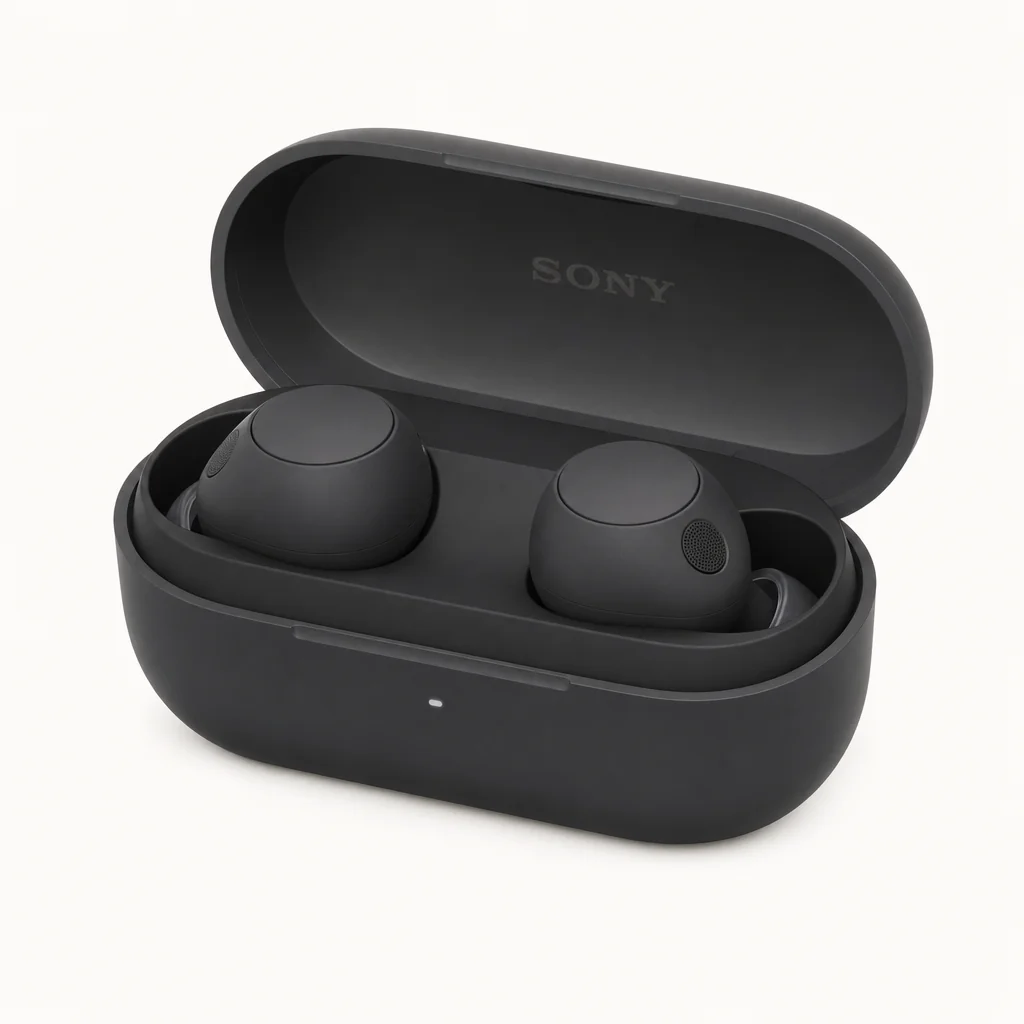
If you asked me to recommend one pair to a person who just wants brilliant earbuds and doesn't care about the spec-sheet wars, this is where I'd point them. The WF-C710N is Sony doing what Sony does best: a warm, easy-going tuning, genuinely excellent noise cancelling for the money, and stamina that puts far pricier buds to shame.
The headline upgrade over the previous generation is what Sony calls Dual Sensor Noise Technology — a second microphone tucked into each bud that delivers a real, audible step up in noise cancelling. On a noisy train carriage it genuinely takes the edge off the low-frequency rumble in a way you'd expect from kit costing a lot more. It's paired with Sony's Adaptive Sound Control, which automatically adjusts the ANC based on what you're doing and where you are, so you don't have to keep diving into the app.
Battery life is a real strong point. You get up to 8.5 hours from the buds with ANC switched on, rising to 12 hours with it off — and the case stretches that to a 30-hour total with ANC, or a frankly excessive 40 hours without. There's quick charging too: five minutes in the case buys you roughly an hour of playback, which is exactly the kind of feature you only appreciate when you're running out the door. A full case top-up takes around 3.5 hours.
Sony also threw in proper wear detection (new for this model), touch controls covering play, skip and volume, and 360 Reality Audio for spatial listening. The one notable omission is codecs: you're limited to SBC and AAC here, with LDAC reserved for Sony's pricier 1000-series. For most listeners on a phone that's a non-issue, but the spec-chasers will notice. There's no wireless charging either.
Pros
- Excellent ANC thanks to Dual Sensor Noise Technology
- Outstanding stamina — up to 40 hours total with ANC off
- Adaptive Sound Control adjusts ANC automatically
- Warm, fatigue-free tuning that suits almost any genre
- Wear detection and reliable two-device multipoint
Cons
- No LDAC — capped at SBC and AAC
- No wireless charging
- Small 5mm driver won't satisfy bass-heads
Real-world tip
Because the WF-C710N leans on Adaptive Sound Control, leave it enabled in the app and let it learn your routine. After a few days of commuting it'll ramp the ANC up automatically when it detects you've sat still on transport — meaning you genuinely never touch the buds. It's the closest thing to "set and forget" in this price bracket.
Nothing Ear (a) — The One Everyone Notices
See Nothing Ear (a) on Amazon UK
£48.99price at 23 Aug, may change
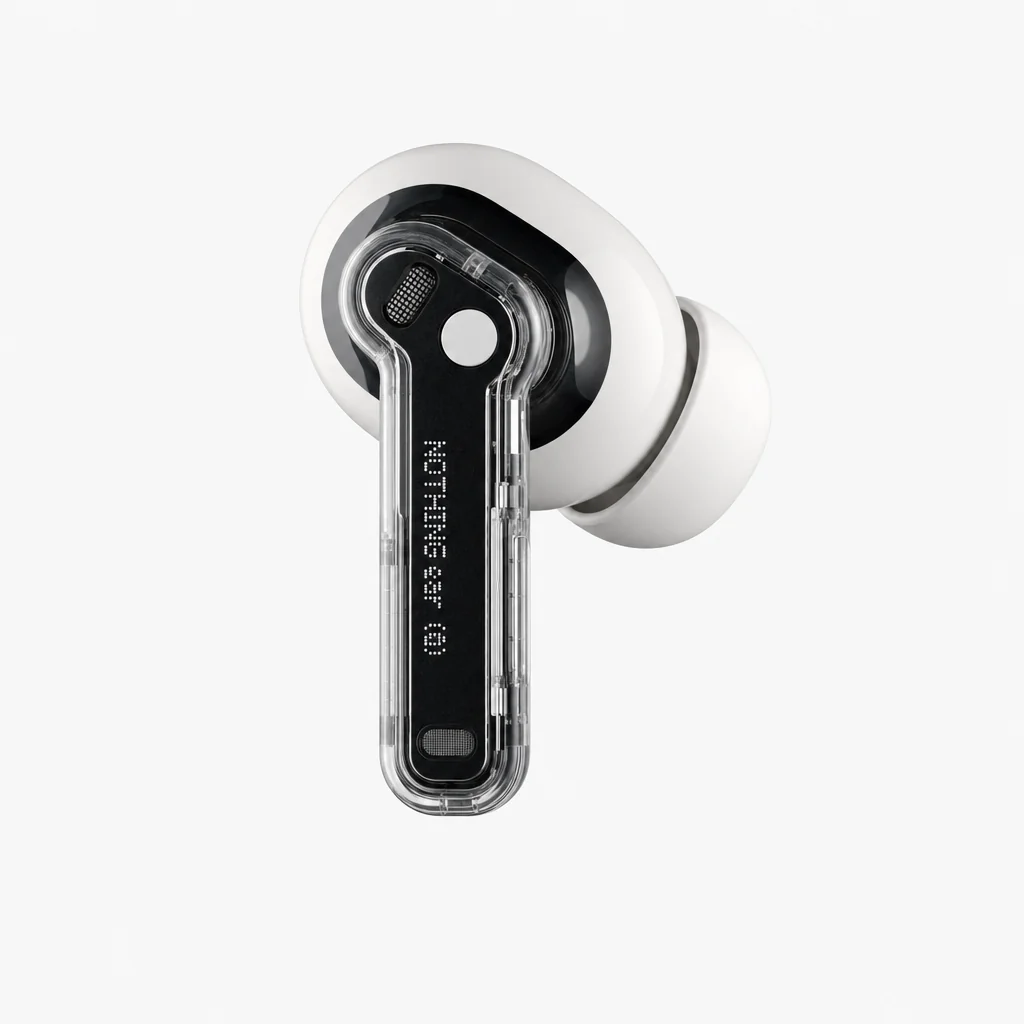
Nothing has built an entire identity around the transparent, design-forward aesthetic, and the Ear (a) is the most affordable expression of it. But style aside, these are properly capable buds. The big 11mm dynamic drivers deliver a fun, V-shaped signature — punchy bass, sparkly treble — that's instantly likeable, even if purists might find it a touch showy.
Nothing's transparent design language is unmistakable, and the Ear (a) brings it to its most accessible price yet.
Crucially for the audio crowd, the Ear (a) supports LDAC alongside AAC and SBC, so if you've got a high-resolution library and a compatible phone, you can feed these buds a much fatter stream than the Sonys can handle. It's a genuine point of difference at this price. They miss out on the lower-latency LHDC codec found on the pricier standard Nothing Ear, but that's a minor loss.
Smart Adaptive ANC
Dynamically detects and seals leaks in the fit, adjusting cancellation on the fly rather than relying on a fixed profile.
Game Mode
Drops latency dramatically so on-screen action and audio stay locked together — handy for mobile gaming and video.
ChatGPT integration
Built-in ChatGPT voice controls let you fire off queries hands-free, a genuinely novel touch at this end of the market.
Graphic EQ
The companion app includes a graphic EQ so you can tame or boost the V-shaped tuning to taste.
Battery life is the most obvious trade-off versus the Sony. You're looking at 5.5 hours from the buds with ANC on, or 9.5 hours with it off, and a total of 24.5 hours (ANC on) or 42.5 hours (ANC off) including the case. That's still perfectly respectable — and the ANC-off case figure actually beats the Sony — but the per-charge bud life with cancelling running is the shortest here. The buds carry an IP54 rating (the case is rated IPX2), each bud weighs a featherweight 4.8g, and multipoint is on board. There's no wireless charging and no spatial audio on this particular model.
Pros
- LDAC support for hi-res streaming
- Fun, energetic 11mm-driver sound that's easy to love
- Eye-catching transparent design
- ChatGPT voice control and a low-latency Game Mode
- Very light at 4.8g per bud, with IP54-rated buds
Cons
- Shortest per-charge bud life with ANC on (5.5 hrs)
- No spatial audio
- No wireless charging; case only rated IPX2
- V-shaped tuning may be too punchy for purists
EarFun Air Pro 4+ — The Spec-Sheet Bully
See EarFun Air Pro 4+ on Amazon UK
£55.99 · 30% offprice at 23 Aug, may change
Every price bracket has that one product that simply refuses to play by the rules of its category, and the Air Pro 4+ is it. On paper, it reads like a flagship that wandered into the budget aisle by accident. We're talking Bluetooth 6.0, aptX Lossless, a dual-driver setup and a colossal 54-hour total battery life. For feature-per-pound, nothing else here comes close.
What that translates to in practice is a pair of buds that can theoretically deliver lossless-quality audio over Bluetooth to a compatible source — something most of the premium kit it's measured against still can't manage — while also lasting through the better part of a working week on a single case charge. The dual-driver arrangement is aimed at separating low and high frequencies for a cleaner, more detailed presentation than a single driver can usually muster at this price.
aptX Lossless and Bluetooth 6.0 only deliver their full benefit when paired with a source device that supports them. On an iPhone, for example, you'll fall back to AAC — so check your phone's codec support before buying primarily for the lossless headline.
It's the spec-led pick: if you love knowing your kit is technically maxed out and you want the longest possible battery life, the Air Pro 4+ delivers more boxes ticked than anything else in this company. It's the bud that most directly throws down the gauntlet to the premium tier on raw capability.
Anker Soundcore Space A40 — The ANC Bargain
See Anker Soundcore Space A40 on Amazon UK
£51.99price at 23 Aug, may change
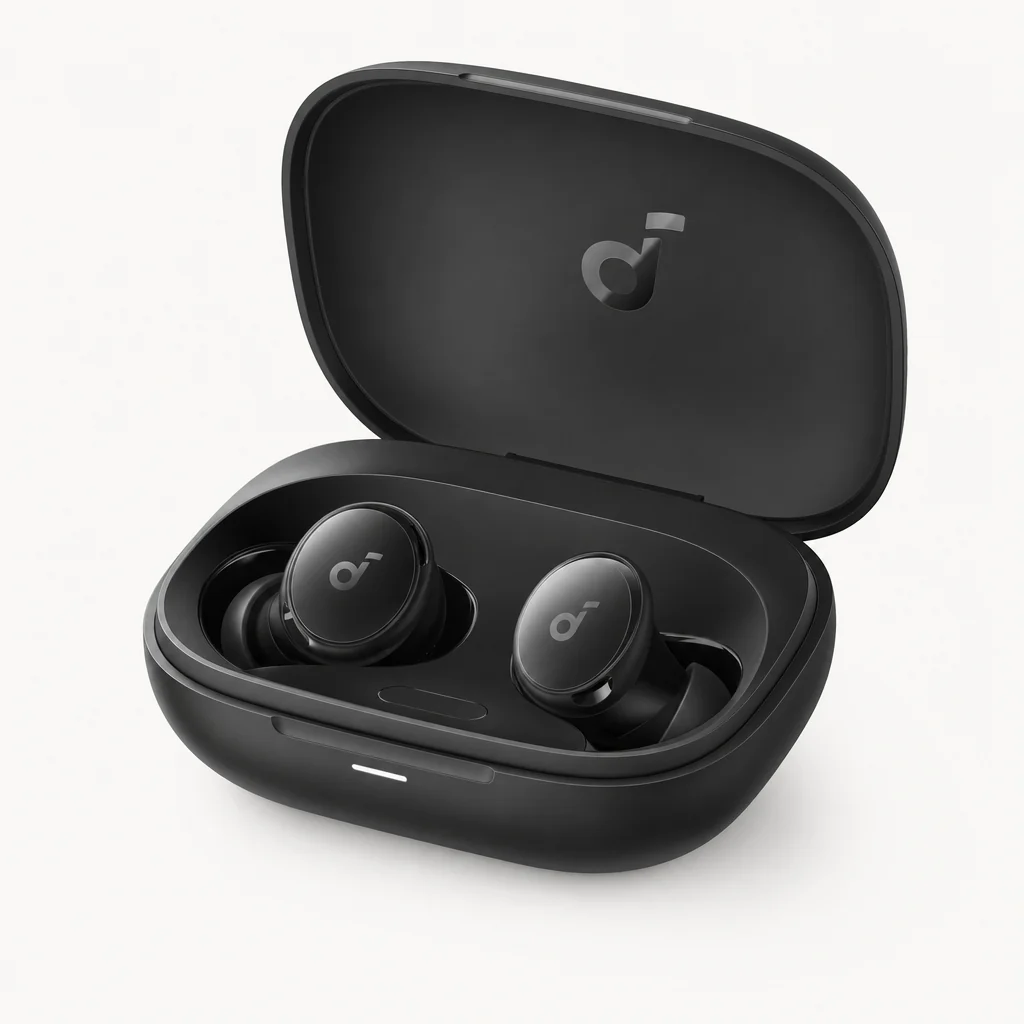
The Space A40 has been a reviewer darling for a good while now, and for one very good reason: it offers some of the best active noise cancelling you can get under £100, in a compact, stemless design that disappears in the ear. If your priority is shutting out the world without spending flagship money, this is the one I keep coming back to.
Anker pairs that class-leading ANC with a 50-hour total battery life, LDAC support for hi-res audio, and a remarkably generous 22 EQ presets in the app — so you can dial in a sound profile to suit almost any taste or genre. The stemless form factor is a real plus if you've never got on with the AirPods-style stalk look; these sit flush and stay put.
Class-leading ANC
Among the strongest noise cancelling available under £100, making the A40 a commuter and open-office favourite.
LDAC support
Hi-res codec support means you can stream higher-quality audio from a compatible Android device.
22 EQ presets
A huge selection of ready-made sound profiles in the Soundcore app, plus custom tuning for the fussy.
50-hour total battery
Long enough that charging anxiety basically disappears from your week.
The stemless shape, strong cancelling and hi-res codec combination is unusual at the price, and it's why the A40 keeps its spot on virtually every "best budget ANC" list. It's the value-conscious noise-blocker's clear choice.
Cambridge Audio Melomania A100 — The Audiophile Bridge
See Cambridge Audio Melomania A100 on Amazon UK
£79.00 · 34% offprice at 23 Aug, may change
Now for the aspirational pick — the one that bridges this round-up to the premium world it's being judged against. Cambridge Audio is a British hi-fi name with proper heritage, and the Melomania A100 brings that pedigree to a stem-style true wireless bud. It hovers around the £99–£119 mark on the street, so it occasionally slips just over the £100 ceiling, but its sound quality makes it impossible to leave out of a conversation about buds that don't sound cheap.
Cambridge Audio's hi-fi heritage shows in the A100's restrained, accurate tuning — this is the audiophile's pick of the bunch.
The standout technical feature is the Class AB amplifier — an analogue amp topology borrowed from serious hi-fi rather than the cheaper, more efficient amps usually found in earbuds. The payoff is a cleaner, more natural delivery that the more excitable V-shaped buds here can't quite match. It also covers all the codec bases that matter, with both aptX Lossless and LDAC on board, so whether you're on Android or chasing lossless, you're sorted.
Total battery life lands at a sensible 39 hours including the case — not the marathon figure of the EarFun or Anker, but more than enough for everyday use. If pure sound quality is the thing you obsess over and you're willing to flirt with the very top of the budget, this is the most genuinely hi-fi-minded option in the group.
Battery Life, Compared
Battery is where this bracket genuinely humbles a lot of premium kit, so it's worth laying the numbers out side by side. The bars below show total stamina (buds plus case) for each model — and note that for the buds with two ANC states, I've used the larger figures where the data gives a range.
The takeaway: even the "weakest" battery here would shame plenty of flagship buds, several of which still struggle to crack 30 hours total. The EarFun and Anker are in a league of their own for sheer endurance, but if you run ANC constantly, remember the per-charge figures matter more than the totals — the Sony's 8.5 hours of cancelling per charge is the standout for uninterrupted listening before you reach for the case.
Don't be fooled by the big number
A headline "54 hours" total always includes case recharges. What actually governs your day-to-day experience is the single-charge bud figure with ANC on, because that's how long you can listen before the buds need to go back in the case. On that metric the Sony WF-C710N's 8.5 hours leads this group, while the Nothing Ear (a)'s 5.5 hours is the one to watch if you're a heavy ANC user.
Head-to-Head Comparison
Here's the whole field distilled into a single table. I've focused on the specs that actually change your buying decision rather than every last data point.
| Feature | Sony WF-C710N | Nothing Ear (a) | Anker Space A40 |
|---|---|---|---|
| Driver | 5mm dynamic | 11mm dynamic | 10mm custom drivers |
| Codecs | SBC, AAC | LDAC, AAC, SBC | LDAC |
| ANC | Dual Sensor Noise Tech | Smart Adaptive ANC | Class-leading sub-£100 |
| Buds (ANC on) | 8.5 hrs | 5.5 hrs | About 8 hours (10 with ANC off) |
| Total battery | 40 hrs (ANC off) | 42.5 hrs (ANC off) | 50 hrs |
| EQ | App-based | Graphic EQ | 22 presets |
| Spatial audio | 360 Reality Audio | No | Yes |
| Wireless charging | No | No | Yes |
| Standout extra | Adaptive Sound Control | ChatGPT + Game Mode | Stemless design |
| Buy | Check price | Check price |
| Feature | EarFun Air Pro 4+ | Cambridge Audio Melomania A100 |
|---|---|---|
| Bluetooth | 6.0 | Bluetooth 5.3 |
| Codecs | aptX Lossless | aptX Lossless + LDAC |
| Audio architecture | Dual-driver | Single 10mm driver; Class AB amplification |
| Total battery | 54 hrs | 39 hrs |
| Best for | Spec-sheet maximisers | Sound-quality purists |
| Buy | Check price | Check price |
No single pair wins on every metric — the right answer genuinely depends on which two or three features matter most to you.
Ready to buy?
Prices in this bracket shift constantly with sales and bundles. Check the latest price and any current bundles on Amazon.
Who Should Buy What
The commuter
Go for the Sony WF-C710N. The combination of strong Dual Sensor ANC, Adaptive Sound Control and 8.5 hours of per-charge cancelling is purpose-built for daily travel.
The style-conscious
The Nothing Ear (a) is the obvious pick — distinctive transparent design, a fun sound, LDAC and clever extras like ChatGPT voice control.
The spec-chaser
The EarFun Air Pro 4+ wins on raw numbers: Bluetooth 6.0, aptX Lossless, dual drivers and a class-topping 54-hour total battery.
The value ANC seeker
The Anker Soundcore Space A40 delivers some of the best noise cancelling under £100, plus LDAC, 50-hour battery and 22 EQ presets.
The audiophile
The Cambridge Audio Melomania A100, with its Class AB amp and both aptX Lossless and LDAC, is the most genuinely hi-fi-minded of the group.
The minimalist
If you hate stems poking out, the stemless Anker Space A40 or the lightweight 4.8g-per-bud Nothing Ear (a) will suit you best.
How I Rate the Field
Taking the group as a whole, the sub-£100 category in 2026 deserves a genuinely high mark. The ratings below reflect the bracket's collective strengths — and the one or two areas where it still trails the premium tier.
Battery and value carry the field, which is exactly what you'd hope. Sound quality and ANC are where the very best premium buds still edge ahead — but the gap is now narrow enough that, for most people in most situations, you'd struggle to justify the extra spend.
Frequently Asked Questions
The Verdict
The whole premise of this round-up was to find out whether mid-range buds can stand up to the premium kit — and the honest answer is that they very much can. None of these five sounds cheap, and several of them genuinely out-spec and out-last buds costing two or three times more.
If you want one safe recommendation, the Sony WF-C710N is the all-rounder I'd hand to most people: brilliant adaptive ANC, a warm and inoffensive tuning, wear detection, and stamina that runs to 40 hours total. The Nothing Ear (a) is the choice if you want flair, LDAC and a genuinely fun sound, while the EarFun Air Pro 4+ is unbeatable for spec-sheet maximalists with its Bluetooth 6.0, aptX Lossless and 54-hour battery.
For pure noise cancelling on a budget, the Anker Soundcore Space A40 remains the value champion with 50-hour stamina and 22 EQ presets. And if it's outright sound quality you obsess over, the Cambridge Audio Melomania A100 and its Class AB amp is the bridge to the premium world — proof that you don't have to spend flagship money to get something that sounds properly, genuinely good.