
Best flagship phones in the UK: which £1,000-plus phone should you buy?
Samsung Galaxy S26 Ultra, Apple iPhone 18 Pro Max, Google Pixel 11 Pro and Samsung Galaxy Z Fold8, compared on cameras, AI, battery life, software support and the folding-screen question.


Privacy Display, integrated S Pen, 3x and 5x telephotos and seven years of updates in one complete Android flagship.
Check price on Amazon
Lasted 18h 27m in 5G browsing tests and pairs a variable-aperture camera with ProRes and Dolby Vision video.
Check price on Amazon
A 204g, 6.3-inch phone with Gemini-first software, strong cameras and seven years of updates from £1,079.
Check price on Amazon
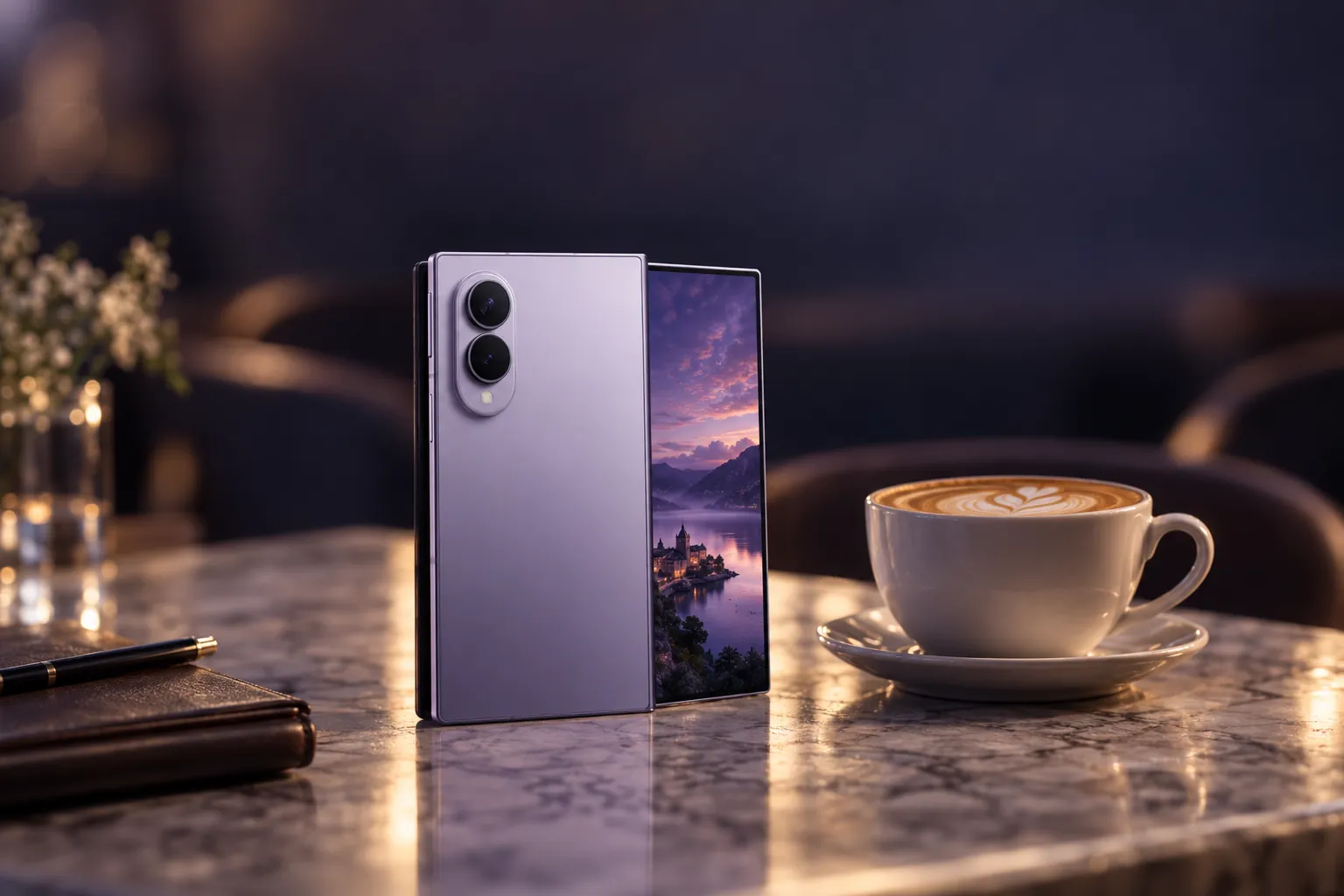
A light 201g foldable whose wider 7.6-inch inner screen suits reading and video, though it lacks telephoto.
Check price on AmazonWe link to the exact model on Amazon UK. Prices change often, so check the live price before you buy. As an Amazon Associate we earn from qualifying purchases.
You're standing on a packed train, thumbing through your banking app, aware of the stranger peering over your shoulder and the battery icon edging into the red. At this price you're not buying a phone for a year; you're buying the thing you'll reach for thousands of times before 2030. Spend well and it fades into the background. Spend badly and you'll notice the compromise every single day.
The short answer
Buy the Samsung Galaxy S26 Ultra if you want the most complete Android toolkit: twin telephoto cameras, a built-in S Pen and a screen that can hide itself from nosy neighbours. Buy the Apple iPhone 18 Pro Max if battery stamina and video matter most; it lasted longest of the four in the shared 5G browsing test. Buy the Google Pixel 11 Pro if you want a phone that fits a pocket and a hand, with Google's camera processing and Gemini built in, at the lowest entry price here. Buy the Samsung Galaxy Z Fold8 only if you genuinely want a small tablet that folds into your coat; it costs the most and gives up a telephoto lens to deliver that.
The £1,000-Plus Decision: What Actually Separates These Four Phones
There's no single "best phone" at this level, because all four are fast, bright and well made. The real question is which compromise you can live with. Do you care more about zoom and gadgets, video and endurance, a smaller body, or a screen that opens like a paperback?
Here's how the four line up in one sentence each:
- Samsung Galaxy S26 Ultra: the feature-packed Samsung flagship, with Privacy Display, an integrated S Pen and 3x plus 5x telephoto cameras.
- Apple iPhone 18 Pro Max: the first iPhone with a mechanical variable-aperture camera, and the longest-lasting phone here in independent browsing tests.
- Google Pixel 11 Pro: a 6.3-inch AI-and-camera specialist that starts at £1,079, the lowest entry price in this group.
- Samsung Galaxy Z Fold8: a book-style folding phone with a 7.6-inch inner screen, and the highest price here at £1,869 for the 512GB model.
Software support is less of a dividing line than it used to be. Samsung promises seven generations of Android upgrades and seven years of security updates on both of its phones, and Google commits to seven years of OS, security and Pixel Drop updates. Apple doesn't publish a fixed number of years, but iPhones have historically enjoyed long iOS support. So, for most buyers, the split is about hardware philosophy rather than how long the phone will stay current.
Google Pixel 11 Pro
UK RRP, 256GB / 12GB RAM
Samsung Galaxy S26 Ultra
Samsung UK Business price for this exact 512GB/12GB Black model (other finishes and retailers may list £1,449; range £1,279 to £1,699)
Apple iPhone 18 Pro Max
UK RRP, 512GB (256GB from £1,299)
Samsung Galaxy Z Fold8
UK RRP, 512GB / 12GB RAM (range £1,699 to £2,209)
Manufacturer launch RRPs for the configurations covered here. Retailer prices, including on Amazon UK, move regularly, so compare the live price against these figures before you buy.
At a glance
| Spec | Samsung Galaxy S26 Ultra | Apple iPhone 18 Pro Max | Google Pixel 11 Pro | Samsung Galaxy Z Fold8 |
|---|---|---|---|---|
| Display | 6.9in Dynamic AMOLED 2X, 3,120 × 1,440, 1–120Hz | 6.9in Super Retina XDR OLED, 2,868 × 1,320, up to 120Hz | 6.3in Super Actua LTPO OLED, 1,280 × 2,856, 1–120Hz | 7.6in inner (2,448 × 1,848) and 5.5in cover (1,972 × 1,248), both 1–120Hz |
| Chip | Snapdragon 8 Elite Gen 5 for Galaxy | Apple A20 Pro | Google Tensor G6 | Snapdragon 8 Elite Gen 5 for Galaxy |
| Storage (model covered) | 512GB | 512GB | 256GB | 512GB |
| Main camera | 200MP, f/1.4 | 48MP, f/1.48 to f/4.0 variable | 50MP, f/1.68 | 50MP, f/1.8 |
| Telephoto | 10MP 3x and 50MP 5x | 48MP 4x | 48MP 5x | None |
| Wireless charging | Up to 25W | MagSafe and Qi2, up to 25W | Qi2.2 Pixelsnap, up to 25W | Up to 20W |
| Weight | 214g | 249g | 204g | 201g |
| Water/dust rating | IP68 | IP68 | IP68 | IP48 |
| Stylus | Integrated S Pen | No | No | No S Pen support |
| Software at launch | Android 16, One UI 8.5 | iOS 27 | Android 17 | Android 17, One UI 9 |
| Buy | Check price | Check price | Check price | Check price |
Samsung Galaxy S26 Ultra: The Do-Everything Flagship With a Screen That Can Hide Itself
Samsung launched the Galaxy S26 Ultra in the UK on 11 March 2026, and its headline trick is one no other phone here offers: a Privacy Display built into the panel itself. Rather than a stick-on filter that dims the screen permanently, it narrows the viewing angle on demand, either for the whole display or just for selected content such as notifications, password fields or specific apps.

That's a genuinely useful thing on the 07:42 into Waterloo or in an open-plan office. Tech Advisor went as far as calling it a significant display innovation rather than a gimmick, and it's hard to disagree: it solves a real, everyday irritation that every other phone simply ignores.
It does come at a cost. Notebookcheck measured roughly 1,000cd/m² with the feature off versus about 645cd/m² with it on, along with reduced contrast and less stable colour. Think of it as a switch you flick on the bus, not a setting you leave running all day.
Use Privacy Display selectively
Because the full-screen mode costs a chunk of brightness, the smarter setup is to restrict only the things you'd mind someone reading: notifications, password entry and your banking or messaging apps. You keep the protection where it matters and the full-quality panel everywhere else.
Cameras: the most zoom options of the four
The rear array is the broadest here: a 200MP f/1.4 main camera with optical stabilisation, a 50MP f/1.9 ultrawide, a 10MP f/2.4 telephoto at 3x and a 50MP f/2.9 telephoto at 5x, which Samsung says delivers 10x optical-quality zoom. Digital zoom stretches to 100x, and video goes up to 8K at 30fps. The wider main aperture and brighter 5x lens are aimed at low-light shots and video.
Reviewers broadly agree on the outcome. When the iPhone 18 Pro Max and S26 Ultra were compared directly, the Samsung was substantially better at very long-range zoom. The catch is that the 3x camera is the same 10MP unit as last year, and the overall hardware jump from the S25 Ultra is evolutionary rather than dramatic.
Performance, battery and the S Pen
Samsung's customised Snapdragon chip is quick, and a larger vapour chamber kept demanding games comfortable over long sessions. The 5,000mAh battery recorded 17 hours 52 minutes of Wi-Fi web browsing and 30 hours 55 minutes of 1080p video playback in Notebookcheck's testing, and 60W wired charging reached 77% in 30 minutes. That's strong, but the iPhone 18 Pro Max lasted longer in the shared 5G browsing test (see the comparison section below).
The integrated S Pen remains unique among these four, handy for signing PDFs, scribbling notes or precise photo edits. One UI is where the experience gets busier: Bixby, Gemini, Perplexity and a pile of overlapping AI features sit side by side, and more than one reviewer found the result cluttered and confusing.
Pros
- Privacy Display is a practical tool for commuters and open-plan workers
- 3x and 5x telephotos give the widest zoom range here
- Integrated S Pen, plus seven years of OS and security updates
- Cool, consistent gaming thanks to a larger vapour chamber
Cons
- Privacy mode costs brightness, contrast and colour accuracy
- 240Hz PWM dimming may bother flicker-sensitive eyes
- One UI's overlapping AI assistants feel cluttered
- No built-in magnets for MagSafe-style accessories; you'll need a case
Who it suits: anyone who wants the most features in one slab, particularly if you already own a Galaxy watch, tablet or earbuds. Who should skip it: S25 Ultra owners hoping for a big camera leap, and anyone who wants a simple, uncluttered interface.
Apple iPhone 18 Pro Max: A Mechanical Aperture Finally Arrives on iPhone
Apple announced the iPhone 18 Pro Max on 9 September 2026, and it went on sale in the UK on 18 September. The big hardware change is the iPhone's first mechanical variable-aperture main camera: six physical blades and four selectable settings at ƒ/1.48, ƒ/1.8, ƒ/2.8 and ƒ/4.0.

In plain terms, you can open the lens right up for more light and genuine optical background blur, or stop it down so that everyone in a group shot stays sharp. WIRED singled out ƒ/1.48 for convincing natural blur and ƒ/4 for keeping a whole group in focus. Not everyone was won over, though. Digital Camera World doubted the aperture makes a big difference on a sensor this size, and found Camera Control fiddly.
All three rear cameras are 48MP: a 24mm-equivalent main with second-generation sensor-shift stabilisation, a 13mm ultra-wide and a 100mm 4x tetraprism telephoto offering optical-quality 8x. The front camera is an 18MP Center Stage unit.
The video toolkit
Video is where the iPhone pulls away from the Android phones here. It records 4K Dolby Vision at up to 120fps, ProRes up to 4K/120fps to external storage, ProRes RAW, Apple Log 2 and Genlock for multi-camera shoots. Reviewers praised its consistent colour, stabilisation and lens matching, which matter enormously when you cut between cameras in an edit. The 512GB model covered here makes sense if you shoot a lot of 4K or ProRes footage.
Stills aren't flawless. The iPhone can over-brighten scenes that should stay dark, and it struggled with backlit subjects next to the Pixel 11 Pro.
Battery: the standout number
In Tom's Guide's continuous 5G web-browsing test at 150 nits, the iPhone 18 Pro Max lasted 18 hours 27 minutes, 33 minutes longer than the iPhone 17 Pro Max and the longest of the four phones in this guide. For context, the OnePlus 15 managed 25 hours 13 minutes in the same test, so this isn't the outright endurance king of the whole market. Apple rates it for up to 30 hours of typical use and 45 hours of video playback.
Charging is less impressive. With a 60W-capable adapter (not included in the box) it reached 44% in 15 minutes and 77% in 30 minutes, which is slower than the smaller iPhone 18 Pro. MagSafe and Qi2 wireless charging run at up to 25W.
The A20 Pro also held its pace well under sustained load, with a 79.4% stability score in the 3DMark Wild Life Extreme Stress Test, against 53.9% for the Galaxy S26 Ultra. If you play long gaming sessions, that consistency matters more than a peak number.
Pros
- Longest browsing battery result of the four, at 18 hours 27 minutes
- Variable aperture adds real optical control
- The most complete pro video toolkit here
- Strong sustained graphics performance
Cons
- 249g, up from 233g on the iPhone 17 Pro Max
- £100 dearer than its predecessor, with little design change
- Long-range zoom trails the Galaxy S26 Ultra
- No power adapter in the box, and charging is slower than the smaller Pro
Who it suits: video creators, iPhone users who want maximum endurance, and anyone who wants dependable point-and-shoot photos with optional manual depth. Who should skip it: iPhone 17 Pro Max owners, since this is a refinement rather than a reinvention, and anyone whose wrist already aches holding a big phone in bed.
Google Pixel 11 Pro: The Compact Choice for Buyers Who Don't Want an Ultra-Sized Phone
Google launched the Pixel 11 Pro in the UK on 20 August 2026, and it's the odd one out here in the best possible way. At 6.3 inches, 152.7mm tall and 204g, it's the only phone in this group you can comfortably use one-handed. At £1,079 for 256GB, it's also £200 cheaper than the cheapest Galaxy S26 Ultra, and £790 below the Galaxy Z Fold8 covered here.

Don't mistake compact for cut-down. The rear cameras are a 50MP f/1.68 main, a 48MP ultra-wide with autofocus and macro focus, and a 48MP 5x telephoto with optical stabilisation. Pro Zoom reaches 120x, but TechRadar found images beyond roughly 30x turned artificial-looking, so treat the top end as a party trick. Within sensible ranges, reviewers consistently rate the camera system highly; it's Google's processing, rather than the hardware, that does the heavy lifting.
The AI case
If you want AI that feels designed into the phone rather than bolted on, this is the most Gemini-centred option of the four. Gemini Intelligence, Gemini Nano, Gemini Live, Magic Capture, Camera Looks, Camera Coach, Ask Photos, Circle to Search, Live Translate and Call Assist all sit inside a single, coherent interface. Reviewers praised the software polish, even where the hardware lags.
Not every new idea lands. HiLight, a rear-camera notification light, and Proactive Assistance were widely judged underdeveloped, and Tech Advisor described HiLight as pointless in its current form.
The honest catch: speed and stamina
Tensor G6 is fine for everyday use but clearly behind Apple and Qualcomm when pushed. Its Geekbench 6 multi-core score sits a long way below both Samsungs. Digital Trends saw its 3DMark stress score fall by about 29% while the phone reached 43°C, and Zenless Zone Zero ran noticeably choppily at higher settings.
Battery life is adequate rather than generous. The 4,850mAh cell lasted 13 hours 25 minutes in the 5G browsing test, behind the Pixel 10 Pro, and real-world screen-on time typically landed between about four and a half and six hours. Overnight standby drain of 10–15% also appeared in testing. Wired charging tops out at 30W and needs a charger bought separately; expect roughly 51% in 30 minutes and a full charge in about 86 minutes. Built-in Pixelsnap magnets and 25W Qi2.2 wireless charging are welcome compensations.
Pros
- Smallest, lightest slab here and the lowest entry price
- Excellent point-and-shoot cameras with a 48MP 5x telephoto
- Cohesive Gemini software with seven years of updates
- Built-in Pixelsnap magnets for accessories
Cons
- Weakest performance and gaming of the four
- Shortest slab battery result in the shared test
- Slow wired charging, with no charger in the box
- Base model has less RAM than the Pixel 10 Pro; 240Hz PWM dimming
Who it suits: anyone who finds Ultra-sized phones unwieldy, and Pixel 8 Pro owners (or older) looking to upgrade. Who should skip it: gamers, heavy users who need long endurance, and Pixel 10 Pro owners, for whom the step up is small.
Samsung Galaxy Z Fold8: Is a Book-Style Tablet-Phone Worth £1,869?
The Galaxy Z Fold8 went on general sale in the UK on 7 August 2026, and it's the only folding phone in this guide. At £1,869 for 512GB, it costs £340 more than the £1,529 Samsung Business price for the equivalent 512GB Galaxy S26 Ultra, and £370 more than the 512GB iPhone 18 Pro Max. What you get for that premium is two phones' worth of screen.

This generation's design is the real story. Samsung made the Fold shorter and wider: closed, it's a 5.5-inch cover screen with roughly 10:16 proportions; open, a 7.6-inch, roughly 4:3 display. Older Folds opened into a tall, narrow shape that made videos letterbox awkwardly. This one opens straight into a broad, mini-tablet layout that suits reading, video and three-app multitasking. Reviewers likened it to a passport, easier to pocket and more natural to hold than taller designs, with a smooth hinge and a less visible crease.
It's also remarkably light at 201g, actually lighter than every slab phone in this guide. Folded it measures 9.7mm thick, unfolded just 4.5mm.
Screens and stamina
Both displays are rated for up to 3,000 nits and refresh at 1–120Hz. Expert Reviews measured 1,337cd/m² on the inner screen with adaptive brightness under a torch, 1,285cd/m² on the cover screen, and accurate colour with an average Delta E of 1.37 inside. Even so, direct sunlight can still make it hard to read.
The 4,800mAh silicon-carbon battery is respectable rather than remarkable. Looped video lasted 24 hours 5 minutes on the inner screen and 32 hours 10 minutes on the cover screen, but the 5G browsing test result of 12 hours 19 minutes is the shortest of the four. Charging at 45W reached 70% in 30 minutes, and a full charge took a little over an hour; wireless tops out at 20W.
What you give up
The camera is the obvious sacrifice. There's a 50MP f/1.8 main and a 50MP f/1.9 ultra-wide, and that's it: no telephoto, just a 2x "optical quality" crop and 10x digital zoom. Almost every major review called this out as a serious omission at this price. There's also no S Pen support, and no Flex Mode, so it won't reliably hold a half-open position for hands-free video calls or tabletop photos, a limitation SamMobile highlighted. And it rocks when laid flat on a table thanks to the camera bump.
Mind the IP48 rating. The Fold8 is protected against water but has much weaker protection against dust than the IP68 slab phones here. If your phone lives in a pocket full of sand after a beach day, or in a dusty workshop, factor that in, and consider a case.
Pros
- Wider design opens into a video- and reading-friendly mini tablet
- 201g, lighter than every slab phone here
- Flagship Snapdragon performance and three-app multitasking
- Seven years of OS and security updates
Cons
- No telephoto camera at £1,869
- No S Pen support and no Flex Mode
- IP48 offers limited dust protection
- Shortest browsing battery result in this group
Who it suits: heavy readers, commuters who watch a lot of video, and anyone who wants to try a foldable without the bulk. Who should skip it: camera enthusiasts, stylus fans and buyers chasing conventional flagship value.
Battery, Brightness and Benchmarks: How the Four Actually Compare Side by Side
Spec sheets can make every phone look like it'll last two days. These are the figures from one consistent set of reviews, so you can compare like with like.
| Measured result (Tom's Guide) | Samsung Galaxy S26 Ultra | Apple iPhone 18 Pro Max | Google Pixel 11 Pro | Samsung Galaxy Z Fold8 |
|---|---|---|---|---|
| 5G web-browsing battery test | 16h 10m | 18h 27m | 13h 25m | 12h 19m |
| Charge after 30 minutes | 77% | 77% | 51% | 70% |
| Geekbench 6 multi-core | 11,563 | Not confirmed | 7,164 | 11,020 |
| 3DMark Solar Bay Unlimited | 49.37fps | 67.9fps | Not confirmed | 47.35fps |
| Geekbench AI | 83,047 | 71,974 (Neural Engine) | Not confirmed | Not confirmed |
What does it add up to? The iPhone leads on endurance and sustained graphics, the two Samsungs are close together on raw CPU power, and the Pixel trails on both. Over a long day of maps, music and messaging, the gap between 18 and 13 hours is the difference between arriving home with a comfortable margin and hunting for a socket at the pub.
On AI performance, the S26 Ultra's Geekbench AI score of 83,047 sits ahead of the iPhone's 71,974 Neural Engine result. Treat that as a pointer to on-device AI horsepower rather than a verdict on which AI features are more useful; that comes down to software, covered in each section above.
Brightness: read the method, not just the number
Peak brightness figures came from different publications using different methods, so they aren't a straight league table:
- Samsung Galaxy S26 Ultra: 2,975cd/m² in Notebookcheck's HDR peak comparison, with around 1,424cd/m² in its standard test.
- Apple iPhone 18 Pro Max: 2,326 nits in a 25% test window and 1,762 nits in a 10% window.
- Google Pixel 11 Pro: 2,860 nits peak in one review, but only 950 nits at maximum brightness in another, so reviewers disagreed markedly.
- Samsung Galaxy Z Fold8: 1,400cd/m² with HDR content on the inner screen.
All three slab phones are comfortably bright enough for a sunny afternoon. The Fold8 is the one where outdoor readability drew real complaints.
Match the Phone to the Reader, Not the Spec Sheet
The all-rounder who wants every feature
Privacy Display for the commute, an S Pen for notes, 3x and 5x telephotos for gigs and wildlife, and easy ties to Galaxy watches and tablets. You'll accept a busier interface in exchange.
The video creator and long-battery seeker
An 18h 27m browsing result, a variable-aperture main camera and ProRes, Dolby Vision and Log 2 recording. Just be ready for 249g in your hand.
The one-handed user who still wants serious smarts
A 204g, 6.3-inch body with Gemini-first software and a strong camera, for £1,079. Skip it if you game hard or need marathon battery life.
The reader and multitasker
A light, pocketable phone that opens into a 7.6-inch screen for books, video and split-screen work. You'll give up telephoto, S Pen and dust protection.
Our verdict
For most people spending over £1,000, we recommend the Samsung Galaxy S26 Ultra. It does the most things well, adds a privacy feature you'll use every day, and has seven years of updates behind it. If you live in iOS, or battery life and video matter above all, the Apple iPhone 18 Pro Max is the stronger buy and lasted longest in testing. The Google Pixel 11 Pro is the smart choice if size and price matter more than raw speed. The Samsung Galaxy Z Fold8 is a lovely piece of engineering, but only buy it if a folding screen is the feature you want most, because you pay more and get less camera.
Sources
- Samsung UK: Galaxy S26 Ultra and Galaxy Z Fold8 product and specification pages; Samsung UK newsroom launch announcements
- Apple UK: iPhone 18 Pro specifications, newsroom announcement and model identification support page
- Google Store UK: Pixel 11 Pro specifications and configuration pages; Google blog
- Tom's Guide: reviews of Galaxy S26 Ultra, iPhone 18 Pro and Pro Max, Pixel 11 Pro and Pro XL, Galaxy Z Fold8
- TechRadar: reviews of Galaxy S26 Ultra, iPhone 18 Pro and Pro Max, Pixel 11 Pro, Galaxy Z Fold8
- Notebookcheck: Galaxy S26 Ultra review
- Tech Advisor: Galaxy S26 Ultra and Pixel 11 Pro reviews
- WIRED: iPhone 18 Pro and Pro Max review; Galaxy Z Fold8 and Z Fold8 Ultra review
- Digital Camera World: iPhone 18 Pro Max review
- Digital Trends, Android Authority and The Guardian: Pixel 11 Pro reviews
- Expert Reviews, SamMobile and Android Authority: Galaxy Z Fold8 reviews
- Samsung Galaxy S26 UltraBest all-rounderView on Amazon
- Apple iPhone 18 Pro MaxBest for battery and videoView on Amazon
- Google Pixel 11 ProBest compact pickView on Amazon
- Samsung Galaxy Z Fold8Best for foldable fansView on Amazon
Sources and evidence (73)
- images.samsung.com (other)
- techadvisor.com (other)
- samsung.com (other)
- samsung.com (other)
- tomsguide.com (other)
- notebookcheck.net (other)
- techradar.com (other)
- samsung.com (other)
- samsung.com (other)
- techradar.com (other)
- tomsguide.com (other)
- notebookcheck.net (other)
- techadvisor.com (other)
- whathifi.com (other)
- support.apple.com (other)
- apple.com (other)
- apple.com (other)
- tomsguide.com (other)
- techradar.com (other)
- wired.com (other)
- digitalcameraworld.com (other)
- tomsguide.com (other)
- apple.com (other)
- apple.com (other)
- support.apple.com (other)
- apple.com (other)
- tomsguide.com (other)
- tomsguide.com (other)
- techradar.com (other)
- wired.com (other)
- digitalcameraworld.com (other)
- whathifi.com (other)
- techradar.com (other)
- store.google.com (other)
- store.google.com (other)
- tomsguide.com (other)
- digitaltrends.com (other)
- techadvisor.com (other)
- androidauthority.com (other)
- theguardian.com (other)
- blog.google (other)
- blog.google (other)
- techradar.com (other)
- androidauthority.com (other)
- digitaltrends.com (other)
- tomsguide.com (other)
- techadvisor.com (other)
- theguardian.com (other)
- ballicom.co.uk (other)
- news.samsung.com (other)
- samsung.com (other)
- news.samsung.com (other)
- tomsguide.com (other)
- expertreviews.co.uk (other)
- techradar.com (other)
- wired.com (other)
- sammobile.com (other)
- androidauthority.com (other)
- news.samsung.com (other)
- news.samsung.com (other)
- apple.com (other)
- news.samsung.com (other)
- store.google.com (other)
- honor.com (other)
- samsung.com (other)
- techadvisor.com (other)
- store.google.com (other)
- notebookcheck.net (other)
- techradar.com (other)
- techradar.com (other)
- tomsguide.com (other)
- samsung.com (other)
- samsung.com (other)