Apple scraps cheaper Vision Pro display project at Samsung
Samsung Display will formally close its glass-substrate micro-OLED programme for Apple in September, ending any near-term hope of an affordable Apple headset.
What you need to know
- Samsung Display will officially shut down the G-VR glass-substrate micro-OLED project in September 2026, according to industry sources cited by The Elec.
- The cancelled panel targeted 1,600–1,700 PPI — roughly half the Vision Pro's 3,386 PPI — and was intended to underpin a cheaper, lighter Apple XR headset.
- Apple is pivoting away from headsets entirely, with AI-powered smart glasses (no display, tethered to iPhone) now the priority, targeting a late-2027 launch.
Apple has quietly killed the display project that was its best shot at bringing a cheaper headset to market. According to South Korean display-industry publication The Elec, which broke the story on 8 July 2026, Samsung Display has internally decided to terminate its glass-substrate micro-OLED development programme — known within the industry as G-VR — and plans to formally close it in September 2026, ahead of its original schedule. Neither Apple nor Samsung Display has publicly confirmed the cancellation.
What the G-VR project was
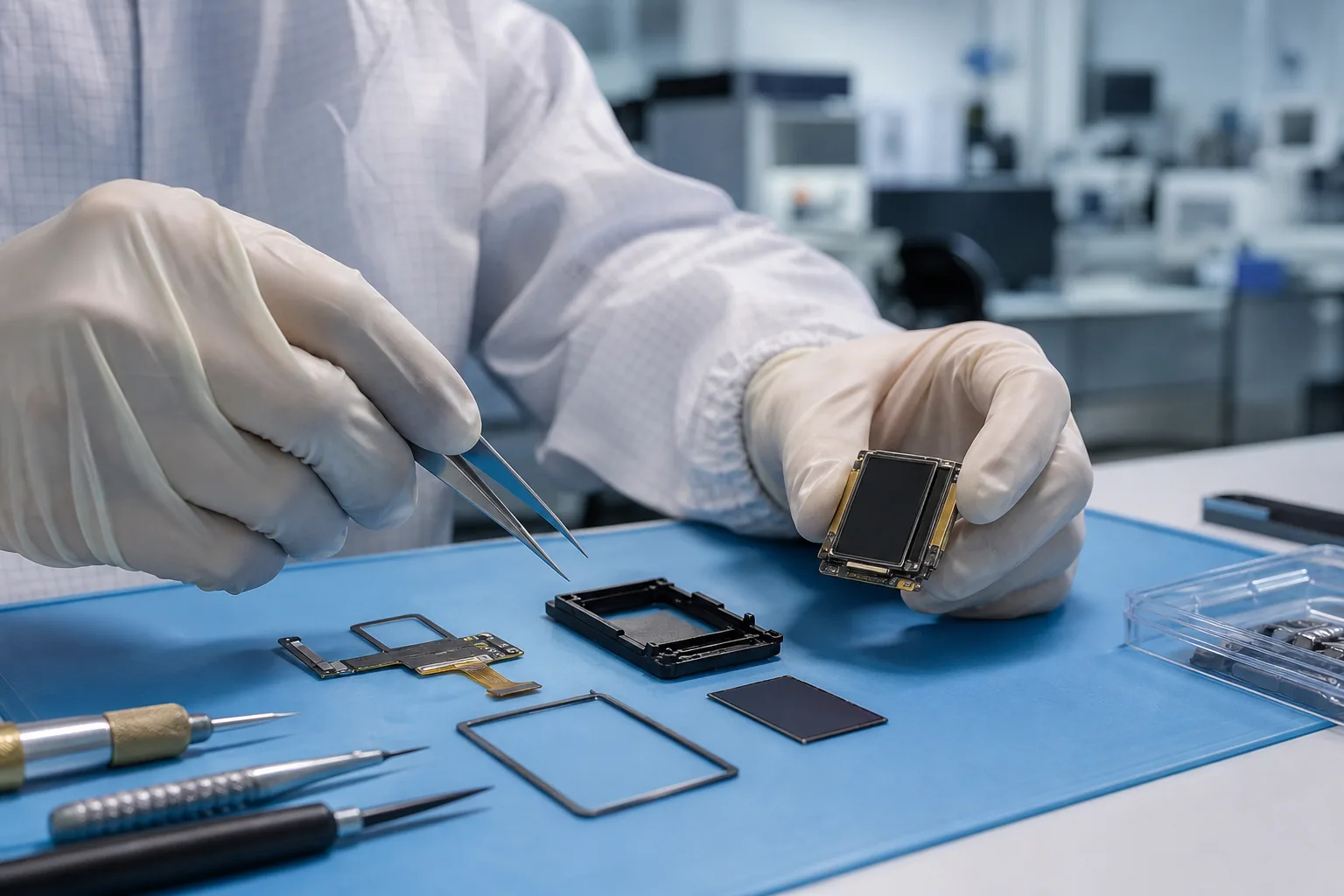
G-VR was not simply a cheaper version of the display technology inside the current Vision Pro. The existing headset uses OLED-on-Silicon (OLEDoS) panels, where the OLED layers are formed on a silicon wafer — a process that delivers extraordinary pixel density but at significant manufacturing cost. G-VR proposed moving those OLED layers onto a glass substrate instead, which would have substantially reduced production costs and opened the door to a lighter, more affordable device.
Samsung Display had been developing mid-range panels under this programme with a pixel density of approximately 1,600 to 1,700 pixels per inch — roughly half the 3,386 PPI of the current Vision Pro, but a step up from the 1,500 PPI Apple was said to be considering as far back as 2024. Mass production had originally been targeted for sometime after 2028. That timeline is now irrelevant. The Elec's sources are explicit that this is a business decision, not a technical failure: there is no fault with the display technology itself.
"As Apple shifts its focus from XR headsets to AI smart glasses, momentum behind the development of glass-substrate VR displays has disappeared." — unnamed industry source, via The Elec
A second source told The Elec: "Work on the project effectively entered its wind-down phase earlier this year, and Samsung Display plans to officially conclude it in September."
How we got here: a slow retreat from headsets
The G-VR cancellation is the final step in a longer chain of decisions that have been playing out for the best part of a year. Bloomberg's Mark Gurman reported in October 2025 that Apple had paused work on a lighter, cheaper device — widely referred to as "Vision Air" — in order to fast-track glasses that would rival Meta's Ray-Bans. By May 2026, Gurman reported that the cheaper headset had been cancelled outright. Then in June 2026, analyst Ming-Chi Kuo reported that incoming Apple CEO John Ternus had removed every Vision headset from the company's product roadmap entirely.
The G-VR closure is, in that context, less a surprise announcement than a formal confirmation of what the industry had already concluded. When the customer walks away, the display programme follows.
Where the Vision Pro stands now
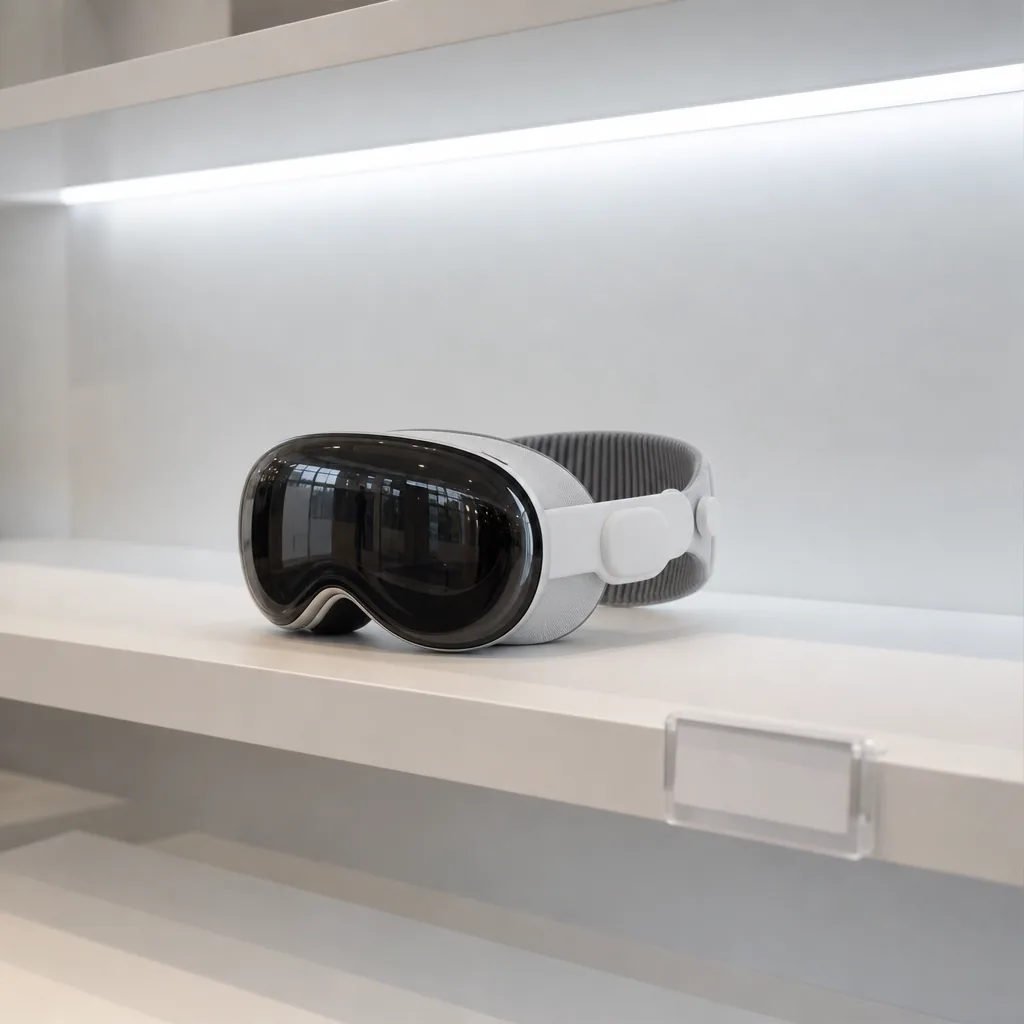
The current M5 Vision Pro — refreshed in October 2025 — is the only Apple headset in existence, and Apple gave a clear signal of its intentions last month when it raised the price rather than cutting it. In the UK, the Vision Pro now carries a price tag of £3,699 for the 512GB model, rising to £3,899 for 1TB. Readers should verify current pricing directly on Apple's UK website, as figures have shifted since the M5 launched. For context, that is roughly seven times the price of Meta's Quest 3, for a product that holds approximately five per cent of the XR market.
Apple is also reportedly discontinuing the Vision Pro Travel Case — a small but telling signal that accessory investment in the platform is being wound down. Software support continues, with visionOS 26.6 betas in circulation, but the prospect of a growing app ecosystem underpinned by rising hardware sales is no longer part of Apple's near-term plan. Gurman said in May 2026 that even if a new Vision Pro-style device does eventually materialise, he would not expect it for "around two more years at least."
Apple's next move: glasses without a display
What Apple is actually building is something quite different from the spatial-computing vision it launched in 2023. According to Bloomberg, Apple plans to ship its first smart glasses by late 2027, with a possible unveiling as early as late 2026. The device — internally code-named N50 — will have no display whatsoever. Instead, it will carry cameras, microphones, and speakers, and will lean on AI capabilities and an upgraded Siri to deliver value, functioning as a sophisticated iPhone accessory rather than a standalone device. Bloomberg has reported a target price range of between $200 and $500, though UK pricing has not been confirmed. True augmented-reality glasses with a display are not expected until 2028 to 2030 at the earliest.
What Samsung Display does next
Samsung Display is not stepping back from XR display development altogether. The company says it will redirect its research efforts towards OLEDoS displays for Samsung Electronics' own XR devices and next-generation RGB OLEDoS technology. At AWE USA 2026 in June, Samsung Display showcased a 1.3-inch RGB OLEDoS panel capable of 40,000 nits of peak brightness, alongside a smart glasses demonstration featuring a 0.62-inch RGB OLEDoS display. The company has indicated it intends to continue expanding partnerships with other device manufacturers — the expertise is not being abandoned, just pointed elsewhere.
For anyone who has been patiently waiting for Apple to make spatial computing accessible, the message from September onwards is unambiguous: the queue has closed.
Why it matters
For UK buyers who have been holding out for an affordable Apple spatial-computing device, this is effectively a dead end: there is no cheaper headset coming, and now there is no panel it could have been built around. The Vision Pro remains a £3,699-and-up product aimed at a vanishingly small audience, and Apple's own direction of travel — towards displayless AI smart glasses — suggests the company no longer believes a mass-market headset is the right bet. Once Samsung formally closes the programme in September, the institutional knowledge gets reassigned; restarting is not a matter of picking up where things left off.