
Foldable iPhone mass production to start in July, Samsung Display confirmed
Apple's first foldable iPhone is on track for a September unveiling after Samsung Display cleared quality thresholds and resolved hinge issues.
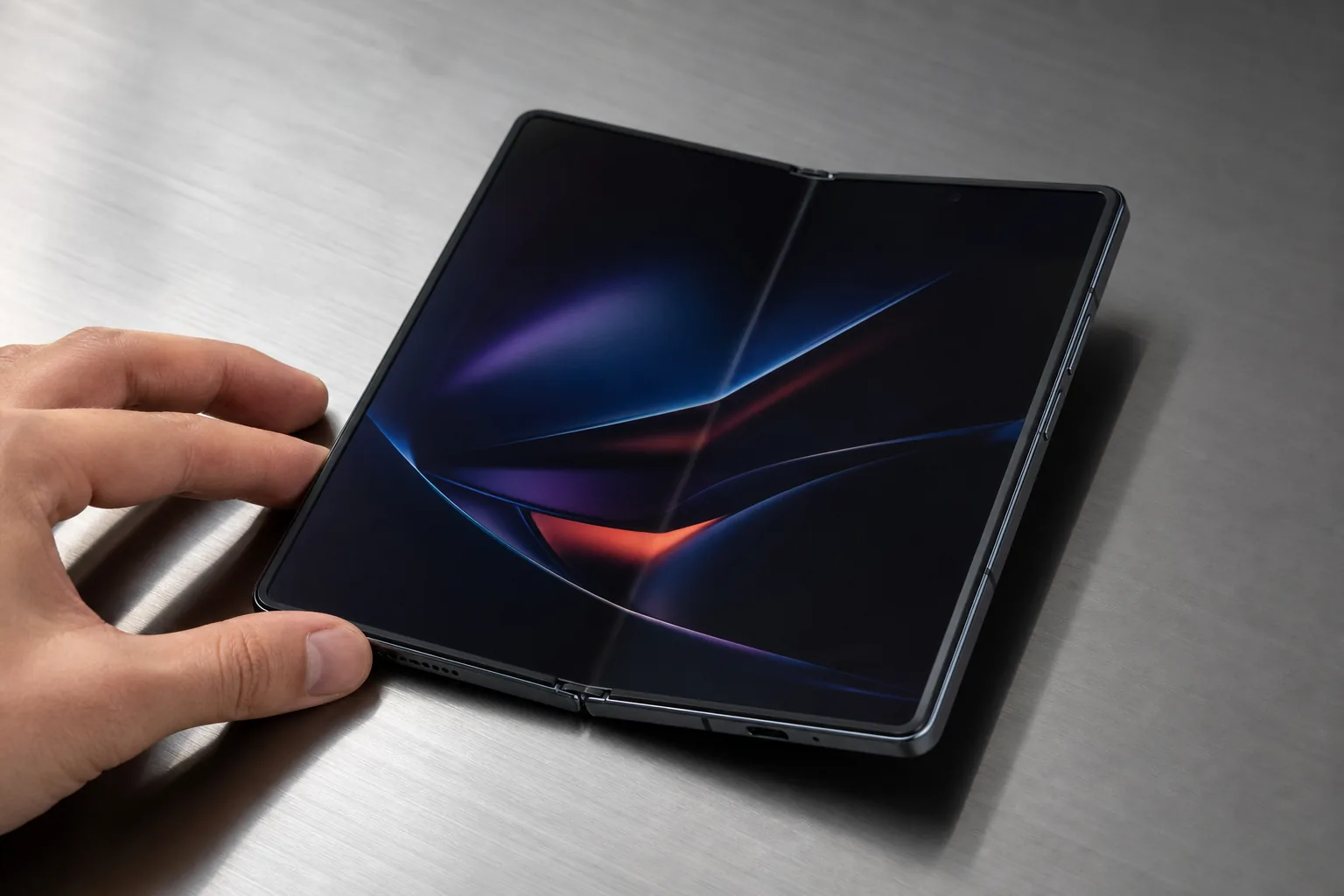
What you need to know
- Samsung Display approved to manufacture foldable OLED panels for Apple as of 22 June 2026
- Mass production expected to begin late July, with Foxconn handling the initial batch
- September unveiling reported as on track; Samsung holds a three-year exclusivity deal with Apple
Samsung Display gets the green light
Apple has approved Samsung Display to begin manufacturing OLED display modules for its first foldable iPhone, according to a report from Korean industry outlet The Elec dated 22 June 2026. The approval came after Samsung Display achieved final production yields above 80 per cent, clearing Apple's reported qualification threshold of 70 per cent. Back-end processing — which includes adding driver circuits, flexible printed circuit boards, and protective components — is already under way at Samsung Display's factory in Vietnam, with the facility targeting an initial run of roughly three million panels this year.
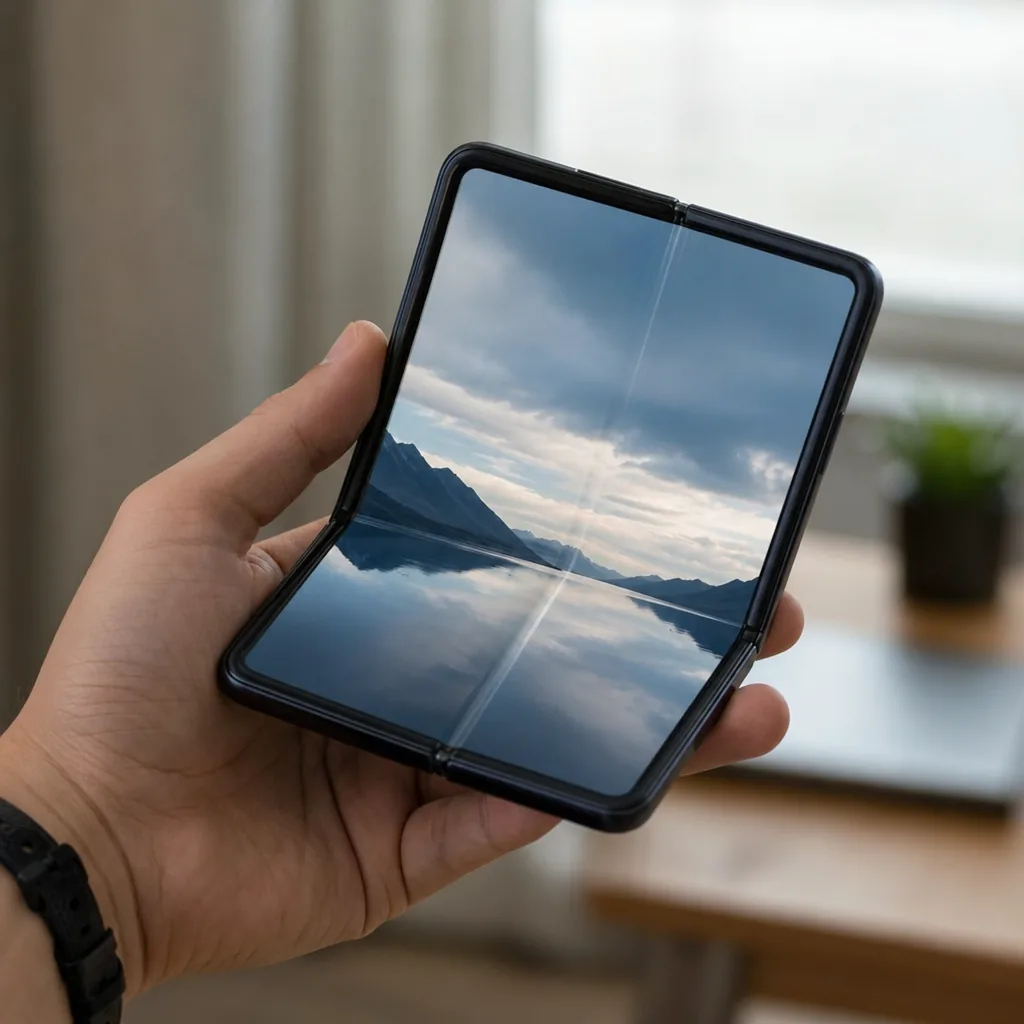
A separate The Elec report, published two days later on 24 June, added that Apple is on course to begin full mass production in late July, with Foxconn handling the first production batch. A September unveiling is described as expected to "proceed without major issues," citing supply-chain sources in both South Korea and Taiwan.
Three-year exclusivity and what Samsung is supplying
Samsung Display is not merely a preferred supplier here — according to supply-chain reporting, it holds a three-year exclusivity agreement with Apple and is providing both the cover display and the larger inner foldable display. The panels are manufactured at Samsung's Asan facility in South Korea before back-end processing at the Vietnam plant, which has around 80 production lines with roughly 50 currently active.
The arrangement was quietly flagged back in September 2025, when Samsung Display president Lee Cheong confirmed his company was "accelerating preparations for mass production of OLED displays designed for foldable smartphones to be supplied to a 'North American client.'" He declined to name the client, but the description left little room for ambiguity.
The hinge problem — and how it was resolved
Production has not been entirely smooth. During durability testing, the foldable iPhone's hinge mechanism reportedly began producing slight noise after repeated folding cycles, while wider-than-expected manufacturing tolerances contributed to elevated defect rates. The hinge itself is supplied by Taiwan's Shin Zu Shing and US-based Amphenol, using 3D-printed modules.
However, a Taiwan-based industry source cited by The Elec offered a direct assessment:
"Most of these issues are now resolved."That confidence from within the supply chain is one reason Apple appears to have committed to the late-July production start without further delays.
What the device is expected to look like
Apple has not officially confirmed any specifications, but supply-chain reporting has converged on a fairly detailed picture. The device is expected to take a book-style form factor — wider than it is tall — with a 4:3 aspect ratio more reminiscent of an iPad than a conventional smartphone. That would make it notably different from the tall, narrow foldables that dominate the current market.
- Inner display: approximately 7.76–7.8 inches, resolution reported at 2,713 × 1,920
- Cover display: approximately 5.49–5.5 inches
- Chipset: A20, built on TSMC's 2nm process
- Modem: Apple's in-house C2 5G modem
- RAM: 12GB
- Rear cameras: dual 48MP (wide and ultrawide); no telephoto
- Biometrics: Touch ID via the power button; no Face ID reported
- Battery: 5,000–5,800 mAh, depending on the source
- Frame: titanium and aluminium
- SIM: eSIM only
The displays will use Samsung's M16 OLED material set — described as its most advanced yet and not yet used in any commercial product — along with Color Filter on Encapsulation (CoE) technology, which replaces the traditional polariser layer to reduce thickness while improving brightness and efficiency. Multiple supply-chain sources describe the inner-screen crease as "nearly invisible," with Apple reported to have pursued eliminating it "regardless of cost."
Name, price and timing
Reporting has largely settled on "iPhone Fold" as the working name, though "iPhone Ultra" remains an alternative that some leakers still favour. Apple has not confirmed either.
On pricing, the most recent analyst estimates point to a US starting price of around $1,999 — lower than earlier 2025 projections of $2,399, though a March 2026 Bloomberg report still anticipated a figure north of $2,000. UK pricing is unconfirmed, but based on Apple's typical UK pricing patterns and VAT, estimates range from around £1,599 for the base 256GB model to over £2,000 for higher-capacity configurations.
The foldable is expected to be introduced alongside the iPhone 18 Pro and iPhone 18 Pro Max in September. Barclays analyst Tim Long has raised the possibility of actual shipments slipping to December, echoing the staggered release Apple used with the original iPhone X. Notably, the standard iPhone 18 and iPhone 18 Plus are reportedly being pushed to spring 2027, meaning the autumn launch window may belong almost entirely to the foldable and the two Pro models.
Why Apple took this long
Apple has been absent from the foldable market since Samsung launched its first foldable device in 2019. Rivals including Google, Motorola, and Huawei have since followed. The crease issue is widely cited as a core reason Apple held back — and the company's reported insistence on eliminating it, whatever the cost, goes some way to explaining the wait. The strongest software-side signal yet came at WWDC in June 2026, where iOS 27 was unveiled containing explicit foldable hardware APIs, which developers and analysts took as near-confirmation that the device is real and imminent.
Why it matters
For UK buyers who've watched Samsung, Google and Motorola compete in the foldable space for years without a credible rival, Apple's entry changes the calculation entirely. If the reported £1,599-plus pricing lands — and the crease really is as invisible as supply-chain sources claim — this becomes the first foldable that mainstream iPhone owners might seriously consider upgrading to. It also signals that Samsung Display, Apple's longtime screen partner, has bet its most advanced OLED technology on the foldable format arriving in earnest.