
8BitDo Ultimate 2 vs Xbox Elite Series 2: Which Pro Controller Is Worth It?
Modern TMR sticks and 1,000Hz polling meet Xbox's established premium pad. The answer depends rather heavily on where you play.
The 8BitDo Ultimate 2 Wireless and Xbox Elite Series 2 take very different routes to "pro": modern magnetic controls versus an extensive Xbox-native accessory system.
Two Pro Controllers, Two Very Different Ideas of Premium
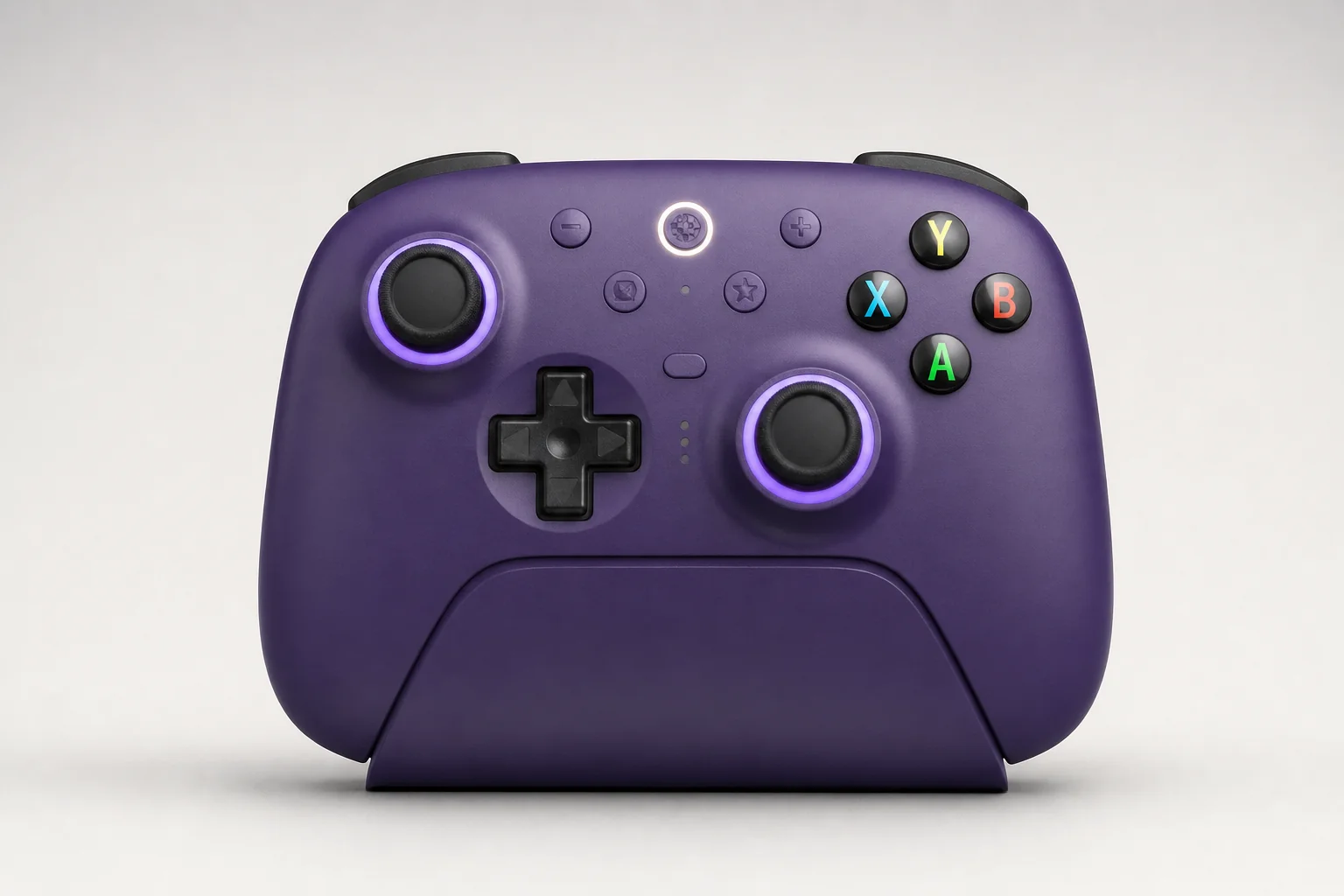
This is not really a cheap controller versus an expensive controller story. It is a story about priorities. The 8BitDo Ultimate 2 Wireless puts remarkably current hardware into a £49.99 controller, whilst the £149.99 Xbox Elite Wireless Controller Series 2 leans into physical customisation, Xbox integration and the kind of accessories that make a controller feel like a little kit rather than just a pad.
There is a blunt £100 gap between the Ultimate 2 and the complete Elite Series 2. That is enough money to make anyone pause, and rightly so. Yet simply calling the Elite "three times better" would be nonsense. Controllers are not washing machines; the features that matter depend on the games you play, the platform under your television or monitor, and whether you actually use paddles rather than admiring them for six months.
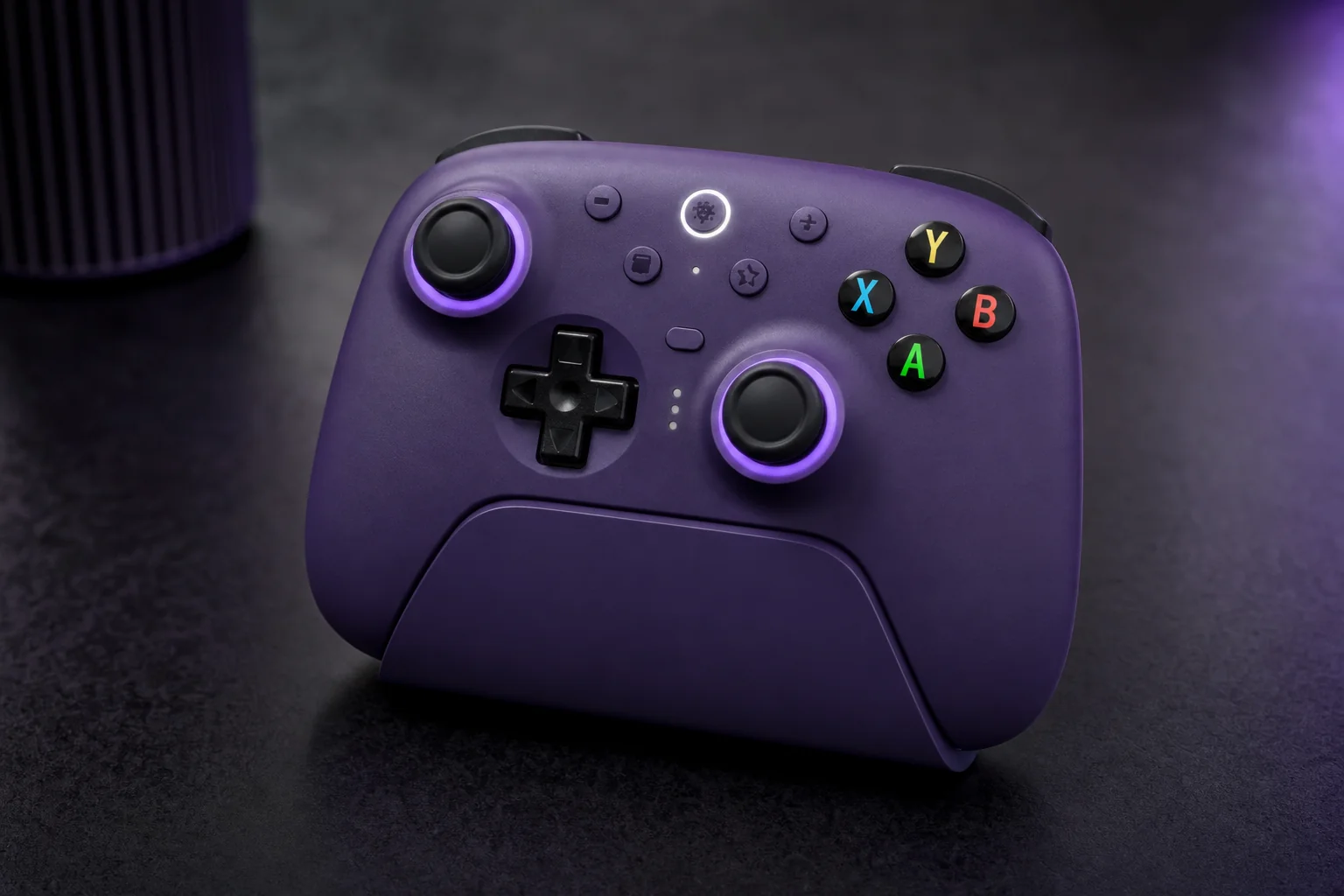
The 8BitDo is the more modern specification-sheet machine. It has TMR joysticks, a 12-bit ADC sampling chip, switchable Hall-effect and tactile trigger modes, 1,000Hz wired and 2.4GHz polling, two rear paddles, extra L4/R4 bumpers, motion controls, RGB rings and a charging dock. For PC, SteamOS, Android and Apple players, that is an almost comically generous collection of features at this money.
The Elite Series 2, released in November 2019, is the established premium Xbox option. It supports Xbox Series X/S and Xbox One natively through Xbox Wireless, offers four removable paddles, adjustable stick tension, trigger locks, interchangeable stick tops and D-pads, a 3.5mm headset jack, Impulse Triggers, a dock and a carrying case. It still feels special in the hand. It also costs accordingly.
The Elite Series 2 Core deserves a quick mention before we get carried away. It uses the same basic controller platform and costs £124.99, but it omits the paddles, extra thumbsticks, extra D-pad, dock and case. It is cheaper than the complete Elite, certainly, but it also removes much of what made the full package distinctive.
8BitDo Ultimate 2 Wireless
Dock, 2.4GHz adapter and USB cable included.
Xbox Elite Series 2 Core
Elite platform with a reduced accessory bundle.
Xbox Elite Series 2
Complete bundle with dock, case and control components.
The short version
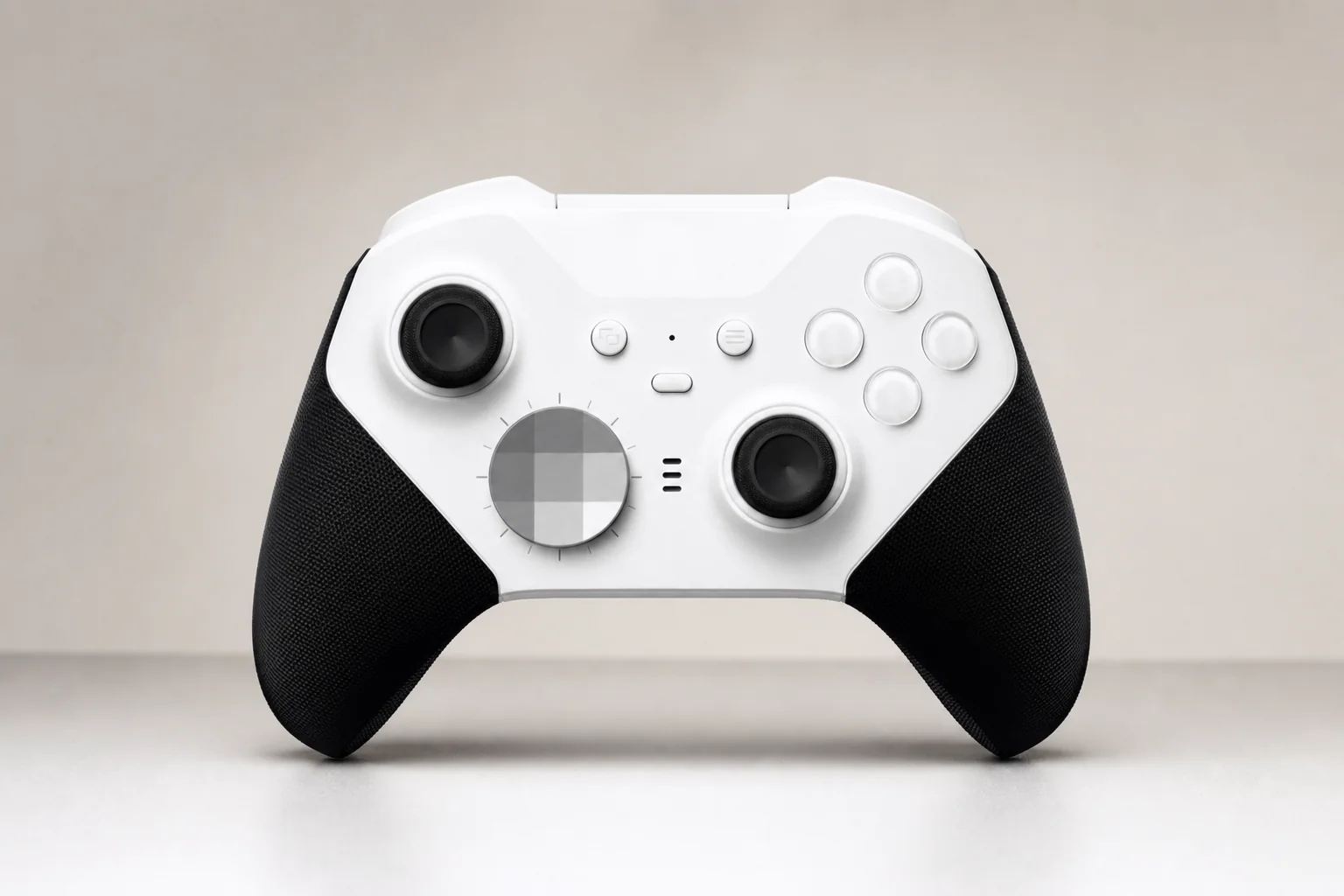
If you play on Xbox consoles, the Elite's native support changes the whole calculation. If you play chiefly on PC, SteamOS or mobile, the 8BitDo's price and stick technology are very difficult to ignore.
The Numbers at a Glance: Ultimate 2 vs Elite Series 2
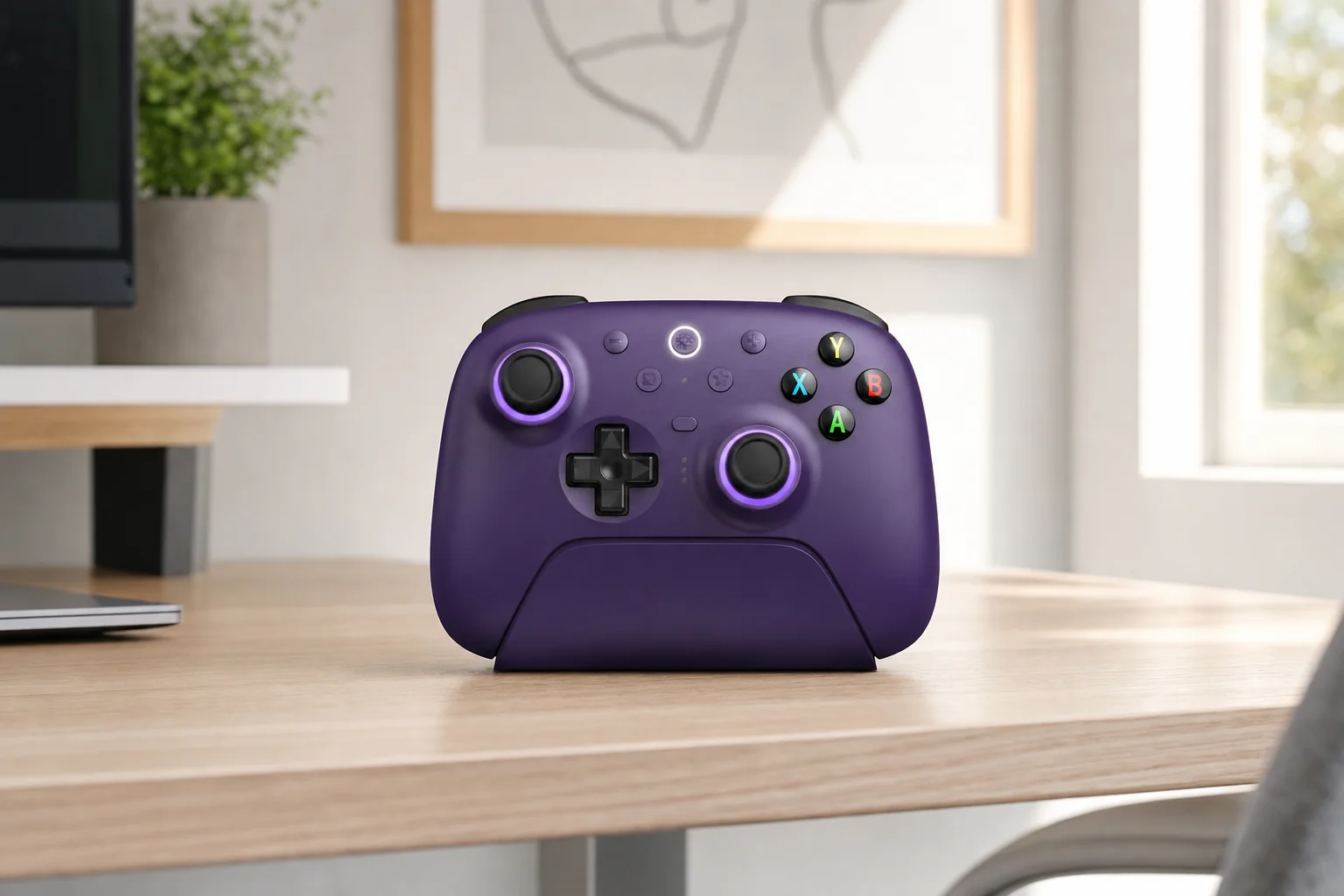
The table below is the useful stuff: the figures and hardware choices that most directly change the ownership experience. The Elite's listed weight applies with four paddles, the faceted D-pad and standard thumbsticks fitted, which is worth remembering when comparing it with the stripped-back 8BitDo.
| Feature | 8BitDo Ultimate 2 Wireless | Xbox Elite Series 2 | Xbox Elite Series 2 Core |
|---|---|---|---|
| UK price | £49.99 | £149.99 | £124.99 |
| Weight | 246g | 345g ±15g | Not confirmed |
| Battery claim | 20 hours 2.4GHz; 25 hours Bluetooth | Up to 40 hours | Up to 40 hours |
| Stick system | TMR joysticks with 12-bit ADC | Adjustable-tension thumbsticks | Adjustable-tension thumbsticks |
| Trigger control | Linear Hall-effect or tactile mode | Three-position trigger locks | Three-position trigger locks |
| Rear controls | Two paddles plus L4/R4 bumpers | Four removable paddles | No paddles included |
| Wireless connections | 2.4GHz and Bluetooth | Xbox Wireless and Bluetooth | Xbox Wireless and Bluetooth |
| Charging dock | Included | Included | Not included |
| Buy | Check price | Check price | Check price |
Both controllers are configurable, rechargeable Xbox-layout pads with USB-C connectivity and rumble. The difference is not whether they are "pro". It is what flavour of pro you need.
The Ultimate 2's included dock is unusually welcome at £49.99: it gives the controller a proper home rather than another loose cable behind the monitor.
TMR Against Tension: Which Sticks Feel More Pro?
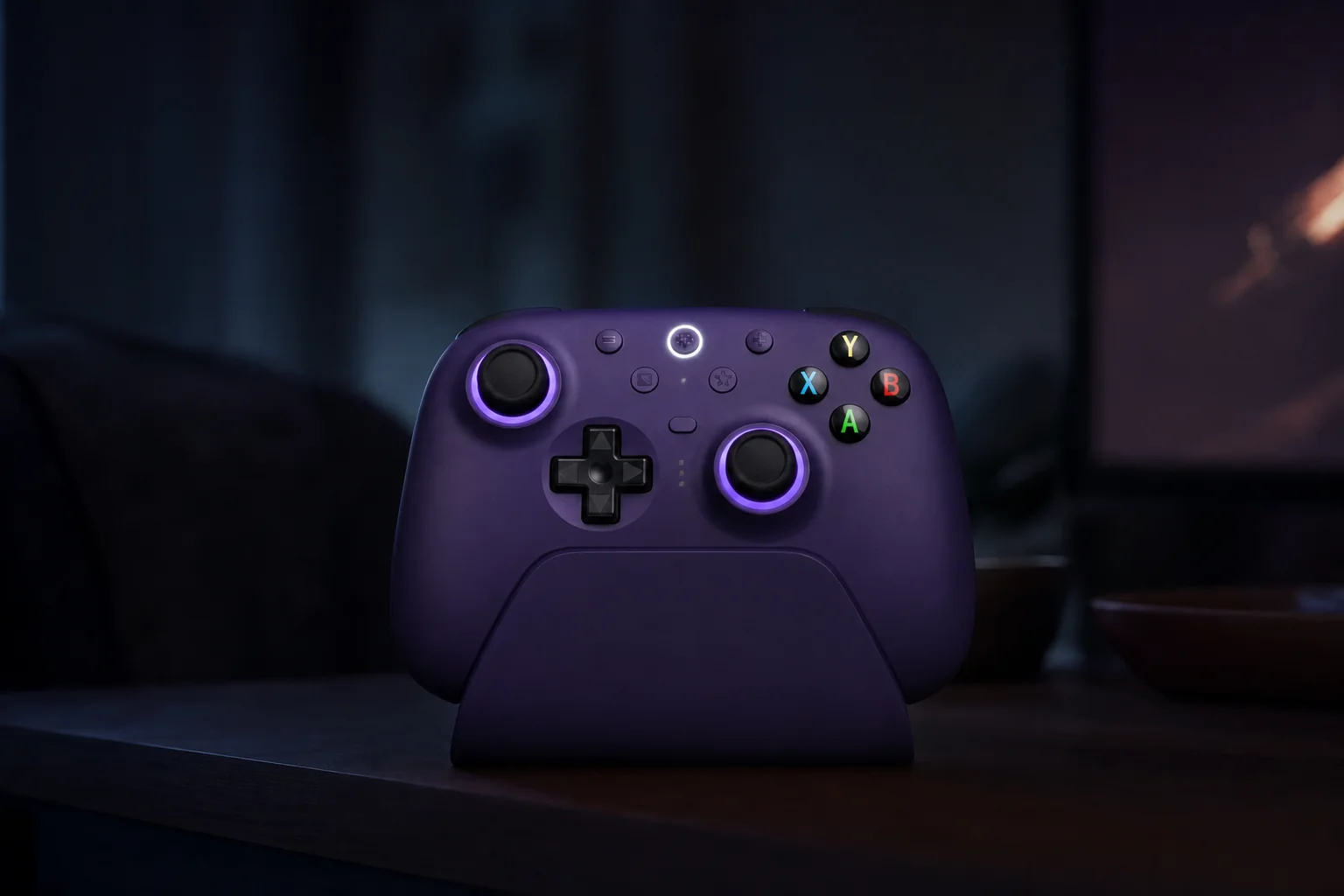
Sticks are the headline act here, and the two companies have taken completely different approaches. 8BitDo uses TMR joysticks paired with a 12-bit ADC sampling chip. Anyone who has watched a favourite controller develop drift will understand why anti-drift stick technology has become such a big buying point.
The Ultimate 2's stick story is not merely a buzzword on a box. It is tied to fast polling, calibration and sensitivity options in 8BitDo Ultimate Software V2. On wired USB and 2.4GHz, 8BitDo advertises 1,000Hz polling. That does not guarantee you will become a one-person esports montage, obviously. It does mean the controller is built around a very responsive input pipeline rather than just decorating a standard pad with RGB.
The Elite Series 2 does something more tactile. Its sticks have three selectable physical tension settings, adjusted with the included tool. A looser stick can feel quicker and more relaxed for broad movement. More tension can provide a firmer centre feel and finer resistance for aiming. This is a genuine hardware adjustment, not just a sensitivity slider in software, and it remains one of the Elite's most distinctive strengths.
Microsoft also includes six thumbstick options with the complete Elite package: two standard, two classic, one tall and one wide dome. Add sensitivity curves and stick-input reassignment in the Xbox Accessories app, and you can make the controller behave far more like your controller. That matters for people who play a mix of shooters, racers and sports games rather than one favourite title forever.
8BitDo Ultimate 2 Wireless: TMR hardware
TMR sticks, 12-bit sampling and high polling make the Ultimate 2 the more forward-looking choice for players prioritising magnetic stick technology and fast PC input.
Xbox Elite Series 2: physical adjustment
Three tension settings, swappable stick tops and Xbox Accessories curves make the Elite the more physically configurable controller out of the box.
Don't confuse stick technology with stick preference
TMR is the better answer if anti-drift credentials are high on your list. Adjustable tension is the better answer if you know you prefer a very specific resistance under your thumbs. They solve different problems, and both are useful.
Paddles, Bumpers and Trigger Locks: The Pro-Control Arms Race
Rear controls are where a pro pad either earns its keep or becomes an expensive way to accidentally crouch. The 8BitDo Ultimate 2 Wireless has two remappable rear paddle buttons, supplemented by extra L4 and R4 fast bumpers. That gives you four additional places to put useful commands, even though they do not all sit in the same position.
For a PC player, that can be plenty. Mapping jump, reload, melee or gear changes away from the face buttons lets your right thumb stay on the stick more often. In action games, it can also make camera control feel less like an exercise in hand gymnastics. The L4/R4 buttons are particularly handy if you prefer bumpers to paddles, or simply do not want every command underneath the controller.
The complete Elite Series 2 goes further with four removable, assignable paddles. This is the configuration serious shooter and racing players tend to want because it can shift four frequent inputs to your fingers without compromising the face buttons. The paddles are removable too, so you can use two, three or all four instead of being forced into a layout that does not suit your grip.
That flexibility is part of why the full Elite package is more compelling than the Core. The Core retains the Elite's underlying controller, stick-tension adjustment and trigger locks, but it does not include paddles. If paddles are the reason you are eyeing an Elite in the first place, buying Core and then treating it as equivalent is a false economy.
| Control customisation | 8BitDo Ultimate 2 Wireless | Xbox Elite Series 2 |
|---|---|---|
| Rear inputs | Two remappable paddles | Four removable, assignable paddles |
| Extra upper controls | L4/R4 fast bumpers | Trigger locks and interchangeable components |
| Trigger behaviour | Switchable linear Hall-effect and tactile modes | Three-position adjustable hair-trigger locks |
| Stick-top options | Software customisation and calibration | Six included thumbstick options |
| D-pad package | Tactile D-pad | Faceted D-pad plus additional standard D-pad |
| Profile software | Ultimate Software V2 | Xbox Accessories app |
Triggers need a little nuance. The Ultimate 2 can switch between linear Hall-effect triggers for analogue throttle, brake or acceleration input, and tactile non-linear triggers for a faster, clickier response. That is a remarkably flexible setup at this price. Racing players should appreciate the analogue mode; players who mostly want quick firing or snappy action inputs may prefer the tactile setting.
The Elite's three-position trigger locks take a more familiar route. They shorten trigger travel in stages. It is an elegant adjustment for shooters, although it does not turn the trigger into a tactile switch. The Elite also brings Xbox Impulse Triggers, which add supported trigger vibration effects to games that use them. Small detail, perhaps. Nice detail, absolutely.
The Elite Series 2's removable paddle system and interchangeable stick tops remain its clearest advantage for players who build every control around a particular game.
Xbox, PC, SteamOS or Phone? Compatibility Changes the Verdict
This is the section that saves you from buying the wrong controller because it has a lovely D-pad. The Xbox Elite Series 2 supports Xbox Series X/S, Xbox One, Windows PCs, Android and iOS devices. On Xbox consoles, it uses Xbox Wireless. On compatible PCs, tablets and phones, Bluetooth and USB-C give you other routes in.
That means the Elite is a straightforward premium purchase for someone with an Xbox in the lounge and a Windows PC elsewhere. Pair it, make profiles in Xbox Accessories, use a headset through the 3.5mm jack, move from sofa to desk. There is very little friction, and friction is what quietly makes expensive accessories gather dust.
The Ultimate 2 Wireless is aimed elsewhere. Its official platform list includes Windows 10 version 1903 or later, Android 13 or later, SteamOS 3.7.13 or later, and Apple platforms including iOS, iPadOS, macOS, tvOS and visionOS 26 or later. That is unusually broad support for a controller at £49.99, particularly if your gaming life is split between a PC, a SteamOS handheld setup, a tablet and an Apple TV.
It is crucial not to infer Xbox-console compatibility just because the Ultimate 2 uses an Xbox-style layout. Its official compatibility list does not include Xbox consoles. If Xbox is your primary platform, that fact is not a minor footnote. It is the dividing line between these controllers.
| Where you play | 8BitDo Ultimate 2 Wireless | Xbox Elite Series 2 |
|---|---|---|
| Windows PC | Windows 10 version 1903 or later | Supported |
| Xbox Series X/S and Xbox One | Not listed for Xbox consoles | Supported through Xbox Wireless and USB-C |
| Android | Android 13 or later | Supported on selected devices |
| iPhone and iPad | Supported on listed Apple OS versions | Supported on selected devices |
| SteamOS | SteamOS 3.7.13 or later | Not confirmed |
| Mac, Apple TV and Vision Pro | Supported on listed Apple OS versions | Not confirmed |
The Ultimate 2 is an excellent Xbox-layout controller. It is not automatically an Xbox-console controller. Keep that distinction clear and the buying decision becomes much easier.
Latency, Polling and the Numbers You Can Actually Trust
Controller latency figures can become a bit silly very quickly. A manufacturer can quote an impressive polling rate, a reviewer can quote one latency number, and suddenly everyone is arguing over fractions of a millisecond while missing the fact that their television is in the wrong picture mode. Still, measurements are useful when they are specific and comparable.
The Ultimate 2 has unusually good evidence behind its headline. In Gamepadla and Prometheus 82 testing, its wired button latency averaged 2.81ms, with a 2.09ms minimum and 3.54ms maximum. Wired stick latency averaged 7.02ms, ranging from 6.08ms to 7.95ms. Its measured wired polling rate was 955.69Hz, close to the advertised 1,000Hz figure.
A separate Prometheus 82 report placed analogue latency at roughly 2.5ms over wired USB and around 3.5ms over 2.4GHz wireless. Those are very tidy results for a £49.99 pad, and they help explain why the Ultimate 2 is more than a value pick with flashy rings around its sticks. There is real performance substance underneath.
The Elite Series 2 does not need to feel sluggish to lose this specific numbers contest. It does not. But the headline polling rate and directly comparable latency results above are available for the 8BitDo, making its performance case much clearer on paper. The Elite's argument is instead about platform integration, controls and feel.
A sensible latency takeaway
For competitive PC players, the Ultimate 2's measured wired and 2.4GHz figures are a genuine reason to look closely. For everybody else, comfort, button placement and your gaming platform will usually matter more than chasing a tiny numerical advantage.
Measured wired polling of 955.69Hz put the Ultimate 2 close to its advertised 1,000Hz target, giving its budget price a notably serious performance edge.
Battery Endurance: The 20-Hour Claim Versus the 40-Hour Claim
Battery claims are best treated like a driving-range figure: useful direction, not a promise about your own week. 8BitDo's manual lists approximately 20 hours over 2.4GHz and 25 hours over Bluetooth from the Ultimate 2's 1,000mAh battery. Microsoft says the Elite Series 2 can deliver up to 40 hours per charge.
In normal use, the gap appears wider than the brochure numbers initially suggest. Reviewer testing put the Ultimate 2 at roughly 10 to 15 hours, while another test landed at approximately 14 hours before the battery was exhausted. RGB lighting may reduce that figure, which is hardly shocking; lights need power, even when they are very pretty.
The practical point is not that the Ultimate 2 has bad battery life. Ten to 15 hours is enough for multiple substantial sessions, and its dock means topping it up can be painless if you make a habit of putting it back. But it is not the controller to choose because you hate charging. The Elite's up-to-40-hour claim remains its major endurance advantage.
| Battery and charging | 8BitDo Ultimate 2 Wireless | Xbox Elite Series 2 |
|---|---|---|
| Manufacturer battery claim | 20 hours over 2.4GHz; 25 hours Bluetooth | Up to 40 hours |
| Reviewer endurance | Roughly 10–15 hours; approximately 14 hours in a separate test | Not confirmed |
| Charging method | USB-C and included charging dock | USB-C and included charging dock |
| Stated charging time | Approximately four hours | Charging dock included |
I would not average these figures into a pretend "real" number. The most honest reading is straightforward: the Ultimate 2's claimed 20 to 25 hours became closer to 10 to 15 hours in reviewer use, whilst the Elite's stated maximum is 40 hours. If long wireless stretches matter more than RGB and light weight, the Elite has the stronger battery proposition.
Comfort, Weight and What Comes in the Box
Weight is personal. Some people want a controller to feel planted and substantial; others want to finish a two-hour session without feeling as though they have been doing wrist curls. The 8BitDo Ultimate 2 Wireless is 246g and measures 147 × 103 × 61.3mm. The Elite Series 2 weighs 345g ±15g with its four paddles, faceted D-pad and standard thumbsticks fitted.
That is a difference of at least 99g in the listed configurations, which you will notice. The Ultimate 2 is the easier controller to toss into a bag, use with a handheld screen, or play with for a long casual session. Its lighter build also makes sense for mobile and Apple TV players, where you may be holding the controller in less supported positions than you would on a sofa.
The Elite is deliberately more substantial. Its rubberised grips and premium finish have a strong following because it feels secure and deliberate in the hand. The trade-off is fatigue for some players, particularly with all four paddles fitted. This is one of those cases where "premium" and "heavier" overlap without necessarily meaning "better".
The Ultimate 2 package contains the controller, charging dock, 2.4GHz adapter, USB cable and manual. The complete Elite package contains its carrying case, charging dock, USB-C cable, four paddles, extra thumbsticks, an additional D-pad and adjustment tool. Neither is stingy in its complete form. The Core, by contrast, is where Microsoft starts asking you to decide what you can live without.
At 246g, the Ultimate 2 is much lighter than the Elite Series 2's 345g ±15g listed configuration — a meaningful difference for travel and longer sessions.
The Price-to-Feature Equation Is More Complicated Than It Looks
The Ultimate 2 costs £49.99. The Elite Series 2 Core costs £124.99. The complete Elite Series 2 costs £149.99. Those figures create two obvious gaps: £75 between the Ultimate 2 and Core, and £100 between the Ultimate 2 and the complete Elite.
For the extra money, the Elite offers native Xbox console support, adjustable stick tension, four paddles in the complete package, swappable stick tops and D-pads, trigger locks, a 3.5mm headset jack, Impulse Triggers, a longer battery claim and a case. That list is not trivial. If those are exactly the features you will use, the price premium has a coherent logic.
But the 8BitDo does not feel cheap in the ways that matter most to a PC player. It has TMR sticks, Hall-effect triggers, near-1,000Hz measured wired polling, rear controls, motion control, RGB, a dock and broad operating-system support. A £100 saving is not a small saving; it is the sort of difference that can fund games, storage or a very decent headset.
Why the Ultimate 2 feels exceptional value
- £49.99 includes a dock and 2.4GHz adapter.
- TMR sticks and Hall-effect trigger technology are unusually modern at this price.
- Two paddles and L4/R4 controls go well beyond a standard controller layout.
- PC, SteamOS, Android and Apple support is broad.
Why the Elite still commands a premium
- Xbox Wireless makes it a natural fit for Xbox console owners.
- Four removable paddles and physical stick-tension adjustment remain distinctive.
- The full bundle adds a case, dock and multiple control components.
- It has a 3.5mm headset jack and Xbox Impulse Triggers.
The Core is the awkward middle child. It is £25 cheaper than the complete Elite, yet it leaves out the dock, case, paddles, extra sticks and extra D-pad. It makes sense if you want the Elite shape, Xbox connectivity and battery claim but genuinely do not care about those accessories. For many buyers, though, the complete package is the version that makes the Elite concept make sense.
Where Each Controller Wins—and Where It Gives Ground
Both products are easy to recommend to the right person. Both also have caveats worth taking seriously before you commit. Here is the candid version.
8BitDo Ultimate 2 Wireless strengths
- Excellent £49.99 feature-to-price ratio.
- TMR sticks and switchable Hall-effect or tactile triggers.
- 955.69Hz measured wired polling and low measured latency.
- 246g body, motion control, RGB, dock, paddles and L4/R4 bumpers.
8BitDo Ultimate 2 Wireless compromises
- It is not listed for Xbox console support.
- Reviewer battery life sat around 10–15 hours.
- RGB can reduce endurance further.
- Its stated charging time is approximately four hours.
Xbox Elite Series 2 strengths
- Native Xbox Wireless support and Xbox Accessories integration.
- Four paddles, adjustable tension and interchangeable controls.
- Up-to-40-hour battery claim, dock and carrying case.
- 3.5mm audio and Impulse Trigger support.
Xbox Elite Series 2 compromises
- £149.99 is a serious premium over the Ultimate 2.
- Its 345g ±15g configuration is markedly heavier.
- Its sticks are not identified as TMR or Hall-effect.
- Longstanding reports have raised concerns around bumpers, grips and stick reliability.
That final Elite point deserves a moment. The controller has remained one of the best-feeling Xbox pads around, but long-term reports of bumper failures, grip deterioration and stick issues have been persistent. The sources do not establish that later production has removed those concerns. At £149.99, that should be part of the decision rather than something you discover after the warranty conversation becomes unexpectedly familiar.
Premium Alternatives Worth Knowing About
If neither controller lands exactly where you need it, there are now several credible alternatives. This is good news for buyers: the Elite no longer has the premium Xbox-style category to itself, and the 8BitDo is not the only affordable controller with magnetic stick technology.
| Controller | UK price | Stick technology | Rear controls | Battery claim |
|---|---|---|---|---|
| Razer Wolverine V3 Pro | £179.99 | Hall-effect thumbsticks | Four back paddles and two claw-grip bumpers | Up to 20 hours |
| Turtle Beach Victrix Pro BFG Reloaded | £179.99 MSRP | Hall-effect thumbsticks | Four remappable rear buttons | Up to 20 hours |
| GameSir G7 Pro Tri-Mode | £89.99 | Mag-Res TMR sticks | Two mini bumpers and two rear buttons | 1,200mAh battery |
| ASUS ROG Raikiri II Xbox Wireless | £174.99 | TMR anti-drift joysticks | Four rear buttons | Up to 50 hours |
The Razer Wolverine V3 Pro is the clicky esports option, with Hall-effect sticks, Hall-effect triggers, four mouse-click paddles and two extra claw-grip bumpers. It is expensive at £179.99, but its Xbox and Windows focus makes it a serious choice for competitive players who want more inputs than the Elite offers.
The Victrix Pro BFG Reloaded is the modular oddball in the best possible sense. It has Hall-effect sticks and triggers, four rear buttons, a 2,000mAh battery rated for up to 20 hours, a 3.5mm headset jack and a Fightpad module. It is for the player who wants a controller that can change shape with the game rather than simply change button assignments.
GameSir's G7 Pro Tri-Mode is perhaps the most direct value alternative for Xbox and PC players. At £89.99, it brings TMR sticks, Hall-effect triggers, rear controls, a headset jack and wireless PC/mobile options, although Xbox use is wired. The ASUS ROG Raikiri II is the ambitious premium choice: TMR sticks, four rear buttons, 1,000Hz PC polling and an up-to-50-hour 2.4GHz battery claim at £174.99.
The modern controller market now has several credible premium alternatives, but the 8BitDo remains the standout low-cost route to TMR sticks and a charging dock.
Which One Should You Buy? Four Clear User Profiles
This is the bit where the comparison stops being abstract. Buy the controller that fits the games and devices you actually use, not the one whose feature list looks most impressive after midnight.
Best on a budget: 8BitDo Ultimate 2 Wireless

See 8BitDo Ultimate 2 Wireless on Amazon UK
Check today's price & availability on Amazon UK
For £49.99, it gives PC and mobile players TMR sticks, Hall-effect triggers, a dock, rear controls and fast wired performance. That is the value champion.
Best for Xbox owners: Xbox Elite Series 2

See Xbox Elite Series 2 on Amazon UK
Check today's price & availability on Amazon UK
Native Xbox Wireless, four paddles, headset support, adjustable tension and the full accessory bundle make the complete Elite the natural Xbox premium pick.
Best for PC and SteamOS: 8BitDo Ultimate 2 Wireless
Windows, SteamOS, Android and Apple support, plus a 2.4GHz adapter and measured near-1,000Hz polling, make it unusually versatile away from Xbox consoles.
Best for paddle-heavy play: Xbox Elite Series 2
Players who genuinely use four rear inputs will get more from the Elite's removable paddle system than from the Ultimate 2's two paddles and extra bumpers.
Best for a lighter pad: 8BitDo Ultimate 2 Wireless
At 246g, it is the friendlier choice for travel, handheld setups and players who find heavy controllers tiring over time.
Best Elite compromise: Xbox Elite Series 2 Core
See Xbox Elite Series 2 Core on Amazon UK
Check today's price & availability on Amazon UK
Choose Core only if you want the Elite platform and Xbox support but can happily live without the dock, case, paddles and interchangeable accessories.
My broad recommendation is simple. PC, SteamOS, Android and Apple players should start with the Ultimate 2 unless there is a very specific Elite feature they need. Xbox console owners should start with the Elite, then decide whether the complete package is worth the extra £25 over Core. In most cases, if you are already spending Elite money, it is.
Frequently Asked Questions
The right choice comes down to the screen and platform in front of you: Xbox-native customisation for the Elite, or broad PC, SteamOS and mobile value for the Ultimate 2.
The Final Call: Spend Less, or Buy the Full Xbox Package?
The 8BitDo Ultimate 2 Wireless is the better value buy. At £49.99, it combines TMR sticks, Hall-effect trigger options, two rear paddles, L4/R4 bumpers, motion controls, a charging dock and near-1,000Hz measured wired polling. For PC, SteamOS, Android and Apple players, it is the controller I would point to first.
The complete Xbox Elite Series 2 is the better buy for Xbox console owners and anyone who will genuinely use its four paddles, adjustable stick tension, swappable stick tops, D-pads, trigger locks, Impulse Triggers, headset jack and included case. It remains a wonderfully capable Xbox controller. It is just difficult to call it a value controller at £149.99, particularly beside 8BitDo's feature list and given the long-running durability concerns.
The Elite Series 2 Core is a compromise rather than an automatic recommendation. It keeps the Elite platform and up-to-40-hour battery claim at £124.99, but loses too much of the full bundle's personality. In short: buy Ultimate 2 for modern value away from Xbox, buy the complete Elite for the full Xbox experience, and buy Core only when you know exactly which extras you can happily live without.
- 8BitDo Ultimate 2 WirelessView on Amazon
- Xbox Elite Series 2View on Amazon