
US Adds Foreign-Made Robots and Inverters to FCC Covered List
New US restrictions cover advanced robotic devices and connected power inverters, while previously approved models can still be sold.
What you need to know
- The FCC’s new restrictions apply to new, foreign-produced humanoid robots, quadruped robots and connected power inverter models.
- Previously authorised products may continue to be sold and imported in the US, while software and firmware updates have a temporary waiver until at least 1 January 2029.
- The move does not apply in the UK, but it could add to Western scrutiny of Chinese technology used in solar installations and commercial robotics.
The US Federal Communications Commission has added foreign-produced advanced robots and connected power inverters to its Covered List, imposing immediate restrictions on new models seeking approval for sale in America.
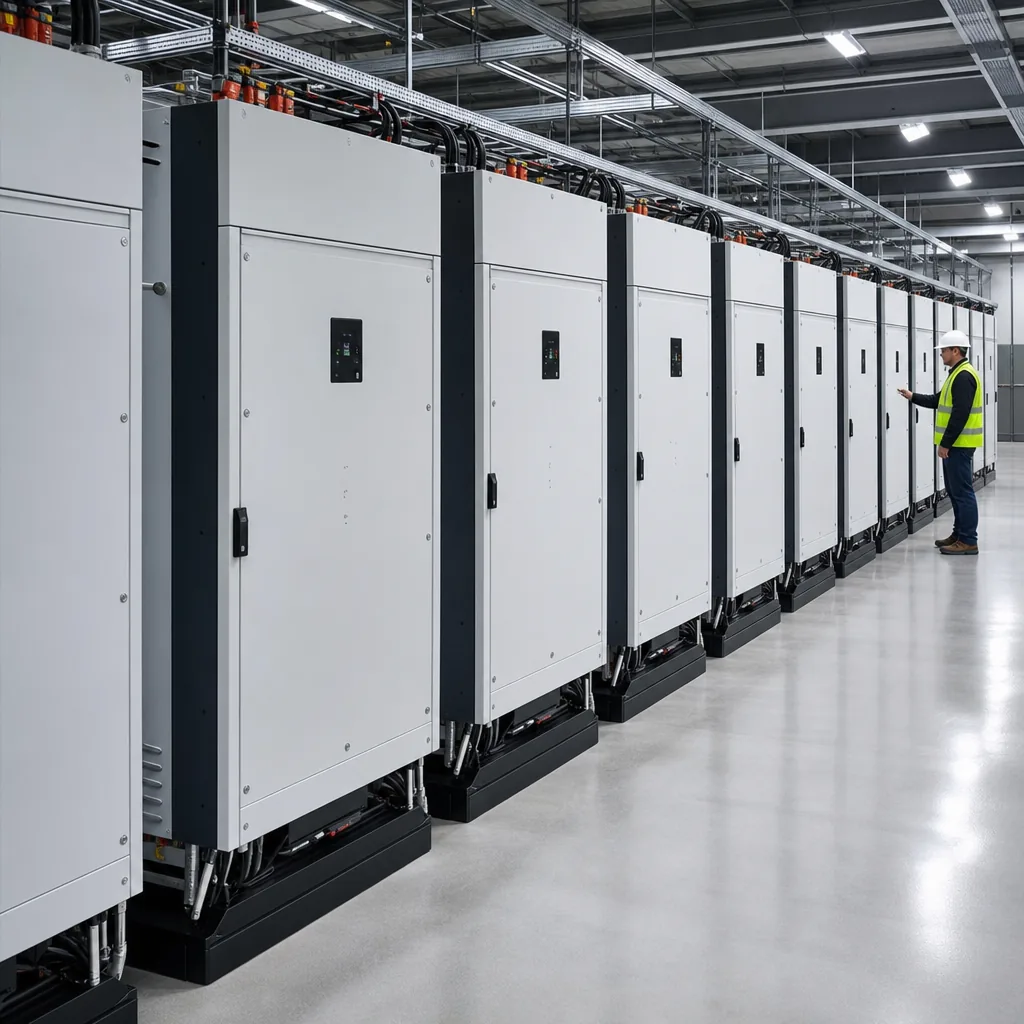
The action, announced on Tuesday 28 July, covers advanced robotic devices including mobile humanoid and quadruped robots, as well as networked inverters used in renewable-energy and data-centre operations. While the move does not name China, it is expected to carry particular weight for Chinese manufacturers, which hold major positions in both markets.
The restriction is based on where a product is made rather than the nationality of the company behind it. Crucially, it applies to new device models that have not already passed the FCC’s equipment-authorisation process. Retailers can continue to sell, import and market previously approved models under the Covered List rules.
Connected devices are at the centre of the decision
The FCC said networked features in both product categories present a potential national-security concern. In its notice, the regulator said: “The networked capabilities of advanced robotic systems create extensive vulnerabilities and vectors for attacks that can manipulate the data and physical operation of the advanced robotic system.”
For inverters, the focus is specifically on equipment with remote communications, data-transmission or firmware-update capabilities. Inverters without remote-control features, or those using an air-gapped external control architecture, are outside the security determination.
US officials’ concern is that remotely connected inverter hardware could be used to shut down solar arrays, collect and remove data, enable surveillance or provide a route for cyberattacks as inverter-based resources become more widely used across the electricity grid. The FCC said the affected devices could create supply-chain vulnerabilities and cybersecurity risks to critical infrastructure.
The decision follows a White House task-force finding that foreign-built robots could present cybersecurity risks to critical infrastructure and to the safety and security of US residents. FCC chairman Brendan Carr welcomed the national-security determinations and said the commission had added foreign-produced advanced robotics and power inverters to the Covered List.
Existing equipment remains on sale
This is not a recall of equipment already in the US market. Existing models that were authorised before the decision can remain on sale, and the FCC has issued a temporary waiver for software and firmware updates for previously authorised robots and inverters until at least 1 January 2029.
There is also a route for some future products to be considered. A foreign-produced robot may receive conditional approval following a favourable determination from the Department of War. Inverter applications may receive similar consideration from either the Department of War or the Department of Homeland Security, if officials decide a product does not pose an unacceptable risk.
That distinction matters because the order is not a blanket prohibition on every overseas-made machine of these types. It is a barrier to authorising new models, with exceptions dependent on security reviews.
Chinese suppliers have a lot at stake
China’s role in the two sectors makes the move especially consequential. China is estimated to have roughly 85% of the global humanoid-robot market. Of about 15,000 humanoid robots shipped worldwide in 2025, research and advisory group Omdia said Unitree and AGIBOT each shipped more than 5,000, while US companies including Tesla and Figure AI shipped a few hundred or fewer.
Unitree was formally designated by the Pentagon as a Chinese military company on 8 June, preventing it from receiving US defence contracts. It then launched commercially in Europe on 22 July, becoming the first Chinese-made humanoid to enter Western commercial markets — six days before the FCC action.
In solar technology, Huawei and Sungrow accounted for 55% of global photovoltaic inverter shipments in 2024, having held the top two positions for a decade. The FCC cited 2020 data showing that US-headquartered manufacturers supplied only 7% of US inverter shipments, with foreign companies dominating utility-scale installations.
Sungrow’s shares fell by as much as 20% in Shenzhen when Reuters first reported that the FCC was considering restrictions on new foreign models. China’s Foreign Ministry accused Washington of overstretching national security to suppress Chinese companies and said Beijing would take measures necessary to defend their legitimate interests.
A wider US push against connected foreign hardware
The additions follow the FCC’s decision to place all foreign-produced drones on the Covered List in December 2025, followed by all foreign-produced routers in March 2026. Chinese drone-maker DJI filed a lawsuit challenging its designation in February; that case remains pending before the Ninth Circuit.
Concern around Chinese solar equipment had been building since May 2025, when US energy officials began reassessing risks after undocumented cellular radios were found inside some Chinese-made solar inverters and batteries, according to Reuters.
For UK buyers, the immediate answer is simple: this is a US rule and does not bar imports or sales in Britain. It does, however, add to pressure on Chinese inverter suppliers after the EU moved to exclude projects using Chinese inverters or other high-risk suppliers from public funding. The UK is not bound by those EU funding rules, but the debate over connected energy hardware is unlikely to stay confined to America.
Why it matters
UK households are not affected by the US rule directly, and it does not suddenly stop existing equipment working. But Chinese companies are central to the global inverter supply chain, so broader restrictions or funding limits in Western markets could eventually influence product choice and prices for solar installers. For businesses considering humanoid or quadruped robots, the decision is another sign that connected hardware is increasingly being judged on its supply chain and remote-access risks as well as its capabilities.