
TSMC Q2 Profit Jumps 77% as It Adds $100bn to Arizona Plan
The chipmaking giant has reported record quarterly earnings and outlined four more advanced Arizona fabs, taking its planned US investment to $265bn.
What you need to know
- TSMC reported record Q2 net income of NT$706.56bn, up 77.4% year on year.
- It plans four more 2nm-class or more advanced fabs in Arizona, although no timetable has been given.
- Strong AI-chip demand has prompted TSMC to raise its 2026 capital-spending forecast to $60bn-$64bn.
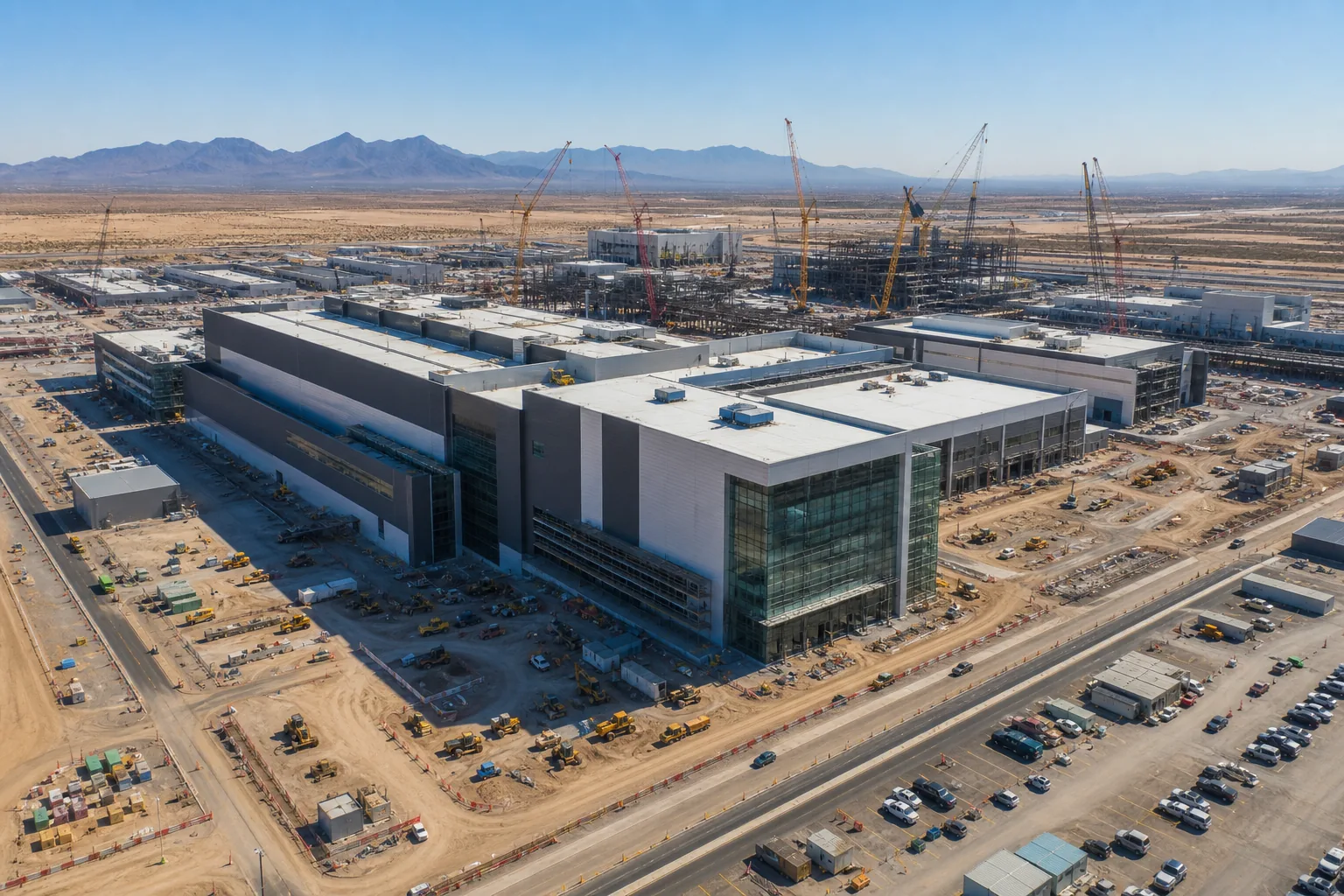
TSMC has reported a record second-quarter profit and committed a further $100bn to semiconductor manufacturing in Arizona, where it plans to build at least four additional fabs for 2nm-class or more advanced chips.
The announcement was made at the Taiwanese chipmaker’s quarterly earnings conference in Taipei on Thursday 16 July. It would take TSMC’s total planned Arizona investment to $265bn, covering 10 fabs, two advanced-packaging facilities and an R&D centre. The company has not said when the extra $100bn will be spent, nor provided construction or production dates for the four newly announced fabs.
For the three months to 30 June, TSMC reported net income of NT$706.56bn, up 77.4% from a year earlier and its fifth consecutive quarter of record profit. Revenue reached NT$1.270tn, while diluted earnings per share were NT$27.25, or US$4.31 per ADR unit.
In US dollar terms, quarterly revenue was $40.20bn, up 33.7% year on year and 12% on the previous quarter. Net profit was $22.36bn, ahead of analyst estimates of $19.74bn. Revenue also exceeded the NT$1.264tn anticipated by analysts cited by CNBC.
AI demand drives another record quarter
TSMC chairman C.C. Wei said: “AI related demand continues to be extremely robust.” That demand is showing up in both sales and profitability. The company’s gross margin reached an all-time high of 67.7%, above the market consensus of 67.1%, while its operating margin hit 60.3%. Net profit margin was 55.6%.
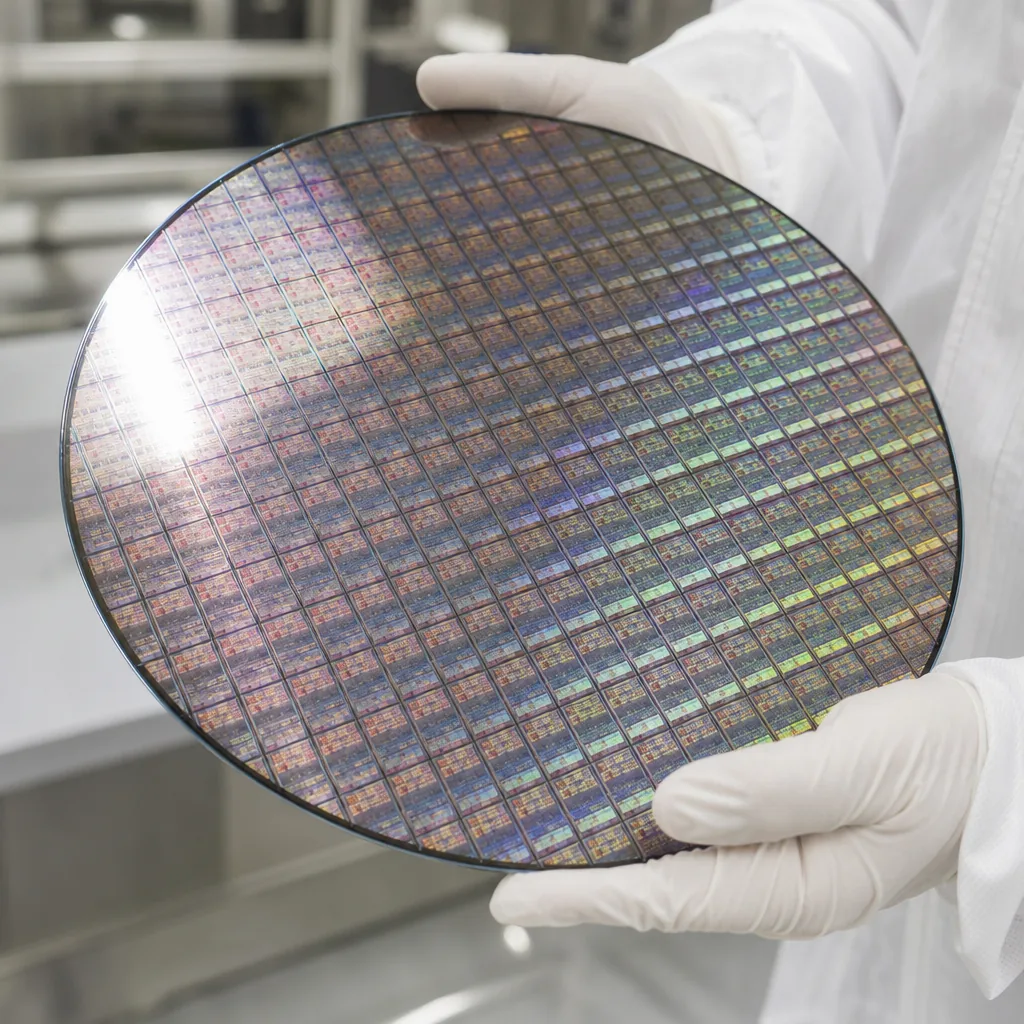
Leading-edge manufacturing was central to the result. Chips made on 7nm processes or smaller accounted for 77% of wafer revenue in the quarter. By process node, 5nm made up 33% of wafer revenue, 3nm accounted for 30%, 7nm supplied 11%, and 2nm contributed 3%.
High-performance computing, the category that includes hardware serving AI and data-centre workloads, represented 66% of TSMC’s 2026 revenue by platform. Smartphones followed at 22%, with Internet of Things products at 5%.
June was also a milestone month, with revenue reaching a record NT$442.68bn. That was up 67.9% from a year earlier and helped push second-quarter revenue above the high end of TSMC’s guidance. First-half cumulative revenue totalled NT$2.404tn, up 35.6% year on year.
Arizona expansion adds four advanced fabs
TSMC had already committed $165bn to Arizona, including six planned fabrication facilities. The latest $100bn commitment is intended for four more fabs producing 2nm or more advanced technologies, alongside advanced packaging capacity supporting demand from US customers.
“This is to build several or more semiconductor logical wafer fab for two nanometer MP [mass production] technologies, as well as advanced packaging fabs to support the strong multi-year demand from our leading U.S. customers.”
Wei said the expansion would foster the US semiconductor ecosystem, strengthen the supply chain and support high-tech jobs. The White House and Department of Commerce confirmed the additional investment on 16 July. Commerce Secretary Howard Lutnick said the project would create tens of thousands of American jobs.
The Arizona programme began with an announcement in May 2020. Fab 21 Phase 1 is now producing 4nm chips at volume, including chips for Apple and Nvidia. It is also manufacturing silicon for Nvidia’s Blackwell AI processors, making it the first TSMC site outside Taiwan to produce cutting-edge AI silicon.
A second Arizona fab, set to use 3nm process technology, was completed in April 2026. Commercial production is expected in the second half of 2027. TSMC Arizona currently employs more than 3,500 people in the state.
More spending, but pressure on margins
TSMC has raised its 2026 capital-expenditure forecast to between $60bn and $64bn, from a previous range of $52bn to $56bn. It expects 70% to 80% of that spending to go on advanced process technologies, with advanced packaging receiving 10% to 20% and specialty processes around 10%.
For the current quarter, management expects revenue of $44.6bn to $45.8bn, with gross margin between 65% and 67% and operating margin between 56% and 58%. Wei said full-year 2026 revenue growth should be slightly above 40% in US dollar terms.
There is a caution alongside the bullish outlook. TSMC expects the rapid ramp-up of 2nm production to cut gross margin by roughly three to four percentage points in the second half of 2026. CFO Wendell Huang said third-quarter business should still be supported by continued demand for leading-edge processes, including the steep increase in 2nm production.
Why UK buyers should care
Most consumers will not buy a TSMC chip directly, but they regularly buy or use products powered by chips the company makes. Its customers include global technology companies such as Nvidia, Apple and Broadcom, meaning its advanced manufacturing output feeds into smartphones, AI-capable PCs and the data centres behind online services.
The Arizona plans will not change availability overnight, particularly as dates for the newly announced fabs remain unconfirmed. But the scale of spending indicates that chipmakers expect demand for advanced AI and computing hardware to stay high for years. For UK buyers, that matters because manufacturing capacity affects the pace at which next-generation devices and services can be produced and delivered.
Why it matters
TSMC makes chips used by companies including Apple, Nvidia and Broadcom, so its ability to expand advanced production has consequences for the phones, AI PCs and cloud services used in the UK. More capacity outside Taiwan could strengthen the supply chain over time, although the newly announced Arizona sites have no construction or production dates. The immediate signal is that demand for leading-edge chips remains exceptionally strong, which may help determine how quickly next-generation consumer devices reach market.