
Claude Voice Mode Adds Opus, Sonnet and App Control
Anthropic’s voice assistant can now use its more capable models and connected apps, though the most useful features sit behind a paid plan.
What you need to know
- Claude Voice Mode now supports the faster versions of Haiku, Sonnet and Opus, depending on a user’s plan.
- Connected apps including Gmail, Google Calendar, Slack, Canva and Notion can be used through voice requests.
- Free users remain limited to Haiku and one connected app, while paid plans get the expanded tools.
Claude’s voice assistant gets more capable
Anthropic has upgraded Claude Voice Mode with support for its Opus and Sonnet models, alongside the ability to work with connected apps including Gmail, Google Calendar, Slack, Canva and Notion. The update was announced on Thursday 23 July and is now available in beta to Claude chat users on mobile, desktop and the web.
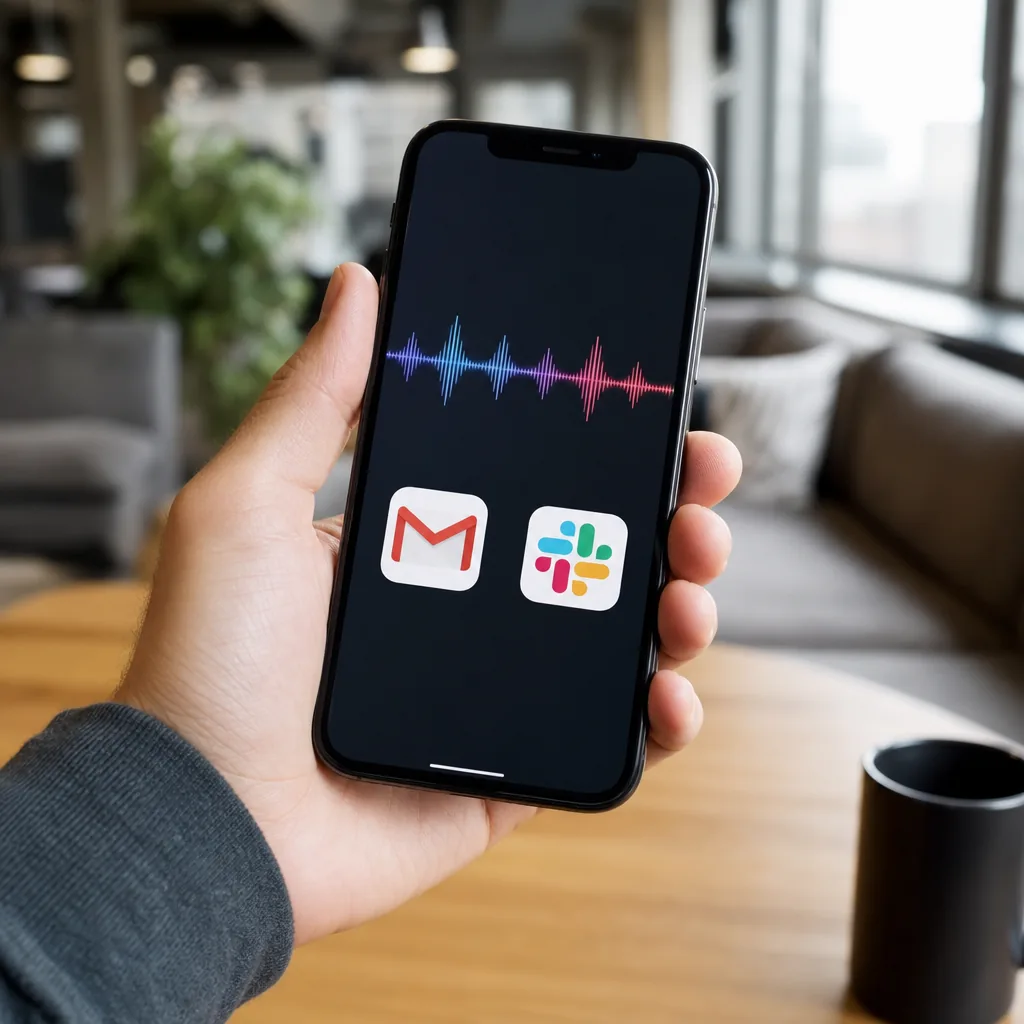
The change is intended to move Claude’s spoken interface beyond quick questions and towards more involved work. Users can now ask Claude to help update a meeting slot, draft an email or create a document in Notion without having to move between apps themselves. Claude will ask for permission before it uses a connected tool, according to Anthropic’s documentation.
Voice Mode starts with whichever model the user last selected in text chat and uses that model’s fastest version by default. A model picker also allows users to switch between Haiku, Sonnet and Opus during a conversation. Anthropic says: “Voice mode uses the fastest version of whichever model you’ve selected, so the conversation runs smoothly.”
App access is the bigger change
Opus and Sonnet support will attract attention because they are Anthropic’s more capable model families, but the new connector access may be the feature that changes how people use Voice Mode day to day. Rather than asking an assistant for information and then manually acting on it, users can speak a request that involves their calendar, inbox or workspace.
That does not mean Claude can freely roam through a person’s accounts. App connections are managed through Settings > Connectors in the Claude mobile, desktop and web apps, and Anthropic says it asks for permission before using a connected tool. Voice transcripts are also saved in chat history in the same way as text chats, while voice conversations count towards normal Claude usage limits.
The company has not published separate message caps for Voice Mode. It has also not specified the exact versions of Opus and Sonnet used in the feature, so users should not assume a particular numbered model release is included.
Free users get a narrower version
The beta is open to all Claude chat users, but the split between free and paid tiers is significant. Free users are restricted to the Haiku model and a single connected app. Paid plans unlock Opus, Sonnet and every connected tool, giving subscribers a much broader voice-driven workflow.
Anthropic does not publish its subscriptions in pounds. As of 22 July, Claude Pro costs $20 per month, or $17 per month when billed annually, before VAT. For UK customers, the final amount depends on the card provider’s exchange rate and UK VAT, with Pro typically landing at roughly £19.50 to £21 per month. Max plans start at $100 per month, while Team starts at $25 per seat monthly with a two-seat minimum.
No new Voice Mode price was announced. Anthropic has confirmed that Opus and Sonnet voice access requires a paid plan, but it has not specified which paid tier is the minimum for each advanced model.
Still less conversational than ChatGPT
Claude’s update arrives weeks after OpenAI introduced a new family of conversational models and refreshed ChatGPT’s voice offering. Anthropic’s approach differs in an important way: its update is focused on model intelligence and access to tools that can help carry out work.
There is a compromise. An Anthropic spokesperson told Engadget that Voice Mode uses a turn-based architecture. Claude listens, pauses to think, then responds, rather than maintaining the more fluid, back-and-forth feel associated with some rival voice experiences. Anthropic did not change the underlying voice model in this release and has not detailed the voice technology stack it uses.
Anthropic told Engadget that further voice investment is planned later this year. For now, the company appears to be prioritising useful outcomes over a more lifelike conversation style.
What it means for UK users
For paid UK subscribers, this could make Claude a more credible assistant between meetings, during a commute or while working away from a keyboard. The stronger models should be better suited to research, planning, writing and detailed questions than the speed-focused Haiku model alone, while app connectors reduce the friction of turning a spoken request into an actual task.
For free users, the gain is more modest: Voice Mode is available, but it remains tied to Haiku and one connected app. Language support is also wider across tiers, covering English, French, German, Hindi, Indonesian, Italian, Japanese, Korean, Portuguese for Brazil, and Spanish for Latin America and Spain.
Users need to select or request their voice language specifically, as Claude does not automatically detect it and existing language settings do not carry over to Voice Mode. The feature works best from a phone, according to Anthropic, which fits its pitch as a genuinely hands-free productivity tool rather than a replacement for the desktop chat window.
Why it matters
This makes Claude more practical as a hands-free work assistant rather than simply a voice-enabled chatbot. For UK users, the appeal is being able to plan, draft and organise tasks while away from a keyboard, although the strongest models and broadest app access require a paid subscription billed in US dollars plus VAT. The trade-off is that Claude’s conversations remain turn-based, making them less naturally flowing than some rival voice assistants.