
Nvidia RTX 5070 Ti vs RTX 5080: Which GPU Is the Sweet Spot for 1440p and 4K?
Two closely related Blackwell cards, one awkward price gap, and a very simple question: how many extra pixels are you really paying to push?
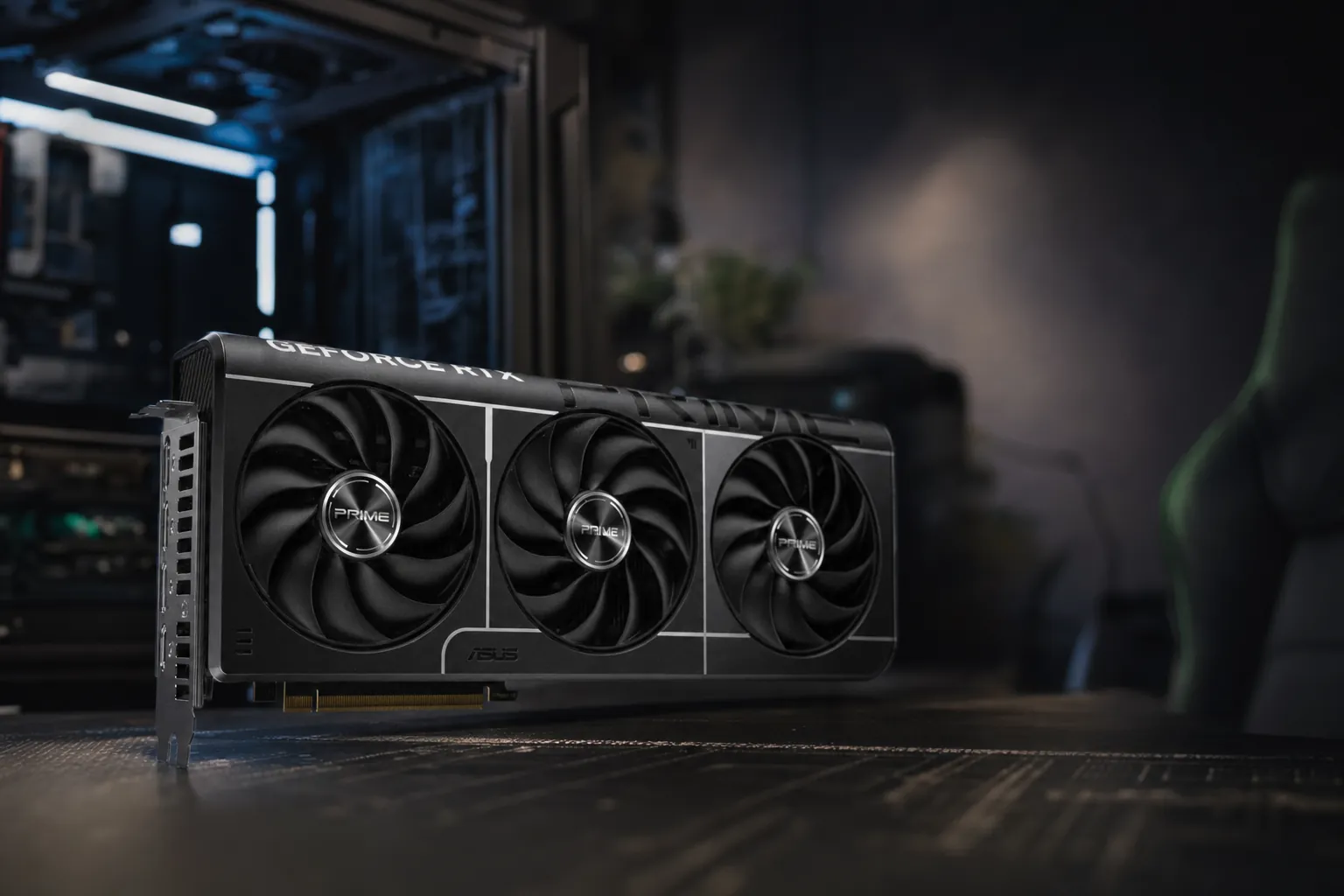
We link to the exact model on Amazon UK. Prices change often, so check the live price before you buy. As an Amazon Associate we earn from qualifying purchases.
The RTX 5070 Ti and RTX 5080 share Nvidia's GB203 GPU family, but their real-world appeal changes sharply once you move from 1440p to demanding 4K gaming.
RTX 5070 Ti vs RTX 5080: the short answer for UK buyers

The RTX 5070 Ti is the better-value choice for high-refresh 1440p and sensible 4K gaming. The RTX 5080 is the stronger card for native 4K, heavyweight ray tracing and high-refresh 4K monitors. That sounds almost too neat, but the benchmark gap and the price gap really do point in different directions.
These are not wildly different GPUs separated by several product tiers. Both are desktop Blackwell cards based on Nvidia's GB203 family. Both have 16GB of GDDR7 memory on a 256-bit interface. Both support the same big-ticket Nvidia stack: DLSS 4.5, Super Resolution, DLAA, Ray Reconstruction, Frame Generation, Multi Frame Generation, Dynamic Multi Frame Generation and Reflex 2. Neither card leaves you outside the modern Nvidia ecosystem.
The raw performance difference is real, just not especially dramatic. In aggregate testing, the RTX 5070 Ti was approximately 12% slower than the RTX 5080 at 1440p and 13% slower at 4K. Put another way: the 5080 is faster, unquestionably, but it does not turn a bad experience into a good one. It turns an already fast experience into a more comfortable one.
That distinction matters. If you play at 1440p on a 165Hz-class display, the 5070 Ti generally has the muscle you want without paying for a level of 4K headroom you may rarely use. If you own a 4K 120Hz-or-higher screen, regularly push ultra settings, or cannot resist switching on every ray-tracing toggle until the game starts looking suspiciously like a film set, the RTX 5080's extra resources make more sense.
The buying rule in one sentence

Buy the RTX 5070 Ti when it sits near its sensible price zone and your priority is 1440p or 4K at sensible settings; pay for the RTX 5080 when high-refresh 4K and demanding ray tracing are the actual goal, not just a nice idea for later.
Two Blackwell GPUs, one important difference in headroom
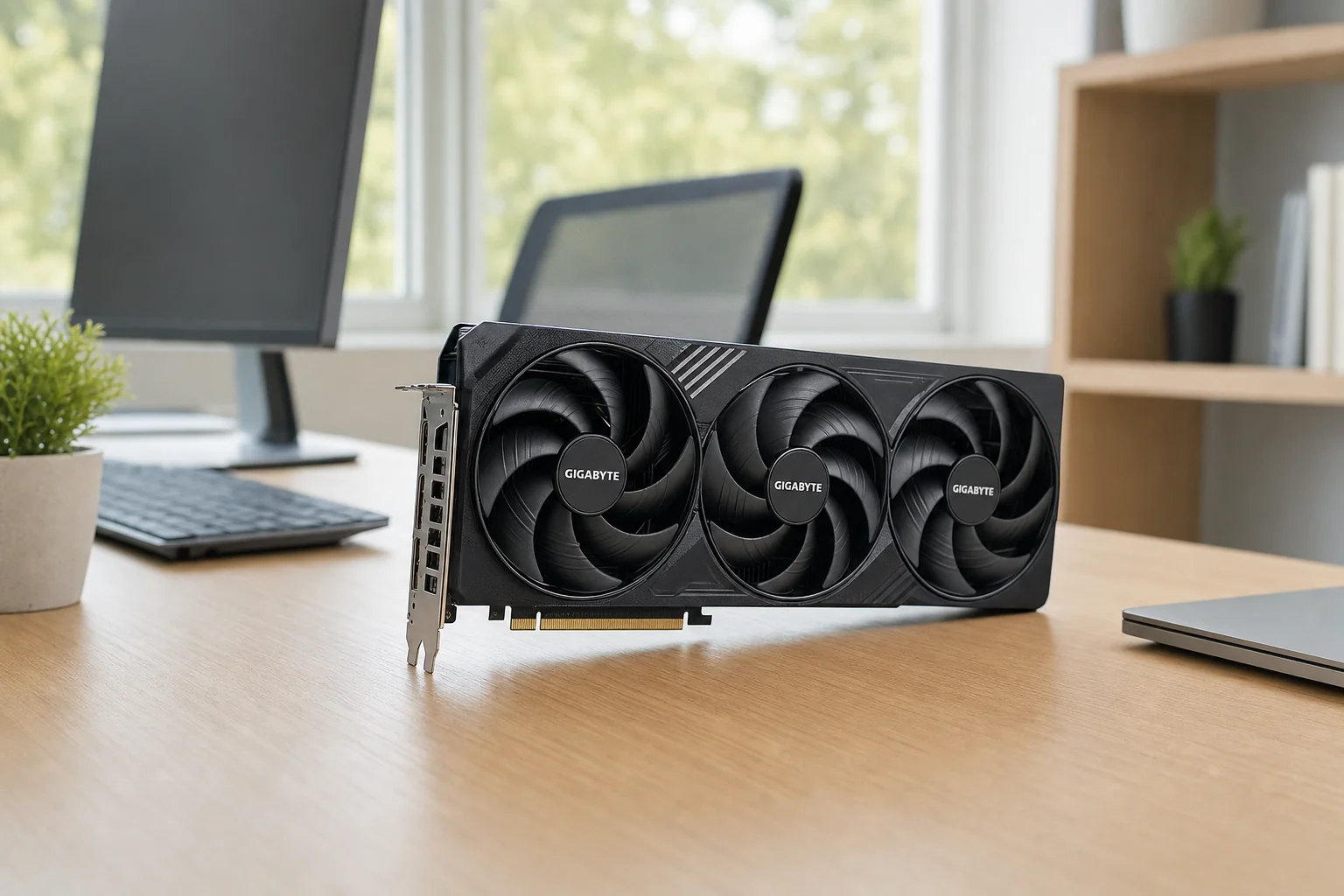
At a glance, the RTX 5070 Ti and RTX 5080 can look unusually similar for cards with such different prices. They use the same Blackwell architecture, the same GB203 GPU family, the same 16GB memory capacity and the same 256-bit bus width. This is not a case where the cheaper card has been saddled with a worrying memory cut. That 16GB figure is a major reason the 5070 Ti remains appealing for buyers who want to keep a card for several years.
The important difference is how much of the GB203 silicon Nvidia enabled. The RTX 5070 Ti carries 8,960 CUDA cores, while the RTX 5080 has 10,752. That is 1,792 additional CUDA cores on the 5080, or 20% more on paper. The 5080 also has the faster reference boost clock, at 2.62GHz rather than 2.45GHz. More cores plus a higher clock gives it more room to breathe in games where the GPU is fully loaded.
There is a similar spread in specialised hardware. The RTX 5070 Ti is rated at 1,406 AI TOPS and 133 RT TFLOPS. The RTX 5080 rises to 1,801 AI TOPS and 171 RT TFLOPS. Those numbers do not translate cleanly into a universal frame-rate percentage, because games, render paths and DLSS implementations vary enormously. Still, they explain why the 5080's lead tends to be more useful when ray tracing is heavy or when you are trying to hold a high frame rate at 4K.
Memory is where the comparison gets slightly mischievous. The RTX 5080 uses 30Gbps GDDR7 memory and reaches 960GB/s of bandwidth. The RTX 5070 Ti uses 28Gbps GDDR7 for 896GB/s. The 5080 therefore gets a little more bandwidth to feed its larger core count, but it does not get more capacity. If your concern is texture-heavy games, demanding mods or simply avoiding a 12GB ceiling at 4K, both cards land in the same reassuring 16GB camp.
The RTX 5080's advantage is performance headroom, not a different feature class. The fundamental display, DLSS, Reflex, driver and creator feature set is shared. This is why price matters so much: you are paying for more speed rather than access to a separate club.
| Core hardware | RTX 5070 Ti | RTX 5080 |
|---|---|---|
| Architecture / GPU family | Blackwell / GB203 | Blackwell / GB203 |
| CUDA cores | 8,960 | 10,752 |
| Reference base clock | 2.30GHz | 2.30GHz |
| Reference boost clock | 2.45GHz | 2.62GHz |
| AI performance | 1,406 AI TOPS | 1,801 AI TOPS |
| Ray-tracing performance | 133 RT TFLOPS | 171 RT TFLOPS |
| Buy | Check price | Check price |
The GPU names matter less than the enabled resources beneath them: the RTX 5080 has more CUDA, AI and ray-tracing hardware, while both retain 16GB of GDDR7 memory.
The full scorecard: where the extra money actually goes
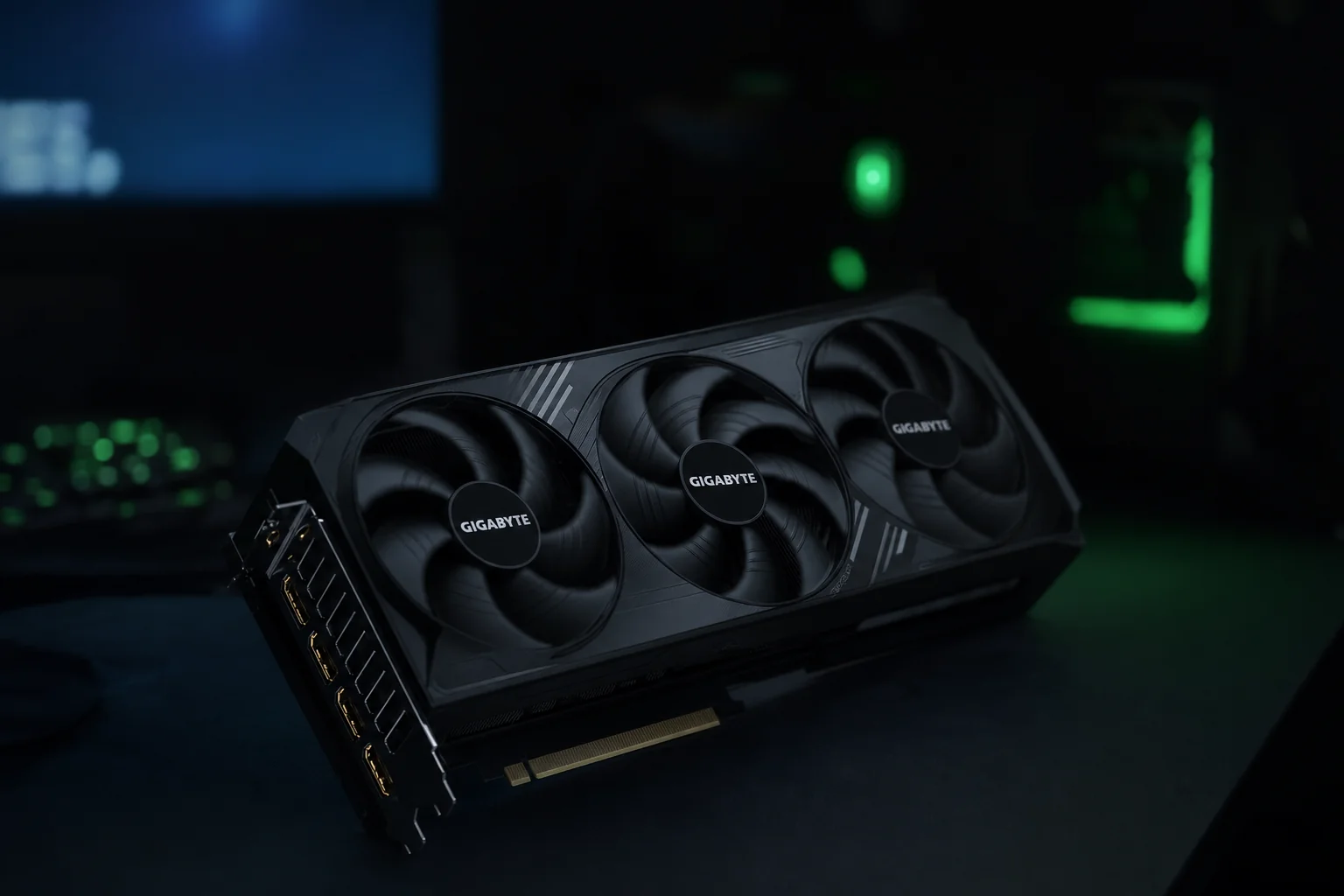
A proper spec comparison is useful here because it cuts through the usual GPU-launch fog. The RTX 5080 does not hide a wider memory bus, a larger frame buffer or a radically different connectivity package behind its price. It earns its lead through more processing resources, faster memory, a higher clock and a higher power budget.
Both cards support PCIe Gen 5, three DisplayPort outputs and one HDMI output. Both support DisplayPort 2.1b and HDMI 2.1b, can drive up to four displays, and list 4K at 480Hz or 8K at 165Hz with DSC as their maximum digital display capability. Both also carry two ninth-generation NVENC encoders and support AV1 encoding and decoding. For streamers and video creators, that shared dual-encoder arrangement is very welcome.
There is one video-engine wrinkle: the RTX 5080 has two sixth-generation NVDEC decoders, while the RTX 5070 Ti has one. It is not the reason most gamers should choose the 5080, but it is a genuine differentiator for workloads that lean on video decoding. The broader software package remains shared: Game Ready and Studio Drivers, Nvidia App, G-SYNC, RTX HDR, RTX Remix, Nvidia Broadcast and VR Ready support are all on the table.
| Reference specification | RTX 5070 Ti | RTX 5080 |
|---|---|---|
| Memory | 16GB GDDR7 | 16GB GDDR7 |
| Memory speed | 28Gbps | 30Gbps |
| Memory interface | 256-bit | 256-bit |
| Memory bandwidth | 896GB/s | 960GB/s |
| Total graphics power | 300W | 360W |
| Recommended system power | 750W | 850W |
| Video encoders | Two 9th-generation NVENC | Two 9th-generation NVENC |
| Video decoders | One 6th-generation NVDEC | Two 6th-generation NVDEC |
| Reference dimensions | Varies by board partner | 304 × 137mm Founders Edition, two-slot |
Modern display support
Both cards support DisplayPort 2.1b, HDMI 2.1b, up to four displays and extremely high 4K or 8K output modes with DSC.
Creator-ready encoding
Both include two ninth-generation NVENC encoders and AV1 encode/decode support for modern capture and video workflows.
DLSS feature parity
There is no cut-down DLSS package on the 5070 Ti: Super Resolution, DLAA, Ray Reconstruction and frame-generation tools are shared.
Reflex 2 and G-SYNC
Both support Reflex 2, including Low Latency Mode and software-dependent Frame Warp support, alongside G-SYNC.
The physical buying experience differs more than the class specification suggests. Nvidia offered a Founders Edition RTX 5080, quoted at 304 × 137mm and two slots. The RTX 5070 Ti had no Founders Edition, so every purchase is a board-partner decision. That means cooler quality, length, thickness, fan tuning and price are especially important. One reviewed PNY RTX 5070 Ti 16GB OC measured 298 × 59 × 120mm, but that should not be treated as a universal size. Check your exact card, your case clearance and the bend room for the power cable. Boring advice, perhaps. Far less boring than discovering your new card is also a very expensive side-panel spacer.
1440p tested: the 5070 Ti is already fast enough for most monitors
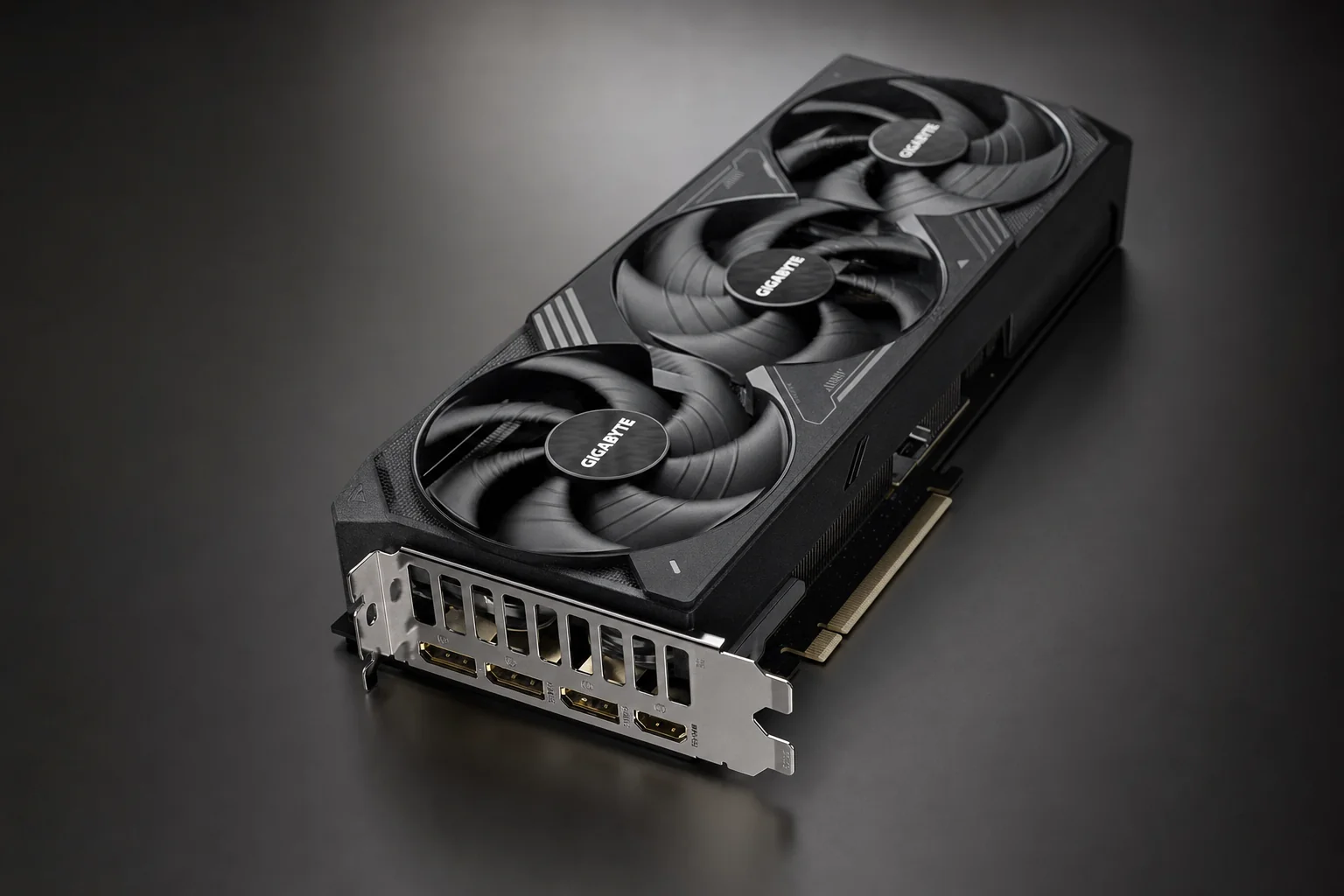
1440p is the resolution where the RTX 5070 Ti makes its strongest argument. It is already a high-end card by any sensible measure, and it was only around 12% behind the RTX 5080 in aggregate 1440p testing. On a chart, that sounds like a neat gap. In a game, it often looks like the difference between a little more breathing room and a little less — not the difference between smooth and unplayable.
For someone on a 1440p 144Hz, 165Hz or similar high-refresh monitor, that matters. Many games will become CPU-limited at this level depending on your processor and settings, particularly competitive titles that are engineered to run at very high frame rates. In those cases, spending far more on a 5080 may buy a benchmark lead that your screen cannot properly show. The 5070 Ti already has the core strength, 16GB memory capacity and Nvidia feature set needed for a premium 1440p build.
Relative index based on aggregate testing in which the RTX 5070 Ti was approximately 12% behind the RTX 5080 at 1440p. It is a broad performance guide, not a promise of the same result in every game.
The actual games tell the same story. In A Plague Tale: Requiem, the RTX 5070 Ti was 11% slower than the RTX 5080 at 1440p. In Starfield, it averaged 85fps at 1440p. In War Thunder, it reached 378fps on average, although it was only 5% ahead of the RTX 4070 Ti Super there — a useful reminder that not every title rewards newer hardware to the same degree.
That last point is worth lingering on. Buying a 5080 at 1440p is not foolish; it just needs a reason. Maybe you have a very high-refresh panel. Maybe your favourite games are unusually demanding. Maybe you value keeping ultra settings for longer, use a powerful CPU and would rather have excess GPU headroom than fiddle with settings. All perfectly valid. But it is also very easy to pay for frame rates that your monitor, your processor or your chosen games do not fully exploit.
| 1440p perspective | RTX 5070 Ti | RTX 5080 |
|---|---|---|
| Aggregate relative performance | Approximately 12% behind RTX 5080 | Reference point |
| A Plague Tale: Requiem | 11% slower than RTX 5080 | Faster result |
| Starfield | 85fps average | Faster result |
| War Thunder | 378fps average | Faster result |
| Best fit | High-refresh 1440p | High-refresh 1440p with extra margin |
For 1440p, monitor refresh rate is the reality check
If your display tops out around 165Hz, the RTX 5070 Ti is usually the rational choice. The RTX 5080 becomes easier to justify at 240Hz-plus, with demanding RT settings, or when you know you will move to 4K soon rather than merely thinking you might.
There is another reason the 5070 Ti suits this resolution so well: it avoids the awkward compromise of the RTX 5070's 12GB frame buffer. The RTX 5070 remains a credible lower-cost Nvidia route for 1440p, but the 5070 Ti's 16GB gives it a cleaner long-term story for modern high-detail settings. The 5080 has no capacity advantage over it. At 1440p, therefore, the 5070 Ti's memory specification feels like the sensible baseline and the 5080's additional throughput feels like a luxury.
My take is simple. For high-refresh 1440p, start with the RTX 5070 Ti and let price decide whether you move up. If the 5080 lands unusually close in price, the decision changes. If it remains hundreds of pounds dearer, you are paying a substantial premium for a lead that is visible in testing but not always transformative in play.
At 1440p, both cards are built for high-refresh gaming; the practical question is whether your monitor and favourite games can make use of the RTX 5080's extra margin.
4K is the separator: smoother margins versus smarter spending
Move to 4K and the RTX 5080's case gets clearer. Four times as many pixels as 1080p place much heavier demands on shader throughput, memory bandwidth and every other part of the graphics pipeline. Add high-resolution textures and ray tracing, and a game can become very rude indeed. This is where the extra CUDA cores, faster memory and higher clocks stop being theoretical specification-table decoration.
In aggregate 4K testing, the RTX 5070 Ti was approximately 13% slower than the RTX 5080. Again, that is not a colossal gulf. But at 4K, an extra 13% can matter more because you are more likely to be operating near a target frame rate. The difference between 70fps and 79fps, or 90fps and just over 100fps, changes how much room you have for a more demanding preset, more aggressive ray tracing or a less compromising DLSS mode.
This aggregate 4K index reflects the RTX 5070 Ti trailing the RTX 5080 by approximately 13%. Individual games, engines and ray-tracing settings can move the gap in either direction.
The 5070 Ti is still a genuinely capable 4K card. Notebookcheck recorded 42.4fps in Star Wars Outlaws at 4K Ultra, 46.6fps in S.T.A.L.K.E.R. 2 at 4K Epic and 32fps in Black Myth: Wukong at 4K cinematic on a tested KFA2 RTX 5070 Ti 1-Click OC. Those figures are not an argument that it should be bought for uncompromising native 4K in every demanding game. They are proof that 4K needs settings judgement, and often DLSS, even with expensive hardware.
That is the key distinction between "capable of 4K" and "comfortable at 4K". The RTX 5070 Ti is very good for players targeting roughly 60–100fps in a sensible mix of rasterised games and DLSS-assisted heavy titles. It has 16GB of memory, strong base performance and all the right upscaling tools. The RTX 5080 gives you more reserve for the days when a game refuses to be sensible, or when you want to pair a 4K 120Hz-plus display with settings that would make a mid-range GPU quietly request a holiday.
Neither card magically makes heavy native-style 4K ray tracing effortless. The RTX 5070 Ti returned 31fps in both cited 4K RT/DLSS results for Black Myth: Wukong and Alan Wake II. DLSS is a central part of the experience at this level, not an optional party trick.
RTX 5070 Ti at 4K
- Strong entry-to-high-end 4K performance with DLSS.
- 16GB GDDR7 avoids a capacity cut versus the RTX 5080.
- Better-value route to 4K when bought near its sensible price range.
- Well suited to 60–100fps targets rather than chasing every last high-refresh frame.
RTX 5070 Ti limits at 4K
- Approximately 13% behind the RTX 5080 in aggregate 4K testing.
- Heavy RT and path tracing can still produce uncomfortable frame rates.
- Less margin for ultra presets, demanding engines and future monitor upgrades.
- Street pricing can undermine its value advantage.
The RTX 5080 is therefore the cleaner recommendation for someone who has already committed to a serious 4K setup. It is the faster card at the resolution where its extra pace is most useful, and it is the strongest Nvidia option below the RTX 5090 for high-refresh 4K gaming. Still, "cleaner recommendation" is not the same as "automatic bargain". The 5080 needs a sensible price gap. If you are mostly playing at 4K 60fps with DLSS available, the 5070 Ti can deliver an excellent experience for less.
There is no shame in using DLSS at 4K, by the way. It is the intended tool for modern demanding games, especially with ray reconstruction and frame-generation features in play. The sensible question is whether the underlying frame rate is strong enough for the result to feel good. The RTX 5080 gives you more cushion. The RTX 5070 Ti gives you a more attractive route into the same Nvidia toolset.
Ray tracing, path tracing and DLSS: Nvidia's premium case
Feature parity does not mean performance parity. Both cards get the whole current Blackwell gaming toolbox, but the RTX 5080 has more ray-tracing and AI hardware to make use of it. Its 171 RT TFLOPS compares with 133 RT TFLOPS on the RTX 5070 Ti, while 1,801 AI TOPS compares with 1,406 AI TOPS. If your library leans towards the games that treat lighting as a personal challenge, that extra headroom is meaningful.
Ray tracing is where Nvidia's broader premium argument gets strongest, especially versus AMD's similarly performing raster alternatives. The RTX 5070 Ti was close to the Radeon RX 9070 XT in broad game testing, but Nvidia was substantially stronger in heavy ray tracing and path tracing. In the cited Doom path-tracing test, the 5070 Ti managed 31fps but was 63% faster than the RX 9070 XT. That is a useful result for showing the direction of travel, although 31fps also tells you that path tracing remains brutally demanding.
DLSS Super Resolution and DLAA
Both cards support DLSS Super Resolution for performance scaling and DLAA when image quality is the priority.
Ray Reconstruction
Both support Ray Reconstruction, an important part of Nvidia's approach to cleaning up demanding RT workloads.
Frame-generation options
Frame Generation, Multi Frame Generation and Dynamic Multi Frame Generation are shared across the two cards.
Reflex 2
Both support Reflex 2, including Low Latency Mode and software-dependent Frame Warp support.
| RT and AI capability | RTX 5070 Ti | RTX 5080 |
|---|---|---|
| Ray-tracing throughput | 133 RT TFLOPS | 171 RT TFLOPS |
| AI throughput | 1,406 AI TOPS | 1,801 AI TOPS |
| DLSS 4.5 | Supported | Supported |
| Ray Reconstruction | Supported | Supported |
| Frame Generation / Multi Frame Generation | Supported | Supported |
| Reflex 2 | Supported | Supported |
There are two ways to read this. The generous reading is that the 5070 Ti gets nearly all the things buyers actually care about, so it is a tremendous way into Nvidia's modern graphics stack. The stricter reading is that those features are most valuable in the games that also push the GPU hardest, and the RTX 5080 is more likely to have the underlying performance to use them comfortably at 4K.
Frame generation is not a substitute for a healthy base frame rate
Frame-generation technologies can make a smoother-looking result possible, but they do not erase the need for strong underlying performance. For very demanding 4K ray tracing and path tracing, the RTX 5080's additional hardware gives it a more comfortable starting point.
For ordinary rasterised 1440p gaming, the distinction is much less urgent. For a buyer who wants the best possible ray-traced experience without stepping all the way into RTX 5090 territory, it is a major reason to favour the 5080. The catch, as ever, is that its present street price asks you to pay heavily for that privilege.
Ray tracing is where the RTX 5080's additional 38 RT TFLOPS and higher AI throughput become most useful, particularly once 4K and reconstruction features are involved.
Power, cooling and the hidden cost of a faster board
The RTX 5070 Ti is rated at 300W total graphics power and Nvidia recommends a 750W system power supply. The RTX 5080 is rated at 360W and carries an 850W recommended PSU figure. That is a 60W difference, which means the 5080's graphics-power rating is 20% higher than the 5070 Ti's.
On paper, 60W can sound modest next to the total draw of an expensive gaming PC. In a real build, it can affect your purchasing decisions. A good existing 750W unit may suit the 5070 Ti, while an RTX 5080 build may send you towards an 850W PSU. That is potentially extra cost, extra cable work and one more part to consider when tallying a full upgrade. It is not always decisive, but it is very much part of the actual price difference.
There is a particularly important caveat with board-partner cards: rated power is not the whole story. A reviewed PNY RTX 5070 Ti 16GB OC averaged 305W, close to its class rating, but reached a measured peak of 350W. This does not make every 5070 Ti a 350W card. It does show why factory-overclocked models, alternative BIOS modes and individual cooler designs deserve more attention than the tiny clock uplift printed on the box.
Cooling results also vary by card rather than GPU name. The PNY RTX 5070 Ti OC was measured at 71°C peak and 67°C average. The RTX 5080 Founders Edition recorded a 67°C gaming temperature, a 74°C memory temperature, 36.8dBA noise and a 1,493rpm fan speed in testing. Board-partner RTX 5080s ranged from around 25.5dBA to 38.6dBA. That is an enormous spread for something casually described as "an RTX 5080". Cooler design matters. BIOS mode matters. Your case airflow matters.
RTX 5070 Ti build advantages
- Lower 300W rated graphics power.
- 750W recommended system PSU is easier to accommodate in many existing builds.
- More potential to spend saved money on a quieter, better-cooled board-partner design.
RTX 5080 build costs
- 360W rated graphics power means 60W more than the 5070 Ti.
- 850W recommended PSU can make an upgrade more expensive.
- More heat requires sensible case airflow and cooler selection.
The RTX 5070 Ti uses two PCIe 8-pin cables via an adapter or one 300W-or-greater PCIe Gen 5 cable. The RTX 5080 requires three PCIe 8-pin cables via an adapter or one 450W-or-greater PCIe Gen 5 cable. Check your PSU cables before the card arrives, not after.
The UK price test: when does the 5080 premium make sense?
At launch, the arithmetic was straightforward. The RTX 5070 Ti carried a UK launch MSRP of £729, while the RTX 5080 was £979. That was a £250 gap. Given that the 5080 was roughly 12–13% faster in aggregate performance, the 5070 Ti looked like the more balanced buy for many players, while the 5080 was clearly aimed at people with a more demanding 4K target.
By 17 August 2026, street pricing had made the decision less tidy. Recent UK retail tracking placed RTX 5070 Ti cards at approximately £865–£900, while the RTX 5080 sat around £1,170 in the latest snapshot, with other recent listings higher. Using £865 and £1,170 as a representative comparison produces a £305 gap. That is around 35% more money for the RTX 5080 against an aggregate gaming lead of approximately 12–13%.
RTX 5070 Ti launch MSRP
$749 US launch MSRP. The strongest value territory remains near launch price or a modest premium.
RTX 5070 Ti current snapshot
Recent UK retailer tracking. This premium weakens, but does not erase, the card's value case.
RTX 5080 current snapshot
Launch MSRP was £979. The 5080 is easier to defend when it moves much closer to £1,050.
| Price position | RTX 5070 Ti | RTX 5080 |
|---|---|---|
| UK launch MSRP | £729 | £979 |
| US launch MSRP | $749 | $999 |
| Recent UK snapshot | Approximately £865–£900 | Approximately £1,170 |
| Representative current gap | Approximately £305 between £865 and £1,170 | |
| Aggregate performance difference | RTX 5070 Ti approximately 12% slower at 1440p and 13% slower at 4K | |
This is the section where I would resist looking only at the badge. An RTX 5080 at £1,170 is not a bad GPU. It is a fast, capable 4K card with excellent RT hardware. But it is difficult to call it the proportional-value choice when its price is roughly a third higher than the cheapest current 5070 Ti snapshot and its broad performance gain is closer to an eighth.
The RTX 5070 Ti is not immune to that criticism. At £865–£900, it is a long way above its £729 launch position. The sensible rough guide is that it becomes compelling below about £800, while the RTX 5080 becomes substantially more defensible below about £1,050. These are not magical thresholds, just practical points where the performance-to-price relationship starts looking less strained.
Do not compare the wrong cards
A premium four-slot factory-overclocked model can distort the comparison badly. Compare like-for-like entry or mid-range board-partner cards, then prioritise cooler quality, dimensions, warranty and noise over a tiny advertised clock increase.
The current UK price gap is the awkward part of this comparison: the RTX 5080 is faster, but its retail premium has often grown more quickly than its aggregate benchmark lead.
The alternatives that complicate the Nvidia decision
The Radeon RX 9070 XT is the value spoiler in this whole conversation. It is the card that forces Nvidia buyers to decide how much they genuinely value DLSS, ray tracing and the wider Nvidia creator ecosystem. In a 52-game comparison, the RTX 5070 Ti averaged 84fps at 4K versus 81fps for the RX 9070 XT, a roughly 4% advantage. At 1440p, the Nvidia card was only 2fps ahead on average, and the 1% lows were 108fps versus 107fps. That is effectively a tie in broad rasterised gaming.
Yet current UK RX 9070 XT pricing has been approximately £595–£650, substantially lower than the 5070 Ti's £865–£900 snapshot and dramatically below the RTX 5080. Its 16GB GDDR6 memory, 304W total board power and 750W recommended PSU give it a coherent high-performance package. The compromise is clear: it is much weaker than Nvidia in the heaviest ray-tracing and path-tracing work.
| Current cross-shop options | RTX 5070 Ti | RX 9070 XT | RX 9070 | RTX 5070 |
|---|---|---|---|---|
| Recent UK price | Approximately £865–£900 | Approximately £595–£650 | Approximately £579–£600 | Approximately £555 |
| Memory | 16GB GDDR7 | 16GB GDDR6 | 16GB GDDR6 | 12GB GDDR7 |
| Memory interface | 256-bit | 256-bit | 256-bit | 192-bit |
| Board power | 300W | 304W | 220W | 250W |
| Primary appeal | Nvidia features plus 16GB | Raster value close to 5070 Ti pace | Lower-power 16GB option | Lower-cost Nvidia 1440p route |
Why RX 9070 XT matters
- Broad 1440p and 4K raster performance was close to RTX 5070 Ti levels.
- Current UK pricing has often been hundreds of pounds lower.
- It still carries 16GB of memory and a 256-bit interface.
Why Nvidia still matters
- RTX 5070 Ti is much stronger in heavy ray tracing and path tracing.
- DLSS, Ray Reconstruction and Nvidia's creator ecosystem remain major buying factors.
- TechSpot found the RX 9070 XT generally consumed about 20% more power than the RTX 5070 Ti in its 52-game comparison.
The RX 9070 is also worth a look for a lower-cost 1440p build. It has 16GB of GDDR6, a 256-bit bus and a notably lower 220W total board power, with UK stock listings around £579–£600. It is slower than both the RTX 5070 Ti and RX 9070 XT, particularly if high-refresh 4K is your ambition, but it is a far more economical way to avoid a 12GB memory configuration.
Then there is Nvidia's RTX 5070. Around £555 in the latest UK snapshot, it delivers the same broad Blackwell software ecosystem with 6,144 CUDA cores, 12GB GDDR7 and a 250W graphics-power rating. It is a credible 1440p GPU. The 12GB frame buffer and 672GB/s bandwidth simply make it less appealing than the 16GB cards for long-term 4K plans.
If ray tracing is not a priority, the RX 9070 XT is hard to ignore at its UK pricing. If ray tracing, DLSS and Nvidia's productivity tools are part of the reason you are buying a premium GPU, the RTX 5070 Ti becomes the more rounded alternative — provided the price is not allowed to run away.
Which card fits your build, monitor and workload?
There is no universal winner here, and that is actually good news. It means you can choose based on the screen in front of you and the games you really play, rather than buying the most expensive card your budget can technically survive. A graphics card should suit the whole system. Otherwise you have simply created a very efficient way to heat a room whilst displaying the same number of frames.
Nvidia GeForce RTX 5070 Ti

See Nvidia GeForce RTX 5070 Ti on Amazon UK
Check today's price & availability on Amazon UK
Choose it for 1440p 144Hz or 165Hz-class gaming, especially when bought near £729–£800. You get 16GB, the full Nvidia feature stack and most of the RTX 5080's broad gaming performance.
Nvidia GeForce RTX 5080

See Nvidia GeForce RTX 5080 on Amazon UK
Check today's price & availability on Amazon UK
Choose it for 4K 120Hz-plus displays, more native 4K headroom and regular use of demanding RT or path-tracing settings. Budget for the higher price and 850W recommended PSU.
AMD Radeon RX 9070 XT

See AMD Radeon RX 9070 XT on Amazon UK
Check today's price & availability on Amazon UK
Choose it when broad rasterised frame rates and UK price matter more than the strongest RT and path-tracing results. Its performance was close to the RTX 5070 Ti in broad testing.
1440p 165Hz player
The RTX 5070 Ti is the obvious starting point. The RTX 5080 is a luxury unless you use unusually demanding RT settings or have a near-term 4K upgrade planned.
4K 60–100fps player
The RTX 5070 Ti remains viable and makes sense when priced competitively. DLSS is part of the sensible 4K strategy in demanding games.
4K 120Hz-plus player
The RTX 5080's roughly 13% aggregate 4K advantage has more practical value here, particularly if you expect to run high settings for years.
Streamer or creator
Both cards offer two ninth-generation NVENC encoders and AV1 support. The RTX 5080 adds a second sixth-generation NVDEC decoder.
The sensible GPU is the one that matches your actual monitor: the RTX 5070 Ti favours high-refresh 1440p, while the RTX 5080 earns its keep on demanding 4K displays.
Final verdict: the sweet spot depends on the pixels you push
The RTX 5070 Ti is the better overall buy for most 1440p gamers. It delivers the same 16GB memory capacity as the RTX 5080, the same essential Blackwell and DLSS feature set, and roughly 88% of the 5080's aggregate 1440p performance. When bought near launch pricing or below roughly £800, it is the card that makes the most sense for a premium 1440p build and a sensible step into 4K.
The RTX 5080 is the better performance choice for serious 4K and heavy ray tracing. Its roughly 12–13% aggregate advantage becomes more useful when you are trying to feed a 4K 120Hz-or-higher monitor, hold ambitious settings, or make demanding RT and path-tracing games feel less like technical demonstrations. Its extra CUDA cores, 171 RT TFLOPS, 1,801 AI TOPS and 960GB/s memory bandwidth are not cosmetic upgrades.
But the value verdict is equally clear: a 12–13% performance gain does not automatically justify a current UK premium of approximately £270–£305 or more. At the recent £865 versus £1,170 comparison point, the 5080 costs around 35% more. That is the kind of gap that should make even enthusiastic 4K players pause before clicking buy.
The Gadget Scout bottom line
Buy the Nvidia GeForce RTX 5070 Ti for high-refresh 1440p, sensible DLSS-assisted 4K and the strongest all-round balance when pricing is close to £729–£800.
Buy the Nvidia GeForce RTX 5080 for high-refresh 4K, demanding ray tracing and path tracing, or when its price falls close enough to the 5070 Ti that the extra headroom stops feeling extravagantly expensive.
Buy the AMD Radeon RX 9070 XT when rasterised performance per pound is the priority and you are prepared to trade Nvidia's stronger RT, path-tracing and DLSS advantages for a much lower upfront cost.
Choose RTX 5070 Ti if…
- You game primarily at 1440p.
- You want 16GB VRAM without moving to RTX 5080 pricing.
- You are targeting 4K at sensible 60–100fps expectations.
- You have a good 750W PSU and want to avoid a larger power budget.
Choose RTX 5080 if…
- You already own a 4K 120Hz-plus monitor.
- You regularly prioritise maximum RT or path-tracing settings.
- You want more margin for demanding new games and settings.
- You can accommodate its higher price and 850W recommended PSU.
For most players, the RTX 5070 Ti is the sweet spot; for committed 4K and ray-tracing enthusiasts, the RTX 5080's additional headroom is the more relevant luxury.
RTX 5070 Ti vs RTX 5080: questions UK shoppers still ask
- Nvidia GeForce RTX 5070 TiView on Amazon
- Nvidia GeForce RTX 5080View on Amazon
- AMD Radeon RX 9070 XTView on Amazon