
Nvidia Reportedly Weighs Rebellions Investment or Takeover
Bloomberg reports that Nvidia is in early discussions with South Korean AI-chip designer Rebellions over a partnership, investment or potential acquisition.

What you need to know
- Nvidia is reportedly discussing a partnership, investment or acquisition with South Korea’s Rebellions.
- The talks are at an early stage and may not result in a transaction.
- Rebellions builds data-centre AI inference hardware, not consumer graphics cards.
Nvidia is in early-stage discussions with South Korean AI-chip designer Rebellions over a potential technical partnership, investment or outright acquisition, according to Bloomberg. The report, published on Friday 21 August, cited unnamed people familiar with the matter and said the talks may still end without a deal.
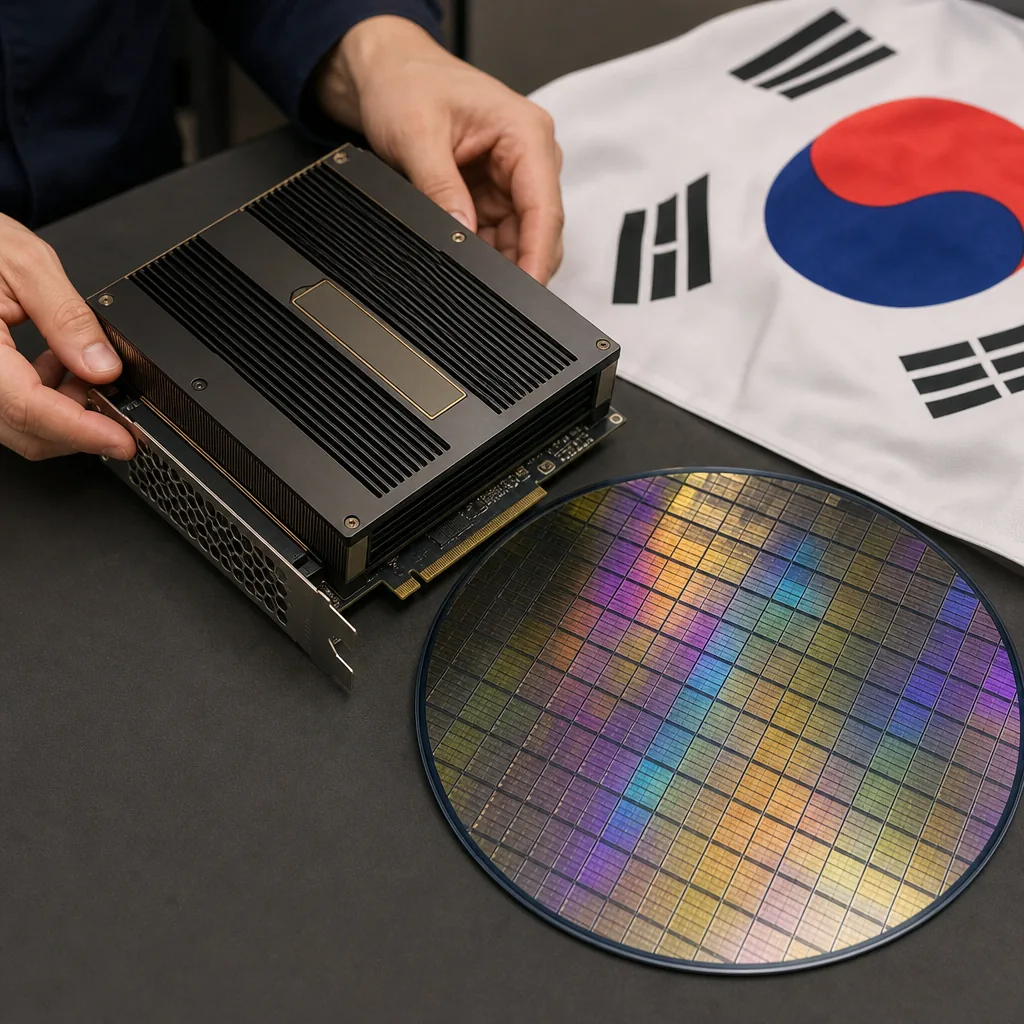
Neither Nvidia nor Rebellions has publicly announced a transaction. There is no confirmed purchase price, investment figure, ownership stake, timetable or definitive agreement, so any suggestion that a takeover is imminent would be premature.
Bloomberg’s sources said Nvidia chief executive Jensen Huang met Rebellions co-founder and chief executive Sunghyun Park at Nvidia’s Santa Clara, California headquarters during the week of 17 to 21 August. The reported meeting concerned a possible tie-up between the companies.
Rebellions is building for AI inference, not gaming
Rebellions is a specialist designer of neural-processing units, or NPUs, aimed chiefly at AI inference: the task of running models that have already been trained. That places it in the data-centre infrastructure market rather than the consumer graphics-card market where Nvidia is best known to many PC buyers.
Its current flagship platform is Rebel100, associated with the company’s second-generation REBEL architecture. Rebellions lists 2,048 TFLOPS of FP8 compute, 1,024 TFLOPS of FP16 compute, 144GB of HBM3E memory and 4.8TB/s of memory bandwidth. The platform uses a four-chiplet system-on-chip based on UCIe-Advanced, alongside two PCIe Gen5 x16 interfaces, and can consume up to 600 watts.
The company says Rebel100 has native support for PyTorch 2.x, vLLM and Triton, software tools widely used in AI development and serving. It also claims 2.8 times the compute density of its earlier ATOM product and up to 2.7TB/s of effective bandwidth in certain long-context language-model workloads. Those are Rebellions’ own figures; independent comparative testing was not confirmed in the available sources.
The underlying REBEL-Quad accelerator was presented at Hot Chips in August 2025. Rebellions said it was made using Samsung’s 4nm process and used Samsung HBM3E memory. It also described the chip as the first AI accelerator to use UCIe-Advanced, a chiplet interconnect approach intended to help combine components into more capable processors.
“The AI industry can’t afford to scale on GPUs alone. With REBEL-Quad, we’re showing there is another path — one that delivers GPU-class performance without the energy tax.”
That was Park’s assessment at the REBEL-Quad launch last year. Nvidia has not issued a direct public comment confirming the newly reported discussions.
A fast-growing Korean AI-chip business
Founded in 2020, Rebellions has expanded from individual accelerators towards a broader AI-infrastructure business. Its plans now encompass inference hardware, model compression and optimisation software, servers, racks, pod-scale systems and deployment tools.
That breadth is relevant to the reported Nvidia talks, even if Nvidia’s particular interest has not been established. A technical alliance, minority investment and full acquisition would be very different outcomes, and Bloomberg’s report says all remain possibilities rather than settled plans.
Rebellions has accumulated significant funding as it has pursued that expansion. It announced a $250 million Series C round at a $1.4 billion valuation in September 2025. In March 2026, it announced a further $400 million pre-IPO round, taking total funding to $850 million and placing its approximate valuation at $2.34 billion.
The company said the March funding would support US expansion, Rebel100 production and preparations for a future initial public offering. Separately, TradingKey reported that Rebellions was targeting a possible 2027 IPO, although that timing was not confirmed in the company material reviewed.
Rebellions has also strengthened its software position. In June, it announced the acquisition of AI-inference optimisation specialist SqueezeBits, saying the deal would bring model optimisation and inference-serving software alongside its NPU hardware. Rebellions said SqueezeBits had previously collaborated with Intel and Nvidia.
Samsung links could add to the strategic appeal
The Korean company already has close ties to Samsung. Rebellions and Samsung announced co-development of the REBEL chip in 2023, with plans to use Samsung’s 4nm manufacturing process and HBM3E memory. Rebellions later announced a chiplet-platform collaboration involving Arm, Samsung Foundry and ADTechnology.
Nvidia itself has extensive relationships with South Korean semiconductor companies. Samsung said in 2026 that it was working with Nvidia across memory, foundry, packaging and AI infrastructure. Rebellions’ use of Samsung manufacturing and memory technology therefore gives the reported talks a notable industry backdrop, though it does not reveal what form any agreement might take.
For ordinary buyers, this is primarily a story about the machinery that powers AI services rather than a forthcoming retail product. Rebel100 and related systems are sold through a contact-sales model for data-centre and rack-scale deployments; UK pricing, retail availability and consumer availability have not been confirmed.
The potential impact is still worth watching. More efficient inference hardware could affect the cost and energy demands of the AI tools consumers increasingly encounter in phones, PCs, search products and online services. But until Nvidia or Rebellions confirms a deal, the practical conclusion is simple: discussions are under way, not a transaction.
Why it matters
This is not a deal for gamers to buy a new Nvidia card, but it could still shape the AI infrastructure behind consumer services. Rebellions focuses on running trained AI models efficiently in data centres, an increasingly important part of delivering chatbots, search tools and other AI features at scale. For the wider industry, Nvidia’s reported interest underlines how valuable alternatives to traditional GPU-heavy AI systems have become.