
Microsoft Reportedly Tests Kimi K3 for Copilot Cost Savings
Microsoft is said to be assessing Moonshot AI’s new Chinese model for selected Copilot work, with potential inference savings of up to $600m.
What you need to know
- Microsoft is reportedly testing Moonshot AI’s Kimi K3 for potential use in Copilot.
- The Information reports the move could cut Microsoft’s AI inference costs by up to $600m, though Microsoft has not confirmed that figure.
- The assessment comes amid White House allegations that Moonshot distilled Anthropic’s Fable model; no penalties have been announced.
Microsoft evaluates Kimi K3 for Copilot
Microsoft is preparing to test Moonshot AI’s Kimi K3 model inside Copilot as it looks to reduce reliance on the more expensive AI systems it obtains from OpenAI and Anthropic, according to The Information.
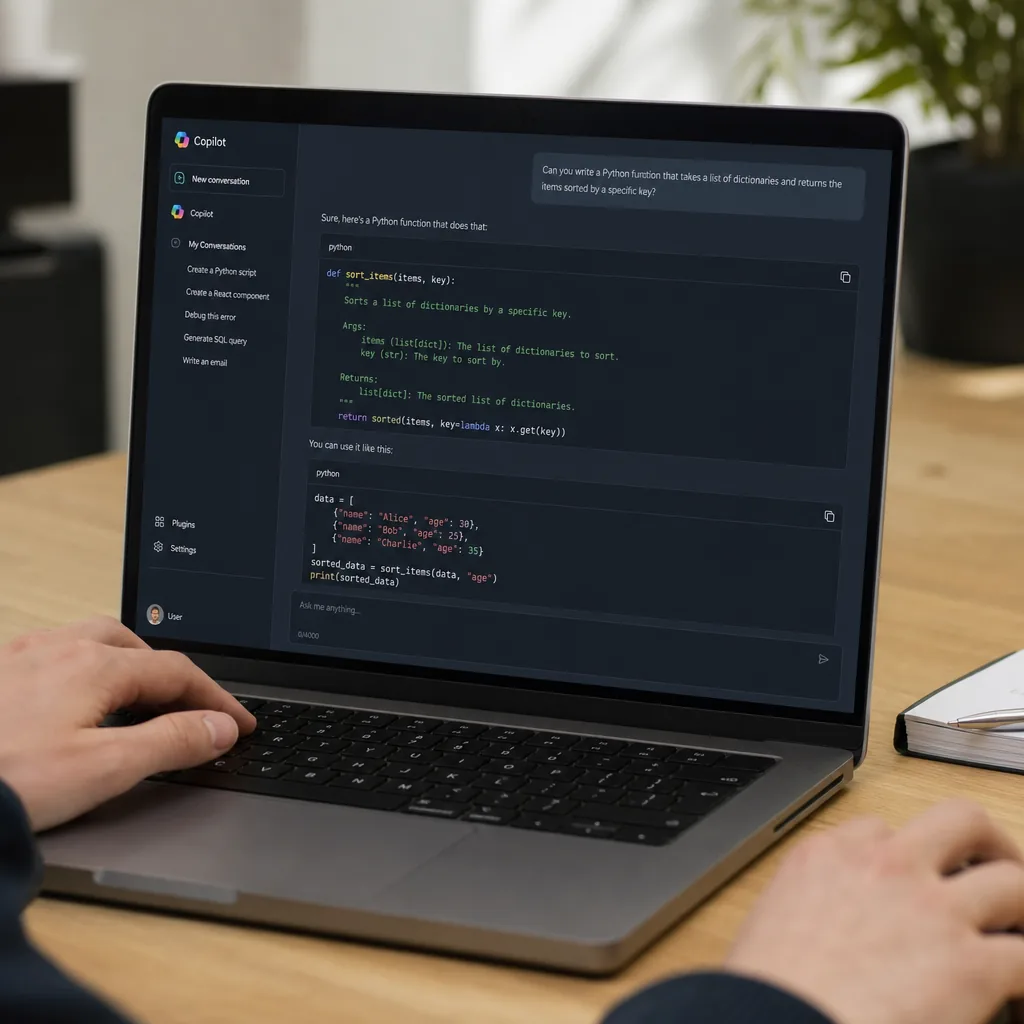
The company is reportedly adding Kimi K3 to its Azure cloud service, while Copilot engineers assess whether it can run features currently powered by OpenAI and Anthropic models. The potential change could reduce Microsoft’s AI inference costs by as much as $600m, the report said, although Microsoft has not publicly confirmed that estimate.
There is no final decision to replace any existing models, and Microsoft has not specified which Copilot features, if any, could be moved to Kimi K3. The reported evaluation is said to cover coding and reasoning performance as well as cost efficiency for particular tasks.
The move is notable because Kimi K3 is exceptionally new. Moonshot AI, the Beijing-based company founded in 2023, released its flagship model on 16 July 2026. Just a week later, it is reportedly being considered by one of the biggest buyers and operators of generative AI systems.
A huge model built to use fewer active experts
Kimi K3 is a 2.8-trillion-parameter Mixture-of-Experts model with a one-million-token context window, native multimodal input and maximum reasoning available at launch. Its architecture contains 896 experts, but activates only 16 for each token — roughly 1.8% of the total pool.
Moonshot has positioned the model as a strong option for coding and agentic work. K3 scored 1,679 points on LMArena’s Frontend Code Arena, placing first in that field, while Artificial Analysis gave it an Elo rating of 1,547 on its composite leaderboard. That was a 732-point improvement over Kimi K2.6, according to the figures in the brief.
Moonshot said K3 sits behind Anthropic’s Claude Fable 5 and OpenAI’s GPT-5.6 Sol on overall performance. However, it said the model beat Claude Opus 4.8 and GPT-5.5 across coding and agentic benchmarks in its own evaluation suite.
Price is likely to be central to Microsoft’s interest. K3’s API rates are listed at $0.30 per million cache-hit input tokens, $3 per million cache-miss input tokens and $15 per million output tokens. That pricing is roughly half the cost of Anthropic’s Opus 4.8, according to the brief. Demand after launch was reportedly so intense that Moonshot paused new K3 subscriptions because of compute strain.
Microsoft has already worked with Moonshot models
This would not be Moonshot’s first route into Microsoft’s AI infrastructure. Kimi K2 Thinking was integrated into Microsoft Foundry in December 2025, followed by Kimi K2.5 in February 2026. GitHub already offers Kimi K2.7 Code in Copilot and hosts it on Microsoft Azure.
That history makes the reported K3 test less of an abrupt switch than an extension of Microsoft’s broader multi-model strategy. Rather than treating Copilot as a product permanently bound to a single supplier, Microsoft increasingly appears to be viewing it as a platform that can route work between models based on capability, price and task.
That is a consequential development for Microsoft’s multi-billion-dollar relationship with OpenAI. Testing a lower-cost alternative does not mean OpenAI technology is about to disappear from Copilot, but it highlights the commercial pressure created by serving AI requests at enormous scale.
White House allegations complicate the picture
The assessment is taking place against a more politically charged backdrop. On Wednesday 22 July, Michael Kratsios, director of the White House Office of Science and Technology Policy, accused Moonshot AI of using Anthropic’s Fable model to develop K3.
“We have information that Moonshot AI distilled Anthropic's Fable for the development of its K3 model. To do this they developed a sophisticated internal platform to conduct large-scale distillation against U.S. models, allowing them to quickly switch between multiple methods of access to avoid detection.”
Kratsios also alleged that Moonshot had acquired servers equipped with Nvidia’s GB300 system and accessed the system in Thailand. Nvidia’s GB300 contains Blackwell chips, which are not allowed to be sold to China.
Anthropic had previously said it tracked more than 3.4 million Claude conversations to Moonshot through hundreds of fabricated accounts. Moonshot did not return a request for comment before publication, and no penalties have been announced. Dean Ball, OpenAI’s head of strategic futures, said he did not believe K3’s performance could be “explained away by distillation or anything like that”.
What happens next for UK Copilot customers
Microsoft 365 Copilot is widely used across UK businesses and is sold as an add-on to a qualifying Microsoft 365 plan. Its headline UK price was £30 per user per month as of May 2026, billed annually, with no UK pricing impact announced in connection with the Kimi K3 report.
Lower inference costs could theoretically help Microsoft maintain or improve the economics of Copilot. Yet a deployment would still need to clear technical integration, security, data-sovereignty and export-control concerns. UK organisations with compliance requirements will be particularly alert to whether data is processed by a Chinese-origin model.
The timing may also prove decisive. The Trump White House has reportedly considered banning US companies from providing or serving Chinese AI models, while sanctions or Entity List designations have been raised as possible responses to alleged intellectual-property theft. For now, Microsoft’s reported K3 work remains an evaluation, not a confirmed product change.
Why it matters
For UK firms paying for Microsoft 365 Copilot, cheaper models could help Microsoft sustain pricing or improve the value of its AI services over time. But any use of a Chinese-developed model would face close attention from organisations with GDPR, data-sovereignty and compliance obligations. Microsoft has not announced a UK pricing change or confirmed that Kimi K3 will be used in any customer-facing Copilot feature.