
Nvidia H200 Chips Reportedly Reach ByteDance and Tencent
ByteDance and Tencent have each reportedly received about 10,000 Nvidia H200 AI accelerators, though their eventual deployment locations remain unclear.

What you need to know
- ByteDance and Tencent have reportedly received around 10,000 H200 processors each.
- The reported deliveries are small beside a claimed 100,000-chip allowance per approved company.
- It is not confirmed whether the chips will run in mainland China, Hong Kong or both.
Small batches of Nvidia’s H200 AI accelerators have reportedly begun reaching ByteDance and Tencent, marking a notable move in the tightly controlled trade in high-end computing hardware between the US and China.
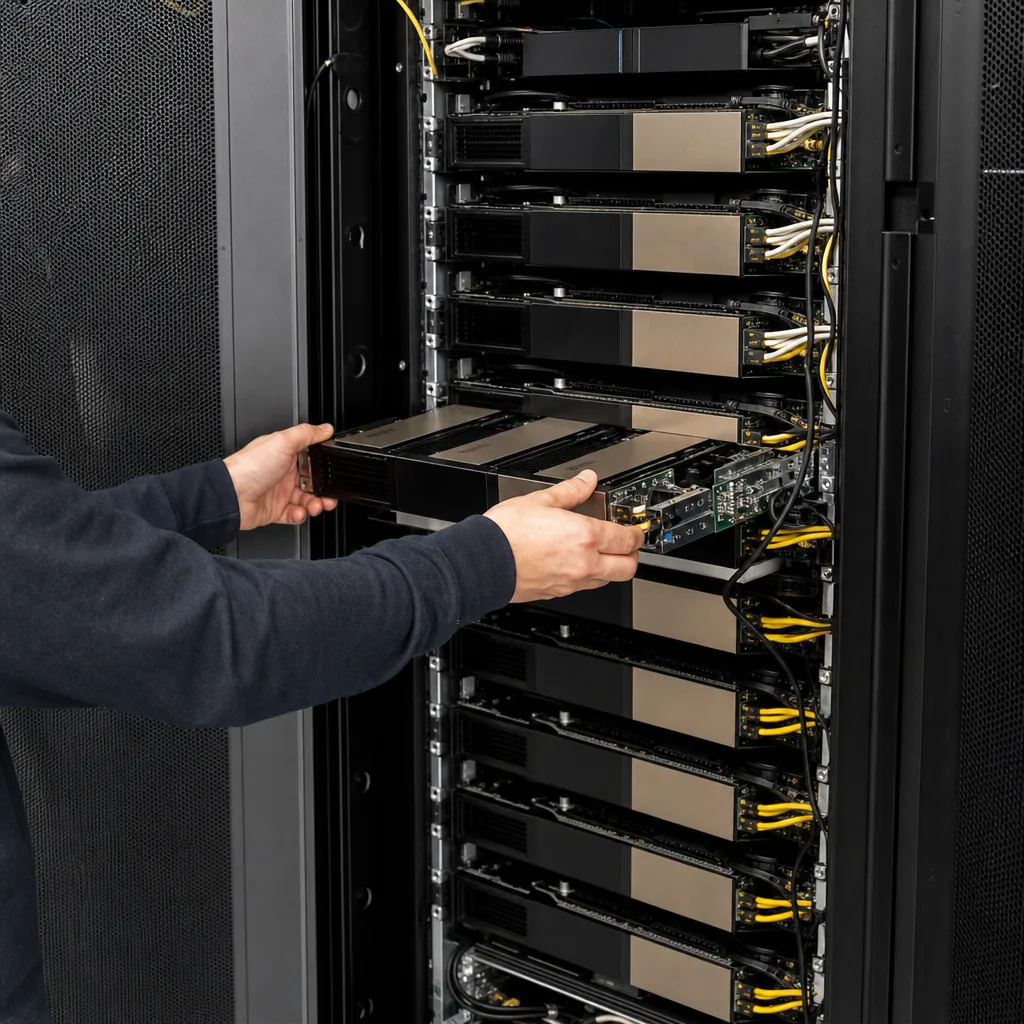
According to a Financial Times report cited by Reuters on 18 August, the two Chinese technology companies have each received approximately 10,000 H200 processors in recent weeks. Reuters said it could not immediately verify the report, while Nvidia had not immediately responded to its request for comment. Tom’s Hardware subsequently described the deliveries as the first meaningful movement of H200 accelerators into mainland China since US approval for controlled exports in December 2025.
The reported quantities are substantial in data-centre terms but remain modest against the limits reportedly available to approved buyers. US approvals reportedly allow ByteDance, Tencent and other approved Chinese companies to purchase up to 100,000 H200 chips each. On that basis, a 10,000-chip shipment would account for roughly 10% of an individual company’s reported allowance.
Large orders, but uncertain deployment
The key unanswered question is where these accelerators will ultimately be used. Reuters’ account of the Financial Times report said Beijing wants Chinese companies to keep much of the licensed hardware outside mainland China, partly to support domestic chipmakers.
Chinese regulators reportedly told companies they could send H200 processors to Hong Kong, which operates outside mainland China’s customs border, and use them there. Tom’s Hardware also reported that buyers still needed case-by-case approval from China’s National Development and Reform Commission, and that Beijing wanted most of each company’s licensed allocation kept in Hong Kong.
That leaves the physical status of the reported shipments unclear. Reuters did not confirm whether ByteDance’s and Tencent’s H200s are installed in mainland-China facilities, Hong Kong facilities or a combination of the two. Tom’s Hardware’s headline said roughly 10,000 accelerators each had entered mainland China, while its report also said most licensed chips were expected to remain in Hong Kong.
A US official told Congress in July that only a small number of H200 chips had been shipped to China, according to the Reuters account. The newly reported deliveries would therefore represent a meaningful increase in the hardware reaching the companies, even if the final operating locations remain uncertain.
What the H200 actually is
The H200 is not a graphics card for a gaming PC or workstation. It is a data-centre AI accelerator designed to be installed in specialist servers and deployed at scale for AI training and inference workloads.
Built on Nvidia’s Hopper architecture, the H200 carries 141GB of HBM3e memory per GPU and offers 4.8TB/s of memory bandwidth, according to Nvidia’s specifications. It is available in H200 SXM and H200 NVL forms. Nvidia lists maximum configurable power of up to 700W for the SXM version and up to 600W for the H200 NVL PCIe version.
Those figures help explain why a shipment of 10,000 processors is a data-centre event rather than a conventional component delivery. Nvidia says an eight-GPU HGX H200 system offers more than 32 petaflops of FP8 deep-learning performance and around 1.1TB of aggregate high-bandwidth memory. Such systems are built for companies operating large AI services, rather than individual customers.
Tom’s Hardware reported in January that ByteDance, Alibaba and Tencent were collectively approved to buy more than 400,000 H200s, although the allocation for each company has not been confirmed in an official public document. It also reported that Nvidia had around 500,000 H200 chips built largely for Chinese customers, a figure attributed to Financial Times reporting rather than an Nvidia statement.
What happens next
The Financial Times report said other Chinese technology companies could soon receive shipments of a similar size, but did not identify them or confirm quantities. Any further deliveries will remain subject to the layered US export approvals and Chinese restrictions described in the reports.
For Nvidia, the shipments would indicate that some H200 demand from Chinese customers is moving from licences and planned orders into actual hardware deliveries. For Beijing, the restrictions on where the processors can be used show that access to foreign AI hardware remains intertwined with efforts to encourage domestic alternatives.
What it means for UK buyers
There is no normal consumer retail route to an H200. Nvidia does not publish a standard UK retail price for the accelerator, though UK suppliers have listed H200 NVL cards at £27,760 including tax and £28,489.99, with the latter marked sold out at the time of the search. Complete multi-GPU H200 servers cost far more.
For most UK users, H200 hardware matters indirectly. AI tools, cloud platforms and business services may run on the same class of accelerators, and restrictions on their international supply can influence where capacity is built and how readily it is available. A UK cloud provider has advertised H200 access from £3.96 per hour excluding VAT, underlining that renting compute, rather than owning the hardware, is the realistic route for most customers.
Why it matters
These are not consumer GPUs, so UK PC buyers will not be shopping for H200 cards. But large AI accelerator deployments shape the cost and availability of cloud-based AI services used worldwide, while export restrictions can affect Nvidia’s supply, data-centre investment and the wider AI hardware market. UK buyers can access H200 capacity through cloud providers, but ownership remains firmly an enterprise proposition.