
Nvidia in Talks Over $250bn OpenAI Ohio Data Centre Backstop
Nvidia is reportedly discussing a guarantee that could help OpenAI finance a 10GW Ohio AI campus, while separate chip funding talks may reach $350bn.
What you need to know
- Nvidia is reportedly discussing a roughly $250bn guarantee for OpenAI’s Ohio lease and construction financing.
- Separate talks over chip funding could reach $350bn, although neither arrangement has been confirmed.
- The 10GW Pike County campus could cost more than $500bn including chips.
Nvidia is reportedly negotiating a financial guarantee of about $250 billion to help OpenAI fund a huge new artificial-intelligence data centre campus in Ohio, according to a Wall Street Journal report published on Monday. Bloomberg and CNBC subsequently confirmed the discussions through separate sources.
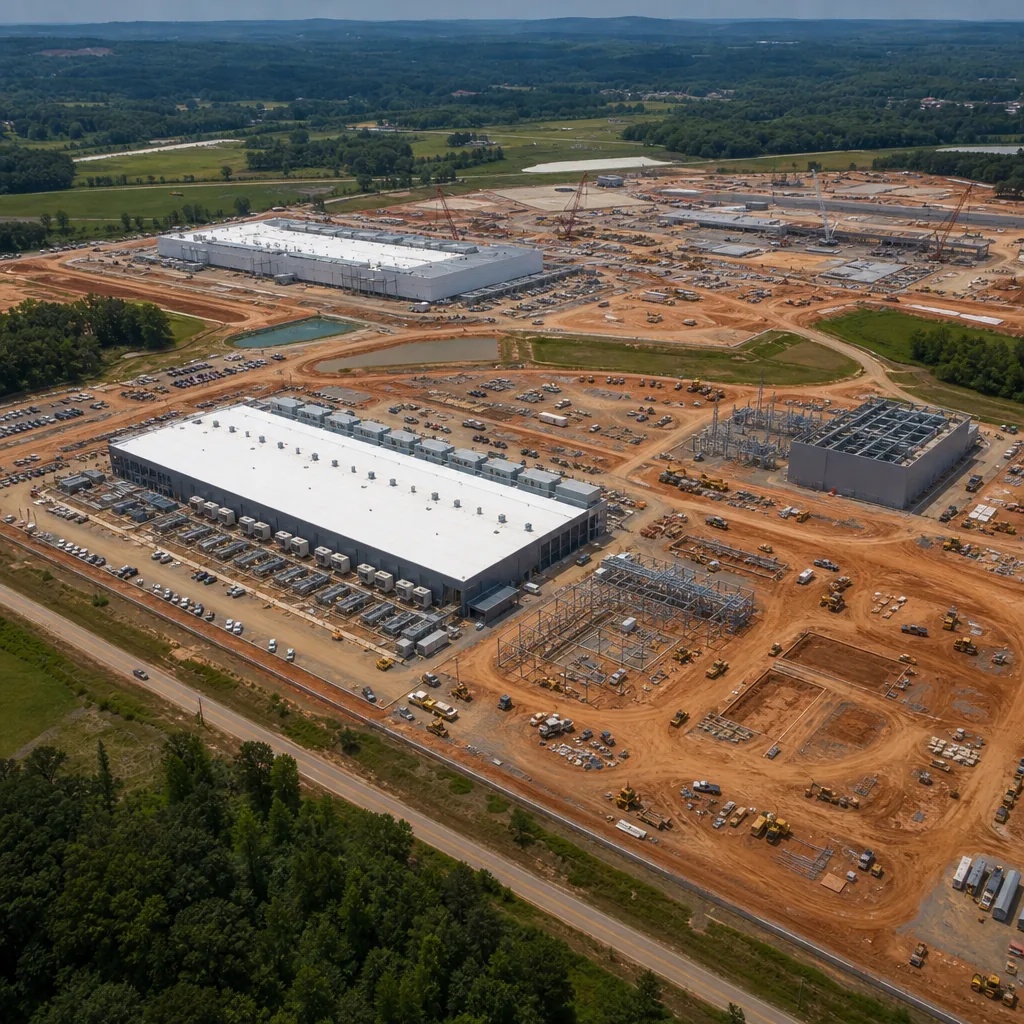
The proposed arrangement would allow OpenAI to raise debt for the 10-gigawatt facility in Pike County using Nvidia’s credit as a backstop, according to a person familiar with the confidential talks. The guarantee under discussion would cover lease and construction financing rather than the graphics processors and other chips destined for the site.
That distinction matters because Nvidia is also reportedly in separate, parallel talks over financing OpenAI’s chip purchases. The Journal said that figure could reach $350 billion. Taken together, the potential arrangements could amount to roughly $600 billion in exposure, although the negotiations remain under discussion and neither company has confirmed a final deal.
Nvidia declined to comment on the specific reports. Representatives for Nvidia and OpenAI had no immediate comment on Monday. Nvidia chief executive Jensen Huang has previously cautioned that media reports can overstate the scope of such discussions, describing earlier conversations as centred on a non-binding memorandum of understanding rather than funding an entire project outright.
A 10GW AI campus in Ohio
The site in question is the PORTS Technology Campus in Piketon, around 50 miles south of Columbus. It is being developed by SB Energy, a SoftBank subsidiary, on a decommissioned uranium-enrichment site leased from the US government.
The development held a groundbreaking ceremony on 20 March 2026, attended by US Energy Secretary Chris Wright and Commerce Secretary Howard Lutnick. Tim Walsh, the Department of Energy’s Assistant Secretary for Environmental Management, said the location had once been known as the “A Plant” and would in future be known as the “AI Plant”.
The Department of Energy had listed the location among 16 federal sites opened to data-centre construction. At full build-out, the campus is planned to provide 10GW of capacity, a figure that would make it an exceptionally large piece of computing infrastructure.
Its first phase is expected to provide roughly 800 megawatts and is currently scheduled for completion in 2028. The broader deployment target is the end of the decade. The initial development covers 189 acres, with official estimates projecting around 10,000 construction jobs and more than 2,000 permanent positions.
OpenAI would control the facility’s equipment through a 20-year lease, with payments beginning once the site is operational. Total costs, including the chips, could exceed $500 billion, making it the largest data-centre project announced to date.
Power, chips and an unusually complex funding plan
The campus’s energy requirements are as striking as its cost. Of the planned generation, 9.2GW would come from natural-gas plants funded by $33.3 billion in Japanese capital tied to the US-Japan Strategic Trade and Investment Agreement. A further $4.2 billion of transmission work is planned with AEP Ohio.
“Thanks to President Trump, the U.S. government is leveraging its assets, like our federal lands, to add power generation, create jobs, and ensure the United States wins the AI race.”
That was Wright’s assessment at the March ceremony. Lutnick described the scheme as part of a wider effort to “reindustrialize the country” through large energy and infrastructure projects.
The power is controlled by the US government and funded separately by Japan under a recent trade deal. Lutnick is involved in deciding which companies receive access to that power. Reuters has reported that OpenAI has been in advanced talks to lease the facility for several weeks, while Anthropic, Microsoft and Google have also discussed the project with Lutnick.
The Ohio scheme is separate from the Stargate project, which is promoted by OpenAI alongside SoftBank, Oracle and Abu Dhabi investment institution MGX. Stargate aims to build 10GW of AI computing capacity in the US by 2029 with $500 billion of investment.
Why Nvidia would back its customer
For OpenAI, the Ohio campus would be a first move towards controlling independently leased infrastructure rather than renting capacity from Microsoft, Amazon and Oracle. Microsoft remains OpenAI’s primary cloud partner, and OpenAI products still generally launch first on Azure, but an amended partnership announced on 27 April made their relationship less exclusive. Microsoft’s licence is now non-exclusive, allowing OpenAI to serve products across other cloud providers.
For Nvidia, a guarantee could lock in demand for its chips for years. Nvidia has already invested $30 billion in OpenAI, while OpenAI generates $2 billion in monthly revenue but runs substantial operating losses. OpenAI is valued at $852 billion, while Nvidia’s market capitalisation is hovering around $5 trillion and its profit margin stands at 75%.
Investors appeared unsettled by the scale of the reported talks. Nvidia shares fell 4.99% on Monday, closing at $196.51.
Billy Leung, investment strategist at Global X Management, said: “The fact that Nvidia is providing additional guarantees on OpenAI's data-center debt is a signal of demand for AI buildout, but it also serves as a reminder of the funding strain.”
Circular-financing scrutiny will not disappear
Any agreement is likely to intensify scrutiny of so-called circular financing, where a chip supplier helps customers secure funds that eventually return to that supplier through GPU purchases. Critics argue such arrangements can blur the line between independent market demand and demand supported by the companies that benefit from it.
Bernstein Research analyst Stacy Rasgon, writing about an earlier Nvidia-OpenAI investment deal, said the action would “clearly fuel ‘circular’ concerns” and would “likely fuel these worries much hotter than what we have seen previously.”
There is also pressure on SoftBank, which carries more than $130 billion of debt while backing projects in Ohio, France and elsewhere. OpenAI and SoftBank each invested $500 million in SB Energy in January to support its data-centre development pipeline.
The next test is whether the reported negotiations turn into binding commitments. Until then, the Ohio project remains a vast planned facility with a defined first-phase timetable, but with its biggest financing details still unresolved.
Why it matters
The proposed site illustrates the extraordinary infrastructure bill behind generative AI, from chips and data halls to power stations and transmission lines. For UK buyers, the immediate effect is unlikely to be a new product, but these deals could influence the supply and cost of AI computing used by services, devices and cloud platforms. The scale of Nvidia’s potential involvement also sharpens concerns about whether AI demand is being supported by financing arrangements that feed back into chip sales.