
Huawei Pura 90s Pro Max launches globally with 200MP telephoto
Huawei's latest flagship pair touch down outside China with 5G, eSIM, and a headline-grabbing 200-megapixel telephoto camera — but Google services are still nowhere to be found.
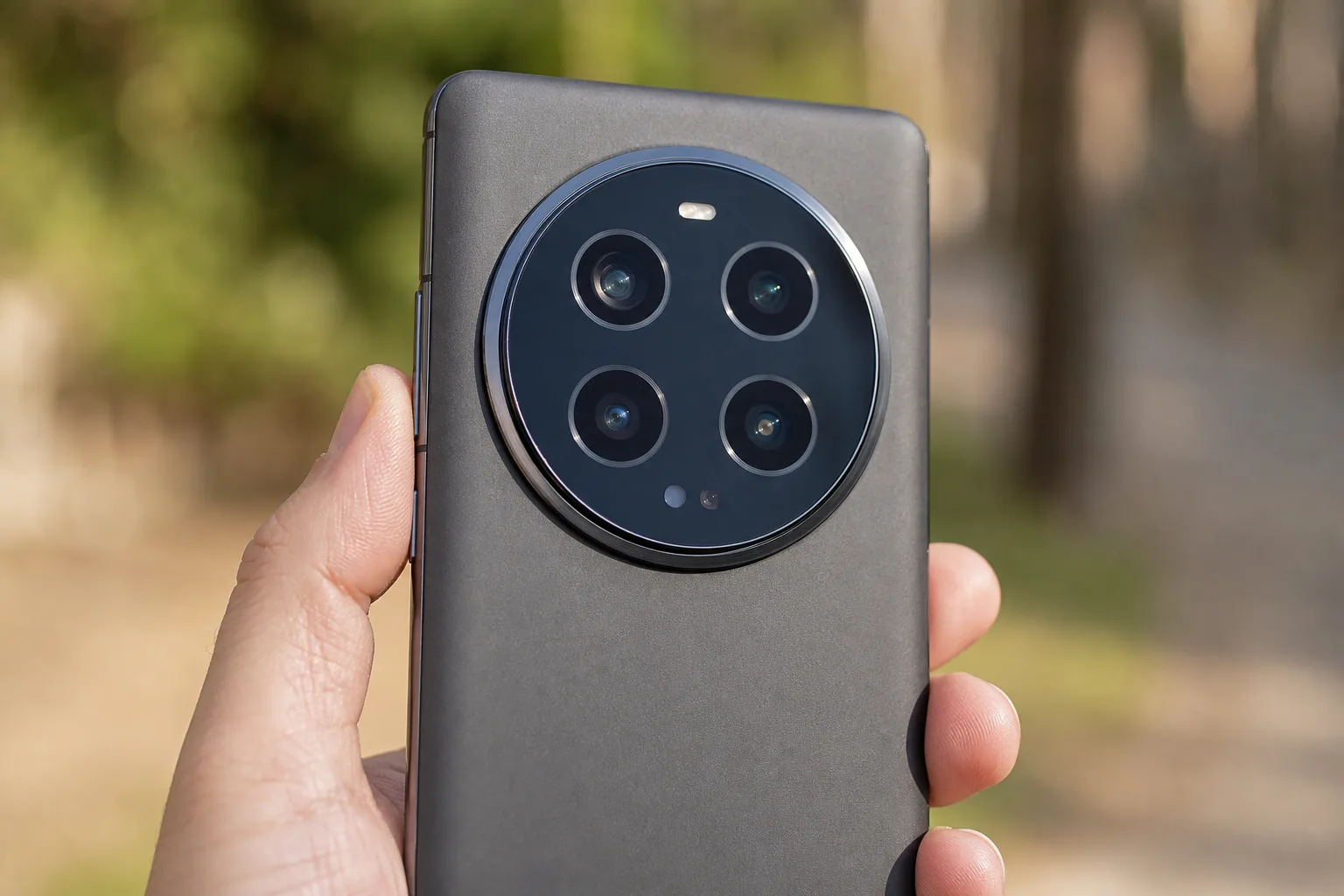
What you need to know
- Huawei launched the Pura 90s Pro and Pura 90s Pro Max globally on 14 July 2026 at an event in Kuala Lumpur
- The Pro Max features what Huawei calls the industry's first 200MP RYYB telephoto sensor, with fixed 4x optical zoom
- Both phones support 5G and eSIM for the first time on a global Huawei flagship in years — but Google services are absent
Huawei makes its global flagship return in Kuala Lumpur
Huawei used a launch event in Kuala Lumpur on Tuesday 14 July 2026 to unveil the Pura 90s Pro and Pura 90s Pro Max to the rest of the world — and for once, the international versions are arriving with virtually everything the Chinese models have. The company publicly describes the "s" suffix as standing for a special edition designed for markets outside the Chinese mainland, and this generation marks what Huawei itself is positioning as its most complete global flagship push in years.
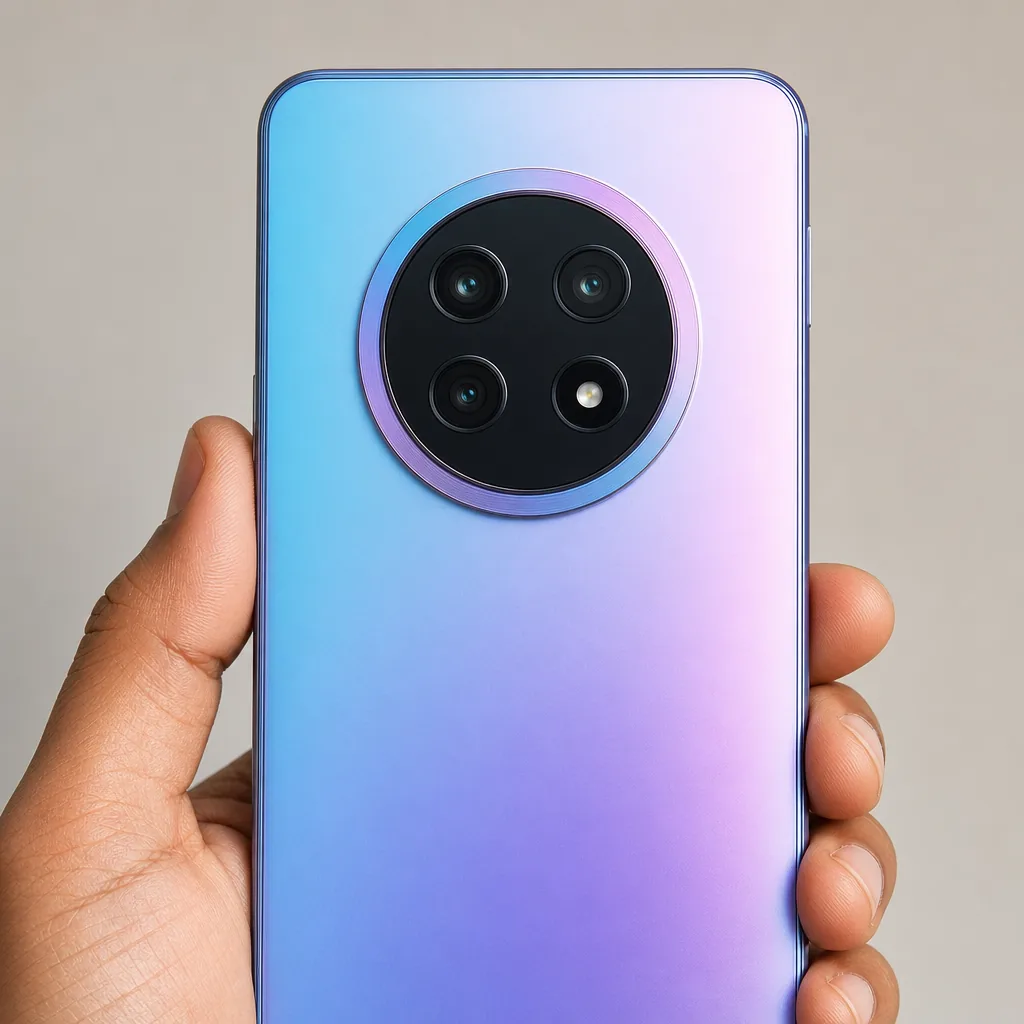
The Pura 90 Pro series was originally announced in China in April 2026, with the Pro Max variant landing on 20 April. The global variants' specifications are largely unchanged from those Chinese releases, which is itself notable — previous Huawei international launches have often arrived stripped of key features or delayed by many months.
The headline act: a 200MP RYYB telephoto
The Pura 90s Pro Max leads with what Huawei describes as the industry's first 200MP RYYB telephoto sensor. RYYB is a sensor design Huawei has used for several generations, replacing some of the conventional green sub-pixels with yellow ones to pull in more light under difficult conditions. Here, that sensor measures 1/1.28 inches and sits behind an f/2.6 lens with a fixed 4x optical zoom, covering an 89mm equivalent focal length.
Huawei says the phone can achieve 20x telephoto video through real-time RAW processing, and the lens also supports macro photography alongside CIPA 7.0-rated optical image stabilisation. The overall camera system covers focal lengths of 24mm, 13mm, and 89mm, with up to 100x digital zoom.
The main camera on the Pro Max is a 50MP, 1/1.28-inch RYYB sensor equipped with LOFIC technology — a design intended to extend dynamic range. It uses a variable aperture ranging from f/1.4 to f/4.0 across ten discrete steps, paired with OIS. A 40MP RYYB ultra-wide camera with an f/2.2 aperture rounds out the rear array, while a 13MP ultrawide sensor handles selfies up front.
The standard Pura 90s Pro also offers a 4x telephoto, but uses a 50MP sensor rather than the 200MP unit, paired with an optically stabilised f/2.1 lens. It supports macro shots from as close as 5cm.
Specs at a glance
- Display: 6.9-inch flat LTPO panel (Pro Max) / 6.6-inch flat LTPO (Pro), both with adaptive 1Hz–120Hz refresh rates
- Chipset: Kirin 9030S on both models — a generational step up from the Kirin 9020 used in the Pura 80 generation, though Huawei has not yet published detailed technical specifications
- Memory: 12GB RAM with 256GB or 512GB storage
- Battery: 6,000mAh (Pro Max, global) or 5,500mAh (EU models), with 100W wired and 80W wireless charging on the Pro Max; the Pro reaches 66W wired and 50W wireless
- Durability: IP68 and IP69 ratings — resistant to submersion up to 2 metres and high-pressure water jets
- Connectivity: 5G, eSIM, Wi-Fi 7 (dual-band), Bluetooth 6.0 with LDAC and L2HC support, and Huawei's NearLink E2.0 short-range wireless platform
- In the box: 100W charger, cable, and a clear plastic case
The Pro Max weighs 230g and measures 8.1mm thick despite its larger screen; the Pro comes in at 213g and 8.2mm. Both phones are available in the box with a 100W charger included.
One notable simplification from the previous generation: the telephoto is a fixed-zoom unit this time around, dropping the switchable-lens arrangement that featured on the Pura 80 Ultra.
Software: the elephant in the room
Both phones run EMUI 16, Huawei's international software platform built on Android Open Source Project version 16. That means no Google Play, no Gmail, no YouTube, and no Google Maps out of the box. Huawei's own AppGallery is the default storefront, supported by Huawei Mobile Services.
Users can sideload Android APK files, but this is a workaround rather than a solution, and it is worth flagging that this avenue will eventually close — Huawei's HarmonyOS 7, used on Chinese devices, removes APK sideloading support entirely. Global buyers running EMUI are not immediately affected, but the direction of travel is clear.
It is worth distinguishing the two software platforms: Chinese Huawei phones run HarmonyOS, which is built from scratch as a native microkernel OS and is not Android-based. Global EMUI devices are fundamentally Android underneath, but without Google's services layer attached.
Pricing and UK availability
At launch in Malaysia, the Pura 90s Pro (12GB/256GB) is priced at RM 3,699, which converts to roughly £670 at current exchange rates. The Pro Max (12GB/512GB) comes in at RM 4,899, or approximately £880 — though these are currency conversions, not confirmed UK retail prices.
Huawei has not confirmed UK pricing or a UK release date as of 14 July 2026, and the phones are not yet listed on Huawei's European or UK storefronts. A dedicated launch for Middle Eastern markets is scheduled for 16 July. European availability has not been formally announced, though indicative European pricing has begun to surface. UK buyers will need to wait for an official confirmation before committing.
Why it matters
For UK buyers, the return of 5G and eSIM support is the most immediately practical upgrade in years — previous global Huawei flagships lacked both, making them a tough sell on UK networks. The 200MP telephoto is a genuine headline spec, and the Kirin 9030S represents a step up from the previous generation. However, the absence of Google Play, Gmail, YouTube, and Maps remains a serious barrier for most British consumers, and with no confirmed UK pricing or release date as of today, prospective buyers will need to sit tight and weigh whether Huawei's AppGallery ecosystem is a trade-off they can live with.