
CMF Phone 2 Pro vs Nothing Phone 3a: Which Budget Phone Wins?
Two stylish under-£400 contenders from the same family, going toe-to-toe on cameras, build, software and sheer value. I've put the spec sheets and the test results side by side to find out which one deserves your money.
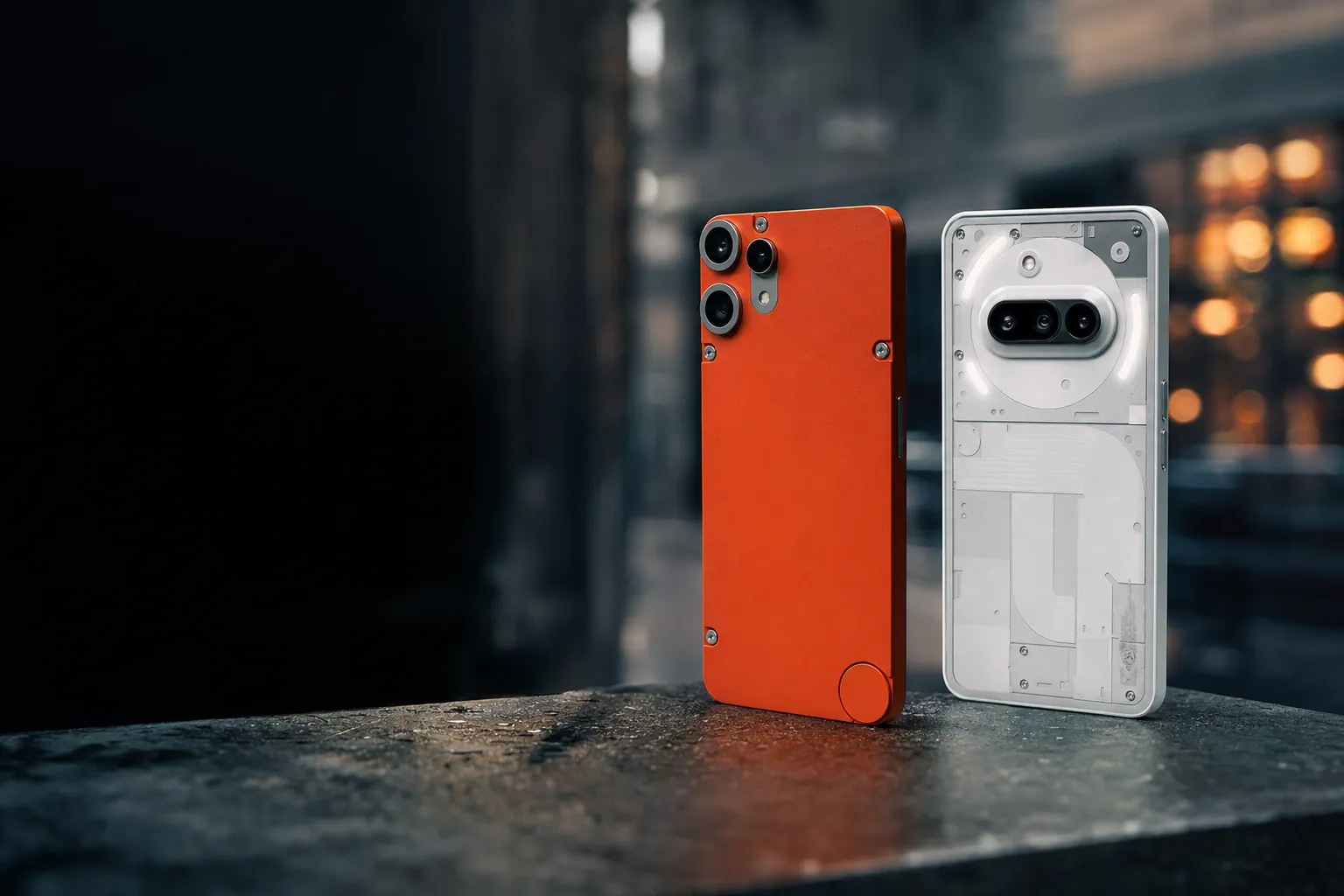
The CMF Phone 2 Pro and Nothing Phone 3a both chase the same buyer — but they take very different routes to get there.
If you want a phone that actually looks interesting and costs less than a fancy dinner for two, Nothing's two-pronged 2025 lineup is impossible to ignore. The CMF Phone 2 Pro and the Nothing Phone 3a share a surprising amount of DNA — same screen size, same battery capacity, same Android skin — yet they're pitched at slightly different shoppers. One leans into playful modularity and outright affordability; the other doubles down on premium materials and that unmistakable Glyph personality. I've spent time digging into both, and the gap between them is closer than the price difference suggests.
Search CMF Phone 2 Pro on Amazon UK
Here's the short version of the story before we get stuck in: the CMF Phone 2 Pro launched in late April 2025, while the Nothing Phone 3a arrived a little earlier in March. They both run Nothing's own software, both promise three major Android updates, and both deliver the kind of design flair you simply don't get from the usual budget suspects. But scratch beneath the surface and you'll find meaningful differences in build quality, charging speed, camera versatility and even how hard they push their chipsets. By the end of this comparison you'll know exactly which one suits the way you actually use a phone.
Throughout this piece I'll lean on real benchmark figures and battery tests rather than marketing fluff, and I'll be honest about the compromises each phone makes. Neither is perfect — they're budget phones, after all — but both punch well above their weight. Let's see who lands the knockout blow.
Specs at a glance
Before we dive into the nuance, it helps to see the headline figures laid out. The eerie thing about these two is just how much they overlap. Same 6.77-inch AMOLED panel, same 5000 mAh battery, same 256GB top storage tier, same Panda Glass on the front. Where they diverge is in the details that matter day to day.
Identical screen, identical battery capacity — the differences live in the chipset, the charging brick and the materials.
Both phones get a gorgeous 6.77-inch AMOLED with a 1080 x 2392 resolution (roughly 388 ppi on the CMF), a 120Hz refresh rate and an enormous 3000-nit peak brightness figure. That brightness number is genuinely brilliant for the money — it means both screens stay perfectly legible in harsh daylight, which is something budget phones used to struggle with badly. The CMF supports HDR10+ and renders a billion colours, so streaming looks rich and punchy.
The two clearest differentiators are charging and chipset. The Nothing Phone 3a charges at 50W against the CMF's 33W, and it runs Qualcomm's Snapdragon 7s Gen 3 rather than MediaTek's Dimensity 7300 Pro. Storage is generous on both: each tops out at 256GB, though the CMF Phone 2 Pro adds a trick the 3a lacks — microSDXC expansion. If you hoard photos and offline films, that little slot could be the deciding factor on its own.
Performance: chipset showdown
This is where the spec sheet gets interesting, because the two phones approach raw performance from opposite philosophies. On paper, the Snapdragon 7s Gen 3 inside the Nothing Phone 3a is the faster silicon — it scores around 10% better than the Dimensity 7300 Pro on CPU tasks, and its Adreno GPU pulls ahead by more than 10% in graphics. If you're chasing the highest possible frame rates in demanding games, the 3a has the edge.
But peak numbers only tell half the story. The CMF Phone 2 Pro's 4nm Dimensity 7300 Pro, paired with a Mali-G615 MC2 GPU, posts solid Geekbench 6 results of roughly 1,016 single-core and 2,961 multi-core. More importantly, it handles sustained load far more gracefully. In a Burnout-style stress test the CMF held onto 60.2% of its performance, whilst the Nothing Phone 3a throttled down to 51.2%. Translation: under prolonged gaming or heavy multitasking, the CMF actually stays closer to its best.
So which matters more to you — the higher ceiling or the steadier floor? In my experience, for everyday phones in this bracket the sustained figure tends to matter more. Most budget chipsets are quick enough for social apps, browsing and casual gaming in short bursts; the question is whether they hold up when things heat up. The CMF's gentler thermal management means it'll feel less stuttery during a long session, even if the 3a wins a quick benchmark sprint.
RAM is another quiet differentiator. The Nothing Phone 3a's top configuration ships with 12GB, while the CMF Phone 2 Pro pairs 8GB with its storage. For aggressive multitasking and keeping more apps suspended in memory, that extra headroom on the 3a is a genuine, if subtle, advantage.
The takeaway: neither phone is a gaming powerhouse, and you shouldn't expect flagship-tier frame rates from either. But both are comfortably fast enough for the things people in this price range actually do. The 3a edges ahead on raw grunt; the CMF claws it back with composure under pressure.
Cameras: versatility vs reach
Cameras are usually where budget phones cut the deepest corners, so it's genuinely refreshing that both of these include a proper telephoto lens — a rarity at this price. Let's break down the hardware before we talk results.
Both phones include a 50MP telephoto with 2x optical zoom — a feature you almost never see this cheap.
The CMF Phone 2 Pro runs a triple setup: a 50MP wide, a 50MP telephoto with 2x optical zoom, and an 8MP ultrawide. Its main sensor is a sizeable 1/1.57″ unit that Nothing claims captures 64% more light than the original Phone 1, backed by AI-powered stabilisation. Video tops out at 4K@30fps, with slow-motion up to 120fps, and the 16MP front camera shoots 1080p.
The Nothing Phone 3a counters with a 50MP main, an 8MP ultrawide and its own 50MP telephoto with 2x optical zoom. On the front it ups the selfie ante with a 32MP camera that performs well in good light. Video again caps at 4K/30fps on the main sensor, but with improved stabilisation over the earlier Phone 2a — a meaningful upgrade if you shoot handheld clips.
Telephoto reach
Both deliver 2x optical zoom from their 50MP telephoto lenses. The 3a's tele produces natural portrait shots and stays usable up to around 4× in daylight, while the CMF stretches further into digital territory with up to 20x.
Main sensor light-gathering
The CMF's larger 1/1.57″ main sensor is built to pull in significantly more light than its predecessor, which helps in dimmer scenes and lifts overall image quality.
Selfies
The Nothing Phone 3a's 32MP front camera outguns the CMF's 16MP shooter on paper and produces pleasing results in good light — a tidy win for the keen self-portraitist.
Modular lenses
The CMF Phone 2 Pro is unique here: it supports first-party clip-on camera lenses as a design accessory, letting you physically extend its optical capabilities in a way the 3a simply can't match.
On measured camera quality, the CMF Phone 2 Pro has impressed independent testers — it scored 125 points in PhoneArena's camera evaluation, beating the Samsung Galaxy A26's 122, with the advantage coming from its main camera and zoom performance. That's a strong result and a clear sign the CMF isn't a token camera phone; it genuinely competes against the established budget names.
My take on the camera battle
These two are remarkably close on photography. The CMF leans into versatility — that big main sensor, the long digital reach and the clip-on lens ecosystem make it the more playful, experiment-friendly camera. The 3a, with its higher-resolution selfie cam and refined stabilisation, feels like the safer all-rounder for social shooters. If photos are your priority, the CMF's measured scores and modular tricks just shade it.
Build and design: plastic clever vs glass premium
Here's the most tangible difference between the two, and the one you'll feel every time you pick the phone up. The Nothing Phone 3a uses glass on both sides with a metal frame, the kind of construction you'd normally associate with pricier handsets. It weighs 201g, and it carries the brand's signature transparent-style rear that reveals faux internals, plus the Glyph Interface — three addressable LED strips on the back for silent notifications and even a countdown timer.
The CMF Phone 2 Pro takes the opposite path. It's built entirely from plastic, which sounds like a downgrade until you realise what that buys you: at 7.8mm thick and just 185g, it's the slimmest and lightest phone the CMF brand has designed. It measures 164 x 78 x 7.8 mm and feels notably more pocketable than the heftier, glass-clad 3a. CMF also leans into modularity — beyond the clip-on lenses, the whole design ethos is about customisation and accessories.
Glass-and-metal premium versus slim, light and modular — it comes down to what you value when the phone's in your hand.
Durability nudges in the Nothing Phone 3a's favour. It carries an IP64 rating, giving it better dust resistance than the CMF's IP54, which is water-resistant up to 25cm for 20 minutes. Neither is a phone you'd take swimming, but the 3a's tighter ingress protection is reassuring if you're often outdoors or on a building site. Both share Panda Glass on the front for scratch resistance.
CMF Phone 2 Pro design wins
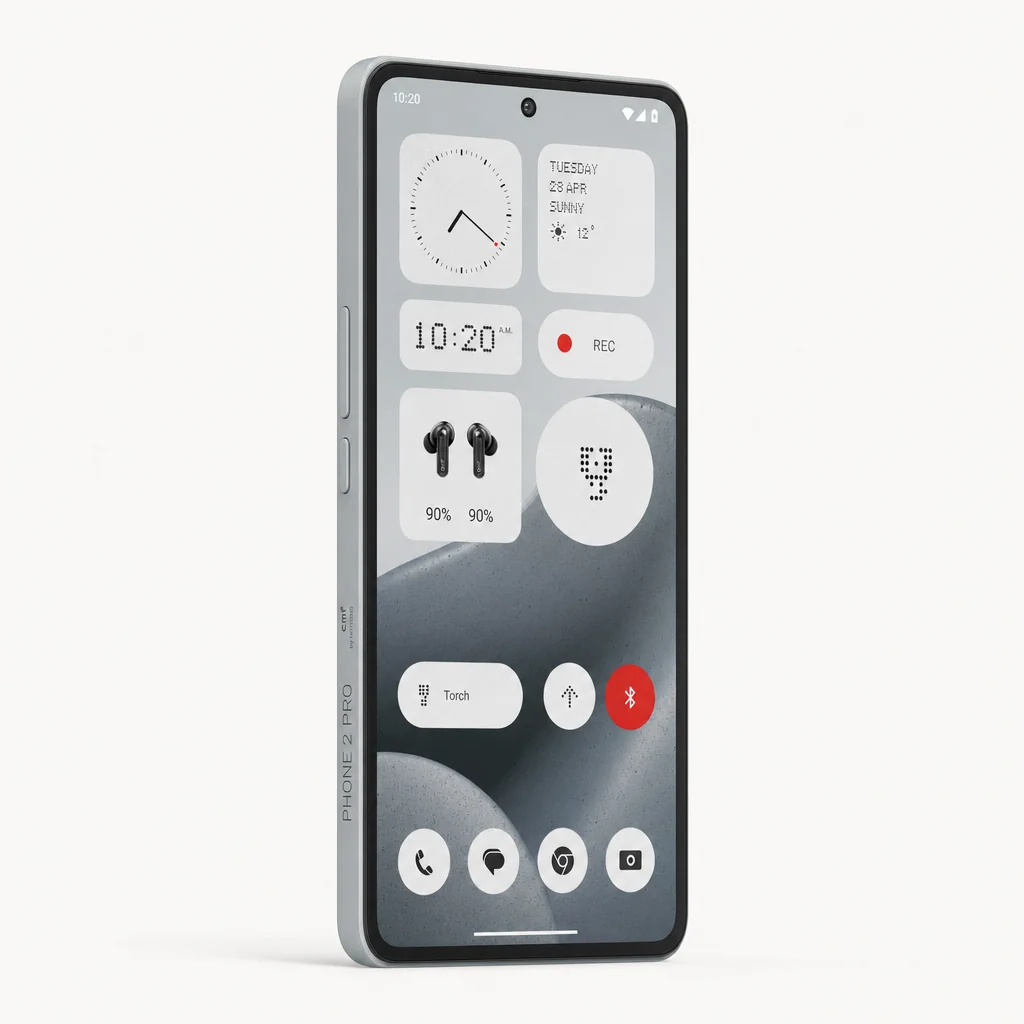
- Slimmest and lightest in the brand's range at 7.8mm and 185g
- Modular ethos with first-party clip-on camera lenses
- microSDXC card support for expandable storage
- Genuinely comfortable, pocket-friendly in the hand
CMF Phone 2 Pro design trade-offs
Search CMF Phone 2 Pro on Amazon UK
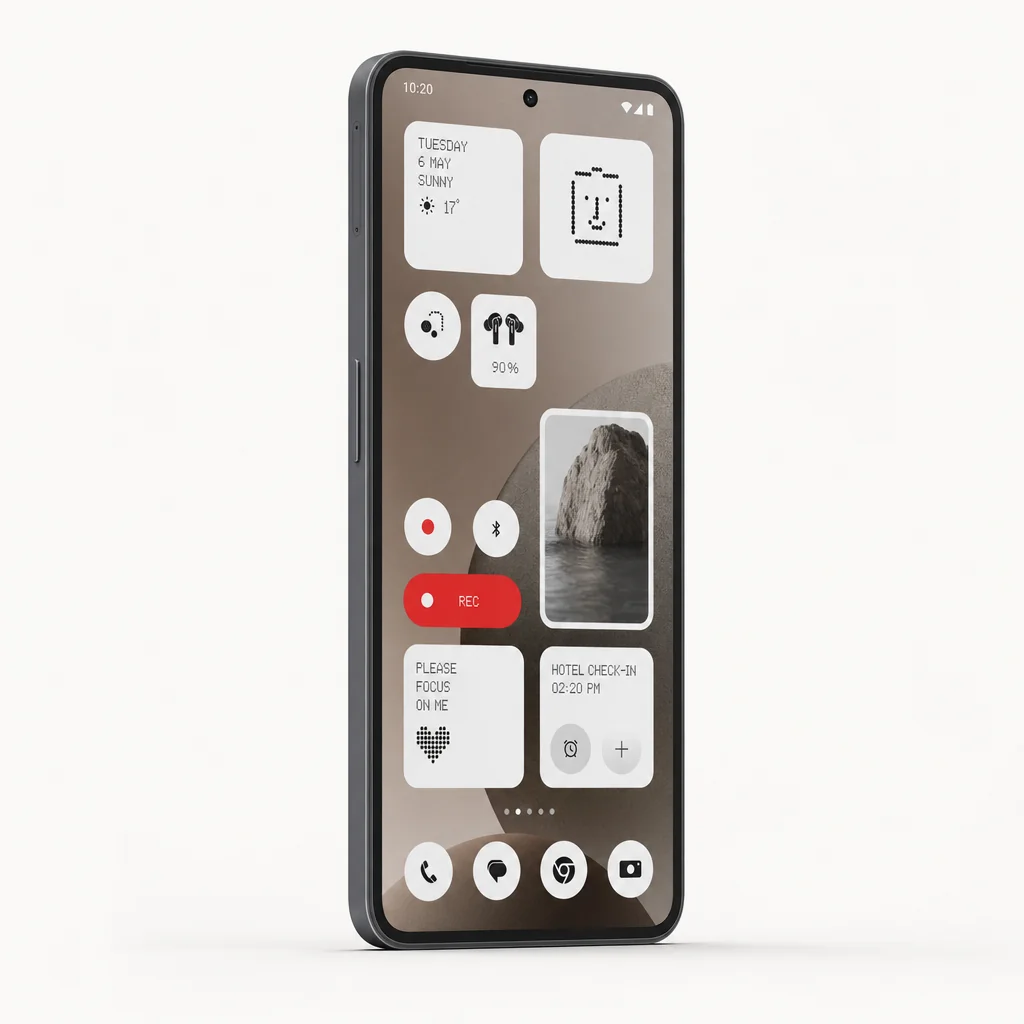
- Entirely plastic construction feels less premium than glass
- Lower IP54 rating than the 3a's IP64
- No Glyph LED strips on the rear
So which design wins? If you want something that feels expensive and looks distinctive on a café table, the Nothing Phone 3a's glass back and Glyph lights are hard to resist. If you'd rather have something light, slim, expandable and quietly customisable, the CMF's plastic body is a feature, not a flaw. I'd happily live with either — they just appeal to different sensibilities.
Software: same family, slightly different rooms
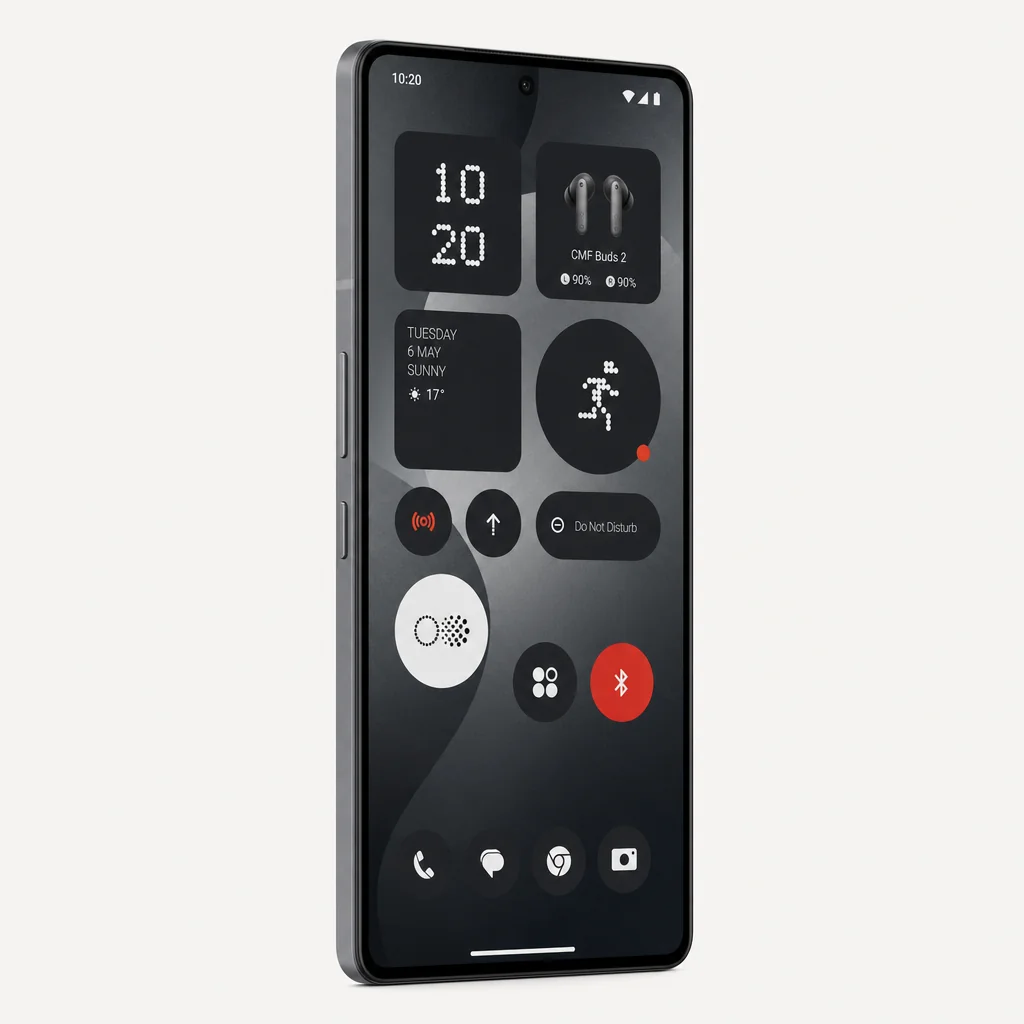
Both phones launched on Android 15 with Nothing's own skin on top, and both come with the promise of three major OS upgrades — a respectable commitment in the budget tier and one that should keep them feeling current for years. The CMF Phone 2 Pro ships with the slightly newer Nothing OS 3.2, whilst the Nothing Phone 3a launched on Nothing OS 3.1.
Nothing OS remains one of my favourite Android skins precisely because it doesn't try to do too much. It's clean, fast, refreshingly free of bloat and brings its own monochrome aesthetic and dot-matrix typography that ties neatly into the hardware's transparent design language. If you're tired of overstuffed manufacturer skins, this is a breath of fresh air.
The Essential Space difference
The Nothing Phone 3a includes Essential Space, an AI-powered feature for capturing notes and reminders that's triggered by a dedicated hardware button. Because it relies on that physical key, it isn't backwards compatible with phones lacking the button — so it's a genuine 3a exclusive within this comparison.
That hardware-button-led AI assistant is one of the few clear software-feature splits between the two. Otherwise, the day-to-day experience is broadly the same — which is no bad thing, because Nothing OS is genuinely pleasant to live with. Both phones support NFC for contactless payments (region-dependent on the CMF), and both use Wi-Fi 6 and USB-C; CMF Phone 2 Pro uses Bluetooth 5.3, while Nothing Phone (3a) uses Bluetooth 5.4.
NFC is worth flagging on the CMF Phone 2 Pro: contactless payment support addresses a notable limitation of the original Phone 1, so if you tap to pay regularly, this generation finally has you covered.
Battery and charging: endurance vs speed
Both phones pack the same 5000 mAh battery, so on paper you'd expect similar stamina. In practice, the CMF Phone 2 Pro consistently edges ahead in longevity tests, whilst the Nothing Phone 3a claws back ground with much faster charging. It's a classic endurance-versus-speed split.
Let's talk numbers, because the test results here are genuinely impressive for budget hardware. The CMF Phone 2 Pro managed 13.5 hours of YouTube streaming — around 50% longer than the Samsung Galaxy A26 — and an estimated 8 hours of screen-on time. Tom's Guide clocked it at 15 hours 24 minutes in dynamic mode and a full 16 hours in standard mode. In the PCMark battery test it lasted 14 hours against the Nothing Phone 3a's 12 hours 38 minutes.
The Nothing Phone 3a is no slouch either, mind you. Independent testing has seen it stretch to two days of mixed use and around 56 hours of active use, and it matched the CMF's 15 hours 24 minutes on Tom's Guide's browsing test at 150 nits. So the 3a is perfectly capable of all-day-and-then-some endurance; the CMF just tends to have a little more in reserve under heavy media use.
Charging is where the Nothing Phone 3a strikes back hard. It supports 50W fast charging, hitting 33% in 15 minutes, 50% at 23 minutes and 60% by the half-hour mark, with a full 20–100% top-up taking 52 minutes. The CMF Phone 2 Pro charges at a more modest 33W: 54% in 30 minutes and a full recharge in 1 hour 10 minutes. CMF offers 5W reverse wired charging, while Nothing Phone (3a) supports faster 7.5W reverse wired charging.
| Battery & Charging | CMF Phone 2 Pro | Nothing Phone 3a |
|---|---|---|
| Battery capacity | 5000 mAh | 5000 mAh |
| Wired charging | 33W | 50W |
| Reverse charging | 5W wired | — |
| 30 minutes charge | 54% | 60% |
| 20–100% time | 1h 10m | 52 minutes |
| PCMark battery | 14h 00m | 12h 38m |
Long-term battery health
The CMF Phone 2 Pro is rated to keep its capacity above 90% even after 1200 charging cycles. That's a quietly excellent longevity promise — it means the phone should still hold a meaningful charge years down the line, which matters if you tend to keep handsets well past the average upgrade window.
The verdict on power? If you prize sheer endurance and want a phone that won't blink at a long day of streaming, the CMF Phone 2 Pro is your pick, with the bonus of stellar long-term battery health. If you'd rather plug in for half an hour and walk away with most of a tank, the Nothing Phone 3a's 50W charging is the more convenient companion.
Head-to-head comparison
Time to put everything in one place. Here's how the two phones stack up across the categories that matter, with the Samsung Galaxy A26 included as a familiar budget reference point given the CMF's camera test directly bested it.
Side by side, the choice sharpens: chase endurance and value with the CMF, or premium feel and fast charging with the 3a.
| Feature | CMF Phone 2 Pro | Nothing Phone 3a | Galaxy A26 (reference) |
|---|---|---|---|
| Display | 6.77″ AMOLED 120Hz, 3000 nits | 6.77″ AMOLED 120Hz, 3000 nits | — |
| Chipset | Dimensity 7300 Pro | Snapdragon 7s Gen 3 | — |
| RAM (top tier) | 8GB | 12GB | — |
| Storage | Up to 256GB + microSDXC | Up to 256GB | — |
| Main camera | 50MP (1/1.57″) | 50MP | — |
| Telephoto | 50MP, 2x optical | 50MP, 2x optical | — |
| Front camera | 16MP | 32MP | — |
| Camera score | 125 points | — | 122 points |
| Build | Plastic, 185g, IP54 | Glass + metal, 201g, IP64 | — |
| Charging | 33W + 5W reverse | 50W | — |
| Software | Android 15, Nothing OS 3.2 | Android 15, Nothing OS 3.1 | — |
| OS updates | 3 major | 3 major | — |
What jumps out is how often the two trade blows rather than one dominating. The CMF wins on weight, expandable storage, sustained performance, battery endurance and measured camera quality. The 3a wins on raw chipset speed, RAM, selfie resolution, charging speed, dust resistance and that glass-and-metal premium feel. It's about as balanced a budget face-off as I've come across.
Ratings: how I score them
Pulling all the threads together, here's how each phone lands across the core categories. These scores reflect performance relative to expectations at their price point — both are scored as budget phones, not flagships.
CMF Phone 2 Pro
Shop CMF Phone 2 Pro on Amazon UK
Nothing Phone 3a
Search Nothing Phone (3a) on Amazon UK
As you can see, the two finish within a whisker of each other. The CMF nudges ahead on battery and cameras; the 3a counters with stronger build and a slight performance lead. Your personal priorities will decide which fraction of a point matters most.
Who should buy which?
Specs are one thing, but the real question is which phone fits your life. Here's how I'd steer different buyers.
The endurance seeker
If your phone needs to survive a full day of streaming, navigation and messaging without a top-up, the CMF Phone 2 Pro's class-leading battery life and 1200-cycle longevity make it the natural choice.
The fast-charge fan
Forget to charge overnight? The Nothing Phone 3a's 50W charging gets you to 60% in half an hour, so a quick blast before you head out is all you need.
The photo tinkerer
The CMF Phone 2 Pro's measured camera lead, big main sensor and clip-on modular lenses make it the more rewarding pick for anyone who loves experimenting with shots.
The design lover
If you want a phone that feels and looks premium — glass back, metal frame, glowing Glyph strips — the Nothing Phone 3a delivers a more upmarket experience.
The storage hoarder
Only the CMF Phone 2 Pro offers microSDXC expansion, so if you carry mountains of media offline, it's the one that won't leave you deleting photos.
The selfie & AI fan
The Nothing Phone 3a's 32MP front camera and the Essential Space AI button on its dedicated hardware key give it the edge for self-portraits and quick capture.
Frequently asked questions
Two superb budget phones from the same family — the right one depends entirely on what you value most.
The verdict
This is one of the closest budget face-offs I've run, and that's a compliment to both phones. The Nothing Phone 3a is the more premium-feeling device, with its glass-and-metal build, glowing Glyph Interface, faster Snapdragon 7s Gen 3 chipset, 12GB of RAM, 50W charging, a higher-resolution 32MP selfie camera and IP64 dust resistance. If you want something that looks and feels a notch above its price, plus the convenience of rapid top-ups and the Essential Space AI button, it's a brilliant buy.
But for outright value and everyday practicality, the CMF Phone 2 Pro edges the win. It's lighter and slimmer, lasts longer on a charge, throttles less under sustained load, adds microSDXC expansion and 5W reverse charging, ships on the newer Nothing OS 3.2, and posted a camera score of 125 — beating the Galaxy A26 outright. Its 1200-cycle battery longevity promise means it should stay dependable for years.
My pick for most buyers? The CMF Phone 2 Pro. It does the unglamorous things — battery life, sustained performance, storage flexibility and camera quality — better, and that's what you live with day to day. Choose the Nothing Phone 3a if a premium build, faster charging and the Glyph personality matter more to you than maximum endurance. Either way, you're getting a stylish, capable phone that makes the usual budget crowd look distinctly dull.
Whichever you lean towards, it's heartening to see this much genuine competition — and this much character — at the affordable end of the market. Nothing has quietly built two of the most likeable budget phones around, and you really can't go far wrong with either.