HoverAir X1 Pro Max vs DJI Mini 5 Pro: Follow-Me Camera or Proper Drone?
Two answers to the same question: "How do I get aerial footage of myself?" One wants you to press a button and get moving. The other wants you behind the sticks, making a film.
We link to the exact model on Amazon UK. Prices change often, so check the live price before you buy. As an Amazon Associate we earn from qualifying purchases.
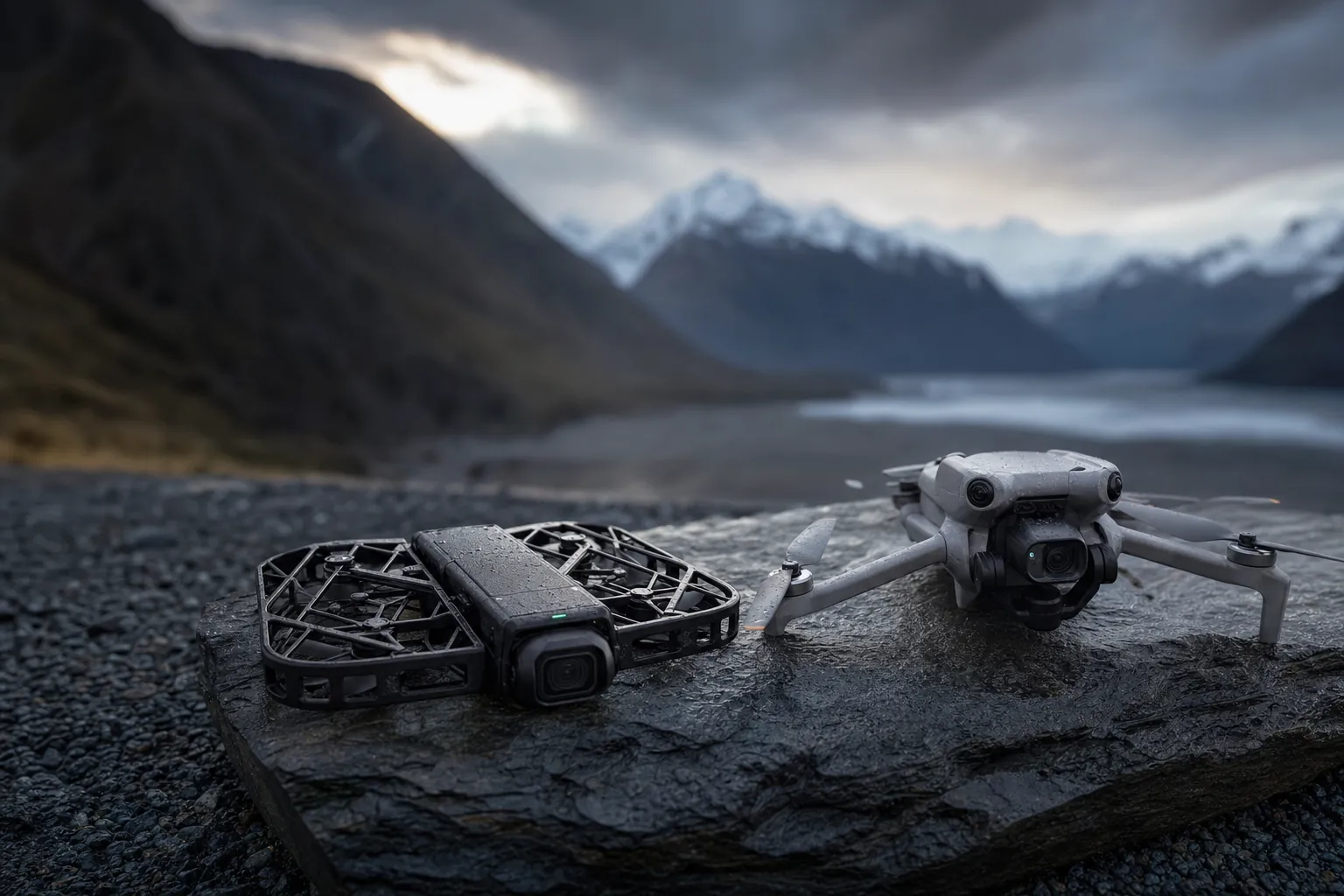
The HOVERAir X1 Pro and ProMax are built around palm launch and autonomous following, whilst DJI's Mini 5 Pro is a conventional foldable camera drone with tracking as one feature among many.
One Button vs One Stick: Two Philosophies for Aerial Selfies
This is not really a straight fight. The HOVERAir X1 Pro and X1 ProMax are self-flying cameras for people who would rather be in the footage than learn to fly a drone. DJI Mini 5 Pro is a proper camera drone first, with automated tracking layered onto much deeper manual control. Both can film you from the air. They simply ask very different things of you.
It is dangerously easy to look at the sub-250g numbers and assume these are interchangeable. They are not. The HOVERAir pair are compact, cage-enclosed flying cameras designed to leave your hand, find you and follow. That makes them unusually appealing for solo runners, cyclists, skiers and anybody who wants a few dramatic seconds without stopping the activity to become a drone pilot.
DJI Mini 5 Pro takes the opposite route. It folds out, uses a proper controller, leans on GPS, Galileo and BeiDou positioning, and gives you the tools to choose your route, your height, your camera angle and your composition. Its ActiveTrack 360 can follow a person, but following is not its entire personality. It is the aerial equivalent of bringing a camera bag instead of a pocket camera.
Neither approach is inherently better. If the goal is "film me running along this trail without ruining the run", the DJI workflow is frankly overkill. If the goal is "make a properly framed sunrise sequence over a coastline, then orbit the family on a beach, then shoot a vertical clip for social", the HOVERAir workflow runs out of road rather quickly.
The short version
HOVERAir is about autonomy and immediacy. DJI is about image quality, endurance, navigation and deliberate control. Buy the one that matches how you actually expect to use it, not the one with the most impressive line on the box.
The Numbers Side-by-Side: Full Spec Sheet Showdown
The quickest way to understand the split is to look at the core hardware. X1 Pro and ProMax share their 192g body and 16-minute flight claim, but the ProMax upgrades the camera substantially. Mini 5 Pro sits much closer to the 250g line, yet carries a one-inch 50MP sensor, a three-axis gimbal and up to 36 minutes of flight with its standard battery.
| Key figure | HOVERAir X1 Pro | HOVERAir X1 ProMax | DJI Mini 5 Pro |
|---|---|---|---|
| Weight | 192g | 192g | Approximately 249.9g with standard battery |
| Sensor | 1/2-inch CMOS | 1/1.3-inch CMOS | 1-inch CMOS |
| Maximum video | 4K/60fps | 8K/30fps | 4K/120fps |
| Still resolution | 12MP | 12MP/48MP | Up to 50MP |
| Stabilisation | Two-axis gimbal + EIS | Two-axis gimbal + EIS | Three-axis mechanical gimbal |
| Maximum flight time | 16 minutes | 16 minutes | 36 minutes, standard battery |
| Reviewer outdoor runtime | About 15 minutes | About 15 minutes | About 35 minutes in calm conditions |
| Internal storage | 32GB | 64GB | 42GB |
| Top follow speed | 26mph / 42km/h | 26mph / 42km/h | ActiveTrack 360 |
There is an important bit of context hiding inside those figures. The HOVERAir ProMax's 8K headline is useful if you want room to crop or reframe, but it does not magically turn a flying action camera into a one-inch-sensor drone. Meanwhile, DJI's 4K/120fps might sound lower-resolution on paper, yet its bigger sensor, RAW stills, 10-bit HLG, D-Log M and mechanical gimbal make it the more flexible imaging platform by a comfortable margin.
The specification gap is less about one drone being newer or more advanced, and more about one being a hands-free flying camera while the other is designed for considered aerial photography.
Cage-Enclosed Palm Launcher vs Folding GPS Bird: Design & Portability
HOVERAir's design is its clearest argument. Both X1 Pro models weigh 192g with battery fitted and share identical dimensions: 4.13 × 5.87 × 1.34 inches folded, expanding to 6.81 × 5.87 × 1.54 inches unfolded. The propellers live inside an integrated protective cage. That sounds like a simple detail, but it changes the mood of using the thing.
You can palm-launch a HOVERAir, let it get on with the tracking, then hand-catch it at the end. For a solo jog or bike ride, that is delightfully direct. There is no awkward search for somewhere flat, no unfolding arms, no controller ritual and no need to keep stopping to check whether your framing has drifted. The cage also makes it a more confidence-inspiring object around the owner than a conventional exposed-propeller drone.
DJI Mini 5 Pro is still a compact machine by proper-drone standards, but it is physically and psychologically a different proposition. Folded, it measures approximately 157 × 95 × 68mm without propellers; unfolded, approximately 304 × 380 × 91mm with them. You are handling a conventional drone with folding arms, a controller and the expectation that you will take charge of the flight.
That control brings a real advantage in more demanding outdoor conditions. DJI's rated wind resistance is approximately 12m/s, or 26.8mph. HOVERAir's Level 5, 24mph rating is respectable for its size, but the tiny autonomous format is best when you are choosing a sensible moment rather than trying to win an argument with British weather.
Practical difference: HOVERAir is the machine you can actually carry "just in case". DJI Mini 5 Pro is the machine you pack when aerial filming is one of the day's proper plans. Neither is wrong. One simply asks for less ceremony.
Sensor Size Truths: Which Camera Actually Captures Better Footage?
Camera specifications can become a slightly silly game of resolution Top Trumps, so let's clear away the biggest misconception first: 8K is not automatically better footage than 4K. Sensor size, lens brightness, stabilisation, colour depth and the ability to control the shot all matter. Here, DJI Mini 5 Pro is plainly the photographic heavyweight.
HOVERAir X1 Pro uses a 1/2-inch CMOS sensor, records 12MP photos and tops out at 4K/60fps. Its f/2.8 lens has a 104-degree field of view, with focus from 1m to infinity. That is enough for attractive daylight clips, especially when the subject is you and the point is the movement rather than pixel-peeping the distant hills. For social footage, family moments and casual travel, 4K/60fps is entirely respectable.
X1 ProMax makes the meaningful upgrade. Its 1/1.3-inch sensor is larger, its f/2.55 lens opens a touch wider, and the field of view grows to 107 degrees. It can shoot 8K/30fps, 4K at up to 120fps, 1080p at up to 120fps, and 10-bit HLG at up to 160Mbps. That makes the ProMax the right HOVERAir for somebody who knows they will crop, stabilise further, slow down action or do some colour work afterwards.
But the Mini 5 Pro's one-inch sensor remains the decisive step. It captures up to 50MP stills, supports JPEG and RAW, and records 10-bit HLG and 10-bit D-Log M. Its f/1.8 aperture is another practical advantage. At sunset, in deep shade, around city lights or on a grey day that seems to have lasted since February, a larger sensor and brighter aperture are not abstract specification wins. They are the difference between a usable shot and a noisy compromise.
| Camera capability | HOVERAir X1 Pro | HOVERAir X1 ProMax | DJI Mini 5 Pro |
|---|---|---|---|
| Sensor size | 1/2-inch CMOS | 1/1.3-inch CMOS | 1-inch CMOS |
| Lens aperture | f/2.8 | f/2.55 | f/1.8 |
| Field of view | 104° | 107° | 84° |
| Maximum video | 4K/60fps | 8K/30fps | 4K/120fps |
| Slow motion | 1080p/120fps | 4K/120fps; 1080p/120fps | 4K/120fps; Full HD up to 240fps |
| 10-bit HLG | Not confirmed | Yes | Yes |
| RAW stills | Not confirmed | Not confirmed | Yes |
| Vertical shooting | Vertical recording modes | Vertical recording modes | True vertical shooting via rotating gimbal |
The bars are a visual hierarchy, not a laboratory image-quality score. Still, they point towards the conclusion reviewers reached: Mini 5 Pro has the strongest detail, low-light performance, dynamic-range potential and grading flexibility. X1 ProMax produces strong 4K footage and gives you useful 8K reframing headroom, but its 8K mode is not the reason to buy it. The reason is that it can get footage of you doing the thing without needing someone else to pilot.
Gimbal design matters just as much. The HOVERAir models use a two-axis gimbal plus electronic image stabilisation. It works well for the format, but DJI's three-axis mechanical gimbal gives you a more composed, more cinematic result when you are flying deliberately. Mini 5 Pro also has 225-degree gimbal rotation and true vertical shooting, rather than relying on a recording mode for vertical framing. For creators making both horizontal films and vertical social cuts, that is quietly excellent.
The Mini 5 Pro's one-inch sensor and three-axis gimbal make it the stronger aerial camera; the ProMax's advantage is getting a compelling follow shot without putting the creator behind a controller.
Follow-Me Autonomy vs Stick-and-Rudder Control: The Real Difference
HOVERAir's central trick is wonderfully simple: you launch from your palm, select an automated flight mode through the HOVER X1 app, and let it track. No conventional full-size controller is required for the basic experience. That is the whole appeal. You do not need to explain drone controls to a friend, bribe somebody to film you, or carry a controller while trying to ride a bike. You start moving.
Its maximum auto-follow speed is 26mph, or 42km/h, with instantaneous tracking speeds claimed at up to 37mph, or 60km/h. Those are genuinely useful figures. They comfortably cover a runner and cover a lot of road cycling, especially when the flight is set up around a predictable route and sensible spacing.
Palm-first workflow
HOVERAir is designed around quick palm launch and hand-catching, so the drone can become part of an activity rather than the activity itself.
Sport-focused tracking
Both HOVERAir models are rated for 26mph/42km/h auto-following and 37mph/60km/h instantaneous tracking speed.
DJI navigation depth
Mini 5 Pro combines GPS, Galileo and BeiDou positioning with conventional controller-led flight and return-to-home features.
Different safety approach
ProMax uses proximity and vision-based sensing; Mini 5 Pro adds omnidirectional sensing with forward-facing LiDAR, vision sensors and infrared sensing.
Optional HOVERAir hardware changes the equation a little. The Beacon extends control range to up to 1km in ideal conditions, compared with up to 500m through the phone/app. Add the Joysticks and you have more manual input over the flight and framing. This is useful, but it does not turn an X1 ProMax into a Mini 5 Pro. The manual-control experience remains an extension of a self-flying camera, not the core design.
DJI's approach is slower to begin with, but more capable once you are airborne. You fly with either an RC-N3 and smartphone or an RC 2 with built-in screen, then choose the exact position you want. Want the drone lower, further left, climbing while panning, then holding a particular angle as a cyclist rounds a bend? That is DJI territory. It is also where the 21km maximum stated flight-distance figure, DJI O4+ transmission and satellite navigation begin to matter. You may never fly 21km, nor should you confuse a transmission figure with permission to fly beyond visual line of sight, but the system's confidence and range are built for a broader kind of flying.
ActiveTrack 360 means DJI is not clueless about subject following. Far from it. But a runner who wants to press one button and disappear down a path will still find HOVERAir much more natural. DJI needs real attention: controller in hand, line of sight maintained, route considered, surroundings checked. That is not a flaw. It is what makes it a drone rather than an autonomous flying camera.
Autonomy is not permission to switch off. Whether the aircraft is following automatically or under manual control, you remain responsible for where it flies, who is nearby, weather, airspace and maintaining visual line of sight.
Flight Time & Charging: How Long Before You're Grounded?
Battery life is where this comparison becomes brutally practical. HOVERAir X1 Pro and X1 ProMax use a 1,920mAh, 7.38V smart battery and are rated for a maximum of 16 minutes. Outdoor testing landed at about 15 minutes for both. That is not terrible for a 192g autonomous camera, but it is short enough that a spare battery is not an indulgence. It is part of the basic ownership plan.
HOVERAir's 16-minute claim came from controlled conditions: 20m altitude, no wind, steady 2m/s forward flight and 1080p/30fps recording. Real life involves wind, repeated takes, rising and falling, tracking corrections and the natural urge to get "just one more" clip. Fifteen minutes is the number to organise around.
| Battery and charging | HOVERAir X1 Pro | HOVERAir X1 ProMax | DJI Mini 5 Pro |
|---|---|---|---|
| Battery capacity | 1,920mAh, 7.38V | 1,920mAh, 7.38V | 2,788mAh standard battery |
| Manufacturer maximum | 16 minutes | 16 minutes | 36 minutes, standard battery |
| Real-world reviewer result | About 15 minutes outdoors | About 15 minutes outdoors | About 35 minutes in calm away-and-return testing |
| Direct charging | About 55 minutes | About 55 minutes | USB-C |
| Charging hub | About 45 minutes per battery | About 45 minutes per battery | Two-Way Charging Hub |
| Battery cycle figure | Approximately 200 cycles | Approximately 200 cycles | 810 cycles |
DJI Mini 5 Pro is in a different league for endurance. It is rated for up to 36 minutes with its standard Intelligent Flight Battery, and hands-on testing managed about 35 minutes in calm conditions while flying away and back. DJI documentation also gives a more conservative approximately 21-minute figure in breezy conditions while recording 4K/60fps with obstacle avoidance set to Brake. That is a useful reminder that headline flight time is not uninterrupted creative time.
There is also a 52-minute maximum with DJI's Intelligent Flight Battery Plus, but that configuration moves the aircraft beyond 250g and changes the regulatory conversation. More on that shortly. For many buyers, the standard battery is the sensible compromise: a long-enough flight, sub-250g configuration and fewer complications.
Buy batteries before ambition
For HOVERAir, extra batteries and a charging hub are what turn a neat gadget into something you can actually use for a morning ride or a day out. Mini 5 Pro has far more breathing room per launch, which is one reason it suits landscapes, travel and planned shoots so much better.
The HOVERAir models excel at quick, short takes; Mini 5 Pro's longer endurance makes it more comfortable for scouting, composing and trying a shot again when the first attempt was not quite it.
Flyer ID, Operator ID and the 250g Line: UK Rules for Both Drones
Let's kill a persistent myth before it takes flight: under 250g does not mean regulation-free in the UK. Since 1 January 2026, anyone flying a drone weighing 100g or more needs to pass the CAA's free online test and hold a Flyer ID. Because all three aircraft discussed here have cameras, an Operator ID is required too.
That means HOVERAir X1 Pro at 192g, HOVERAir X1 ProMax at 192g and DJI Mini 5 Pro in its approximately 249.9g standard-battery configuration all require a Flyer ID and Operator ID. There is no full pilot licence for ordinary recreational flying in this context, but there is still paperwork, still a safety code, still a 120m maximum height and still a legal responsibility to maintain visual line of sight.
UK baseline for all three: Flyer ID required because each aircraft weighs more than 100g; Operator ID required because each carries a camera. Being small and clever does not give a drone a diplomatic passport.
The good news is that the HOVERAir models stay under 250g. In the relevant A1 "Over People" category, a sub-250g aircraft can generally fly closer to uninvolved people than a larger drone, and can fly over people, provided it is not over crowds and is not operated recklessly. The propeller cage may make HOVERAir feel friendlier around people, but it does not override the rules or common sense.
DJI Mini 5 Pro's standard configuration also sits under 250g according to DJI's approximately 249.9g figure and is identified as C0-certified. That can support A1 "Over People" operation under applicable rules. It is extremely close to the threshold, however, so use the standard battery and check the actual configuration rather than casually assuming every bundle is treated the same.
The Intelligent Flight Battery Plus pushes Mini 5 Pro above 250g. DJI documentation gives a 355g maximum take-off mass for the C1 configuration. That is not automatically a reason to avoid it, but it is a reason to understand the class marking and rules before using it. The CAA allowed certain C1 aircraft to operate in A1 during the transition period through 31 December 2027, but the correct category and separation requirements still matter.
Do the boring bit before the fun bit
Check airspace and local restrictions before leaving home, stay within visual line of sight, respect the 120m ceiling and do not fly over crowds. The best aerial clip in the world is not worth an awkward conversation with an airfield, landowner or annoyed holidaymaker.
Runner, Cyclist or Family Holiday: Matching the Drone to the Mission
Here is where this comparison gets properly useful. Forget abstract "best drone" language. Ask what you want to come home with and how much faff you are willing to tolerate while getting it.
HOVERAir X1 ProMax
Best for runners, cyclists and skiers who want hands-free tracking, up to 26mph auto-follow and a more capable 1/1.3-inch camera with 10-bit HLG.
HOVERAir X1 Pro
The more accessible autonomous option for quick clips, indoor use in suitable conditions and low-drama palm-launch filming.
DJI Mini 5 Pro

See DJI Mini 5 Pro on Amazon UK
Check today's price & availability on Amazon UK
The pick for landscapes, travel, low-light work, RAW stills, deliberate camera moves and much longer flights.
DJI Mini 5 Pro
Its rotating gimbal gives true vertical shooting rather than relying solely on a vertical recording mode.
For runners and cyclists: HOVERAir X1 ProMax
If you run, ride or ski alone, HOVERAir X1 ProMax is the obvious answer. It exists for this. Launch it, set the mode and let it follow while you carry on. The 26mph auto-follow limit is enough for most runners and plenty of road cycling, while the 37mph instantaneous tracking figure gives it headroom for quicker bursts.
Pairing it with the Beacon makes the most sense for serious users because it extends the ideal-condition control range to 1km and opens up more control through the optional Joysticks. The compromise is battery life. A 15-minute outdoor runtime means this is a drone for clips, not a continuous documentary of your entire ride. That is fine. Most good edits are made of short, decisive shots anyway.
For a family holiday: HOVERAir X1 Pro
For family holidays, I would generally steer towards the standard X1 Pro. It offers the same 192g body, integrated cage and autonomous workflow as the ProMax, and 4K/60fps is more than enough for holiday memories. The cage matters when confidence levels are mixed, and the ability to use it indoors in suitable conditions gives it a role that the Mini 5 Pro does not really have.
The Pro is not a toy, and it still needs considerate use around children, people and property. But it is the least intimidating option here. You are not handing someone a complicated controller and asking them to fly a £689 camera drone over the sea while everyone waits. You are choosing a mode, launching and grabbing a short clip. That difference is huge on a real holiday.
For a family trip, HOVERAir's quick launch and enclosed design can be more valuable than the absolute best image quality—particularly when the alternative is leaving a more involved drone in the bag.
For travel films and landscapes: DJI Mini 5 Pro
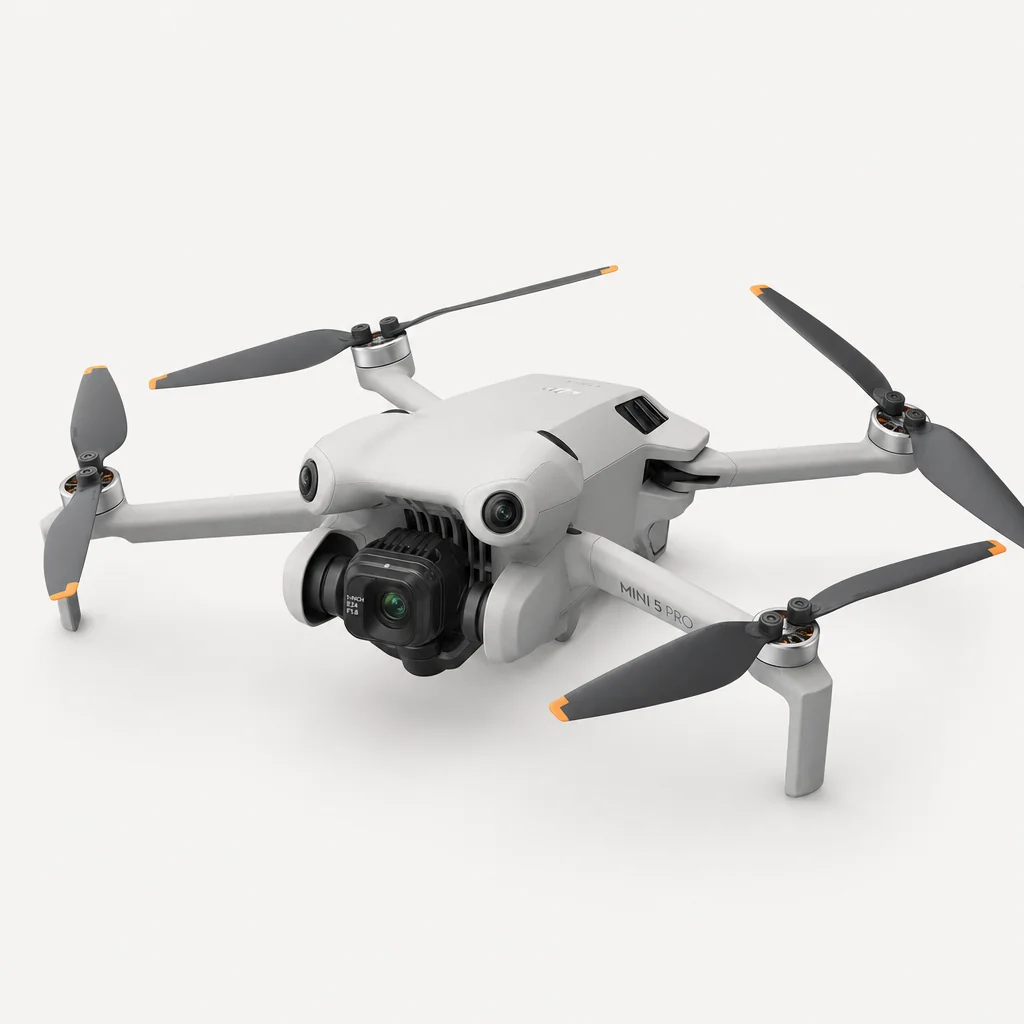
DJI Mini 5 Pro is the better travel camera if aerial footage is one of the reasons you brought a drone. The one-inch sensor, f/1.8 aperture, RAW stills, 10-bit HLG and D-Log M provide a noticeably deeper creative toolkit. Add the three-axis gimbal, satellite navigation, obstacle sensing and roughly 35-minute real-world calm-weather endurance, and you have room to scout, frame and repeat a shot rather than rushing because the battery is already blinking.
It is also the sensible choice if you care about landscapes more than yourself. HOVERAir is brilliant at keeping a person in the story. DJI is better at making the landscape the story, then placing the person exactly where you want them within it.
What You'll Actually Pay: Price and Bundle Breakdown
The pricing ladder is logical. HOVERAir X1 Pro starts at £459 in the UK and $499 in the US. X1 ProMax carried a £639 launch/review price in the UK and costs $699 in the US. DJI Mini 5 Pro starts at £689 in the UK with the RC-N3 controller, placing it only £50 above the ProMax at that launch/review price—but it is a fundamentally more involved package and product.
HOVERAir X1 Pro
UK standard model. $499 in the US. Includes 32GB internal storage, with microSD expansion up to 1TB.
HOVERAir X1 ProMax
Launch/review UK price. $699 in the US. Adds a 1/1.3-inch sensor, 8K/30fps, 10-bit HLG and 64GB storage.
DJI Mini 5 Pro + RC-N3
UK starting price. The standard-battery configuration is listed at approximately 249.9g.
DJI Mini 5 Pro Fly More + RC 2
UK Fly More Combo with the controller that has its own built-in screen.
DJI's UK range also included a £869 Fly More Combo with RC-N3 and a £1,039 Fly More Combo Plus with RC 2. The Plus setup needs special attention because its battery changes the aircraft's weight category. If keeping the standard sub-250g configuration is central to your purchase, do not treat "more flight time" as a free upgrade.
On HOVERAir's side, accessories alter the value proposition quickly. A PowerCase was listed at £155 and spare batteries at £69. Beacon, Joysticks, the charging hub and extra batteries make the ProMax experience much more complete for sport users, but they also make the headline price less representative. That is not a criticism; it is simply worth budgeting honestly.
Storage deserves a mention too. X1 Pro has 32GB internal storage, ProMax doubles that to 64GB, and both accept microSD cards up to 1TB. HOVERAir recommends V30 or V60 cards depending on recording mode. Mini 5 Pro includes 42GB internal storage and takes V30-or-higher microSD cards. For high-resolution action footage, removable storage is not glamorous, but it is much cheaper than discovering your best clip is trapped behind a full internal drive.
Strengths and Weaknesses: The Honest Trade-offs
There is no perfect winner because these drones are optimised around different frustrations. HOVERAir removes the frustrating bit where you need another person to film you. DJI removes the frustrating bit where a tiny camera drone cannot quite make the image you pictured.
HOVERAir X1 Pro and ProMax strengths
- Hands-free autonomous tracking with palm launch and hand-catching.
- Integrated propeller cage makes close-to-owner use feel less intimidating.
- 192g weight keeps both models under the 250g line.
- Up to 26mph/42km/h auto-following suits running and much cycling.
- ProMax brings 1/1.3-inch imaging, 8K/30fps, 4K/120fps and 10-bit HLG.
- No conventional full-size controller is needed for the main experience.
HOVERAir X1 Pro and ProMax compromises
- About 15 minutes of outdoor runtime means spare batteries matter.
- Smaller sensors than DJI's one-inch unit limit low-light and grading potential.
- Manual control is more accessory-dependent and less central to the product.
- ProMax does not offer a 90-degree rotating camera for native vertical capture.
- ProMax sensing is less comprehensive than DJI's omnidirectional LiDAR-led system.
DJI Mini 5 Pro strengths
- One-inch 50MP camera with RAW, 10-bit HLG and 10-bit D-Log M.
- Three-axis mechanical gimbal and true vertical shooting.
- Up to 36 minutes of rated standard-battery flight time.
- About 35 minutes achieved in calm hands-on testing.
- GPS, Galileo and BeiDou positioning, plus omnidirectional sensing and forward LiDAR.
- Much stronger choice for landscapes, low light and composed manual shots.
DJI Mini 5 Pro compromises
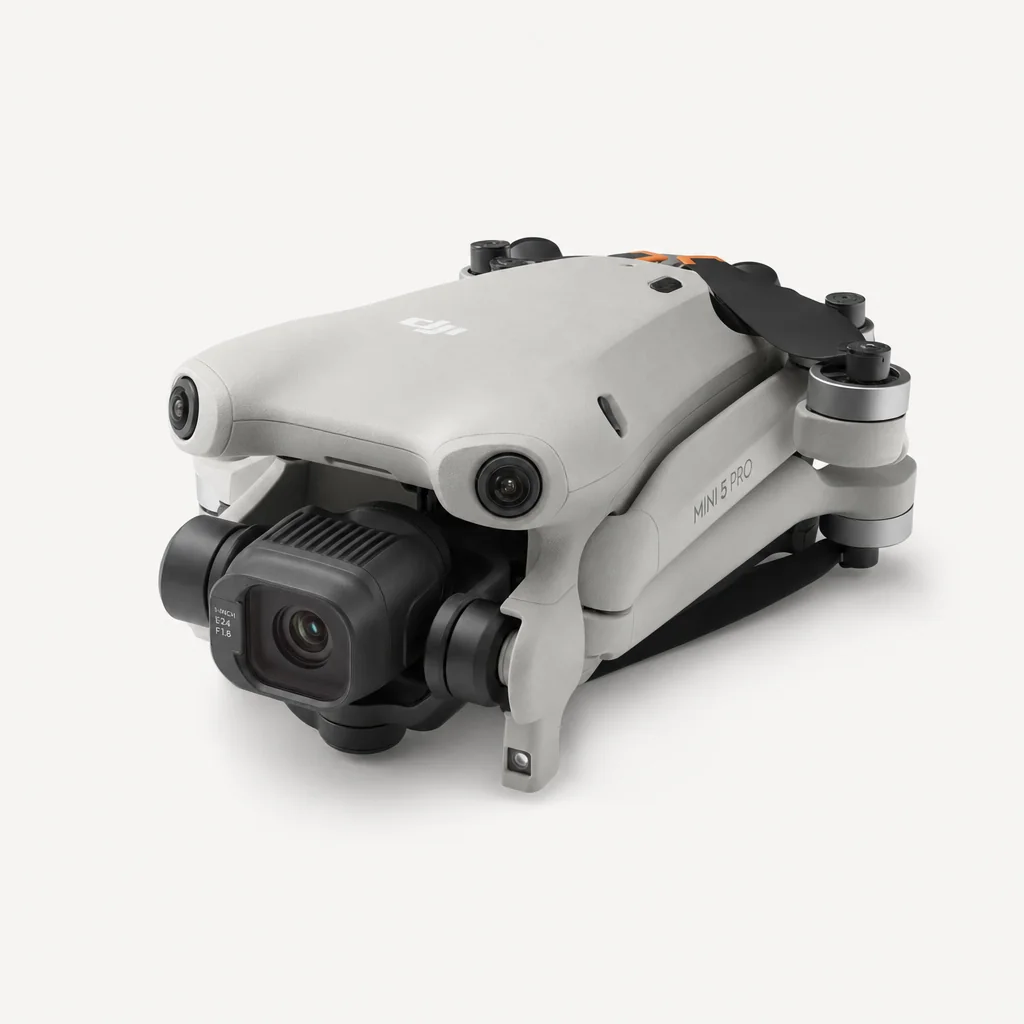
- Needs genuine piloting and more setup than either HOVERAir model.
- Larger and less spontaneous to deploy.
- Not suitable for indoor use in the same way as the HOVERAir format.
- Standard battery sits very close to 250g; Plus battery moves it clearly above.
- US availability, warranty and service arrangements remained less straightforward than in the UK during 2026.
My own rule of thumb is uncomplicated: choose HOVERAir if you value the chance of getting a clip at all; choose DJI if you value the quality and control of the clip once you have committed to flying. The best drone is often the one you will actually use, but the most satisfying footage often comes from the one you learned to fly properly. Annoying, perhaps. True, definitely.
Where HOVERAir Sits in the Range
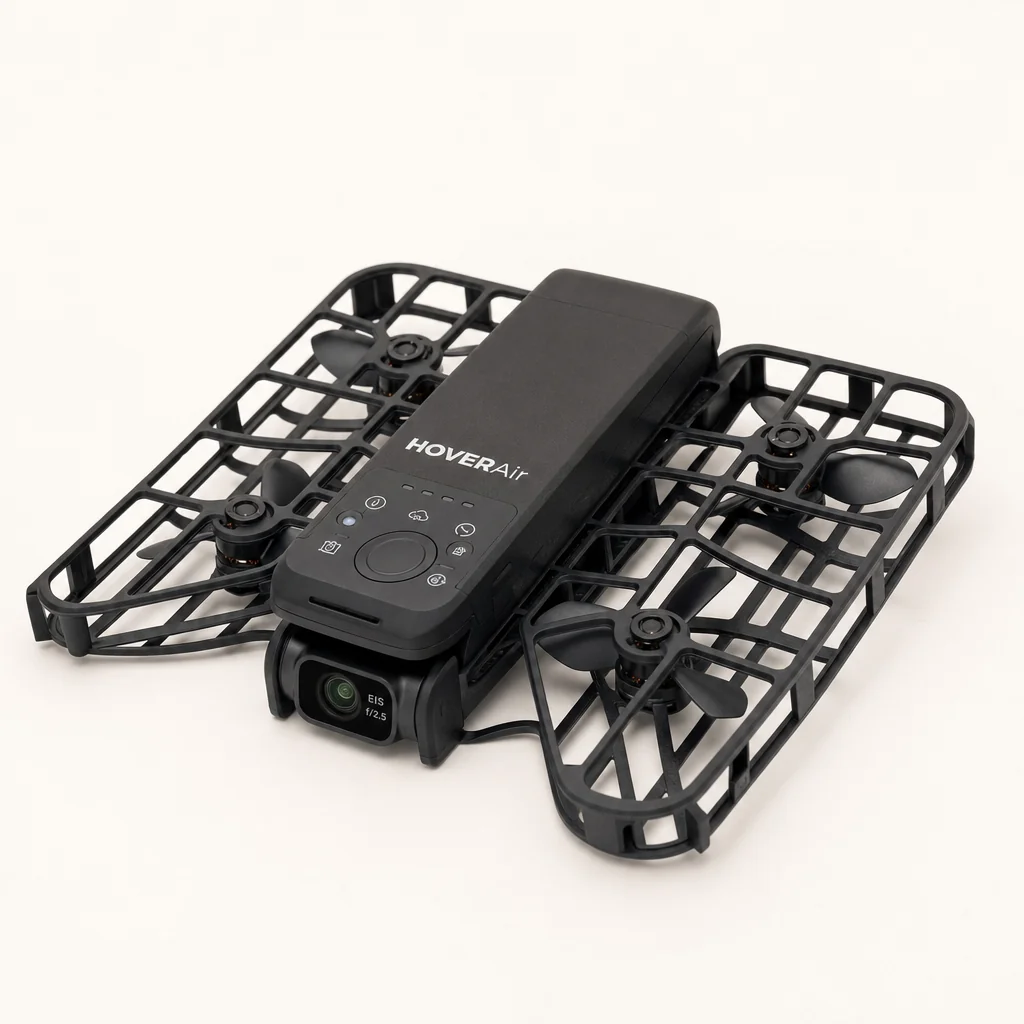
HOVERAir's nearest conceptual rivals are not really the Mini 5 Pro at all: the closest comparisons are DJI's own compact, self-flying models, which we have not tested here. They are DJI Neo and DJI Flip: smaller, more accessible drones that sit closer to social clips and quick personal footage than full aerial cinematography. The HOVERAir models are distinctive because they combine the protective cage, autonomous tracking workflow and optional Beacon support around sports use.
| Model | Claimed maximum flight time | Best understood as |
|---|---|---|
| HOVERAir X1 Pro | 16 minutes | Autonomous flying camera for hands-free personal footage |
| HOVERAir X1 ProMax | 16 minutes | Higher-spec autonomous flying camera with 8K and 10-bit HLG |
| DJI Mini 5 Pro | 36 minutes with standard battery | Conventional camera drone with high-end compact imaging |
This is useful because it stops the Mini 5 Pro comparison becoming unfair. Its longer endurance and much larger sensor are exactly what you should expect from a conventional camera drone. HOVERAir is selling convenience in a very specific form. When it nails the shot of you running along a ridge with no pilot in sight, it can feel like magic. When you want to hover at a precise point, adjust your camera angle and expose a sunset carefully, the magic gives way to DJI's much more practical toolkit.
HOVERAir belongs closer to the quick-capture end of the drone market, whilst Mini 5 Pro earns its place as a compact aerial camera system for users who want to plan and control each shot.
Your Questions Answered
The best choice comes down to whether you want the drone to disappear into the background while you move, or whether you want to take full control of an aerial camera.
The Verdict: Which Aerial Camera Deserves Your Money?
For runners, cyclists and solo adventure clips, buy the HOVERAir X1 ProMax. Its 26mph auto-following, 37mph instantaneous tracking speed, 1/1.3-inch sensor and 10-bit HLG make it the best autonomous option here. Add the Beacon and spare batteries if this is going to become part of your regular kit. It is not a substitute for a proper camera drone, but it is much more likely to get the shot when nobody else is available to film.
For family holidays, first-time users and uncomplicated memories, buy the HOVERAir X1 Pro. It keeps the cage-enclosed, palm-launch simplicity that makes the HOVERAir concept special, offers 4K/60fps and costs less than the ProMax. Its battery remains short, but for quick clips around a trip it is the friendliest and least intimidating choice.
For landscapes, travel filmmaking, still photography and the best possible footage, buy DJI Mini 5 Pro. Its one-inch 50MP sensor, RAW capture, HLG, D-Log M, three-axis gimbal, true vertical shooting, GPS navigation, obstacle sensing and roughly 35-minute real-world calm-weather flight time put it in another category. It needs more skill and more attention, but it rewards both.
The headline conclusion is simple: HOVERAir prioritises autonomy and immediacy; DJI Mini 5 Pro prioritises image quality, control, range and endurance. If you want aerial footage of yourself while remaining the subject, go HOVERAir. If you want to become the pilot and make aerial footage properly, go DJI.
 DJI Mini 5 ProView on Amazon